Welcome to the Lion's Roar podcast from the publishers of Lion's Roar magazine and Buddha Dharma,
The practitioner's guide.
I'm Sandra Hannabome.
Dr.
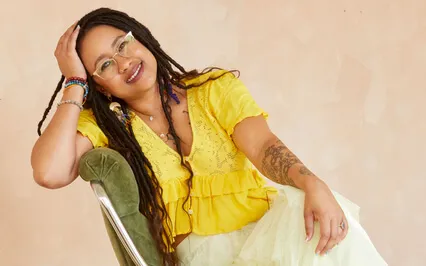
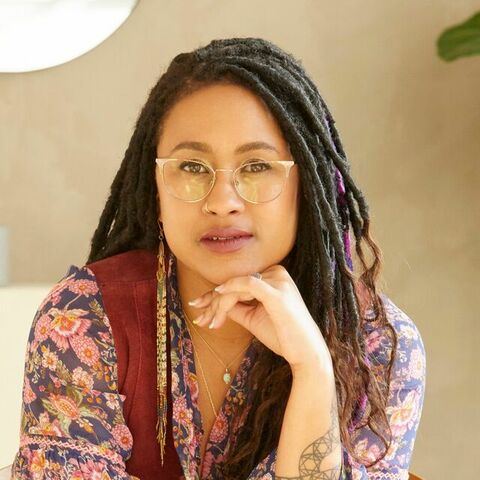
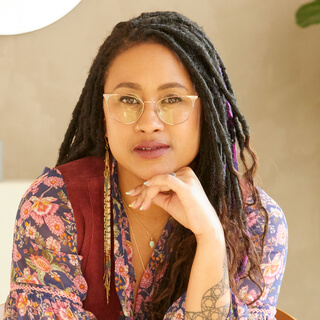
Sarah King is a highly accomplished neuroscientist,
Medical anthropologist,
Political and learning scientist,
Founder of MindHeart Consulting,
Yoga instructor,
And a mindfulness teacher who specializes in research on the relationship between mindfulness,
Community alternative medicine,
And social justice,
Examining the relationship between individual awareness and collective awareness as it relates to well-being.
Dr.
King developed the Science of Social Justice framework to explain how well-being and social justice are one and the same.
It's complemented by a visual model to illustrate.
It's called the Systems-Based Awareness Map,
Which you can see by clicking the link in the description.
Today,
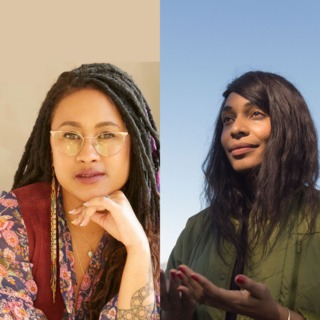
Lion's Roar editor Pamela Ayo-Yatunde and Dr.
Sarah King explore the mind-body connection,
Identity,
Art,
And mindfulness,
And the deep implications of this novel framework that has the power to change how you understand yourself,
Your community,
And even political events.
Greetings,
Lion's Roar podcast listeners and readers.
I am delighted to introduce you to Dr.
Sarah King.
I learned of Dr.
Sarah King when I put out into the universe that I was looking for a Black neuroscientist.
And a couple of people wrote and said,
Well,
This is the person you need to connect with.
So a little bit about Dr.
King.
Dr.
King is the postdoc scholar in the Department of Neurology at the Oregon Center for Complementary and Alternative Medicine in Neurological Disorders.
Now,
That is a mouthful.
Dr.
King,
Can you just break that down?
What does all of that mean?
I think that the easiest way that I could break that down is that everyone within my department studies non-pharmacological,
Which is a long-winded way of saying non-drug-based treatment of various diseases and issues,
Mostly having to do with the relationship that people have with chronic pain.
And so you know that there's a lot of different diseases and injuries and even mental health disorders that are related to chronic pain.
So the people in my department study mindfulness meditation,
Yoga,
Deep breathing,
Acupuncture,
And other mind-body therapies,
Which is where you get the alternative medicine part of that title from.
Well,
On behalf of everyone on this planet,
I thank you and your colleagues for this work because I think the opioid crisis has brought to mind how dangerous it can be to take pharmacological methods for feeling better.
And many of us,
Even around COVID-19 and vaccinations,
Have been largely concerned about side effects.
And so if we can avoid medicines that have the potential for negative consequences,
We're interested.
And so we thank you for your work.
Absolutely.
Thank you.
Thank you so much.
You're welcome.
Now,
Another reason why people said,
Oh,
You've got to talk to Dr.
King is because you are a Buddhist practitioner.
Yes.
Can you say something about how your practice or practices in Buddhism influence your work in complementary medicine?
Oh,
Absolutely.
You know,
Really growing up throughout my life,
I came from a background that a lot of people would say ticked off a lot of statistical boxes,
As it were,
For particularly young African-American women.
So I came from a lived experience of growing up experiencing,
You know,
Living in a home with a single mother,
Living with chronic houselessness and homelessness in and out of battered women's shelters and hotels and moving from city to city every two or three months.
And so I was out of school a lot of the time.
You know,
I grew up in a world that was deeply affected by the prison industrial complex and the incarceration of some of my family members and their experience of police brutality in front of my eyes as I was growing up.
And my experience with chronic homelessness actually continued into college.
So I ended up going to,
You know,
Getting a scholarship to go to a very elite liberal arts institution called Pitzer College,
Which is in the Inland Empire of California.
And you know,
I think that I was very,
I was very aware of how different my lived experience was from the students that I went to college with.
And I also became very aware when I was in college of the presence of really profound pain inside of my body.
I was in constant psychological pain.
I had a lot of,
You know,
I was experiencing a lot of depression,
A lot of anxiety,
But a lot of physical pain inside of my body that therapy by itself really wasn't doing much about.
I'm very grateful that I had access to counseling services when I was in college.
One thing that I noticed was that the more that I,
Well,
Number one,
All of the therapists that I saw did not share my lived experience with me.
They came from a different,
A white bodied identity.
So they really weren't able to reflect back to me a deeper understanding of the suffering that I was experiencing due to my lived experience.
And I noticed that the more that I talked about it,
The more in touch I felt with this really deep pain inside of my body.
I didn't know what to do with it.
So I felt like I was collapsing under this pain.
And it really wasn't until just after I left my undergraduate studies and went to UCLA for my master's program that I discovered both yoga as well as initially I discovered Mahayana Buddhism.
And I began to practice very extensively doing retreats.
And I lived in like a Buddhist ashram for a few months.
But one of the things that I also noticed was that,
And this was,
I think as a result of my interpretation of Mahayana Buddhism,
I really went into it with the intentionality of denying my body.
I wanted to cast it to the side.
I wanted to be rid of everything that I saw as being wrong and dirty and foul and pure about my body because of my lived experience.
And then I remember when I was going through my first yoga teacher training,
Someone recommended to me that I visit Spirit Rock.
And at Spirit Rock,
Most of the teachers teach in the Theravadan tradition.
And at Spirit Rock,
I found a place where I could really fully embody the enormity of my grief and be held in that experience in this container of loving practice.
And I think that I was able to,
Through the mindfulness practices that I learned on Vipassana retreat,
I was able to recognize this relationship that was occurring at every moment of every day,
This profoundly intimate conversation that I was having with myself,
Especially when I started body scanning practices and adding metta practices and forgiveness practices to it.
I was really able to notice the difference between the kind of suffering that was arising in my experience that was leading to more suffering and the suffering that was leading to liberation.
And then I remember,
I will never forget.
I was on a 10 day retreat.
I think it was actually a retreat for people of color that was happening at Spirit Rock.
And while I was on the meditation cushion,
I experienced what I would frame as emptiness for the first time.
The only way that I can describe it is that I felt as though the feeling or the sense that I had of being a singular self,
A singular individual,
Just completely melted away.
And I felt that I was boundless.
I felt that I was infinite.
I felt like I had merged with all of time and space somehow.
And that experience really,
Really transformed me forever because it was the first time in my whole existence that I felt no pain and I felt no suffering.
I just felt interconnected.
I felt interdependence.
And it was really from that initial experience of emptiness and no self and this sense of liberation that was truly embodied that washed over me during that moment.
And I thought to myself,
Okay,
Well,
If somebody who looks like me and comes from my background can have this experience without the aid of any drugs,
Without the aid of any therapists simply being held in this very specific container of practice,
Then what does this mean for the pain and the suffering that I see being lived out in my community and in communities across the world?
I felt like I had to make those connections.
And since I was studying in a program that was interdisciplinary,
I was studying education and neuroscience and anthropology,
I really started to turn my eye towards our nation's schools and just really ask myself,
Because I was so keenly aware of the suffering particularly that our youth go through.
And I asked,
Well,
Where is the embodied education in our schools?
Is this happening?
This is an extraordinary experience of healing and where is it happening for our youth?
So I would say that's really how I would chart out my journey towards mindfulness.
Wow.
So like profoundly earth shattering and so powerful.
So what's more,
Tell us please more about your mission.
You're doing some really interesting things in interesting places.
Thank you so much.
You know,
This is actually a story that I really love to tell.
So when I was really in the thick of my dissertation research,
I have to admit that I was so bullied up with this transmission of like love and gratitude that I was feeling over just what my practices in the community that I found within my practices had given to me that when I discovered,
I started digging around,
I was like,
Okay,
Where is yoga happening?
Where's mindfulness happening in our schools?
And this was,
You know,
Probably about 13,
14,
15 years ago.
And so it was still a very nascent movement,
But I was looking particularly for where are the youth of color in the United States being taught these practices?
And if they are being taught these practices,
Who is studying them?
And I found no one,
All of the mindfulness or yoga based interventions that had been studied amongst the youth population had occurred with all white identified populations,
Right?
And I use this term white identified very deliberately because whiteness is an identity that has been given to people of European descent within this country.
So I just want to be clear for people who are listening why it is I'm using that term.
So I found a school,
I found a program,
I went to the field to study what was going on and I carried in a great deal of bias with me because I was looking at the scientific literature that studies mindfulness in psychology and neuroscience.
And the literature touts a lot of things about,
You know,
Mindfulness practices increase empathy and gratitude and compassion and it decreases aggression and it increases attention and it decreases impulsivity and all of these wonderful things that if you're an educator or you're a parent,
You're like,
Well,
I want that.
I want that for my child,
Right?
So I think in a certain way,
I was expecting that.
And when I went to this school,
I discovered that the youth were pretty firmly divided into three different camps,
Right?
There was one camp that was all about it and their lives were completely transformed.
In the same way that I had been transformed by the experience of emptiness,
They were talking about experiencing themselves in a totally different empowered light,
Both by themselves as well as in their families and in their communities.
They wanted to give more,
They wanted to be more present,
They wanted to be more compassionate.
And then about a third of the students were kind of like,
They didn't really think much about it,
They were very neutral.
And then another third of the students were downright pissed.
They mutinied,
They protested,
They gathered together,
They had a petition,
They were marching through the hallways,
They wanted this mindfulness and yoga intervention kicked out of their school,
They were demanding to the principal.
This is actually harming us.
We don't want anything to do with it.
So then I knew it was my job,
Both as a scientist as well as a mindfulness practitioner to get curious.
Like,
Okay,
What's going on here?
And what was super clear to me,
What they expressed was that mindfulness practices in their capacity to bring us into this like really intimate connection with the reality of what is happening inside of our bodies.
Well,
Systemic oppression was the context which they were living in.
And it was causing them trauma,
It was causing them pain.
So they're like,
So you want us to sit down and get even deeper into the pain of racism,
Get even deeper into the pain of all of the oppression that we're feeling.
And then we're not being given any tools to do anything about it.
We're not,
We're just going to pretend like our identity is like not a factor here.
Like that makes no sense and we're not having any of it.
And they were 12.
And they were right,
Right?
From their perspective,
They were completely right.
Yeah,
Absolutely.
And they were my teachers in that moment.
And so then that really got my gears thinking,
But you know,
I was very fortunate that I had been taking,
You know,
On retreat with wonderful people like Larry Yang and Conda Mason and Joanna Hardy and just like wonderful teachers of color who had really created the space for me to come into contact with my own experience of identity in the context of my mindfulness practice and what that meant in terms of,
Well,
You know,
Well,
What does my body have to do with social justice?
What is my mind?
What does the body-mind connection have to do with social justice?
Well,
If we're talking about the body-mind connection,
We're talking about awareness,
We're talking about the brain,
We're talking about neuroscience,
It all just started clicking for me.
And so what I'm most excited about now is that through the course of being in my postdoctoral program,
I really sat down and I said to myself,
Okay,
Identity is extremely complex,
Right?
But I'm tired of talking about identity in terms of just the political.
I want to talk about identity in terms of our awareness of our identity,
Right?
I want to talk about social justice in terms of our awareness of social justice,
Right?
Our perception.
I really want to bring it home into embodied practices.
So I have developed a map that I call the systems-based awareness map,
Right?
So it goes through the levels of pure awareness,
Internal awareness,
Identity awareness,
Bodily awareness,
And then it shifts from this space of like,
Okay,
Well,
How are we investigating using our capacity for awareness and attention inside of our bodies,
Inside of our skin,
Right?
Our skin is this very unique barrier between us and the world,
Right?
And our skin is also constantly bringing in information from the outside world to tell us about the world that we're living in.
But here's what I was picturing as I was developing the map.
I was actually picturing myself seated in practice,
Being completely still with no one else around me.
I started asking myself questions,
Okay,
How could I map out the experience visually for a person of what I'm experiencing when I'm seated in meditation practice?
And then because I teach mindfulness,
Very often one of the instructions that I'll offer up when I teach is to very slowly open up the eyes,
Right?
What is that?
That's movement.
And to begin to orient and slowly turn your head and look at the room around you.
What is that?
You're moving your eyeballs.
There's more movement.
And to begin to shift your body and look around and notice if there's anything different about the quality of the room that you are in from the time that you began your practice until now.
And then I had this aha moment where I was like,
Okay,
Well,
There's the body in stillness and we're still having this phenomenally complex multilayered experience of many layers of awareness inside of what my mentor,
Dan Siegel likes to call the skin encased body.
But then what happens the minute that you begin to move,
That you behave,
That you speak,
You have agency,
You have agency in the world and you can have awareness of that agency,
Right?
You have agency that is yourself,
Your own individual agency,
And you can be aware of that or you can be aware of the agency of the collective,
The collective awareness.
And so I've included all of these different layers of awareness inside of this map.
And I'm going to be launching it at the Museum of Modern Art in New York.
I've come up with a program that is called Art and.
.
.
Can I interrupt you just for a moment?
Yeah,
Yeah,
Yeah,
Yeah,
Yeah,
Yeah.
Why there?
I mean,
Right?
Right.
Because,
You know,
It's like,
Okay,
Yeah,
I hear you.
I hear the development of the map.
It makes sense to me.
Yes.
And now you're taking it to a museum of modern art?
Yes.
Well,
You know,
Well,
It's so funny how many people,
Especially my family members,
My mother in law was like,
I mean,
This is amazing,
But like,
How did this happen?
Well,
I had been working on a theoretical framework.
It's called the science of social justice from the time that I had finished my graduate studies.
And the science of social justice is a theoretical as well as an applied investigation of how social justice and wellbeing,
According to the way that I see it,
Are one and the same thing.
And so if you really take a look at in medicine,
There's something called a bio-psycho-social frame of health.
And all that that means is that what's happening in our physiological bodies,
What's happening in our psychology or our mental health,
And what's happening in our relationships are constantly intertwined.
And if you look at the various diseases,
Both physically,
The various mental health outcomes,
The negative ones,
And the strains on our relationships within marginalized communities,
All of the wellbeing interventions that are being developed to tend to those are the path towards social justice in my framing.
So I had been lecturing on this and putting that content out into the world in places like the embodied social justice certificate program.
And I was taking it to universities and really any space that would listen to me.
And on that note,
Were they listening and did they embrace it because the bio-psycho-social concentric circles,
That's been around for a long time.
That's a construct that has been around so long that it's accepted as the truth.
Exactly.
I'm imagining you adding another layer and people are like,
I don't know.
Well,
You know,
When it comes to the bio-psycho-social framing,
I was really taking that and I was using it to demonstrate a whole new way of perceiving what social justice is.
So that's different from the systems-based awareness map.
So with the science of social justice,
When I was doing these lectures at universities in different places,
I started putting them up on my website just for people to be able to see afterwards.
And I had no idea that inside of the Museum of Modern Art,
They were following me and my journey.
So they reached out to me one day and they said,
Dr.
King,
We've been following the science of social justice.
We've been learning with you.
This is a form of education that's been happening inside of the museum.
We are wondering if you would be interested in picking out one piece of art from our collection,
Any piece that you want to.
And I was like,
Oh man,
That's like,
That's,
That's going to be a tall order,
But they said,
Pick out one piece of art.
And they,
There's a woman named Jackie Armstrong,
Who has started a program called the Artful Practices for Well-Being Initiative inside of the museum.
So she was bringing in people from different walks of life to pick out one work of art and to record a meditation that was at the nexus of this work of art and what they did in the world.
So that was the first collaboration that I did with them.
And it's still up on their website.
I picked out,
It is like a collage painting by an amazing African American woman artist named Betty Saar.
She's 95 years old.
She is absolutely one of the most brilliant and game-changing American artists that has ever lived and is still living.
And then after that,
Myself and Dr.
Dan Siegel and our colleague Orlando Villaraga,
We did an event together for the Museum of Modern Art,
And it was called the Art and Science of Hope and Justice.
And that was the first time we selected about eight pieces of art,
And Orlando composed these amazing musical soundscapes.
And we designed an experience.
Our thought was,
Right,
We didn't want to say that it was about mindfulness.
And we didn't want to say it was about contemplation or meditation because it was an event for the global community.
And we wanted it to be accessible.
And we realized that there are some people who,
When they see those words,
It's intimidating.
And they think things to themselves like,
Well,
I can't quiet my mind.
My mind's all over the place.
So this isn't the sort of event for me.
So our thinking was that if we were to put each work of art and we selected works of art that we felt would communicate something about this relationship between hope and justice,
And then really just with a few somatic instructions have people really be immersed in the soundscape that Orlando had designed.
He works with these phenomenal indigenous instruments that he designs himself.
And so we were guiding them through experience of gazing at this work of art,
Being immersed in the soundscape,
And then we would shift into conversation about the science and be in conversation with the community about what it was that they saw.
We had no idea how it would go.
We were so surprised.
People were bursting into tears.
People were in the chat,
They were saying,
I've never had an experience of art like this before.
They were connecting to the art with their bodies.
But what we noticed was that they were expressing a kind of connectedness and spaciousness that you might hear somebody describe after a lengthy retreat.
But it was happening in the context of this zoom with the art and the immersive music and the conversation about the neurobiology of hope.
So then that gave me the idea,
OK,
We're going to create a program,
It's going to be very similar,
Where people are going to be led through the different layers of the systems-based awareness map,
All eight layers of awareness.
So there's storytelling about awareness,
But Orlando is going to be designing another soundscape.
The idea is that there's going to be something about going through this storytelling journey of awareness and the intentionality between the music,
The sound,
And the silence that is built in,
As well as the works of art that I'm picking out that are basically I'm picking them out so that they're paired to go with every single layer of the map.
And what it is that I want to investigate is when people are in this truly immersive environment between sound and silence and art and storytelling about awareness,
They will be invited to,
At the very end,
If they wish,
Participate in a study at the very end of that program.
And the study is going to be the neuroscience component of it.
We're going to see if people have some sort of experience of mindfulness that arises for them within the context of this program without ever once calling it that.
Wow.
Okay.
Now,
I want to ask you to pause for a moment because I need to just digest for a moment the profundity of what you just shared.
Yeah.
Okay.
So slow down for a moment.
Both of us need to slow down.
Okay.
I need to slow down to grok it and let you know what I'm imagining.
So what I'm imagining,
And tell me if this is what happened.
So when you talk about having the lived experience that you lived.
This lived experience is shared by many people.
Lots of people call it trauma,
Different types of trauma.
But when you talk about the art,
So the visual pieces that you all chose with the theme of hope and social justice put together with a musical soundscape performed on instruments and made,
Which means it's probably a sound that they've never heard before.
Never.
There is a response that also includes tears,
Makes me think that there's something about this entire experience and the planning of it that helps people walk through something,
A memory deep down inside,
Maybe one that they thought was so far down that it was no longer there.
That it presents itself like facing a traumatic,
Not that the event was traumatic,
But like having the resiliency to face something that was traumatic,
That left a traumatic imprint.
What I'm imagining,
Does that sound like what happened?
Had a lot of reports of that.
The art and science of hope and justice program,
Because this was in the middle of the pandemic.
This was just prior to the election in the United States.
We were really putting this program forward with the intentionality of like,
Whoa,
Things are about to get real.
We want to offer something healing.
Yes,
For the community members in the United States who are anticipating what's going to happen with the results of this election,
But really the global community was anticipating this.
Because we had to do it on Zoom,
The chat was open for people to be able to type in and let us know live in the moment what their experience was.
We were very surprised to see people typing into the chat very often saying,
Oh,
I just had this memory come back to me,
Oh,
I just had these sensations come back to me.
People who were all ages,
20 years old,
70 years old,
98 years old.
What we noticed was that there was something about the relationship between our presence,
The music,
The combination of the sound and the silence.
The silence inside of the music is very intentional as well.
And the moments in time where the art would be up on the screen and no one would be talking,
It would just be the participant,
The art,
And the music,
Sound and silence.
It created a container of healing that was much more radical and pronounced than what it was that we were expecting,
Especially because it was on Zoom.
So that then became the blueprint for this next program that I'm going to be launching.
Please tell us more so people can know how to participate.
Okay,
So the event in February is called Art and Awareness as a Catalyst for Collective Healing.
It will most likely,
You can sign up to be a participant in this event on the Museum of Modern Art's website,
Either in December or January.
I have to get it exactly right for them when they put it up.
But it will be open for people to sign up from the global community,
No matter where you are.
So that's the event that's going to be happening in February.
Really my central question is,
That is guiding my work in a way,
Is like,
Can art be medicine?
Art be medicine?
And I'm definitely not the first person to ask this.
I know that there is a movement,
Particularly at Harvard,
Really investigating clinical uses of art therapy for patients who are experiencing cancer and multiple sclerosis and all different sorts of maladies where people are going through intense chronic pain inside of their bodies.
So this relationship between the success of art therapy and clinical settings,
That's already been established long before I answered this,
I started asking this question.
But part of what I'm really intrigued by,
Especially given the events of January 6th in the United States,
I'll tell you the truth.
The systems-based awareness map was literally born the day after on January 7th.
What happened was the initial event,
The Arch and Science of Hope and Justice,
That was in November of 2020.
And then January 6th happened and I could not sleep.
I was so agitated isn't even the word.
I felt like my molecules were coming apart.
So I decided to turn to my practice.
I went into my office,
I sat down on my cushion,
And I have all of these whiteboards in my office and I had all these words written on it.
I'm looking at it right now.
I have words like structural violence,
Epistemologies of race,
Habits,
Behaviors,
Perception,
Language,
Meaning,
Thoughts,
Perception,
Biology,
Sensations.
I have all these.
It was just a big thought cloud that I would just sort of ponder,
Go into my practice,
And it's the first thing that I see every time I open up my eyes from my cushion when I'm meditating.
So I did the very same thing.
And when I opened up my eyes,
It dawned on me.
I was like,
Wait,
Wait,
Wait,
Wait,
Wait.
We need to have a,
We need a way to think about what's happening in our society.
We need a way to be able to think about it that is informed by systems,
Nested systems that are in relationship with one another.
But what is the primary relationship?
What is the primary bond that is holding together all of experience?
Awareness.
So I thought,
Okay,
It has to be a map.
People need to understand what is the relationship between all of the sensations and feelings and emotions and thoughts that are happening inside of my body,
Right,
At all hours of the day.
But then the next thought that I had was,
Well,
Where is identity happening?
Is it happening outside of me?
No.
There may be many aspects of my identity that have been placed upon me,
Such as my race or my class.
I didn't choose those things,
Right?
But where do I experience my identity?
I'm experiencing it inside of my embodied awareness.
It is nested in a systems way.
So I thought,
Let me just take a pen to paper and just try to map out.
My colleague,
Dr.
Angel Acosta said to me,
Sis,
Sis,
You got to map this out.
I started just mapping it out from the perspective of,
Well,
What do I experience when I'm seated in my practice?
I can see the possibility,
I'm sorry,
The necessity of us having another conversation.
Okay.
And I'll tell you why.
First I'll tell you why.
It's because what you're talking about has the potential to reduce violence.
That's the,
And we are living in a society where we're in an uptick,
Continual uptick in violence.
Yes.
And so that's why I want us to have another conversation.
Let me tell you what I want that conversation to be about.
And maybe you have something to say about it already.
As I was reading something that you sent me about your map,
Systems-based awareness map,
I began to think about two large groups.
One large group was the group on January 6th that tried to disrupt the peaceful transfer of power.
Some people call it an insurrection.
Some people call it a coup attempt.
It's that group.
There's another group that formed right after George Floyd was tortured and murdered.
That's right.
Okay.
And so,
And there's been fear all around about what these groups were gathered to do.
There was a group of women who marched right after Trump took office.
So we are forming in these large groups,
Right?
And identity plays a part.
Awareness of identity plays a part.
Is there anything that you can say before our next conversation down the road that can help us be aware,
Remember to be aware of the ways that we form identity so that we can avoid getting into groups that are gathered to promote and enact violence?
That being the million dollar question of all of human history,
Right?
One of the things that people will notice on my map,
Of course,
They can't see it in the context of this conversation,
But they will see it printed out in other places.
There are little arrows that are drawn between each of the layers of awareness,
White arrows.
The inputs and outputs?
The inputs and the outputs to the system.
So you'll notice that some of those arrows are stemming from pure awareness outward,
Pure awareness that is inside of all of us.
And it manifests and it proliferates through each of the layers of internal embodied awareness out into the world as we move in and we express ourselves with agency out into the collective where the environment and society and culture are.
And there's a symbol there.
One of the symbols is a red,
It almost looks like a firecracker explosion.
And then you can see in the key that that says violence or unintegrated trauma.
So part of what it is that I am hoping people will understand through their experience of this map in whatever way that they encounter it is the degree to which we have unmutabilized,
Unprocessed,
Unintegrated trauma,
Not just from our own lived experience,
But intergenerational trauma that is passed down in our genes,
That is passed down from the behavior of our ancestors down through the line.
And we are going to be potentially emitting those same violent behaviors outwards in gatherings of groups.
But when we don't have awareness about the way in which intergenerational trauma shows up inside of our bodies,
Inside of our embodied awareness,
We're out of control.
We're being reactionary,
Which is part of what our mindfulness practice,
Our contemplative practices,
Helps us to notice when there are reactions,
Automatic reactions that are coming up,
Welling up from inside of us.
And we have to learn how to identify with our contemplative practices,
Right?
Well,
What does that feel like?
And then we have to start investigating,
Right?
Well,
What happened to my ancestors?
What were the traumas that happened to them and the places that they came from?
And how could those be possibly being carried down the line into my body,
My being,
My presence?
Because we have choice.
We have agency.
Agency is built in that map.
And so once we learn how to identify that intergenerational trauma,
Then we can be the generation where it stops.
Wow.
On that note,
I will say that's hopeful.
Absolutely.
That is very hopeful.
And I want to know more.
And I trust that our readers and listeners want to know more too.
So Dr.
King,
I'll just say for now how much I appreciate you and your work and your sharing it with us.
Thank you so much,
Ayah.
Thank you so much for having me.
All my gratitude for being here in this space with you.
It feels like family.
It feels like home.
So thank you so much.
You're welcome.
Thanks for listening.
Mission-driven,
Nonprofit,
And community-supported,
Lion's Roar offers Buddhist teachings,
News,
And perspectives so that the understanding and practice of Buddhism flourishes in today's world and its timeless wisdom is accessible to all.
We do this by providing as many entry points as we can through our print and digital publications,
Our website,
Video,
Social media,
Online courses,
Practice retreats,
And more.
We try to bring Dharma to people right where they are,
Knowing the difference it can make in their lives.
You can help us spread the Dharma by leaving ratings and reviews.
Or go to lionsroar.
Com to subscribe and get unlimited access to online articles,
New magazine issues,
And several collections,
Plus perks and exclusives from Lion's Roar Magazine and from Buddha Dharma,
The Practitioner's Guide.