How can you grow the confidence to step into uncomfortable conversations?
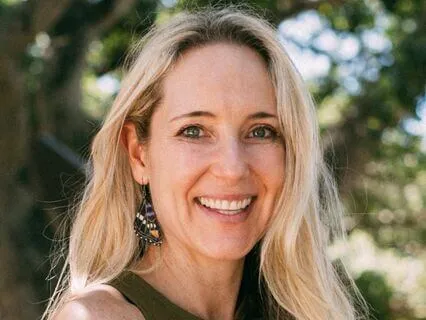
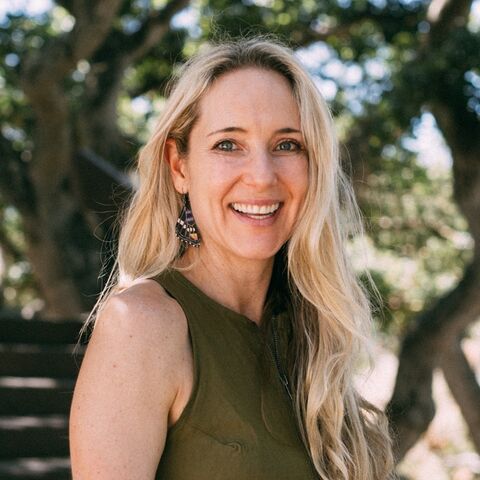
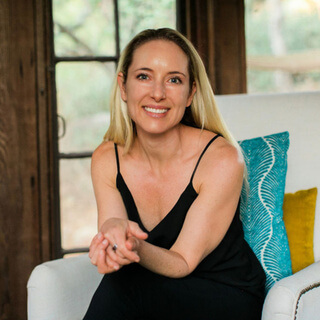
That's what we're going to explore today with Jane Chapman on The Wise Effort Show.
Welcome back to The Wise Effort Show.
I'm Dr.
Diana Hill.
I'm a clinical psychologist and this show is about helping you develop wise effort,
Use your energy in ways that matter to you,
Savor the good of your life along the way.
And today's episode is a real play.
I'm talking with Jane Chapman,
Who is a chef and also the founder of Communotable.
She gathers groups in small,
Intimate settings,
Makes a beautiful meal,
And talks about challenging topics,
Everything from loss to creativity.
And today,
Jane is going to share with us a place that she can get a little bit stuck when she's leading these conversations and really where she's craving to have more confidence,
More support,
To speak up,
Speak out,
Maybe redirect somebody.
Jane is such a beautiful example of wise effort.
Wise effort doesn't mean it's always easy or that you know what's going to happen.
It can be quite uncomfortable at times,
But it's really pointing yourself in the direction of your values.
And as you'll listen to this episode,
You'll hear Jane's values float to the surface,
Values of community,
Connection,
Curiosity.
Be a values highlighter,
Listen to her values,
And then also listen to how she uses those values to be a source of support for her while she's doing the hard work of connecting with strangers.
When you look up the definition of confidence,
It's defined as the feeling or belief that one can rely on someone or something,
Firm trust.
And when we're in an uncomfortable conversation with another person,
It requires some inner confidence to say something.
We struggle with confidence when we're overwhelmed by strong emotions like fear.
When we have high expectations for ourselves,
We think we have to say things perfectly.
You'll hear both of those in this conversation.
When we lack experience,
We haven't done it before,
Or when we don't have the skills to carry out a behavior.
And the way that you build confidence is through the skill of being able to stay open to discomfort,
Remembering why you're doing this,
Practicing through experience,
But also cultivating a compassionate self,
One that you can trust inside.
So there's three skills that are woven into this short real play that I think you could take away for yourself.
One has to do with mindset.
A confident mindset is when you take on a difficult conversation as a challenge,
Not as a threat.
Another has to do with values,
Remembering why you're willing to be uncomfortable.
What is this in the service of?
And the third is compassion.
When we can embody a compassionate,
Wise version of ourselves,
Like in the exercise I do with Jane at the end,
You will feel stronger,
You'll feel more supported,
And it'll really come from the inside out so that you can respond without reacting.
All right,
Enjoy this real play with Jane Chapman on The Wise Effort Show.
Hi.
Hi.
Jane,
Good to see you.
I thought we could start by you sharing a little bit about who you are,
What you do professionally,
And this is a real play episode,
So that means we're going to dive into maybe like some little spot where there's some stuckness or tightness,
Or you just want to open something up or move something in your life,
And we'll see where it goes.
Okay.
Great.
So my name is Jane.
I started The Communal Table.
This is a project that I started during COVID,
And I felt that there was this growing just disparity and polarization happening in our town,
And that then with COVID,
These natural silos became just deeper,
And physically,
Actually,
We were just so separated from one another,
And I really had just had enough of it,
And I thought,
What can I do to make this better?
We have so much love for our community,
And I grew up with this culture where we,
Everything,
No topic was off limits.
We had dinner parties,
And my grandmother would purposely bring people together that were very different,
And we would have these robust conversations,
Disagreements,
But at the end of the night,
People would give each other a kiss,
And we'd see them the next time,
And I felt like that had been lost,
That we were finding anything could be divisive,
And that any topic,
It could be a reason to just no longer be in friendship or community.
With families,
We all saw it,
And so I just thought,
What can I do to fix this?
What's the remedy?
How do I bring back the art of conversation?
And so that's how I started this project called The Communal Table.
You're also a chef,
So tell us a little bit about what happens at a Communal Table event,
And people can do this at home,
Too.
You don't need Jane to be able to do this.
Yeah,
And that's my greatest hope,
That we would all be able to do this on our own.
So what I do is each month,
There is a specific topic,
And then I send out an invitation,
And I create a beautiful,
Delicious meal,
Shopped from the farmer's market,
And we have a curated,
Focused conversation on this discussion topic.
So you don't always know where we're going to be gathered,
But you do know what you're going to be there to talk about.
And some of the topics and locations are wild,
Like there's the ones that we did have been up at a farm,
But you've also done them in designer studios.
I think you did one at a pottery studio once.
And then you also have deep topics,
Things like grief,
Body image.
What are some of the examples?
Female pleasure,
Our relationship with money,
Friendship,
Forgiveness.
I've done at this point over 75,
So so many topics.
But then there are some things that always come up.
I think that's why I'm here today.
Yeah,
So I wanted to explore that for you.
What comes up for you and also what comes up for the group?
And obviously,
There's an interaction there.
One of the things that comes up a lot for me that's difficult is I have to redirect people and get them back on topic and do it in a way that feels friendly and respectful,
But still valuing the group of why we're there.
That's what we're discussing.
And it's difficult.
Yeah,
What happens for you?
A lot of fear,
Fear that there is going to be a confrontation.
And part of it is I don't know who's going to come to my events.
Many of them are strangers.
This is like many people's worst nightmare.
I know,
It really is.
A social event that you're not going to know anyone at,
And there may be that one confrontational person.
And then we're all looking to Jane,
The leader,
To keep us safe.
And that's a lot of responsibility.
It is a lot of responsibility.
It is.
And also part of the thrill for me,
Honestly.
I also do love that it's this,
I'm deeply curious.
And so I do love that I don't really know what's going to happen.
And I do think it is of this greater service of getting different women in front of each other in our community and talking about things that really matter and not keeping it surface level.
So I think that's what helps me do it.
But yeah,
I always,
The fear comes up.
I get a little sweaty,
Like nervous,
And then trying to find the right time to interject.
And that can be difficult.
So it's all at once a lot of thinking and feeling.
So one thing that you said in there that feels really important is that you already are doing this where you're shifting it from a threat mindset to a challenge mindset.
And there is a good amount of research on this type of threat mindset versus challenge mindset,
Whatever it is,
Whatever difficulty is coming your way.
If you see it as a threat,
It's going to activate all our threat responses,
Right?
If you see it as a challenge,
You actually go more into the toward move of,
I'm going to take this up.
You said a little bit of a thrill,
Sort of like a fighter pilot kind of thrill feeling.
And that can,
It's the same,
The energy is the same,
Like it's a strong energy,
But it feels like a different type of energy of something that this is harming me versus this is something that I want,
That there's some kind of growth or interest,
Curiosity.
So you have that,
Which is great.
And you've already kind of intuitively learned how to shift that.
You're so skilled.
You have so many tools and practices that you're already doing.
But I want you to have more when you get to a really tricky spot.
So tell me about a time when you felt like you actually hit a wall and you didn't know what to do.
Or you just got overcome by this,
By whatever discomfort was showing up.
I think at my last event,
This happened.
Our conversation was around our relationship with money.
And I myself had so much anxiety about this conversation because it's something myself that I'm really working through my own relationship with money.
Feels like it's all over the place.
And on that's the other piece too.
So many of these topics that we are discussing,
They really do hit home for me.
So they're not easy.
Yeah.
And I don't feel like I've mastered it.
And I really,
That's a piece too.
I do have some anxiety around some specific events.
So this one,
I already had that.
I was going into this like,
Hmm.
And I purposely didn't have an expert there.
So it was just every woman came with their own relationship with money,
That we are all our own experts.
And at one point,
The conversation was shifting around and it felt like it was really a topic of privilege.
And we're at this beautiful home and talking about money.
People had to pay to be there.
And it's just the host said something that irked me.
And I felt like I had to say something.
And that's where I felt a little stuck because I thought,
You know,
Do I say something?
Do I not?
Physically,
I felt all the sensations like I have to step in here.
What was said?
It was about how it didn't matter,
You know,
How much money you had,
But that you can find joy anywhere and that you could go on a beach walk with your dog.
And it just didn't sit well with me.
And I thought,
And I said this,
I did share it.
And I said,
Well,
It just feels like if you're,
If you're,
That's not always true.
If you're on,
If you're walking on the beach during the day,
Like you're not at work,
You're,
You had to get there.
You had a dog like this all costs money.
It's not so simple.
You live by the beach.
You live by the beach.
You live in this town.
Yeah.
Like that.
That takes something.
And it felt,
I felt uncomfortable because I was,
I was in this interesting place where I was basically going against what I'm in someone else's home,
Disagreeing with them in front of the table.
But I also just felt that it was important to talk about that.
But I did feel really nervous.
And later after the event,
I asked her and I said,
You know,
Did I offend you?
I'm really sorry if I did,
But I couldn't really help it.
It just had to come out.
And I wished at that moment,
You know,
Maybe some different tools.
I think because sometimes I,
In that moment I was reactive and I would have liked to have a little bit more peace around it.
You said the word confidence earlier.
Yeah.
And confidence.
Yeah.
What do you think?
I just feel,
I just feel that you're really brave to say something and to step into that.
And that if we were all doing more of that,
Then maybe we would all feel a little bit more confident,
You know,
Like that there,
One,
It is,
It is in a lot of ways your responsibility because you're leading the group to say something and that you have awareness to,
To hear that that comment is a continuation of,
Of harm or assumptions about finances and money and privilege and resources,
You know,
And,
And then it contributes to it,
You know,
The mentality of that anyone can be happy.
There aren't social determinants of health or social determinants of happiness,
Which are very true.
So I feel like you're brave.
And then I also wonder what it would have been like to be a member of that group.
And here you say that,
What,
What it would have been like to be one of the other members.
What do you think they were feeling in that moment,
Hearing you respond?
I don't know.
I think,
I think some of them probably,
I think it was probably both.
I think for some people there,
It probably felt good because everyone there had different resources.
And so I imagine that it would feel nice to also be acknowledged like this is really hard.
I know times when I've been struggling,
It's really difficult to focus on joy if you don't know if you're,
How you can pay your mortgage that month.
And so I think that probably felt comforting to some and maybe some didn't relate at all.
I don't really know.
That's the other thing at these events.
I don't always know how people are going to receive these,
These conversations,
But yeah,
It could have gone differently.
I didn't have,
I didn't have a plan.
I don't think we often have plans,
But,
And nor should we have a plan.
I mean,
There's,
There are steps to calling out privilege or calling out racism.
Name it,
Right?
Name it and name its impact in a personalized,
In a personal way.
This is how this is impacting me,
Or this is what I'm feeling in this moment.
Maybe request a change and at the same time,
When you're in the heat of the moment,
Some of it is what you were,
Exactly what you were doing is like,
Here comes this wave where I'm noticing something is happening.
I need to say something about it.
You connected with your values and you said something and maybe you felt like you stumbled a little.
I'd rather you stumble than not do anything.
Yeah.
But I do want to give you a little thing that you could do when that comes up again,
Because it's going to come up again that could be potentially useful to you.
And this is a,
This is a practice.
It's sort of like a confidence practice.
Confidence is sort of a weird word because oftentimes we feel like I would need to feel confident about having conversations about privilege before I have people over in a group to talk about money.
And that's actually not the way confidence works.
It's actually,
You have people over to talk about money,
You get uncomfortable and then you talk about money again and you get uncomfortable and you do that a lot of times and you start to feel more confident in your capacity to talk about money or to call out privilege.
And certainly when we know that,
When we've talked,
Like when you talk to someone that's had a lot of conversations about issues around diversity,
You can tell their comfort level is probably correlated with the amount of times that they've had those conversations.
Right?
And this was the first time you've done this with money.
So it felt kind of like a little bit like this is uncomfortable.
So when that inner drive comes up and it's that moment to kind of like step into discomfort,
Which is really what all your,
You said earlier,
This is all my,
Basically my,
My meetings,
My dinner tables are just welcome to discomfort.
Yeah.
Discomfort with Jane is what you could read.
Instead of communal table,
Uncomfortable table is what you should have named it,
A table of discomfort.
Yeah.
Pretty much.
Anything that you got,
We're going to poke it.
Mm-hmm.
Right.
And your job is to hold the discomfort.
Yes.
And I think one of the things that could be really beneficial for all of us when we're entering into these group settings is to feel that we're not alone and to also access our wisest version of ourselves.
And you had mentioned your grandma and how she used to bring people together at a table.
Any other wise women ancestors of yours that you think were people that,
That spoke their voice or showed confidence or do things that felt hard?
Who are some of those people in your life?
I think of my mom.
I think of many of my aunties in town.
I think of my cousin,
Isa.
I think of friends I have.
I think I have so many women around me.
Yeah.
That do that.
Yeah.
So now this is- It feels like I have an army around me already.
Army around you.
Yeah.
Thinking of their faces.
Yeah.
So you could feel the army around you,
But then I also want you to feel the army within you.
Because all of those women,
Whether you are biologically connected to them or not,
They are imprinted in you cellularly,
Right?
They are.
Physically in your DNA.
Mm-hmm.
But then they're also imprinted in you because they've changed you epigenetically.
We know that being in the presence of a compassionate other actually,
And embodying compassion actually changes us at the cellular level.
So what I'd like for you to do is,
Which one of these women would you say had the most compassionate eyes?
Like when you think about,
Which one of these women's eyes just stand out for you?
I think my grandmother.
Your grandmother.
So here's what I want you to do,
Jane.
Look at me through your grandmother's eyes,
Okay?
And which one of these women's,
Like their heart just stands out to you,
Like the most compassionate heart,
The most brave,
Loving,
Beautiful heart?
I think of my mom.
Your mom.
So feel that warmth of your mom's heart in your heart.
Can you feel it?
Mm-hmm.
Uh-huh.
Yeah?
You can touch it?
Mm-hmm.
So grandma's eyes,
Compassionate heart.
Which of these women feel like they've got a solid,
Grounded force to them,
Like stable,
Solid?
I think of my aunt,
Cassie.
Aunt Cassie.
Feel the stability of her,
The groundedness of her,
Maybe in your legs,
In your core.
Yeah.
And which of these women know how to speak their voice in a way that is clear and assertive,
But also kind?
I'm going to call out Issa.
Issa.
So imagine that you have Issa's beautiful lips and her big smile and her voice that's supportive in you,
Okay?
So here you are,
Jane,
But you're not just Jane.
You're Jane with your grandmother's eyes and your mom's heart and your auntie's solid ground and your cousin's clear voice because all of them are inside of you.
They're all part of you.
And so when you feel that upsurge of energy and then you say yes to the energy,
The way that I want you to show up,
The way that you present is from that,
From that place,
That confidence.
And it's a different kind of confidence than just mental confidence.
Yeah.
So bring that all together.
I feel so good already.
Yeah.
What feels good?
What's happening for you internally when you do that?
I really feel it on a cellular level.
I just feel taller.
I feel more ease around it.
It feels like a natural confidence,
Not something that I'm mustering up myself.
There you go.
So different.
And you use this mustering up,
Which is like tight energy.
And then when you talked about the inner compassionate confidence,
It just sort of rose up inside of you and out.
And we all have that capacity.
For some people,
It may be that they access people in their life.
For some people,
They don't have family members.
They have richness in other ways.
They have richness of spiritual people that they could embody,
Like take on the eyes of Jesus or take on the heart of the Buddha.
There's ways in which you could access this spiritually.
There's ways in which you can also access it just by thinking about people in your life,
Even if it's just been fleeting people that have shown you a way of being that you want to be,
And they've changed you because of that,
A teacher or a mentor.
Or the lady at Rite Aid that I ran into yesterday,
Who was the nicest lady ever,
And she was engaging with me.
And we just all need to get along and be kinder to each other.
I'm like,
You are.
I want to take you home with me.
You just changed my day from Rite Aid.
So there's ways in which when we actually embody this compassion itself,
It helps us step into that discomfort.
Thank you.
Yeah.
I love that.
So what's your takeaway from today,
From this conversation?
I think my takeaway is that practice.
It feels so delicious and accessible.
And I think it sounds fun as a practice to start thinking about who these people are.
If it's my living people or ancestors or the micro interactions,
That sounds really playful and energizing to think about and to play with.
And I like the way,
I really like the way it felt in my body.
It just felt like I'm not alone,
That I don't have to struggle with this by myself.
Yeah.
It's not just you that's saying something.
Yeah.
Yeah.
Mm-hmm.
I think that's my big takeaway from this.
And then just to keep doing it,
Because I think it is important.
And I want to give other women the tools around it and,
You know,
Hopefully when other people see this happening,
They want to do it too.
Yeah.
Yeah.
I do hope that people listening to this may be encouraged to start a little table,
Whether it's their own dinner table or it's a lunch table at work,
To have these types of conversations.
And then you can bring that skill of your most compassionate self to the table.
And if we do another one,
I think we're going to do one in May,
I'd love to do that practice with our group.
Same.
I'm going to be so curious to hear,
Because now when I'm looking at you,
I can't help but just see your grandma's eyes.
Like that's what I'm looking at when I see,
And I'm seeing Jane,
But I'm also seeing Jane with her grandma.
And in that,
It changes also the way that we see,
That we view each other,
That each human that we're in contact with isn't just that human.
They exist within a lineage and a history and a context that shaped them.
And it's so beautiful.
Yeah.
I just can't help but want to be more intimate with people knowing that.
Totally.
Yeah.
So we'll do that in May.
Okay,
Good.
Thank you.
Thank you.
So good.
Thank you so much for listening to this episode of the Wise Effort podcast.
Wise Effort is about you taking your energy and putting it in the places that matter most to you.
And when you do so,
You'll get to savor the good of your life along the way.
I would like to thank my team,
My partner in all things,
Including the producer of this podcast,
Craig,
Ashley Hyatt,
The podcast manager,
And Yoko Noguen,
Who is the social media manager.
And thank you to Bangold at Bell and Branch for our new music.
This podcast is for informational and entertainment purposes only,
And it's not meant to be a substitute for mental health treatments.