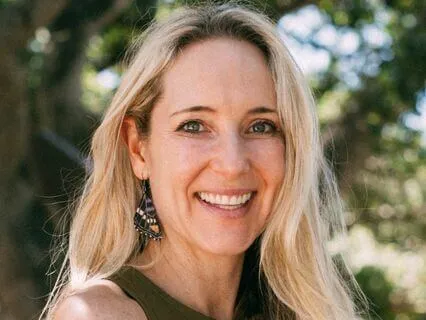
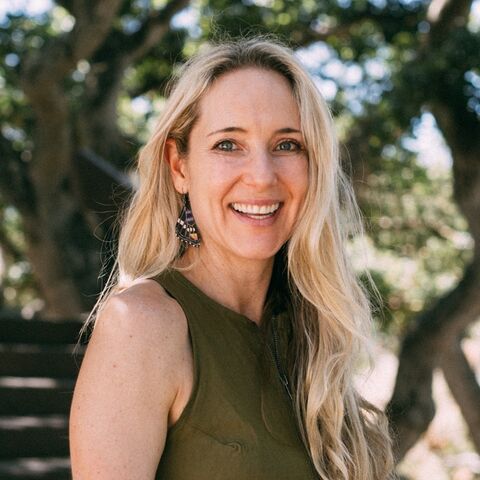
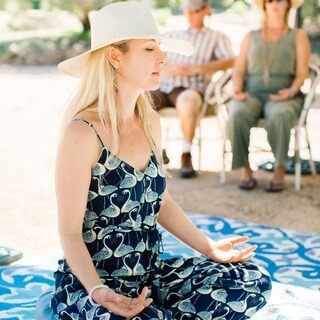
What is the Finnish art of sisu and how can you use gentle power to overcome obstacles?
That's what we're going to explore today with Dr.
Elisabeth Lahti on Your Life in Process.
Mental health and behavioral health professionals,
I hope that you will join Joseph Sirochi and Stephen Hayes and myself on Friday December 8th from 11 a.
M.
To 5 p.
M.
Pacific Time.
We're going to be offering a CE workshop on process-based therapy.
Joseph and I will be leading the workshop from 11 to 4.
We'll talk about how process-based therapy is revolutionizing mental health,
How to do network modeling.
You'll get some experiential practice and then Steve Hayes will be there for the last hour to guide us in a live question and answer session.
I hope you sign up.
The link is in the show notes.
See you there.
Hi,
I'm Dr.
Diana Hill.
I'm a clinical psychologist and this podcast is designed to help you develop more wise effort.
How to do things that are worth it towards your values,
Savor the good of your life along the way,
Do less of what's not worth it,
Less of what's burning you out.
And part of that is really harnessing your energy,
Dialing it up in places that matter to you.
And I've been interested in this concept of energy for decades.
In yoga we call it prana.
In Chinese medicine they may use the word qi.
In France they use the word elan vital.
And in Finland there's a related concept called your sisu.
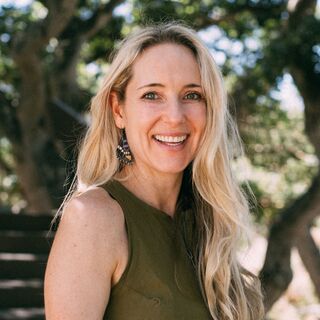
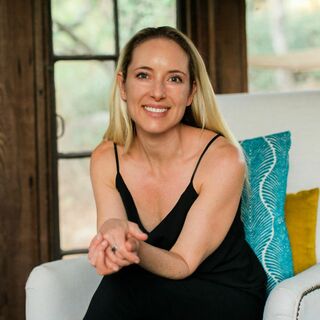
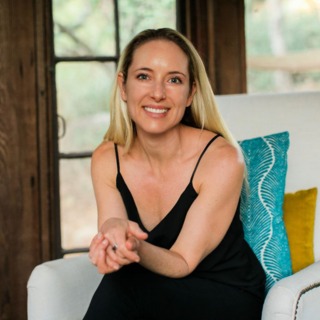
And today we're going to talk with Elisabeth Latte who is a Finnish psychologist who really laid the foundation for the research in this ancient Finnish construct of sisu,
Which is about courage and determination in the face of extreme adversity.
And in researching sisu she completed a 1,
500 mile run and bicycle ultra-endurance feat across the length of New Zealand.
We'll talk a little bit about that.
We're going to talk about what sisu is and also how she's evolved the concept to be more about gentle power,
That sometimes too much sisu isn't such a good thing.
Elisabeth's work has been featured in The New Yorker,
CNBC,
Business Insider,
Scientific American,
BBC and Forbes,
Among others.
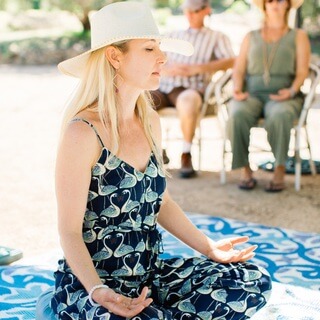
And she has a book out called Gentle Power and is the co-founder of the Positive Psychology Association in Finland.
Let's take a listen to Dr.
Elisabeth Latte on gentle power and the Finnish art of sisu.
Share with us a little bit about what sisu is.
It was a totally new term to me before I started reading your book and it has some nuances to it in terms of how you're also describing it as gentle power.
So what is sisu?
It's almost that I have to take a little breath every time when I start to answer the question.
It's to give a very simple definition.
Sisu,
You know,
Small word spelled S-I-S-U,
So appearance is very modest.
But what it carries within it is this idea that it denotes this internal fortitude,
Embodied fortitude,
Which is universal.
So it's in every single human,
Even though the concept itself is Finnish.
Sisu is extraordinary determination in the face of extreme adversity.
So it's that point that we arrive to when we come to the end or the edge of our assumed capacity to endure,
Whether it's physically or mentally.
And a lot of people resonate to this when I say,
If I give talks abroad,
And people have never heard of sisu,
But when I describe it as this dark forest that we are walking through and then we come to the edge and we're able to push through that darkest of moments.
So sisu can relate to these concepts like the dark night of the soul.
It can be more in the moment,
Whether it's taking a leap of faith into something that feels very scary for us.
It could be us going into bringing to life an idea around entrepreneurship.
It's us embarking on the journey of personal healing.
It could be us embarking on the journey of parenthood.
So all of these things that bring us to the edge of our,
I wouldn't say not just comfort zone,
But to the unknown.
I know you studied with Angela Duckworth and are familiar with grit.
In the US,
We're all about grit.
In our schools,
We're all about getting our kids to be grittier.
This concept of sisu,
How does it differ from grit?
So there's two ways how we can approach this as a psychological concept.
Grit is how Angela defines it.
It's passion and perseverance for a long-term goal.
So we use grit to embark on a goal and to put in the effort day in,
Day out over a long-term time span.
So there's a goal that we start to reach toward and grit allows us to stay the course and be there.
During that journey,
We can use maybe a marathon as a comparison because it's pretty fruitful for this.
So during the course of the marathon,
Many people face what is called the wall.
So it's an experience that I have used all the energy in my body,
The glycogen reserves,
And it literally feels as a wall that I can't push through this.
But that's the moment when we dig into or connect to these inner,
Deeper,
Somatic reserves of energy.
And then we continue pursuing that gritty endeavor.
So sisu is something that we visit within that space of grit.
But another important way to make the distinction,
Which I only realized maybe a couple of years into my own research,
Was that I was trying to force sisu into the same mold as a person would who has a background in psychology that I was looking at as a cognitive quality solely.
And what I realized later that I'm actually looking at a concept that connects to a different kind of energy circuitry almost,
That we don't have so much research yet.
And that sisu is best described as embodied fortitude,
Or embodied toughness,
As opposed to mental toughness,
As opposed to what grit represents,
Which is that it's a cognitive quality.
And of course,
Sisu has these as well.
But it is best placed into the system that allows us to understand the intelligence of the somatic wisdom in our body.
So it really,
I hope,
Can give a tool for the research that is done in that dimension and sector of human research and end to endurance and trauma recovery and human performance.
Yeah,
Embodied fortitude.
When I was reading your book and thinking about this concept of sisu,
I was thinking,
Okay,
When was the last time I experienced this?
I mean,
We all know it.
I mean,
Folks that are listening to you,
They have a knowing of,
Oh,
Yeah,
That embodied fortitude in childbirth,
Doing a athletic feat,
Or maybe something at work,
Setting a limit or boundary or quitting something or a divorce.
I mean,
These are all things that require more than just cognitive fortitude.
It's a courageous act,
But also you get sourced by an inner energy.
And this summer,
My dad got really sick,
And he was in the hospital.
And it was a time when it felt impossible.
My kids are home for the summer,
We were,
I'm still working,
I had nothing left.
And somehow during that time,
I was able,
I just had this immense source of energy to go spend time with him to be able to figure out how to make something that was impossible possible.
And I remember sitting with him when at one point in the hospital,
When the pain was getting really,
Really,
Really intense,
And him closing his eyes and just saying,
And like putting up his hand for me to just give him space to go inside and be able to work with the pain internally.
And those two moments watching my dad be able to face intense pain,
And then me be able to show up and move towards pain,
I was like,
I'm wondering if that's Sisu.
It was like a grace that came to both of us,
Not something that we were working at.
It just came to us.
Is that accurate?
Is that Sisu?
Yeah,
So it's so,
So beautifully described what he just shared there.
And to bring in the word grace.
That's one of the reasons why when I started to look into Sisu and do the research,
Which was in response to my own experience with trauma.
So I started to look for answers to the question that was keeping me up at night,
Which was how do humans overcome extreme adversity?
And who does?
Who doesn't?
What are these forces and fortitudes and powers that we tap into?
And when I was when I started to dive into Sisu,
I pretty soon realized that it's a bit of a research nightmare and a science nightmare to go into this quality because it is not easily quantified,
Or that you can always say and point to exactly where it begins.
How does it end?
It is often a felt sense of something.
To me,
It always often feels like an opening,
That it is me tapping into a resource of power that is not just trusting in this willpower here,
But it's a different kind of reserve.
And there is a kind of connection to,
One would say,
Something greater than us.
So it's us tapping into that.
And the good thing is that because Sisu doesn't tie to a religion,
So to speak,
In any ways,
It can also be a concept that can be brought into the realm of science to help maybe explain these very hard-to-explain experiences that people have on a day-to-day basis when facing adversity and overcoming very deep,
Difficult things.
You mentioned trauma.
This concept you started working on after a traumatic experience,
And you write about your experience of being in a relationship with domestic violence,
Which seems like that would be when you need Sisu to be able to get out of a situation like that.
So then connect the dots between leaving your relationship and running across New Zealand.
What happened there?
And the book is called Gentle Power,
Which is,
It's not called Sisu.
So there's some distinctions there that maybe you learned as you were on your journey to discover what does Sisu mean,
Scientifically and personally.
Yeah,
Well,
Where do I want to start?
So I do want to start from this nice thing that you noticed,
That the book is not called Sisu.
Sisu is not just what we do,
But it's how we do it.
So that's one cultural,
Very interesting part of this concept,
Is that in the Finnish narrative around this word,
It's not only about the strength we put into something,
But there is an invitation for integrity.
There is an invitation for putting our best out there.
So Sisu in relation to us and the world,
Sisu in relation to how I speak to myself and how I treat myself,
In a way that transmutes this concept into a constructive quality is what I call gentle power.
Because Sisu as a power,
It can allow us to come through very extreme things.
It can allow us to be humans in the world who actively pursue things or make change happen.
But every time when we take action,
There is a new world that's born.
And depending on what's the quality of this strength,
Whether we're able to also bring gentleness to it,
Understanding,
Bringing those contributions and practices that actually help us come into that parasympathetic state,
Will define what is really the essence of how we're using Sisu.
So we can have a world where we use Sisu as a harsh quality.
And this is something actually I found out from the first research that I did,
Which is a research paper called Embodied Fortitude.
And it's downloadable online.
It's open access,
Like all good research should be.
In that survey that I did,
Where we had over a thousand people who responded,
I was able to discern that.
So obviously not all Sisu is good,
But there was these three categories,
How when we have too much Sisu,
Or it is not balanced or rooted in some kind of a practice that allows us to make it constructive,
It can lead to hurt to the person,
To me as an individual,
Where it can lead to accidents,
It can lead to burnout.
It can lead to me really overextending myself in ways that ends up depleting me.
Secondly,
It can lead to hurt and detrimental impact to our environment.
So if I am a person who very beautifully has a lot of Sisu,
But I also have a very harsh inner narrative and I impose that on other people as well,
Say to my children,
To my coworkers,
To my family,
Expecting them to exemplify the same levels of Sisu that I am in a certain given moment,
It will start to create a sense of unsafety.
And then the third one is that too much Sisu,
It can turn into this kind of stubbornness.
So it impedes our ability to think clearly.
So as I went on this journey,
Taking all this understanding of Sisu first and foremost as a life force related quality,
And also as something that's so deep that we unearthed only in those extreme situations during that run,
Which was,
It was 1,
500 miles.
There ended up being cycling in the middle part of the run.
And it is something that I'll just,
I'll end because I want to kind of open a dialogue with it,
But I'll just say that it ended up being one of the most defining experiences of my own life,
Almost like a pilgrimage that gave me a blueprint of who I am and how do I function in those moments.
And as a result,
The biggest discovery I made was understanding this distinction between Sisu as a hard power and Sisu as something where I'm also able to soften myself and add this level or this essence of grace as you described it.
And that is gentle power,
Which allows me to go through tough experiences in a way that there's not so much repair to be done afterwards because I go through them a little bit more gently.
Yeah,
Gentle power.
So this ability to face adversity,
Whether it's chosen adversity or unchosen adversity,
With both that sort of the steadiness and the ease,
Like the persistence and the softness.
And those two often aren't put together.
We either think we're going to be gentle,
Which means maybe just not taking on the whole 50-day race across.
But we also think then we're going to be powerful,
Where I'm going to take on this race and I'm going to push through it and I'm going to have some grit.
And finding that effort and ease,
Which is for me very much like a yogic principle.
You see it in a lot of different places.
You see it in Taoism,
This balance of both coming together,
And that's where the fortitude arises.
And I love that you said you bicycled in the middle because there is something about being adaptable and flexible with gentle power.
Central to psychological flexibility is to adapt as things change,
Change with them,
Rather than just continuing to push forward.
So that's the part I'm interested in,
Is when you.
.
.
We're all impressed that you ran 30 miles a day for multiple days in a row,
And then you took a break,
But you still finished.
So tell us about that part,
The decision around taking that break and how it relates to gentle power.
Yes.
And to me,
When I look that journey now in retrospect,
The 50 days,
That exact part now that you're describing was the most important thing for me.
It's almost that the 50 days and the whole preparation existed just for that moment when I had the chance to adapt.
And so I think the best way to approach this is to bring in this idea that Sisu,
As this concept of a lived experience of gentle power,
It's always an invitation to self-leadership.
So it is to bring more awareness to how we're doing and what we're doing.
And at some point during the run,
This thing happened to me,
Which I think is very relatable to a lot of people,
That I went into this experience and excursion with a very pure intent to stay open,
Be able to remain adaptable.
But at some point,
Instead of the beat of my own drum,
My own heart,
There was this mixed beat that came from outside,
And it started to guide me.
And it was these partially imagined also expectations from outside how I should do this.
And so a very huge awakening for me was when I realized that that had happened.
And at the same point,
I realized that joy had left me,
That initial sense of what was the original cause for my mission.
Just like before we started this podcast,
You allowed me to pause and just bring the focus into what's the why we're doing this.
And at that moment,
There was a moment of clarity where I realized that it is my decision to,
And it's part of Sisu also to have the courage to make the decision so that they come from this place of our own heart.
It was day 12,
And I had been running 12 days consecutively.
We had events as well,
Where we invited the community to come and we were speaking of creating compassionate cultures because the run was around breaking the silence around domestic violence and helping to create communities where people can share when something happens.
There's less of a barrier to ask for help.
And I had this very intense dialogue with the road throughout my run because I was on the highways.
I was mostly alone.
You got to talk to somebody.
Yeah,
You got to talk to somebody.
The road is a good choice.
Oh,
Yeah.
And the psyche is never silent either.
At some point,
The road confronted me,
Which was my own psyche.
And he said,
Or she said,
It said,
You know,
Do you see that next bend over there in the far distance?
And I said,
Yeah,
Yeah,
I see it.
Then the road was silent a bit and continued to say that,
Well,
You know,
Elizabeth,
When you run there and you turn around the bend,
You're going to see another straight stretch of road and another bend.
And behind that,
There's going to be another bend.
But you will never run out of road to run by just being there.
And as I was in a lot of pain at that moment,
The next idea from the road was what it said to me was that,
Do you realize that the pain will end only when you make it end?
That it was in my decision to make that call to stop living according to that expectation that I had built in my mind,
That it's somehow a failure to adapt or to change.
Because we had made a plan for 50 days and it was a Guinness World Record attempt and all of these.
So all these structures sometimes very easily can start to dictate how we live and do this human journey.
While the call is constantly to be in touch with our own heart and have the courage to also make those decisions.
So at that point,
I realized that there was something for me to understand about me as a person.
So this is personal to me,
But maybe it relates to some other people as well.
And I realized that because of my upbringing and how much I had to be the warrior all my life and to overcome,
To heal,
That historically for me,
It had been easier to be hard on myself than to be kind and gentle.
And as I started to later then go into a deeper research into this idea,
I came to a realization how important it is to call this book Gentle Power.
Because what I want to do with it is to challenge that notion,
That strength equals toughness and it equals to follow through no matter what.
And a lot of us carry those practices because they work.
I mean,
We do have to go and push through those dark slides of the soul,
But oftentimes we do it at such horrible cost to ourselves,
To our families and on and on and on it goes.
So at some point it needs to come to a halt and come to an end.
And for me,
To be honest,
It's been one of the scariest things ever to start to be gentle on myself and accept that softness that I carry and be soft in a world where it seems to be the only wise thing to be tough.
Right.
And I don't know how many of us are going to run 30 miles multiple days in a row,
But some of our lives feel like we're running 30 miles multiple days.
Sometimes it feels like that in our life.
And to have that pause of questioning,
Why am I running?
There was a reason why I wanted to do this in the first place.
And then could I do it differently?
And my son this morning,
He woke up just kind of tired.
And sometimes it's hard to tell when you have a teenager,
If they're growing tired,
Sick,
He wasn't sniffling,
He didn't have a fever.
Is he just in a bad mood?
Does he have a science test?
And all of the above.
And so he was like,
I don't know if I want to go to school,
Mom.
And I also know some of the research on school refusal,
Which is generally good to have your kid go to school because it can turn into a pattern of school refusal.
But I could have gone into the power mode of push,
Go to school.
You have to go to school.
You have the science test today.
And what I did was instead,
You get primed by the people that you read and listen to and your voice and also my own personal practice of how I want to be as a parent.
I want to be a gentle power parent,
Gentle,
Powerful leader.
And so I said to him,
I said,
Well,
Let's do this.
Why don't you go this morning and we'll check in two times today.
We'll check in around your first break.
And and then we'll check in again at lunch.
And I'll make myself available during those times to come get you.
So that it becomes that autonomy.
It's his choice.
And also knowing that we change over the course of a day,
We may be feeling tired,
But we may have energy later.
And that and that's the 30 miles,
Right,
That we need to do those check ins.
And then we need to have choice that comes from inside of whether or not we're going to continue.
And why would we continue?
And so it can be small,
But it can be big,
I guess,
In lots of ways,
This concept of gentle power.
I also think about just leadership in terms of our countries and in how we've had so much of a model of make the distinction between force and power,
Forceful,
Powerful roles,
As opposed to gentle power in the leaders of our countries or our cities or our schools or wherever our businesses.
Such a beautiful example that you just gave there,
Like of gentle power.
And it reminds me of this line from Tao Te Ching,
Which goes,
Even though in the Eastern Taoism,
The yin and the yang,
The soft feminine principle and the masculine principle,
They're seen as complementary.
So they're never opposing or contradicting each other,
But they're complementary.
But even then,
In Tao Te Ching,
It says,
We must know the yang,
The masculine principle,
But we must abide to the yin.
So for that reason,
To help me hardwire myself to that feminine principle,
Which does not seem to be in such a good wrap in our society,
Because power seems to get the results done.
And we get this seeming sense of control when we grab the wheel and we force our way through something.
So we have evidence that it works,
But we don't consider the end results and the cost and the price of it sometimes.
So in order for me,
As someone who's had to grow in that yang environment,
To welcome a space for this more softer,
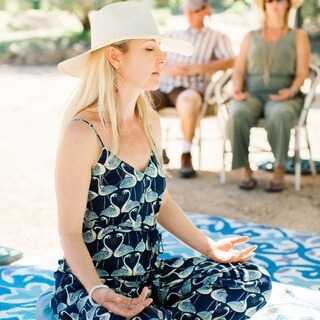
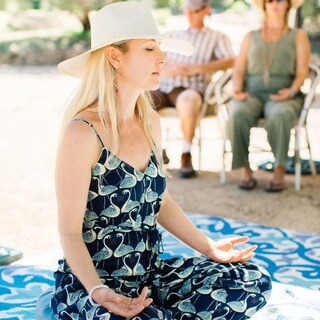
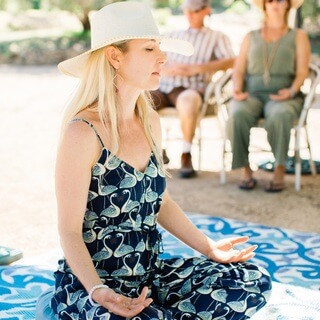
Often when I meditate,
I actually put this left hand,
Which in many traditions symbolizes the yin,
The soft principle,
I put this in the bottom and I lay the yang hand so that it's cupped by this yin.
So I'm helping myself to remember of this principle that I must know the yang,
So have the ability to push through things and get very focused and fortified,
But that it always rests inside this gentleness and this nurture and care that we need in order to really be our best.
We know that what happens when we go from that place of parasympathetic activation,
So we have access to all this beauty that is us.
And I also want to add that Alter Run is such a beautiful and fruitful metaphor for this Sisu.
And even though I,
For some reason,
It was my soul's journey that I had to go and physically do it,
But life itself is the ultramarathon.
We're all on it.
We've started the journey and we're all doing that long haul.
So whatever we can bring into it that we learn how to do it in a way that we get a little bit less blisters,
We are able to be more open to seeing the beauty around us and connect with the people who are there on the journey.
Yeah.
Well,
I love that you learned about it through running.
I've been running ever since I was eight years old.
I remember I used to live in this cul-de-sac that at the very end had a bike lane and the bike line had the miles marked out on it.
And I remember being eight.
I don't know what inspired this,
Probably because we were doing the mile at school or something like that.
And I remember going out and the very first time I ran a mile and it was such a big deal to run a mile and to come home without stopping.
It was a big deal.
And then fast forward,
I ran cross country in high school.
And what happened for me around running is that in the same way that you talked about it,
It gets kind of stolen for you,
Is that when I started running competitively and I also developed anorexia at that time,
Running no longer became this experience of something like,
Oh,
I'm kind of challenging myself and I get to go out and explore.
I mean,
It's an outdoor activity,
Explore my own mind.
It became about hitting marks that kept on going further and further out.
So one mile was no longer,
I mean,
Gosh,
That was not enough anymore.
And then it became five and then it became 10.
And then it became waking up at four in the morning to run.
And what's interesting is that for me,
My recovery hasn't been about I'm going to stop running.
It was about reclaiming the run for myself.
I'm going to reclaim how I want to run.
And now I'm in my 40s and running.
So talk about,
You need to be gentle.
Can't do it every day and nor would I want to,
But it's also opened the door to when I go travel,
It's my favorite thing to do is to go run and explore cities on foot.
And,
Or it's my favorite thing to do in the morning.
I call a friend and that bringing,
You know,
You talked about parasympathetic and one of the newer things that I've been learning from polyvagal theory.
And this was just from a conversation I had with Stephen Porges is how we can actually bring the vagal break to the sympathetic.
So play is an example of that.
Play is you are sympathetic.
You are moving,
You are active,
But you're safe in your activity.
You're playful.
And then we can also bring the safeness to the,
The,
The dorsal.
Like when,
When you are in a Shavasana and you're completely relaxed,
You're getting a massage.
You're,
You're in a state of immobility,
But you're safe.
And that to me was a,
Is an interesting concept that I've been exploring because the way that I run now is I run in a way that's safe.
I run in a way that's gentle.
I call friends.
I listen to music.
My favorite thing to do while running is chanting.
If I'm doing a long run,
I'll just put my favorite chant and it gets me into a space that's not about pushing through to get to the next mile,
But it's really,
It's quite meditative and enjoyable.
And I've reclaimed it.
Maybe it's gentle power or harnessing my Sisu differently.
Cause I've definitely seen the dark side.
I think anyone that's had an addiction has seen the dark side of Sisu.
Yes.
Whether it's addiction to work or addiction to whatever.
Yeah.
There's a very important point actually that comes through with this,
What you were sharing.
When I speak of gentleness,
There's this almost a little bit of a fear that are we being tricked now to something that we must all come very squishy and not achieve our goals.
That there's something to be very afraid of with this yin feminine principle.
But the invitation is really to understand that the point is not to stop putting high goals and achieving as we need us in this world to really step up and be participants and have the hard conversations.
But exactly what you are saying,
That how do we find that safety even in the middle of those hard things that we are doing?
And what you are describing is really the beautiful,
The high expression,
The higher octave expression of Sisu.
When we bring it from not just what we are doing,
But how we do what we do.
And if we do it with that higher octave version,
It actually helps contribute to making that reality that is more safe and yet more,
I would say more powerful for all of us.
The gentleness makes us more powerful.
I just think about that with yoga.
When you are in a pose and if you're tensing up around that pose,
You're using a lot of energy that you're putting into the tension.
And if you can release a little bit,
Then you can hold the pose for longer.
Another thing I've been doing is jump roping.
My sister-in-law taught me about jump.
I haven't done jump roping since I was a kid,
But she taught me about jump roping.
And so I started out and I could barely do 10,
15,
20 without getting out of breath,
But she showed me jump rope with ease.
And now I can jump rope for a long time because I'm relaxed in the jump roping.
So there's something about this combination.
We can actually achieve our goals more effectively when we practice this gentle power.
And I think physical ways are a great way to try it out.
How would you encourage us to build this?
What are the practices that we could do to build our gentle power in our Sisu?
So I want to jump on a little bit on the jump rope example that you gave.
So I see Sisu,
It's a subset of life force more generally.
So the question is really what contracts it?
What closes off the flow of life force in us?
And that's why when we experiment with these things that bring more play,
Like when I speak of Sisu,
Which is so unexpected to some people,
I also like to speak of play,
To speak of joy,
To speak of these more relaxing practices that we do.
And especially in Finland,
It's a bit unexpected because we're really used to associating Sisu to this,
You know,
That we tense,
Like literally we close the fist and we push through.
But the invitation I feel is really for us as a society and as humans to start reframing what does power look like and to have the dialogues and the conversations with those who we need to have it so that we understand that whatever fears we have for the gentle and for the softness.
I would say maybe the best way to start diving into one's Sisu,
Number one thing is to become aware that we have this life force,
This quality within us,
That can be accessed when we need it.
So when I speak of Sisu abroad and in different contexts,
What I often notice is that people have a hard time realizing that they have so much strength.
So the problem so much isn't that we don't have Sisu,
But we simply forget that we have this power resource within.
So sometimes I guide people in the very beginning to a very simple exercise,
Which I call the stories of Sisu.
So it can be done as a journaling,
Where you take a little bit of a peaceful moment and then write down events from life where you felt that you had come to a point where it seemed like there's no way to go further.
You had consumed your mental and physical capacities,
But yet you came out from the other side.
So simply writing down these simple things,
Which is one line maybe,
Helps us to start to remember ourselves as these beings who have this extra strength.
Like for me in New Zealand,
I still keep drawing from that experience of how on some days I ran 30 miles and I took the shower and I was able to go and do the event.
We did it for a couple of hours.
I went to sleep.
I felt like there is absolutely no way I can get up in the morning and do the same again.
And yet I did fall asleep.
Something happens in that reparative state and in the morning I was able to get up.
And just to have that physical experience that I know now that I am able to expand beyond what I thought I was capable of,
It will stay with me forever.
And so simply writing down these moments,
The next step is to write down what helped,
Like what was in that moment something that allowed you to come through.
For me it was restoration,
Allowing my body to repair and sleep.
It was the lady I had with me who was my crew queen as I called her.
So there was that human connection that helped me.
And so to write down almost like a little manual of Sisu for myself,
So that when these tough times come,
They don't come so unexpected,
That we have something to go to and to draw from in those moments.
Looking at very small moments in daily life where we'd rather do the easy thing and then maybe opting for something that allows us to stretch a little bit.
I use the word which is from this Dr.
Ruddy Ferguson,
Which is to get constructively uncomfortable.
So this is very important.
Constructively uncomfortable is enough.
No one needs to sign up for a marathon or go put a crazy goal.
It happened to be part of my story.
But every time when we choose between that moment,
We teach our brain and mind that it's not so scary to lean into discomfort.
And then when we do that many enough times,
When life gives us an actual challenge,
We already have a pattern in our mind that I am someone and I am a person who can choose a little bit more difficult route and I have what it takes.
So it's taking those very tiny,
Small daily moments.
For example,
For me,
It's sometimes when I come home and there's an elevator right in front of where I would go to my house,
My home.
So do I take the stairs,
Which is next to it,
Or the elevator?
And this in itself will definitely not grow our Sisu.
I mean,
Sisu is for extreme moments.
But it does train a mindset where I'm more prepared to go into that difficult thing when it actually comes.
There's a trust that we can build within our own selves in pushing ourselves,
But not pushing ourselves to the point of destruction.
And that's the fine line of encouraging ourselves to move to the edge of the comfort zone or the edge of I'm not sure if I can do this,
But I'm going to try and I'll be gentle to myself as I go through it.
Whatever happens,
You don't always have to do the harder thing,
Which is my default.
It's always just if it's harder,
It's better.
And that is not always the case.
So that's why I love this concept of gentle power and figuring that out for yourself,
Starting to journal about these Sisu stories and then writing down what were the qualities that you already have inside of you that showed up.
I love that we're not creating new stuff.
It's like you already have it in there.
And then how could you take maybe that into the small moments of could be you're having an urge or a craving,
Or you're about to do something impulsive,
Or you're about to run away from something that is scary,
A difficult conversation.
And how could you use this gentle power to help you in those little small moments of your day to build it and grow it so that when the big stuff hits,
Which it will guaranteed,
You've built that embodied fortitude that you described this as,
Which is lovely.
Thank you so much for spending this time.
I wish I could see you in person,
But maybe I'll come to Finland someday and we could go for a run.
Much shorter run than what you're used to.
I only do short runs nowadays.
Only short.
Yeah.
We set an intention at the beginning.
I am curious,
What was your intention?
And do you feel like you were able to stay true to it through this conversation?
Yeah.
My intention was simply to be a human to humans,
To really just be present as who I am.
So that was the intention I put there,
That there's no need for that mindset of performance that so easily comes because it's so hardwired.
So it's just the return to this human expression that seems to be the magic.
Wonderful.
Well,
Thank you.
And for those that want to pick up Gentle Power,
I just saw it in our local bookshop.
I was down at Paradise Found,
Which is in Santa Barbara,
And it was displayed there.
And I was like,
Oh,
I'm interviewing her.
How cool.
So it's available in your local bookshop.
It's available online.
I highly recommend it.
You have a great interview with Tammy Simon as well from Sounds True.
And it's just been an honor and delight to spend this hour with you.
Thank you for teaching us about Sisu and about Gentle Power and demonstrating it so beautifully in your presence.
Beautiful.
Thank you,
Diana.
And thank you for being an example of Gentle Power.
Really,
I felt it,
Even though we're not present,
But it goes across the airwaves even.
Now that we have a better understanding of what Sisu is,
Here's some ways in which you can explore Gentle Power and Sisu this week.
First,
What is an example of a Sisu story in your life?
When was a time when it seemed like you hit a wall,
But somehow you came out the other side?
And what helped?
It's important to reflect on this,
Because that inner resource,
That Sisu within you,
You're probably going to need to draw upon again.
And if you remember that you have it inside of you and what helped,
It'll be a little bit easier to access it.
Second,
Choose the more difficult route on purpose to grow your Sisu,
To grow your stamina.
It's good to keep on stretching ourselves,
Make ourselves a little bit uncomfortable.
You can do it physically,
You can do it emotionally,
You can do it cognitively.
Continue to challenge yourself.
And the more that you challenge yourself and you choose the difficult route,
The stronger you become when the difficult route chooses you.
And then number three,
Know the yang,
Abide by the yin.
What that means is even as you are building up that energy,
That fortitude,
Choosing the difficult route,
Hold it all with gentleness.
Hold it all with yin.
How can you dial up a little bit more yin in your life so that your yang can shine strong?
Alrighty,
Those are your practices for this week.
Remember,
You can download them if you are a More Life in Process member.
And thank you to all of you that support the show.
It makes a big difference.
See you next week.
Thank you so much for listening to this episode of Your Life in Process.
When you enter Your Life in Process,
When you become psychologically flexible,
You become free.
Please join me as a member at yourlifeinprocess.
Com.
And if you like this episode or think it would be helpful to somebody,
Please leave a review over at podchaser.
Com or call me at 805-457-2776.
Email me at podcast at yourlifeinprocess.
Com.
I want to thank my team,
Craig,
Ashley Hyatt,
Yoko Nguyen,
And thank you to Ben Gold at Bell and Branch for his original music.
This podcast is for informational and entertainment purposes only,
And it's not meant to be a substitute for mental health treatments.