Namaste and a very warm welcome to all of you in this daily live meditation session with me,
Dehansi.
We're going through yoga sutras of Patanjali,
Ashtanga yoga,
The eight limbs of yoga,
Which creates a discipline to integrate yoga into our life,
To sort out different aspects of our life,
Different dimensions of our life,
Using the wisdom of yoga,
Using the science of yoga.
We have been extensively going into discussing,
Practicing different aspects of the first two pillars,
The yama and the niyama,
The principles and the rules.
We have gone through each one of them extensively.
And today I would like to discuss another very interesting topic,
Another pillar of this Ashtanga yoga,
The third pillar of this Ashtanga yoga,
Asana.
As we know in the Western part of the world postures,
This has been made very popular in different parts of the world.
Right now,
If you see 10 years ago,
15 years ago,
Yoga was a taboo.
15 years ago,
You could not have told anybody that you're doing yoga,
That you're doing meditation.
But now when you see all across the world,
In every 100 meters,
Every 2 kilometers,
Every 5 kilometers,
There's somebody who is teaching yoga,
There's somebody who is practicing yoga,
And the benefits of yoga can be experienced,
Can be seen in people's fitness,
In people's mental health and people's general well-being.
It's well accepted and all over the place yoga is being practiced.
But what is being practiced is only one tiny bit of yoga,
Which is the asana.
It is one of the most important bits as well,
But at the same time,
One bit of the entire landscape of yoga,
Of the entire spectrum of what yoga has to offer.
Today,
We're going to exactly talk about that which is asana.
What is asana?
What is a posture?
Which posture is good for you in meditation?
What is the best posture of meditation?
How to achieve a good posture?
Is there a rule to a good posture or is there no rule to a good posture?
Can one achieve something by just simply having the right posture?
All these questions must be answered in one's own experience,
In one's own wisdom through contemplating and understanding on the yoga sutra of Patanjali about asana,
What is an asana.
So,
Let us hear what Patanjali has to say.
He says,
Sthira sukhamasana,
Three words in which he covers what is an asana.
He says,
Sthira sukhamasana,
Sthira is steady,
Stable.
Sukhamas,
Comfortable,
Easy,
Happy,
Pleasant.
Asana the posture,
The presence,
Sitting without interruption.
So,
If you put them together,
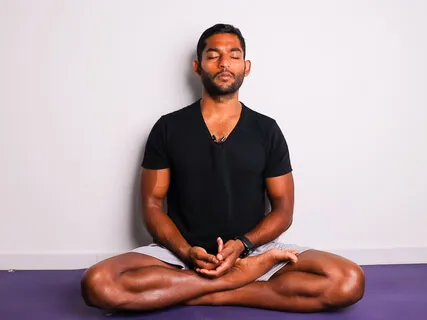
Asana is a steady,
Comfortable posture.
Asana is a steady,
Comfortable posture.
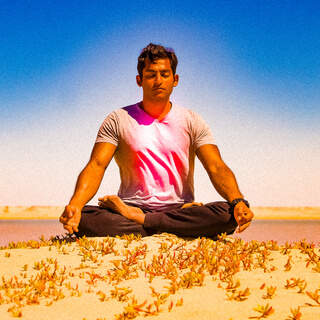
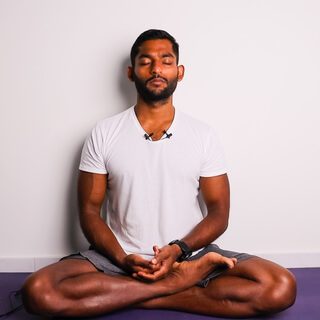
Any posture that is steady and comfortable is an asana.
So many people ask me why do I need to sit in the lotus posture,
Why cannot they lay down on the ground for meditation or take any other posture and I always tell them,
First of all,
Find any posture that is comfortable for you because an asana,
A posture is that steady and comfortable state which allows you to go beyond the body.
If you are constantly engaged with the body throughout your meditation,
You will only be just addressing the body,
Your awareness will not have any chance to rise above the body to brighten itself,
To go deep within yourself,
To understand your mind,
To understand what is beyond the mind,
To experience what is beyond the mind.
So it is a very fundamental requirement that the posture that you take,
The asana that you take for meditation is comfortable and steady and it can be any posture.
Interestingly,
If I give you that free option and if you yourself give yourself that free option to say let me choose one posture which is steady and comfortable in which I can sit for 10 minutes,
15 minutes,
20 minutes,
30 minutes,
1 hour,
2 hours in one posture,
Find out,
Experiment and find out what that posture is for yourself.
And you will be amazed that no matter which posture you take,
No matter which chair you use,
No matter which couch you use,
No matter whatever aids of comfort you use,
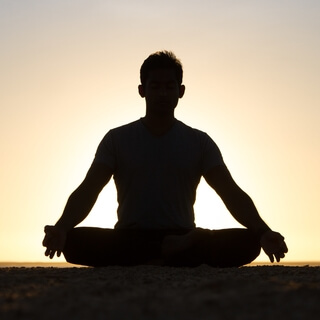
There is no other posture than actually this lotus posture,
The siddha asana in which you can actually stay steady and comfortable beyond a certain amount of time.
So if you are a beginner of meditation,
If your practice is just right now 10 minutes,
15 minutes,
30 minutes,
Then my suggestion is find yourself a posture where you can feel steady.
It doesn't have to follow any rule,
It doesn't have to follow any strict guidelines,
Whatever is comfortable for you sitting on the couch,
Sitting on the chair,
Sitting on the floor with some mat,
With some cushion.
But as your practice evolves,
As you go beyond the 30 minute mark,
The 40 minute,
The 50 minute,
60 minutes and so on,
Then you will have to slowly find yourself building a posture,
Practicing a posture in which you can be steady and comfortable for longer than that amount of time and that is only this lotus posture,
The siddha asana.
And in this cross-legged posture,
You can sit as long as you want,
Once it is mastered,
Once it is practiced.
Why it is important?
This steadiness,
This stillness,
Because the steadiness of the body leads to the steadiness of the mind and that steadiness of the mind leads to awareness,
Expanding beyond the body,
Beyond the mind.
So without the body being stable,
Without the mind being calm and still,
There is no progress in meditation.
That is why this fundamental aspect of meditation which is postures is very important and must be practiced,
Must be mastered.
And further on,
Patanjali says,
Prayatna shyathilya anatha sampaththi,
By lessening the natural tendency for restlessness,
By practicing relaxation,
By meditating on the infinite,
Posture is mastered.
So how do you come about mastering this posture,
Mastering whichever posture that you are aiming at to put yourself at ease,
To put yourself at steadiness,
At stillness?
Patanjali says,
By lessening the natural tendency for restlessness.
So this is the work that you have to do in meditation,
That effort that you have to make to reach the effortlessness and by meditating on the infinite,
Posture is mastered.
Here he gives one technique.
He says,
While you are practicing anasana,
While you are practicing a particular posture,
If your mind is not allowing you to maintain that steady state,
If your mind is too much crazy,
Too much all over the place,
Disturbing,
Distorting,
Making you restless,
Meditate upon the infinite.
Meditate upon the infinite,
That infinite could be,
You can meditate upon the blue sky,
You can meditate upon the cosmos,
You can meditate on the infinite nature of your consciousness.
The idea here is,
The technique here is that you don't let the mind disturb your stillness by letting it expand into the infinite,
By letting it meditate over the infinite where it has no grip.
When the mind has no grip on the infinite,
It loses its energy,
It loses its disturbance for you to slowly,
Naturally come back to the stillness,
To the steadiness and the relaxation which allows you to then be in meditation,
Be in silence,
Be in awareness further.
In the last sutra about asana,
Where Patanjali says,
Tat dvandha anabigart,
Therefore one is not disturbed by the dualities.
Once you attain to stillness,
Once you attain to asana,
A posture in which there is no movement,
There is no duality as well.
The duality of this and that,
The duality of right and wrong,
The duality of any kind happens with the movement.
When the pendulum is moving,
It has those extremes,
It has the duality,
It has the right,
It has the left.
And it keeps on moving between that right and left because there is movement,
So there is duality right,
There is duality left,
But when there is stillness,
When there is steadiness,
When there is absolutely no movement,
In that state there is no duality.
In that state is advaita,
In that state you are out of all patterns,
You are out of not only the duality,
You are out of the body,
You are out of the mind,
You are free from the body,
You are free from the mind.
So aim for the stillness,
Aim for that posture,
Aim for asana as the fundamental,
As the foundation of your meditation practice.
With that,
Let us take these three sutras on asana into practice,
Into our silence,
Into our awareness,
By in today's meditation focusing mainly on the stillness of your body.
Your effort has to be on the stillness of the body and everything else happens along with it on its own,
The stillness of the mind,
The stillness of your being,
The stillness of all your energies will happen automatically,
All you have to do is,
All you have to make an effort is towards your body,
Towards the stillness of your body.
And if a technique is needed,
If your mind is completely distracted and you must do something about it,
Meditate on the infinite.
I will give you impulses on both,
On the steadiness of the body and the infinite for the mind as we sit in meditation for the next minutes.
Please close your eyes.
Decide on a posture that you will take,
That you will commit to remaining still for the next 15 minutes.
As this stillness,
Steadiness grows in your body,
You may have to make finer modifications in your body posture.
That is okay.
Everything that moves towards stillness and steadiness in your body posture is okay.
All other urges,
All other restlessnesses,
All other sensations must be let go and focusing on stillness of the body.
One more.
With every exhalation,
Let your body rest.
At its own weight,
In finding its stillness,
In allowing it to settle.
Observe a balance.
Maintain a balance.
Find that balance between body settling and body rising.
Allowing the body to find its balance between expanding and contracting.
Allowing the body to find its balance between expanding and contracting.
Body balanced between the right and the left,
Between the front and the back.
Allow your body to find this balance,
This effortless stability.
This steadiness.
Allowing your body to find this balance between the right and the back.
No effort needed.
Every alertness letting the body find its steadiness.
Allowing your mind on the infinite,
On the infinite empty space all around you.
Inside you.
Outside you.
Your mental awareness on the infinite space,
Inside and outside,
Without any boundaries.
While your body in a steady,
Still,
Is asana.
Allowing your body to find this balance between the right and the back.
No pain,
No pleasure in the body.
Every stillness,
Lightness,
Alertness in the mind,
In the infinite.
Allowing your body to find this balance between the right and the back.
The stillness of the body comes the stillness of your breath.
The stillness of your mind,
Of your being,
Of all your energies.
In a sense of absolute let go,
Without any effort.
In ease,
Silence,
Bliss.
Maintaining this natural stillness,
Very gently and slowly,
You may open your eyes with me.
Still remaining aware of the asana that you are in.
And taking this physical,
Mental,
Emotional stillness,
Stability,
Wellness to your daily life.
Please pass on this message of yoga,
Meditation and asana to your friends and family.
Thank you very much.
Namaste.