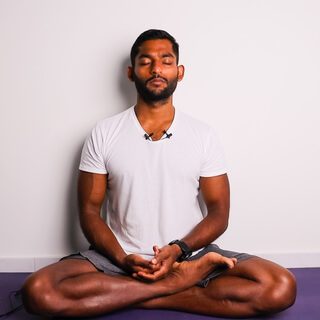
Namaste and a very warm welcome to all of you in this daily live meditation session with me,
Dhyansa.
We're going through Yoga Sutras of Patanjali.
20 years,
30 years,
40 years,
How much time and energy we put in developing a skill,
In training one aspect of our life which allows us to earn our right to live in society,
To function in this machinery of economics,
Of society and this and that.
So much training,
So much skill development,
So much energy and effort that goes into building that one aspect of life and we,
For everything else,
We let that on howsoever it is in our being,
For all other aspects of life,
For love,
Compassion,
Relationships,
Understanding oneself,
What we want,
What we don't want,
How to be with others,
How to be with oneself,
What is,
Why are we here,
All the rest is left just accidental in life.
If you have experiences in life which teach you something along the way,
Then you attain that knowledge,
Then you attain that wisdom.
Otherwise the only training,
The only education,
The only skill that you develop is to somehow survive,
Somehow make some money,
Serve something in society so that the society is functioning,
So that the structure that you are in is functioning.
It is never meant for you,
It is meant for the structure,
It is meant for the organization,
But not for you and for you yourself,
Where is the education,
Where is the training?
That is where yoga meditation comes in.
Yoga meditation is not a training,
A teaching of some religion,
Of some concept,
Of a belief system or a school of thought.
It is a way in which you direct your awareness,
Your energies to learn from your own self,
Because yoga meditation and all these ancient wisdoms are based on the foundation that you already know what you are supposed to know.
But it needs to be manifested,
It needs to come out,
That knowledge,
That wisdom has to unfold from within to without.
And that process was supposed to be natural,
But are we living a natural life?
Ask yourself.
And the answer is no,
We are living such an artificial life that that unfoldment is left accidental and that accidental is only very few moments of life where we learn about oneself,
Where we really go through a teaching,
A lesson about oneself.
But yoga and meditation are a systematic,
A structured learning training so that you start unfolding what you already know.
The wisdom that is there within you starts to rise up,
Starts to rise and shine,
Starts to gain energy and from within to without starts expressing in your life.
So it is independent of any religion,
It is independent of any belief system,
It is independent of any lifestyle that you have.
Whosoever you are,
A businessman,
A musician,
Any artist,
A doctor,
A servant,
It does not matter,
The king,
The servant,
From all sorts of walks of life,
Whatever you carry within you must come out from within to without and that is where yoga and meditation enables that process,
Enables that unfoldment.
We are going through Yoga Sutras of Patanjali where in Ashtanga Yoga,
Patanjali is setting down values and rules and initial foundations so that the practice can be built on top.
And today we are going through the last two Niyamas.
Niyamas means rules or the courses of life that you have to set for yourself.
The first one is Svadhyayat,
Svadhyayat,
Ishta Devata,
Samprayoga.
By self-study comes communion with the divine.
Let me repeat,
By self-study comes communion with the divine.
So here Patanjali emphasizes that the self-study must become a rule in your life,
Just like you are studying for a particular skill,
For a particular training,
For 5 years,
10 years,
20 years,
30 years.
Self-study has to accompany all throughout your life.
This self-study is an endless unfoldment that you must carry as a rule in your life.
If you have dropped self-study,
Then you have stopped growing,
Then the unfoldment has stopped and you will feel no matter where you are in life,
No matter what you have achieved in life,
You will feel stagnant.
The smell of stagnation will make your life feel that there is no joy,
There is no peace,
There is no taste,
There is no love and you would want to escape to something else.
So keep growing,
Keep learning about yourself.
That is the message of Patanjali in the sutra.
And he says,
By this self-study comes the communion with the divine.
We can talk about the divine,
But let us first of all understand what is this self-study,
How to do this self-study.
There could be three different levels of this self-study.
One first level is intellectual introspection.
This is where you start to read what other people have to say.
You start to introspect different aspects of life.
When you are in situations,
You are in pain,
You are in anger,
You are in any kind of situation,
Emotional situation or any kind of other experience of life.
When you don't know how to go by that experience,
How to conduct yourself in that experience,
That learning can come from other people's experience,
From learning from the books,
Learning from the introspection.
So this intellectual introspection,
On the level of the mind,
On the level of the thought that you start understanding the situation,
You start understanding the experience,
You start analyzing different facets of that experience.
This is where also psychology comes in,
The modern psychology,
The psychotherapy,
All these sciences,
All these dimensions of sciences are based on the intellectual introspection,
On the intellectual reflection of the mind,
Of the thought in play,
In understanding the experience,
In understanding the problem,
The issue and moving towards the solution.
For the basics,
For the very first layer of self-study,
This is good to start with.
But if you just stop there,
If you just go by what is written in the books,
If you just go by only thinking,
You will see that thinking is also,
It has limitations.
It is important in actual situations when everything is all right,
You can think about this,
You can think about that,
You can always plan next time when the anger arises,
I will do this,
I will do that.
Next time when I'm in this situation,
I will do this,
I will do that,
Do that because it is written here,
It is written there,
It sounds logical that I should be calm and not angry.
But when the anger arises,
When the pain arises,
When the fear arises,
How can you just remain intellectual about that?
It falls apart,
It fails,
That is why the psychotherapy,
The psychological approach to the intellectual approach to solving these mental problems is somewhat inefficient,
It helps,
But in the moment,
In that very moment where the energies are in a certain place,
You cannot address them just by intellectual thought.
So the first layer is yes,
Introspection and yoga offers that introspection,
Not just with the teachings that Patanjali is bringing,
But allowing you to think as well,
Allowing your mind to reflect as well as we go through these sutras,
As simple or as absurd or as fancy,
They may sound,
They may show you the divine,
All it is expected out of you is first of all your intellect,
Your mind to start introspecting about them and reflecting them in your own life.
The second is self-awareness or in some schools of thought it is called as self-remembering.
Gurjeev,
He used to call it as self-remembering,
But it is a fancy way of saying self-awareness.
In a moment,
In a situation,
Not only intellectually you are knowing about the subject matter,
What to do,
You have a plan for that,
But you are very much there in that moment,
You are self-aware,
You are reflective of what is happening,
Not judging.
Introspection is the judgment part.
So you have to move from introspection to self-awareness to go even deeper.
And when you are in self-awareness,
That means that you are just simply observing the situation,
You are going through anger,
You are going through fear,
You are going through pain,
You don't try to change that situation.
And that is the beauty of self-awareness,
That is the potency of self-awareness that simply by becoming aware,
By raising your awareness in that moment,
By raising your presence in that moment of what is happening,
Not judgment but awareness.
Let whatever happens after awareness,
Let that process happen automatically within your energies,
You don't have to even drive that process.
All you have to do is be 100% aware of that moment.
And the third level of self-study,
When you have enough introspection,
When you have self-awareness established,
Then even the self slowly starts to disappear and then what is left is pure awareness.
The third step which can be called as witnessing,
That there is witnessing 24-7 with you all throughout your life.
And this witnessing is something once established,
It never goes away.
Introspection,
You may think today and tomorrow that introspection fades away,
That self-awareness,
Today is strong,
Tomorrow is weak,
But once that self-awareness turns into witnessing,
Once you are so established in that awareness that there is no self anymore,
There is only witnessing,
There is only awareness all throughout the times,
That is a permanent establishment.
In that permanent establishment of knowledge,
There is always self-study,
There is always knowledge of oneself and that allows the communion to the divine,
Which means your consciousness has fully unfolded your full potential.
Your full potential is your divinity.
There is nothing other than that which can be called as divine.
There is no other layer of consciousness hanging in somewhere that you will reach.
You will reach to your true potential.
All the petals in your lotus have opened,
There is no more unfoldment left,
There is only pure consciousness to experience.
And there is one related last niyama which I would like to very briefly talk about,
Is Surrender to God,
Samadhi is attained.
It is related because the surrendering to God,
Meaning once the whole consciousness has unfolded and all along the way,
You need surrender to what is happening.
In that self-awareness,
In that non-judgmental state of the experience,
You have to also bring in surrender.
If you start taking intellectual control,
If your mind starts coming into the way,
That process is broken.
So you must go through surrender and if you surrender to the whole of this existence,
The flow of this existence,
That you can call as surrender to God and according to Patanjali,
Samadhi is attained.
So in the states of meditation,
You would say Samadhi is attained and in the real life,
In our worldly life,
You would say Samadhan is attained,
Meaning the solution,
The solution that you are looking for of your problems is attained.
With that,
Let us internalize these two niyamas,
This self-study by introspection,
Self-awareness and witnessing and surrendering to the awareness,
To the divine,
To this whole existence all along the way in the next minutes of our meditation.
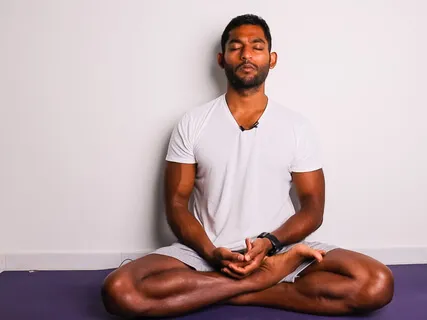
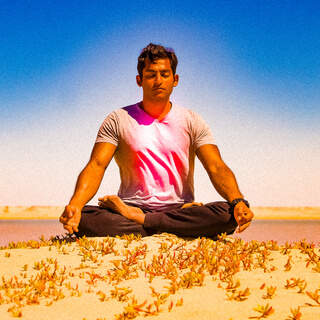
Please close your eyes.
Make sure that your posture is upright and comfortable.
Imagine your breath is flowing in and out naturally.
Take a couple of deep breaths if you want to restore your natural breath.
And through this natural breathing,
Allowing your body to settle,
Allowing your mind to breathe,
Allowing your mind to breathe,
Allowing your mind to breathe,
Allowing your mind to turn your awareness inwards towards your mind.
See that this turning inwards is first of all supported by your mind,
By your thought.
You think about turning inwards.
That is the level of mind.
Use the thought to turn inwards,
For the awareness to turn towards yourself.
All your thought energy,
All your mind to help you to become aware of your mind,
To become aware of yourself.
The thought about your body,
The thought about your mind,
The thought about yourself.
All your thoughts,
All your mind to help you to become aware of your mind,
To become aware of yourself.
Use the thought and slowly move away from the thought to self-awareness,
To becoming aware of oneself without the thought.
The self directing the awareness.
The self holding the awareness.
The self experiencing the awareness.
That will return to the thought.
.
The thought energy pointing inwards making you more aware and then yourself directing the energy towards your inner space the awareness of your inner space.
.
And slowly as your awareness settles,
A silence arises in that silence.
Let go of the self,
Let go of the thought and allow just the awareness to remain.
.
No object in awareness,
No subject in awareness,
Just awareness.
.
.
.
.
.
.