Hello,
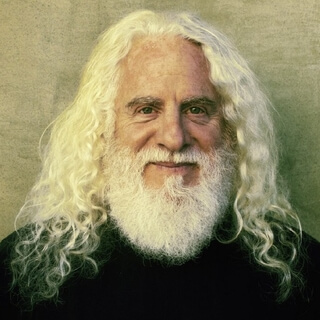
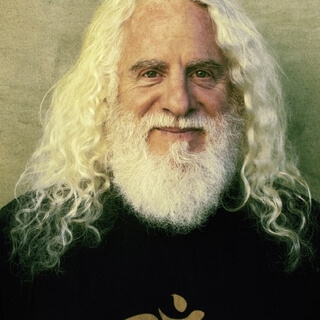
This is davidji and welcome to today's meditation.
Let's get comfortable and let's settle in as we immerse into a yoga meditation.
The Yoga Sutras of Patanjali are 196 sutras that constitute the foundational text of yoga.
Patanjali divided his yoga sutras into four chapters known as paras and they contain the 196 aphorisms.
The first paras,
The first chapter is samadhi paras.
Samadhi refers to a blissful state where the yogi is absorbed into the oneness of existence.
Samadhi is the main technique that yogis learn by which to dive into the depths of the mind to achieve that oneness.
It's meditation.
Patanjali describes yoga in this chapter and then the nature and the means to attaining samadhi and this is the chapter that contains the classic line yoga citta vritti naroda.
Yoga,
Union,
Oneness is the progressive quieting of the fluctuations of the mind.
The second chapter is the sadhana para.
Sadhana is the Sanskrit word for practice.
That's our daily practice.
Patanjali expounds on ashtanga,
The eight limbs and together they constitute raj yoga.
The eight limbs are the yamas,
Social codes,
The niyamas,
Personal codes,
Asana,
The physical practice,
The postures,
Pranayama,
Breathing techniques,
Pratyahara,
Withdrawal of the senses from their external objects,
Dharana,
Concentration or focus for the purposes of meditation,
Dhyana which is that steadfast meditation and samadhi,
Oneness with the object.
In samadhi there is no distinction between the active meditation and the object of meditation.
The easiest way for us to integrate the eight limbs of yoga into our life is to live them and as the Buddha said,
All that we are arises with our thoughts.
With our thoughts we create the world.
If we can plant subtle intentions,
Sankalpa,
At the level of the soul,
Then they will continue to flow through us in every waking,
Dreaming and sleeping state.
And so let's first invite the intentions of the yamas into our heart.
The yamas are social codes,
Essentially how enlightened beings should move through the earth with five basic personal commitments to the world.
One,
To be non-violent,
Ahimsa,
To have no violence in our thoughts,
Our words and our actions with others and this sweet mother earth.
Second,
Satya,
Benevolent truth,
The absence of falsehood,
To align ourselves with the divine truth,
The universal truth and flow through each day,
Open,
Vulnerable,
Truthful.
The third,
Asteya,
Non-stealing,
Not acquiring what isn't yours.
This is our opportunity to dig deep,
Find our creative space and create what we desire because the universe is infinite and there's plenty for all of us.
The fourth,
Brahmacharya,
Originally defined as celibacy,
Abstinence,
But more appropriate in 2013 is having an awareness,
A conscious choice-making in all of our relationships.
Our intimate relationships,
Our casual relationships,
Our distant relationships.
To not take any of them for granted and to be fully present and recognize the consequences of all those interactions.
And five,
Apari graha,
Non-coveting,
The absence of greed,
Not desiring what others have but truly appreciating and having gratitude for all that we have.
And if we can walk through the world with ahimsa,
Satya,
Asteya,
Brahmacharya and apari graha flowing through us,
Then when we live each day with greater grace and greater ease.
So let's gently close our eyes and let's allow the five yamas,
Non-violence,
Truth,
Non-stealing,
Conscious choice-making and non-coveting to flow through us.
Non-violence,
Truth,
Non-stealing,
Conscious choice-making and non-coveting.
And just float right now and allow them to merge into you with each breath that you take.
Feel a yama surge into your heart and merge with you.
Let's begin.
And now let's invite ahimsa,
Non-violence,
Into our heart.
Take a long,
Slow,
Deep breath in and feel non-violence fill your heart.
Let's invite satya,
Benevolent truth,
The absence of falsehood into our heart with a long,
Slow,
Deep breath in.
And feel it settle in as you exhale.
Let's invite asteya,
Non-stealing,
Into our heart,
Long,
Slow,
Deep breath.
And gently let that go.
Invite brahmacharya,
Conscious choice-making,
In all of your relationships into our heart.
Feel it weave itself into your third eye as you exhale.
Your asana chakra,
Your conscious choice-maker.
And now let's invite apare graha,
Non-coveting,
Absence of greed,
Trust that the universe is infinite and that there's always enough for you.
Long,
Slow,
Deep breath in and let them all go.
They've planted like seeds in the fertile soil of your heart and filtering throughout your body,
Through every cell.
And now let's take it deeper and we'll use the mantra ahimsa satya.
Ahimsa satya.
And now let's silently repeat the mantra ahimsa satya to ourselves.
When you notice you've drifted away to thoughts or sounds or physical sensations,
Ever so gently drift back to the mantra.
I'll watch the time and when you hear me ring the chime,
Sit gently with your eyes closed.
So let's begin.
Ahimsa satya.
Sit gently with your eyes closed.
And let the stillness,
The calmness,
The stillness and silence settle in.
And now let's seal the planting of these seeds of truth and non-violence at the core of our being.
Celebrate that by chanting the hymn of the universe,
Aum.
First let's take a long,
Slow,
Deep breath in.
And gently let that go.
Let's do that one more time.
And gently release.
And now together let's chant the hymn of the universe,
Aum.
And when it's comfortable you can slowly open your eyes.
And let the air flow slowly.
Open your eyes.
You can look around at the tens of thousands of non-violent,
Truthful,
Sweet beings who share this collective consciousness with you.
And today,
Throughout the day,
Let's continue to allow that sun-colop,
That subtle intention of Ahimsa satya,
Asteya,
Brahmacharya and a paragraha which we've delicately planted.
Allow that to just ripple from your soul,
From your heart,
From your lips and from your actions.
From the sweet spot of the universe,
This is davidji,
Wishing you a beautiful day.
Namaste and I'll see you in the gap.
Namaste.
Namaste.
Namaste.
Namaste.