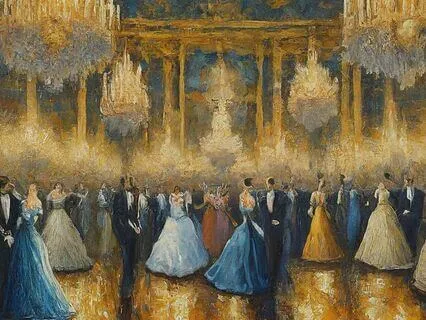
Robert de Saint-Loup,
A central figure in Marcel Proust's novel,
In Search of Lost Time,
Is a complex and multifaceted character who embodies a fascinating blend of aristocracy,
Intelligence and contradiction.
As a member of the prestigious Guermantes family,
Saint-Loup is born into a world of privilege and expectation.
However,
He defies the stereotypes of his class,
Revealing a depth and complexity that goes beyond his social standing.
Initially introduced as a young,
Dashing cavalry officer,
Saint-Loup is admired for his physical prowess and intellectual curiosity.
He is a voracious reader with a particular interest in philosophy and politics.
His friendship with the narrator is a cornerstone of the novel,
Providing a lens through which to examine the intricacies of their social milieu.
Despite his aristocratic background,
Saint-Loup possesses a genuine empathy and understanding for those outside his social circle.
This is evident in his relationships with people from various walks of life,
Including his mistress Rachel,
A woman of humble origins.
His ability to connect with people from different backgrounds challenges the rigid social hierarchies of his time.
However,
Saint-Loup is also a product of his environment.
He is susceptible to the pressures of his class,
Often caught between his personal convictions and the expectations of his family.
His involvement in the Dreyfus Affair,
A politically charged case that divided French society,
Highlights this internal conflict.
Initially swayed by anti-Semitic sentiment,
He eventually comes to support Dreyfus,
Demonstrating a capacity for growth and intellectual independence.
As the novel progresses,
Saint-Loup's character deepens.
He becomes entangled in a complex love triangle with Gilbert Swan and the narrator,
Revealing vulnerabilities and insecurities.
His marriage to Gilbert,
A woman he does not truly love,
Is a testament to the constraints of his social position.
Despite his infidelity and the superficiality of his marriage,
There are glimpses of genuine affection and tenderness in his relationship with Gilbert.
Robert de Saint-Loup serves as a pivotal character in In Search of Lost Time.
Functioning as both a catalyst for the narrator's personal growth and a microcosm of the societal complexities,
Proust explores.
A mirror for the narrator.
Friendship.
Saint-Loup's friendship with the narrator is a cornerstone of the novel.
Their bond provides a framework for exploring themes of loyalty,
Envy,
And the complexities of male relationships.
Social class.
Through Saint-Loup,
Proust examines the intricacies of aristocratic life,
Its allure,
And its limitations.
The narrator,
While drawn to this world,
Also recognizes its superficiality,
A contrast illuminated by his friend's character.
Intellectual growth.
Saint-Loup's intellectual curiosity and engagement with philosophy and politics stimulate the narrator's own intellectual development.
Their conversations serve as a platform for exploring ideas about art,
Society,
And human nature.
A microcosm of society,
Class,
And morality.
Saint-Loup embodies the tension between aristocratic privilege and personal ethics.
His involvement in the Dreyfus Affair,
For instance,
Reveals the moral complexities of his class and the broader French society.
Love and marriage.
Saint-Loup's relationships,
Particularly his marriage to Gilbert Swann,
Offer insights into the institution of marriage,
The nature of love,
And the role of social expectations in shaping personal choices.
War and loss.
Ultimately,
Robert de Saint-Loup is a tragic figure.
His life is marked by a constant struggle between his desires and the demands of his social class.
His death in World War I is a poignant loss for the narrator and a symbol of the devastation of war.
It serves as a powerful symbol of the devastating impact of war on individuals in society.
His loss underscores the fragility of life and the impermanence of human connections.
In essence,
Robert de Saint-Loup is more than just a character.
He is a lens through which Proust examines the multifaceted nature of human experience.
His life unfolds against the backdrop of a changing society,
Allowing Proust to explore themes of class,
Love,
War,
And the complexities of the human heart with profound depth and insight.
Through Saint-Loup,
Proust offers a rich and nuanced portrait of a young man caught between the allure of the aristocratic world and the complexities of human nature.
His character serves as a microcosm of the broader social and psychological themes explored in the novel,
Making him one of the most compelling and unforgettable figures in literary history.