I was very overweight.
I'd had chronic depression for many,
Many years and it had gotten really bad and I was stuck on the sofa.
And then one day something inside me kind of shifted and I noticed that I just wanted to try.
And that's the point it just felt as if I was going to go forward or I was going to go backward and backward was not good.
Welcome to the Art of Attention.
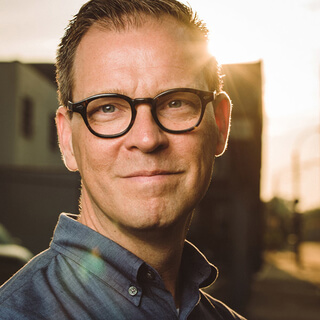
I'm Darren Larson.
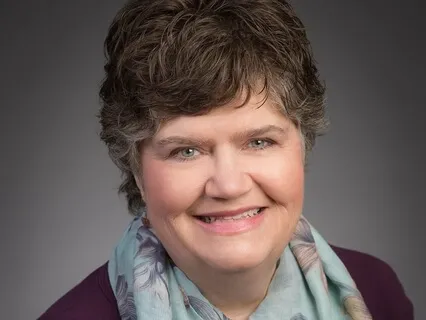
My guest today is Nita Sweeney,
A writer from right here in Columbus,
Ohio.
She's written a memoir called Depression Hates a Moving Target,
How Running with My Dog Brought Me Back from the Brink.
We talk about how she went from being unable to get off her couch all the way to running marathons and the small steps she took to change the way she's relating to her life.
Our conversation is more than just about running though.
Nita and I talk about what helps her deal with depression,
But our conversation isn't intended to be a substitute for getting help you need from experts.
If you think you might be depressed,
Please reach out to your local mental health center.
You'll also find resources in the show notes.
You can find other episodes of the Art of Attention through the WCBE podcast experience at wcbe.
Org and wherever you get your podcasts.
I hope you enjoy my conversation with Nita Sweeney.
Nita Sweeney,
Welcome to the Art of Attention.
Thank you so much.
I'm really happy to be here.
I'm excited about this.
I want to start by having you consider when you think about trying to live your life fully or more fully,
Would you say that the kind of things that make that so challenging are external things like the news and politics and the world,
Other people,
Or is it more of an internal obstacle that makes that challenging?
I think it's both,
But what kicked in when you were talking is lessons that I do have in mindfulness and the fact that everything is grist for the mill.
So I'm sitting listening to someone who has a political opinion completely opposite of mine and I have choices.
And so,
You know,
My first response might be anger,
It might be wanting to leave,
It might be all those kinds of things,
But is there a place I can find myself where I can open up to that and just observe what's happening inside me and not want to flee?
Now what actually happens most of the time is that I just react to whatever it is.
You know,
When you talk about living fully,
I try to be engaged with anybody no matter where they are on the spectrum.
And right now that's really hard.
So you know,
I try to stop and just pay attention to myself.
Am I really listening to this person?
Am I already creating my argument?
Am I looking for the exit?
You know,
I always think about the plane,
The nearest exit maybe behind you and things like that.
Do I want to leave?
Is it okay to leave?
That kind of thing.
So that was the first thing that popped into my head.
But I think it's probably internal.
I mean,
Just to actually answer the question,
It's probably internal because if I'm really using the skills I'm trying to develop,
It actually doesn't matter where I am,
Who I'm with,
What's going on.
I can find peace within myself.
And that's been a huge struggle for me because of a lot of other outside issues.
Okay,
And is there some insight or some small thing that you have found helps you navigate that particular kind of internal challenge?
I try to feel my feet and that always sounds,
It sounds so silly,
But good.
Because what happens is I get up in my head and if I can get back into my body,
Especially if I can feel grounded,
You know,
Just feel my feet on the ground,
My feet in my shoes,
Or maybe when I'm driving,
You know,
My body on the car seat,
Things like that actually go to physical sensations because they're very grounding.
And then,
And they're less complicated than my mind,
Which is really complicated.
So I try to go with very physical sensations.
So that's my go-to is feel your feet or I would say feel your butt in the chair because they're usually,
I'm often sitting down.
Yeah,
No,
That's awesome.
Well and it's not silly and because,
Well,
Number one,
There's a lot of validation in neuroscience that that is an effective strategy and so effective that I've read studies about how they're teaching folks in the military to do that instead of just waiting until trauma happens to like recover from trauma,
Building in this as a resilience tool to practice that before you need it.
Yes.
Right?
Yes.
And I always think if soldiers are taking advantage of that,
Why aren't civilians,
Right?
Yes.
And I do think it does,
It might sound silly,
Well,
This is welcome to my world.
Everything I recommend to folks sounds silly or sounds maybe too good to be true or maybe sounds too easy to be effective.
Simple is the,
Yeah,
Simple.
That's so simple.
Yeah.
But it is powerful because it does ground you back into your body.
As I'm reading your book about running,
About how you navigate the challenges of,
I guess,
Going from someone who didn't see herself as a runner to then,
And I think this is what your story is about here,
Right,
Is gradually feeling like you were part of that tribe,
Feeling like that was a role that was more and more comfortable for you to identify with over time.
I did notice that you were employing something like this,
Where you would switch over from the narrative,
The stories you were telling in your mind to something about your form or whatever.
So I'd like to dig into that.
But how do you feel about sharing a little bit,
An excerpt from your book for us to be able to kind of start to talk about that in general?
That would be great.
Want me to read?
Public street,
Wherever I'll read.
Oh,
Good.
All right.
This is from close to the end of the book.
It's kind of what resulted from the journey.
I'd gone from a woman who found it difficult to leave her house to one who regularly took part in enormous events with total strangers.
Time alone on the trail or the streets had become a meditation,
A time for reflection and a path of insight.
Running with a group taught me I could be social without being overwhelmed.
Trainee helped me to show up regardless of how I felt,
Even if it meant getting up at hours I fondly referred to as the quote,
Middle of the night,
Close quote.
Facing my fears gave me a sense of self-esteem I'd often lacked.
My days slouched alone on the sofa,
Jealously reading social media posts about my friends' accomplishments were over.
I joined their ranks and had the strong legs to show for it.
I mean that's quite an accomplishment from where you started,
Wouldn't you say?
Yes.
Yeah.
What was that like to go from,
I mean,
I love this story,
I love this image I have of you going out for your first run.
Can you talk a little bit about what that was like?
It was really scary for me.
I mean,
I kind of made sure when I was writing it to explain how to an outsider it would seem a bit extreme,
But to me it was so terrifying.
I was very overweight.
I'd had chronic depression for many,
Many years and it had gotten really bad.
I'd had all these different people die,
Which gave it a grief layer and I was stuck on the sofa and I was trying to write and I couldn't or it wouldn't,
It wasn't going well.
And one day I saw this social media post from a high school friend who was a year older than I am,
Where I was at the time,
And at least the same size and had not been known for athleticism at all.
And she posted something like,
Call me crazy,
But this running is getting to be fun.
And I thought,
Running?
You are kidding me.
I sort of watched her progress for a while.
And then one day something inside me kind of shifted and I noticed that I just wanted to try.
And that's the point.
People actually ask me now,
You know,
How do I get to that point?
I really don't know.
It's just this internal shift where it just felt as if I was going to go forward or I was going to go backward and backward was not good.
So I pulled on,
I had this pair of,
Oh,
They were just like cotton sweatpants.
They might've been bright pink,
I don't actually remember,
And a cotton hoodie and just all the things that now as a runner who's done a lot of running,
I would never wear.
I had trail shoes,
These giant trail shoes,
Because that's the only thing I,
There's only kind of athletics shoes I had that didn't have Velcro on them.
And so I had that and then I couldn't do it alone.
So I leashed up Morgan,
Our yellow Labrador.
I called him and of course he's always ready to go outside.
And then I picked up a digital kitchen timer,
A little white plastic digital kitchen timer because the plan that this friend was running on,
It was an interval training plan and it said 60 seconds of jogging.
And I thought,
60 seconds,
Okay,
I can do 60 seconds.
And I'd had another friend who I was in an email group and she had also taken up,
I think she called it jogging too.
And I went outside and when I got on my street,
I live in a suburban neighborhood where people work.
So there was nobody home,
But I was convinced there were people home and they were watching.
So I walked the dog down into this secluded area near my house and turned on the timer and we jogged for 60 seconds.
And then I walked and I was so happy to be done with 60 seconds.
But there was all of that kind of paranoia in my head about people would laugh and people are watching and they're going to be making fun of me.
And you know,
It's funny now because nobody's actually paying attention.
What I was,
It was me that I was,
You know,
And so when I try to be awake now,
I still have the same thoughts.
But now I can go,
Oh,
There you are again and just let it pass.
Like you recognize that,
Right?
It's a,
It's a really powerful illusion though,
Right?
Didn't you say?
Yes.
Actually really successful people have this kind of sense of being undermined by how they're being perceived by others.
It doesn't sound as powerful as it is,
But it is to be able to catch yourself.
I'm doing that thing where I'm telling myself a story my neighbors are watching.
Yes.
Right.
And it's,
It's complete illusion.
I also,
A little bit later in the,
In the book,
I talk about how I didn't tell anybody.
I continued on this training plan and I wouldn't tell anybody.
And the reason I didn't tell anybody,
In my head I thought,
Well,
I don't want anybody to discourage me.
But that,
It wasn't them.
It was me.
Yeah.
I was afraid that I would sabotage myself.
And so I think practicing being,
You know,
Awake to that and noticing those thoughts.
And that's what's hard is noticing them first before you just stop.
I think part of becoming familiar with that or catching that in real time is first realizing that you've done it.
So it sort of starts with reflection and then you kind of get closer to like,
Maybe I'm going to catch myself in the middle of that kind of,
What would you call it,
An illusion,
That thing I'm doing inside.
But I do think it begins with reflection.
Yeah.
It's awareness.
It's a,
It's just knowing that I'm doing it because I have done it for so long without being awake to it.
Yeah.
But,
But there was something about having these other people that were moving forward and not stopping themselves that made me more awake to what was going on in my head.
And also,
You know,
I mean,
I had to have a kind of a regular meditation practice that helps that too.
But even with that,
Having them and being able to say,
Okay,
So they are doing this somehow.
What is it about me that wants to stop me?
And how can I just be awake to that so that I don't stop?
Would you say that the fact that it's something about taking care of yourself,
It's an investment in yourself,
Or not only an investment in yourself,
But also a willingness to be confused and kind of fumble your way through something new,
Like learning a new language or musical instrument,
Right?
I don't know.
From my personal experience,
I've always been,
It's been easier for me to do things that are focused on the needs of others.
I'm willing to learn and be clumsy and mess,
Messy and fumble my way through if I'm,
If it's in the service of helping others.
But in the service of helping myself,
I don't know.
Does that seem more challenging for you?
Well,
Yeah.
I,
I think that depends on your personality type,
Because I am definitely a pretty NEDA focused person.
Are you?
Yeah,
I am.
And so for me,
It's more about comfort levels.
I really think that it depends on the person,
Because I know a lot of other people who talk about,
Gosh,
I can't take this time for myself.
I can't take time away from my family,
My kids,
My job,
My whatever.
And mine was more the thought,
People are going to laugh at me and this is going to hurt.
So it was very,
I mean,
Really was very selfish.
I mean,
It just,
Yeah.
Gotcha.
Well,
Or,
Or would you say,
Well,
Let's see if I'm getting this right.
Hearing you a little differently is that you're talking then about navigating outside your comfort zone.
Yes.
Okay.
Yes.
It's pushing against edges that are,
Again,
Illusions.
Right.
But the idea that I can't do this,
And then because I do have mental health challenges,
The normal idea I can't do this becomes it's going to kill me.
Okay.
And so I always,
You know,
It's kind of like illusion on steroids.
Yeah.
Yeah.
The steroids is a great,
It's like survival.
Yes,
Exactly.
It feels like a survival instinct not to be uncomfortable in that particular way.
Right?
We talk,
It's easy to talk in platitudes,
Aphorisms,
You know,
Be outside my comfort zone.
Oh,
All the action is where I'm outside my comfort zone.
That sounds great.
But the lived experience I think can be excruciating.
Well and I don't think you can jump.
Well,
I want to keep bringing it back to myself.
I couldn't jump from being an inch outside my comfort zone to being,
You know,
A mile and a half outside my comfort zone.
I had to do that gradually.
Now there are people that enjoy,
You know,
The same people that like diving off a diving board or jumping into the pool.
I'm the kind of person that sticks their toe in and then half the foot and then up to the heel and then maybe the ankle and then we'll just sit there for a while.
So there's a lot of platitudes that,
And I use them too,
But they don't always reflect my actual experience.
Yeah,
It's easy to say that.
It's really difficult to live that particular kind of discomfort.
Live the discomfort of even your edges,
Even when you're nudging out inches.
Right?
And I'm with you.
I'm not a dive in.
I'm an inch my way in too,
So I can relate to that.
I think there's a lot of people who can relate to that.
Okay,
So we have you running for one minute so far in your story.
Yes,
A whole entire 60 seconds.
Yeah,
I love this by the way because I actually think this is where things really start in the small step.
It reminds me there's a,
Where is he from?
Stanford,
BJ Fogg.
He's kind of an expert in behavior change and he says that the biggest problem people make is not going small enough.
So I think this is a really good example.
So then what was next?
Well,
I used this training plan.
It became kind of a driver.
I've never been actually diagnosed officially with OCD,
But I definitely have compulsive tendencies.
And so once I take something on,
It becomes an external driver.
And for me,
It has to be external.
If I said,
Oh,
I'm going to make up a training plan for myself,
That doesn't work for me.
I have to have some outside expert.
So the plan was very gradual.
You would do this interval three times a week.
So it was 20 minutes total,
Walked for a minute or walked for maybe five minutes.
And then 60 seconds of jogging,
I think 90 seconds of walking,
60 seconds of jogging.
And so I had this plan.
And so I would follow the plan and I printed off the plan and I put it on the end of my bookcase.
And then every day I would check off what I had done.
And there was something about that little checkmark that just gave me these positive body sensations and a little tiny bit of self-esteem because I hadn't felt as if I could complete tasks.
I mean,
I was having trouble unloading the dishwasher at this point.
And so I would just follow the plan.
And everything went well until about week four,
Where the plan seemed to escalate and I had a complete freak out and that's all in the book.
But yeah,
That's what I did.
But by then I was emotionally invested because I'd started feeling better.
I started noticing one of my barometers is napping.
How often do I need to take a nap?
And I wasn't having to take the naps.
I was getting up a little more regularly.
I was,
You know,
Bathing is a big thing when you have mental health challenges too.
And I was at least bathing the days after I was running.
And so by the time the plan escalated to a place where I felt I couldn't do it,
I wanted to somehow figure out how to continue.
And I found ways with the help of some other friends to modify it so that I could do it.
But it took some doing,
Again,
Because I had this illusion that if I wasn't following the plan to a T,
Then I was a failure.
Right.
And at the same time,
It kind of nudged you into yielding to that structure.
Yes.
Right.
Which I think is what anyone who,
In my experience,
Anyone who actually runs a marathon from 60 seconds to a marathon,
The longer distance we're talking,
The more likely that person has yielded to a training structure for months.
Yes.
Yes.
And I do think that's the kind of demystifying part,
Taking it away from the what's wrong with me that I can't do X to O.
Today I can't run a marathon,
But I can do what's on my training schedule for today.
And the other thing about that I think is really helpful is that it eliminates you having to decide day to day.
Yes.
I talked a lot about that in the book because that's one of my problems.
I get in this decision kind of loop where,
Well,
What about this?
Oh,
But there's this and then that.
And I did still have it.
I bought too many pairs of socks.
And so then I would have the question of which socks to wear and that became paralyzing.
Oh,
Right.
And it is any time I can eliminate a decision.
That is really,
Really helpful for me.
It's funny.
I'm sitting here kind of feeling like,
Oh my God,
That people are going to know this.
But I did write a book about this.
Yeah,
Right,
Right.
I wasn't reading it aloud.
Well,
Actually,
No,
That's something that occurred to me as I'm reading your book,
Though,
Is there's this interesting tension between you by yourself and you with,
Let's say,
The neighbors watching or other runners or I was even thinking someone who felt so scrutinized by the story you're telling yourself about the neighbors watching or judging you harshly and someone who publishes their story as a memoir.
What do you how do you what do you think?
How do you think about that?
It's a little weird.
You know,
It's it's funny because,
Like I said,
I'm very self-focused.
And so it's not that it didn't occur to me that people were going to be reading this book.
I mean,
That would be a complete delusion.
But I really didn't think about it a lot.
When I was thinking about finding a publisher,
I had to turn it around and start looking at the audience because that's,
You know,
Finding who your audience is for the book.
And especially when you're pitching,
Because you have to narrow the publisher down so that it's the genre that interests them and they're kind of reader and all that kind of stuff.
So that was where it actually became more I became more awake to that.
But I write for myself,
I really do.
So I write to figure out what's going on in my mind.
And that's what the story was about.
After I'd run my first half marathon,
That's where people really started noticing.
And they would ask me these strange questions.
Someone would ask me,
Did you get a haircut?
Or they would notice that I'd lost weight or close friends might say,
Did they change your meds?
I mean,
I would just get these questions.
And what it was,
It was the running.
Right.
And so that's when I realized that the story might be more than just me figuring it out.
It might be something that inspired others.
That was never my first.
That's not like my mission in life is to publish.
But I realized then the story might be bigger than me because I joke about the fact that I thought I was writing a book about running,
You know,
About how I went from couch to marathon.
I was actually writing a book about how I saved my life.
And that's what happens a lot of times with stories is that,
You know,
It starts with these facts,
Like the fact that I was paranoid about the neighbors and this kind of stuff.
And then it goes on to how today I still have those issues,
But I can go,
All right,
You've run how many races?
Really?
Really,
You know,
That kind of thing.
So yeah,
It's very odd actually.
But I do,
Yeah.
And as you're saying that,
It does make a kind of sense.
Also,
If we're talking about this kind of illusion aspect where this perception,
I can craft a kind of a scary story about a humiliating story,
Right?
Yes.
It's a very entertaining story.
And it's a very personal feeling story.
It's very sticky.
It's so sticky.
Yeah.
And it doesn't necessarily,
You can't control how favorable you come out in that story.
I mean,
That's what makes it so intoxicating or compelling.
But then there is something about crafting how you tell your story and taking your time to do that and editing it and bringing some objectivity back in and thinking about the reader,
Right?
It's a little bit different.
But you do have some control about what you highlight and what you point out.
Even though I have to say,
You're very personal.
It's very revealing in a way that I appreciate.
If we're going to talk about the messiness of real life,
We have bodies,
We have aches and pains,
We worry about things that maybe you need to be worried about,
Maybe not.
It's a very blurry line.
And then there's things that happen when we're running that are not glamorous,
Let's say.
It's having to do with porta potties or that inability to reach one.
So I do love that you're willing to share an intimate detail like that.
But it feels more,
It's more on your terms when it's something you've crafted.
Is that true?
Yeah,
I think you're that,
I hadn't really thought about it that way,
But that is true because it's very different from me showing somebody a first draft or me walking out into the street with my digital timer.
The original book was 197,
000 words.
The one that was published was about 78,
000.
And it's definitely crafted.
I mean,
A memoir is real.
It is fact.
I kept journals,
I interviewed people,
I asked a lot of questions to make sure I had the facts right,
And I believe I got them pretty close.
But it's crafted because I'm trying to tell a story,
Carry a message maybe.
I want to get to the point where we kind of map on how the challenge of writing your memoir is similar to the challenge of starting small with,
You know,
Running small and then maybe writing a chunk at a time.
But before we do that,
There's something I was thinking also when I was reading,
Maybe a pattern I noticed where there is some goal,
Maybe you think it's outside your reach,
Or maybe you're starting to think it's closer to your reach,
That there was the anticipation of it.
Let's say that's your first 5K or your first half marathon.
There's the anticipation,
There's the doing it,
And then there's the aftermath.
There are three distinct things,
Would you say?
Oh,
Absolutely.
And did you find that what I started to pick up on is the doing had vitality,
Exhilaration,
Sense of closeness to others,
The actual execution of this thing that you feared or that felt interested in exploring?
I don't know if that is that fair to say in general that you found the doing to be pleasant?
Yes.
It was more nuanced than that.
It depended on where I was on the particular day,
And even moment to moment in the race,
Runners joke about the first mile is a liar because you're getting warmed up and you still have a long way to go.
It depends on how far you're going,
But there are all these moments or these phases kind of within the event.
But when I would allow myself to just be right where I was and notice,
And especially when I could notice,
For example,
The Columbus marathon during the first half,
That was the first race where they had a lot of bands.
And so when I would get stressed out,
I would just try to listen because I might be between bands but I could like hear the one behind me and hear the one coming up.
And so I try to,
Again,
Bring it back to my body because that way I would calm down.
Yeah,
Definitely the doing is where the juice is.
And that's true of writing also because I'm very goal oriented.
I like gold stars and pieces of paper that have gold seals on them and things like that.
It's been hard for me to often just enjoy the writing process because my head gets way ahead of me.
And so it's been a good practice to just enjoy the actual manufacturing of words,
Putting them on the paper,
Moving them around.
Because if you don't,
As a writer,
That's you're kind of really screwed.
The process is where it all happens.
I think with so many things,
Actually,
I'm hoping this will emerge as a theme in all my conversations.
Yes.
How do we let outcomes or goals get us oriented in the direction we want to go?
And then how do we really fall in love with the process,
Which is messy.
But it sounds like,
Okay,
So for the doing,
For the actual running,
You started to discover coming back to your senses,
Coming back to your body could help keep you out of your mind and you really could go into periods where it was really pleasurable to run.
What worked when you were in the anticipation phase or the,
Like,
Let's say,
The week leading up to a half marathon or your first marathon?
What works there?
The week leading up to it,
We always talk about,
They call it the taper because you taper down in mileage.
So you might have been running 25,
30 miles a week and Suddler Pro is running 100 miles a week.
And then all of a sudden you're running 10 or very few miles.
And so,
Like,
I wasn't burning off that extra anxiety that is part of what running is like a medication for me for anxiety.
And so that was kind of a free for all for a while.
I would mostly talk to other people that were having the same experience.
So I'm in a,
I'm in a,
Eventually,
You know,
I started with the kitchen timer,
But eventually I joined a running group.
And so there were other people that were on the same training plan and we would just get on social media or text each other and talk about,
And I call it taper madness because we were all going a little crazy.
And so we would just joke about it.
And that,
That kind of softened the blow.
Now having had so many races behind me,
Again,
I do the same thing.
I notice the thought pattern.
I notice the sensation.
Oh,
You're anxious.
This always happens.
This is normal.
Can I do something not physical because I'm supposed to be kind of resting up for the race?
Can I do something else to distract myself or can I just pay attention to it and be okay?
But I usually have to do that in small doses because I'm not as skilled at it as,
You know,
Like somebody else might be.
What makes that hustle hard?
Yes.
Right.
And I think this is so relatable that just feeling it,
Again,
We're back to the,
It's uncomfortable.
Yes.
And it makes me wonder being able to yield to the training structure itself is great,
Right?
So you don't have to think about it.
Did you find that there were things you could do that you could fall back on without having to make them up on the fly to manage that kind of discomfort or is it more,
And I guess that's partly what you're describing is encouragement from others.
Yes.
And a lot of times I would talk to people who were further along in the process.
In our running group,
It's called Marathoner Training here in Columbus through the Fleet Feet store.
And each pace group has a coach.
And so we might talk to the coach or the coach even would anticipate the situation and say,
This is taper week.
You're going to feel jittery.
You're going to feel anxious.
Your mind is going to kind of disasterize.
Go read a book,
Listen to some music.
There's that sense of not having to recreate the wheel.
And there are people that like to do it completely alone and like recreating the wheel or whatever.
They don't even realize they're doing it because they're doing it solo and they figure it out themselves.
I need lots of help.
So I was really happy to have other people who'd been further along.
I still thought I was going to die.
I mean,
Of course,
You know,
Anxiety or excitement.
Yeah.
But that was helpful.
That's a powerful impulse.
And then what about after?
Because I,
Yeah,
It was this part I actually wanted.
I felt like it was evoking in me kind of like wanting to protect you or something because I thought,
Oh,
I want you to enjoy this longer.
And it's very honest for you to say that aftermath was actually kind of challenging.
Wouldn't you?
Would you say?
It was bad.
Yeah.
You know,
I think it's normal for anybody achievement.
There's actually a term for it.
I don't know what it is,
But where people build up,
Work a long time for a goal,
Do the thing,
Achieve the goal,
And then they're really disappointed or really it's not even disappointed.
It's just you just kind of crash.
Like a hollowed out?
Yeah.
Yeah.
It's a I call it falling off a cliff.
But it started,
You know,
With my first 5k,
That feeling of the next day after was over the sense of emptiness.
And that one was a little different because it was a 5k to raise money for the type of cancer that my niece had died from.
And so there's a very bittersweetness to it,
Seeing other survivors,
Seeing my family,
Especially my sister was her only child.
And I didn't plan anything for the day after because I thought,
Oh,
I should rest.
Well,
No,
I should have gone to lunch with somebody is what I should have done.
And I didn't have,
You know,
Scheduled like a massage a couple days later or something.
So yeah,
And that would happen with every single race.
And it happened.
It's happened for me with most everything.
But now again,
I know to anticipate it.
And it took a while,
I mean,
It took a lot of races before it didn't surprise me.
Well,
It seemed that the the degree of crash was in proportion to the degree of the challenge.
Is that fair?
Oh,
Absolutely.
Yeah,
The full the full it was,
It was a big,
It was a really big crash.
And that took me a couple days to figure out what to do.
And so then and so now so you've run,
Maybe what three marathons total now?
Three marathons,
27 halves,
80 shorter races.
Actually more than 80.
So then if like,
Let's say you were getting,
You were planning,
Mapping out your marathon training now,
Would you anticipate building in that follow up plan now?
Absolutely.
And what kind of things do you think about?
That's what I do.
Well,
I get a massage because my massage therapist loves to,
She's very in tune with me.
So if I don't want to talk,
She will just let me be in silence with her spa music in the dark.
If I want to talk about the race or whatever,
I can just chatter,
Chatter,
Chatter,
And that's fine with her.
I usually do that preferably within 24 to 48 hours after the race,
Because that's when it's physically most effective.
And then I try to schedule dinner out with Ed,
That's my husband,
Maybe some running friends.
And then I go for a run too.
And I do that pretty quickly.
A lot of people don't,
At first,
I think after my first half,
I'm not sure I ran for a week.
Now you know,
I'll walk the dog at least,
But get some of that movement because I need a little bit of that runner's high to help me within 48 hours of running like a marathon.
I forget that I know how to run.
I mean,
That sounds nuts,
But if you talk to other runners,
They're like that too.
And you probably,
You're a runner too,
So you know.
So I have to remind myself,
Oh yeah,
It's just left foot,
Right foot,
Left foot,
We can do this,
We can do this.
It doesn't take long,
Right,
To get,
I think of it also as acclimating to an accomplishment.
Like it seemed so unachievable,
And then you achieve it.
That's unachievable always makes a more compelling story.
And then once you do it,
It feels like,
Oh,
Well,
Anybody can do that.
Right.
It's all right.
It goes quickly into anybody.
If I can do it,
Anyone can do it,
Which reminds me to ask you about something I was thinking about.
I think maybe this might be a point where you and I are a little bit different in our motivation.
Would it be fair to say that the identity of things,
Like let's say running,
The identity of being a runner is part of the motivation or part of the challenge or not?
For myself,
I think I kind of have an opposite.
I don't tend to think of myself as the thing I've done.
I can write poetry,
But I would never call myself a poet.
I could run marathons,
But not call myself a runner.
But it seemed like as I was reading you,
There was,
It came up again and again,
This theme of either not feeling like a runner or surprised to then feel the pleasure of actually feeling like a runner.
I'm more in the camp of the belonger,
Wanting to belong.
And again,
Wanting a lot of external affirmation because I feel,
You know,
Sort of adrift a lot of times inside.
And I found that that's helpful.
It's not that I'm,
You know,
That I think that's the biggest thing in the world,
But it's been really important to me for some reason.
And I think there's sort of like joiners and not joiners,
And I'm a joiner.
And that surprised me.
I don't think I knew that about myself until I really got into the running community because I am an off the scale introvert.
I mean,
I really need tons of alone time.
I had a very busy extroverted day yesterday,
Was fabulous.
And I was exhausted this morning,
Just exhausted.
So to think that I want to be with this group of people identified as a runner,
It surprised me.
But yes,
I'm definitely that.
No,
I love that.
But also because,
Well,
I'm not a one size fits all anything.
Right?
So anytime we can say that what works for me might not work for someone else is such a helpful reminder.
I think we have a strong tendency of if we discover something helpful,
We want to give it to everyone.
And I love the idea of part of each of us has this project of figuring out which is a bigger motivator,
Which one works for me,
Which one gets me off the couch,
Right?
To belong or not belong.
And I tend to be like,
I'm kind of on the outside looking in on things.
And I feel much more at home in that,
From that perspective.
I don't know why.
I don't know.
Probably something about personality and something early experiences.
I was thinking that I want to clarify that I'm,
I don't like to be in the middle,
Though.
I like to be on the outside of the inside.
So I'm never the ringleader.
I'm very rarely the ringleader.
I want to be invited,
But I want to be free to say no,
You know,
For you not to be upset if I don't come.
But yeah,
I want to be invited.
So it's sort of that,
It's sort of that kind of a push pull thing.
Well,
When you say that,
It reminds me that while I'm sitting here kind of almost relishing in the fact that I don't join,
You're reminding me that that's not entirely true.
I like to be in the center,
But not playing by the rule,
By the established rules.
So example would be,
Right?
Example would be growing up in the Baptist church,
I would question everything.
So when I,
But I would play the piano for the choir and I would teach Sunday school,
But I did it my way.
I would,
I would kind of shirk the recipe.
I would open it up a little bit and I find that to be true in everything.
And like,
Even though I'm a mindfulness coach and teacher,
But I really bristle at a lot of the trappings.
So I will never feel like a Buddhist.
I will never identify as a Buddhist,
But I like to be among them and making,
Carving my own way or finding ways to translate that to other groups.
One of the things I think that drives me is being able to connect the dots so that people don't feel like they have to adopt an identity to get the benefit of some lessons some group of people has learned.
Does that make sense?
That makes complete sense.
I know,
But I'm in this,
It's mostly an online group called the Dead Runner Society.
And that was the first time in that group,
It was the first time I ever heard the phrase your mileage may vary.
I mean,
I heard it with related car ads and things like that,
But that each of us,
And they also talk about each of us being an experiment of one.
Anytime anyone in the group will ask for advice and someone more seasoned or someone who's had that experience gives their experience or gives advice,
They will always close it with YMMV,
Your mileage may vary because we are so individual.
I love it.
And that's been really important for me.
So while again,
While I'm a joiner,
I also appreciate this idea that we are so unique.
I also study personality types and that has been so helpful in helping me let people be who they are.
If I can get to that place where I can just focus on my own thoughts,
My own body sensations,
And realize that other person has their own life experiences,
They have their own family background,
Their own education,
Their own whatever they're reading,
Listening to that's shaping them and I'm not in their shoes.
So you know,
It's,
I try not to judge.
The empathy builder.
I also think when we're exercising that impulse to see someone else more objectively and to kind of zoom out,
I do think it also benefits us in being a little more objective about ourselves.
I love this idea of the,
What did you say,
Experiment of one?
An experiment of one.
An experiment of one is so good.
Yes.
Well,
I think that might be a good point for us to add to before we move on to the explicitly about the writing is let's just highlight,
I think you and I both would agree on this,
But we don't see,
Like I don't see mindfulness as the cure all or the silver bullet.
I don't think you see running that way either.
So maybe you could say a little bit about how,
How do you explain to people that while running helped you with anxiety and depression,
That you are in favor of like the whole spectrum of resources available to someone who's suffering in those ways.
Could you speak to that a little bit?
Yes,
That's something I've been very,
Very careful with because I do not want anybody to think that I am touting running as a cure all.
It did not cure me.
I still have chronic depression.
I still have plenty of bad days.
I still take medication.
Now I've been able to reduce the number of meds that I took.
I still see a therapist.
I don't see her as often.
I still do this type of therapy called neurofeedback.
I don't do it as often,
But I still need that.
So the way I like to talk about it is that running is one tool in a toolkit and there may be times in my life where I will need more intervention,
But I also know plenty of people who were on medication and started various forms of exercise and got off and are completely fine.
So I'm,
You know,
I have absolutely zero professional medical expertise.
None.
Right.
Zip.
So I'm,
You know,
I'm just very careful to say that I'm only sharing my own experience.
It has worked wonders for me.
I mean,
I'm,
I really am a different person,
But it hasn't been a cure.
So yeah,
I think it's so important to stress that and we can't say it often enough.
I say it all the time in the context of mindfulness that it's a powerful capacity builder,
But it does not replace the other,
Those other tools or the support of therapists and support groups and family.
You know,
It's just one thing.
I do think that it does help you get more out of those other supports.
Right.
Um,
And it,
But it's like just because I go to the gym or just because I run doesn't mean I stopped going to the doctor.
Right.
And then if we're talking about our emotional health and our social health,
It's complicated.
Did you find then when it came time to write your account of this,
Your memoir,
What do you call it?
Do you call it a running memoir or what do you call it?
It's a memoir.
I call it a mental,
A mental health and running memoir with a dog.
Okay.
So it's a dog,
Mental health,
Mental health,
Dog,
I don't know.
Yeah.
Yeah.
Those are the three big things.
It's running,
Mental health,
And I mean,
I couldn't have done it without the dog.
Yeah.
But at the same time to work on that project,
Which I'm imagining took a long time.
Yes.
Were there insights and exercises that you acquired from your mindfulness practice from running that benefited you in navigating that big daunting project?
Yes.
I have been writing for a very long time and I've actually written 10 books,
But this is the first one that's been published.
I have others,
You know,
In a drawer.
Congratulations by the way.
That's significant.
That's a persistence.
Yeah.
It's a,
Yeah,
Tenacity.
The,
The way in which running really helped was with endurance.
Probably the best example I can give you is we go to an Ohio State football game every year and for many,
Many years when we would go,
We would park and then I would have to stop halfway through and rest before we could then get to the stadium.
And after I started running within,
I think like the next year,
I walked to the stadium and realized we didn't stop anywhere.
So that same kind of stamina was necessary for this.
The difference with this book was that I took it to a higher level than I had with any of the other books.
And that took just stamina.
I mean just to sit there for hours and hours and hours and hammer it away.
Cut,
Cut,
Cut,
Cut,
Cut,
Because it was huge and now it's much smaller.
And also the process of submitting.
And I submitted it to tons of agents,
Tons of publishers,
And just day in,
Day out,
Sending it out again,
Sending it out again.
The ability to polish all the pieces that were necessary,
All the marketing materials that were necessary to get the publisher,
All of that.
I took some classes about polishing those materials and to be able to be in those classes and be able to focus.
That was a new skill set.
The running was the stamina.
And with the mindfulness,
It was the attention.
And same thing again,
Noticing the thought process of I can't do this or this is too hard or nobody's going to want it anyway,
That kind of thing.
And I do a practice called writing practice that I learned from a best selling author,
Natalie Goldberg.
She talks about getting to a place where writing does writing.
It was like that with running where it was you just do it,
You just do it,
You just keep showing up and you watch the thoughts but don't pay attention to them.
You go,
Oh,
There you are again.
Oh,
There you are again.
And so it was sort of that whole combination of having the writing practice,
Having the mindfulness so I could watch the thoughts and having the stamina for running that felt like the trifecta for me.
And then I found Mango,
Which was this amazing publisher that was actually interested in what I was doing.
So there was some luck too.
What about the idea of like,
Was there some parallel to a training program?
Did you have a structure for how you would approach the weeks or months?
I don't know how long you worked on this.
Did you have to make up your daily work schedule or how did you navigate that?
No,
The first draft,
I did it during this thing called National Novel Writing Month,
Which is every month in November you try to write 50,
000 words of fiction.
But I was writing,
I'm what they call a rebel because I tend to write,
I've done fiction,
With this book obviously it's nonfiction.
So I use that as a structure because you're writing,
What's the number?
It's like,
I can't remember,
It's whatever 50,
000 divided by 30 is,
It's like 17.
But right,
But that is the equivalent of a training schedule.
So I did that.
And then I did that kind of like again in December.
And then the structure that carried me to get the whole first draft was the fact that I knew where the book ended.
And so I knew where it started on the sofa,
And I knew it was going to end,
You know,
After that first marathon.
And so the structure was writing to that ending.
But a lot of what I did,
I didn't necessarily write it in chronological order.
I'd have a memory about a particular day,
And then I would do writing practice on that particular day,
You know,
Let's say a particular 10k or something,
And I'd write about that.
I also keep a lot of journals,
Like running logs.
My running logs are very,
Very long.
So a lot of people might write,
You know,
I ran 10 miles at this pace,
My left knee hurt and I saw a deer.
You know,
Mine will be 70 times that long.
It'll go off.
I had a lot of material that I could learn.
And then got to a place where I just wanted to get to the end of the story.
And so that's what pulled me through.
And no,
I'm not big on schedules.
I mean,
It's funny because I need the external structure,
But I'm not good at creating schedules for myself.
Right.
But you kind of did cobble together something.
Yes.
And then once I was submitting,
I tried to have a certain number of submissions out all the time.
So if I'd get one back,
Then I'd have to send one out.
So I'd have,
You know,
Just kept doing that.
Okay,
You had a little system to keep it going.
So was there a point at which you thought,
Oh gosh,
Just like,
I'm not going to get to the end of this?
Daily.
Okay.
That was usually my first thought waking.
And then I'd get up and start moving.
And just go through anyway.
So it is so much like running and so much like mindfulness to hear you talk about it in that way.
Yeah.
So what I hear you saying in general,
I'm thinking about listeners.
I don't hear you saying people should run or people should write or people should even do mindfulness.
But I kind of hear a message in maybe someone out there who is struggling or suffering or doesn't feel very comfortable,
Doesn't feel.
.
.
I think of it as I'm not trying to be happy all the time.
I'm trying to feel more at home in my life in general.
So I'm hoping that every few years I can look back and compare now to the past and say,
I'm feeling more at home in my life than I was five years ago,
Something like this.
And part of that,
I want that to include savoring what's pleasant,
But also fighting less with what's unpleasant,
As both of those being part of normal human life,
Not taking all of it so personally or so rollercoaster-y.
Does it sound right that partly what you're reaching out to your readers and maybe our listeners here today,
Some encouragement that if there's something that feels too big,
You can start small.
Find one thing you can do to move yourself in the direction of something that intimidates you.
Does that seem fair?
Well,
That's where the title comes from.
That's exactly where the title comes from.
Because there were days where,
There still are sometimes,
But there are days when I just can barely get out of bed.
I mean,
It's been,
They're few and far between now,
But there are still days.
I realized that if I could just sit up,
Just like sit on the edge of the bed and then stand up and then go into the bathroom to brush my teeth.
It was just,
I had to chunk it way down.
But especially people who have any kind of mental health issues,
We get overwhelmed so easily.
And I forget who you said,
The person who said that we don't start small enough.
Because that's the thing is I cannot think about writing a book.
I have to think about writing for an hour or writing for 15 minutes or 10 minutes.
I can't think about running a marathon.
I have to run two miles today.
I can't think about learning to sit,
Like a 10-day retreat.
I have to do 10 minutes of sitting.
I think it's so powerful.
Yeah.
I mean,
With the mindfulness too,
My husband actually taught me kind of my first meditation and he set the microwave timer for five minutes.
And basically he just said,
Do your best to sit still.
Yeah.
And that was it.
I mean,
I think aiming low is so powerful and it's sustainable.
Right?
Aim low.
The power of aiming low.
That's our new motto.
Let's get bumper stickers.
But I think it's encouraging because I think if someone's out there listening and they want to like,
They want to learn how to cook,
You don't have to become a chef.
Find one simple recipe and just make it.
Right?
Like you're saying,
We've got to inch our way through these things.
And the people who become chefs,
They didn't become chefs by making a masterpiece the first time.
The power of practice and the power of mistakes and letting yourself be messy.
You know,
I used to joke that I want to be the kind of person that walks into dental school already knowing how to do a crown.
Part of that I wonder is we are inspired to do something because someone demonstrates mastery and it's so appealing.
But part of that,
What we don't know fully until we get into the thick of things is that effortlessness is a kind of illusion.
I'm at the point now in my life when I see someone who makes something look easy,
I just assume it must be so hard.
It must have taken so much time and effort to get there.
There's talent,
But without some kind of craft or strategy or structure,
Very few people get to that level of being able to wow us.
But then there's that tension between,
Okay,
Now I'm wowed,
But can I aim myself in some direction but really set my expectations,
My daily expectations for myself much lower.
I hear in you also,
You developed a taste for discomfort or a taste for what's,
What am I thinking here?
It's like to endure the ability to,
I like to think of it as a skill actually.
I had to hone the skill of being uncomfortable without freaking out.
And I do joke about having an infinite capacity for boredom because I'll run miles and miles on an indoor track,
Which makes a lot of people crazy.
But there's,
It's just the kind of thing where you have to build up a level of tolerance for a particular thing.
I listened to elite runner Stephanie Bruce,
And she talked about that,
About being able to endure pain and that the elite runners develop the skill of being able to endure more pain.
Not that you,
You know,
We don't want to sound masochistic at all,
But I think that that's how people achieve goals is they get to the place where either they block it out or are able to use techniques like mindfulness and awareness to go through it.
Right.
They erode their resistance to discomfort.
I think they also calibrate being able to tell the difference between a true sensation that's uncomfortable and needs attention and a sensation that's just uncomfortable because we're exercising.
And I think with time and practice,
It's experiential.
You start to calibrate the ability to know,
Am I really in danger of my neighbors judging me harshly or is this maybe one of those times where I'm telling myself a story?
How do you think about where you are in your life regarding that idea of base level contentment right now?
Well,
We're in a very unusual time in my life because my book has not been out very long,
And so it is full tilt bozo book marketing.
And I'm a person who only a few short years ago was on the sofa or in bed a lot.
For me right now,
It's adjusting to a new normal and it's not pretty a lot of the times.
There's gnashing of teeth.
But I also try to have moments where I can stop and feel the pleasure too because there's these amazing times when I just think,
Is this,
You know,
I pinch myself.
Is this really happening?
They wanted this for so long.
Is this really happening?
And it's amazing.
It's sometimes terrifying,
Sometimes very frustrating when I either I don't do something,
I forget something or I don't do it well,
Or I'm relying on someone else and they don't come through.
You know,
There's a lot of that that I'm not used to.
And it feels as if I have a small window.
I think the window is probably bigger than I thought it was,
But it feels like a tight window.
So it's a little different.
The whole idea of being at home in my own life feels very,
Very positive and like something I would really love.
I'm not sure I'm there yet,
But it's just having this conversation with you has given me so much to think about and reflect on because people ask me what's it like?
And I say that it's like drinking your favorite liquid from a fire hose.
It's like the liquid you wanted your whole life,
The tastiest,
Tastiest,
But having it blown at you.
So I'm not graceful all the time.
Well,
Yeah,
It's interesting too,
Though,
That I think that I often say people don't come to a mindfulness class because they want to get better at savoring when things are going well.
Yes.
But I do think it's a skill that very few people actually hone.
I actually talk about that in the book about running the marathon because,
And it was the same thing when I was an attorney for 10 years and when I passed the bar,
People would say,
Oh,
You must be so happy.
And no,
Actually I wasn't.
I had a job to do.
Now I actually had to do the thing.
And so the same thing with the marathon.
There's that lull and what's the next thing?
And oh,
You published a book.
This is such a great dream.
And well,
Yeah,
But then you have to market it.
And what about the next book?
And that,
You know,
So it's not,
We have peak experiences.
I think the thing that I'm learning and if there's a biggest message in the book is it's that day to day stuff that's what's really important.
What am I doing right now?
What is this moment about?
What can I do today to do this thing?
So yeah,
I don't feel like I'm not necessarily answering your question,
But I just find that it just has to come back to right now.
Just right here.
That's actually quite frankly is all there is anyway.
What makes it so appealing to me to have these conversations is that they're hard to put into words.
So I don't expect us to get it right.
Well,
You know,
If I could write about it,
I'll send you a note.
All right.
Well,
Nita Sweeney,
Thank you so much.
Thank you,
Darren.
I really appreciate this opportunity and I wish you the best of luck with this.
I'm very excited about it.
And I can't wait to listen to all the future podcasts.
Thank you so much.
I hope our conversation has sparked some ideas for you to explore in your own life.
Maybe there's even some project or challenge you've been afraid to start working on.
Is there one small step you could take today?
If you want to learn more about Nita Sweeney and her memoir Depression Hates a Moving Target,
Visit her website at nitasweeny.
Com.
It has links to her social media channels,
Her blog,
And her monthly Write Now Columbus newsletter,
Summarizing all the writing-related events,
Author readings,
And writing workshops throughout central Ohio.
You'll also find links to all these resources in the show notes.
Look for other episodes of The Art of Attention through the WCBE podcast experience at wcbe.
Org and wherever you listen to podcasts.
You can email me at darren at attentionalfitness.
Com with feedback about this episode or to suggest future guests.
Until next time,
Don't wait for the world to get less distracting.
Find ways to exercise your attention.
I'd love to hear about it.