Welcome to Letting Grow,
The podcast about one of the spiritual journey's most difficult and courageous moments.
Letting go of who we think we should be so we can grow into who we most deeply are.
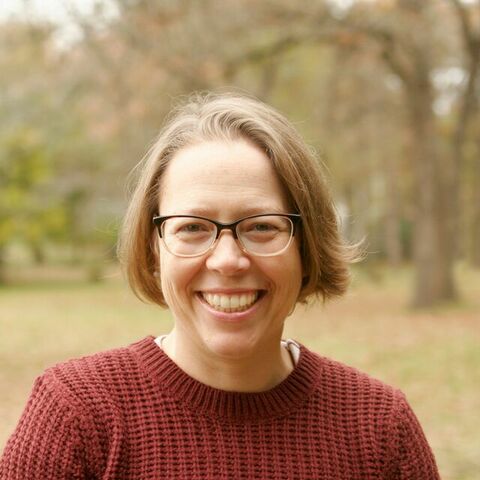
I'm your host,
Claire Villareal,
And I appreciate your joining me today.
Hi friends,
This is Claire and I am super excited to welcome you to the first episode,
Full episode,
Of the Letting Grow podcast.
This podcast is going to be about,
Obviously,
The act of letting go and growth in a spiritual context.
And I want to just briefly introduce myself a little bit so you know where I'm coming from.
So I have been Buddhist since about 1997 and I've been meditating since then as well.
I have trained in the Thai forest tradition of Theravada Buddhism and also in the Nyingma lineage of Tibetan Buddhism.
If those things don't mean anything to you,
That is fine.
I just want to let you know where I'm coming from.
I've also studied religion and Buddhism and contemplative practice academically,
Both as an undergrad at Rice University in Houston,
Texas.
And I also did my master's and PhD level work on that.
And so all of that kind of gives me a background in these topics,
But honestly,
That's not really why I have this abiding interest in death and rebirth,
Metaphorically,
Literally.
That really,
I would say,
Is because of my mom,
Who was a wonderful spiritual person and who died much too young of cancer.
And the process of watching her go through that and then the process really of losing her and exploring in a much more intimate and real feeling way,
My own beliefs and worldwide beliefs about death,
What happens after that.
It's really been enriching and it's kind of shaped the direction of my intellectual interests and just my personal interests.
And I say that,
Again,
In the spirit of full disclosure,
Partly because I think most people who are drawn to these subjects of transition and death and rebirth in a spiritual sense,
A metaphorical sense or a literal sense,
I think most of us have gone through the experience of profound loss or change or having to adapt.
And it just makes these topics much more real.
In Buddhism,
You know,
There's a lot of meditations and reflections on impermanence,
On the fact that we're all going to die.
And I had done those for years,
But still there was something about the process of actually losing my mom that made it just much more clear,
Much more immediate and of greater concern to me to kind of get my own house in order and learn about the process of transition before it was,
You know,
My turn,
Because it will be sooner or later.
So,
In a way,
I actually want to use a little story to kind of ease us into the big topic that I want to talk about in this first episode,
Which is what this podcast is about,
Why,
Why I think it's interesting and relevant and timely and just super,
Super important for anyone who's interested in the spiritual journey.
But before I get into that,
I just want to say,
You know,
My own journey into being really interested in these topics of death and rebirth.
It came when I was in my late 20s,
And then my mom passed away when I was 30.
And to me,
It's kind of,
It's interesting that that echoes the Buddhist story of the life of the Buddha.
And in a way,
I think the story of the Buddha's life is really the story of each of us who makes it to,
You know,
30-ish,
Because we've typically faced some kind of loss or challenge or something that kind of bursts the bubble of that childhood or early adulthood sense that things are good and they're only going to get better.
So the story of the Buddha is that he is born the son of a king,
And his father wants him to grow into another king to take,
You know,
The father's place on the throne someday.
And so he keeps the Buddha,
The prince,
The Buddha-to-be,
He keeps him very isolated from all forms of suffering,
Because there's been a prophecy that this child will either turn out to be a world-conquering ruler,
Or a great spiritual sage.
And obviously the king,
His father,
Wants a ruler.
So,
Until the Buddha is about 29 years old,
We are told,
He lives this life of ease,
Everything he wants is provided for him,
There are descriptions of how fabulous his various pleasure palaces are.
And most of us don't have that upbringing,
But I can definitely relate to the idea that until you lose a certain innocence or freshness of approach of early adulthood,
There is a sense of sort of boundless opportunity and optimism,
And it's not necessarily tempered by an appreciation at sort of a gut level of impermanence,
Of the fact that we all grow old.
We all get sick,
We all die eventually.
So,
The Buddha-to-be leaves the palace when he realizes that suffering is inevitable,
The death is inevitable,
And illness,
Old age,
Are inevitable.
And,
You know,
I think it's easy to look at this moment and to think that that's sort of where Buddhism begins and ends,
You know,
This recognition of suffering.
But the thing is,
Through the Buddha's quest,
He finds that there is an end to suffering,
He finds that there is an end to this endless cycle of death and rebirth that Buddhism posits as the way things are,
And he actually comes through and realizes his own Buddha nature.
He realizes his timeless wisdom and awareness and wakes up and realizes that each of us can wake up to this greater something within us.
And as much as we often don't want to think or talk about death,
If we're willing to,
We can kind of go through the scariness of thinking about the ends of things and come into a space of,
Once again,
Finding the optimism and opportunity that's available to us.
So for me,
Talking about death and rebirth in a metaphorical context or a literal context,
It's bittersweet,
But it leads to something very true.
So having said that,
I want to just talk a little bit about really sort of the heart of what I want to spend our time on in this podcast,
Which is transitional states.
And in Tibetan,
These are called the bardo states,
And bardo just means in between.
So basically,
Every single moment of our lives is in between one moment and the next,
But it's difficult to realize that directly.
So there's a lot of teachings on these bardo states,
And there are four of them.
And basically,
Each of these states covers a period between one moment and the next in our life cycle.
So the four states are the bardo of this life,
The bardo of death,
The bardo of clear light,
And the bardo of becoming.
And the bardo of this life begins when we're born,
And then it ends when we begin to die,
So like to actively die.
So in a way,
You could say every day our lifespan gets less,
Every day we're dying,
And it's metaphorically true,
But the bardo of this life ends really when we,
When our body is beginning to shut down at the end of our life.
So the next bardo is the bardo of death,
And this begins,
Obviously,
When we begin to die.
And it describes,
The teachings on this bardo state describe how the body and the mind shut down at the time of death.
This bardo ends when we're fully dead,
Our body and our mind are no longer together,
And the next bardo is the bardo of clear light.
And this is the moment,
According to Buddhism,
When everything,
Everything temporary about us has fallen away.
So our body has fallen away,
Our energy system fallen away,
Even our ordinary mind has fallen away,
And all that we're left with is our own deep,
True Buddha nature.
And it's a really amazing spiritual description of a time when we all naturally get to have a moment of just recognition of the nature of reality.
And then the final bardo state is the state of becoming.
So after that bardo of clear light,
If we don't recognize that this is us,
That we're experiencing as the nature of reality,
Then we kind of pass out,
We wake up in this in-between state.
And this is what's colloquially called the bardo.
So this is between the end of the death process and the beginning of our next lifetime.
And traditionally,
It said that during this time we have sort of dreamlike appearances.
We might be able to notice the thoughts of people we were close to.
We can travel from one place to another just by thinking about it.
We go through walls.
It kind of sounds similar to ghosts in Western culture,
You know,
Beings who aren't physical,
But who can be seen maybe by people with particularly psychic gifts.
So we go through that state and we experience all these different dreamlike perceptions.
And then as we're coming toward the end of this state,
We basically get drawn into the next lifetime that we're going to have.
So those are the four bardo states,
And I'll be talking more about them in upcoming episodes.
But I just want to say,
Even if we're not talking about literal death and rebirth,
I think these bardo states are really helpful for thinking about transitions more generally.
So for instance,
The bardo of this life is kind of equivalent to the way things were,
You know,
Like our normal state before we enter some big period of transition.
And I'm recording this in September of 2020.
So we've all lived through a massive period of change and,
You know,
Just a very unsettled time with COVID.
And it's easy to look back at the old normal and to realize,
Okay,
We all,
You know,
Had issues and problems and obviously wasn't perfect.
But looking back,
We can really recognize the stability of that time in a way that I didn't necessarily appreciate while I was living through it.
And then the bardo of death can be kind of equated to the time when that normal state falls apart.
So again,
To take the COVID situation as an example,
As we were getting into March of this year,
In the US anyway,
Like things were starting to shut down.
And it took people a while,
Even after things had shut down,
I think,
To realize that the old normal really was gone and it's not coming back.
And so there was that time of everything kind of falling apart,
A lot of sense of upheaval,
A lot of uncertainty.
It's a really anxious,
Stressful time for those of us who are inclined towards stress and anxiety.
And then I feel like now,
I'm not sure if we really had like a moment of clear light with this COVID situation.
I think a lot of us,
You know,
Earlier in the pandemic,
I certainly saw videos coming out of Italy of people going out on their balconies and singing together.
And there was a real moment of people drawing together in this shared deprivation and suffering of the COVID pandemic.
But it feels to me like now,
As of September,
We're kind of in this in-between state,
This bardo of becoming,
As it were.
And the old normal is gone.
We don't know when we're going to get a vaccine or be able to kind of really emerge into a new normal.
People have been trying to reopen things.
I'm from Texas.
Our state definitely wanted to reopen everything as soon as possible,
And that did not work out well.
So there's a certain amount of denial.
People just wanted to skip ahead to a new normal as quickly as possible,
Which is actually very much a part of the traditional teachings on the bardo of becoming,
Too.
That people just want stable ground under their feet again,
And we don't have that much tolerance for being in this kind of in-between state.
So that's a really brief overview of the bardo states.
And as I said earlier,
We're going to talk about them more in upcoming episodes.
But I want to say something before we close this episode about why I think these teachings are really relevant right now.
And obviously,
They're teachings from another time,
Another culture,
Another context.
A lot of the assumptions that these teachings make,
Even that there is a next life after this one ends,
May be foreign to a lot of people.
So why is this helpful?
I think it's helpful to have a map of how transitions happen.
And I think it's helpful in part so that we can locate ourselves on that map and not just feel like,
Well,
Everything has fallen apart.
It's all chaos.
I don't know what happens.
What do I do?
We still don't know what happens next,
Even if we have kind of a map through a transition,
But at least we know we're in a transitional state.
We also know that in a transition,
There are certain things we can do to really grow and benefit and take advantage of that transition instead of just getting all the downsides.
We're going to get the downsides anyway.
Like right now,
People can't go out to eat.
A lot of people have lost their jobs.
People are losing their homes.
There's a tremendous amount of harm and displacement and just suffering that COVID is bringing.
I mean,
People are dying.
180,
000 Americans as of now have died of this illness.
So there's a tremendous amount of suffering that comes with a lot of forms of transition.
But that's not all there is.
Often in these transitional moments,
We also have big opportunities.
If we're going to live through the downside anyway,
We might as well try and get a lot of that growth,
The opportunities that it presents.
So I'll dig into all this stuff more.
This first season of the podcast,
I want to talk about the Bardo states.
I'll have some conversations with cool people who have interesting perspectives on all this and will meditate together.
And I hope that all of this is supportive for those of us who are living through this together and who want to be able to harness the transitions in our personal lives and also these massive global transitions really for growth,
For benefit,
And to come out the other side of this stronger.
So thanks for tuning in and I hope you stay safe and well,
And I'll see you next week.
Thanks for coming along for today's exploration of the process of letting grow.
If you found this episode helpful,
Please share it and subscribe now wherever you listen to podcasts.
So you're always in the loop for links to more content related to today's episode.
Please see the show notes.
See you again next week.