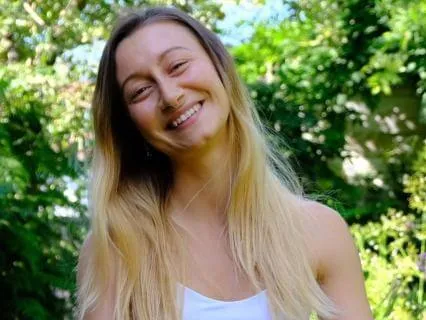
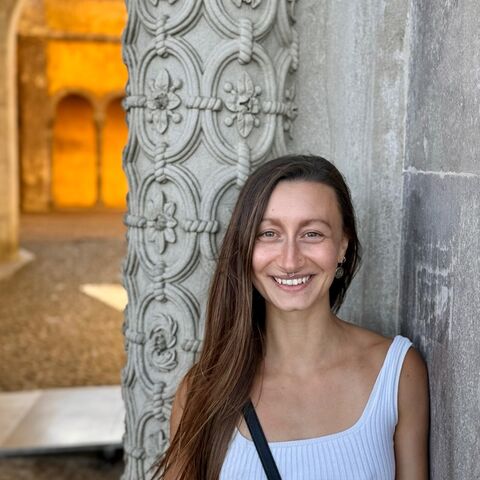
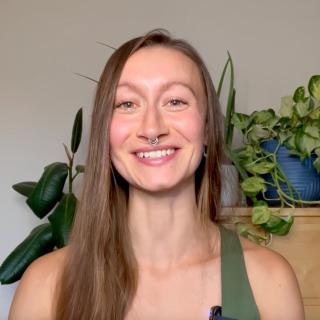
Welcome to this talk with Eleonora.
Eleonora is a good friend of mine,
Having practiced together for many years in London,
And I'm so excited to share this incredible conversation.
Meet Eleonora Gendelman,
A multifaceted individual with a passion for guiding others towards a more meaningful and fulfilling life through mastering the mind.
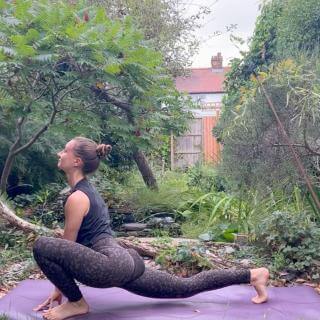
As a seasoned yoga and meditation teacher,
Life coach and host of the Insightful Talking to Myself Mindset podcast,
Eleonora combines her diverse background from a former career as a model,
Artist,
And fashion designer to provide a holistic approach to personal growth.
Having navigated the high-stress fashion industry in London,
Eleonora's personal journey illuminated the powerful impact of limiting beliefs.
She found herself in a world of perpetual stress,
Deadlines,
And superficial values,
Trapped in fight or flight mode.
It was through yoga and meditation that Eleonora discovered a path to belonging,
Community,
And the possibility of redefining her truth and purpose.
Purpose.
Her mission is to empower individuals to challenge self-imposed limitations and question every facet of their reality.
She explores the innate connection between mind and body,
The possibilities that arise from introspection and the power of embracing one's true potential.
She passionately advocates for creating a life aligned with purpose,
Going beyond preconceived ideas,
And embracing the vast spectrum of human experience.
As you listen to this conversation,
You'll discover the profound impact of challenging limiting beliefs,
The importance of self-discovery,
And the transformative journey that unfolds when we question everything,
Embrace the possibilities that lie beyond our beliefs,
Unlock our full potential,
Live authentically,
And create life on purpose.
Welcome,
Eleonora.
Thank you so much for joining me.
We're going to be talking about empowering your narrative,
Crafting a new story beyond limitation.
For those watching,
Let us know you're here,
Where you're watching from,
And of course,
Feel free to drop in the comments with any questions or insights you have as we go through.
So I think let's get straight into talking.
Again,
Thank you so much for joining me.
Thank you for having me.
I'm very,
Very excited to be part of it.
It is a very important topic for me also,
And it is part of my journey and part of my exploration and also part of my work.
So I'm very excited about our conversation.
Amazing.
So I thought,
Why don't we start with what's a belief and what's a limiting belief?
Yes.
So what is actually a belief?
A belief is a thought we keep on thinking.
So it is a thought we choose to think over and over and over again until we think that this is a belief.
It is actually not a fact.
It is actually not true.
It is something we choose to believe over and over again until we see it as our belief.
So we have a lot of beliefs from our society,
Our upbringing,
Our parents,
Our friends,
And those thoughts and beliefs we don't even question.
And actually I do love there is a quote which is,
We question all of our beliefs except those we really believe in and those we even don't think to question.
So we do question thoughts and beliefs that we have and that we are aware of,
But there are so many beliefs that we don't even realize that they're actually beliefs.
They're not facts,
They're not truth about ourselves,
About our life,
About what is possible,
About what happens in the world.
So it is a very interesting question.
Topic.
And limiting,
So limiting beliefs are obviously beliefs that are limiting us from living the life that we want from being that person and that version of ourselves that we want to be.
Those beliefs are limiting us from experiencing this reality that we want to have.
And sometimes or most of the times we don't even know that those are just beliefs.
That we have.
We have those dreams and we have the goals and we don't know what is it that holds me back from actually having this life,
From having more joy,
More connection,
More fulfillment,
More purpose.
And we kind of like we feel like I want more,
I can be more,
I am capable of more.
But there is something that holds us back.
And it's usually,
Obviously our own mind and our own beliefs,
Probably like most of the time,
Unconsciously,
Unconscious beliefs,
Limiting beliefs that we don't even realize that they are holding us back.
It's actually in the end,
It's just us holding us back.
It makes me think of this psychology term called confirmation bias.
And it's like,
Once you have this belief in place that you don't even realize is there,
You look for instances that prove that belief.
If you think you're not good enough,
Then you're going to look for all of these instances where that made you feel like something wasn't good enough.
So maybe where you didn't get good exam results,
Maybe where you didn't get promotion that you wanted.
And then you're also going to,
At the same time,
Without realising,
Discount all of the events that would actually make you feel like,
No,
I am good enough.
So whether you did get the promotion or you did get good grades.
And I think those two really feed into each other and you don't,
You know,
A lot of people don't realise it's happening at all.
Yeah,
It's like energy flows where focus goes.
So if you focus on all the confirmations,
I'm not good enough,
Or I'm not capable enough,
Then you see all the confirmations and you're like,
Oh,
Yeah,
It is.
I'm kind of like proving myself right that this belief is true.
And it's actually me doing that.
So this is kind of yeah,
Interesting topic.
This is also part of how do I change this belief?
Because sometimes we have so many,
So many things that prove us right that this actually this belief is true.
So it is actually sometimes very hard to change it because we don't see it as something that we choose to think.
Exactly.
So I'd love to know as well,
What's been your personal journey with recognizing and then moving beyond limiting beliefs that you might have had?
So I am still on my journey,
And I think everybody is,
Whoever is actually growing and evolving.
So we always,
You know,
We are,
This is where we are today.
And we all,
Or most of us,
Or people who like to grow and evolve and work on themselves,
We have dreams and we have goals.
This is where we want to go.
And this gap between where I am today and where I want to go,
Those are those limiting beliefs.
Because of those beliefs,
I'm not there yet.
There's something I do not believe yet that I am capable of having this life that I imagined for myself,
This dream or this goal that I want to achieve.
Those are those beliefs that I need to believe to actually get there,
To achieve this goal.
So I am still on this journey as,
And it is a fun journey.
It is a challenging journey.
It is,
You know,
Every kind of every change in every,
Yeah,
Growth is uncomfortable.
So it is a fun and uncomfortable place to be.
But yeah,
There were a lot of a lot of situations in my life where mostly people kind of try to limit me in terms of,
Oh,
You know,
You should do it this way,
Or you're not ready yet,
Or something like that.
And it's interesting to,
You know,
To prove not them wrong,
But like to see what is actually possible.
Like one of the examples,
It's a recent example.
I am a yoga teacher and I used to teach in studios in London.
And it's kind of like the belief or if you don't know what else exists,
You think,
Oh,
This as a yoga teacher,
You should run from studio to studio.
And this is how it works.
This is like life of a yoga teacher.
And at some point I was like,
You know what?
It's kind of like it doesn't feel right anymore.
I want to have something different and I need to go and explore what is out there.
Because if we do not know what is out there,
We just sit in this box and we know,
Okay,
This is how it should be.
So now I am here right now I'm in Portugal,
And I'm teaching classes on the beach,
In the sand,
On the sand,
Next to the ocean,
You know,
Listening to the sound of the ocean,
And like synchronizing the breath to the sound of the ocean.
It's just amazing.
And having the sunlight and the warmth of the sun on the skin,
And it's just completely different connection,
Which is amazing.
Yeah,
So you know,
As a yoga teacher,
I don't have to be in a box.
Cycling or walking or box to box.
So there are so many options,
So many opportunities we do not even realize just because we kind of,
We don't explore,
We don't question things enough.
So yeah.
I find it really interesting that you said a fun and uncomfortable place.
I feel like that's a really good way to put it because it is like,
Um,
You know,
Especially when you're,
I suppose,
Stepping into like a bigger life or like a new way of being,
Then there is a discomfort to it.
And at the same time,
It is a lot of fun.
So there's these two opposing things where it's brand new.
So you're,
You know,
You're being asked to expand in a certain way,
Which can be really uncomfortable,
But at the same time,
There's this reward that makes it like,
Oh,
This is quite fun though.
I can,
I can keep doing this.
Yeah,
I think it's also it's also this excitement,
You know,
It's,
It's kind of like life will be uncomfortable,
Either way.
So you either stay where you are,
And you're basically stagnating or you're doing or thinking the same things.
As you think.
On autopilot,
Or you're actually growing and evolving,
Which is also uncomfortable,
But there is a possibility to actually get somewhere new to explore something else to explore what is possible for you.
So it is that excitement of Oh,
There is there is something better there is more there is this life that I want to live and it is possible for me to actually to actually have this life.
So let's explore.
So yeah,
It is a fine and uncomfortable place.
But yeah,
It's life with all the all the emotions.
Thanks for watching.
Exactly,
You can't escape the discomfort of life,
Especially when you,
Well,
I mean,
You know,
As you were saying,
There's discomfort in either way,
Whether you want to stay in one place or whether you want to keep evolving,
There's discomfort and a big part of everything is just learning to be with that.
Yeah,
And it's also obviously a decision.
What discomforts do I choose?
What is,
You know,
It will not be comfortable.
It will be comfortable for a moment,
But you will always have this nudge within that is like,
You know,
There could be more,
I could do more.
So there will always be this discomfort of,
You know,
As humans,
We are,
We want to grow and we want to evolve.
So,
Yeah,
It's just deciding which discomfort do I want.
So I think an important thing as well to mention is like,
You know,
For people dealing with anxiety,
With low mood,
Especially if they've been dealing with them for a long time,
There can often be this limiting belief that these things won't change,
They're part of the day to day.
How would you suggest someone start to shift those beliefs?
Well,
So just like we've just said,
Actually,
It is much easier to stay where we are.
It is much easier to kind of like label yourself.
Oh,
I am this and this.
I can't change it.
So and I just stay as I am.
It is much easier because it does not obviously require any work.
But So how do we change any change?
The first step to any change is awareness.
It's becoming aware that first,
That my life could be different.
I could be different.
It's becoming aware of my beliefs,
That those things that I believe about myself,
Whatever it is,
Whatever I label myself or somebody else labels me,
It is not a fact.
It is not true.
It is something I choose to believe.
It is my belief.
So just become aware that this is a belief.
Becoming aware of What are those beliefs that create this result in my life?
What are my beliefs that create this life that I have right now,
That creates that version of myself that I am right now?
The next step is deciding that I want to change.
This is,
You know,
It takes a decision.
You have to decide.
I want to change and I want to be uncomfortable.
And I am ready to take those steps.
And the next step is creating strategies,
How to change,
How to shift.
What is the strategy?
How can I change it so it actually is possible?
You know,
Sometimes we want to change and we want to change everything at the same time.
So it just feels very overwhelming and like,
Oh my God,
It's just too much.
To shift from one belief to another belief is sometimes there's this gap that we need to bridge and sometimes we can't jump from,
I am not enough,
Or I am to old,
To young,
Whatever limiting belief it is,
Or yeah,
I'm not worthy enough to I'm the best in the world.
Like,
You know,
It's kind of like there's a big gap.
So sometimes we need to use bridge thoughts that will help us to step by step to get to that new belief that will create a new reality.
For example,
From I'm not enough,
We can have a bridge thought which could be,
It is possible that it's a war.
It is possible for me,
It could be possible for me.
What if I explore if it's possible for me?
Or what if I try,
I can try,
You know,
So we never know until we try.
And it's,
It is easy to stay where we are.
But as long as we,
You know,
As long as we try and we explore what is actually possible,
We will create different results,
We will create different opportunities in our life.
And Yeah,
And it's just interesting to,
You know,
To explore for yourself.
What is possible for you?
Am I actually,
Am I capable to change it?
What if I am actually the first one who is able to change it?
You know,
You never know.
Yeah,
Maybe create something exactly.
Maybe you will create something that does not exist yet so.
You never know until you try.
I love that.
What do you think are some of the most common limiting beliefs that you see in people that really hold them back from feeling better or creating a life that they really enjoy?
Well,
It is some kind of version of I'm not enough.
I'm not capable enough.
I am,
You know,
I'm too old.
I'm too young.
I'm not experienced enough.
Yeah,
I am,
There's something wrong with me.
Like,
You know,
I'm different,
I'm different than other people.
Another one is I have never done it before.
So it's kind of like,
I don't know,
The I don't know is actually a very,
Very limiting belief.
I don't know.
So it's kind of like limits us from trying and from adding actually getting to know something.
So yeah,
I'm unworthy.
I'm not lovable.
So those,
Those kind of I think I'm most for a lot of people,
Some kind of I'm not enough in some kind of version.
I feel like I don't know is an interesting one,
Because if you add I don't know,
If you add on yet,
I don't know yet,
Then it already has such a different energy to it where you're already just by adding that one extra word,
It's turning from I don't know,
And then that's the end of it to I don't know yet,
You know,
Because then it adds this element where it's like,
I don't know right now,
But I'm going to explore it and I will find out.
Yeah,
You just open yourself up to the possibility and you have this curiosity to explore.
And yeah,
You have this beginner's mind,
How we say in yoga.
I don't know yet,
But I can learn it and I could get those skills and tools.
So how do actually now that we're speaking of yoga,
How do you think that yoga and meditation help in breaking down limiting beliefs and creating a new narrative?
Well,
Meditation is a powerful tool to learn and to practice how to observe our minds from the outside,
How to be the watcher of our minds.
So this is where we distance ourselves from what I think and actually believing what I think.
So we distance ourselves from what our mind offers us,
All those suggestions,
I'm this and I'm that,
I am not strong enough,
I'm not flexible enough,
Like those kinds of things that people say in yoga.
So it helps us to just observe what actually happens in here,
What happens in our minds,
What do we think about ourselves?
What do we think about our life?
What do we think about,
Yeah,
What is possible for us?
And yoga or yoga asana,
Of the physical practice helps us to.
Through our physical body to get to know our minds as well.
Yeah,
So we are using the postures,
We're using us and us to mirror back what we need to see in ourselves to see those kind of thoughts,
Oh,
I'm not,
You know,
I'm too old to start doing yoga,
Or I am not flexible,
I should not do yoga,
You know,
That's why you actually should,
Or I'm not strong enough to do this,
Or I'm too old or too young,
Or I'm not capable.
So those kind of like limiting beliefs we can explore,
Or this pose is hard,
Or this is challenging,
Or This is easy,
Or just observing,
You know,
My ego,
Where do I want to show up?
Where do I want to show off?
It's kind of like the physical body,
The poses help us to to watch my brain,
How do I think about this practice about myself?
How do I Yeah,
How do I show up?
How do I show up for myself,
For my practice?
What do I believe about myself?
Can I be disciplined?
Can I show up for my practice consistently?
So,
Yeah,
The practice and the Met and the poses are useful tools to get to know our minds,
To get to know our beliefs,
Our limiting beliefs,
What's,
Yeah,
What's what's what we think about ourselves.
And it's obviously the physical practice helps us to,
To push those limiting beliefs to question.
Every time we try something new,
We try something different,
We try a pose we have never tried before.
We get stronger,
We question once again,
Our beliefs,
Like,
Oh,
I thought I'm not able to do this.
But now I can.
So it is a very useful tool to So,
Yeah,
To explore,
And the more we explore on the Met in our physical practice,
The more we take those tools in our life,
And the more we are more open to explore.
Oh,
I did it in my practice today.
Maybe outside of the match,
Outside of the studio,
I can try this too.
You know,
Maybe I can As I change my body,
As I become more flexible,
As I become stronger,
I can maybe change my mind,
Being more flexible in how I approach life and how I see things.
Very useful,
Life-changing tool.
Yeah.
So it sounds like it's,
Um,
Which is what I think as well is that you have this practice and even if let's say what you're doing,
You're thinking about it more so in physical terms,
It starts to,
It's like the attitude that you adopt on the mat starts to seep its way into the rest of your life.
So maybe initially you're like,
Oh,
I didn't think I'd be able to do that pose,
But now I've been practicing for a while and I can,
And then you're in the rest of your life and you're like,
Oh,
I never thought I'd be able to achieve whatever this thing is that I wanted to achieve.
And now I'm thinking maybe I should try because I'm doing all of these new things.
Yeah,
Yeah,
It gives a lot of tools to explore,
To get to know yourself.
It's to challenge your beliefs and yourself.
Exactly.
So I know you previously worked in the very high stress fashion industry.
So what insights can you have?
A lot of people listening are quite high achievers.
So what insights do you have for people dealing with stress,
Anxiety,
Low moods that are in these high stress industries?
You know,
It is deciding that my health,
My mental health is my priority.
It is,
It takes a decision it because otherwise.
You know,
You have to choose whatever is important for you.
Otherwise,
Other things will choose you.
And you're like,
Oh,
I have to do this and this and this.
And I'm not able to take care of myself.
Like,
You know,
You need to,
As always,
To fill your own cup first.
So you can give from cup and you need to put on your oxygen mask first before you can help other people.
So it is deciding what is what is important for me.
So,
You know,
There are a lot of things we have to do.
Well,
It's a different topic,
But there's actually nothing we have to do.
We choose to do things,
Even if it feels like,
Even if we believe that we have to do all the things.
I have to take care of this and this and this and my job is so stressful and I have to do all the things.
Have not,
We don't have.
We don't have,
You know,
It's kind of like we decide,
Okay,
Those are the things I have,
I have to do.
So,
Yeah,
It is deciding what is it.
What is important for me and why is it important for me?
Because obviously without your health and without your mental health,
Nothing else matters.
And if you don't have your health,
You can't also enjoy whatever you do in your life.
Yeah,
And I think it's quite a challenging one for a lot of people because you do have this idea of like I have to be doing all of these things and maybe you prioritize work because you're really invested in,
In doing well.
And there's a kind of irony to it that you de-prioritize yourself through that but if you de-prioritize yourself then How can you be doing well at anything else if you're leaving yourself behind?
Yeah.
You know,
It's,
In the end,
You Yeah,
You still you want to enjoy what you do.
And that's otherwise,
Jobs usually take a lot of time off in our life.
So it is basic,
It is your life.
And if you don't enjoy it,
And you do not enjoy it,
If you are if you do not feel rested,
And if you do not feel like you are,
You know,
100%,
Then it's Yeah,
It's not not worth to do all the stressful work.
Even if,
You know,
At some point,
It's just not fun if it's too,
Yeah,
If you constantly have to sacrifice yourself.
Yeah,
There's no point.
So how do you think someone could recognize when a limiting belief is at play in their mindset?
So,
Well,
As we said,
Yeah,
Sometimes we kind of,
Well,
First useful tip is meditation.
Through meditation,
We see some things that we do not see from the outside.
So it's just taking a moment,
Pause,
Sit,
And watch.
Another useful exercise could be is writing down,
What are my dreams?
What are my goals?
Where do I want to go?
How do I want my life to be?
Who do I want to be?
And then writing down on the other side,
Who am I today?
So today,
This is the version of me today.
This is the version of my life today.
And this is where I want to be.
And then you see this gap.
And then you can write down the reasons why I am not here yet.
Why is my life here and not here?
And those reasons are actually our thoughts.
And those reasons are actually our beliefs about why I'm not there yet.
So those are the beliefs.
Yeah,
Writing down the reasons,
Questioning why,
And then we will see some of the thoughts and beliefs.
And another useful tip is,
We all have blind spots.
So some things we cannot see.
So a very useful tip is to have someone,
To have a coach who will show us our blind spots,
Who will ask us questions where we realize,
Oh,
I didn't even think that it is me thinking that,
You know,
It is me believing.
Realize it is a belief.
So a very useful tool also it was for me.
I do have a coach and it is very useful to have someone from the outside that will show you your mind,
That will show you your brain and like show you know those are your blind spots.
So definitely I would definitely recommend to get a coach to actually help you and guide you on this journey.
Otherwise yeah it requires a lot of self-discipline,
It requires a lot of a lot of times to show up for yourself and to,
Yeah,
To question things.
And at the same time,
Still,
As I mentioned,
There are some things we just we can't see.
We can't see what we do not know.
Exactly.
Yeah,
I think that's so important actually being able to I suppose that even looking for support,
It takes a certain mindset shift to be able to be in a place where you're willing to accept support.
And ask for help,
Yeah.
Exactly.
I find a really interesting way as well that I've spoken to people about.
And one thing I find interesting when questioning beliefs,
A thing you can say to yourself is,
Would this hold up in court?
And then you can see,
Is this belief actually true?
And a lot of the time it's like,
Well,
No,
There isn't actually concrete evidence for this.
It's just something I keep thinking I've turned into a belief,
But at the end of it,
It wouldn't hold up in court.
It's not actually,
There isn't concrete evidence for it.
Yeah,
Exactly.
Or you can ask yourself also like,
Would everybody else believe that too?
So is it something everybody on this earth would believe?
And if not,
Then it's just your belief.
So as you mentioned,
Like asking yourself,
Is everybody,
Does everybody think the same thing?
You know,
Like,
It's kind of like,
There's so many things like,
Everybody sees things differently.
So it's also like,
To have a coach is very useful to have also different perspective on things.
So this is kind of like,
Oh,
I didn't think it that way.
So yeah.
What does it mean to you to create life on purpose and how can this help in overcoming limiting beliefs?
Well,
Creating life on purpose means to create the life that we desire and we want to live.
And our thoughts are very creative.
They obviously,
They create the life that we live right now.
So our thoughts create our feelings and those feelings drive our actions and our actions creates the results that we create in our life.
Basically our thoughts in the end create,
Our thoughts create the results that we have in our life,
Which is our life.
And the mind is the most powerful tool that we have.
The mind is.
.
.
A tool and we are the managers,
So we can direct our minds to think what we wanted to think.
Otherwise,
It will autopilot to just recreate those same thoughts and same beliefs and the same life.
We have around 6,
000 thoughts or 60,
000 thoughts.
Anyway,
Many thoughts a day.
So it's kind of like if we do not choose to change them,
We will think the same thing.
Over and over again.
Creating life on purpose is distancing yourself from whatever your mind offers you,
Whatever suggestion your mind gives you and deciding on purpose.
Is it something that I want to believe?
Is it something that serves me?
Or is it something I want to let go?
Is it something that helps me to To move towards that version of myself,
That version of myself I want to be,
To move towards that life I want to have,
Or is it something that is holding me back?
Believing it?
Or do I want to change it?
And it's just this power of deciding what is the thought that will create the life that I want?
And can I direct my mind to think that thought unconsciously.
So,
There are so many thoughts that we think unconsciously we do not even realize and it's something our mind thinks because it is comfortable it is familiar this is something that we always thought in our life.
What do I want to think on purpose?
So it's on autopilot thinking.
What I wanted to think.
So in the end,
It will create the life that I want to have.
This is what I'm trying to say.
Yeah.
So I'm wondering,
Do you have,
For example,
Like daily practices or things that you would do or that you recommend doing every single day for someone to work with their limiting beliefs and to start to create life on purpose?
Well,
What I would recommend is it's kind of like it's called thoughts download.
So in the morning,
You can choose a time for yourself.
This is something I do throughout the day.
I have my notes and I take notes and like,
Oh,
Interesting.
I have this thought and I didn't realize or something like that.
But you can all you can have every morning kind of like a ritual of,
OK,
Let's have 10 minutes and I will write down all the thoughts I have today,
This morning.
And then you just have a look at those thoughts And,
And you can question them Oh,
Is it something that is.
Helping me in my life?
Or is it something I would like to change?
What do you think about that thought?
So you can do that thoughts download And then,
Yeah,
Then you create those bridge thoughts,
If you're working towards a belief that you want to believe.
And then what I have myself or what I do myself is also,
It's a daily manifestation that I,
Like,
Beliefs that I want to believe and I repeat it for myself.
And very important thing is,
If you decide to choose a new belief that you want to believe,
It is very important that it is something that feels real for you.
Like,
You know,
Not something like,
Oh,
I'm the queen of whatever,
You know.
Something where you're like,
Because very important to,
It is useless if we just repeat something without actually feeling it.
So you want to repeat it.
And this new belief needs to create that emotion in you,
The emotion that will drive that action that you want to take,
That action that will create the result.
So you want to actually say to yourself something that that will create that emotion that you want to take.
Once you create.
So it's really important to be able to connect with the emotion and find something I suppose,
Do you think then,
When you're trying to manifest something,
You should do it in stages?
So rather than going straight to the,
You know,
The big goal,
You would want to,
Over time,
That smaller goal.
Manifest them?
Yeah,
You know what,
You can,
It's kind of like,
You know,
You can manifest a big goal.
And at the same time,
You can ask yourself,
What is that small step that I can take today?
Because otherwise,
It's like,
Oh,
Well,
I want to build a house or whatever,
Like,
Can I just do one brick,
One brick at a time?
So what is like asking yourself,
I okay,
I want to create this big goal?
Yes,
Having this goal.
And at the same time,
What is so you,
You How you manifest is you visualize that big goal in the future,
You visualize yourself feeling that feeling that this goal will give you like that feeling of whatever it might be accomplishment,
Fulfillment,
Happiness.
Take this feeling,
Basically,
You borrow this feeling from your future self.
And you ask yourself,
How am I present my present self?
How can I take action today towards that goal?
What is the next best step?
So you borrow that feeling from your future self and you take action today from that feeling from that feeling of whatever it might be.
So you kind of like act as if you're already there.
You take the action of today.
Yeah,
So one step at a time.
I like that,
Tam.
I've never heard that borrow the feeling from your future self,
But I like it because then it's already,
Like you were saying,
It's creating this idea that it's already happening in the future and I'm just borrowing this for now and then I will have it in the future again.
Yeah,
No,
I love it.
I actually I work with those terms all the time,
Future self,
Present self,
Past self.
So and it's kind of like very useful also for beliefs,
Like,
You know,
When you think about your self in the future,
You think about your future self.
So whatever you want to achieve in the future,
You can ask your self or you can ask your future self,
What is it I As this version of me,
What is the belief I would believe about myself?
You know,
The future self is that wiser,
More experienced version of ourselves that has already achieved all the goals.
That we want to achieve.
And it's kind of like I do,
I did talk quite often to my future self for guidance,
Like,
Hey,
You are,
You know,
A year from now,
You are so much wiser,
Tell me.
What do you think?
What do you believe?
So it is very useful to just,
You know,
Visualizing,
Okay,
This is my future self.
This is me in the future.
What do I think?
What do you believe about myself?
And then you can just borrow the beliefs.
I love that.
I love that.
It makes me think of,
I've been reading about habits at the moment,
The book Atomic Habits,
And he talks about how For example,
If you want to be healthier,
Or let's say in this point you want to have,
You want to improve your mental health,
Then you think about,
Okay,
What would someone who had really great mental health,
What would they do on a daily basis?
And then you just work from there rather than creating this really big goal.
You create all these little habits that day by day give you those small improvements.
So then in a year and two years and three years,
Four years,
Then you arrive like,
This is who I am now,
Rather than setting these goals all the time.
Yeah,
I love the exactly you think about that.
Yeah,
The version of who you want to become.
I like the future self because it kind of like it gives you the power that you have that inner wisdom and inner guidance instead of like looking outside of like,
Oh,
How is he doing or how is she doing?
I should do the same.
It's kind of like we all have our own different journeys.
We all have our own different skills and tools.
So it's kind of like you create this relationship with yourself.
Of you create this trust with yourself,
I know,
Like,
You know,
Like you look into the future and like me,
I know exactly what it is,
What is the right thing for me to do,
Instead of like,
Oh,
How are other people?
How are they doing this?
And I'm kind of trying to like,
Trying to do the same.
So it's kind of like,
For me,
It creates this relationship with myself and the trust.
Also,
Kind of like the support of my future self,
Like,
You know,
If you if I work on my goals,
I know,
I know that I have someone in the future,
Which is myself,
Which,
And this person has already achieved all those goals.
So it's kind of like feels very,
It feels even more personal instead of like,
Oh,
He did this and maybe I can do this.
It's kind of like,
Oh,
I did it already in the future.
So yeah,
It just creates this relationship and trust with yourself.
So whatever happens,
Trust in the process and you will get there.
And I think it's so important as well,
Like you were saying,
To think about it from a personal level,
Because it can be,
You know,
You can get stuck thinking this person does it this way,
So therefore I should do it that way,
When like you were saying,
You know,
We're all individuals,
So what works for that person might not work for you,
And what does work for you might not work for someone else.
So it's important to keep exploring all the time,
All the different things you could bring in and be like,
This works for me,
I really resonate with that,
But I don't resonate with that.
And then having this,
Like you're saying before as well,
Beginner's mind,
And exploring everything.
Yeah,
Yeah,
It's a very interesting and personal journey.
So it is very exciting.
And there is no right and there is no right or wrong.
Yeah,
To try and DN.
And believe.
Whatever you want to believe,
You can just decide,
This is what I believe.
There are no rules.
This is a cool thing.
They're like,
Honestly,
There are no rules,
You can believe whatever you want,
Whatever you want,
Whatever helps you,
Whatever serves you,
You can believe it.
Like,
We kind of we don't need a permission,
Nobody will give us a permission to believe something.
So it is a fun thing to try.
And you know,
And the thing is,
In the end,
Even if you even if we kind of do not achieve those goals and dreams,
In the end,
We did believe it.
We believed in ourselves.
And it is very empowering.
And it is very fun thing to do just to believe something you decide,
Hey,
This is what I want to believe.
Let's believe it.
Why not?
Exactly,
And I think that alone will get you somewhere different to where you are now.
Yeah,
It just gives you more empowerment,
More empowerment to actually create something.
And if you achieve something,
It's kind of like you have this,
Oh,
I visualized something.
I visualized something a year ago,
And now I am where I wanted to be a year ago.
And you're like,
Oh,
Wow,
I am actually creating life on purpose.
I am actually creating what I wanted to create.
And then you're like,
Oh,
What else?
What else?
Why am I thinking so small?
Let's explore what else I can create.
So it is a very exciting thing.
And once you start to explore one belief,
Even if it's how small it is,
Even if it's in a yoga practice,
You're like,
Oh,
I can do this pose now.
And you're like,
Oh,
What's next?
What is the next pose?
Maybe I can do this transition and this.
And you're like,
Let's explore more and more.
So it is a fun thing to try and explore.
Exactly and I think it comes back to like you were saying before fun and uncomfortable because You know,
Sometimes you do get to this point where you're like,
Oh wow,
I really dreamed about this for a long time and now I've actually done it.
And I think it's important to recognize that when you are moving towards making a change,
That there is a period where it is like,
Where it feels like you're not making as much progress as you'd like to.
And then all of a sudden you arrive,
But there is that period where it's like,
Oh,
Is this happening?
I can't tell this is uncomfortable.
I'm putting in all of this work.
And it's really important to recognize that part.
Yeah.
And it is,
You know,
Exactly like as long as we take action,
As long as we show up and we try and do something,
It will,
At some point,
We will create some kind of result,
Whatever it might be,
Like,
You know,
We will create definitely a different result than if we just sit and do nothing.
So yeah,
And sometimes it's kind of like invisible progress where,
Yeah,
We do not know.
But yeah,
At some point in the end,
It will make sense.
Yeah.
Uh,
So thank you for having me.
It was super fun.
And,
Uh,
I love this topic and I love exploring what is possible and what is limiting us and what is this life about.
So thank you so much for joining me in this conversation with Eleonora.
I hope you enjoyed this talk and I hope you were able to take home some insights to help you change your narrative.
Thank you so much.