Welcome to In the Deep.
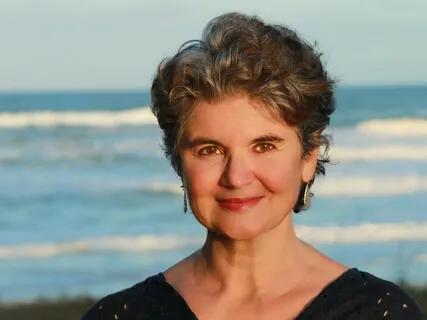
I'm your host,
Katherine Ingram.
The following is excerpted from a session of Dharma Dialogues held in Lenox Head,
Australia in March of 2019.
It's called Love and Loss in Friendship.
This is the original copy of I Am That,
The original orange copy.
It's taped up on the binding.
I've had it,
I think,
Since 1981 when it came out.
This is a collection of dialogues with Nisargadatta.
So in one of the dialogues,
The questioner says,
The person immersed in the world has a life of many flavors.
He weeps,
He laughs,
Loves and hates,
Desires and fears,
Suffers and rejoices.
The desireless and fearless Yani,
What life has he?
The Yani in Hinduism is the adherence to a wisdom tradition instead of a bhakti who's an inherent to a devotional tradition.
The desireless and fearless Yani,
What life has he?
Is he not left high and dry in his aloofness?
And Nisargadatta answers,
His state is not so desolate.
It tastes of the pure,
Uncaused,
Undiluted bliss.
He is happy and fully aware that happiness is his very nature,
And that he need not do anything nor strive for anything to secure it.
It follows him more real than the body,
Nearer than the mind itself.
You imagine that without cause there can be no happiness.
To me,
Dependence on anything for happiness is utter misery.
Pleasure and pain have causes while my state is my own,
Totally uncaused,
Independent,
Unassailable.
Not so desolate.
Independent being.
And Jesus said it too,
Lay not up your treasures where moth and dust corrupts.
We live in conditioning,
Generally speaking,
Of constant hunger,
Of constant yearning,
Of constant wanting.
Always something,
Just a carrot that's just out of reach.
Often that's the case.
And we in particular live in cultures where that message of wanting is being broadcast so loudly by the most powerful media ever in history.
It's very,
Very difficult when you're immersed in that conditioning and that in that constant message.
It's quite difficult to ignore it and to truly fall into the uncaused simplicity of being.
But it takes actually very little consideration to remember how lucky it is to be alive.
Right?
It's very,
Very nice to be alive.
We forget,
Amazingly,
We forget that we prefer life.
There may come a moment when the balance shifts and things get so miserable,
Then you're ready to go.
But for most of us,
Most of you ambulatory sighted people here.
Right?
It's pretty good.
And you can start to really reflect on how your own,
What in Sanskrit is called satchitananda,
The truth of the bliss of being,
The simplicity of being,
How your own experience of that is not far away.
It's near at hand.
And you can start to get used to turning your attention to that uncaused,
Unassailable.
Right?
Instead of living in a constant burning agitation of desire.
Or if only,
Or if the world were different,
Or if,
Fill in the blank,
Everybody has so many versions of the hunger.
So part of the emphasis here is how are you using your attention?
It's about how you're using your attention.
And your attention can be your ally.
Your attention can be reconditioned amazingly,
And in a relatively short period of time,
Not entirely,
It doesn't have to be entirely.
It doesn't have to be every single second you're going to be living in the bliss of being.
It's that more and more your attention can incline in that direction and have many,
Many moments through the day where you're experiencing a completely uncaused ease and delight and admission of how much you enjoy life itself.
And I always recommend ratchet down your senses of joy.
Just ratchet it right down to the most tiny little things.
So instead of the big things that you're going after,
Now you're just noticing the little things and they're sort of scattered about everywhere.
I think it's a similar question to what I asked last time.
You mentioned that little shift of attention doesn't take much effort.
I'd just be interested to hear if you have any tips about how to actually make that shift or in your experience,
What helps to make that little shift of attention and how you actually do it in practice.
Yeah.
In my own case,
I noticed that I make that shift when my mind has drifted into a dark hole.
That's when I make the shift.
Otherwise,
I'm not bothering with the mind.
So if it's just flowing along,
If the awareness is flowing along just as it does,
Noticing this,
Noticing that,
Focusing here,
Or not just floating in a sense,
I actually,
That's my favorite way as sort of a floating awareness,
I leave it be.
I don't really direct it much.
It's when it's getting into trouble.
Then there's an intervention needed.
Because it has become somewhat habitual over the years,
I don't tend to stay in the troubling phase too long.
I move the attention,
Especially if it's about things I can do nothing about.
Sometimes a problem arises that requires attention that you do have to give some focus to.
It may have disturbing elements with it.
That might take a bit longer in terms of looking at what can I do?
Is there anything to be done?
If there is,
What are the steps to do it?
But a lot of what we're chewing on,
Gnawing on in our minds that is giving us a kind of uncomfortable feeling,
Often you examine it and you realize it's not anything you can do anything about.
As soon as that is noticed,
Then it's time to redirect the attention.
Another clue is to really feel into your body.
If you start to notice your body is feeling nervous,
There's a nervousness running through,
Anxiety is kicking up.
Examine what's going on in your mind because it's usually your mind,
Almost always,
That is the root cause of the feelings in the body that are becoming more and more agitated.
Another wake up,
Another Dharma bell for this noticing is the nervousness in the physical system.
And then you just let it be your ally.
Think of it that way,
Like getting into a soup of a swirl of negative thoughts,
Fear,
Agitation,
Whatever it might be,
Regrets,
Especially if you've already gone over the regret,
And so on.
Jealousy,
All the usual suspects.
As soon as you start to notice the train of thought,
Let it be your ally.
Let it be the reminder,
The knock on the door that says,
No,
Move the attention.
And you don't have to replace it with some kind of fantasy,
Right?
Or some sort of Pollyanna story.
Like you don't have to say it's all perfect.
I used to always bristle at that one.
And what more appealed to me is it is as it is.
It's the suchness,
Right?
So,
You know,
You move back into things are as they are.
And let your attention be simple.
And come back to just the basics being,
With whatever you're doing or not doing.
And keep it really easy and just as basic as I'm saying it,
If possible.
Because if you make it a big how to,
You know,
If you think you have to do some program,
Or some sort of mindfulness practice or something like that,
It's yet yet another hurdle to jump over,
Right?
But if it can be just move the attention,
Going down a dark alley right now,
Move the attention.
It's just that simple.
Even if you have to do it many,
Many times,
Even in one short space,
You might have to do it quite a few times.
Right?
The mind might keep going back,
Especially if it's something that's captured the attention for some reason or other.
Or some piece of news you've just heard.
You know,
The mind will keep going back to it maybe for a while.
And so it might mean many,
Many interventions.
That's okay.
And to really give up a sense that you're going to have a steady state in this.
Right?
Another thing I feel is so unfortunate that people promise enlightenment,
Right?
It's such a kind of Leonard Cohen's teacher,
Sasaki Roshi once referred to it as a fairy tale for grownups.
A fairy tale for grownups,
Some enlightened state that you're going to be in,
Some consistent enlightenment.
Right?
We get sold these bill of goods,
You know,
By characters who are just not trustworthy.
And,
You know,
I often say they're either deluded or dishonest,
But in either case,
It's not a reason to be paying attention to them.
And,
You know,
We don't require that.
We're mature people who understand that there's a lot of conditioning.
A lot of it is biological conditioning.
A lot of it is conditioning in the reptilian brain that is going to have,
You know,
Fear arise and perhaps anger arise and all kinds of things arise,
You know,
Just,
You know,
That are just before you even have a thought,
You know.
So,
You know,
I stepped out of my back door a few months ago.
I went to my laundry line,
Which is around the back of the house.
And as I came around the corner,
What I apparently had not realized when I stepped out the first time was that there was a seven foot,
Three meters,
I think is what that comes to.
I don't know meters very well.
A seven foot brown snake.
I must have stepped right over it when I,
On my first time out.
And it was headed the other direction from,
It was facing away from the laundry line part.
So,
When I came back around the corner,
There it was slithering.
And all I did was like run.
I just ran as fast as I could past it and over to my neighbor's house to get help.
But,
I mean,
It was,
I can't say that there was a thought.
So,
Like that,
You know,
It's like there's so much powerful conditioning.
And then we have all of the childhood conditioning and we have so much conditioning.
You know,
To think that you're going to override it into some fairytale state,
Right,
Is,
You know,
It is like a fairytale.
And it's not necessary for a much increased sense of calm and happiness in your life and a much greater ability to be in more easy relationships and a much greater ability to truly not fuss over things that you can do nothing about.
All of those things that make life a lot smoother.
And I would even add,
Releasing this idea of a steady state is part of that relaxation,
A great part of that relaxation.
So,
Then you have no quarrel with these arisings.
They come.
Very few people have the kind of conditioning whereby their minds are just easy all the time.
Very few,
I would say,
In the world or ever in history.
It's just not that,
You know,
You can't expect that.
But can we work with what we've got and can we use our powerful neocortex to direct the attention?
Yes,
We can.
Thanks and so,
It all makes sense.
I like that idea of keeping it really simple and not trying to create some complex practice that you have to do.
Right.
Yeah.
And staying tuned into the body,
Certainly.
Yes.
There's a level of relaxation that's possible when I'm open.
Yeah.
Yes,
Indeed.
And also,
There comes a confidence with this habit whereby you know that the mind is going to keep defaulting,
Especially in trouble.
It's going to default back to its clear and safe spot quite a lot.
So,
A certain confidence starts to develop.
Right?
So,
Even though you might sense trouble ahead,
There can be a way in which you still are living very much in present awareness with the understanding that when trouble lands,
Your attention will handle it in the most intelligent ways.
Thank you.
Yes.
I wanted to say something about the phenomena where the body actually influences the mind.
And I know for me,
When I was thinking about shifting attention,
I'm very aware that my mind creates all kinds of experiences for myself.
But I also know that when I'm feeling some grief and sadness,
It's just in my body.
And I can just be feeling that,
But it's not generating a lot of thoughts,
But it might.
But it's just on body sensations,
It's a deep,
Very deep and old feelings that just don't shift for often a long time.
So,
When I think of shifting attention,
I know to bring my attention to that.
And I'll let it be.
That's what I do.
But it's painful.
Yeah,
Yeah.
I mean,
There are certain things that are just,
There's sadnesses that can live in our being.
And in a kind of,
I hesitate to use this word chronic way,
But there can be a kind of sadness inherent.
It's like the Buddha's first noble truth,
The truth of suffering.
There's a lot of sadness,
A lot of loss in this world.
Whenever I feel a little overcome by that,
My way is to counter it with some sort of giving myself some joy,
Like actually letting the sadness be a kind of wake up call to me,
Not to try to eradicate it entirely,
But to rebalance it somehow.
So,
If I'm starting to fall into some sort of sadness,
And I've had a tremendous amount of loss in my life in the last decade in particular,
I've lost a lot of my best friends.
Before that,
I lost my brother at the age of 38,
But I've lost a lot of my best friends.
And my father just died a few months ago.
And I feel like I know sooner turn around from one loss,
But there's another one that's either about to happen or just happened.
And so,
There is a kind of quiet sadness and also a kind of preparation for more to come,
Seems to be the direction things are going.
So,
What that does for me whenever I feel myself feeling a little bit like I'm going under the waves of it and need a breath of air,
I give myself permission to do something fun.
I just bump up the joy factor somehow or other,
Right?
And that's what I recommend,
To really counter it and really give yourself permission.
And it's not that you're ignoring or suppressing or not giving the sadness its due at all.
It's not that because it's still there in a way.
It's just that it's getting,
It's that you're acknowledging that it might be getting out of balance,
That it's getting to be a bit too much.
And there's no point in having yet another body on the pile,
That being yours,
Right?
You want to have your own self tuned up to be an inspiration to others and to help out where you can.
And there's nothing more inspiring to me than to be with someone who actually does get the sadness and yet who's sitting there manifesting in a whole way and is still able to laugh and is still able to see the beauty of things and still able to have fun.
I like having both of those on the table,
You know,
In my relationships and my friendships and among the people I admire,
The people I most go to for as my teachers,
As my mentors,
They have all had that blend.
I really have no use for people who sell some constant happiness program and I can't read those kind of books,
Never have read one of them.
You know,
I really get,
I started being attracted to Buddhism when I was a teenager,
You know,
Because of the first noble truth.
As soon as I heard it,
I thought,
That makes sense.
You know,
The truth of suffering,
That makes sense.
That's the background of everything that we have to experience while we're here,
That we are dealing with continual impermanence in all of our joys as well,
You know.
And so,
To just say,
Okay,
That is the nature of things here.
Now,
How do we dance with this?
You know,
How do I still continue to dance with this?
Someone wrote me the other day.
He's a Harvard professor of psychology.
And he told me something in this note that he wrote me.
He said that his wife makes him watch Titanic once a year.
I guess she loves the movie.
And he said,
The only scene that he really,
Really enjoys is the one where the musicians,
When it becomes clear the ship is going to sink,
First they pack up their instruments and they're about to leave the area where the music is happening.
But then they realize there's no point.
So they go back to their instruments and they continue to play.
And I just love,
I loved that scene as well.
And I had kind of forgotten it a bit,
Even though I knew that historically it was true,
But I forgot that it was in the movie that clearly.
And I love that he loved that scene.
And in a way it's kind of our situation,
Isn't it?
Right?
So are we going to still play the music?
Are you still going to risk your heart in love?
Are you still going to be giddy with happiness over stupid things?
Right?
Laugh over silliness and have fun with your friends and make jokes and,
You know,
Do all those things in a full wholehearted way with this awareness?
Could it be even that having the awareness of the sadness,
Of the impermanence,
Of the inevitability of more grief,
Could it be that that gives even greater power to our moments of joy?
Imagine those,
Imagine those musicians playing beautifully on the deck of the Titanic,
You know.
Thank you.
Yeah.
My experience with this has been that I feel more deeply and richly and which is sometimes intense.
But also I really have come to value it.
Like when my daughter was born,
I remember sitting there with her and kind of already losing her.
And it always reminds me of that,
This cup is already broken kind of thing.
But yeah,
It was like such a more profound experience,
I think,
In love.
And yeah,
But it hurts more sometimes.
Do you find that as well?
I do.
The pains are more painful than pain.
Yes,
I do find that.
Yes.
Because one is just naturally more sensitive,
The more,
If you live in the quieter,
Deeper places,
You just notice more.
And so you are more sensitive to both joy and pain.
Yeah.
I found that really hard to reconcile at the beginning.
And I do find a physical practice helps me,
Like the unembodied practice,
I think,
Not so much a movement practice,
But spending time in my body to allow those things to be felt and letting them just flow.
You know,
If I need to have a cry,
I have a cry and try not to suppress it or make it bad or anything like that.
But yeah,
On the flip side,
You have a lot more fun,
I think.
It's like that poignancy.
It's like you remember that these moments are short and sweet and yeah.
Yeah.
But yeah,
It's still hard.
Yeah.
Yeah.
Noah,
You know,
I think a lot of people avoid going any deeper in themselves because of the intensity of that much more feeling in general.
I do think that when you start to open up,
It's just that the whole spectrum widens.
So you're getting a wider spectrum of feeling and of experience.
So you get more joy and more sorrow.
But I think a lot of people,
It's kind of unbearable to feel that much.
And it takes a lot to bear all of that,
Doesn't it?
I think some people are just constitutionally not that strong somehow to really,
You know,
There's a book by Martin Luther King Jr.
I think it's from one of his talks and it's called The Strength to Love.
You know,
Because if you love really,
Really,
Really deeply,
You know,
You get on the one end the benefit of love,
You know.
And then the other end,
You're at risk for the loss.
Yeah.
Which will come.
Either you or the one or thing you love,
You will be parted.
So yeah.
To your point about becoming a mom,
One of my friends told me long ago,
Shortly after the birth of his son,
Who's now 30 some years old,
But he said,
I held that baby in my arms for the first time.
And he said,
I've never felt so much love and so much fear in one moment.
My teacher calls it,
One of my teachers calls it widening your bandwidth,
Which I always really like,
In that sense of being able to hold a higher frequency or a wider frequency of experience.
Similar concept.
Yeah.
And I think I noticed it when I fell in love with my daughter's father,
Which was the first time I'd felt like I loved someone without needing it back,
But also that it was already lost kind of thing.
And I remember it was actually grieved before I even like told him I had to go through this grief process.
And it was really,
It was really difficult.
And I,
Yeah,
I've found,
I don't know,
I found that a really challenging thing to live with in my life.
But yeah,
I love that you said that I often have that sense too.
It's like,
You know,
I sometimes feel like a weirdo.
I sometimes feel like a bit of a weirdo.
Or maybe I'm quite a weirdo too.
But I like the weirdo club that I'm in actually.
Yeah.
No offense fellow weirdos.
Yeah,
No,
I so appreciate what you said.
I have a great resonance with it and also have that same experience.
Yeah.
I'm so glad you've addressed this.
I'm so glad you've addressed it.
Yeah.
The flashing through my head,
I looked at my dog who's nearly 11 last night on the bed and I'm regretting how little time I'm spending with her.
And I went,
She's here now.
Yeah.
This could be the last moment.
Yeah.
It's,
It's be here now with her.
And every time I look at her and feel that love,
It's that agony.
It's,
And I don't understand when we're surrounded with just snap out of it,
Let's be happy.
I can't even be bothered putting that voice on.
Yeah.
It's a bit of a story this one,
But a friend I've been doing a lot of support with lately has ditched me because I've reconnected with the man love of my life.
I find this so sad for her that she said,
I can't be your friend if you're going back into that relationship.
How lonely she must be.
Not to value a friendship that will ride through the storms.
We've got to have,
You know,
I keep seeing courage on here and I saw it as courage,
Rage.
I don't know,
But it does.
It brings up rage in me.
I think when the courage,
The love is denied,
Defied and vilified out of fear.
And it,
Yeah.
And I always hear that song.
Love hurts.
Yeah.
I don't know how to live any other way,
But.
No,
And I think that we have to,
With our friendships that sometimes,
You know,
You walk together on a path with someone side by side for a while and then for one reason or other,
The paths diverge,
Right?
A reason and a season.
A reason and a season.
A reason and a season.
Yes,
Exactly.
And it takes a certain strength of love to really quietly bow to that change and to try as much as you can to release whatever story is haunting you or going over and over.
If only she would have more understanding or be different or only if I hadn't said this thing or just to really to understand.
I quote this quite a lot.
Maybe you haven't heard me say it,
But it's from a teacher long dead,
Ken Keys.
Love is not necessarily a basis for involvement.
So sometimes,
Sometimes our love with someone,
Our paths diverge and it's not a basis for involvement,
Right?
The love can still be there.
It just maybe needs to have a new form and that new form may even be that you don't see each other.
I have quite a few of those actually.
I was going to say several,
But there's getting to be more than that.
Right?
You live long enough and you know so many people and you have this or that and whatever and it's amazing how sometimes the appropriate level of engagement might be quite seemingly far apart.
It might be just an occasional email or not even that.
Right?
And if that's just the truth of it,
You know,
If you're triggering each other in your company,
Then maybe the truth of it is it needs more space.
Give it some air and that air might be quite a lot.
Whereas with other people,
Mercifully,
It's like water into water,
You know,
Or self onto self where you're with them.
You know,
I said in a piece that I recently wrote about my friendship with Leonard Cohen,
I said in his company,
I never censored my thoughts.
Like I could just say anything like the most crazy or politically or incorrect and I mean,
Whatever and usually we agreed with each other so it was safe.
But I mean,
Even if there was times when if I said something and he had to kind of stop and think about it or kind of let it in in some new way and the same on the other side,
It was always safe.
It didn't,
There was never,
Right,
I mean literally never ever a moment that I wanted to take back in conversation and I would just say the most outrageous things.
Just as you could imagine if you had stream of consciousness coming in your speech out of your mouth.
Very few people you can really do that with,
Right?
And so,
But then you have to ask yourself,
Well how much censoring am I actually willing to do with someone just to take care of them so that we don't have a conflagration,
Right?
So,
You know,
If at some point you find yourself you can't actually be even real at all,
Even if you do limit what you're saying,
Right,
Then it's too much work,
Right?
And you have to just bow.
So,
If something about how you're living your life is agitating to someone,
What can you do?
Nothing.
I feel like this,
The wisdom and the ego are two left-footed dancers in my head.
It's,
The ego wants to go in and right the wrongs.
Wow,
Yeah.
And the wisdom wants to accept what is and it's.
I would go with that one.
Yeah,
Because you've got a left and a right.
Let us start to lead the dance.
It's such a,
I've been doing it,
But I've been faking it.
I told myself I'm okay.
Well,
You know,
Fake it till you make it actually.
I mean,
Sometimes one does have to,
Even in a kind of willful way,
Resist engagement,
No matter how satisfying the ego pronouncements might be,
Right?
You resist until something quiets in you and you're happy you resisted that pronouncement.
Because often what happens is you just have more blowback material and it just gets worse.
The fire gets higher in the sky,
You know,
And in your mind.
So,
It's actually a very withdrawal from a conflagration like that.
It doesn't actually mean some sort of resignation.
It's a clear enough statement,
Right?
I'm a big fan.
I'm a big fan of,
I call it timeouts for grownups.
And I'm amazed at how effective and how clear the communication is,
Right?
If somebody withdraws from you,
Let's say something's happened and somebody takes a step away,
You pretty well know why.
There's very few times when you're saying to yourself,
I have no idea what happened.
Now,
Maybe once in a while,
But usually you pretty well know why,
Right?
It's a very clear communication and because of its gentleness,
It doesn't leave the other person much to,
You know,
Bang up against.
So,
Maybe in this case,
Right,
Since you're engaged in a relationship that you want to be in,
And that that is what you're going to do with your life at this moment anyway,
Then you bow and say,
You know,
It is the suchness of things.
The getting to know self,
I lay there all night doing all these stories in my head about this.
And then right,
I'm going to send an email this morning and then I'll do it this way,
This way.
So,
I've given myself little bus stops on the way through today.
And one of them was,
Don't do anything until you come and sit with Catherine and the gang.
Okay,
Well,
We're going to check this one off the list.
So,
That's a little bus stop.
It was like,
Let's just go sit on a bench there.
Yeah.
And so,
I think the getting to know through these years as they pass and getting to know myself and it's like,
Okay,
The old me would have got up at two o'clock and written the email.
Yes,
Yes.
So,
That's a nice recognition of the wisdom winning.
Yes,
Yes.
Well,
It's also,
I think,
A generally good practice to wait until one is in at least a bit more quiet space to give it pause.
There may still be times when something has to be said,
Right,
That the silent way isn't necessarily always exactly the way to play it.
But it's also even when there are words to be said,
It's good to calm down first.
It's good to really ask yourself,
Okay,
Can I say this in a way that they can really hear it?
And can I say it from a place that is intending that higher good rather than putting them in their place or punishing them or basically making them see how foolish or ridiculous they are,
Right?
Any of that is going to be sensed on the other side,
Just as we would.
But if you have someone speak to you,
And we have all perhaps been so fortunate to be in this position whereby we misstepped and someone in vulnerability and honesty comes to us and tells us clearly how that hurt and without a heavy duty blaming and without unkindness,
Right,
But just straightforwardly,
That's a very powerful moment on the receiving end,
Right?
That's a really powerful moment.
So,
You know,
To keep it in your own I language that is experiencing what you're speaking from what you're experiencing directly,
If you do decide to have that conversation,
And to have the very strong intention inside oneself that your motivation in this is to take care of both of you in it.
Hi,
Catherine.
Hi,
Everyone.
Hello.
Thank you for having me today.
I just whenever I sit before you,
I always I mean,
Or how,
How wonderfully gracefully and effortlessly everything I have to question gets answered before I even have to speak.
So I just want to acknowledge you thank you and everyone here.
And this beauty that we live in.
Yes,
I lost a friend couple of days ago.
And I've been going through the whole gamut of shock and grief and sadness.
Your friend died.
Yeah.
Yeah.
And on the flip side of that,
It's like she's showing us so much beauty.
Yeah,
You know,
How beautiful life is and how well she lived and how kind and generous and loving.
And that hasn't died.
No,
You know.
And so I wanted to party today.
So I came here.
I always feel so good.
So topped up and I just want to technology and thank you.
How lovely.
Thank you.
It is amazing.
Again,
I quoted Leonard who always has the best lines,
But I recently wrote something and I quoted him.
So come my friends,
Be not afraid.
We are so lightly here.
It is in love that we are made in love we disappear.
So true,
Huh?
Yeah.
And then and then that in love we disappear.
It's just like this this fragrance that's left behind of you and of the friend or of the parent or you know that you kind of that's what you that's where they still live in in your heart.
Right.
It's like it just keeps getting passed along and informs and tenderizes you know and tenderizes us.
Sometimes I ask myself like with all these losses I've endured.
You know,
What's the upside?
And one of the upsides is that I feel I feel about the ones left behind a lot more preciousness.
You know,
I don't take them for granted.
Yeah,
I think that's what I've been witnessing is how I now look at everyone around me.
Yeah,
With much more love and understanding.
Yes.
And myself.
Yes,
Yes,
Yes.
Which is huge.
Yeah.
Yes.
Yeah.
And connecting into what is real,
You know,
What is important.
Yes,
Indeed.
It's kind of a it's not quite formed yet as a question but it's around choices and making decisions.
When there's a sense of making a decision I find that's when I get really I can get really turned into it.
And it's really nice to actually sit here and get that broader perspective and it becomes less important.
And nonetheless there's still the decision.
And sometimes when I am faced with decisions there's like there's an easy a choice that feels easier or a choice that feels more challenging,
Less comfortable.
And I remember like back in my early 20s when I was just coming out in uni I'd go a lot by I'd choose by feeling I just wouldn't even quit like I just kind of abandoned my mind and have had the privilege I guess of feeling very free and spontaneous and not thinking of a lot of long term impact or consequences.
I would just follow the feeling and what felt good.
And then through the course of my life some of those decisions resulted in well now I have children and a mortgage and the mind kind of has come in thinking oh well maybe I should actually be a bit more involved in this decision making process.
And so there's kind of the feeling and then the mind and the strategy and then the balance of all of that and then the gut as well I guess.
And so now when I have these decisions this is the bit that's less formed it's like sometimes there's a deep feeling to want to do something that feels challenging and less easy.
And then there's a more easy comfortable part.
Yeah I just want to hear about which way to lean or whether there is some.
Yeah I don't know if that's.
Yeah no it's a good question and you know I guess what comes to me to say is find if you can feel into the motivation because sometimes there can be a motivation that is very beautiful but it might mean that the activity that it demands is going to be pretty tough to do to pull off right.
And but because the motivation has a kind of purity to it you in a way surrender your own ease in its service right.
So there are lots of people who you know who are operating from that level of motivation because the motivation their identity if you will is for the greater is the greater whole right.
So that would be that would be the place that I would say to get clear on.
And then if you find yes there's something calling me that wants to give myself away in some creative way whatever that might mean whatever creative circumstance you're being pulled to then somehow energy comes to do it even though it still may be quite hard to pull off right.
It still may be that.
Now if you're sort of having to be whipped along to do something based on more sort of ego motivations and some part of you wants to just not bother I would say yeah sure go with that not bother because you know I feel again as I started out this session we live in a constant projection of having to somehow assert somebody out there who's doing something that's cool and should be on Instagram and have 200,
000 followers and you know and it's just this constant it's a hungry ghost realm that a lot of people live in and celebrate right and are paid fabulous riches for.
So if there's any hint of that I would say run from it but if it's coming from a different place in you that feels and fair enough that you feel okay I've got this limited time here on the planet and I have certain talents and I would like I would just genuinely like them to be used up right.
If it's just that then yeah then you follow follow your North Star in that and not everybody is so lucky that the following of that North Star puts them in a circumstance where it's just so easy to do right not many people have that a lot of people who are following and are very satisfied in their work it's still very hard right.
I woke up today and I've been very busy of late and a bit tired and I woke up today and when I realized it was Sunday and I had darvid diolence I went oh damn.
Now of course I shook that off and pulled it off but um but and and and joyfully so and and of course I love my work and I feel very very very privileged right but do I love it every single minute or are there not times when I'm tired and I just feel wow you know or I've just arrived now not so much anymore but for 25 years I was traveling you know and often in strange cities staying in somebody's you know attic you know and definitely but something there was a bigger greater motivation and a greater sense of satisfaction than my particular ease right yeah yeah thank you yeah so really look at where where's the push or the pull coming from yeah yeah yeah.
The other thing that's coming is kind of coming as you say that is and I don't know if it's another fairy tale but there's so when I'm when I've made a choice or I'm living a certain thing out there's this sense of is this a full yes like a full-hearted yes and that may be a fairy tale because I actually haven't felt a full-hearted yes right some things one does get a full-hearted yes right but maybe some other things you're just getting a mostly yes you know right yeah settled and at ease and yeah but there's a niggle or you know too yeah and that's okay too of course yeah I mean it's certainly nice to just move through space and have always the full-hearted yes that you're following but again rarely do we get that yeah so just like me this morning so but the greater yes is of course there.
This has been In The Deep.
You can find the entire list of In The Deep podcasts at katherineingram.
Com where you can also book a private session by phone or Skype or make either a one-time or a recurring tax-deductible donation.
Assuming you like these podcasts we would also appreciate a review wherever you're getting yours.
Till next time.