I,
A few years ago,
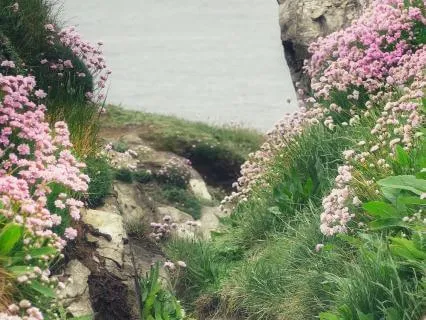
Planted a jasmine hedge along one side of my property,
And it has so grown into a magnificent thing.
And at the moment it's blooming with thousands of jasmine flowers,
And it blooms for quite a while.
And I usually have a few sprigs next to my bed through the night.
And I find the scent of jasmine very enchanting.
As we know,
Our sense of smell is very,
Very connected to memory.
It's probably one of the great evolutionary advantages that we've needed over the long walk of our time.
So there's inevitably an experience when one has a strong smell that's associated with other places you've been,
That you find yourself thinking about those places,
Remembering them.
So in this case,
For instance,
I can be smelling the jasmine around here and suddenly I'm having a flood of memories about being in India,
Or the night-blooming jasmine in Los Angeles when I would go for walks at night,
Or Hawaii,
A lot of jasmine around in Hawaii as well,
And many places.
It's a simple pleasure.
It sort of connects me to the journey of my life.
Not that I think,
When I have those memories,
Not that I think a whole lot about what was happening and what was I doing,
It was more you just sort of momentarily land in the place.
You stick the landing into a certain moment,
A certain spot in time.
And I'm aware as I'm living the current moment and smelling the current fragrance of the jasmine of how these moments too become stored in memory somehow,
However imperfectly.
But nevertheless,
They're getting recorded in a strong way because of the very pleasant smell all through the night,
As a matter of fact.
I say this by way of saying that our daily experience now is your treasure.
These are your moments of these days.
These are your treasures.
We're often waiting for something else to happen,
For the world to get back to normal as this.
I think we left normal sometime back,
Whatever that was,
Whoever got to say that was normal.
But nevertheless,
Whatever we thought was the usual norm of life,
I think we'd better adjust to a great unknowing,
A great mystery,
And count these days as your real treasures and not ask for some other version of reality to go back to a certain time that you felt was better.
Let this be your treasure.
Let this day,
Let this smell of the jasmine or of the spring blossoms or the summer blossoms wherever you are,
Let those be your new treasures.
Let those be your newfound memories.
It will only hurt to lament ways of life that are now not on offer,
And it will gladden your heart to celebrate what is on offer in the now.
And there's plenty,
There's plenty.
Even that we can have a conversation like this with friends from around the world.
That's a really amazing thing,
An amazing privilege,
Something that most people of history couldn't dream of,
Literally couldn't have dreamed of.
Maybe Jules Verne could have dreamed of it,
But most people couldn't have dreamed of it.
There's a tendency we all have,
It's very conditioned,
To take things for granted.
And this is another habit that can be challenged,
But you don't have to do it every minute of the day,
Having to constantly remind yourself,
Don't take this for granted.
That would be oppressive,
But to have a light intention,
A light intention that's just moving through and being grateful here and there,
Through the day,
Cutting down on the whining.
Sometimes I say to myself,
Literally,
Stop whining.
So I'm particularly happy in this phase that I'm in because the jasmine are blooming away,
And then I also planted loads and loads of gardenias.
They start blooming about a month after the jasmine is finished.
So these are my little small joys,
And there are many more in my life,
But I really let myself have these words.
It's something that I allow my attention to focus on.
I'll walk outside and stand on the deck and just smell,
Just breathe.
My niece,
Who's on this call,
Told me yesterday that,
You know,
In the midst of all the uncertainty about life in all our countries,
She happens to be in the USA,
She was sitting on her deck,
I think she said,
And a little hummingbird was just hovering all around her,
Very close to her face,
And she was just in this pure presence with the hummingbird.
Just in these minutes of hanging out with it,
Just all around her,
Flittering and fluttering all around her.
These are your treasures.
There's a lot of things that are off the table now.
It's really difficult to make plans.
We have some things that are limited now,
But we do still live in extraordinary abundance,
And it may not be as much as we're used to,
It's still plenty.
Let's use our attention intelligently,
Wisely,
Dharmically,
Gratefully,
Lovingly.
Let's use our attention to feel a sense of well-being that transmits to other people.
Being able to draw on a kind of a well of experience and memories is obviously a very important thing for us to try to put into practice in these times of everything being sort of,
Well,
Lots of things,
Not everything,
Not everything by a long shot,
And that's your point,
But lots of things being curtailed and circumscribed or just being simply off the menu.
That is something that I feel like I'm starting to be able to put into practice,
Because indeed I've lived a charmed life,
So I do have a well to draw on,
But one of the things that is really troubling me is my son,
And he's 11,
And he doesn't have that emotional buttressing of a life well-lived and lots of satisfactions or challenges overcome or regrets put aside and all of those things that most of us here on the call are of a certain age where we've got a great sort of stock of things to support ourselves with,
A life well-lived,
A sense of satisfaction.
I mean,
If things really do just take a dreadful downward spiral,
I could console myself that I've had a life well-lived.
And then your point about Henny Child,
The question,
That fundamental question,
Would you have rather not been born at all,
Had 11 great years of love and a fun family life.
To him going forward,
He's busy building new memories,
And he has to a certain degree a well of memories and experiences to draw on,
But that's not of great interest to him.
He's busy looking outward.
I've been quite comfortable looking inward these past 18 months.
Well,
Comfortable might not be the word,
But I'm happy to do it.
I'm at an age where that comes more naturally,
But that's something that I'm seeking your advice and anyone else on the call,
Please.
Anyone else who's had experience with children and helping them,
Giving them the tools to tell a child to tell their expectations.
First of all,
When I was talking about memory,
I was more talking about these spontaneous associative memories that arise with certain smells and certain circumstances.
I wasn't necessarily suggesting to go fishing for them in the past.
I would say to you about your son,
He doesn't have to be conceptually prepared in any way.
He's being prepared by the strength of love that he's experiencing as a child.
That's the best possible preparation for providing a kind of psychological stability for whatever comes.
You don't need to be talking to him about,
At least at this point,
About resetting his inspirations or goals or whatever.
He's in a kind of developmental process,
Which you can just let roll on.
These children are going to,
As I've said to you and many other people,
They're going to get whatever amount of life they get.
We can protect them as best we can,
But as we all know,
We don't control the universe.
We don't control much at all.
So the main buttress against sort of horrible psychological collapse is feeling a sense of connection,
Feeling a safety within one's family,
Feeling loved,
And having only met him once.
I can see in a glance,
He's a joyous child.
He's been well loved.
There's nothing more strong than that.
I think sometimes we make the mistake,
And certainly it can work that people who've been through hell and back can develop a certain strength.
But sometimes we make the mistake that people who haven't been tested that way or haven't gone through a whole lot of FAMA,
That they might be more soft or they might fall apart more.
As it turns out,
People who've had a lot of abuse and anxiety in childhood,
It actually causes a very quick response to anxiety in later life.
It basically increases your tendencies to anxiety throughout life.
It's like a double punishment.
You get punished in childhood,
And then you're basically more anxious going forward.
That's very well known and measured.
Whereas,
I think kids who've just been so well loved can often roll through hard times better than one would think.
Just because you haven't seen them have to go through that doesn't mean that they don't have what it takes to do it.
And in the meantime,
Happy childhood.
Your whole job as his dad,
Happy childhood.
You don't have to be scaring him with anything or getting him ready.
It'll happen gradually.
The kids are so hip these days,
And they're all connected to each other,
And they're all talking,
And they're a great,
Strong peer group for themselves.
They're processing things in their own ways.
So it's not only on your shoulders,
In terms of how much information,
How little,
But you can be just the solid rock,
The big shade tree,
The loving arms,
The guy who fixes stuff around the house,
Gets the- Listen to his patient bling.
Yes,
You're right.
And it would be just almost a constant koan,
I think,
For many parents,
Like,
What do I say?
What do I do?
How do I prepare him?
I just don't know if there would be any good that would come,
Especially to someone as young as 11,
Maybe later in the teen years.
And I have friends who are talking to their teens,
Very honestly.
But you asked for another view.
And my niece,
Who's got an 11-year-old daughter,
She's got two kids,
One's 11,
Your son's age.
I know,
There's lots of other parents on the call.
I was thinking about the 11,
You said the 11-year-old.
I think that the kids do a remarkable job of staying in the moment.
And so I do think that's something that,
Especially my younger eight-year-old,
Just really living,
Enjoying moments and living in the moment.
So I think that's something that I feel like I'm relearning,
I'm getting every day from them,
Definitely appreciating the small things,
The things that,
Finding joy in things that adults overlook.
And so there's a lot of that.
But the 11-year-old,
In my case,
She is very mature and she is seeing the way of the world.
So I do admit to struggle a little bit with that and just the protectives I convail.
So I think what you say there,
Catherine,
Is really what I think about every day.
We talk about this as just providing the comfort and love and the open arms,
And that is really giving,
It's making her well-equipped to go forth and handle everything.
That's great advice to flip it.
Yeah.
That's a real little nugget of gold.
That's yeah.
He can show me how to navigate some of this by taking those small pleasures,
Which is innate and natural for children.
This is what Catherine keeps trying,
All of us,
Crusty old grownups,
Get tangled up in bigger things when the kids just naturally find delight in little things.
Yeah.
And another memory that's coming to mind is,
You know,
As I began to become more and more alarmed at what was going on on the planetary level,
This goes back quite some years,
But probably at least 18 years ago,
I said to Leonard,
How do we speak about any of this?
How do we warn anybody?
Can we possibly have conversations?
It'll scare the bejesus out of everyone.
And Leonard said,
There are things we don't tell the children.
And of course he meant not just the little kids,
But in this case it applies,
But also lots of people are not ready to hear the really bad news.
And there's no point.
Why should we scare them?
Why should we tell them?
Unless it's a warning that will get them out of an immediate emergency,
But if it's something that there's not a lot to be done about,
Then,
You know,
There are things we don't tell the children.
And that's just,
That's how it has always been with adults.
There's no need.
So I would just say,
Have fun with him and let his joy infect you instead of your concern infect them.
You're the parent,
You know,
You've got more information,
You're watching the trends of the world.
You can't help but know certain things that he just doesn't need to know right now.
I think the big takeaway for me today so far is stop whining.
I think it may be my new mantra,
Saying this tongue in cheek,
But you know,
Those,
Those whining moments,
I know enough to know that they don't benefit me.
It's not like this authentic expression that needs to emerge around something like grief or,
Or anger.
Sometimes the things that I need to feel,
And if I try to damn them,
Then the process doesn't,
It doesn't resolve itself.
Yeah,
Well,
Like the whining,
It just,
You know,
It's like,
It's like a mosquito that can just keep buzzing in your ear.
That's a great,
Great image.
Yeah.
I moved to this new house.
I feel really lucky,
Really lucky and privileged to be able to own a home,
Especially in Portland,
Where the market is,
Is really tough right now.
And everything about this place fell into,
Fell into place so easily,
Like it was my first day looking,
It was the second place I looked at,
The first wooey bid I submitted.
And I got a feeling,
I got a feeling in my heart and I got a feeling in my gut when I walked in of just like,
It's magical,
It's meant for me.
And,
You know,
Didn't know if I would actually get it,
But I did.
And it all happened really quickly.
And then I had about a month prior to moving in to like come by and really feel the place out,
Feel the sounds,
Feel the garden,
Feel the light.
And turned out the sounds are really loud.
It's on actually like a major intersection that's very well covered by a hedge,
But you're close to a very busy road.
And I didn't,
I didn't think about this the first time I came by.
I was just so kind of enraptured in so many smells and so much beauty to feast the eyes on.
But so the sound kind of fell into the background and then I started coming back and it was way in the foreground.
And the first few days I lived here,
I was just fixated on the rising and falling of these engines as they come to a stop sign right out front and then accelerate again.
And the first night I tried to sleep,
Didn't happen.
And,
You know,
I just I'm up at night thinking,
Oh,
My God,
I just bought a house that I'm not going to be able to sleep in or find peace in.
And,
You know,
As I'm getting used to it and finding anew the capacity to rest my attention on other things that bring me joy,
I'm finding that there's a kind of a letting go,
Like I'm wanting on the one hand to just have some neurofeedback machine reprogram my mind so I don't have aversion to loud sounds.
And on the other hand,
I'm finding this,
Ah,
So this is as it is right now.
And I have so many little gems to feast my other senses on.
And the capacity to practice,
I mean,
I feel like I'm kind of in like a getting a little.
Redisciplining of my attention because as soon as I get complaining about it,
Then it's just loud sounds and complaining inner loud sounds,
Which is exciting.
Yeah,
It's just an amplification of noise in and out.
We and,
You know,
Barking dogs will go off somewhere else and,
You know,
You can just get stuck on that aversion loop.
But finding in that the capacity to actually let it pass,
Rise and fall and pass,
It's powerful.
It's it's a kind of retraining that I think ultimately will be of benefit.
Absolutely.
Yeah.
I've had many times in life,
Different circumstances,
Whether it was,
You know,
Renting a house in Hawaii and discovering that there are all these roosters nearby that are crowing at right before dawn and the break of dawn.
And I'm not an early morning riser.
And,
You know,
And thinking,
Oh,
My God,
You know,
I'm going to be woken up every day at dawn.
But after a few days,
I didn't even hear them anymore.
Or if I did hear them,
They were just somehow in the dreams and it didn't wake me up.
Or in New York City,
Where you visited me in that apartment on the Upper East Side.
And,
You know,
I mean,
I moved there from a quiet situation and when and suddenly it's sirens at night and traffic and horns honking.
And but again,
I just got used to sleeping.
It just was a different background noise.
So maybe just as you're describing,
Open your mind to an adjustment,
Because of course,
If you're being in resistance to it and thinking,
What have I done?
I bought a house and it caused a noise.
And,
You know,
If that if that story,
If that whining of those mosquitoes are buzzing.
It just intensifies the resistance.
One more thought I'm having,
Too,
And it's another lesson I've learned over the years,
Which,
You know,
Maybe you wouldn't have been able to get such a nice house if it wasn't a very quiet place,
Because maybe it would have been a lot more expensive and a lot more people after it,
You know.
So in perhaps some way,
There was an advantage.
That's sort of,
You could frame it that way.
Yeah,
Yeah.
One more thing,
Catherine,
I liked what you said at the end of your intro about just like.
The not you didn't say the word necessity,
But just like there have been times in the past when you've described just such open ended attention,
Like such non doing.
Such open,
Like open perspective,
Open mind,
And I heard you saying today a little bit like maybe a little bit more energy around really guiding attention right now during these times when there are a lot of things we can't have and pleasures that we can't indulge that like really requires our discipline to change the channel from the whiny mosquito of our own dissatisfaction to a more active appreciation of the choice.
And you got that one exactly right.
I find in my own case,
I am having to use stronger attention and stronger intentionality than has been the case for decades,
Actually.
Things feel closer in in terms of the pressing in,
And there's a wobble through the world of anxiety.
And as you know,
I pay a lot of attention to the news and to really like the under threads of the news.
And I'm very,
Very aware of tremendous shortages that are going on in the world.
Supply chain disruptions,
Things that are going to have knock on effects for probably all of us.
And there are psychological costs of having to make these adjustments.
So I'm making those two more frequently.
That's how it is,
As humans have had to do in hard times,
In terms of uncertainty,
In terms of how's all this going to go,
In terms of potential cutbacks of all kinds of things we rely on.
Those thoughts can't help but float up in awareness as potentials,
As possibilities.
And so I am applying more direct the attention,
Move the attention,
Not into fantasy,
Into now.
I said last night,
It was a phrase that came to me in the quiet part before I began speaking,
And I'm not sure I can remember it exactly,
But it was something like,
The future as a concept,
Which is all that it is,
The future as an idea,
As a concept,
Is always unresolved.
It's always unresolved.
So it has a little tension built in,
Because even if,
Even if let's say your future is about dread,
Well,
That has certainly tension built in.
But even if it's something,
Something good,
You're not sure it can happen.
You're not sure it's going to happen.
You might get thrown off course.
So you just never know.
It's always as an idea,
Which all,
It's all that it is,
Is unresolved.
Whereas the present as a lived experience is always in full resolution,
Always resolved,
Here and now.
It's just what it is.
That's it.
I have for years had a cartoon on my refrigerator and it was a Zen master sitting with his student.
And apparently the student has just asked a question and the caption Zen master is saying,
Nothing happens next.
This is it.
It's sort of like when you're just sort of resting in,
Okay,
This is it.
This is my present moment.
This is the most alive one we have.
All the future ones are all just completely unresolved.
Who knows?
But this one,
The aliveness of this one is where we can rest.
It's resolved.
Hi,
Katherine.
Hi,
Dear.
It's my first time here.
So thank you for that.
Yeah.
The thing that I wanted to just say is that I've been on a long journey of my mom passing away and what you shared about the smells and how that brings up so many sensations,
Thoughts,
And also reminded me of expectations.
And in this time that she's going through this dying process,
I've had so many expectations of how the end would be,
How the end will come,
How we'll have this Kumbaya and we'll sort out all our issues from our whole life together and we'll find peace and wholeness and she'll essentially open up in a way that she never has.
And that's not my mother.
That's not my mother at all.
She's the very kind of closed and private person.
And I think you're just reminding me how I've gone through this simultaneous grieving process as well,
Not only losing my mom,
But also losing the hope of having this nice kind of what I would want,
Right?
This kind of,
I'm a,
I'm a therapist,
So I always want to talk about my feelings at the end of the process and share and have a good cry together.
But,
You know,
That's just not,
Not what she's wanted.
And I think as I'm going through this with her,
What I've learned that reminded me of your flower example is how the simple things can just bring me into the present with her.
And she can't really speak right now.
And just,
You know,
The other day I went over there,
Just held her hand and laid with her and listened to the rain or,
You know,
I brought in some flowers and some essential oil and a diffuser and,
Or I rubbed her feet or,
You know,
Things like that,
That I think can,
Can be so much more than words and tears and sharing.
Oh,
Yeah.
Beautiful.
I've told this story many times,
But one of my very close friends in Hawaii,
She did a training,
A hospice training,
And her teacher said this one thing that she applied in her work,
And actually she applies in general.
He said,
Your job is to be a non-anxious presence.
It is a need to be.
When you're sitting with someone who's dying,
You don't have to have the big understanding and the big talk and the big meeting of souls and hearts and minds.
People tend to die as they've lived,
I hear.
You know,
I'm sure there are great examples that have been,
People have breakthroughs,
Which would be the time to do it,
But a lot of people don't.
And your breakthrough can be that you were able to be a non-anxious presence at her bedside,
That you didn't want more than that,
And,
And when you think about being on the other end,
If you're busy dying,
You wouldn't want to have someone in the room who wanted something from you.
Exactly.
But having someone in the room who's just chilling and is giving you their good company in a kind of quiet,
Simple way,
That would be very welcome,
I would think.
I always loved the simplicity of that,
And I also apply it just in general.
Like if I'm,
You know,
If I'm just with people or if I'm in some circumstance where I maybe don't feel so connected or whatever,
I just figure all I have to be is a non-anxious presence.
Thank you for sharing that.
You're welcome.