Welcome to In the Deep.
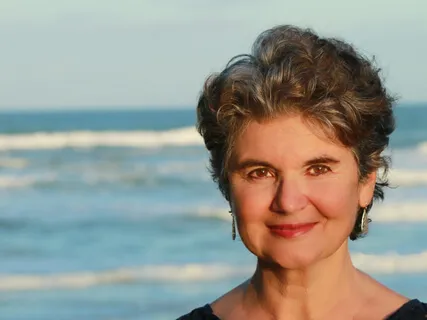
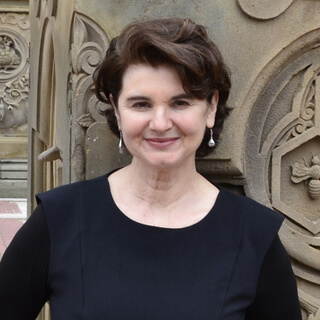
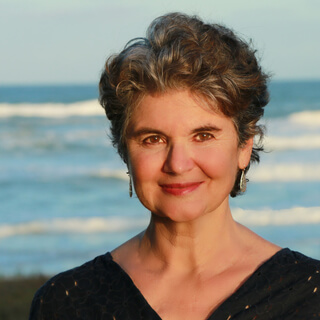
I'm your host,
Katherine Ingram.
The following is excerpted from Dharma dialogues held in June 2017 in Lennox Head,
Australia.
It's called Letting Go.
I want to also let you know that we'll be launching live online sessions of Dharma dialogues beginning in January,
And we'll be scheduling those at various time zones to accommodate you anywhere you are in the world.
Security.
We think a lot about it,
Don't we?
We're very programmed to want it.
You hear a lot about it.
You hear a lot about it in terms of financial security,
Home security,
Retirement security,
Political security.
Right?
It's a big theme that goes around.
And relatively new in history,
Actually,
In terms of expectation through most of human history.
People really didn't store food as such.
There wasn't enough to be storing it ahead of time until there was agriculture.
When we were nomadic,
You kind of ate on the run.
Or there would be an animal that lasted for a week for the group.
But there wasn't much long-term security,
Was there?
And yet we're very programmed to want that,
Expect it,
Get anxious if we don't have that.
I was listening to an interview with a world-famous comedian who is very,
Very wealthy.
And he was talking about how he keeps working.
He has to keep working because he never feels a true sense of security and that he hadn't felt that since he was a child.
He used to feel it when he was a child in the home of his family,
But that he really hadn't known it since,
Which I found quite surprising given his stature in terms of his fame and wealth.
But it's really an inside job how you're feeling about security,
Isn't it?
So it begs the question,
Where is this sense of,
Let's call it even just a feeling of safety or of wellbeing?
How does one have that truthfully?
Can you have it without any guarantees of anything?
Can you have that without being guaranteed that you have food for sure coming,
That all your collection of stuff is somehow protected?
So from my point of view,
I notice what I rely on in this regard because like everyone else,
I'm afflicted with those kinds of conditionings.
And when they arise and whenever I notice I feel afraid in the face of it,
My attention moves into not just the here and now,
Which is always good,
But also a reliance on my capacity to let go as needed.
I'm getting pretty good at that.
If something goes,
If something is taken,
There's a loss of some sort.
Even though there may be some grief with it,
There's a letting go,
Not fighting the fact of the loss.
And I notice that I'm relying on that capacity to give a sense of wellbeing,
To kind of give a sense of calm in the face of whatever is to come.
The reliance on your capacity to let go.
Now,
There's a time for holding on to certain things in that we're enjoying them,
We're connected,
There's a relationship or there's children you're taking care of or any number of things,
Caretaking a house.
There's a time for the engagement,
The full and beautiful engagement as long as that's happening,
As long as that's around.
We engage and show up and do it well.
But then as things flow out of our hands,
Which they inevitably do,
Then what?
Then it's the time for letting go.
And one can become quite facile in letting go.
I've had the great good fortune of knowing a lot of people who were very good at that.
And seeing how kind of lightly and gracefully they've just let go of amazing things.
One of my close friends,
She's in her 80s now,
Her house burned down in one of the Malibu fires.
She barely got out with her life.
It happened so fast.
The fire was on one side of the hillside,
But it suddenly jumped the highway and it was just the whole Pacific Coast Highway on the ocean side started to be ablaze and then people just barely made it out.
And she was one of those.
And as she's driving down Pacific Highway,
It's being covered by helicopters or filming it.
And her daughter is watching in San Francisco,
She's watching their family home on television being burned.
And she's saying to her mother on the phone,
There it goes,
Mom,
It's going,
It's gone.
It's fully aflame.
And her mother is driving in her car listening to this information.
And she felt this massive collapse inside,
As we can imagine.
She had recently lost her husband.
He had died of cancer.
All of his paintings,
All of their memorabilia,
All of the photographs,
Gone.
Anyway,
There was one that she had put out actually by the ocean.
There was one big portrait of the two of them,
A fantastic picture of the two of them actually.
And she'd put it out by the water's edge.
And one of her neighbors had taken it into his house,
Which wasn't burned.
But anyway,
So there was one left.
But anyway,
My girlfriend said she felt this internal collapse,
Just everything,
Just,
You know.
And then she felt this incredible expansion,
Like all within about five minutes.
And she just felt this gigantic wow.
And basically she had this like major major satori of herself being her home base.
Right?
That actually her home base of herself was still there.
I've had many,
Many friends go through just incredible things,
You know,
Just I've spoken a few times in the last few months about a dear friend of mine who got diagnosed with a brain tumor and was dead in a few within a few months.
And she literally went from just full gallop in her life to this weird diagnosis and out.
But I talked to her through that period of even though I was here.
And she was again,
She was very light through it very,
Not in any because of any brain damage.
She was light because of her capacity to let go.
This is the security you could find.
Alan Watts has a book called the wisdom of insecurity.
Right?
It's the recognition of the impermanence.
It's the deep recognition that you can't hold on to anything.
Your willingness to say,
Okay,
If that is if it's time,
Then so be it.
And that willingness,
That ability,
Then allows you to play with all the beautiful things in your life that you are engaged with still and really enjoy them.
Really,
Really enjoy them in a full hearted way.
Because if you're someone who doesn't let go easily,
Then even engaging with things you love and feeling the great love of that can be a little scary because you're panicked about the loss.
There's an anxiety.
Whereas if you feel fairly free flowing in relationship to your stuff,
Your loved ones,
Not that you're detached from them,
But that there's a certain recognition that you're just playing together for this,
You're dancing for a little while.
Yeah,
So many of my friends,
I've been through just amazing things.
And it's been really inspiring to watch how when something goes,
There's this open handedness with it.
That's the security.
That's basically the security of being ready to die,
Right?
To die to whatever certain circumstance,
To die to whatever assumption and to die to this world.
It's a really powerful kind of security.
Thank you for that.
That was quite revealing as you were sharing that and the sense of letting go and I kind of in my mind I was thinking,
Well,
Yeah,
I can let that go,
That go,
No,
I can't let that go.
In the sense of how that would feel if it was gone.
But as you were finishing,
There was this,
I don't know,
It's kind of like a realisation that you become more genuine,
I guess,
When you're free of all that clutter and beliefs and things that you thought that you wanted to stay attached to.
And so I kind of felt that letting go and yeah,
This word genuineness came up and I'm a fan for authenticity and people being true to themselves.
And you see people like that,
You know instantly that you can trust them,
That you can tell them your wildest dreams or your deepest,
Darkest secrets.
And the less that you have on your mind and it's more the stuff that I keep in my mind than any material stuff.
But if that's all gone,
Or the willingness to let it go,
Then there's an even more sense of being true to me.
Yes.
Does that make sense?
Sure.
Yes.
So thank you for that.
And much more sense of internal space.
Like you said,
You used the word clutter,
You know,
That's like the clutter of beliefs,
The clutter of having to maintain some presentation in the world,
The clutter of our prejudices and all of it,
You know,
It's like as they,
As you're willing to free them,
What's left is this kind of sparkle of just kind of luminous awareness,
Right?
That's just going to take in information as it comes and then process it through that kind of clarity.
Right?
But really this point of,
Yes,
I hear you,
There are certain things that you say,
No,
No,
I'm not ready to let go of that.
And of course,
We all have that.
We all have those feelings,
Of course.
It's just that when one is confronted with it being gone or about to go,
Then this capacity that I'm speaking about that can be deepened with clarity,
With wisdom kicks in,
Like with my friend who was suddenly,
She was having a grand time in her life.
She just bought a houseboat and remodeled it and it was her dream for many years and she just had moved onto it with her dog.
And she was kind of at a phase where she was going to be retiring and had her money,
Because she sold a house that she had all this money that the boat didn't cost very much.
And she was going to be traveling.
She had,
You know,
She had plenty of life,
Right?
And then suddenly she didn't.
Suddenly she was faced with this all is going to end very quickly.
And yet she was so graceful through it.
Right.
So my point is this,
That yes,
I'm all for passionate engagement,
Right?
I love that and I encourage it.
I find the kind of tepid detachment that a lot of spiritual circles promote contraindicated for wisdom or for love or for any number of good things.
I see it as a kind of scaredy cat position.
So I'm not at all suggesting this sort of detached from life or detached from the things you love,
But rather a full engagement maybe even more intensified by your clear knowing that this is a time limited run.
You know,
It's like,
Like going to say,
Going to,
If you happen to be a music lover,
You know,
You're going to the,
Like the last concert of your favorite musician,
Right?
You're going to really hear every note,
You know,
It's going to be,
There will be a poignancy perhaps,
But you're going to hopefully anyway,
You're going to be there for every single note and know that you're experiencing something really special.
And that's really the point is that,
That we get to be here and experience this.
It's really special.
Precious.
Yes.
Yes.
I remember when our previous dog was nine years old,
He had a brush with death.
He killed a cane toad.
I remember that.
And that nearly killed him.
And it gave me such an appreciation for him being in our life.
And every morning that we woke up and he was still there,
We said it's a bonus.
Yes.
Yeah.
Every day.
And we really so enjoyed that last year with him because of that,
Because we knew that it could be gone any moment.
We just didn't take it for granted anymore.
And I actually feel that with the pets that we have now,
Even though the cats are only one year old,
Jesse is only three.
Yeah.
It's so joyful to have them.
And we know that,
I mean,
The cats have been playing with snakes in the garden and we don't know how long they will be around.
But that's true for every single,
Although all of us.
For everyone.
Yes.
And we just forget it.
There's this blanket of dullness that comes over and maybe for many people that's kind of necessary in a way just to function,
That there's a certain ignoring of the ultimate reality that is the ultimate reality of life and death.
Maybe that's adaptive in some way for a lot of people,
But I find,
Especially because of living in Dharma circles,
I find that people who are hyper aware of,
Not hyper in terms of obsessive,
But just acutely aware of the impermanence,
They live much more in what you're describing,
Which is in this kind of sense of preciousness and gratitude,
Which actually has a lot of happiness with it,
A lot of wellbeing and a lot of grace as you make your exit.
Yeah.
The other thing,
What I've noticed is,
I was having a conversation with a friend this week and her mother's got dementia,
My mother's got dementia and she was talking about how she's trying to eat the right things and to make sure that she gets the right nutrients to prevent herself getting dementia.
And I do the same,
Not always,
You know,
On holidays,
All the rules are.
But I also know seeing my mom with dementia and having seen her go down that road over the years,
There are no guarantees.
And there's so many people that I hear that say,
Oh,
I can handle a lot of things,
But I don't want to get dementia.
Who knows?
Who knows whether you get that or not?
And yeah,
Obviously it's not something I want to call upon myself,
But it's also that we're not in control.
And to make peace with even that.
Yes,
Very good.
Yeah.
And that would be a hard one,
But yes.
And when I see my mom,
Blissfully unaware of all the fear that she had of going down that road and just so in the moment,
And there's such a teaching as well.
There is,
Because you're right.
The projection about it might be far worse than the actuality of it in some cases anyway,
Sometimes maybe not.
And that too,
We're not in control.
Yeah,
Of course.
Yeah.
Yeah.
So it's,
Yeah,
I find it interesting to look at.
Yeah,
Of course.
There's a lot of ways that we fear things that then when they happen,
We realized the fear was actually worse than the happening,
Even though it wasn't a great fun thing,
But it was not as bad as all the dread beforehand.
I have quite a medical background for many,
Many years in palliative care,
Terminal.
And so actually,
Death is all the time.
It's around here.
It's all the time here.
Yeah.
And you know,
I often talk about it and many people are completely shocked,
You know,
Because it's so,
It's so in my daily life.
Yeah.
Well,
The denial of death is very popular.
Yeah,
You know,
There's a famous book called the denial of death by Ernest Becker,
He won the Pulitzer Prize for it.
It's,
I think he wrote it in the 70s.
And it's brilliant.
It's,
You know,
And he talks about just how pervasive it is.
And then based on his work,
These other psychologists developed something that they called,
They basically just they looked at something that they call terror management strategy,
The ways that we find ways to just somehow ignore,
Push away,
Don't look at,
Deny death,
You know,
When there's this recognition of it.
And,
And,
And,
Of course,
As I just said,
Dharma people tend to have a much higher awareness of it,
I've noticed,
It also becomes your ally,
Right,
Becomes your ally,
You're living in reality.
And therefore,
You're not frittering away you're not you're not oblivious,
You're not dulled by the conditioned mental thrust,
You know,
Of more,
More,
More,
Right?
I got this beautiful email this morning from one of my close friends.
I'd love to read it to you,
Actually.
Um,
It's just short,
But it was so beautiful because she had lived a high life.
She was a famous singer and she was in a relationship with Leonard Cohen for a long time,
He produced an album for her along with several other albums that she already had.
Anyway,
Fast forward in time,
She,
She left Los Angeles.
She moved to Croatia where she had never been.
She'd never been there before she moved there.
She knew one,
She had one friend.
She moved to this little beach town that she picked just because she was driving around and thought it looked nice.
And she set up a life there in Croatia,
Then she eventually met this guy and married him.
He's half Italian,
Half Croatian.
His family has sort of a farm on the Italy side.
And she,
She wrote me this email today that was like,
It was like,
It was such pure Dharma.
I had sent her the Bob Dylan speech that he just recorded his Nobel acceptance speech which just came out this week.
I had sent that to her.
So she writes back,
Interesting speech.
Not many of those iconic sixties voices left.
Time is passing as quickly as the leaves fall in autumn.
So the time we have left,
It all comes down to that.
I was happily reminded about Achilles wishing to be a slave for a king rather than the ruler of all nothing.
My own appetite for fame died a long time ago.
And now I adore the simple life,
Such treasures to see on my daily walks,
The perfect meal,
The shared laughter,
My husband teasing me about how I don't do anything but pick beans and cherries or sweep the driveway or do the laundry.
It really is odd how satisfied I am with life.
No matter what it brings,
I finally get the genesis of everyone's pain,
Their suffering and brokenness,
Their despair and attachment to it,
Which drives them deeper and deeper into the darkness.
I remember my decades of dealing with those demons and can meet them all there with compassion and wisdom and then carry on with my weeding,
Preparing the risotto,
Fetching the wine,
All the while processing the bits of trauma and evil still lurking in my subconscious like a hard crust in my divine core.
This perfectly imperfect world,
How beautiful it is.
Last week you were talking about kind of tuning into this.
Yeah.
So,
Which is lovely.
Very quiet.
I just feel like with you,
You're saying like anxiety and fear coming up,
Which is coming up massively in this session.
The more I let this be tuned or whatever,
It feels like it's a letting go of control.
Yeah.
That's what I'm speaking about today.
Yeah.
Yes.
That feels like death.
Right.
Except that it isn't.
Is that the trick?
It's the recognition,
Right,
That there are only a tiny few things we're in control of.
Right.
There's not many.
And the pressure and the urge to be in control,
Which again,
Is part of this illusion of security that we're indoctrinated with to try to find.
That in itself becomes a straining thing,
But you get kind of used to it and it becomes your way of operating.
You wake up into it,
Right?
But often life will let you know,
In fact,
You weren't in control.
You thought you were in control,
But you weren't.
Isn't it true?
I don't know if you guys might not have this at amusement parks.
I don't even know if you have amusement parks anymore,
But when I was growing up,
We had bumper cars.
Do you have those?
So you're driving on your bumper car and you go this way and the car goes that way and you go this way,
The car goes that way.
But sometimes you're turning the wheel and your car is going on a completely different way and you begin to suspect it's on a track that you thought you were in control of,
But you're not.
Isn't it?
I used to get really angry when that happens.
Yeah.
I don't want to go that way.
Right,
Right,
Right.
I know.
Yeah.
But it's a lot like life.
As much as one tries one's best to direct the river,
It flows on its own.
And your little domain of control is basically where you're putting your attention.
That's really it.
Like,
What are you doing with your attention?
You have a little tiny rudder there,
But that can make all the difference because what you're doing with your attention conditions how you're experiencing the very moment you're in.
That's what gives you the taste of the moment you're in.
So,
So many times you can make this experiment.
You're driving along and let's say it's raining and there's a lot of traffic and people are being aggressive and you can start to go into a story of the horribleness.
Right?
And then you could watch your attention if you want.
You can switch it and it can go into,
Well,
Luckily I'm in this car.
I'm not out in the rain and I can just drive very,
Very carefully.
I have that control of this little amount of control.
I can drive very,
Very carefully and just be chilled out and not tell any story.
I one time was on my way to Dharma dialogues in Los Angeles and as can often happen,
There was this bumper to bumper traffic jam.
It just that looked like it was miles long and people were going ballistic.
I mean,
People were,
People were banging on their horns and everybody was just felt dangerous just because of the level of tension.
But I decided because there was nothing to do but just sit there really and creep along.
I decided I'm going to start smiling at people and just see what happens.
It was actually a little bit brave,
But it actually was very good.
There was a really good outcome of that experiment.
Not everybody smiled back,
But a lot did.
A lot of people smiled back and I felt like just in that little moment,
That one little moment,
There was a break like,
Oh,
Like here we are in this crazy situation together and people like that,
Like,
Oh God,
Yeah,
Right.
You can just use your attention wisely in all these kinds of ways,
All the while knowing that that's really your own place of security.
That's your security is how you're using your attention and your ability to let go as needed.
Having to have things in control is a fool's errand,
An exercise in frustration.
Yeah.
Yeah.
It kind of happened on the way down today.
That's pretty much what you're saying.
I think you're onto me.
On the way down from Brisbane.
You came from Brisbane,
Right?
Okay.
Yeah.
It was cool driving the rain actually.
Was there a lot of traffic?
There's a few spots that slow down.
So that's when the control thing came up.
Yeah.
Right.
You're thinking,
Oh,
Right.
I want to get there so we can be quiet.
And then I realized like,
I'm coming down here to be quiet and it's ridiculous.
Right.
Right.
Yes.
So you were saying like about control before,
About being engaged and in these circles is like a disengagement.
Yeah.
Encouraged.
So I do that naturally.
You disengage?
Yeah.
You're talking about people being afraid of losing things like family members.
Yeah.
So I think I felt like you busted something,
Got found out or there's a fear came up there because I think what I do is I never fully engage.
So I don't have to feel that.
So you stay protected.
Right.
So it's like sleepwalking all the time.
That's very common with people.
It's a lot of what happens in this world.
Yeah.
But if you could really let in that,
You know,
That there's a guarantee that you will be separated from all those you love.
Let that in.
And just like Marianne was talking about her dog who almost died and that they got to have that extra time,
How precious that was.
Right.
And that becomes much more how you feel when you're with your people and with anyone or anything you love.
You feel this sense of gratitude and preciousness.
Right.
Yeah.
And it's been happening actually.
Good.
It's a lot more feeling there.
Yeah.
It's pretty full on at times.
Yeah.
No,
People avoid feeling,
You know,
People avoid feeling.
And I think part of being awake is that I say it all the time.
You live on a larger spectrum of consciousness such that you're feeling both ends of it very powerfully.
You're feeling sorrow powerfully,
You know,
And you're feeling joy very powerfully and you're feeling love very powerfully.
Right.
Yeah.
It's like a huge fear coming up with this letting go or not letting go of control.
But there's this big fear that comes up,
But it's kind of coming along for the ride.
And it's just a big joy there as well.
Yeah.
Not sure where it's going.
Yeah.
But you're on for the ride.
Yeah.
Yeah.
Yeah.
You don't have to control where it's going.
You just kind of keep awake to it and use your attention wisely and gently.
You know,
You can always just move your attention.
Just like I said,
You're sitting in the traffic and you decide to,
You know,
There's a great teaching image of a dog walks into a room full of mirrors,
100 mirrors,
200 mirrors.
So the dog walks in and looks at all these images of a dog looking back at him and he starts barking.
Now all the dogs are barking at him and he's like getting more and more freaked out.
But what if he gets walks in and he wags his tail?
Right.
If he wags his tail,
Everybody's happy.
Right.
And it's kind of like that.
There's a way in which we,
You know,
We can just shift our experience of a lot of things.
Not always,
Not always,
But a lot of our circumstance can be shifted just by wagging our tail in the situation,
Instead of barking.
This has been In the Deep.
You can find the entire list of In the Deep podcasts at KatherineIngram.
Com where you can also book a private session by phone or Skype and see my schedule of upcoming events.
If you're a regular listener,
Please consider making either a one-time or a recurring tax deductible donation in any amount that is comfortable for you.
Till next time.