Welcome to In the Deep.
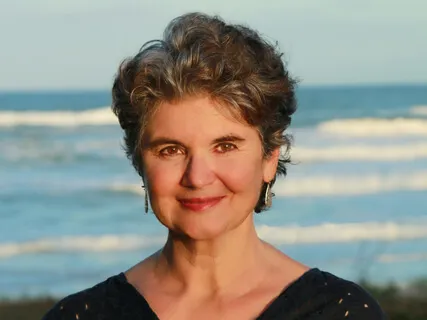
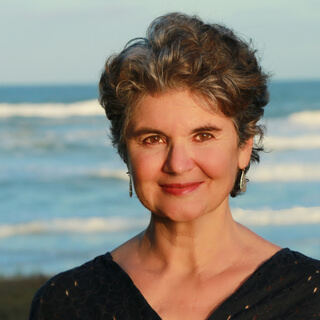
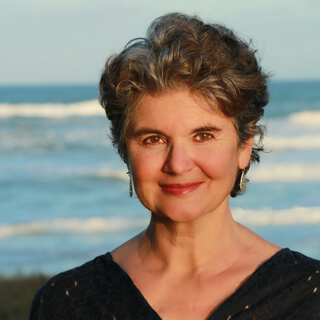
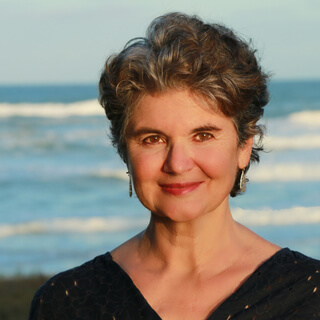
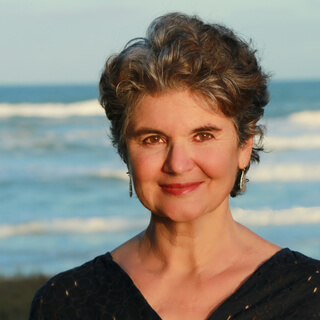
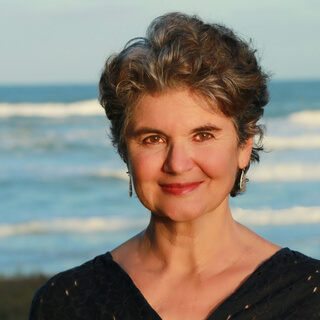
I'm your host,
Katherine Ingram.
The following is excerpted from a session of Dharma Dialogues held in Londax Head,
Australia in August of 2019.
It's called Don't be afraid,
Be ready.
That's a quote from Edward Snowden.
Edward Snowden is coming to speak a bit about a favorite subject,
Courage.
Courage,
Even hearing the word kind of gives you a little strength.
Edward Snowden has a line I love,
Don't be afraid,
Be ready.
Now how can we be ready for what comes?
We don't have to imagine a lot of things.
We don't have to be scaring ourselves.
But we're sensitive creatures and we can feel in our world,
If you're paying any attention whatsoever,
There's a trembling.
It's getting harder out there.
We still live in our bubbles of privilege and abundance and beauty.
But we're not,
I would dare say,
We're not oblivious to the fact that things can change even in our little paradise and in any one of our lives in a personal way.
We can expect loss.
Right?
This has always been the case.
It's always been the case.
I was very attracted when I was 22 years old.
I went to Naropa Institute in Boulder,
Colorado.
It was the first year of its opening.
I don't know if any of you have heard of it,
But it was 1974,
Very first year of the opening of Naropa Institute,
Which became a great convening of incredible teachers of that time,
Of that era.
Trungpa Rinpoche founded it and Ram Dass was teaching there and lots of incredible teachers,
Gregory Bates and Allen Ginsberg,
Lots of incredible people all gathered in this one small town.
And I became very interested and attracted to one of the lesser known teachers.
He was completely unknown,
Joseph Goldstein.
He's since become a very famous mindfulness teacher,
But at the time no one had heard of him.
And he had just come back from India where he had been studying meditation for seven years and he only had his old college clothes to wear.
And here we are at Naropa and everybody's in their Indian garb and looking very glam and fashionable.
And he was in his very straight buttoned down collars and very straight collegiate looking wear.
But for my money,
He made the most sense of anyone there out of the many,
Many,
Many,
Many teachers who were there.
And I kept dabbling around because you could all the day long.
But I kept,
As soon as I went into his room the very,
Very first day,
He was teaching a course called Essential Buddhism.
And on the very first day he taught the Four Noble Truths.
And the very first truth is the truth of unsatisfactoriness or the truth of suffering.
And even though I was only 22 years old,
That lit into me like a fire.
Like the way that he explained it and the way that he talked about it,
Blazed into my awareness in such a way that really I can say nothing else ever had prior to that point.
So I should say as a full disclosure,
I've had a long relationship to seeing the brokenness of the world.
And I feel at this time I have never seen it more broken.
I also suspect that what we're going to be seeing is the biggest breaking of it in our species long history.
So all of this is on offer.
And we're under a deluge of news about it.
And even if you want to just keep the news local,
Even if you want to keep it just to our region,
You can't help but be privy to it.
So how do we go forward?
How do we go forward with joy,
With kindness,
With maintaining our ethics?
Because ethics can get very slippery in desperation.
And that's another thing we're seeing in the world.
We're seeing a breakdown of morality and of just human decency and kindness.
And so what tools of courage can we rely on in this time?
So fortunately,
They're simple.
Don't have to learn any big huge program.
But it does have to do with how you use your own attention and being committed to using your attention in a clear way,
In an intelligent way,
And not just forgetting about it and going along on the programming.
Because your programming,
Our particular animal type,
Our programming is rough,
Frankly.
It's basically like chimpanzee programming,
Extremely selfish and a big me first thing running.
And it takes a lot to override that program.
We all know this.
We all know how something happens.
And the first response will be to protect yourself.
The first response will be,
You know,
How am I going to get through this and get what I want and need?
It's very deeply programmed.
And it's been an evolutionary advantage along the way as well.
Although we've been advantaged by being cooperative,
It's been a blend.
It takes quite a lot of of committing to empathy,
Committing to feeling into how your behavior how your life is affecting other people,
What it is you're doing in this very moment.
Having the light mantra.
I don't mean this literally,
But just as a background intentionality,
To think of yourself as a servant of the greater good.
Which,
By the way,
Is a very lovely feeling.
Right?
Doesn't have to be a huge hardship.
It's a beautiful thing to feel.
To think of yourself in all your actions in through the day.
Now that doesn't mean that you always have to put yourself last.
Sometimes,
Of course,
You have to put yourself first in certain circumstances,
Even for you to continue to help.
But instead of going through life in a kind of not only me first,
But me only,
Which a lot of people are in.
It's a kind of reversal of that thrust.
It's more,
It's a we program.
That we are in this,
We are facing lots of things that are going to be hard.
Lots of us are already in those hard situations.
And I often speak about having our own well be full in order to spill over.
Right?
How do you keep your own well full as your offering for the greater good?
So it's all the usual things I speak about.
It's celebrating simple joys,
Like really letting yourself have tiny joys through the day.
The ways that people live in fantasy about a future date at which their real joy is going to show up.
Right?
That is definitely getting to be a fool's errand.
That is definitely getting to be a folly.
It always was,
By the way,
But it's particularly now.
Right?
Waiting for some future dreamland or some future recognition or some future relationship or whatever your fantasy is.
I would just say if that comes well and good,
But in the meantime,
The little tiny joys.
And I also recommend when you're in a circumstance with your friends,
With your loved ones,
Putting in a flower in your garden,
Whatever it is,
Take your time.
Right?
Maybe slow things down a bit.
If you can,
If you're not pressured by a job or you've got a bunch of kids or people you're taking care of or you're at a hospice situation,
But anytime that you can really indulge,
You're slowing down in your happy things and your happy moments.
And even the simplest things like when you lay down at night into your bed.
Oh,
So nice.
I bet most of everybody here has a bed and not everybody in the world does.
Just every little thing.
And when you're sitting with your friends and you're having a sweet conversation,
It doesn't have to be deep.
Right?
Just having a nice conversation with your friend or you're just sitting there looking at the sky together.
One of my girlfriends in New York just wrote me a couple of days ago.
And she had just been to the,
There's an exhibit of Leonard Cohen and some big museum in the city in New York.
And they have all these beanbag chairs sitting there where people can watch films and listen to different of his music in this room.
So she was telling me she was flopped on the beanbag chair and she was listening to Dance Me to the End of Love.
And she was thinking about me because she knew we're friends and she knew that would be something she and I would have loved to do together.
So she wrote me about this whole experience.
And I wrote her back and said,
I would have loved to have been there with you on those beanbag chairs.
And I meant it.
But in the moment,
I was sort of experiencing the joy of it anyway in my,
Just an imagination.
And I let myself have that.
And I actually put on the song to just listen to it while I was writing to her.
So all of these little ways,
Find your own,
All these little tiny little treasures that are scattered about here on your precious days of life.
Who knows how many are left.
They're a finite number.
Very finite number.
How many days,
Right?
And not miss it.
And in these ways,
In letting your own well be filled up with joy,
With little happinesses,
In keeping your attention strong in terms of being a servant of the greater good,
Feeling into empathy as much as you can.
Right?
Keeping those ethics strong.
This is how you find courage.
That's where your sanctuary is.
That's where your strength is.
It's not necessarily a courage that will protect you in terms of keeping you from harm.
It's the kind of courage that allows you to go through whatever is coming.
I don't know if it's in this moment,
But for some reason not resonating with courage.
And I'd like you to speak a bit more about it.
You were mentioned at the Writers Festival,
By the way,
Exactly on that point.
On courage?
Yeah,
The mediator said that she'd read your article and that you'd said about bringing courage.
It was a talk on environment.
Okay.
On the environment.
But I don't know,
For some reason right now,
I'd just like to hear a little more why particularly courage rather than other qualities.
Well,
It's certainly not to say that the other qualities aren't always welcome as well,
But this is the one that came to me today.
She also quoted you as saying courage is the one thing that we need in order to move into what's happening environmentally.
Yes,
In particular that in terms of what we're looking at.
Yes,
That is the thing we're going to definitely need a lot of.
But we need it anyway in life,
Don't we?
I mean,
It's a daily need.
You know,
Even just hearing of the struggles of our friends or of our own,
Right?
Even just that,
Just even just all the people you love in your life and all the burdens they're carrying,
Right?
So even just holding that in your heart,
Being available for that.
In fact,
Courage comes from core,
Which means heart.
So that's what I'm getting at today is that it's some form of fortitude in a sense.
It's a staying steady in the midst of all that's happening.
You know,
It's being willing to just keep looking at it.
Even if you have tears in your eyes to just,
You know,
And not go into fairy tale stories and denial.
Right?
It's a lot of that going on.
And,
You know,
That's what I mean by courage.
Facing the truth of things.
I mean,
Again,
To go back to that day when I was 22 years old and heard in such a clear expression the first noble truth,
It just made perfect sense to me.
It allowed,
It allowed the suffering,
You know.
And so I think another way to say it is that courage is the willingness to see.
And when I observe,
I've come to the point where,
Whether it's in spiritual scenes,
And there's a lot of it in spiritual scenes,
Of real fantasy fairy tale stories that sort of are like these pretend get you out of jail free cards.
Like if you believe this or it's all perfect or it's karma or it's this,
It's that.
It gets sold.
It's really,
You know,
Sold as truth,
But it's in my way of seeing far from it.
There is no truth in that.
People just talking about things they have no experience about,
But it's age old,
You know,
Religious beliefs and promises of all kinds of fantasy stuff.
When I see this or when I'm confronted with it in a person and in their belief system,
What I see is fear.
That's what I'm looking at when I hear these things.
I just see,
I just hear fear.
They're desperate for some kind of control in that which cannot be controlled and that they cannot predict how it's going to happen.
And so it used to annoy me,
Those kind of things.
It used to just bug me.
And I would sort of blame those ways of thinking on a lot of the ruination of the world that people can't see clearly.
And that's part of the problem.
I'm just remembering this quote from Goya.
It's one of his edges.
It's called something like the sleep that creates monsters,
Something like that.
Anyway,
It used to be that it would just annoy me,
That kind of refusal to see what seems so obvious.
But over time,
I have much more compassion for it because I just see how desperately people will cling to whatever little stories they can find to calm themselves down.
Right?
But that said,
I have particular admiration for people who can stare right into the dragon's mouth and call it for what it is.
So that's what I'm recommending.
That's what I aspire to.
And I'm having to find a way to live in the dharma in this.
That's the challenge of our time.
You know.
It used to be that we were all dealing with personal experiences of death,
Whether of other people or our own coming.
That was a lot to deal with.
That was already a lot.
Right?
And now it's gotten bigger.
Now it's very,
Very,
It's gone exponentially into the realm of extinction.
So,
You know,
Courage is what we need.
You can play with that,
Though,
In whatever ways makes sense for you.
Like whatever,
It doesn't necessarily have to even be that same word.
Maybe for you it's calm.
Maybe that's the word you want or whatever.
It doesn't have to be about a word,
But rather a feeling,
An intentionality.
I think what I'm sitting with and would really love,
I'm really sitting with something very difficult,
And I'd love your inspiration or take on it,
I'm really addicted to everything being nice and comfortable.
I don't really see that's when my ego is happy,
When everything's nice.
I'm in a situation with a colleague where something I feel really passionate about,
There's just a constant struggle of wills.
And I'm really trying to know what to do with this because it's causing me so much suffering,
Even physical headaches.
I'm so tormented by this situation.
And I just want to walk away.
That's not the courageous thing to do.
So I just,
What would you or what do you have to say in a situation like that?
I know it's ego stuff.
I know it's sort of,
But it's so painful.
Well,
Let me just say that sometimes there are situations you want to walk away from and that you should walk away from.
But then there are circumstances we simply cannot walk away from.
There's no getting out of it.
And then we have to face it and deal with it as best we can.
But is this a circumstance where due to it being work-related or whatever,
You simply have to carry on somehow?
Is that the case?
No,
It's not like a survival.
And I see in this terms of crisis and these really big things going on,
It's not something like that.
It is something I could walk away from.
But I'm really confused because I'm very passionate about something we share.
So it is kind of work-related.
And it would cause me a lot of personal grief.
I don't know where the growth is.
I don't know where the courage is in this situation.
So I could walk away.
And then there's also something in that that feels very,
Yeah,
Because it's something I really believe in.
Feels like a real dilemma.
And it's not changing.
It's not getting better.
And I don't think this situation is going to change.
I mean,
For me,
I choose peace every chance I get.
That if there's a circumstance that's agitating and is causing upset and can't seem to find any resolution or even have a sense that that's going to be possible,
Then fair enough to let it go.
As part of your own,
Keeping your own well full,
Keeping you tuned up and in good form and as happy and peaceful as you can be.
And then put your energy somewhere else where it's being more used.
Right.
And where it's more welcome.
And it does take a certain readjustment of certain types of conditioned beliefs that we have all had in our counterculture,
Where you're constantly having to work through things and you can be seen as,
You know,
Like unwilling to go the distance or all kinds of stories like that.
Right.
When maybe it's just,
I mean,
One time,
Poonjaji gave a group of people a little koan of sorts,
A little exercise,
A mental exercise.
He said,
What if you've just come to Lucknow and you've rented a room and it's so beautiful and you're here to have satsang and only to discover that you've rented a room above a motorcycle repair shop,
Which is just going all day and into the night with zoom,
Zoom,
Vroom,
Vroom,
Horrible noise and sound and cacophony all the time.
What do you do?
So different people had all their different spiritual answers.
And finally he said,
Well,
Why not just move?
Why not just move away from this?
Right.
Which I loved.
It's very practical.
Now,
Let's also look at it another way.
What if you can't?
What if you're in prison and it's really loud and it's really dangerous and the food is awful and there's bugs crawling on you at night and it's super hot,
Which is how a lot of prisoners are living.
Then what?
Then you've got to find the quiet as best you can.
Right.
Hard.
It'll be hard.
But maybe there's ways and you do hear stories of people who have broken through in various ways,
Even in the concentration camps like Frankl.
So you realize that the human spirit is incredibly strong,
But you don't have to overly punish it to see if that's the case.
So while you're able to make choices for your own peace and happiness and calm and ease,
By all means do and let yourself completely off the hook for that.
And by the way,
It's sort of a teaching to the others or the other.
You know that they can if they want to keep pulling on the rope,
They're going to have to pull on it with nothing else tugging on the other side.
And,
You know,
And I've applied this in my life quite a lot.
It's really my go to spot,
Actually.
I call it timeouts for grown ups.
And sometimes they're getting a timeout that's going to last the whole life.
Right.
That they're just too dangerous playmate.
And,
You know,
There's plenty of other playmates.
Right.
Thank you.
That really resonates.
Yeah.
I thought the courage was to just stay with it and keep with it and grow and learn.
And it's just actually so,
You know,
Literally physically painful.
So thank you.
That really resonates.
Yes.
The courage is to really live your authentic life and be honest as to what you can handle.
Right.
And especially if you're having to handle it unnecessarily,
It's not as if you're in a prison.
Right.
So at the point you ever are in a circumstance that's super,
Super hard,
Like physical pain or whatever,
Then you'll find your deeper places then.
But along the way,
You will have been,
In a way,
Strengthened by living a lot of peaceful life.
Right.
Where your own system is on a frequency that is very high.
And given the work that you do,
You want to give the kind of love that you give out to your own self.
I've been really a person that gets very motivated by suffering historically in my life.
It brings a big response in me usually.
But this whole,
As I've become more and more aware of the climate crisis and extinction,
My response has been apathy in a sense.
And maybe it's too big and I just don't think there's anything I can do.
But I've noticed that I've become less and I'm also less motivated to help people with their ordinary suffering.
It's like a part of me is just really pulled back.
And I suppose I have some concern about that in the sense that whilst sort of unhooking from a whole lot of ideas about who I should be and how I should be in the world has been good,
Like these happy accidents that you talk about,
These moments.
I had one last night.
I was watching this really boring film,
The Avengers.
It wasn't that boring.
And the internet got interrupted and I was waiting.
It said two hours,
50 minutes.
And my nephew came and sat down.
I said,
Oh,
How are you?
And anyway,
We got talking.
And he started really opening up and sharing.
And he said,
He goes,
Normally I don't share this part of myself because people don't take the time.
And you've taken the time.
And I feel like I've really been able to show a part of myself.
It was a complete accident.
Like if the film had kept going,
Sometimes you got a bit boring.
And I was like,
I hope it's playing it,
You know,
At the start of my life.
But because I stuck with it,
It was this beautiful moment,
Really precious.
So there's these moments where I feel very natural connection and flowing and,
You know,
Like something's happening and I'm involved in life in a different way.
But to be honest,
Generally I sort of wake up and there's a bit of a,
Okay,
I need to eat.
I should do this.
I should do that.
The motivation in the face of what's coming.
Yeah,
My response is kind of freeze,
I suppose,
Apathy.
And why do you think in terms of your not having so much feeling about people personally who are suffering around you?
It feels like why worry about the little details here and what's going to fall over here when there's this massive tsunami coming and it's all going to be wiped out.
So why help someone get out of domestic violence or do this or do that or whatever it may be in these crisis.
It just feels like,
It's just wait.
And there's a part of me,
I mean,
This probably doesn't sound very good,
But I feel like there's a distortion in the way our consciousness has evolved and our society has evolved.
And there's a part of me that's like,
Yeah,
Wipe it out.
Let's reset and start again.
So I'm like,
Yeah,
This is a great solution.
When you think,
You know,
You spend so long,
Like I was really committed to change the consciousness,
Change that whole movement.
So that's where I put all my energy in.
I'm like,
I don't think that's going to work anymore.
And now I'm like,
OK,
Mother Nature's got this other way.
But there's a part of in that there's a lack of feeling,
There's a bit of detachment.
It's kind of like let the tsunami happen.
It might be a phase you're passing through in coming to terms with this,
And it might be a protective phase,
You know,
Whereby it doesn't matter anyway.
Let it burn.
Right.
And everybody with it.
Right.
It could be a way in which it gives you that detachment,
As you say.
And also,
It's not just a thought,
Like I know that it's there,
But I wake up,
I don't see it.
I see people going about their normal days.
It's beautiful weather.
Everything's normal.
So it's really easy just to go.
Something is happening,
Is coming,
But I can't really see it.
And a lot of other people aren't seeing it.
So it's like.
Right.
Except that you do seem to think it is happening.
So there's that.
Well.
Yeah,
I have been through a lot of different phases along the way with this and much of what you've just expressed is quite familiar to me in terms of my own ways that I've seen this and held it at different points.
And,
You know,
And also the point about this species,
You know,
Kink in its consciousness.
You know,
Sometimes I've definitely thought good riddance.
But it's gotten much more it's gotten much more down to a very localized reality for me now in terms of.
Just what I said earlier,
Kind of how can I be of help?
Right.
Just in any old way,
Just wherever.
So like you,
I used to think much more about the bigger pictures.
You know,
I was in the activist world and that was what I specialized in as a journalist and hung out with lots of those people who had big visions.
And I still have friends that are in big vision consciousness of let's figure it out.
My attention has so changed in all of this.
Right.
And it really is down to,
You know,
Just the simplest anything I can do,
Just hands on.
I'm helping my friends being available for someone in a conversation about things that you don't really think are going to have much relevance soon.
But nevertheless,
It has relevance for that person.
You know,
It's like the starfish analogy of on the beaches.
You know that one.
Right.
Apparently,
It's maybe a true story.
But anyway,
I heard it as this priest was walking down the beach in Mexico and thousands and thousands and thousands of starfish had had washed up onto the shore and were dying.
And he was walking along and picking one up here and there and tossing it back into the ocean.
And someone came along and said to him,
Father,
What are you doing?
There's thousands and thousands of these.
It makes no difference.
These few.
And as he's picking the next one up and tossing it in,
He said it made a difference to that one.
And so it's like that.
You're just basically,
You know,
Even if it's just some little comfort,
Just some little hand holding,
Some kind word,
Some way that you say,
I hear you have been there.
That becomes,
Not becomes,
That remains meaningful.
Right.
Let me just say,
I've just had another one of my really most wonderful friends.
He died in 82 or three of AIDS.
And I wasn't there.
I was on the West Coast.
He was in Boston at the time of his death.
But a bunch of my bunch of our mutual friends were in the room with him and he took something so that he would slip away from this world.
And he was a great lover of plants.
And he had all these plants in his room.
And one of the last things he said was he told his friends that plant needs to be watered.
You know,
You see one of them had been uncared for while he was busy dying in the previous week.
And I so loved that,
That,
You know,
One of his last thoughts was and was so typical of him.
You know,
That so it gets down to that.
It's sort of like,
You know,
Again,
A kind of courage,
A kind of courage,
Courage being a heart bravery,
A heart,
A heart stamina.
Right.
And it just occurred to me when you were talking that there's also some kind of relief in me about not having to fix the broken system.
I think that a lot of my work with people had been around the consequences of patriarchy,
The consequences of capitalism,
Consequences of this society where people are so alone and meaningless.
And then me and there's no motivation in me to fix those consequences.
It's kind of like let the system break.
So maybe,
You know,
Just getting a little bit more refined because what you said about acting locally really stirred something in me and to be able to start just operating from these new values in this new way.
You know,
Actually,
You know,
Just like you're saying with connection and kindness and compassion,
But not going back into this old way of trying to make this way of living OK and the poor,
You know,
Helping the victims of it.
What's the point when that way of living is so clearly,
You know,
Not healthy for the environment,
The world or anything?
Yeah.
And I would also propose,
And I don't say that this has to happen or anything,
But it's possible that it would happen that you even stop thinking about the system.
It's just what we did here.
Right.
It's just what we did.
It goes back a long way.
As soon as we started building fires,
We were changing the atmosphere.
Right.
And it goes back a long,
Long way.
And so this was the kind of creature we are and the systems we built each step of the way as we built them.
As I said in the essay,
We,
As I'm quoting my friend James Kunstler,
It just seemed a good idea at the time.
Right.
Burning coal seemed a good idea at the time.
Burning the dead fossil goo.
That was a great idea at the time.
Even the nuclear power plants been watching that Chernobyl.
Yeah,
You're watching.
You go,
What?
Why?
Why?
Well,
They were wanting energy in a coal place,
You know,
So I mean,
All of it,
You know,
It's like it's hard to pull out any thread to see,
Oh,
That was where we made the wrong turn.
Right.
And so you even the whole system is just as it is.
And you start just internally bowing to the what so of the circumstance.
And,
You know,
And you keep doubling down on just living in the ways that are commensurate with what you feel is a more noble stance.
Even though you cannot help but be aware.
As I wrote an essay,
Each of us is a heat engine.
Each of us is generated.
We're using stuff,
You know.
We're using stuff and we're heating up the atmosphere.
Each one of us.
And we're feeding on life.
And it's just how this,
This existence as we know it,
As carbon based creatures is playing out.
So that's why I also say no blame.
Forgive everybody everything.
Right.
And then it does free up,
Michelle,
A lot of energy that isn't wasted on the if onlys and let's,
You know,
Have a revolution and all of those things.
They had their day.
Right.
And you even gave a lot of your life to it.
But now instead of apathy,
And it may be a phase you're passing through,
What may come,
What may replace that is,
Is incredible tenderness.
It's so beautiful.
That is true.
In the flat line of apathy,
You know,
You actually become a lot more sensitive to those tiny things.
Yes,
You do.
It's really nice.
Yeah,
That was really special.
And like those happy accidents that occur,
You know,
Because you're not out there driving and pushing with your ideas of how things should be.
Just kind of watching and then something happens.
It's nice.
Yeah.
Yes.
Yes.
Like that.
Yeah.
I sometimes do this little mental exercise.
I've mentioned that you've probably heard me say it before,
But every now and again,
I'll do a little mental exercise as needed of what if this was my last day and I knew it.
Right.
I mean,
I think everything I would be looking at and every little thought through my head and every person I might feel estranged from and every person I might be judging on the world stage and all of it would just be subsumed by a great feeling of tenderness and of like a wow.
Yeah.
There's another aspect of this that I want to bring in and I was just thinking as you were talking how I'm still prone.
I go outrage and helplessness.
You know,
They seem like I'm on either end of that seesaw and I know I don't know if you were following,
But,
You know,
Andrew Bolt,
That wonderful son journalist,
Had a go at Greta Thunberg and had a go at her mental illness,
Had a go at the fact that she was travelling by sea,
You know,
In the way that only Andrew Bolt can do.
And I just felt so much outrage,
Yeah,
And disgust,
Sort of outrage and disgust.
And,
You know,
He speaks for many.
You know,
The truth is Andrew Bolt exists because he speaks on behalf of the many people that read him.
And when I get out of outrage,
The flip side of that can be,
Like there is a place of equanimity in the middle,
But it sort of moves,
It moves quite quickly,
Kind of passes from one to the other.
Yeah,
Because the flip side is,
You know,
The feeling of helplessness and it's like as an analogy,
Like we're in a boat heading off a cliff,
You know,
As a species,
We're in a boat heading off a cliff and some people are paddling fast towards the cliff and some people are trying to paddle backwards.
And everyone's arguing about the people,
Whether we should be paddling.
But the truth is we're in a big river heading towards the cliff anyway.
It doesn't really matter which way people are paddling.
And the contemplation of that.
It's funny as I say it now,
There's quite an expansion just because I'm with you.
I was going to say,
If we reframed the feeling of helplessness sitting in the boat to the feeling of acceptance,
That's the expansion.
Right.
So,
Of course,
If you call it helplessness,
It's unpleasant,
Very unpleasant and presumes that you want to be able to change the course.
And you can't.
Right.
But if the situation were such that you see that the situation as it is,
You would have liked to have had it be a different outcome,
But you see that it isn't going to be,
Let's say,
In the boat going over the rapids.
And if you went into quiet,
If you went into acceptance,
If you went into,
Okay,
This is it.
Right.
Whole different feeling.
So another another connection to courage is a willingness to accept the unacceptable.
Okay,
We're on the raft in the river.
Yes.
And the river is going to keep going.
And we have accepted the fact that there's a huge change coming and we are the major part of that change.
A little bit,
I nearly see the river as being evolution.
Yeah.
In our stage of evolution and technology,
We have a lot of power to make a difference to the future.
Maybe we could build a dam,
Slow the river down and control it a little bit to give us enough time to get the answer we're looking for,
Because we don't know what the answer is yet.
And with that time and the communication and the little bit of awareness that I think is coming into the world now about climate,
About climate change and where we're going,
Bit by bit,
We all do our little bit every day to influence people around us.
The people we can have the most influence on,
Especially people like me who aren't big thinkers,
Are those that we know and love.
So every day if we can make a little bit of difference in the way they think towards these bigger problems,
Hopefully we can convince them to do that same thing to their friends.
And I'm a believer that the future isn't as bad as we think it is.
I believe it's going to be what it'll be,
But we have the power to help and change.
Yes.
Well,
I hope you're right.
It also doesn't scare me that much.
I don't spend a lot of my time worrying about the future.
That's wise.
I don't spend a lot of my time thinking about it,
But not worrying about it.
That's really good.
Yes.
And that's a very intelligent way to be.
And some people are more adept at that than others.
Some people's nervous system and conditioning is such they're just stricken with anxiety a lot more easily.
And in that case,
I would say to people,
And I do say to people,
Use your attention,
Redirect as much as you can.
Some people are just more naturally sanguine.
They're built that way.
And I know people like that who are able to even look at very hard possibilities and are not particularly freaked out by them.
And others who really have to mind manage,
I call it,
And I'm one of those,
I have to mind manage in terms of choosing courage,
Choosing peace,
Redirecting my attention,
Because scary pictures will arise and do arise.
But I have been working with them a long time.
So,
Yeah,
I hear you.
And it's very,
Very wise and lucky,
Actually,
For you that you're not afflicted with future thinking or future pictures that are scary,
Let's say.
I agree with what you both said.
At times I feel outraged,
And at the same time I try not to worry about it.
But something that has been bugging me a lot lately is more to do with humanity and what's happening with us,
With the lack of unity,
And let's get together.
I feel like the more the world is going this way,
The more people are just closing themselves into their little.
And you see that happening in the family unity as well.
And as an eternal empath I am,
I feel left out or falling behind.
In what way?
In a way of feeling like putting myself not necessarily last but always putting others first.
And I'm finding that I don't have a place in this world being like that anymore.
And that's what I'm finding really hard to grasp in a day of today.
So I was wondering what can you say that would be more encouraging and more encouraging to continue and accept.
Because I agree with you,
Accepting the unacceptable is courage,
But it's painful to accept.
Well you know,
We live in a time where there is a lot of sadness and a lot of things that we're looking at that are disturbing.
And what you've just said about,
I'm just going to paraphrase what I think you were saying,
That selfishness and bunker mentality is increasing due to the pressures.
And that you're someone who has been much more open and much more free form giving and much more generous such that you don't put yourself ahead of others.
And that you feel like you're out of step now in a time when that is,
Yeah.
So I would just say to you,
There are plenty of others like yourself and it's fair enough to seek out those and really cobble those together as much as possible.
And it's in a way a localizing effort.
You know,
It's again keeping this word in mind,
Very forefront for all of us,
Localizing our lives a lot.
That means in friendships,
In food,
We know where our food comes from,
In thinking about those who are less fortunate,
Water,
Basics,
Right?
Part of that is also going to have to be as it is in many places that have already tested through these principles,
Trainings in nonviolent strategies and in ethics and in sharing and in all of those things.
So you're already way ahead in that and it's fair enough if someone's out of step with you emotionally and in fair play and in being just a decent friend or companion or workmate,
See if you can just disengage.
What do you feel that really plays with your sense of self and am I doing it right or even sense of worth?
Because when you feel taken for granted,
It's really easy to go,
What am I doing this for?
Yes.
And so then instead of having to look backward,
Let that awareness inform you going forward so that you are putting your energy where it is more welcome,
More appreciated.
I like to think of it as being good compost for the field,
Right?
Your life is good compost.
It's just being used.
You know,
You're offering it.
It's just getting used up.
And you want to,
Just as with planting any field,
You'd put the compost where it's most likely to have some possibility of taking root,
Encouraging growth,
Right?
Or something beautiful coming of it.
And that is fair enough to do,
Right?
You don't have to be a martyr.
Nobody's keeping score.
Nobody's up there seeing if you're a good girl.
It's all about how you're feeling in terms of your living your authentic life.
And as I'm saying,
Being of help feels good.
It's a constant feedback loop.
So,
Yeah,
Being another form of courage is also having to go against your conditioned impulses that are so,
Their grooves of habit are so strong.
And sometimes to break them,
You do have to get out of who you think you are or should be and surprise yourself and think,
Okay,
Well,
This is actually who I really am.
This new me.
This has been in the deep.
You can find the entire list of in the deep podcast at Catherine Ingram dot com,
Where you can also book a private session or make either a one time or recurring tax deductible donation to help with the production costs.
Assuming you like these podcasts,
We would also appreciate a review wherever you're getting yours till next time.