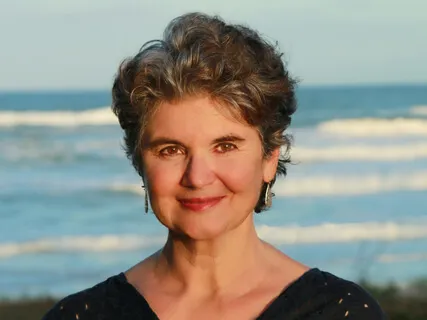
Welcome to In the Deep.
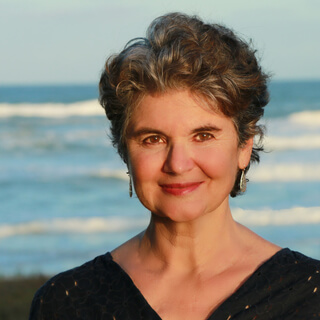
I'm your host,
Katherine Ingram.
The following is excerpted from a session of Dharma Dialogues held in Lenox Head,
Australia in September 2019.
It's called Die Before You Die.
We often mistakenly rely on circumstances for our happiness,
Right?
We like to get our circumstances a certain way,
And then we like them to stay that way.
They don't tend to do that,
Right?
You know,
Just only,
What was it,
Three days ago,
We had totally clear skies.
We could just breathe freely.
And now we have very smoky skies,
Although the fires are not imminently upon us,
So we can only imagine how smoky it is where they actually are,
But as of this point,
They're 37 miles from where we sit at the moment.
And yet,
Right,
Change in the atmosphere.
And it's often the case,
Of course,
That physical changes like that rattle people.
They just induce a sense of deep insecurity.
I've just,
Last week,
The hurricane that was rolling up from the Caribbean to the mainland,
The US,
Was threatening my mother in Florida,
And then subsequently my relatives all up the way up the coast.
Insecurity,
Kind of a sense of destabilizing of one's sense of well-being.
So this is basically the case for life on Earth.
This is how it has been.
Our time has been very stable comparatively compared to the other epochs of time of human history.
Our time has been incredibly cruisy,
You could say.
But it's getting less so.
So then let's ask ourselves,
Where do we find stability?
If we can't rely on stability externally,
Is there a possibility of having any stability?
Now,
I'm going to say a provisional yes.
I say it provisionally because I haven't been tested fully.
And I can't say from my own direct experience that I would always stay stable.
I sometimes am destabilized in circumstances for short periods of time.
And I'm not sure there wouldn't be a circumstance that would induce quite a lot of panic and for a longer period of time.
But in the normal warp and woof of life these days,
I notice a fairly quick return to an internal quiet,
Which is where I mostly rest.
So whatever thought is happening or whatever physical circumstance,
There's a way that the system resets itself into just this,
Right?
What's this?
So losses happen.
Accidents happen.
This one and that one just got diagnosed.
You read the news,
That's troubling.
Pretty endlessly troubling.
All of these kinds of bits of projections of,
Well,
A lot of it comes up in imagination,
Isn't it?
You hear about something and you imagine what it is.
Sometimes that imagining might be quite close to how it might have been,
Might be occurring.
But sometimes not.
Sometimes our imagining of it is far worse than it actually is.
In any case,
These are all the ways that we can get thrown off our seat,
Thrown off our mountain seat of freedom.
A lot of it is self-induced.
A lot of it is worry.
A lot of it is pictures of what might be.
What is it going to mean if I go down this projection of what could happen?
I've been thinking a lot about the Zen phrase,
Die before you die.
Just cut to the chase.
And then it's almost like you understand that this is a tenuous circumstance.
We happen to get a lucky draw,
But our luck may be running out.
And from the vantage point of die before you die,
Then every minute extra is gravy.
So you just go through whatever you have to go through,
And you live another day.
You keep resetting internally.
You keep going to the sweet spot.
Even if you're on your last breath,
That would be the great time to go there.
I think I've died a few times already.
In 2005,
And this is not me,
But our previous dog nearly died.
He killed a cane toad,
And that nearly killed him.
And he lived another year after that,
And every day was a bonus.
And it was such a deep lesson for me.
And still I apply it in many ways.
And I forget.
And then something happens and I die again.
And it's happened around my children.
And then realizing every day is a bonus.
Yes.
It's amazing how we do go to sleep about it.
Given how limited the time is,
And how it zooms by,
It is amazing how we just fritter away a lot of the mental energy and thoughts on real nonsense.
And you imagine sometimes from a later perspective,
Like how you were obsessed about this or that,
That you can barely remember now.
So it's another,
It's not just carpe diem.
It's not just seize the day.
It's understanding the powerful import of how you're using your attention as you go.
Just what are you doing with your attention?
I have died many times too,
And lived I suppose.
Today I'm really,
Yeah,
I just feel real tender in my heart today.
When I got up on,
What is it,
Sunday today,
I think it was Friday morning when the smoke first hit the region,
Because I get up real early,
Watch sunrise either at the beach or at the creek in my backyard with the platypus.
And it was an eerie morning.
There was a stillness,
A smoke,
What the sun looks like through the smoke.
Did you see the sunset last night?
Oh yeah.
Wow.
Boom.
You know,
And with these meandering words,
I'm just grateful to be back at Dharma dialogue.
And seeing you and sitting here,
It's,
Yeah,
I think I've mentioned it before here that I often in my life felt like a bit of a black sheep and really connected with all different people in the community,
You know,
From the homeless to the richest to the whatever,
You know,
The indigenous,
I kind of like to warm their,
Hear their,
Connect with everyone.
But I still felt like I'm a bit different.
I'm a different fish to all these people.
But I really feel at home in Dharma dialogue.
That's so nice.
It's lovely to hear.
And I'm really glad of that.
And it's not because of,
Like you alluded to at the start,
It's not because of the circumstance of me being here.
Really.
I can't explain it.
It's,
It brings me home to no agenda.
Yes,
Yes,
Yes.
And that's kind of,
It makes my central nervous system feel really good and well away from my past manic depressive tendencies,
You know,
That kind of have disappeared out of my existence now.
How nice.
I'm so glad to hear that.
Excellent.
Thanks,
Catherine.
Yeah,
Beautiful.
Yeah.
Take Not Hon has a new book out.
I think it's called At Home in the World or something like that.
It might be At Home in the Body of the World or something.
It's a beautiful title.
To your point,
Though,
Just feeling really at home in your skin,
You know,
Where you live.
And,
And,
And then a real appreciation for that.
But something else you said,
Which I also felt a resonance with was sometimes one does feel different.
You know,
In a way you can kind of feel both,
Both different and at home in yourself.
Because,
Well,
Actually,
We each are.
We're each having this,
Such a unique experience.
You know,
We actually don't really even know for sure if we're seeing the same colors that we're looking at them.
But we're both having,
We both might be having a,
You know,
What I'm seeing as beige,
You might be seeing as what I see as red.
I don't know.
And especially in terms of our,
Our,
The way that our conditioning is working on us and the way that our perception then,
Especially those who are using their own attention,
I find people who are directing their own attention,
Their perception starts to widen in kind of wild ways,
You know,
That,
That the sensitivity starts to really open to channels that are more,
You know,
It's like,
Like Aldous Huxley said,
Opening the doors of perception,
That the actual perception starts to become acute.
Exercises are heightened.
Insight is more frequent.
It's almost like you're looking,
You know,
At the mystery from kind of a kaleidoscopic way.
And,
And when you add that element in,
Then we really are each having such a completely unique experience.
So even with your very best friends,
Right?
And your,
You know,
Your dearest and nearest.
It's,
It's thrilling to have conversation and to have a sense that we're grooving and,
You know,
We share a lot and all that,
But we're not going to really go the full distance,
Right?
So there is a way in which there's an aloneness.
There's an aloneness.
And that can be very beautiful.
And one can feel very at home in that.
I think where we get caught is that we start interpreting it as lonely.
Yeah.
And,
And that's a fair enough way that people will start to feel.
If they have an expectation that they're going to be fully met,
They'll start feeling lonely.
If you don't have that expectation,
And you know that this is an alone trip,
Actually.
And if you do happen to have someone around some of the time that you can relate to and hang with,
That's great.
I'm sort of with this thing of attention and where my attention is.
And because there are moments where I'm sort of seeing how to let the mind go,
Like,
I don't mean like,
Let it go away,
Just let it wander,
Let it do what it does.
And,
And at times,
It opens up to the,
Like,
Just beautiful spaces of gratitude and presence.
And then sometimes,
Like this morning,
I was booking a physiotherapy session for my son,
In my mind,
I don't even have a son.
You know,
It comes up with these,
Like,
Absolutely,
Like nothing even to do with me.
Wow,
Let alone anything else.
And just that the necessity for my mind,
I don't know if everybody's,
To just keep on creating stuff.
It's kind of fascinating that if one is creating a fantasy son,
That you would be booking a physiotherapy session.
Well,
It was a thread if I tracked it back.
It's not like going on a sailing trip or something.
Totally random.
It was a thread that I have a,
It was me going into the future,
I have a physiotherapy session next week.
And then somehow there was some link to somebody else and their son,
And then in a sort of a semi-dream state.
And I kind of came to,
Just with a sense,
I don't even have a son.
And I noticed my preference is that I would rather be in the,
You know,
That spacious gratitude.
And when it's doing that mundanity thing,
It's hard to tolerate the volumes of.
Yeah,
So I think I have a question around how much to rein it in,
In that situation.
Like how much,
Because I know I can watch the breath and that would sort of narrow the,
There's something in me that doesn't want to narrow something down right now.
And yet I don't want to just be on some endless fantasy.
Fantasy.
Yeah.
So there's a balance.
I mean,
Obviously,
See I don't subscribe to that narrowing of giving the mind this one little focus and making it stick on it.
I did that a long time ago for many years,
As you know.
And you know,
It's one of my friends,
Francis Lucille once described it as giving the dog a bone so it doesn't chew up the furniture.
Basically,
You're just sort of distracting it.
So you let it chew on that thing instead of this other thing.
But the bone,
It feels like then blocks something else.
Yes,
Exactly.
Totally.
Yeah,
Right.
So,
So yes,
The mind will trip around a lot,
Especially if you're just plunked down sitting.
It'll,
You know,
Want to have some fantasies or it might have memories or projections or whatever.
I think that's fine unless it becomes a kind of dreamy continual state,
Which you do sense some people are in.
They're dreamers and that they just seem like they're not here.
They're just living in a fantasy,
Which can even go toward mental illness.
So that is obviously an imbalance.
But just regular ordinary fantasies that arrive or arise or creative impulses or visual things are not a problem.
And one doesn't have to constantly drag one's attention back to the bone.
There's something that's new for me in really like being kind of fascinated with the nature of my mind and mind and literally just seeing it in motion,
Kind of coming up with things and letting things go.
And it's fascinating on some level,
Like not what it's coming up with,
But the vastness of it.
Yes.
Right.
As well.
Yeah.
Yeah.
It's pretty creative.
Yeah.
I think it's maybe just the thing around preference then that I struggle a little bit.
Preference is fine.
Yeah.
And as long as it's not harmful.
Yeah.
Like where I have my attention.
Like if I do put in a tinge of remembering gratitude,
It shifts the field in a very beautiful way.
So I like to do that.
Yes.
And you can.
You can incline the attention into gratitude a lot.
But it's also within that it's also fine to have preferences as long as you don't kind of collapse into,
You know,
Misery when you don't get your way or you don't get your preference.
So it's like with my own preferences,
Of which I have many.
But I release when I don't get my preference.
It's usually not a kind of internal fight.
I just let it go.
And I've been noticing too,
Like if something is lost or it's broken or anything,
It's just like no sweat.
It's just,
You know,
With the exception of my computer.
Which strangely,
I have more of a charge on that than I do if I like cut myself or,
You know,
Break some bone on my toe or whatever.
It's like way less problematic than a computer crash.
Because that also then goes into a lot of extra hassle.
You know,
You realize a lot of my time now is going to be eaten up with this,
You know.
And so there is a kind of rattling that goes on.
But basically,
Yeah,
Preferences are totally fine.
We can't help it.
It's not like you're deliberately doing them.
It's like you're just you're being human.
It's all I mean,
I really emphasize ordinariness and being like regular and just being honestly human.
But then using your attention in intelligent ways to make that as easy a way through this life,
Right?
Using your attention as your ally.
So yes,
Sometimes you get what you want,
Sometimes not.
I was coming here.
I'm new to the area.
And last night,
I came from Melbourne.
And I've lived there since on and off since I was a 15 year old.
So it feels a bit disorientating to be in this beautiful area.
I'm living now overlooking the beach on the ocean.
But as I was driving up here with the trees and the landscape,
I was really frightened and alone in the smoke haze.
And I was with a young person last night and she was telling me about the fires burning the National Park.
And I haven't been listening to the news or sort of really I've just sort of been having some quiet time at the moment.
And my sort of critic was sort of like,
Oh,
You should know,
You should be knowing about these areas and what's going on.
But as I was driving here and I just noticed how I just needed quietness as I was driving along the road and noticing the haze and thinking about being alone and being frightened about climate change and what that meant for me.
And then I had this thought,
Well,
All people are afraid of dying.
And I thought to myself,
Even if there's people that are not afraid of climate change,
We're all afraid of death.
And I sort of was thinking about that,
That sort of common humanity of being afraid of dying.
So coming here and just sitting with you,
You know,
So much resonated with your words about it just sort of almost like,
You know,
Sometimes you go into the meditation before you arrive at the meditation.
So that was quite beautiful.
And it's just,
You know,
This sort of sinking in and just a sense of arrival and being in community,
Which is why I came here is to seek a common,
You know,
Just to sit here.
So thank you.
Lovely.
Lovely.
Yes.
Yeah.
So I sort of thought,
Well,
I don't need to sort of campaign about and advocate about climate change.
I just sort of like saying,
Okay,
What are we afraid of and how do we connect?
Yeah.
And how do we want to connect and how do we want to share our time?
Yeah.
It is forcing a great communal feeling globally now,
Because everywhere is experiencing it pretty much.
If not yet,
They will be.
Yeah.
And my friends just read an article he writes on climate catastrophe and he wrote this very arresting headline of his article,
Eventually we will all be climate refugees.
Yeah.
I'm at the moment I've been supporting my mom who's had cancer and she's sort of facing a lot of uncertainty.
And I just realized and so that's what this morning's arrival here was just,
It doesn't matter what the theme like,
What the external circumstances are.
And it allows me to sit with her and join with her in her sort of uncertainty and unknowing in that sort of.
And that's such a powerful way to sit with someone going through something like that,
Because they can feel your actual empathy,
Not just your sort of compassion for them.
Yeah.
Yeah.
And I was really sort of like the last few months,
Because I teach self-compassion and compassion and all of that.
And I was thinking there was something about it that really wasn't very sincere.
I was lacking and I felt incongruent with that.
Well,
I always find it interesting to consider the word compassion from the Latin roots,
Which is suffering with,
And it's really more like empathy.
It's more like,
Because some forms of compassion in Buddhism,
They used to say it can be like the near-end enemy of pity.
Yeah.
Yeah.
Yeah.
Yeah.
No one wants to be.
And you can kind of feel when someone has that kind of compassion for you.
But it's a really different thing when you're with somebody who you feel they're actually feeling into your suffering,
Like they're suffering a bit as well because you're suffering.
And there's something very,
I sometimes refer to it as amortizing the suffering.
It's sort of like,
You feel it and they're feeling it and it somehow takes a little bit of the weight off of you,
Even though you don't want your friend to suffer.
But there is some way in which like one of my best friends told me two weeks ago,
She'd just been diagnosed with cancer and I started crying on the phone and she was crying.
But then when I started crying,
She stopped.
And then I stopped.
But you know what I mean?
It's sort of like just the way in which the shared experience of anything that's difficult makes it that much easier to bear.
Yeah,
I guess what I've been wrestling with the last couple of weeks or week and a half or so is partly grief and powerlessness.
I lost a friend of mine last week,
Which in an accident or suicide actually.
Okay.
Yeah.
So yeah,
It's pretty heavy and the kind of,
You know,
Going through all the stages of grief of that and the powerlessness of not being able to do anything about it.
And in the midst of that,
I have another friend who's going through similar circumstances,
Which might end up going that way.
And there's just this,
You know,
It's hard to know what to do with all the feelings that associate with that,
You know,
The fear and the.
.
.
Fear of why.
About him maybe doing it.
Yeah.
Yeah.
I guess it is a projection.
Well,
No,
There's,
That's valid.
I thought you were referring to the other one who just had done it.
Yeah,
Right.
Yeah.
Yeah.
Yeah.
Now that's a valid worry.
Yeah.
Yeah.
Yeah.
Well,
Those are normal feelings.
Yeah.
Definitely normal feelings,
Powerlessness and grief are the obvious feelings in the face of a suicide.
It's why I always recommend to people who talk to me about thinking about suicide unless they have a terminal illness,
Which then I totally understand.
But one of the things I always say to people,
And I have had a few friends actually commit suicide.
And in fact,
After we had been talking about it for maybe 10 years,
He'd been talking to a lot of his closest friends for a decade.
So I had,
And he was super spooky brilliant.
So he was quite someone,
You took on something if you wanted to debate him on a point,
Because he was very well informed on his subject.
So he had all these sort of amazing reasons why it made sense.
And I kept coming back to only one,
Which is you're going to leave so much suffering behind.
I couldn't refute all the other ones he was saying,
They all made sense.
Long story why but anyway,
But the one that I could say with,
You know,
Without equivocation is that it just leaves misery behind.
And it leaves behind.
Oh my gosh,
And I should have I could have I did it.
You know,
Even for me,
Even after all that time.
The last time we spoke,
I was in a car,
Jack Kornfield and I were on Maui going off to the coast on some wild part of the island.
And my friend David was working on this whole webcast series for me and he was handling the registrations and he did something wrong on the registration.
And I said,
No,
No,
You've got to call her back and tell her No,
No,
That wasn't,
You know,
You got to fix it.
And it was a little bit short.
And he then said to me,
Well,
I've been extremely busy.
I've got something I'm doing.
And I had a little I had a little flutter that went through me when he said that.
And as it turned out,
He was plotting his suicide that very weekend,
He managed to take care of all my business.
And the way that I even found out the way that I knew that it happened is after we got back from Hana on Maui,
I went to my post box.
And in my post box was this fat thick envelope from David,
In which was something like $3,
000 in cash.
And I knew and then I mean,
Without even reading the letter,
I knew and I opened up the letter and it said,
I know you have to quickly now hire somebody for the rest of the podcast for the rest of the webcast series.
And then I knew of course,
You know,
And anyway,
Point being that I was left with,
I went over and over and over that last conversation.
You know,
I had enormous regret that I didn't.
Yeah,
Well,
I just regret the conversation.
Now,
That was mild compared to what lots of our other friends went through,
Because I had always stood there for him and had hung in with him and lots of our other friends abandoned him because they got tired of the suicide conversation.
And one of the things he also did on that last weekend was he was very techie.
He was super amazingly techie.
So anyway,
He had this whole program that allowed him to send out posthumously emails.
And so we all got these emails that came into our boxes days and days after he had died.
And he was very funny.
His subject line said,
Boo,
Which was pretty spooky,
I have to say coming,
You know,
It's like I'm looking at the anyway,
So.
But he in the email,
You know,
He thanked me for and he said,
He did say this one line,
He said,
My last few months would have been so much more lonely had I not had you to talk to.
But nevertheless,
I still felt bad.
And some of our other friends felt horrible.
And his poor mother,
Who was 80 some years old,
And whose daughter had just died of cancer,
Which was another reason I kept saying to him,
You can't do it,
You just can't do this to your mother.
So the wave of sorrow that a suicide leaves is very different than an accident or an illness or a car wreck,
Or it's a whole other thing that leaves everybody in the wake in some form of powerlessness,
Right.
And that's the best case and the worst case,
It's tremendous remorse.
So yeah,
Whatever,
Whatever you're feeling is so normal,
I grieved for a long time,
I still it's been a long time since it happened,
Probably almost a decade and and I still have moments of deep grief.
It's just a very human thing you're experiencing.
It's exactly appropriate.
Yeah,
It would be weird if you had just breezed through it.
Right.
It would have meant some kind of disconnect.
Yeah.
And or some sort of denial.
But yeah,
Facing it right head on is,
Is gonna have pain with it.
And that's why I always say to people,
Don't just don't do it.
Don't do it to your people.
I used to joke with David and say,
Take up smoking.
No one will mind if you have to die because you've got lung cancer.
He'd say,
No,
That's gonna take too long.
The other thing I've seen about David's suicide is that although my grief around it has to do with my loss of his friend of his presence in my life,
Because he can really make me laugh.
I have come to a really deep acceptance of his choice.
And that,
As he saw it,
Like what I would say to him all the suffering you're going to leave behind,
He would say the whole of it is less than the suffering I'm in.
And I'd say,
No,
You can't know that your mother and all your friends,
Blah,
Blah,
Blah.
He said,
First of all,
You will all get over it really fast.
And it was true.
I mean,
Not that over entirely,
But it wasn't like our lives just collapsed.
And I said,
Yeah,
But what about your mother?
You know,
Might mean that she dies younger than she would have and so on.
And he just,
He felt that him just continuing to live in a state of misery because of the possible suffering and the length of suffering for someone else wasn't a valid enough reason for him.
And all this time later,
I sort of see that he just didn't want to be here any longer.
And he just didn't want to.
And he hung in a long time after not wanting to.
So it is a way in which one can come to an okay,
Okay,
You know,
You just sort of bow to their choice,
Even though you see the suffering that ensued.
But I don't know,
There's something softening about that.
The fact of it is suicide is quiet in me.
The purity of the grief comes up now and again.
What's coming up for me around this conversation is something that is also obviously very relevant to me at the moment,
Which is around boundaries,
Like personal boundaries and responsibility.
I think if you have sort of that really empathic tendencies or leanings,
So just talking about,
Yeah,
I'm curious on your thoughts around the,
Where do you hold your own responsibility for your feelings?
And then when do you acknowledge that it's someone else's responsibility?
I guess I would need a slightly more specific example.
But just generally speaking,
How I work with boundaries,
It would be similar to,
I experience it in terms of tiredness.
So some boundary might be that a particular conversation is making me tired,
Or particular energetic need is making me tired,
Or a particular activity is making me tired,
Right?
So I'm kind of,
I'm gauging it as to how either mentally or physically tiring is this,
And how much more energy do I have without judging the nature of it necessarily.
That's just an added tiredness.
But just realizing,
You know,
I said earlier about the point about attention,
That you've got this amount of attention in the life.
And then,
And you've only got each day,
You've only got about 16 hours of that day,
You've only got two thirds of the day for your attention.
And you've got a very limited number of days,
So which are undetermined.
They might be more limited than you imagine,
Right?
So then,
Then those,
Then how you're using your attention becomes very,
Very precious.
And so sometimes,
One is aware that certain things are just draining this ration of attention that you've got.
It's draining it faster than it need be,
And that you need to preserve it for better use.
And that isn't necessarily to make anything wrong,
Or it's just certain things.
So that's how I,
That's how I work with boundaries.
I like that.
Because I think it's very easy to look externally and think,
Oh,
It's the shoulds,
But I should be able to.
Oh yeah,
I don't have that.
Yeah.
Yeah,
I don't have that.
It's funny,
I was speaking to Kathleen the other day when we met,
And we're both psychologists.
And I realized that in order for me to have a day where I was energized and could go about my day well,
I could see about two,
Maybe three clients,
Maximum.
And that was my max.
And I think it made me realize that maybe I should be doing something else.
But also that may be the message of that.
It may also simply be that you're doing two or three,
You're doing them well,
And that's the maximum you can do.
And if the reason for needing to move along has to do with maybe needing to make more money in some fashion,
Then that's a different case.
But again,
To really honor your own energetic system,
To not compare it to another's,
Because you don't know,
Like I think that empath types,
Because they're so sensitive,
They're getting hit with stimuli that's having a greater effect than it would for people who are less empathic and who are less sensitive.
And so sometimes an empath,
Highly sensitive person is comparing themselves to someone who is not highly sensitive and who can handle a lot more incoming traffic and stuff,
A lot more pounding of the system that for you would just wipe you out.
So to really honor that,
To honor your own nervous system and to,
Even if it's just one a day,
To not have any story about that to yourself at all,
This is how you're built.
You didn't build you,
This is how you're built.
And I did sort of let that go and realized that actually a strength to me is something that you're not just good at,
But that energizes you.
And I realized that for me to be really authentic and energized and do my best work in the world,
I think I'm actually,
There's other things that I do better in terms of energizing me and teaching.
And yeah,
So I kind of moved away from that,
But there was a lot of guilt under around that for a while.
Yeah,
Right.
Well,
Yeah,
That can also get seen through and let go because it's just really an honoring.
It's the appropriate thing to recognize and to then follow up on in terms of how you're living.
Yeah,
It is fascinating the way that we put demands on ourselves and we should be this,
We should do that,
We should.
I'm going to think about my own energy a lot more.
Yes.
Thank you.
Yes,
You're welcome.
Yeah.
It's a great barometer.
This has been In the Deep.
You can find the entire list of In the Deep podcasts at katherineangram.
Com where you can also book a private session or make either a one-time or recurring tax deductible donation to help with the production costs.
Assuming you like these podcasts,
We would also appreciate a review wherever you're getting yours.
Till next time.