Hi,
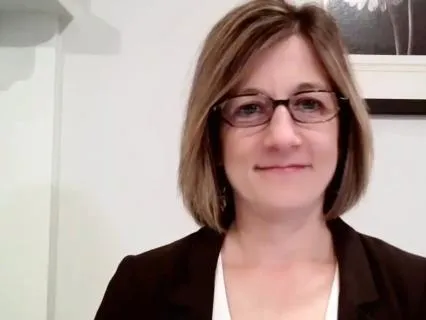
I'm Beth Kerland,
And today I want to share with you two short breath practices that you can use when you feel stressed or when you feel anxious.
So the first thing that I want to do is just to invite you to take a deep breath right now and notice what happens.
Notice how you feel.
Notice how you take that deep breath.
For most people,
When they hear take a deep breath,
They do this.
Kind of taking in that really deep inhalation.
And what that actually does is it revs up our sympathetic nervous system,
That part of our nervous system that's responsible for arousal.
And when we're already feeling stressed and anxious,
That can actually.
Kind of increase the.
.
.
That sympathetic nervous system activity and make us feel even a little bit more anxious or stressed or certainly it's not a calming breath.
So when we want to calm down our nervous system,
We actually want to slow down the exhalation.
So take a moment to try this,
To just let the air come in naturally through your nose.
And then take your time and really slow down the exhalation by two or three or four counts.
Maybe even making your exhalation.
Up to twice as long as your inhalation.
But finding a rhythm that feels comfortable for you.
And you might experiment with breathing out through pursed lips like this.
Almost like breathing out through a straw.
This is actually very soothing.
Exhalation.
You might even take a moment to put a hand on your heart or a hand on your abdomen.
And take those nice,
Slow exhalations.
This sends calming messages to your nervous system.
And the exhalation by slowing it down actually puts the brakes on the sympathetic nervous system,
That fight or flight response.
It turns on our parasympathetic nervous system or dials it up.
So that we're actually creating more relaxation in our body.
So the other breath pattern.
That I want to show you really quick.
It's more of this one-to-one breathing and that is to make our inhalation and our exhalation about the same length.
And the invitation here is to slightly slow down your breath to invite it to become a little deeper,
A little bit slower than usual.
In a pattern that matches.
So maybe breathing into the count of four or five,
And then out to the count of four or five.
Find whatever number works for you.
That allows your inhalation,
Your exhalation to be about the same length.
And what this does is it actually creates coherence in our nervous system between these two branches,
The sympathetic and the parasympathetic.
It's like taking the brakes in the accelerator of a car.
If you want to have a smooth ride,
There needs to be kind of this regulation between those two systems.
And when we even out our breath in this way,
It creates that kind of coherence in our nervous system.
And this can be really helpful when we just want to feel balanced,
When we want to feel calm,
But maybe when we're not in a very heightened state of stress or anxiety where the slower exhalation could be especially helpful.
So.
.
.
I invite you to give these a practice as you go through your day to just notice one's breathing.
We often don't.
Often our breath is so shallow as we go through our day.
We hold stress.
We hold tension.
So just inviting you to notice your breath and to experiment with these two breath patterns to see what your nervous system might need or what might feel best for your nervous system in the moment.
I wish you much well being.
And take good care.