Hello and thanks for tuning in.
If you've been following along in my series,
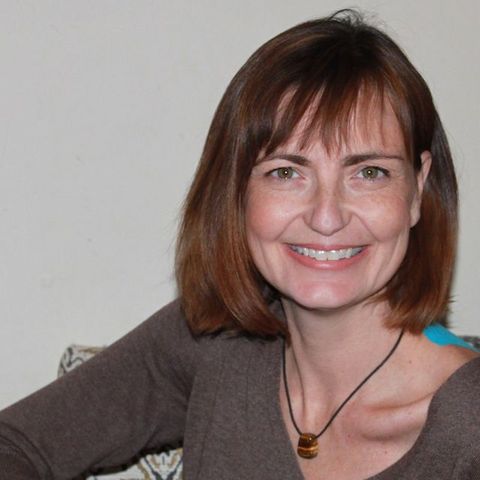
You know by now that my name is Barbara Brooks and I'm a certified health and life coach.
If you just landed on this talk,
I invite you to listen to the other parts of this series as well.
I'm presenting this series because I was the primary caregiver for my late husband when he battled a rare form of cancer.
And let me say the understatement of the year,
The experience was rough.
I fell into that trap of trying to be a super giver.
No time,
No attention,
No thought on myself.
And I think this is a normal response.
I think it feels like this is the only way it can be.
But as time passed and I eventually kind of quote unquote came out on the other side and I really took some time to reflect back,
I felt this deep need to help others.
So much so that I've launched this coaching practice.
My intention for these talks is to put a perspective out there.
A voice with some thoughts and small tips that I wish someone had said to me at that time.
I mean,
I wish I had my own health coach back then,
Someone who could personalize things to my specific reality.
I'm aiming to present in this series some small actions that I wish I had considered and done for myself so that I would have actually been stronger and ultimately so that I could have been a better caregiver.
At that time,
And I think about people that are listening in,
I'm sure you're in a similar boat.
I was stretched so thin.
My two sons at that time were in junior kindergarten and grade three and obviously they needed me.
Oh,
And there was the fact that I personally had been given that BRCA2 gene diagnosis at the same time and I had my own appointments and my own surgeries to deal with.
There's an image I use with my clients that sums up how I felt at that time.
To me,
I picture sitting in a chair,
But instead of the chair having four legs,
It has three.
So every once in a while,
Without warning,
You feel a wobble from that missing leg.
You feel a lurch.
You realize with a start that you aren't on solid ground.
And I'm wondering whether anyone listening knows what I mean.
And this feeling,
That wobble leads me to the focus of this talk.
It's based on a quote,
And I bet you've heard it before,
Anger is fear in disguise.
And why I want to dig into that notion that anger is fear in disguise is that when I felt that wobble,
When I was worn down,
When I was at the end of my rope,
I often lashed out in anger.
Now,
Looking back,
I see that those moments of anger,
The anger was a mask.
It was masking my fear.
I was just reading an article about this in Psychology Today and it says,
Quote,
While fear leads us to feel vulnerable and not in control,
Anger can be energizing and empowering and as such,
It can become the go-to reaction to experiencing fear.
I remember having such a short fuse,
Sometimes over the smallest things.
So the next time you are feeling angry about the situation or you have felt anger towards the person you're caring for,
I invite you to ask yourself,
What is it specifically that I'm afraid of?
What is it about this moment that has triggered some fear?
Maybe you're afraid you're not cut out for this.
Maybe you're afraid you can't do this anymore.
And you may be hard on yourself about your temper,
Your anger,
Maybe even feel guilty.
But think about it.
Are you as hard on yourself when you're afraid?
And you may experience this anger outburst the other way.
You may have to endure angry outbursts from the person you're caring for.
Do they lash out at you?
I was hoping to introduce this concept because when someone lashes out at you in anger,
You most likely respond in anger right back.
But if you give a second of pause and think of their anger as a mask and that the person you're caring for may be afraid,
How would you react?
If you were looking at a small child who's afraid,
Don't those empathetic feelings rush in?
Ask yourself,
What are they afraid of in this moment?
I'm certainly not saying this is easy.
Nothing about caregiving is easy.
But my homework to you,
And you know I love assigning homework,
Is to think about this concept and think back to the last few times you lost your cool.
Can you look upon that situation differently?
I'm back to that Psychology Today article.
And I quote,
Being open to our fear and anger helps us better connect with ourselves.
These emotions offer us insight into our sense of safety.
Learning to recognize and acknowledge them offers us an opportunity to mindfully choose how we respond to rather than react to them.
I want to finish with that visual I use with my private clients,
The missing leg on the chair.
Please realize that you aren't necessarily on solid ground.
There will be wobbles and they can be hard to predict.
Thanks for tuning in and thank you for your caregiving.