Hello and welcome to Vibrant Lives podcast.
I'm Amanda Hayes your host,
A lawyer turned nutritionist with a passion for learning from experts about how to live a vibrant life through practicing mindfulness and meditation,
Eating a nourishing healthy diet and moving my body,
And sharing what I learn with you here on this podcast.
Please note that any information or advice provided in Vibrant Lives podcast is not intended to be used to treat or cure any injuries or medical conditions and it is never a substitute for advice from your own health professionals.
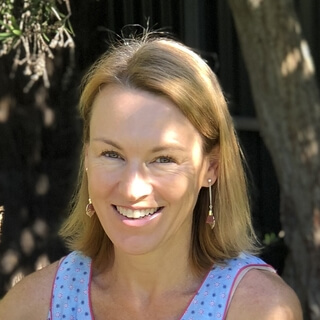
Today I am here with the wonderful,
Vibrant and fun Alexis Guttridge and we're going to talk about her career from the crazy and stressful world of being a successful restaurateur in Boston,
To the now much more Zen life she leads as a mindfulness and meditation teacher.
In fact,
You may have come across some of her teachings on Insight Timer,
So might I suggest you get a nice warm cup of tea and sit down and listen to my chat with this wonderful and fascinating woman.
Hi Alexis,
Welcome to Vibrant Lives podcast.
Alexis,
You're a meditation and mindfulness teacher.
You're based in Melbourne and I'm so excited to talk to you today about that.
But first you've got a very interesting life story.
Your career has been very varied and full and I'm really curious to find out what led you to your current role.
So let's start at the beginning.
You were born and grew up in the US.
So whereabouts in the US did you grow up?
Yeah.
Hi,
Amanda.
Thanks so much.
I love sharing my story.
So I grew up in,
I was born and raised in New York City.
Lived pretty much in every borough you can imagine,
Manhattan,
Brooklyn,
Long Island.
What was a New Yorker through and through.
And then at around probably my teens moved to Massachusetts.
So right outside of in between Boston and New York pretty much.
Right.
The Berkshires.
The Berkshires would kind of be like,
I'm trying to think what it'd be like,
Kind of like for those people that are from Victoria,
It'd be like the Dalesfords.
Okay.
You know,
Lots of trees and beautiful land.
So you take this New York City girl who grew up in a concrete jungle and you take her to the country,
A bit to the bush.
And it was a shock to the system,
But probably the greatest gift my parents could have ever given me.
And why did they do that?
Was that because of their careers or was it a decision to move out of the city?
A plethora of many layers of things.
But I think it was in part career.
I think looking back now,
Probably burnout.
You know,
They had these very,
Very intense jobs.
My stepfather was in real estate and my mother was the head of a department on the university and they wanted to make a change and they wanted her kids,
I think,
To have more space.
I also lived in an area in Brooklyn that is like the coolest and hippest place in the world now.
But it wasn't then.
And so,
You know,
There were some dangerous moments and I think there had some concerns and yeah,
They just,
You know,
My mom's an artist and she's like,
We're moving to the woods.
When she's 13 years old,
You're like,
I don't want to move to the woods.
And so what was your family like?
You've mentioned your mother and your stepfather.
Did you have siblings,
Pets?
Yeah.
I'm actually from a divorced family.
I have two dads and two moms who got divorced.
I've never actually really known my parents to be together.
They got divorced when I was very,
Very young and they both got remarried and each had a son.
So I have two half brothers,
But I am the only product of the original marriage.
And I am definitely kind of the black sheep of the family.
Oh really?
Quite different,
But at the same time,
A massive combination of all four of my parents who have had big influence on my life.
My father is a lawyer and my stepmother used to be in social work.
And all four of my parents now are happily,
Almost at full retirement.
So I'm very,
Very happy for them.
Oh,
That's great.
Well,
It sounds like,
Despite the divorce,
There was four people who influenced your life.
So yeah,
That's good.
Divorce influences you too,
But learn from it.
It's in part,
Part of the reason I choose not to have children,
But when it came to,
You asked about pets,
Which I think is an awesome question.
I always had dogs growing up.
Yeah,
Dogs.
I'm trying to think what else.
I had a guinea pig named Gizmo.
I saved some wild rabbits that then all turned on each other in the cage.
So that was not a good story.
My mother was big into horses and I've always loved riding.
I never really had them as pets,
But I've always been a big fan of riding.
But I would say I am a dog lover through and through and Axel's sleeping somewhere.
My heart just melts for dogs.
Same.
I absolutely love them.
Any dog,
Whenever I see a dog,
They're just great.
They're so they make,
They make me so happy.
They're always smiling and accepting and they're just beautiful.
And I,
As I get older and as I stepped away from my old life,
I,
I really embraced dogs that they were a teacher and that there was so much we can learn from dogs.
Yeah.
Yeah.
I totally agree.
They're lazy or they eat too much.
And I'm like,
Are they lazy?
Do they eat too much or do they just do what they want to do and what they need?
Moving forward a bit.
You earned a BA in communications at the university of Massachusetts in Amherst.
And after you graduated at Alexis,
What was your first job?
Real job.
I worked my first real job.
Yeah.
There were some weird ones before that.
I worked for CBS television in Manhattan.
It was the dream job.
It was,
Yeah,
It was everything a 21 year old girl could dream of for someone who wanted,
Wanted it all,
Wanted the big payday,
Wanted,
Wanted that lifestyle.
And I got it and I absolutely hated it.
Well,
I didn't hate per se the work.
I didn't like the structure,
The corporate structure.
I found it.
I found myself to be very resistant to it at a young age.
Even the simple things of telling me what to wear.
Oh,
Really?
Gosh,
That's quite controlling in a way,
Isn't it?
Yeah.
And it wasn't in the sense of like,
You have to wear a black shirt and black pants or black skirt.
It was just,
You're not professional enough or,
You know,
I've always been a kind of jeans and,
You know,
I'm a jeans and blazer girl now.
That's,
That's my idea of getting dressed up.
And I've always kind of had that inside me.
I've never been comfortable in dresses and heels.
And so I kind of resisted that for a long time,
Which is funny because I eventually gave into it at one point in my career,
But it never felt right.
So I did an amazing job.
I stuck it out for a year.
And as nauseous as it made me at 21 years old,
I walked away from it having no idea what I was going to do.
Wow,
That is really brave.
It's quite deflating when I can relate to that story a bit,
Because I remember my first job,
Real job in a law firm.
And I remember sitting there thinking,
Is this it?
All these years of study,
Is this it?
And being quite despondent about it and,
You know,
Ultimately moved away,
It took me a bit longer than it took you.
But after you left CBS,
Then what did you do?
I started working in restaurants pretty much immediately after,
Not for any particular reason.
Pretty much what happened was I was in Manhattan.
I thought,
Let me take a break.
I just broke up with a long term boyfriend.
And a friend of mine said,
In the Berkshires,
In the beautiful country town,
I'm opening up a restaurant.
He was a chef.
Why don't you help us?
And I was like,
I know nothing about food.
I know nothing about restaurants.
Like,
The idea made me nauseous.
So in true Alexis form,
When it makes me nauseous and scared,
I usually jump.
And that's what I did.
I was like,
Okay,
I have nothing else to do.
And I have this degree.
And I just walked away from the dream job of that degree in communication.
So yeah,
I'll go work in a restaurant for a summer.
And it was literally,
It was a very clear moment in my life when it felt right,
When it felt perfect,
When it felt like this beautiful dance that I had just entered in on that I got to be a part of.
And that was the world of hospitality.
Yeah.
I just I fell in love with it immediately.
I fell in love with the choreography of how the night is run to all the different facets.
And it was very quick and immediate.
And so the owners of this restaurant noticed that right away.
So I just started picking up more responsibility.
And the next thing you know,
The following year,
I'm managing the restaurant,
Not having any clue what I was doing.
But faith,
I guess,
And commitment and energy.
And you stayed in that industry for quite some time.
And you reached,
I guess,
Pretty high levels in that you,
You opened up your own restaurant,
And you took risks and it was a very,
Very interesting restaurant.
And you took risks and it did really well.
So can you talk to us a little bit about those years?
Yeah,
So I left that little restaurant in the Berkshires,
Which I will be forever grateful for.
And I went off,
I applied,
I remember I applied to like five manager jobs in restaurants,
New York City and Boston,
I was just kind of,
Maybe someone will hire me,
You know,
With my little town experience.
Well,
Someone hired me in Boston,
A beautiful restaurant right in the center of Boston.
And my career moved very quickly.
Apparently,
I was quite good at running restaurants.
And,
You know,
I,
I own a lot of running restaurants to dance,
I used to dance when I was younger.
And the choreography that comes from dance is that you have to,
You have to be able to watch all the moving parts,
Feel all the moving parts.
And,
And also be able to give feedback and be able to juggle 15,
000 things one way.
And then when you walk through the dining room,
Notice 10 different other things.
And it was something that just this skill that honestly is a skill we can't really teach.
There are certain things in hospitality you can teach.
But this dance isn't something a lot of a lot,
A lot of people can do.
And so I,
My career just kept blossoming.
And I was handed an opportunity with a restaurant owner who was a very,
A celebrity chef,
If you will,
That year that he hired me,
He was on the cover of Food and Wine magazine is one of the best chefs in the country.
I had no idea who he was.
And this is just going to show you how naive I was,
I wasn't into the industry.
A lot of people that get into food and wine,
They love cooking,
They love drinking,
Although I did love drinking way too much.
They love the celebrity side of it.
I actually really liked being on the dining room floor working with the employees.
And so I was very clueless and naive to a lot of the ins and outs of the industry.
When famous people would walk in,
I had no idea.
I was just like,
Oh,
You're nice.
Here,
You know,
And I,
But I work 14 hours,
And I give you my heart and soul.
And so when that gentleman gave me that opportunity,
His name was Tony is Tony Maas,
Still owns restaurants in Boston.
And he just gave me a lot of faith and courage in myself and gave me my first general manager position.
And I just continued to keep pushing myself keep trying new things working.
I worked for a larger company after that that had multiple restaurants.
And then as life does,
When I think you're on the right path,
An opportunity presented itself to me.
And that was that was the day everything changed.
So I was working with my who's now my former business partner,
His name's Matthew Godet.
And we were running a restaurant together.
And somebody had approached me independently and said,
We would like you to open a restaurant for us.
Apparently,
Someone had kind of thrown my name into the hat and said,
To the public,
You will be the owner,
But we will fund you all the money.
So we will give you a million dollars you build it how you want it.
Wow.
I was 26,
Seven years old.
And I was like,
What?
Like,
I never even thought about owning a restaurant like you guys are crazy.
Do you see how hard these owners work?
Like,
I don't want that.
I had never thought about it.
And then this,
Then this man tells me what he wants.
And I'm,
I think about it.
And then I start really thinking about it.
And I think,
Well,
If I'm going to do all the work,
And,
And put in all the blood,
Sweat and tears,
And you really think I can do this,
Then why am I doing it for you?
Why don't I do it for myself?
And again,
In true Alexis form,
Never taking the easy way out,
Because man,
It would have been a lot easier to just take his money and build or build.
I walked away from the offer,
Not easily.
And I want to be very clear on this,
Because this happened a lot often when I used to get interviewed in restaurants.
I do not come from heaps of money.
I did not walk away from it,
Because I was like,
Oh,
No problem.
I'll dip my hand in the trust fund.
I had money when I made that decision.
But what I had was the faith that maybe I could really do this.
And so I started down the journey of raising money.
I put together a team of amazing people,
Advisors,
From accountants to lawyers to financial advisors that have built restaurant empires throughout Boston and New York.
And within six months,
I had found a space.
I had raised $1.
4 million.
And I was off to the races and running and it was the brain was moving fast.
That sounds amazing.
And also really scary for a young person.
I had family members actually really tried to stop me in a very aggressive way.
They were so scared for me that they couldn't handle it.
Were they scared of potential failure or were they scared of how hard you're going to have to work?
I think it was the failure and I think it was the financial commitment.
Yeah,
Sure.
So there's a lot of at stake if it doesn't work out,
Isn't there?
So you found yourself running your own restaurant,
You were working really,
Really hard.
It sounds like you never really took time for yourself.
You never slowed down.
You lived and breathed it.
I imagine there was a lot of stress as well.
So I think I read that it was around this time that you started incorporating meditation into your life.
So how did you do that?
Yeah,
I,
Um,
I mean,
The short version of the story is that I led my business with a very heavy hand.
I was very good at what I did,
But I was very mean.
People feared me in the industry and I thought that was something to be proud of.
That's hard to imagine looking at you now.
I know.
I'm fully aware and I have had a lot of conversations with those people that worked for me.
And there's a lot of love and appreciation.
So I'm grateful for all that they tolerated.
But that was also because of what I saw in the industry.
It was a very male dominated industry run by mostly chefs and they ran with a very heavy,
They ran with fear.
That was just how it was done when I was in it.
Hopefully there has been some shift and change.
Through that strong work,
I was through that strong leadership skills and heavy hand.
I also partied very hard.
So everything was kind of cyclical,
How I,
How I ran my business to how I party to how I worked out.
So I partied really hard because I worked really hard and I had no other time.
And then when I did work out,
I would do like CrossFit and really,
Really hardcore training,
Which there's nothing wrong with it,
But they all kind of lined up.
They all made sense.
Right.
And then I had an injury.
I hurt my back.
And I read this time and time again,
People that go through different types of transformation in their life.
There's this trigger,
There's something that happens.
And for me,
It was I injured my back.
And so I couldn't do CrossFit.
And I was like,
I'll give this yoga shit a try again.
This being the girl that last time I went to yoga class was like almost peeing your pants,
Laughing.
Well,
I went to yoga again,
And it was not so ridiculous.
And I found some kindness that I had not felt in years towards myself.
I had not laughed or cried in probably 15 years.
I definitely hadn't smiled in 15 years.
I remember my father would beg me to smile when he was taking a picture and I physically couldn't.
And now I physically can't smile when I take a picture,
Which is really interesting to me.
And you can see this in the pictures of my lifetime.
And so I started yoga,
Which then quickly led to meditation,
But I didn't tell a single soul I was doing either.
And why was that?
Is that because it was so different from this persona that you had at work,
This sort of hard,
Tough,
Hard working?
Is that why you didn't tell anyone?
That's exactly why.
And I didn't want to be judged.
I didn't want to be seen as this hippie dippy,
Woo-wee.
And I wanted to be taken seriously.
That was very important to me in my career.
I was young and I was a woman in a male,
Senior dominated industry.
So I kept it a secret.
I let the yoga slip out over time.
I actually brought yoga teachers into the restaurant and I tried to incorporate,
But I kept my meditation practice that I was waking up every morning for 15 minutes and sitting,
I made a little altar.
Again,
I had no idea what I was doing.
I never had been to a meditation class.
I found an app and I just started sitting every morning for 15 minutes and it became air.
It was like,
I couldn't breathe.
I couldn't get through the day without that sit.
And the more consistently I sat,
The more everything in my life changed.
And in what way?
What did you notice?
So there were simple things in the beginning.
Like I started reading at night before I went to bed.
I hadn't read in years.
I was going through a time in my life when I had started the yoga that I also recognized that I had a problem.
I had a poor relationship with alcohol.
So I was going to a psychiatrist about three times a week to try and figure out what did sobriety mean to me and what that looked like.
I found that it really helped with the drinking.
Just didn't feel the need to drink at night every night,
Which is what I did for 15 years.
I didn't have one night off.
Wow.
I quit smoking at that time,
But it was things from the reading the books to how I ate.
Being in the restaurant world,
We do this.
We shovel our food down our mouth.
And I did that when I was at home,
I never cooked.
I found that even in the restaurant,
I would sit and I would eat my food.
Even if I was sitting on the stairs or hiding in a corner in my office,
I was finding that I was sitting.
And the really big obvious change that actually people noticed almost immediately was I wasn't yelling.
That is so fascinating,
Isn't it?
It sounds like that change you say contributed to you being able to stop drinking or rely less on drinking and just made you from the sounds of it,
A calmer and possibly happier person.
Yeah.
I mean,
I think for the first time in my life,
I was actually connected to myself and I wasn't moving through the world with a purpose.
That was what I thought everybody wanted me to do.
Yeah.
And trying to prove yourself all the time.
As you said,
You were a woman in a very male dominated industry.
And I think the natural inclination for women in those positions is to sort of,
You've got to work harder,
Be smarter,
Do more,
Sort of prove yourself the whole time.
It certainly felt like that in the legal industry anyway.
Yes.
I can only imagine actually.
So let's bring us to today.
So you now live in Australia,
In Melbourne,
I believe you've left the restaurant industry.
So how did you end up here?
What's happened between that and arriving and living in Australia?
Yeah.
Yeah.
It's funny when I jump online with new clients,
Especially ones that are in America,
They're always like,
Wait,
You're not Ozzy.
So I sold my business.
And in part,
You know,
When I started the practice of yoga and meditation,
I just started to feel and I was happy.
And my business had gone through some ups and downs and I was given an opportunity to sell and I jumped at it.
And it was the hardest decision of my life.
I probably never cried so much in my life,
But those tears were probably somewhat of joy to A relief maybe.
Letting go.
Yeah.
And so in the same month that I sold my business,
I saw this opportunity come up to go to India,
Never having been to India without any research.
I was like,
Okay,
Put my entire life in storage and set out on,
I didn't read the book till after my trip,
But to be perfectly honest,
My own version of Eat,
Pray,
Love.
It really quickly came.
I gave myself about four months.
My little brother was getting married.
So I thought he's about nine years younger than me.
And I thought,
All right,
Well,
I've got these four months.
I have to be back in America for the wedding.
I don't really know what's next in my life.
I assumed after those four months,
I'd go back into the restaurant world in some level as a consultant.
I don't know,
Even though I don't think I really wanted to,
I think it's really hard.
And I think this is important for people to hear just because you're good at something doesn't mean it's good for you.
Yeah.
Yeah.
But also,
I think for you going back into the restaurant industry was the obvious choice,
Right?
You knew how to do it.
Yeah.
And reinventing yourself now at this point being 35,
36,
It seems a bit harder and scarier.
And financially,
It seems scary too,
Right?
What are you going to do to make that money again?
And so I traveled,
I went to India,
I went to Vietnam,
I went to Indonesia.
And I'll never forget,
I was sitting in a pool in Vietnam.
And someone said to me,
An Aussie couple that I was talking to by myself,
Like,
You're gonna go to Australia?
And I was like,
No,
I'm gonna go to Australia.
Like,
I'm doing the whole like,
You know,
Finding myself like,
You know,
My own little spiritual journey.
And they were like,
Oh,
You've got to go.
And I was like,
Really?
I was like,
All right.
Well,
If you say I have to go there must be.
And so they were from Byron Bay.
So my first point of entry into Australia was Byron Bay.
Right place to start.
And I remember calling my mom and being like,
Mom,
There's people not wearing shoes in the supermarket.
And I'll never forget that was like my I was like,
Wow,
This is kind of what I imagined in my head,
Actually.
And I quickly realized I needed to I'm here.
Okay,
You got to go to Melbourne or Sydney,
Right?
You're you're in Australia.
That's what you do.
Do not ask people from Australia,
Melbourne or Sydney,
You get very strong answers on either one.
Okay,
Nobody's making this easy for me.
So I closed my eyes and I picked.
And now I picked Melbourne.
No,
I'm saying if you asked me,
I would have said Sydney,
Because I used to live there.
But you picked Melbourne.
I've been lucky.
I've actually lived in both for a few years.
So but I ended up in Melbourne.
And I remember I was like,
Well,
Now what do I do?
I'm in a metropolitan city.
Long story short.
What do you do?
You're a 36 year old 35 year old single gal.
I went on Tinder.
I thought,
Cool.
I thought I'll tell my girlfriend's a fun story.
I'll go on a date with Ozzy and not understand a word he's saying to me.
And which actually happened on one of my dates.
And on I went on three dates.
Because I really was like,
I don't really know what I'm doing here.
And the third date was my husband.
Oh,
My goodness.
That's a great story.
Yeah.
And I did never left Australia.
I mean,
I went back from the brothers wedding.
But in that month,
My now husband and I planned our future.
We knew amazing.
So you had a pretty instant connection then with him from the sounds of it.
Yeah,
My husband had been single for just as long as I had and lived a pretty,
Pretty hectic party life just as I had.
And we were just both ready.
And he was nothing like anyone I had ever dated in my life.
Wow.
And he's an Aussie.
True Blue Aussie.
Oh,
Wow.
True Blue.
He was born and raised about four hours outside of New South Wales in a little tiny coastal town called Foster Tungcurry.
Oh,
I know Foster.
Yeah,
There used to be a really good triathlon there.
But it's moved to Port Macquarie now.
Okay,
Yeah.
That was it.
I went home,
Packed up my things and a few months later moved to actually Sydney for the first few years and then now in Melbourne.
Isn't that amazing that that sort of spur of the moment trip to Australia has led to your new life here.
So let's talk about meditation.
Yeah,
You went from using meditation for yourself to help yourself.
And now you're teaching others and helping others.
So how did you become a qualified meditation teacher?
And also what made you want to do that?
Why did you want to expand beyond just using it for yourself?
Yeah,
Look,
When I never wanted to teach,
I never wanted to teach yoga or meditation.
Everybody thought that was the path I was going to take when I walked away from restaurants.
I tried so much random work the last probably four years of my life trying to find a place in the world.
And I had I was always doing trainings.
I have done teacher trainings,
I've done everything but was never going to teach.
I just want to keep learning.
And one of the biggest things I noticed when I was doing little side projects of consulting for restaurant businesses is there was this lack of mindfulness.
Yeah,
This lack of awareness of think about and I'm sure you can remember this back in your law firm days when you're in a project and you're on the computer and you were just in it,
In it,
In it,
And you're stuck,
But you don't know how to step away.
Right?
You don't know how to take that five minutes and walk away and come back in mindfulness.
And I really recognize that this was missing in the world in general.
And so I started teaching just a little bit here and there,
Getting my groove,
My feel and really recognizing that my style of teaching was immediately very different than everything I had mostly been exposed to.
I really take away the spiritual aspect from it while I have I pay homage to it and I appreciate it.
We live in a different time,
We live in a modern world.
So we need to,
In my opinion,
Teach in a modern way.
And if that spiritual side works for you,
Then great.
But for a large part of the population,
I think the reason people avoid this practice is because of the spiritual side.
Yeah.
It's,
It's,
If you're not into that,
It's immediately alienating,
Isn't it?
So people will turn away.
Yeah.
So how do you then make your teaching confluent with the modern world?
So a big thing for me is giving yourself permission.
So the verbiage that I use when I teach it is a very big part of it.
And it comes from a lot of trauma informed trainings I did actually,
This invitational language and recognizing through the trainings that I've done that we can all appreciate this language,
That there is no one way to meditate.
You do not need to sit on a pillow with your fingers in a mudra and wear a pretty flowy dress or be sitting on the ocean.
You know,
Um,
You know,
When I show up to my public classes,
I always wear jeans and that's intentionally done.
I want people to realize that you can do this sitting in your car before you get out for a meeting or on the toilet.
Yeah.
Anyway,
You've got time.
Um,
So a big part of it is,
Is how I present myself and the language that I use that I also come from the teachers that I've done a lot of training with in Australia,
That your thoughts are okay.
That we are allowed to have thoughts in our practice and that we all have them.
Yeah.
Um,
And I think transparency is really important.
I think when I started learning about meditation,
I found it very hard to find teachers.
I think there's a lot of people out there that,
You know,
Put guided meditations out there,
But I find that they don't talk about,
You know,
The,
The,
The sticky parts that we all have in meditation.
Like for some reason it's,
It's unspoken and I don't really know why.
Um,
I think in part because there's this mystical side to it.
Yeah.
That's what I think too.
And I,
I don't,
I don't think it needs to be there and it look,
Whatever works for you,
Keep doing it.
I am the last person that's going to say you need to meditate this way,
But I'm also going to say to you,
If what you're doing doesn't resonate,
Why are you staying with it?
Let's try something else.
Yeah.
And,
And make it,
Um,
Accessible from the sounds of what you're saying.
Yeah.
Yeah.
You know,
That's a really,
Really important point too.
And it's actually why I love the world of online,
To be honest.
And what,
What the last year has shown me,
I actually love teaching online more than anything,
To be honest,
Because I get to meet people where they're at.
Yeah.
That's a good point.
If you want to stay at your desk and you're in the middle of a project and you've only got those 20 minutes,
And that's where you stay.
If you want to lie down on the floor and take a nap,
It's your comfort.
It's your space.
Um,
And the beautiful thing about this practice is that we,
We can meet each other and do it anywhere.
And it sounds from what you say,
Very non-judgmental it's come as you are.
Yeah.
I always joke.
I say you can,
Um,
I tried during when we were in some pretty heavy lockdowns in Melbourne,
I would always be like,
Anybody want to show up in their party dress?
Like who cares?
Um,
I really think we do this,
This community of disservice when we keep perpetuating this idea of what it needs to look like.
Yeah.
And make it have formalization around it where it's,
It's,
As we said before,
A little bit alienating to some people.
You know,
I met with,
I had a private student in my house the other day.
Um,
And we were having this amazing conversation.
She's been practicing for a while and she was told by a teacher that you,
You have to get off of guided meditations and you have to move to silence.
Like that's the next step.
And so she tried that and has been miserable.
Now,
No disrespect,
But if you're miserable,
Why not go back to what makes you happy?
Yeah.
Yeah.
It seems like a no brainer,
But unfortunately I think people have this idea.
Okay.
I need to sit for 30 minutes in the morning,
30 minutes at night in silence and that there's these rules and that's what makes meditation meditation.
Yeah.
Yeah.
Maybe they think that if you're doing a guided meditation,
It's not a pure in quotes meditation.
And I,
And I'm very transparent with people.
I would say I use guided meditation.
I would say at least for the first four years of practicing.
I really like it.
I have to say I do a bit of both,
But sometimes I just like the sound of someone else's voice and you know,
It sort of takes the pressure off in a way you can just let it flow through you.
And so I like both.
I think it's a very natural progression that needs to happen.
So we,
As humans,
We automatically,
It's just,
It's innate.
It's within,
You know,
We kind of want to force and create and we want succession and we want to keep going.
Yeah.
But with meditation and to be honest,
I think with,
You know,
A lot of athletes would even agree on some level with this is that the progression will happen naturally when we allow it.
And this game happens with meditation.
One day I just wanted to stop listening to people.
That was,
It was,
And then there was a time where probably a few months after where I didn't like the silence and I went back to it,
You know,
So,
But I ha I never forced,
I never said,
Hey,
This is what you need to do.
And that goes the same for how long you sit.
You know,
I think people really push themselves to a time limit that makes it unenjoyable.
Yeah.
And a bit artificial too.
Yeah.
Am I done?
Am I done?
Am I done?
I'm guilty of that sometimes.
Yeah.
You know,
I work with people sometimes the first thing they tell me is,
Well,
I don't set a timer.
I'm like,
So what do you do?
How do you,
How do you know when to stop?
How do you know?
Always set a timer.
Oh,
He's always,
Always set a timer and make sure if you're setting a timer,
Make sure it's a nice little chime or bell or dog bark,
Whatever you like,
But make it something that it's enjoyable.
So when it's,
When the time ends,
You're not like startled.
Yeah.
Yeah.
Alexis,
You also talk about mindfulness and meditation.
So can you explain to us what the difference is between those two?
Yeah.
So,
You know,
It's really interesting to me because I always struggled with this and my teacher that I work with in Melbourne always has some quite clever ways of,
Of interpreting mindfulness to me is there's two parts to it.
Mindfulness is a way of living.
So the more meditation we practice,
The more mindful we move through life.
It's like the more gratitude we practice,
The more grateful we move through life.
So mindfulness is,
Is being aware each step you make through your death,
Mindfully being aware when you eat your food so that you're not inhaling and that you actually feel when you're full,
Which is a strange concept in these days.
It is.
It shouldn't be,
But it is.
And,
You know,
It was,
It was a strange one for me.
It took me a while.
I actually eat less now than ever.
Not because I'm trying to,
But because I'm like,
Oh,
Wait,
Slow down.
You're full.
Like that's what that feels like.
So that to me is mindfulness.
And then the other side of mindfulness is a style of teaching.
So this idea of guided meditation for me,
It's a very practical,
Guided meditation without a spiritual side.
So it's,
We're taking,
We're kind of combining these two worlds.
So sometimes we'll meditate when I guide someone through meditation,
The whole meditation might be about the sounds that are surround us and how we can just meditate on our soundscape,
The humming of the refrigerator to the garbage truck outside and how these everyday things in our lives can actually be a part of the practice.
And so that when you move through the world,
Not practicing,
You actually have an appreciation for what's happening around you.
You slow down.
You recognize the space in between each moment,
As opposed to rushing to the next moment.
And it sounds like for you,
That's a,
Like a 180 degrees turn in your,
From your previous life to your current life from always rushing,
Scoffing down your food when you had a quick moment to do so always looking around,
Seeing what's happening to now living in the moment,
Being mindful.
And it's,
You're absolutely right,
Amanda.
And one of the biggest lessons and one of the hardest lessons for me to learn,
And this was a big,
Like,
Kind of like hung my head low for a little bit to own up to this.
I was always the one that said,
You have to be a multitasker.
It's the only way through life you need to multitask,
You need to go,
Go,
Go.
And I really believed it.
And I believed it for years.
When I started this mindful way of living,
I started to realize that I was dare I say more productive,
When I did one thing at a time,
Finished it,
Moved on,
Or was like,
I'm not getting there with this,
I'm going to put Paul hit pause,
And I'm going to move on to something else,
As opposed to trying to juggle all these balls.
And I to this day,
I'm actually still amazed by it.
When I practice,
I move through my day much more methodical.
When I don't practice,
It's like,
Oh,
My God,
I'm trying to juggle all these balls.
I'm trying to get it all done.
And I get less done.
Yeah.
And one of you drop one of the balls in it inevitably.
Yeah.
So this multitasking versus I had never even heard this word before you need tasking.
Hmm.
One of my mantras is do one thing.
So simple,
Right?
Do one thing.
You said the word pause before.
So that is a good segue into your,
Your website and your business.
It's called pause with Alexis.
And through that you offer meditation and mindfulness practices.
And I know that you offer them to individuals and to corporations.
I'm quite interested to hear how that would work with a corporation.
So how do you do that?
So,
I mean,
When it started with corporations,
I started probably about two years ago,
I was actually doing a little online pre pre this current world with some American companies,
But also person in Melbourne.
And what we do is it's usually about a six month commitment from that company.
It's not mandatory people can choose to come or not.
And we hold,
It's about a 30 minute or so class every week.
And we do all different types of topics.
So we always do a little bit of movement because most of them have been sitting at their desk all day.
It's not formal movement.
This is sometimes really fun and silly movement just to get the body moving,
But also a chance for them to connect with their body and to be able to do that.
And then we will go through guided meditation.
And sometimes it'll be breathing techniques or something lovely like gratitude and constantly try to change it up with them.
I'm constantly reading and learning.
And sometimes we'll even explore things like active listening.
So they'll get into partners and they'll have a meditation and then they'll reflect with their partner.
And ultimately what I'm what my hope is to with bringing it into the classroom,
My hope is to with bringing it into the corporate sector is to help prevent burnout.
Sure.
Maybe soften it a little bit to not be as hard as it was for me.
And to people that walking away from your desk for five minutes and taking a few breaths or going outside and closing your eyes and just sitting on a bench might be all that it takes to have a successful day to enjoy what you're doing.
But we have to give people that space and time to have that.
And what Alexis are some of the benefits then to well,
Let's start with the business itself.
What what what has been proven or noticed?
So some of the feedback I get is that the rest of their day is actually more productive.
They don't feel as overwhelmed.
A decrease in anxiety,
I would say employees.
Some employers have said to me that the communication has shifted,
Which I've I've always been quite proud of,
Meaning they are better listeners.
They're active listening to each other and they're they're wanting feedback as opposed to being like,
Nope,
Nope,
I got this or I don't want to hear your input or there's a there's a kindness that comes from this practice.
That's great.
It can only improve the working environment.
Yeah.
And especially with the unique way that everyone communicates these days.
There needs to be a level of patience.
Alexis,
You also work with individuals.
I know that you offer one on one classes.
So how do they work?
So most of all,
I can't even say most anymore.
My one on ones vary.
So they're online.
They're in person in my home now,
Which seems to be a very popular thing,
Which is awesome,
Because Axel loves meeting everyone.
And I go I also go to people's homes,
Which I'm very happy to do,
Because for some people,
That's where their comfort is.
And one on ones really range.
I work with people that have had a practice and have lost their way and just want support of kind of finding their way back.
I work with people that try to practice are completely frustrated and think they're doing something wrong,
Which they're not.
So quite often,
You know,
I might go to someone's home or have somebody here for an hour,
It ranges 30 minutes to an hour,
Depending on you know what you need.
And a lot of times half of that can be just talking about the practice.
Yeah.
So there's this idea of reflective meditation,
Where you meditate,
And then we talk about what happened during your meditation,
Because quite often when we allow the thoughts to flow,
And then we talk about it afterwards,
Or you can journal afterwards,
We pull apart those thoughts a bit.
And you actually can discover why those thoughts come up.
So instead of resisting your thoughts,
Allowing them,
It sounds a bit like there's almost a counseling aspect to it potentially helping people.
So I know that's a good thing.
I think shine a light on their own issues.
Well,
And I think that's it.
I am in no way a counselor.
But I think what happens is that you become your own counselor,
You I just give kind of some cues when I hear certain words.
And I kind of,
It's almost like I keep throwing the ball back at you.
I keep saying certain things that you keep bringing up.
And you inevitably are the best judge of what you need.
And almost always,
Every time,
They come to their own conclusion.
Yeah,
That's great.
It's very intuitive from the sounds of it,
Then.
Yeah.
And so what are some of the benefits then that you've noticed with the people you work with?
Yeah.
Um,
I work with a lot of moms who say they're,
Again,
We'll go back to communication there,
Or we'll say their patients with their children.
I don't have children,
But I could imagine.
Um,
Especially when you're in lockdown for a long period of time.
Patience is a big one that has come up,
You know,
Just overall awareness that this practice doesn't have to look a certain way.
Yeah,
No.
So I often will get people that will send me pictures,
They'll be away with their partners,
And they'll go off in a little nook,
And they'll go sit for a few minutes outside.
And they'll be like,
Look,
I took a pause here.
And I'm like,
Awesome.
Like,
So this awareness and recognition of what they need,
And how they need to hit the reset button,
I think is the biggest gift we can get from this practice.
And then there's the big thing is like decreasing anxiety.
Yeah.
It plays a really big role when we can have this awareness in our body when we can feel the anxiety building up,
Because I struggle from anxiety as well.
Noticing,
So you're more tuned into your body,
You feel it boiling,
Boiling,
Filling,
Filling,
Filling.
And as soon as you start to feel that you sit.
And you're able to manage that anxiety.
And through managing it,
You're actually able to understand where it's coming from,
Why it's showing up.
Yeah,
That could be transformative for some people,
I imagine.
Yeah,
Yeah.
And it helps with fear.
Whether it's something you want to get over,
Like I always use the example,
I now ride motorcycles,
And it's something I've been fearful of my whole life.
And every morning before I would go for a practice ride in Sydney at 6am,
I had to meditate because the anxiety and fear was so bad,
It was overwhelming,
And it was almost paralyzing.
But I wanted to do this.
And the fear helped me find some balance,
The meditation had worked with my fear and helped me find balance.
It sounds like you're someone who almost thrives on putting yourself in uncomfortable positions,
And then being able to overcome that fear or whatever the emotion is and master it.
I don't often look at it as an uncomfortable situation.
I look at life in general,
And this is a very bold statement,
I recognize it,
But that we can all do whatever we put our minds to.
Yeah,
You're proof of that.
Yeah.
But it is determination,
But it is also just that mindset of like,
I can do this.
Yeah.
And I guess figuring things out and persisting and being patient if necessary.
Alexis,
On your website,
You have a PAWS library.
So what is that and how do people find it or join that?
So the PAWS library was created because there's so much out there,
And I realized that there's so many options out there.
And there's some really great apps,
But part of what a lot of my students were saying when I was referring them to apps is that there's too many choices.
And those choices were almost creating anxiety for them.
So many teachers,
I don't know what to do.
And I was like,
Huh,
I thought I was sending you off in a good direction.
So I thought,
Why not create my own library of guided meditations where if you know you like working with me and you know,
My voice speaks to you because it is,
It's a connection.
They're just voices that work for some of us.
So I created my own little library.
Right now we're up to about,
I think there's 26 guided meditations.
They range from five minutes to 30 minutes.
It's just a monthly subscription.
There's no commitment or anything.
You try it for a month.
You can bail out at any time.
But I just wanted a way for people to be able to meditate in their own time,
In their own way.
And they're all different topics.
There's some of the traditional ones of breathing exercises and gratitude,
But then there's things like topics that,
What about when the days aren't good?
And meditating on that.
There's a really big range of topics that I'm quite proud of.
And I hope to keep adding.
And I've actually had some regular students now that have put in requests for recordings.
So that's great.
Yeah.
I think it's awesome.
Cause I'm like,
You know,
Tell,
Tell me what you guys want and yeah.
So hopefully that will just continue to grow and be out there for everyone to use.
Great.
So I'll put a link to that in the show notes.
Alexis,
Is there a short practice that you could recommend to our listeners?
Yes.
So I,
I,
There are two different practices I would offer.
Do you want me just to kind of outline two different options?
Yeah.
Sounds great.
Okay.
So one is a non-structured practice and the other one is a structure.
So the non-structured for,
For,
For my creative folks that just want to let loose is to find a comfortable seat in your home.
And I'll kind of do a bit of an intro for you guys,
Just so you can get a feel for it.
Find a comfortable seat in your house,
Or maybe you do this outside if you've got a backyard or a front porch,
Or another option is to crack open a window if you've in between running to the shops and you're parked,
Of course,
Not in the back,
Of course,
Not moving.
And this informal practice is to simply listen,
To allow the soundscape that surrounds you to be the practice,
To hear the cars driving by,
The dogs barking in the distance,
And to simply listen,
To not resist,
To just be with what surrounds you.
For some of you,
That might be a practice.
And maybe you set a timer for five minutes and you take a break.
And then the other one is a bit more structured.
And so I'll just walk you through this really quickly.
This is what we call box breathing.
And I love this because it gives you some structure and it's quite simple.
So envision a box,
If that helps.
A box has four sides.
And you're simply going to inhale to the count of four,
Exhale to the count of four,
Inhale to the count of four,
Exhale to the count of four.
And that's one round.
And so if you lose your way at any point,
Just start again.
Remember box,
Four sides,
Inhaling to four,
Exhaling to four.
Because the reality is that when we create length in our breath and more space and time,
A,
We're bringing more oxygen into our body,
But we're also sending a signal to our body that it's time to relax.
It's time to find some ease and create that space.
So box breathing.
Thank you.
I like those two because they're relatively simple and you could do them anywhere at any time.
Yeah.
And either one.
Yeah.
And I find when I do the box breathing,
I know everyone's listening.
But what I do when I'm even doing it for myself is I use my finger and I kind of guide myself and I draw a box and it just kind of keeps me going round and round.
That's just a little something I do.
Thank you.
So Alexis,
I noticed you've got a tattoo on your left arm.
What is that?
I've been trying to work it out.
It's been ongoing.
Up here is all snowflakes.
I love snow.
Just don't see much of it anymore.
This isn't very old.
This is probably about 12 years old.
And then through my journeys,
This is,
You can kind of see here,
Is actually an elephant.
Oh,
Cool.
Yeah,
It's kind of like a,
I call her modern day Ganesha.
And then just some flowers.
And there's,
I can't really show you that there's bamboo.
And that kind of represents my travels.
And then there's some letters on the inside that correlate back to my restaurant days.
Some verbiage that says you can just have this.
And it's just about people being a bit demanding in the restaurant world.
I saw it first on your website.
There's a picture of you.
And I just thought,
I wonder what that is.
Yeah.
So my tattoos all tell me a story.
They're kind of different chapters of my life.
If they weren't so painful for me,
I'd probably tell more stories,
But I do not like the pain that comes with them.
Well,
I can't relate to that because I don't have any.
So Alexis,
I saw on Instagram actually,
That you visited South Australia.
I think it was around Christmas time last year.
What was some of your favorite things that you did or saw in South Australia?
Oh my gosh,
Everything.
Okay.
I had never been,
My husband had never been and we drove,
We took the dog.
Well,
The people,
First of all,
Let me just say thumbs up,
Two thumbs up.
Everybody super kind.
And I will talk to anybody that will talk to me.
I think I embarrass my husband sometimes.
I just love getting to know people.
And everybody was so nice.
And especially somebody that has a different accent.
I have struggled in certain areas.
Just with people being receptive.
And I never felt like I was an outsider there.
I loved where we stayed.
We stayed in,
I'm probably going to butcher how you say this,
But we stayed in Port Nurlunga.
No,
You said it perfectly.
I just thought it was just this beautiful coastal area.
And I have to say,
I fell in love with the wine region there.
Yeah,
McLaren Vale.
McLaren Vale was just an experience on itself.
When I stopped drinking years ago,
I had always said I wanted to be able to drink again at some point in my life that I wanted to find that balance.
And it took a long time,
But I finally gotten there.
And one of the reasons I wanted to keep wine in my life is because I love the story.
I love about it.
I love the art form.
And so every day,
My husband and I would pick a different winery,
We would just go and talk to these people and taste and it was just,
It was a beautiful experience.
And it was probably the most memorable.
And I've tasted a lot of wine in my lifetime.
It's probably one of the most memorable wine experiences in my life.
Oh,
That's so lovely to hear.
I also love talking to winemakers because they're so passionate.
And as you say,
It's an art,
I think.
It's really creative.
Yeah.
Yeah.
No,
We talk often about coming back.
So we will definitely be visiting again.
And Alexis,
Who inspires you?
You know,
It's funny.
The first person that comes to mind is my closest and dearest and oldest friend back home.
Her name is Jocelyn.
She's probably the kindest person I have ever met.
And I have not always been the kindness and she has always stood by my side.
Even when I was not kind.
And she's always supported me even when she thought I was nuts,
But she's always been honest and upfront.
I think she inspires me to continue just being kind and sharing this and that it's okay to be vulnerable.
Yeah.
So I'd have to say Jocelyn.
Oh,
She sounds like a gorgeous friend.
There's nothing like old friends,
Are there?
They're just so precious.
Just the final question.
And I like to ask this question of all my guests.
If there are two things that you could recommend that people could do to improve their wellbeing,
What would they be?
Rest.
Good one.
I'm going to go with rest and write.
As in journaling or?
I'm not going to use the word because I think we hear that word journaling and we think of like when we were a kid and we had the diaries filled up.
So pick up a piece of scrap paper and just write down some words of how you're feeling.
But rest and write.
Maybe writing in this modern day is recording into your phone.
Take it however you want,
But reflecting.
Rest and reflect,
We could say instead of writing.
Rest and reflect.
Thank you so much for coming on Vibrant Lives podcast today.
It's been such an honor to speak with you.
I've really enjoyed it.
Oh,
Thank you for having me,
Amanda.
I really appreciate it.
Thank you so much for listening to Vibrant Lives podcast today.
I do hope that you found today's interview interesting or inspiring or both.
Eat well,
Move well,
Think well.