We can say that developing meditation on a kammatthana,
A meditation object,
Has the greatest benefit for our lives.
If we develop a meditation object well,
Gain a good level of peacefulness,
And promote it to wisdom that can let go of the sense of self,
Then that will be a benefit to ourselves and to others.
So we need to be intelligent,
To train ourselves in dhana,
Sila,
Bhavana,
Generosity,
Morality,
Meditation,
Or sila,
Samadhi,
Bhanya,
Morality,
Concentration and wisdom.
And when we train in this well,
What is that like?
We will be able to enter a land of peace.
Oh,
So there is a real land of peace.
We can say that there is a human world,
The land of the humans,
The land of the heavens,
The land of the brahma gods,
The animal realm,
The hell realm.
In the hell realm,
It is hot and chaotic.
In the animal realm,
It is doing everything just for oneself.
It is oneself against others,
And there is harming of each other.
So we can't even talk about having the basic level of sila,
Morality,
Here.
Being a monkey or a bat,
And then having no food,
They have to steal it,
Because they can't find any food.
Being an elephant,
When the food in the forest is depleted,
And they have to go into the village and impede on the villagers.
So in the animal realm,
There is harming each other in order to survive,
Just to be able to live.
If their body doesn't get any food,
They will die.
They won't be able to survive.
So it's like this.
So it's hard to talk about a basic level of sila in regards to animals,
Unless it's an animal with varami,
Spiritual perfections,
That has come to be born.
Then they can develop varami,
The perfection of sila.
So if we want peace,
And to really get to the land of peace,
Then we need to see the land of peace first.
Then we can be able to attain to the land of peace.
To do this,
We need to be someone who is courageous.
Being a monastic or a layperson,
They are called someone who is intelligent.
Being a yogawachara,
One who is intelligent,
They must have a mind that is very firm and focused.
Here we look and see,
Why is it normal for the mind to be stubborn and rebellious?
Why isn't it tender,
Malleable and yielding?
Why is there still conceit,
Holding on to a self?
We have a little,
And we are conceited.
We have a lot,
And are conceited.
We have a little bit of samadhi,
And are conceited.
And the more that one has people's respect,
Having fame and recognition in society,
Then they are even more conceited.
Like Uruvela Kasapa,
Gaya Kasapa and Nadi Kasapa.
Each of them had their own followers,
500,
300 and 200 respectively.
They had the people's faith and confidence,
And they were conceited.
They felt that they were the most outstanding.
They were big teachers.
And imagine if we were them,
Having 500 followers.
That's not a small number.
And with his brothers,
Together there was 1,
000 hermits.
And the whole of the city of Rajagir had faith in them.
So were they conceited?
They had to be conceited.
But when the sammasambuddha,
The perfectly self-awakened Buddha,
Could lower their conceit,
Their views and ego,
Then they could listen to the Dhamma of the Buddha.
Then their minds became easy to teach.
Their minds were tender and yielding,
And they could attain to becoming arahants,
Fully enlightened.
They gave homage to the Buddha.
The Buddha was their teacher and sasada,
The founder of the dispensation.
But all of the laypeople's faith was still stubborn,
Still fixed.
They had no confidence in the sammasambuddha.
Here Uruvela Kassapa bowed his head on the sammasambuddha's feet.
He cried with joy.
He praised the Buddha as his teacher.
Then the conceit and all the stubbornness of the public was lowered,
And they listened to the Dhamma of the sammasambuddha,
And many attained to sotapanna,
Stream entry.
So someone who is going to enter the Dhamma,
When their mind has gained peace,
It will be straight and direct to go towards the paths and fruits of Nibbana.
There will be someone who is easy to tell and to teach,
And is yielding as well.
So here we can think that if we have a lot of duties and responsibilities,
A lot of distractions in our life,
Then can we become peaceful?
We won't be able to be peaceful in body and speech.
We have to receive all types of information and things from outside,
And it brings in agitation.
But someone who has wisdom will do less work and duties,
Sometimes getting higher positions and more to manage,
And it brings in more agitation,
Restlessness.
Our time is used up on managing work.
We have no time for ourselves.
And that which has the highest benefit is time.
But if we have no wisdom in order to earn a living,
Then we can also be in trouble and in difficulties.
So we need wisdom to be able to earn a living.
But we have to have time to find peace in the mind.
We become someone who is sense-restrained and is careful of their actions and speech,
And not getting too involved and caught up with a lot of things.
We must be able to make this mind peaceful.
And we look to see if our mind has grudges and ill-will.
There is none.
Then we try to spread metta,
Goodwill,
To all living beings,
Whether near or far away,
In the human realm,
To deva and brahma realms,
To animals,
To the beings in the hell realms,
From the highest brahmas all the way down to the lowest hell realms.
We have no grudges or ill-will to anyone at all.
We develop metta meditation until our mind can be peaceful and still.
And when it can be peaceful,
Then it suppresses down the anger.
We develop asubha,
The meditation on the unattractive,
Or we use the meditation repetition bhutto,
Quickly,
Then we can suppress the raga,
Lust and restlessness.
So we use one of the meditation objects so that we can train our mind to be peaceful to a good level.
And when it is,
Then we will have wisdom.
We can see that people are born into this world,
And there are people of high and low status.
It is not equal.
Skin and race are not equal.
We people love ourselves.
And so when this is the way it is,
Then we shouldn't look down on others in the time when others are suffering.
When they make mistakes,
We don't look down on them,
We don't insult them.
If we have more status and we look down on those with less status,
Or we have more wealth and we look down on those with less,
Or we have some little dhamma and we look down on those with no dhamma,
Then this is not right.
This isn't the path that goes straight to the land of peace.
So we need to be careful,
Having I and mine.
I am on this level,
You are not on this level,
So you need to move aside.
You are someone with no status,
So you move aside.
You have no one that respects or looks up to you.
You have no value.
You have to move aside,
Because I have more value.
There are more people who know me.
So basically one who has better worldly conditions,
Loka dhammas.
They have everything complete and in abundance.
Then they may have conceit and ego,
And look down on others.
For those that don't have a lot,
But want to have more,
They can cheat others.
And later they wish suffering to each other,
Harm each other,
And have a mind of ill-will.
And this is falling from being a kaliyanacana,
A good and beautiful person,
To a puttujana,
An ordinary common person.
Then things are in chaos.
So when we are aware of this,
Then we don't want it to be like this.
We have to establish our minds to have the best benefit.
We develop metta meditation.
There are no boundaries for us.
Whether in the forest,
Mountain,
Or being at home,
Then we develop metta meditation.
We spread metta.
We train our minds to be peaceful.
We will breathe in uttho,
Uttho.
The mind becomes peaceful.
And with having the sublime abiding of metta.
And this is a meditation object that looks after our minds well.
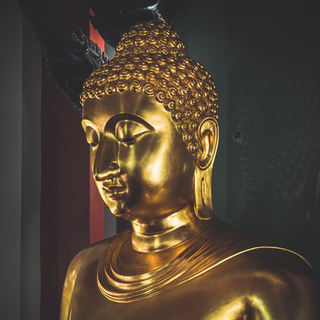
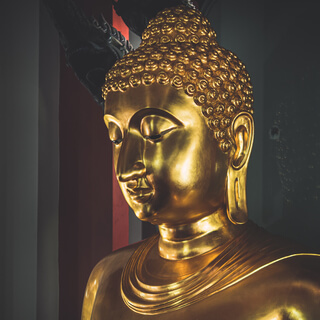
Here we contemplate what the Buddha taught.
Where is the Buddha?
The Buddha is in the heart.
The Buddha attained enlightenment in India,
Underneath the Mahabodhi tree.
But he attained it in the heart.
The Buddha had the wisdom to see all the dhammas,
Phenomena,
Were all conditioned.
They arise,
Persist,
Then cease.
He could destroy ignorance,
Craving,
And attachment.
He became the sammasambuddha,
Able to attain enlightenment through his own efforts,
In his heart.
Then the Buddha taught the dhamma.
The Buddha is in the dhamma.
The Buddha has attained parinibbana,
The final nibbana.
But the Buddha hasn't parinibbana.
The Buddha is in the dhamma.
If we see the dhamma,
Then we see the sammasambuddha.
When we practice,
Then we have faith and confidence in the Buddha.
In the beginning,
The Buddha is an individual,
A person.
But later on,
We go more deeper,
And the Buddha is in the heart.
The Buddha is in the dhamma.
We try to bhavana,
To practice.
And when we have better samadhi concentration,
Then we know clearly that this path that the Buddha taught is correct for sure.
The great teachers emphasized for us to look after our minds.
If we have liking,
Then we fall under the trap of craving.
If we have disliking,
Then it is craving.
We don't have liking or disliking,
And we are upeka,
Equanimous.
Until our equanimity has strength,
And it is upeka sampojanga,
Equanimity as a factor of enlightenment.
The body is light,
The mind is light,
The mind is peaceful.
The aramana,
Sense or mental objects enter,
And it arises and ceases.
We see it clearly.
We have seen that Nibbana is very close to us.
We're close to seeing the dhamma.
It's not far away at all.
We have strength.
Here,
The saddha,
The faith and confidence will be full.
There is effort.
There's no need to say anything.
No need to control the mind to walk meditation or to sit meditation.
We won't get bored or weary of walking and sitting meditation,
In cultivating and training the mind.
Why?
Because we have something that is fueling our hearts.
The fullness of heart and the rapture,
It fuels our hearts.
It feeds our hearts.
We can notice in the dhamma practitioner who can walk meditation without missing it,
Sit meditation without missing it.
Doing group chanting,
They chant loudly and fully determined,
And with fullness of heart and bliss.
This is the path that will see the dhamma.
When we praise the virtues of the samma sambuddha,
The dhamma and sangha,
We practice until bhutto encompasses everything.
It has gathered together in the heart.
There is rapture and samadhi.
The rapture and bliss fuels the heart.
We are at ease.
Then when we contemplate this body as being a heap of elements,
A heap of aggregates,
Then the mind is uplifted and joyous,
And sees the body as being anatta,
Not self.
It sees it as being impermanent,
Unsatisfactory,
And not self.
The mind exits the world.
It floats.
It's like it escapes from the world and goes to be in another world.
It's another world.
We see it.
It exists.
That's the world of lokuttara.
That's beyond the world.
This here is the world of conventions.
It's a world that we will cycle through births and deaths.
This is lokiya,
Mundane.
That is transcending the world,
Lokuttara.
Then the samadhi that we do is samma samadhi.
The mindfulness that knows is samma sati.
The wisdom that knows is samma diti.
The effort is samma wayamo.
Here we have right thoughts to renounce attachments.
It is samma sankhapo.
There is sila,
Samadhi,
Bhanya gathering together.
When we see like this,
Then our effort is full.
Mindfulness comes,
And wisdom arises.
Our efforts have no laziness and boredom.
We believe fully and certainly in the dhamma teachings of the samma sambuddha.
Here we will put forth effort without fail,
Doing it continuously and sustaining it.
And one who gets to this point,
They can't do a lot of work.
They can't have a lot of distractions and work.
They can't speak a lot.
They can't sleep a lot.
Because the mindfulness and samadhi will keep on poking,
Poking,
Poking them onwards.
And ultimately,
How is it?
We will see clearly.
Oh,
The body is just a body.
This knowing builds more and more.
It damages sakkiya ditti,
The self-identity view,
Every day,
Every day,
Every day.
The mind is empty every day.
We see Nibbana being over that side.
This side is lokiya,
The mundane world.
And then we come back here again.
And the question arises,
Why is it like this?
We have seen that side,
Lokuttara.
So why do we come back here?
Why do we come back to the side of lokiya again?
The answer is that we are currently building barami.
Our barami is not full yet,
So we can't go there yet.
We have seen it,
But we can't go stay there yet.
It's not clear.
We haven't seen it in its entirety.
So we need to put forth a firm effort until sila,
Samadhi,
Bhanya comes together and the knowing arises just one time and we're able to cut off the mental defilements as samujeta bahana,
Overcoming by destruction.
Sotapatti magha and sotapatti phala,
The paths and fruits of stream-entry,
Can arise in our hearts.
Here,
This is a bhikkhu.
A bhikkhu can be a layperson.
It can be a monk,
A bhikkhu monk.
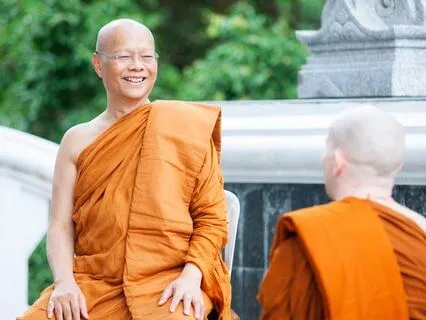
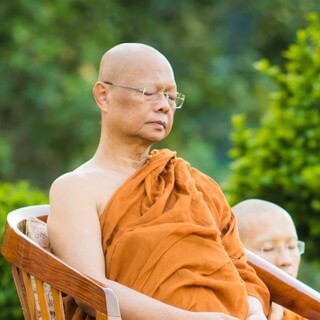
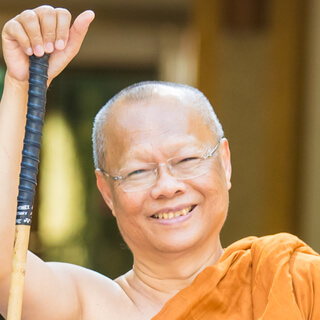
Sitting here is a bhikkhu monk,
A venerable,
A yoga vajra.
So we are determined to train ourselves and practice like this.
We are someone who doesn't harm others.
We are someone who is established directly towards nibbana.
We're doing what has benefit.
We spread a mind of metta in order to have samadhi arise.
We can suppress our anger.
Our samadhi becomes firmly established and we look for the truth.
And this is vipassana,
Insight.
And then wisdom arises.
Like this,
The Buddha arises in the heart.
We can see the Buddha in the heart,
Which is called seeing the dhamma in the beginning.
It closes off the lower realms,
And there's no eighth life.
In the beginning,
We have to get to this point,
Get to the land of peace,
To meet with nibbana.
May you grow in blessings.