Hi,
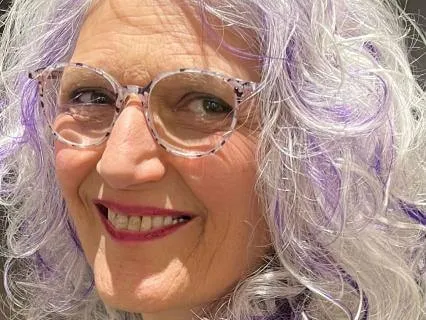
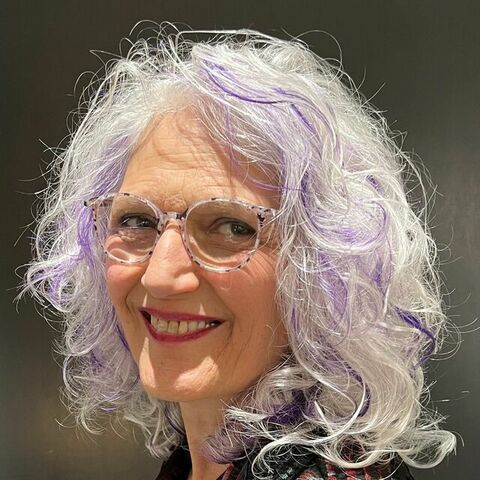
This is Teresa Conte.
For those of you who have lost a child,
I'd like to share an experience that may be helpful to you as you move through your grieving process.
But first,
I'd like to begin with a quote from Angie Tugas-Pillman from her book,
Lonesome Calling.
She wrote,
Please pray for me to be stronger.
That sentiment has been a huge part of my personal healing journey,
As I awake each morning praying for the strength to move through the day with grace and ease.
I first got news on July 5th,
2025 around 10pm from my son Ian's father in an email informing me that Ian was in the hospital as a result of a drug overdose and subsequent heart attack.
As nature would have it,
I had plans to meet a friend for a drink at 8pm that night,
But as it was raining heavily and my friend lived about 30 minutes away and would be coming by motorcycle,
We decided to postpone our meeting for safety reasons,
And what a blessing it was.
As I wouldn't have known about my son's condition until I checked email much later that night.
I called the hospital where my son had been admitted near Seattle and spoke to the attending doctor.
The prognosis,
He said,
Wasn't good.
He told me that my son was in a coma and had severe brain injury as he had been without oxygen for more than 14 minutes and likely much longer than that.
I rushed to pack a suitcase and began searching for airfare from Italy to the U.
S.
It was a miracle as I found a flight leaving Venice early the next morning.
I reached out to a friend around midnight and left a text message to let her know what was happening.
She just happened to wake up around 3.
20am and saw my message shortly before I needed to leave home and so kindly offered to pick me up at 4am to take me to the station so I could catch a bus to the airport two and a half hours away.
I arrived in Seattle around 5pm that evening where a friend picked me up and drove me directly to the hospital where I remained for the next four days as the staff was kind enough to let me sleep on the bench in my son's room.
When I arrived,
Ian was on life support.
I prayed as did my friends for my son's recovery but to no avail.
Ian passed four days later on July 9th.
The days following my son's passing were a mix of tears,
Staring at walls,
And watching movies coupled with periods of feeling okay while not really feeling okay,
If you know what I mean.
In 1969,
Elizabeth Kubler-Ross,
An American psychiatrist,
Described five stages of grief in her book entitled On Death and Dying.
Perhaps you know what they are.
The following is a brief description.
Denial.
This initial stage involves the refusal to accept the reality of the loss.
It can manifest as shock,
Disbelief,
Or a feeling that the loss isn't real.
Anger.
As the reality of the loss sinks in,
Anger may arise.
It can be directed at oneself,
At others,
Or even at the deceased.
Bargaining.
In this stage,
Individuals may try to negotiate with a higher power or attempt to undo the loss by making promises or seeking to change the past.
Depression.
As the reality of the loss fully sets in and bargaining fails,
A period of sadness,
Withdrawal,
And despair may occur.
Acceptance.
This final stage represents coming to terms with the loss,
Not necessarily with happiness,
But with a sense of peace and understanding of the new reality.
And,
While not part of Kubler-Ross's original five stages,
Guilt and hope have since been added.
With the exception of bargaining,
I've experienced each of these stages in varying degrees and have periods where I forget and think I can call my son or that he'll call me.
I've heard from others that they too think they can call or will hear from their loved one even after 10 or more years have gone by.
It was immensely helpful knowing that I wasn't alone in experiencing this and that I wasn't crazy.
Grief is like riding a wave.
It has a life of its own and the stages aren't linear.
I first learned about this when my mother died in 1989.
I remember going into Safeway,
A supermarket in Seattle where I was living at the time,
Feeling fine,
Happy even,
And then pow,
Turning into a ball of wailing tears when I stepped across the threshold and entered the store.
It was completely unexpected.
For those of us who are grieving,
The important thing is to accept our feelings as we are able to do so,
As hard and raw as they may be.
In the long run,
It helps us to heal.
But I know it's not easy and it's tempting to turn away from our pain and suffering,
However we may do so,
But this too is part of the process and helps us make it through the next moment,
The next minute,
The next day.
So it's important to have compassion for ourselves and where we are in our process.
There's always the next moment to begin again.
You may find that the people you thought would be there for you disappear without a word or never show up in the first place,
While others,
Even those you don't know,
Show up to support you when they learn about the news of your child's or other loved one's passing.
Others fall someplace in between.
I am so thankful for the support I've received from phone calls,
Text messages,
Social media posts,
And email,
Not to mention the kindness of others,
Including friends,
Acquaintances,
And even people I'd never met who heard about my son's passing and sent financial contributions or organized a gift certificate to be sent to me.
It truly touched my heart and helped me feel connected and not alone.
I share this just to say don't be surprised at who shows up for you or how.
Accept and give thanks for those who are there and understand without trying to fix or change you.
Let them know how much you value their support.
If you haven't experienced deep loss yourself and know someone you'd like to support,
I have a few suggestions.
First,
Don't ask too many questions of the person who's grieving,
Especially if you don't know them well.
Yet,
Do ask what you can do to support them.
Offer specific kinds of help,
Like taking the dog out for a walk if they have one,
Or picking a few things up for them the next time you're at the supermarket.
Please don't tell them they'll get over it.
That's the last thing they'll want to hear.
Accept them where they are.
Don't tell them that you're there for them unless you really mean it.
Otherwise,
It will feel like another loss,
A betrayal of sorts to the grieving person.
Don't try and rush them through the process.
Rather,
Sit with them.
Let them be where they are for as long as they need to be.
Lastly,
Do let them know you're thinking of them from time to time.
While support is forthcoming during the initial loss,
It tends to fall away after the first few months.
When this happens,
The person grieving can feel alone,
Especially if they're not part of a grief or healing group.
It's also fine to invite them out for coffee,
A walk,
Or something else,
But do so without any pressure or expectations.
There are days when I need to cry,
Process,
And be alone,
And days when I need to have the company of friends,
Which is becoming more apparent.
Perhaps you're experiencing that as well.
I followed my inner nudges and have taken myself on short trips,
Have met with friends for lovely outings and walks along the sea,
And coffee at a favorite cafe.
If you're grieving the loss of a child or another loved one,
People won't always know what to do or how to support you.
It's okay to ask the people you know and trust for their help and what it is you need.
Self-care is crucial,
And setting boundaries when needed is also important.
As for me,
I returned to Seattle in September of 2025 for house and pet sitting job that I accepted before my son died.
Aside from providing the service I enjoy,
It would have given me an opportunity to visit and spend time with Ian while I was there.
Although I know my client would have been fine if I had canceled,
In my heart of hearts,
I knew that going was the right thing to do,
But wasn't quite sure why.
What I found was that it provided me with an opportunity to visit places Ian and I had been or that reminded me of him.
While painful,
It was also deeply healing.
I share that as an example to trust your intuition to guide you,
Even if you don't yet understand why you're being drawn in a particular direction.
There may be an unexpected healing or blessing waiting for you,
Just as there was for me.
And most importantly,
Trust your own process and timing.
Lastly,
Know you're not alone.
While you may not feel your loved one's presence or perhaps feel it intermittently,
Know that they are there with and for you.
I hope sharing my experience has in some way been beneficial for you.
If so,
I'd love to hear from you.
Please leave a comment if you're comfortable and share your experience.
We are not alone,
Nor are we meant to go through the grieving process on our own.
We can embark on the journey together.
Thank you so much for listening and wishing you much healing.
With love,
Teresa.