Hello,
My friend.
Welcome to your sleep story.
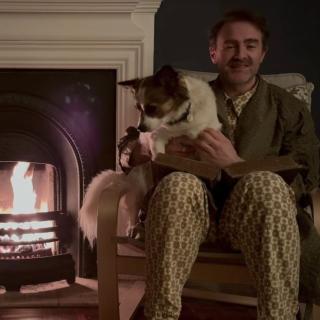
My name is Stephen Dalton.
I'm an Irish storyteller,
And it's my great privilege to be the voice that you listen to as you go to sleep tonight.
Tonight I present to you some of my favorite stories that I've created involving rain.
Tonight you will hear my favorites,
And I hope they are favorites of yours too.
Get ready for hours and hours of storytelling with the lovely,
Relaxing background of falling rain.
I really hope you like it.
One small thing.
If you'd like to support my work,
You can do so on Patreon.
Dear.
Okay,
Let's do the relaxation session,
Which will take a few minutes before tonight's sleep story.
I'm going to count down from ten to one,
And as I do,
Allow yourself to let go more and more.
10.
Feel the support.
Of the bed beneath you.
Or the floor.
Or whatever you lie upon tonight.
And beneath what you lie upon.
Feel a deeper support.
The support of the earth.
Our home.
Our constant support.
And as you become aware of that support,
See if you can.
.
.
Sink into this moment a little more now.
Just.
.
.
Let go.
A little more now.
Nein.
Ew.
Are safe.
Allow my voice.
To be an anchor of safety tonight.
To be a friend.
To be a gentle guide.
A guide that only ever brings you.
To safe places.
Too warm.
And cosy places.
To places that enable and support You're asleep.
Trust.
That my voice.
.
.
Is a friend tonight.
Feel into your body now.
Notice where you might still be holding tonight.
Notice where you may have pain.
Or tingling Retention.
Notice anything.
Maybe you feel something in your feet.
Or in your lower legs Recise Or your belly.
Your chest.
Shoulders.
Your neck You're back.
Arms.
Hands.
Or maybe you're like me.
And you hold tension in your face.
Just see if you can soften a little now.
This is a time.
For kindness to yourself.
And to your body.
Seven.
The day is.
.
.
Whatever has been.
Has been.
Whatever will be.
Will be.
But right now.
.
.
All you have is this moment.
Your thoughts can't change what has gone before.
Your thoughts can't change.
What will come tomorrow.
Your brain.
.
.
Needs rest now.
So as thoughts come and go now.
Don't fight them.
Don't chase them away.
See them for what they are.
So much.
Then just.
.
.
Watch them go.
Like leaves.
Floating away.
On a moonlit river.
Or clouds.
Passing through a starlit sky.
Six.
This is your moment.
This.
Is your time.
You have earned this moment of kindness to yourself.
You deserve.
To have peace in your life.
We all do.
So.
As you become aware of that fact as you.
Come to the understanding.
That we all deserve peace.
See.
If you can settle into this moment.
.
.
A little more now.
Letting your body know.
That it's really time for rest.
Peace.
Lives within you.
It is a constant friend.
Waiting to be found.
Waiting to be felt.
Where does it live within you?
Maybe it's in your heart.
Maybe it's in your head.
It's up to you to find it.
But I promise you it's there.
Perhaps allow a little gratitude now.
Gratitude.
For the simple things.
Through your body.
For the shelter you have tonight.
For the ones you love.
And who love you.
For the beauty and wonder of this world.
Of this planet.
That you can find.
When you look for it.
3.
Begin to engage with your imagination now.
Begin to really notice the rain.
The sound of it.
Maybe even the smell of it.
What does it feel like on a wet day?
You are about to find.
Deep letting go here.
Deep cleansing.
The rain.
Is about to wash all your worries away.
Checking in with your body one more time now.
Finding the places you are holding still.
And allowing yourself.
To give in.
To allow the tension to ease away.
Your body has worked hard for you today.
It's time.
To give it rest.
And one.
Completely letting go now.
As I tell you.
Tonight's sleep story.
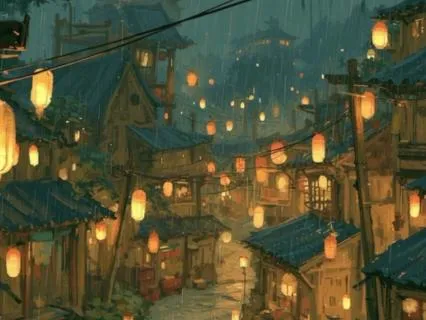
You arrive in the village.
Without knowing how or why.
There is no moment of arrival.
No memory of a journey.
You are simply here.
And it feels as if you always have been.
The rain is falling gently.
Steady and unchanging As if it has been fooling for centuries.
The streets are lined with lanterns.
Their golden glow.
Reflected in the puddles at your feet.
There is no rush here.
No urgency.
No next thing to do.
And I remind you.
There is nothing for you to figure out.
Nothing to fix.
No path to follow.
You are simply here.
Moving through this place.
At exactly the right pace The world will keep turning.
Without you pushing it along.
A man stands beneath an ornyx.
Watching the rain His hands are tucked into his coat.
And his face is turned slightly upward.
As if listening.
To something only he can hear.
He isn't going anywhere.
He isn't waiting for the rain to stop.
Fear is just.
.
.
Standing.
Watching Breathing.
And it is enough.
A woman lights a lantern outside her shop.
Shielding the flame with her hands.
She adjusts it carefully Not rushing the task.
As if she has done this a thousand times before.
And we'll do it a thousand times again.
Inside The shelves are lined with simple things.
Jar of tea.
A stack of folded cloth A row of books with worn spines.
She lingers for a moment.
Looking at the light she has placed and then disappears inside.
Satisfied.
And you are still walking.
Still seeing still existing.
In this quiet timeless place Because for now.
.
.
That is all there is.
And it is enough.
The cat watches the rain from a dry ledge its tail curling lazily around its paws Its eyes are half closed.
Ears flicking every so often as droplets patter against the stone beneath It is in no hurry.
It has found a place of shelter.
And that is enough for now.
The world outside will continue as it always has.
And the cat will move.
When it pleases.
Across the street A young boy crouches beside a shallow puddle.
His fingertips tracing patterns in the water.
He is entirely focused.
Lost in the simple action.
Of watching ripples.
Expand and fade His shoes are so.
.
.
But he doesn't seem to notice.
He has no place to be.
No task pulling him away.
The moment belongs to him.
And he lingers in it.
Unbothered by anything.
Beyond the circle spreading across the water's surface.
A bell chimes softly from a cafe doorway.
And an older man steps outside.
With a steaming cup in his hands.
He stands beneath the ornid.
Blowing gently on the surface before taking a slow sip.
My shoulders relax.
He does not glance at a watch.
Or glance down the street in expectation of something coming next.
Be simply.
Stands.
Drinking his coffee.
Content with the warmth in his hands.
And the cool air on his face.
And may I remind you again.
.
.
You are not here to accomplish anything.
There is nothing waiting for you.
No next step that must be taken.
You do not need this all.
Or plan or move towards something.
The people here.
.
.
We're not moving towards anything.
They are simply being.
And that is enough.
A lantern sways slightly in the breeze its frame creaking as the flame inside flickers The rain continues gentle and steady.
Never hurry.
Never pressing forward.
The light does not push back against the night.
Nor does it try to brighten anything.
Beyond the small circle of its glow It simply is.
And that is enough.
Your steps are slow.
Then hurry.
Each footfall on the dump stone.
Settles you further into this place.
There is no waist on your shoulders here.
Nothing pulling at you.
Nothing demanding to be done.
The rain washes it all away.
Bye.
Drop.
Until there is nothing left But the simple.
.
.
Of walking.
And as you walk.
I remind you.
Life here is not something to be conquered.
You do not have to prove yourself worthy of it.
Here or anywhere else.
There is no great test.
No final measurement.
That decides whether you have done enough.
The people here are not chasing achievement.
They are not burdened by the need to be more.
A week.
They eat.
They light their lanterns.
They sit in the quiet.
And listen to the rain.
And that.
.
.
Is enough.
A woman stands in her doorway,
Holding a cup of something warm.
She looks out at the street.
Her expression unreadable yet peaceful.
Perhaps she is thinking of someone far away.
Perhaps she is thinking of nothing at all.
But she is here.
Standing in the doorway.
Breathing in the scent of rain and lantern oil.
And that is all that matters.
There is no pressure here.
Here the only thing that exists.
Is the moment you are in.
There is no future pressing down on you.
No past tugging at your mind There is only the street beneath your feet.
The golden glow of the lanterns.
And the steady sound of the rain.
And as you walk,
Perhaps something inside you.
Begins to understand.
There is no rush.
There never was.
Whatever you might be carrying.
You can set it down now.
Whatever ways you have been holding.
You do not need to hold us anymore.
The world will continue to spin.
Even if you stop to watch the rain.
A tree stands at the edge of the street.
Its branches stretching wide.
Leaves heavy with rain.
Each drop.
Gathers at the tip of a leaf clinging for just a moment.
Before surrendering to the pull of gravity.
One by one They fall.
Small.
Glistening beads.
Slipping down.
Into the puddles below There is no resistance.
No hesitation.
The tree does not fight the rain.
Nor does it rush to dry itself.
Is simply stands.
Rooted and still.
Letting the water blow where it must.
And as you walk.
I remind you.
.
.
There is a lesson in this.
And how the tree does not resist the rain.
Does not try to hold itself apart from the world.
It does not complain.
That the sun is gone.
This does not long for drier days.
It simply exists as it is.
In this moment.
Allowing the rain to nourish it.
Knowing that everything will change again.
In its own time.
A small stream runs alongside the street Its surface broken by the gentle rhythm of raindrops.
The water moves without effort.
Gliding over smooth stones.
Bending around the curves of the village.
Following the path the earth has made for it.
It does not fight to go in another direction.
It does not push against the flow.
It moves with the land.
With the rain and trouble.
By where it has been.
Or where it is going.
A bird shakes itself from the eaves of a wooden roof.
Its feathers puffing against the rain.
It does not soar today.
It does not cool out.
It simply hops along the ledge.
Pecking at droplets watching the world from its quiet perch.
There is no urgency in its movements.
It knows the storm will pass when it is ready.
And until then.
.
.
There is shelter.
There is stillness.
There is rest.
The rain continues.
Steady as ever.
It does not change for you.
It does not pause or lessen.
It is not something to be endured,
Though.
It is something to be part of.
Something that simply is.
The people here do not rush through it.
They walk.
Stay away.
They listen.
And so do you.
Because for now.
That is all there is.
And is enough.
A young woman stands outside a small teahouse adjusting the lantern that hangs above the doorway.
The glass is misted with rain.
And she wipes it clean with the sleeve of her coat.
Her movement's unhurried Yeah,
For.
.
.
The light inside flickers warmly.
She tilts her head for a moment.
As if admiring the way the light spills.
Unto the wet street Then steps back inside Without a word.
Leaving the door slightly open.
From within.
The soft clink of porcelain.
And the low murmur of voices drift out into the night.
An old man sits on a bench beneath the shelter of an overhanging roof.
His hands folded over a cane.
His gaze fixed on the street ahead He does not seem to be waiting for anything.
He simply watches.
The lantern beside him hums with steady light.
Illuminating the lines of his face.
And the quiet thoughtfulness in his eyes.
The rain drips from the edge of the roof in front of him.
Forming a thin shimmering curtain.
Between him and the rest of the world.
He does not seem to mind.
He has seen many rains before.
And he will see.
Many more.
A child tugs at their mother's coat.
Pointing up at the lanterns that hang in rows above the street.
They look like little stars,
The child says.
A voice full of wonder.
The mother smiles.
Pulling her hood tighter around her face.
As she looks up with them They do.
She agrees softly.
As if she is seeing them for the first time too.
And for a moment The two of them stand there.
Heads tilted back watching the lantern sway gently in the rain.
As if nothing else in the world exists.
And I remind you.
You are witnessing something rare Something quiet and real.
These people are not waiting for something greater to arrive.
They are not striving or pushing.
They are simply here.
Existing in the glow of the lanterns In the hush of the rain in the warmth of each other's presence.
A shopkeeper leans against his doorway.
Arms crossed.
Watching the empty street He sighs.
Not in sadness.
Not in impatience.
But in something softer.
Release.
An acceptance of the quiet.
The lantern beside him flickers slightly.
As if in response He does not move to adjust it.
He simply lets it be.
Lets the light shift as it will He is in no hurry.
The world will continue.
At its own pace.
And so.
.
.
Will he?
You keep walking.
Though you do not know how long you have been walking.
.
.
It could be minutes It could be ours.
But time does not exist here.
And so it does not matter.
There is only the sound of the rain.
The glow of the lanterns.
And the quiet rhythm of the village.
Moving at a pace.
Belongs to no club.
A soft light catches your eye.
A small alcove just off the street.
Sheltered beneath the wooden eaves of an old building.
A lantern hangs low It's glow steady.
And beside it.
A bench with a sick cushion,
Dry and waiting.
No one is here.
No one needs to be.
It is a place for resting.
For pausing.
For letting the world be as it is You step into the alcove.
Settling down on the bench The air smells of rain and old wood.
Of something warm and familiar.
The lantern beside you flickers slightly Casting shifting shapes against the wall.
The sound of the rain fills the space around you.
Daddy.
Endless.
Ciento.
And I remind you again.
There is no schedule to keep here.
No time to run out of.
No moment you must move on from.
The village will remain as it is.
The rain will continue to fall.
The lanterns will continue to glow.
And you.
Right now.
Have nothing to do.
But rest.
You close your eyes.
Listening.
The rain does not hurry.
And neither do you.
There is nowhere else to be.
Nothing else to become.
Just this moment.
Stretching on without an wrapped in the quiet warmth of a village.
We're at time us not.
Exist.
Your body is softening.
Your mind is quieting.
You are exactly where you were meant to be.
You can let go of any thoughts that do not serve you.
You are wrapped in warmth.
And safety.
In rest The world is taking care of itself.
You can let go.
You are supported.
Just as the earth supports you.
Your breath is slow.
Daddy.
Peaceful.
Every part of you.
Is unwinding into rest.
You are allowed to rest.
Without guilt or worry.
You are floating.
Deep.
And deeper.
And to sleep.
You can trust.
That everything is unfolding as it should.
You are weightless.
You can surrender.
To the quiet rhythm of the night.
Sleep is washing over you.
Like a gentle tie You are drifting.
Into deep nourishing rest.
Your thoughts are soft.
Like clouds passing by You are welcoming sleep.
With open arms.
You are loved.
You are cared for.
You are enough.
Nothing is urgent.
The night holds you.
You can let your body sink into comfort and ease.
Your breath is guiding you into sleep.
Everything you need.
Is already within you.
The world is quiet.
And you are part of that quiet.
You are arriving.
Into the deepest peace you have ever known.
Sleep is again.
And you are accepting it fully.
You are safe.
You are at peace.
Yeah.
Are.
Asleep.
The rain had been falling gently since before dawn.
Drumming softly against the greenhouse roof.
Inside.
The air was thick with the scent of damp earth.
And the faint sweetness of leaves warmed by the steady hum of life Ray moved slowly along the rows of plants.
His hands resting lightly on the edges of the wooden frames that bordered the beds.
He paused by the tomatoes.
Their green vines trailing upward Their fruit,
Heavy with the promise of ripeness.
A bead of water clung to the curve of one tomato.
Catching the dim gray light filtering through the rain streaked glass Ray bent closer.
Studying it with quiet satisfaction.
But he didn't pick it.
Not yet.
Outside The rain fell steadily.
Blurring the edges of the world beyond the greenhouse walls.
Ray liked it that way.
In here surrounded by the steady growth of his plants.
The weight of time seemed to lift.
As one man had once put it to him in his youth.
In here there was no fear of the club.
He reached out and brushed a fingertip over a leaf.
Feeling its cool surface.
Smooth but firm.
Alive under his touch.
The sound of rain deepened slightly.
The soft swell.
As the wind shifted outside.
Rey moved further down the road.
His steps unhurried.
You knelt beside the cucumbers.
Their trailing vines stretching wide.
Their fruit tucked neatly among the leaves.
A quiet smile crossed his face.
As he adjusted a wayward stem the gesture careful and practiced.
For a long while.
He stayed like that.
Listening to the rain.
And breathing in the familiar comforting smells of the greenhouse.
In this warm and sheltered place.
It was easy to feel the world was.
At peace.
Now Rey straightened slowly.
His hand resting on one of the wooden posts that framed the greenhouse.
The wood was smooth under his fingers.
Worn by years of use and care.
This place.
.
.
Had been a part of his life.
For as long as he could remember.
His earliest memory of it.
What's this a boy?
No older than six Watching his grandfather kneel by these very same beds.
His hands calloused and steady.
As he worked the soil.
You see,
The greenhouse had been his grandfather's pride.
Built by hand.
During a lean year when the family had little but the will to endure.
Ray's grandfather,
Billy,
Used to say that growing food wasn't just about filling plates.
It was about building a future.
A greenhouse is a second house.
He would say with a chuckle.
Trace it like one.
And it'll look after you And it hurts.
The food grown here that fed their family through tough times.
There had been seasons when storms ruined the fields.
But the greenhouse always stood firm.
A shelter against the harshness of the outside world.
Its walls had held warmth when winters were bitter.
And its roof that shielded tender shoots from the heavy rains of spring.
Ray took a step back.
Letting his eyes sweep over the space.
To others.
It might just look like a simple structure of wood and glass.
But to him.
It was alive.
The beds were like rooms.
Each one familiar in its layer Each holding its own stories.
Over there in the corner by the rosemary bush his grandmother used to sit on a low stool shelling peas while telling him stories about her childhood He let his hand trail along the edge of the cucumber bed as he walked.
His mind wandering to the meals this greenhouse had provided.
Summer salads.
Eaten under a wide oak tree.
Warm stews in the winter,
Made richer by the vegetables grown here.
Jars of tomato sauce lined up on the pantry shelves.
Like little treasures.
The greenhouse.
Hadn't just fed the body.
It had sustained the spirit too.
Ray stopped by the door.
And looked out through the rain-speckled glass.
The garden outside was blurred by the downpour.
But the greenhouse remained a world unto itself.
He smiled faintly.
If this was his second house.
.
.
It was perhaps the one that felt most like home.
Ray reached for the watering can that sat by the corner.
Its metal surface dulled with age and use.
The handle was cool in his hand.
And as he carried it to the rain barrel.
We could feel the faint sway of water slushing inside.
The rain had filled the barrel nearly to the brim.
And he tipped the can carefully.
Watching.
As the water flowed out.
In a clear,
Steady stream.
It was late spring.
And the greenhouse was at its most vibrant.
The early greens of lettuce and spinach.
Had already been harvested.
Leaving space for the deeper,
Richer tones of mid-season growth.
The tomatoes were in their prime.
Their vines heavy with fruit.
That ranged from pale green To a blush of orange and red.
The cucumbers sprawled low.
Their leaves,
Wide and vibrant.
While the peppers stood upright.
Their glossy skins.
Beginning to show hints of yellow and red.
Ray moved to the row of peppers.
Pouring the water slowly at their base.
He crouched low.
To get a better look.
Brushing his hand against the soil.
It was them.
But not too wet.
Just right.
For their roots to drink without drowning.
He adjusted the angle of one of the stems.
Rubbing it gently against a small wooden stake.
Without it.
The plant might tilt too far the weight of its growing fruit.
Pulling it down.
Next He turned his attention to the rosemary bush in the far corner.
It was one of the oldest plants in the greenhouse.
A remnant of his grandmother's time.
Its scent was sharp and familiar.
Rising.
As he rubbed a sprig between his fingers.
The silvery green leaves stood out against the darker shades of the other plants.
A reminder of seasons long past.
And meals shared.
He trimmed a few sprigs carefully.
Thinking they might go nicely in the soup he'd planned for supper.
The lettuce beds were nearly empty now.
Their time passed.
But the spinach beside them still clung on.
Its leaves thick and waxy Ray pulled a few strugglers,
Their stems crisp under his touch and laid them gently in a woven basket.
This was his ritual.
Taking only what was needed.
Leaving the rest to grow a little longer.
He worked slowly.
Deliberately.
Moving from bed to bed.
Checking this soil.
Adjusting the angle of a vine.
Or pinching off a withered leaf.
The suns.
Though marked with aid.
Moved with the surety of decades of practice.
Each action was small.
Almost unnoticeable.
But together.
They were the lifeblood of the greenhouse.
The light outside was soft and grey.
The rain showing no sign of stopping.
Ray glanced up at the glass roof.
Droplets sliding down in erratic lines.
The greenhouse felt warm.
Alive.
Almost humming with quiet energy.
The plants at this stage of the season.
Seemed to hold their breath.
Neither young.
Nor ready to harvest.
But full of potential.
Like a song waiting to be sung.
As Ray set the basket down on a lower bench A sudden flutter outside the greenhouse caught his attention.
Through the rain streaked glass.
He spotted a blackbird.
Hopping along the garden path.
Its feathers were slick with rain But somehow it didn't seem to mind.
Posing now and then.
Back at the ground.
He watched it for a moment.
Leaning lightly against the frame of the greenhouse door.
The blackbird reminded him.
Of the days when his children were small.
And the garden outside was their playground.
It wasn't unusual to see them crouched in the dirt.
Their hands grubby from digging for worms.
For making soup from leaves and petals They'd often chase the birds too.
Laughing as the startled creatures took flight.
Their wings beating in hurried arcs towards the sky.
One summer in particular stood out to him.
When the oldest than us.
And discover it a blackbird's nest.
Tucked away in the hedge at the far end of the garden.
She had been so careful.
Peering at the tiny blue eggs with wide-eyed wonder.
Shushing her brothers when they got too noisy nearby.
You'll scare them away.
She'd whispered urgently.
Her fingers pressed to her lips.
Ray could still hear the soft laughter that had filled those days.
Garden alive.
With the boundless energy of childhood.
He remembered how they'd carry baskets of vegetables into the kitchen.
Where Margaret would teach them.
How to snap beans.
Rochelle,
Peace.
The black bird outside gave a sudden shirk.
Shaking the rain from its feathers.
And Ray smiled faintly.
Lost in the memory of those simpler times.
Now the garden was quieter.
The children had grown.
Each carving out their own lives.
Far from home.
The house felt bigger these days.
Quiet.
Though the greenhouse still held echoes of those younger years.
Rey found comfort in knowing what they had built here.
Both the garden and the life they shared.
Would always be rooted in his children.
Wherever they might be.
The blackbird hopped closer to the greenhouse.
Tilting its head as though studying him.
Ray chuckled softly.
And reached for a small handful of seeds from the bench.
Scattering them just beyond the door.
Bird flitted forward cautiously Its glossy feathers catching the dim light.
It was such a small thing.
In this moment It meant so much.
Bringing back these beautiful memories.
Ray returned his attention to the greenhouse.
He moved toward the stack of twine on the workbench.
Cutting a piece just long enough.
To secure a sagging tomato vine.
The twine was coarse between his fingers.
Its texture familiar.
Almost comforting.
He rubbed it carefully around the vine.
Tying it loosely.
To the wooden stake beside it The steak had been in use for years.
Its once smooth surface.
Now marked by grooves.
Where ties had been secured and removed.
Over countless seasons.
Satisfied He ran his hand over the length of the vine.
Brushing away a few yellowing leaves These small tasks.
Dying.
Trimming Tending.
We're second nature to him now They didn't require thought.
Only quiet attention.
That was exactly why he loved them.
Further down the road.
The parsley had grown unruly.
Its feathery leaves sprawling beyond the edge of its bed.
Rain out beside it.
Pinching off a few sprigs and setting them in the basket with the spinach.
The deep.
Green of the parsley.
Contrasted sharply with the slightly lighter shades of the spinach.
And he thought for a moment.
How vibrant they looked together.
Beautiful.
Like something you'd see in a painting.
He was now picking vegetables and other leaves and herbs.
From Margaret.
It was in the kitchen.
He could hear the faint clatter of pots and pans in the distance.
And he knew that you would be wanting some greenhouse goodies.
He moved toward the tomatoes.
She'd asked for just a few.
Ripe but firm.
Enough with the sauce she was making.
He bent down.
Examining the fruit closely.
And look.
Three of the deepest red ones from the vine.
Cradling them in his hand.
Before placing them carefully into the basket.
The skin was smooth and cool.
The faint tang of tomato.
Hanging in the air.
As he brushed the leaves aside.
Next.
Were the courgettes.
Their flowers had just started to bloom.
But Margaret had told him the smaller ones were sweeter.
She told him every year.
They were better for slicing into ribbons.
He crouched low.
Searching among the broad dark leaves.
Until he found two perfect ones.
Their pale green skin.
Streaked with deeper hues.
He snapped them off gently at the stem.
Wiping a bit of soil from one with his thumb.
Before laying them beside the tomatoes.
Parsley Courgette Tomatoes.
He ran through the list in his head.
Am I missing anything?
If I have to come back out,
I will.
He thought.
Ray carried the basket to the torch.
Setting it on the low shelf beside the frame.
He rested one hand lightly on the door handle.
But didn't turn it just yet.
Instead.
He stood there.
Looking back at the greenhouse.
The warm,
Earthy scent Seemed.
Richer now as though the plants were breathing softly in the stillness.
The rain outside.
Gently on the glass It's rhythm steady and reassuring.
His gaze wondered over the rows of plants.
Each one thriving.
In its own quiet way.
He thought of how the greenhouse had been a constant in his life.
Something that connected him to the past.
He could see his grandfather again.
Kneeling in the soil with his sleeves rolled up.
Showing ray how to plant his first seedling He could hear his grandmother's laughter.
As she brushed dirt off her apron.
Holding up a basket of freshly picked herbs like a prize.
The years layered themselves in his memory.
The summer his mother had coaxed strawberries to grow in the far corner.
The autumn when his father's hands had stained green from shelling beans.
The winters when Margaret and the children had huddled inside the greenhouse.
To escape the chill.
This place wasn't just a shelter for plants.
And it sheltered lives too.
Ray reached up.
And touched one of the wooden beams.
His fingers tracing the grain of wood.
How many hands had done this before him?
His grandfather's.
His father is.
.
.
His own children's when they were young.
Even after all these years.
The greenhouse built in life.
With the echoes of those who had tended it.
Whoa.
The soil the air.
He stood there a moment longer.
Letting the memory of their voices Feel the quiet space around him.
It wasn't sadness that he felt.
But a kind of fullness.
Like the greenhouse itself was holding him.
Just like it always had.
Ray smiled.
Eight come back tomorrow.
And the day after that.
And all the rest of his days.
Because this place wasn't just a part of his past.
It was a part of him.
And everything.
Let it come before.
It is a cozy,
Cold day at the old repair shop.
It is raining outside.
But inside.
.
.
All is well and warm.
The young man sits at a long wooden workbench near the window.
His glasses are thin and square.
Sliding down his nose as he works.
He pushes them back up.
With the back of his hand.
His fingers move quickly.
Winding thin wire around the frame of an old clock His hair falls over his forehead.
Dark and untidy.
He doesn't brush it away.
His eyes stay on the clock.
Across the room.
The woman sits near the fire Her hands are steady.
Pulling a needle through a square of linen.
She has red hair.
Cut short.
And where is the thick sweater?
That looks soft and well worn.
Her mouth curves slightly as she works.
A quiet hum in her throat.
The fire pops and shifts The rain taps steadily on the glass.
The old man sits near the far wall sharpening a thin knife with slow practiced strokes.
His hands are thick with veins His hair is white and cropped close He holds a piece of leather across his lap.
And runs the blade across it Testing the edge.
His eyes are sharp but calm.
He listens to the rain.
The bell above the door chimes.
They all look up.
The old man sets down the knife.
The young man lays the clock aside The woman stands and goes to the door.
An old lady stands in the doorway.
Wrapped in a soft coat She holds a wooden box,
Wrapped carefully in cloth.
Her hands tremble as she unwraps it.
It's a doll's house.
She says.
From when I was a girl.
The young man stands and steps closer.
The paint is chipped.
The shutter hangs loose.
A piece of the roof has broken away.
He touches the side of the house with the top of his finger.
My father made it for me.
The old woman says.
Her voice is quiet.
The young man nods.
The woman by the fire steps closer.
Touching the old lady's arm.
The old man watches from across the room.
His hands resting on his knees.
The old lady feels safe here.
She feels welcome.
She feels like these three people want to help her.
We'll see what we can do.
The young man says.
The young man lifts the doll's house carefully in both hands.
It is heavier than it looks.
The wood is solid.
But the joints are loose.
The roof shifts slightly under his fingers.
He sets it down on the workbench and leans in.
His glasses slipping down his nose.
He pushes them back up with the back of his hand.
The old woman watches him closely.
Her hands are clasped in front of her.
Knuckles pale.
Can you fix it?
She asks.
The woman with the red hair touches the old lady's arm We'll need some time.
A few days,
She says.
The young man tilts the house on its side.
Running his fingers over the edges.
Three days,
He says.
We'll take good care of it.
The old lady nods her eyes are bright and a little weepy.
She lifts her coat at the collar and buttons it I leave it with you then.
The three members of the old repair shop can tell how much the doll's house means to her.
The woman walks her to the door.
The old lady steps out into the rain.
She opens a blue umbrella.
And starts down the lane.
Looking back once at the little old repair shop with its thatch roof and the three kind people within it.
The door closes behind her.
With his self.
The young man stands over the doll's house.
He pulls a thin screwdriver from a leather roll on the workbench.
It sets to work.
Removing the root The screws are rusted.
And it takes a moment to coax them free.
He sets them aside in a small dish.
The roof lifts away easily after that.
He sets it down beside the house.
She said her father made it.
The woman says.
She stands behind him.
Arms crossed.
He did a good job.
The young man says.
The wood's still strong.
He runs his finger over the edge of the roof.
Feeling the roughness where the paint has worn away.
He tests the frame of the house,
Checking for weakness.
The joints are loose but whole The foundation is solid.
The old man sets down his knife and stands.
He steps over to the workbench,
Studying the house.
His pale blue eyes narrow.
He reaches out.
And touches the edge of the frame with one finger.
And carve.
He says.
The hinges are brass custom made.
The young man nods.
He lifts the roof again.
And shows the underside.
The old man leans closer.
Leather hinges.
He says.
That's unusual.
Could you make new ones?
The young man asks.
The old man nods slowly.
I'll need some time.
He strokes the leather strap in his hands.
I've got a piece in the back that'll do.
He turns and walks to his bench.
Lifting the strut and measuring it against the edge of the house.
The woman stands at the other side of the workbench.
Studying the tiny furniture inside.
Carved wooden bed.
With thin posts The small dresser with two working drawers.
A chair with a missing leg.
She lifts the chair between her fingers.
And tests the break I can mend this,
She says.
She sets it down.
And lifts a square of embroidered fabric from the floor of the house.
Tiny stitches.
Forming a delicate floral pattern.
And stitched She says.
She looks at the young man.
I'll make a new one.
The young man nods.
He kneels down and peers inside the house.
The floorboards are worn and slightly warped.
He presses down gently.
The boards are loose.
He says.
I can fix them.
They work quietly for the rest of the afternoon.
The old man cuts the leather.
Measuring it against the frame of the roof.
His hands are steady.
Practice.
He scores the leather with the edge of the knife.
Then punches small holes with a thin awl He threads the hinges through.
And sets them aside to try.
The woman sorts through the furniture.
She finds the missing leg of the chair and glues it back into place.
She sets the chair beside the fire to set.
She pulls out a thin needle and pale blue thread.
And begins working on the fabric.
Her hands move steadily.
The tip of her tongue.
Pressed against the corner of her mouth as she worked.
The young man removes the loose floorboards.
Sanding down the edges before fitting them back into place.
He mixes a thin batch of glue.
And works it carefully into the grooves before pressing the boards down again.
He sets more clamps along the edges to hold them in place.
The rain continues steadily outside.
The light in the workshop shifts.
As the afternoon darkens into evening.
The fire crackles in the grave.
The old man sets down the leather hinges And.
.
.
Stretches his hands.
The woman sets aside the fabric The young man leans back and rubs his eyes under his glasses.
It's coming together.
The old man says.
The young man nods.
He reaches out and touches the side of the doll's house.
Feeling the smooth grain of the wood.
Under his fingertips The house feels steady now.
Salud.
Almost whole.
The next morning.
The young man is the first to arrive.
He sets his bag down near the door and shrugs off his coat.
His hair is done.
From the still falling rain.
He pushes his glasses up the bridge of his nose.
And walks to the workbench.
The doll's house sits where they left it The new leather hinges lie beside it.
Dark and smooth.
The repaired chair sits by the fire.
The embroidered cloth is stretched across the small wooden frame.
Drying in the soft warmth of the room.
The young man sits down.
He lifts the house and tilts it under the light.
The joints are clean now.
The floorboard steady under his hand.
He takes the leather hinges and sets them against the frame of the roof.
They fit perfectly.
He threads small brass pins through the holes and taps them into place with a thin hammer.
The roof opens and closes smoothly now.
The bell above the door rings The woman steps in.
Rushing rain from her red hair.
She carries a basket under one arm.
She sets it down on the table and pulls out a folded piece of fabric.
I finished it last night.
She says.
She unfolds it carefully.
Hail Blue Linen.
With tiny stitched flowers at each corner.
The young man takes it between his hands.
But the stitches are small and perfect.
He nods.
She'll like that.
He says.
The woman smiles.
She lifts the repaired chair from the side of the fire.
And sets it inside the house.
She stands by.
Tilting her head to the side.
We need curtains,
She says.
We do?
The young man says.
He sets down the cloth.
And leans forward.
Studying the small wooden windows.
The door opens again.
The old man comes in.
Carrying a roll of thin white cotton.
His coat is slick with rain.
He sets the roll down on the workbench.
And unwinds it.
Thought this might work.
He says.
The woman lifts the glass.
It's soft and clean.
Etched with faint lines of blue.
She pulls out a pair of scissors.
And begins cutting thin strips She holds them up to the windows.
Measuring them against the frame I'll sew them.
She says.
The young man stands and steps back from the workbench His glasses slide down his nose.
He pushes them up with the back of his hand.
Did you test the roof?
The old man asks.
The young man lifts the roof.
It opens smoothly.
The hinges are tight and strong.
The old man nods.
The woman sits down near the fire.
And begins sewing the curtains.
Her needle flashes in the light.
The old man takes a piece of soft cloth and begins polishing the small brass knob On the doll's dresser The young man sands the rough edges of the window frames.
Goes on like that.
For the rest of the day.
The room is quiet.
Except for the soft sounds of the work.
The old man's cloth sliding over the brass.
The woman's needle.
Passing through the cotton The young man's sandpaper against the worst The fire crackling.
The rain against the windows.
Bye evening.
The doll's house looks almost whole.
The roof is solid The floorboards sit steady.
The small chair stands straight The curtains are sewn and pressed.
Ready to be hung.
The young man stands back and looks at it.
The woman sets her needle aside and stands next to him.
She'll be pleased.
She says.
The old man lifts the dresser.
Now gleaming And sets it inside the house.
He steps back.
It's a good house.
He says.
The young man touches the side of the roof.
The old wood feels warm under his hands.
Tomorrow.
The woman says.
We'll finish it tomorrow.
They leave the shop one by one.
The old man first.
Than the woman.
The young man stays a little longer.
He sits down at the work bench.
And studies the Dawes house in the quiet.
He reaches out.
And touches the roof one last time.
Outside The rain falls steadily.
The fire burns low in the grave.
The house stands on the workbench.
Small and strong and waiting the next morning.
The young man is already at the workbench when the others arrive.
The room is warm and cozy.
The rain still falling The fire still burning steadily in the grate.
The old man walks in first He sets his coat on a hook near the door and rubs his hands together.
His knuckles are swollen with age.
But his grip is steady.
He walks over to the workbench and touches the side of the doll's house Good work.
He says.
Roof holds.
The young man nods.
He sits down and adjusts his glasses.
He holds a thin paintbrush between his fingers.
And a small tin of white paint sits open beside him.
The woman comes in a moment later.
Carrying a wicker basket She sets it down and pulls out a tin of tiny brass hooks.
For the curtains.
She says.
The young man dips the brush into the paint And steadies his hand against the edge of the doll's house.
He paints the window frames carefully.
Thin even stroke The paint settles into the grain of the wood.
The old man watches him for a moment.
Then sits down at his own bench and lifts a small pair of pliers.
He begins working a strip of soft brass into shape.
Curling the edges.
The woman takes the tiny curtains and begins threading them through the hooks.
Her needle moves swiftly.
The young man finishes the window frames.
And sets the brush aside He stands and stretches his back.
The old man sets down the pliers and holds up a thin brass curtain rod.
He tests the ends with his thumb.
That'll hold,
He says.
The young man nods.
He lifts the doll's house and tilts it towards the old man.
The old man stands.
And fits the rod across the frame of the window.
He fastens the hooks in place with small brass screws.
Turning them carefully.
Between his fingers The woman steps closer.
Holding the finished curtains.
Pale blue cotton with neat stitching.
She threads them onto the rod.
And slide them into place.
They step back together.
The young man adjusts his glasses The house looks different now.
Stronger.
Brighter.
The roof fits snugly.
The floorboards are even.
The windows gleam The chair sits straight The curtains hang just above the sill.
It is a safe and cozy house.
For any doll.
The old man steps closer.
He presses his hand against the side of the house.
It's a good house.
He says.
The woman,
Not.
.
.
Her father would be pleased.
The young man crouches down.
And peers through the tiny doorway.
It needs something.
He says.
The woman tilts her head.
All right.
She says.
The old man smiles.
I have an idea.
He says.
He walks to the back of the shop and opens a drawer.
He pulls out a square of soft leather.
No bigger than his hand.
It's dark brown and supple.
He sets it on the workbench and trims the edges with a thin knife.
He smoothed the surface with the back of his hand.
The young man lifts the house and sets it down gently.
The old man kneels.
And slides the leather square through the doorway.
Sits neatly.
In the center of the floor.
The rug.
The woman says.
The old man nods.
The young man stands.
And looks at the house.
His glasses slip down his nose.
He pushes them back up.
That's it.
He says.
They stunned together.
Looking at the house.
The old man crosses his arms.
The woman tucks her needle back into the basket.
The young man rests his hand on the roof.
Outside The rain keeps falling.
Light and steady It taps against the glass.
The fire crackles low in the grate.
They stand there a while longer.
Listening to the sound of the rain.
The next morning.
The old woman arrives early.
The bell above the door chimes softly.
As she steps inside.
Closing her umbrella.
With shaking hands.
The young man stands from his stool.
His glasses slip down his nose.
And he pushes them back up The woman sets down her basket and stands beside him.
The old man rises slowly from his chair near the fire.
Brushing his hands on the sides of his trousers.
The old woman's eyes settle on the doll's house Her lips part slightly.
She steps forward.
Her hand pressed against her chest.
The house sits on the workbench.
Small and perfect.
The roof is steady and whole.
The windows gleam under a thin coat of polish The new curtains hang neatly inside.
Pale blue against the dark wood.
The little chair sits at the centre of the room.
The dresser shines.
The leather rug.
Lies across the floorboards.
The paint along the window frames is crisp and clean.
The young man steps aside.
The old woman reaches out and touches the roof with the tips of her fingers.
She kneels down.
Peering through the doorway.
It's just how I remember it.
She says softly.
The old man stands beside her.
His hands resting on his belt.
It's strong again.
He says.
The old woman nods.
She looks at the curtains.
At the brass knobs on the dresser.
She strokes the edge of the roof with her thumb.
My father would have liked this,
She says.
The woman with the red hair steps forward and touches the old woman's arm.
We saved the original wood.
She says.
And the hinges are new.
The brass is close to what was there before.
The old woman stands slowly.
Her hands shake.
As she presses them together.
How much do I owe you?
The young man shakes his head.
He says.
The old woman's brow creases but you.
It's a gift.
The old man says.
From your father.
The old woman's mouth trembles slightly.
Her eyes shine.
Thank you.
She says.
The young man lifts the house carefully.
And wraps it in soft brown paper.
He ties a length of twine around it.
His fingers quick and sure He sets it in the old woman's hands.
She holds it close to her chest.
Her fingers press gently against the sides of the house.
I'll keep it on the table.
She says.
By the window.
The woman with the red hair walks her to the door.
The old woman steps out.
Into the rainy morning.
She stands for a moment.
Benetione.
Looking down at the house in her hands.
Then she covers it.
Make sure it's safe from the rain.
And starts down the path.
Her figure's small.
Beneath the soft drizzle.
The young man stands near the window.
Watching her go.
The old man sits down again.
And stretches his legs The woman crosses her arms and leans against the workbench Good house.
The old man says.
The young man nods.
His glasses slip down his nose.
And he pushes them back up with the back of his hand.
The woman smiles.
She picks up the small brass hooks left on the table and drops them into a jar.
The young man gathers the tins of paint and screws the lids on tight.
The old man crosses his arms over his chest.
And leans back in his chair The bell above the door rings.
A man stands there holding a battered violin case in both hands.
The young man looks toward the door.
The woman stands up straight The old man lifts his head.
The young man steps forward.
His glasses slip down his nose.
He pushes them up.
With the back of his hand.
How can we help?
He asks.
The rain has been falling for some time now.
Steady.
And hurry.
It is the kind of rain that never startles.
Never rushes.
Only moves with the rhythm of the night outside your tent The river flows in quiet harmony with it.
Winding through the landscape carrying the night's reflection upon its surface.
You are tucked into a perfect place.
A bend in the river.
Sheltered by the curve of the land.
Where the world feels gentle.
And still.
Inside the tent.
Everything is as it should be.
The air is cool but not cold.
The fabric of the tent,
Stretched securely around you.
Forming a cocoon of warmth and quiet The raindrops tap against the canvas in a rhythm that is endlessly reassuring.
A sound as old as time.
As natural as breathing.
Each drop lands.
Sessles.
Disappears into the fabric.
Only to be followed by another.
And another.
A soft and endless lullaby.
The river moves.
But it does not hurry.
Its surface catches the faintest glimmers of lantern light.
From somewhere unseen Perhaps from a farmhouse far in the distance.
For a small wooden cabin.
Tucked away in the trees.
But these lights are not for you to reach.
They exist only as gentle reminders.
That you are not alone in the world.
That others do.
Are safe.
And resting beneath the same rain.
And I remind you.
There is nothing you need to do.
Nothing you need to solve or fix.
The rain will fall whether you think about it or not.
The river will flow.
Whether you watch it or not.
The night will move forward at its own perfect pace.
Asking nothing from you.
You are here.
In this place At this moment And that is enough.
The river flows outside.
The river that has been here long before you arrived.
It will be here long after you leave as well It does not ask where it began.
Nor does it seek to know where it will end.
It moves only in this moment.
Following the shape of the land.
Yielding to every curve and bend.
Without resistance.
It does not fight against the stones in its path.
It slips around them.
Over them Shaping them slowly gently with time and patience.
Beyond measure.
And so I remind you.
.
.
There is wisdom in this.
And the way the river flows not by force but by surrender.
It does not rush to reach the sea.
Nor does it cling to where it has been.
It simply moves.
Allowing the land to guide it.
Trusting in the path it has not yet seen.
There is no fear in its movement No hesitation.
Only the quiet certainty.
That wherever it flows.
.
.
Is exactly where it is meant to be.
You do not have to hold on to things now.
You do not have to brace against the unknown Against the bends in your path Against the things you cannot yet see.
You are already moving.
Already carried forward by something greater than worry greater than fear.
Just as the river does not cling to the rain.
You do not need to hold on to every thought that passes through you.
Let them come.
Let them go.
Let them fall into the current.
And be carried away.
Dissolving into the night.
The rain continues to fall,
Steady as ever.
Joining the river without ceremony without resistance.
The river accepts it all.
The smallest droplets.
The streams that trickle from the land The great waves that one day may come.
It does not close itself off.
It does not ask for less or more.
It is simply.
.
.
Open.
Always open.
To whatever the world gives it.
And so.
.
.
I remind you.
You are safe to do the same.
Safe to let go.
Safe to trust in the unseen bands ahead.
Safe to suffer.
To allow yourself to be carried.
Without needing to know where you will arrive.
The river does not question its course.
And neither must you.
For you are safe.
You are wrapped in safety.
As surely as the tent wraps around you.
As surely as the rain surrounds you with its steady rhythm.
The river flows beside you.
Unbroken.
And trouble.
And you are part of this night.
Part of this stillness.
Part of something vast and gentle.
That asks nothing of you.
There is nowhere else you need to be.
There is nothing else you need to do.
There is no time to chase.
No moment slipping away.
You are already within it.
Already held.
Already exactly where you were meant to be.
Listen to the rain.
It does not change.
It does not waver.
It remains the same.
Constant and familiar.
A sound as ancient as the earth itself It falls against the tent.
Against the trees against the surface of the river.
And it does not ask you to sing.
Or to try.
Or to do anything at all.
It is simply there.
Steady.
Reassuring.
Endless.
And so I remind you.
You do not need to hold yourself apart from this safety.
You do not need to keep a part of yourself awake.
What?
Waiting.
There is nothing to watch for.
Nothing to wait for.
This is a night without demands.
Without urgency And you are safe.
You can rest now.
The river flows.
But you do not need to follow it.
Rain balls But you do not need to count the drops The world will turn without your effort.
Without your planning.
Without your worry.
You can sink deeper now into the quiet into the night.
Into the warmth of the place that holds you.
You are safe.
Ew.
Are safe.
You.
Are safe.
There is nothing left to do but sleep.
The night holds you.
Just as the Earth does.
Just as the river does.
There is no edge to this safety.
No limit to how deeply you can rest within it.
The rain remains steady.
I'm changing The same as it was when you first heard it.
The same as it will be.
When sleep takes you fully The river continues its quiet journey.
Though you no longer need to follow it with your thoughts.
Boots.
And it will always move.
But you are still.
Held in peace.
Wrapped in the hush of the night Resting in a way that asks nothing of you.
Your body softens.
Your breath slows.
The world beyond this tent Fades.
Rain.
The river.
Goodnight.
All of it exists.
But only a something distant.
Something gentle.
Something far away.
From the place you are sinking into now.
And I remind you.
.
.
One last time.
You are safe.
Yeah.
I want.
.
.
You are exactly where you need to be.
There is no rush here.
There is no time to measure.
There is only this.
And this.
Enough.
In a place far away from here.
Far,
Far away,
In fact.
There is a library.
The hidden library.
Right at the edge of the world.
A place where forgotten dreams are stored.
No road leads to it.
No map.
Marks its location.
It stands alone.
Beyond the last known places.
Beyond even the wandering paths of travelers who have lost their way.
The library has always been there.
Though few have ever seen it.
Those who find it.
Do not come looking for it.
They arrive in a quiet moment.
As if stepping between one thought and the next.
Drawn by something they could never name.
The building itself is unassuming.
An old stone structure with a dark slate roof.
Crouched upon a stretch of land.
That seems to hold the very last breath of the world.
The sea is nearby.
Though not visible.
Lonely hurt the soft rhythmic hush of waves that seem neither near nor far.
The sky above his face heavy with raining clouds.
Moving slowly.
As though they too are reading.
Drifting between stories that were once known.
A single lantern burns by the door.
Though no hand ever lights it The glow is steady.
Golden.
Welcoming in a way that requires no invitation Door is wooden.
Tall and wide.
Weathered by time but strong.
There is no handle.
No luck.
Only the quiet certainty.
That those who need to enter will find their way inside.
As the rain moves gently across the land.
The traveller arrives at the threshold.
They pause for a moment.
Looking up at the quiet Towering shelves glimpsed through the high windows.
The light inside is soft.
And though they do not yet understand why,
They know that they belong here.
The traveler steps forward.
And as they do.
The door to the library opens without a sound.
The scent of old paper and warm oak drifts towards them.
Mingling with the faint trace of salt from the unseen sea.
The rain outside is steady.
The gentle presence in the background Stepping inside.
The traveller finds themselves in a great hall.
Lined with towering shelves that seem to stretch far beyond what the eye can see.
Books of every size and color fill the space.
Their spines worn smooth by time The grand fireplace stands at the centre of the room.
Its flames flickering in quiet conversation with the shadows The warmth of it reaches out like an old friend Wrapping the traveler in a comfort that feels both new and familiar.
A single desk sits by the fire.
And behind it An old woman is writing in a leather band book.
She does not look up right away.
As if she already knows who has come.
After a moment.
She sets the pen down and lifts her gaze.
You've come at last,
She says.
Not as a question.
But as a simple truth.
Her voice is low and kind.
Carrying the weight of someone who has known many stories.
She gestures to a chair by the fire.
An invitation without expectation.
There is no rush here.
The traveler hesitates.
But only for a moment.
Then they move toward the chair.
Sinking into its deep cushions as the warmth of the fire seeps into them.
The woman watches the traveler for a moment,
Then nods.
As if something unspoken has been confirmed You are here to remember.
She says softly.
Or perhaps to forget.
The traveler then reaches up and pulls back the hood of their cloak.
A woman's face is revealed.
Lined with time.
But softened by wisdom.
Her hair,
Once dark.
Is streaked with silver.
Falling in loose waves over her shoulders.
There is something steady about her.
Something quiet.
But enduring.
She has walked many roads.
Known both joy and sorrow.
But tonight.
.
.
She is simply here.
Here in this place.
Where time does not press upon her.
Where she does not have to be anything,
But what she is.
She unfastens the clasp at her throat and lets the heavy cloak slide from her shoulders Draping it over the back of the chair.
The warmth of the fire reaches her now.
Not just on her skin.
But deeper.
Sinking into the tired places.
That have long been waiting for rest.
The air smells of old books and wood smoke.
Of something indefinable.
But familiar.
It reminds her of something.
A place In the moment A feeling.
But the memory slips away.
Before she can grasp it.
The woman at the desk watches her without urgency.
She has seen many come through this door.
Though not often.
Each one arrives with something unseen resting on their shoulders.
Something they may not even name.
But here.
And the glow of firelight in the hush of pages waiting to be turned Will burdens grow lighter?
The old woman looks at her hands for a moment.
As if searching for something there.
She has lived a long life.
Long enough to have forgotten things she once thought she would always remember.
And perhaps.
.
.
That is why she is here.
Not to search for what was lost.
But to make peace.
With what no longer needs to be held.
You have time.
The librarian says gently There is no need to decide anything now.
She gestures to the room.
To the endless shelves stretching into shadowed corners.
Take as long as you need.
She does not answer.
She only sits there.
Feeling the warmth of the fire.
Listening to the rain on the glass The room is quiet The world outside does not exist.
She stands.
The cloak shifts on the chair behind her.
She looks at the shelves.
Books stretch up and up disappearing into shadow.
She does not know where to start.
She walks to the nearest shelf.
The wood is dark and smooth.
The books are old.
Some are sick others then Some have titles on the spines.
Others do not.
The dust has settled in the spaces between them.
Not too much.
Just enough.
She reaches for a book.
The leather is soft.
Warn It fits in her hand as if it belongs there.
She opens it.
She reads the first line.
Then the second Her breath catches.
The words.
.
.
Are hers.
She does not remember writing them.
But she knows they are hers.
Behind her,
The librarian waits She does not speak.
She does not need to.
The fire crackles.
The rain falls.
The world holds still.
She turns another page.
The paper is thick.
The ink pressed deep into the fibers.
The words are steady.
Be careful.
They belong to her.
But they are at distance.
As if someone else wrote them long ago in another life.
She reads.
A dream she once had.
The place she once wanted to go.
A name she once whispered to herself in the dark.
She does not know why she lets them go.
She does not remember deciding to forget.
But here they are.
Waiting She presses her palm flat against the open page as if to steady herself.
The fire crackles behind her.
The rain taps against the window Soft and steady.
The world does not press on her here.
There is no rush She looks up.
The librarian is watching her but not with expectation.
There is kindness in her face.
A patient that asks for nothing.
She exhales.
Slow and quiet.
The book is heavy in her hands.
Heavier than it should be.
She could close it.
She could put it back on the shelf.
She could let it be forgotten again.
Or she could keep reading.
She turns another page The words are careful.
Deliberate.
She remembers the shape of them.
The way she used to think.
The way she used to hope.
Some lines are written in her old precise hand Others are rushed.
Being darker.
Pressed harder into the page.
She must have written those late at night.
When thoughts would not settle.
She traces a sentence with her fingertips.
The promise she once made to herself.
The promise she did not keep.
The rain is steady against the window.
The fire shifts.
Sending light across the floor.
The warmth is steady.
Unmoving She remembers now.
The way she let these dreams slip away Not all at once.
But little by little.
The way water wears down stone.
She had told herself she was being practical.
That some things were not meant to last that wanting.
Was not the same as having But here they are.
Not lost.
Not erase.
Only waiting.
She turns another page.
The ink is lighter here faded in places.
Some sentences trail off before they finish.
Others are underlined.
As if she had once wanted to remember them forever.
You reach them.
She lets them sit with her.
There is no pain in them.
Not anymore.
There is only recognition.
She had been here before.
In her own mind in her own dreams.
She had wanted things once.
She had believed in things.
And then At some point.
She had let them slip away.
She exhales slow and steady.
She does not feel regret.
Not exactly.
What is gone is gone.
What is past cannot be pulled back.
But something in her shifts Just slightly.
Like a door opening an inch.
To let in fresh air.
She looks up.
The librarian is still there Still waiting.
But not watching too closely.
She is letting the old woman decide.
She closes the book.
This time without hesitation.
The weight of it is real.
But it does not feel heavy.
Places it on the small table beside her chair Not forgotten.
Not erase.
Just resting.
She leans back The fire is warm.
The rain is steady.
She breathes in.
Breathe out.
And for the first time in a long while She feels light.
She lets her eyes close for a moment.
The fire crackles.
Low and steady.
Its warmth wrapping around her like an old friend.
The rain hums against the windows.
Never demanding her attention.
Only reminding her.
That the world outside exists.
But here.
.
.
In this room She does not have to be anywhere She does not have to carry anything.
She exhales.
She had not realized how much she had been holding inside her.
Her hands rest lightly on the arms of the chair.
They are not clenched.
Her shoulders are not drawn up She had spent years.
.
.
Bracing herself for something.
She no longer knows.
She had carried old hurts.
Old worries.
Old names that no longer needed to belong to her.
She had walked through life.
With the weight of things that had long since faded But here.
.
.
In this quiet place She sees it clearly.
She sees.
That she does not have to hold them anymore.
The last things do not need to be carried.
Pats.
Does not need to be clung to.
She opens her eyes.
The firelight moves softly over the stone walls.
Over the bookshelves,
Stretching high above her.
It is peaceful here.
More than peaceful.
It is safe.
Not the kind of safety that keeps things locked away but the kind that opens up a door and says You are free to leave.
Or free to stay She stays.
She stays and she lets go.
The librarian watches her for a moment then steps toward a nearby shelf She runs her fingers along the spines of books Choosing one with care.
It is smaller than the others.
Bound in deep blue glass.
The gold lettering on its cover Worn but still clear She carries it back to the old woman.
And places it gently in her hands This is for you.
The librarian says.
Inside.
There are many mantras Words to remind you of what you already know.
Read them if you like.
Or hold them close.
They are yours now.
The old woman opens the book.
The pages are thick.
The ink dark.
There is no introduction No explanation.
Just the words.
One after another.
Simple and clear.
She begins to read.
I release what no longer serves me.
I am no longer bound to the past.
I carry only what is life My heart is free to rest.
I do not chase what is not mine.
I breathe in peace.
I breathe out all that is heavy.
What has been is done I am here now.
I forgive myself.
For what I did not know then.
.
.
I trust the quiet.
It has always known the way.
There is nothing I must fix tonight.
I welcome the space that letting go creates.
I am not held by memories.
I am held by the presence.
I choose ease.
I choose rest.
Past is a story.
I may close the book.
I am allowed to move forward.
I give myself permission to be unburdened.
I do not need all the answers.
My worth is not measured by what I hold on to.
I surrender to the softness of now.
I am more than what I have lost.
I leave space for new light to enter.
I trust the turning of time.
I am not what has happened to me.
I am not what I have let go.
I am safe without my old burdens I do not have to hold everything.
I am light And I am whole.
Let the night hold me.
The world holds me.
I rest in the knowing that I am enough.
I let go.
And I am free.
She reads each line slowly.
As if tasting the words.
The pages feel warm in her hands She does not rush.
When she reaches the last mantra She does not close the book.
She simply holds it.
Feeling the truth of it.
Settle into her bones The librarian does not speak.
She does not need to.
The old woman exhales The rain continues.
Steady and soft She has let go.
She has made space.
And now.
At last.
She is ready to sleep.
The librarian gestures.
Towards the far end of the library.
Come,
She says.
There is a place for you.
The old woman rises.
Her cloak still draped over the chair Forgotten She does not need it now.
He follows the librarian through the great hall.
Past shelves that whisper the presence of stories unread and memories untold.
The rain taps softly against the windows.
A lullaby she has known all her life.
But never listened to until now.
They walk through a narrow archway.
Into a quieter space If such a thing is possible.
The air is thick with stillness but not the kind that feels empty.
This is a stillness that holds.
That cradles.
A single bed waits near the corner of the room.
A soft wool blanket folded at its foot a window sits above it The glass dabbled with rain the sky beyond stretching out into quiet infinity The librarian turns to her.
You may rest here as long as you like.
The old woman steps forward.
Feeling the warmth of the space settle around her.
She sits on the edge of the bed running her fingers over the linen sheath They're cool.
Clean.
Untouched by time Three exhales.
Her body is tired.
But for the first time.
.
.
In a very,
Very long time.
It is a good kind of tired.
The kind that comes at the end of something.
Not the meadow.
She lies down.
The bed welcomes her without hesitation.
The library is vast filled with more stories than she could ever read.
But for now.
She does not need them.
She closes her eyes.
Rain falls.
Steady and kind The world is still.
G.
Sleeps.
You are already on the road.
Not a big road.
Not the sword that gets itself painted and polished.
And lined with signs.
This one is narrow and twisty.
Made of old tarmac and older stone.
And it winds its way through the Scottish Highlands.
The rain is falling.
Of course it is.
And it's been falling all morning.
Tapping on the caravan roof.
Like a kindly auntie.
Who can't stop faking you things.
The hills are enormous.
Soggy lumps of moss and heather.
Some as green as broccoli.
Others the color of a dusty plum.
They loom on either side of you.
But not in a frightening way.
They're more like quiet giants.
Who have seen everything.
And can't be bothered to move.
Here and there.
A sheep stands.
Back to the wind.
Looking as if it's lost something very important.
And can't quite remember what.
The Kampravan is your whole world.
It smells like old wood.
And clean laundry.
And you've got a tartan blanket over your knees.
And a mug of something hot in the cup holder.
The rain keeps falling.
Always the same.
Never in a hurry.
And it makes you feel well.
Save.
Like someone has shut the door on the world and said That's enough for now.
Up ahead.
The road takes a shy little bend.
Then wriggles round a puddle the size of a dinner table.
You slow the campervan to a crawl.
Outside.
The look appears like a trick.
One moment there's nothing but mist.
And the next.
There it is.
Flat and silver.
And slightly smug.
Like it knows how good it looks.
There's a ruined castle.
Perched by the water's edge.
And even though it's only stones and silence now.
You get the feeling that it could tell many stories.
The campervan hums along.
Content as a cut in a bakery.
You don't push it.
There's no rush.
You're moving just fast enough.
To see the little raindrops streak sideways across the glass And just slow enough.
That every bend in the road Feels like a good idea.
The rain keeps going.
A friendly sort of drizzle.
Soft and familiar.
You think maybe the whole country of Scotland has been quietly reigning like this for two hundred years?
And everyone simply decided not to mention it.
Inside the van.
The heater puffs out its warm breath now and then.
There's a half-finished oat biscuit in the little tray between the seats.
And you think about it.
Then decide to leave it right where it is.
Out the window There's more green than you can quite believe.
Slopes and dips.
And mossy clumps like someone spilled an entire basket of emeralds and just walked away A few cows stand beneath a tree.
Looking perfectly dry and perfectly uninterested in you.
You like them very much.
The road tips upward now.
Just a little The campervan grumbles in its polite way.
Adjusting its gears.
Doing what it's always done.
You don't worry about anything.
You don't have to.
The van knows the way.
The van has done this before.
Maybe hundreds of times.
And it's going to do it again today.
With you in it.
Safe and dry.
And not the least bit bothered.
You glance at the rear view mirror.
Not to look for traffic There isn't,
Honey.
But just to see the ribbon of road behind you.
Curling away.
Like a ribbon of treacle.
It feels good to know it's there.
You've come from somewhere.
And you're going somewhere.
And in between There's this.
You.
The rain.
The road And the harm.
The road lifts a little higher now.
Climbing in a slow,
Steady curve.
You barely notice it.
The camper van handles the hill.
Like an old hand pulling on warm socks.
The rain is still falling.
Not hard.
Not so Just the way it's been all day.
Like a well behaved dog.
Buttering along beside you.
Then.
Something appears through the mist.
At first.
.
.
You're not quite sure what it is.
The shadow.
A trick of the rain on glass?
But no.
It's real.
You blink once just to be sure.
There it is.
Eileen Donencastle.
It rises up from the water like a daydream.
Perched on a little island where three great locks meet.
It looks like the sort of place stories begin.
Stone walls.
Still and strong.
The bridge curling over the water.
And behind it.
The highlands,
Heaped up like sleeping dragons.
Their backs wet with rain.
You slow the van just a little.
Not stopping.
Not pulling over.
Just drifting by.
Letting your eyes soak it in.
It's the kind of beautiful that doesn't feel like it's trying.
It's just sitting there.
As it has for hundreds of years.
Waiting to be noticed Or not.
You press a little button on the dash and the speakers click softly The podcast starts.
It's your favorite kind.
The kind that makes everything feel even more real.
Eileen Donencastle Says a calm,
Friendly voice.
One of the most iconic sights in all of Scotland.
Built in the 13th century to protect the lands of Kinteo against Viking warriors.
It has stood watch over this place for centuries.
Though destroyed in 1719.
It was lovingly rebuilt in the early 20th century.
By Lieutenant Colonel John McRae Gilstrup.
What you see now.
Is the castle reborn?
Stone by stone.
Based on old plans and full of hidden staircases.
Ancient stories.
Outside the window.
The castle stays in view for a little while longer The locks shimmer.
The rain keeps falling.
And the van keeps moving.
Its name.
The podcast continues.
Comes from Donen of Ai.
A celtic saint who is said to have settled here in the sixth century Some say he brought peace to these wild places.
Others say he simply liked the view.
You smile at that.
It seems like a very good reason to stay.
The podcast goes on.
Soft and clear through the campervan speakers.
Like someone sitting beside you with a good book and plenty of time.
If you've ever imagined what a highland castle ought to look like This is probably it.
Eileen Donan sits right where three great sea locks meet.
Giving it the look of a ship anchored in stone.
It's been in movies.
On postcards in dreams But before all that.
.
.
This was just.
.
.
Here.
Outside.
The rain continues its pat,
Pat,
Pat Against the windows.
Unbothered by history.
The podcast continues.
Inside the castle You'd find thick wooden beams.
Roaring fireplaces.
And narrow spiral stairs that go nowhere fast.
There's a kitchen and a little room where letters were once written by candlelight.
With the wind howling outside.
You glance at the castle again.
Now a little farther behind you.
Legend does it.
That one of the castle's earliest keepers was a man named dalek mcrae Though the locals just called him Dao.
He was said to be peculiar,
Even by Highland standards.
Tall as a broomstick.
Fond of salted porridge.
And always seen carrying a small carved box he never opened Some say it contained a key.
Others say it was empty.
And he just liked the weight of it.
You grin a little.
The name Dao suits him.
They say Tao once stood on the highest turret during a storm.
His boots soaked through,
And declared,
This place is not built of stone.
It's built of waiting No one ever quite knew what he meant by that.
But people still quote it.
As though someday.
.
.
It will make perfect sense.
The podcast voice fades into the soft hum of the van again.
Leaving only the rain.
And the road.
You keep driving.
The camper van doesn't ask where you're going.
It just goes.
It's very good at that.
Outside.
The landscape begins to shift.
Not quickly.
Not dramatically.
Just enough that you notice.
Let the hills stretch out a little wider now.
Their shapes,
Softer and rounder.
Like they've grown sleepy from all the rain Patches of golden grass appear Between the deep greens and browns Little bursts of brightness that shine through.
The lock stays close,
Sliding alongside the road.
Every now and then.
A splash of white appears.
A bird,
Perhaps?
Or a bit of wind catching the water.
You don't need to know.
It's nice not knowing sometimes.
There are trees now.
Not many.
And not the tidy kind.
These are old island trees.
Short and twisty and they lean into the rain Some of them grow right out of the rocks.
As if they've decided to make a go of it.
Whether or not anyone thinks it's a good idea.
Further off.
You spot a crooked little house?
Tucked into the side of a hill.
It looks abandoned.
But not in a sad way.
More like it's been resting for a very long time.
And isn't ready to get up yet.
Its chimney still stands.
Pointing into the grey sky Like a question mark The road keeps on going.
And so do you.
Wrapped in the warmth of the van.
The steady top of the rain.
And the long gentle sigh of the highlands Rolling past your window.
Like someone remembering a very kind dream.
You tap the little button again.
And this time you choose to listen to an audiobook.
It's cool.
A brief and rather odd history of Scotland.
As told by people who liked the weather.
The rain continues outside.
Quite pleased with itself.
And you settle a little deeper into the sea.
The van rolls on.
As the audiobook starts.
Scotland.
Has been around for absolutely ages.
Longer than tea.
Longer than trousers.
Into mud.
Much longer.
Than any sensible map.
Can properly explain.
People have been clumbering over these hills.
And paddling in these locks since the time of mammoths Though the mammoths have since moved on.
Long ago there were tribes with names,
All different kinds of names.
The Kaledonai.
The damn no night.
Devote Dini.
Fierce and brave,
They painted themselves blue.
Told the Romans to mind their own business.
The Romans came anyway,
Of course.
That's what they did.
But they never quite managed to conquer Scotland.
They built a big wall to keep the trouble out.
Adrian's War.
And then another one just in case.
And still,
The Highlander said,
No thank you.
We're fine.
And carried on herding their cows and inventing bagpipes.
Then came kings and clans and endless shouting.
Battles with swords and flags and lots of mud.
Names like Bruce and Wallace And mak this and mak that.
Most of them fought very bravely.
Often against each other.
But in between all the fighting and marching.
There was poetry.
And music.
And kindness.
People built great halls with roaring fires.
And they sang ballads so sad they could curdle milk.
They spoke Gaelic.
Which even the rocks seemed to understand And they told stories that were not entirely true.
But far too lovely to ignore.
And that.
The voice says.
Is where Scotland comes from.
Not from maps.
Retreaties.
Were flags.
But from the stories told.
While the rain came down Just.
.
.
The audiobook fades into silence.
You don't rush to fill this space The rain is already doing that.
Tap,
Tap,
Tap.
Tap,
Tap.
The heater lets out a soft puff And the campervan keeps trundling forward.
Like it's nodding in agreement with everything you just heard.
You think about the painted warriors.
The barefoot tribes blue skin and the bagpipes and the kings who lost their hats.
It all feels.
.
.
Very real.
And also slightly made up.
In the nicest possible way.
The road dips a little.
Then rises again.
Like a sleeping giant's shoulder.
You watch the hills shift around you.
Those hulking soaking shapes Scotland.
It's not.
.
.
Just a place.
You think.
It's a person.
A very old person.
With wet socks.
And far too many stories.
Then you see it.
A sign.
It's the kind of sign that shouldn't still be standing.
Crooked.
Wooden.
Painted letters faded by a hundred years of highland rain.
But it's there.
Clear as day.
Glenn Finnan,
Seven miles.
You don't need to decide.
The road is already turned toward it.
Glenn Finnan.
Perhaps you know that name.
Even if you don't know why.
There's something about it.
Something important.
You try to remember.
History class.
The film.
Outside.
The landscape begins to gather itself.
Trees cluster in little groups like they're planning something.
The hills stretch taller,
Prouder.
The rain still falling seems to straighten its back and then Just over the next ridge You see the start of it.
Stone arches impossibly high curving through the air like something out of a dream The Glenfinnan Viaduct.
You've seen it before somewhere.
But never like this.
The day is growing old now.
And you find the spot without even looking for it.
Just beyond the viaduct.
In beside a row of damp birch trees and a little stream There's a lay-by.
That feels like it was put there just for you.
Flat ground.
A clear view.
And the sound of the rain.
Still falling.
Steady and sure like it never even considered stopping.
You ease the campervan into place.
The engine hums a little longer.
And then you switch it off Feeling safe.
Outside.
It's a soft sort of night.
Blue at the edges.
Still raining and thick with island mist The viaduct is still visible.
Its arches stretching like the back of some ancient creature Dreaming beneath the rain You climb into the back of the camper van And lie down on your little bed cozy under your covers now.
You pick up the little hardback book you found earlier on the shelf above the kettle.
It has no dust jacket.
Just a worn green cover.
You open it.
And the pages begin like this Ronnie,
Bonnie,
Prince Charlie.
Who was neither called Ronnie nor Bonnie,
But certainly caused a stir.
Charles Edward Stuart.
That was his real name.
But that's no fun at all.
So we'll call him what everyone else did.
Bonnie Prince Charlie.
He was dramatic,
Fond of velvet.
Born in Rome of all places.
And destined so he believed to reclaim the throne of great britain for his family In 1745,
He came to Scotland with a plan.
A big one.
A crown sized one.
He rallied the highland clans,
Stirred up loyalty like porridge in a pot.
And made a rather grand speech at Glenfinnan.
Right there.
Just past your window You can't see the exact spot now But it's there.
A little monument with a quilted figure on top.
Gazing forever toward a future that never quite happened the Jacobites.
As his supporters were called.
Marched all the way to Darby.
But they didn't win.
They didn't even get terribly close.
And after the disastrous Battle of Culloden in 1746,
It was all over.
Charlie fled.
And here's the bit everyone likes best.
He disguised himself as a maid.
And was rowed over the sea to sky by a clever young woman named flora macdonald She got a song written about her.
He got a very long walk.
Back to Rome.
But the romance of it stuck.
The bravery The sadness The feeling that something wild and noble had passed through the highlands and vanished like mist.
And what of the viaduct you ask the great stone bridge that curves like a question across the glen It came much later.
Built at the end of the 19th century.
When steam trains were new and astonishing It's made of concrete.
One of the first big structures in the world to be built from the stuff.
And it's still standing.
Strong as ever.
You may have seen it in a film once,
Carrying a wizard's train.
But it was ours first.
You stop reading.
The words settle inside you like toast and jam.
Outside.
The rain keeps falling.
The viaduct is still there.
Quietly magnificent.
And you.
Inside this campervan.
With your book?
And your blanket.
Feel entirely tucked in.
Not just in the van.
But in the world.
As though you've slipped into a pocket of time.
Made specially for resting Your eyes close.
The book slips shut.
The rain carries on.
And somewhere in the distance.
A highland cow turns in its sleep.
Dreaming of flags and bagpipes.
And blue paint.
And the rain falls.
And the night holds you.
And you.
Arr.
This rained the day we began.
Not heavily.
Just enough to keep a shine on the spades and darken the soil as we turned it over.
I remember how the sound of it on the canvas of the tent It started before dawn.
Soft and constant.
And how it followed us down into the valley.
Like a presence.
Like something that had been waiting there longer than we had.
They'd been to Newgrange before,
Of course.
I had stood at the edge of the mound in the dry months.
Notebook in hand.
Tracing the outer curve with my eyes.
Trying to picture the line of the passage beneath it.
But it was only when the rain came.
That it began to feel like something real.
As if the earth had softened just enough to let us in.
We weren't many.
Just myself,
Three students from the university.
And a local lad named Kearney.
You had grown up two miles from here.
And said he'd always known there was something strange about the place.
The others were cheerful enough.
Asking questions.
Laughing at the cold.
I didn't say much.
I've never liked to fill the silence of a place like that.
There's something about.
.
.
Old ground.
You have to meet it with quiet.
The first few hours were just turf.
Sudden heavy stuff We worked slowly.
Stopping now and then to empty the muck from our boots.
But then.
.
.
Just before midday.
Kearney struck stone.
Not the kind that comes up rough with the earth.
But she.
.
.
Cut by hand long ago.
He stood back and looked at me.
The rain dripping from the peak of his cap.
And for a long moment.
Neither of us said a word.
It was a threshold.
And we both knew it.
By late afternoon we had cleared enough to reveal the faint beginning of a passage.
Sloping slightly inward.
The sides curved and tight.
The air around it cold in a way that didn't feel like the weather.
I ran my fingers along the inside wall.
The stone damp but smooth beneath the grime.
And felt something.
Just for a second.
Not knowledge.
Not exactly.
Not even intuition.
More like a presence.
As if the place was aware of being touched for the first time in many centuries.
And somewhere behind it.
Beyond what we could yet see.
There was a quiet I could not name.
A quiet that felt held in reserve.
Like something waiting for its moment.
We worked for weeks before we saw the full curve of the chamber.
It came slowly.
Stone by stone.
As if the place were revealing itself only when it felt ready.
We brought in a small lump.
Battery powered.
And fixed it on the end of a pole,
Lowering it in gently.
That first time.
I remember holding my breath.
The walls inside weren't blank.
They remarked,
Lines and swirls and spirals some faint.
I'm bold I sketched them carefully in my notebook.
Tracing over them later in and the others were asleep.
I didn't know what they meant.
And I still don't.
Not truly.
But I remember a feeling.
Even then.
That they were made with purpose.
Not just decoration.
Something more deliberate.
The language,
Maybe.
Though not one we've kept.
There was a shape to the passage.
Narrow.
But not haphazard.
It ran inward with this strange precision.
As though the builders had something specific in mind.
I didn't say that aloud.
It would have sounded fanciful.
But still.
When I lay awake in the small cottage we rented just up there,
I found myself.
Staring at the ceiling.
And thinking about direction.
About line and light.
There was something there.
I could feel it.
But I didn't yet know how to name it.
That winter we stopped digging.
The cold had hardened the ground again.
And Kearney's mother took six.
You never came back after that.
I heard he went on to work in forestry somewhere near Sligo.
But the students moved on too.
As they always do.
One of them sent me a postcard from Florence the next spring,
With a sketch of the Duomo on the front.
She said she missed the silence of the mound.
But I stayed.
Not always digging.
There were long months when the budget dried up and I was back in Cork lecturing.
Filling out forms.
But I returned as often as I could.
The place it caused me.
Not in a way of obsession,
Exactly.
More like prolonging.
Some quiet part of me.
Had always been facing in the direction of this hill.
Waiting to arrive.
My new digging.
You start with your hands.
That's the truth of it.
Before the tools.
Before the measurements.
It's the hands that learn the shape of the place.
I came to trust mine.
More than I trusted my own mind.
The fingers would find what the eyes miss.
Change and pressure.
A faint shift in temperature.
A smoothness beneath the soil that spoke of intention.
Worked stone.
Polished long ago by hands not so different from mine.
There is a sound.
To taking.
Not just one.
For the whole set of them.
And after a while you come to know them.
Like you'd know the voices of friends.
The scratch of trowel and shale.
The soft sook of clay pulling at your boots the brittle snap of a root giving way.
And in the quiet between those sounds.
The slow exhale of the land itself as if it were letting go of something it had held for centuries.
I worked lying down half the time,
Stretched out with my face close to the ground.
To dump air.
Rising into my nostrils.
There is a humility in that position.
You stop thinking of yourself as separate from the earth.
You become part of the floor.
Part of the slope.
Harsh of the quiet.
Some days I'd stay like that for hours.
Inching forward on my elbows brushing away tiny crumbs of soil.
With a soft bristled brush.
Until a carved edge emerged.
Spirals.
Triangles For once what looked like the rips of a sunburst I didn't name them.
I just recorded them and moved on.
It's not fast work.
It shouldn't be.
You learn patience in the soil.
And discipline.
The kind of discipline that comes from doing the same motion.
A thousand times.
Not for speed But for precision.
I kept a log book,
Of course.
Measurements.
Sketches.
Elevation markers.
But none of that captured the thing itself.
Not the feel of it.
Not the smell of it.
The smell of wet limestone.
Or the way your breath misted in the low chamber.
Not the way you could sometimes hear water.
Shifting deep below the stones like an old voice.
Trying to speak.
By the third season.
I knew the passage better than I knew the hallway of my own flat.
I could move through it in the dark.
By memory alone.
I would crouch in the narrow corridor.
One hand resting on the stone to steady myself.
And I'd feel the faint swell in the floor.
Where the central chamber began.
We hadn't cleared it all yet.
Not even close.
But the shape of it was beginning to reveal itself.
It wasn't linear.
It been.
Curved toward something.
I remember one afternoon.
Rain heavy on the tent outside.
The air inside the mound cool and still I'd been tracing the outline of a stone basin.
Deep set.
In the chamber wall.
It was smooth.
More so than the others.
And shallow enough that light might catch in it.
If light were ever to come.
I sat back on my heels and just.
.
.
Stared at it.
Who put you here?
What hands shaped you?
Whose eyes have seen you.
Millennia ago.
And then I moved on.
Time pass.
And then.
Something started to happen.
It started with a feeling more than a fact.
That was the strange thing.
There was no cry of discovery,
No moment of revelation.
Just something I noticed one December morning.
When I came down to check the covers we'd placed over the chamber mouth.
The weather had turned.
The river was full.
And the wind came in sideways.
Carrying rain that hit the side of the mound.
In a low hiss I remember my coat was soaked through.
Before I'd crossed the field.
Inside.
The air was thick and quiet.
I moved carefully.
Flashlight in hand.
Ducking beneath the wooden supports we'd installed the season before.
It was darker than usual.
The sky outside was low and dull.
And I thought I'd only be inside for a moment.
Just to check for leaks.
Maybe brush away the worst of the dump.
But something stopped me.
Just past the first bend There was light.
Not from me.
I'd switched off my torch already.
But real life.
.
.
Thin and gold.
And stretching faintly along the floor of the passage.
A narrow band of it.
Like a blade drawn along the earth.
I stood perfectly still.
Thinking I must have left something open behind me.
I waited.
The beam didn't move quickly.
But it moved.
It reached forward into the passage.
Like it was looking for something.
And then it faded.
Gone in a minute.
Maybe less.
And that was all.
I didn't mention it that day.
It didn't feel right to speak of it.
Not because I was afraid.
But because I couldn't explain it,
And I didn't want to ruin it with language.
I just.
.
.
Noted the date.
December 19th.
It meant nothing to me at the time.
But I underlined it in the margin of the logbook.
I went back every morning after that.
Before sunrise.
Sitting just inside the entrance with my coat pulled tight.
Listening to the wind.
Into the far-off sound of cattle.
Moving against the fences.
And the 20th.
The same thing.
Faint and sharp low against the ground more certain now.
The same on the 21st.
Though it reached further.
I stayed in the chamber that morning.
Longer than I meant to.
Didn't D.
Didn't speak to the others when I saw them later.
I was trying to hold the shape of it in my head.
This thing I didn't understand.
But had seen with my own eyes.
There was something at work here.
Something crafted.
I began to think about the line of the passage.
The shape of the hill.
The angle of the entrance.
Not guesses.
Not magic.
Just.
.
.
Facts.
Quietly arranged by people.
Who had known what they were doing.
I didn't call it alignment yet.
I didn't know that word in that context.
I just wrote it in my notebook.
There is a reason.
That light comes here.
They made it so.
I told the department I needed to be on site again for winter maintenance.
That wasn't untrue.
We always did a bit of clearing before the freeze.
But that wasn't the reason I returned.
I came because something had stayed with me all year.
That beam of light those mornings in the passage.
The way the ground seemed to hold its breath while it happened.
I'd thought of it in the summer.
While lecturing on Bronze Age tools to students who barely looked up from their notebooks.
I'd thought of it in shops in cues while shaving.
It was a quiet obsession.
The best kind.
I arrived in the valley three days before the solstice.
No funfair.
No audience.
Just myself and a bag of provisions.
Kearney's cousin still kept the keys to the gate.
And he didn't ask questions.
When I told him I'd need them for a few days.
He handed them over.
Like he was giving me the keys to a chapel.
That first morning I entered the mound in darkness.
No torch.
I let my hands guide me.
I knew every bend by then.
Every dip in the floor.
I sat in the chamber and waited.
Bye-bye.
Resting against the far stone.
Cold came up.
Through my coat.
But I didn't move.
Outside.
They could hear the valley waking.
Wind across the grass.
The distant clatter of a tractor starting.
And silence.
And then the light.
It came slow.
Like before.
A ribbon.
Faint at first Then more certain.
But this time I watched how it moved.
It didn't fill the space.
It never did.
But it re- Very precisely.
To the back of the chamber It touched the stone basin there.
The one I'd cleared with my own hands.
And it rested on it.
Just for a moment.
The line of gold.
On the coldest stone in Ireland.
I exhaled.
Not knowing I'd been holding my breath.
It faded as before.
Quietly.
Without drama.
And when it was gone.
I sat a while longer.
Long enough to let the weight of it settle into me.
When I stepped outside.
The sun was fully up.
And the air was thick with mist.
I walked to the edge of the mound slowly.
Tracing it with my fingertips.
They had done this on purpose.
I was certain now.
Still.
I told no one.
Gracias.
You must understand.
This wasn't a time of headlines or documentaries.
There was no internet.
No audience waiting to be amazed.
We were just men in boots.
With notebooks and wet socks If I was going to say something.
.
.
It had to be true.
It has to be measured.
And I had to be sure.
So,
I returned the next year.
And the year after.
And each time.
.
.
I sat alone.
Listening to the silence.
Before the light came in.
And each time.
Escape.
It was the year I turned sixty.
That I invited someone else to see it.
Not a crowd.
Just one.
A young lad from the department.
Clever.
Not in a hurry.
He'd asked me once about Newgrange in passing.
And I remember the way he spoke of the stones.
Not just as data.
It said they looked as though they remembered something.
I told him to come on the 21st.
I didn't say why.
I just said.
.
.
Be early.
Before sunrise.
And bring a flask.
He arrived with muddy boots and wide eyes.
And I let him down the path without speaking.
The wind was sharp that morning.
The sky was clear.
I remember thinking.
.
.
Let it show him everything.
Inside.
I stepped back.
I let him crouch near the basin.
I didn't explain what was coming.
I just waited.
As it had so many times before.
Let the light return.
I heard his breath catch.
That was all.
You didn't speak.
He just watched.
The gold blade of it stretching over the stone.
Touching the edge of the carved spiral.
Like it had done for millennia.
And then fading.
Venice was gone.
He turned to me and said nothing.
Just nodded.
Once.
He understood.
That was enough.
Later that year.
We made measurements.
We took readings.
We mapped the angle of the sun and the axis of the passage.
I stood at the top of the hill with a notebook.
While he called out figures from below.
We confirmed what I had long suspected.
The mound was aligned.
To the winter solstice sunrise.
Precisely.
Deliberately.
A calendar written in stone.
Built before the Pyramids of Giza Set in the earth with nothing but hands and knowledge and sky.
Eventually.
It was published.
Others came.
Articles were written.
Photographs taken.
And the place began to change.
Not in itself.
The mound remained the same.
But in how the world looked at it.
People spoke of wonder.
Of mystery.
Of ancient genius.
And they were right in their way.
But none of it felt quite like those silent years when I sat alone in the dark.
Not wasted.
I went one last time,
The winter I retired.
There was no reason to.
The papers had all been written.
The sight was managed now.
Carefully kept with a small car park and a path laid down to keep tourists from trampling the wild grass.
There were visitor hours and laminated guides.
The solstice was by ticket now.
Kamras.
Lists but I still had a key.
And no one stopped me.
It was early.
Mid-December The kind of morning when frost clings to the edge of your coat.
And your breath drifts like smoke I walked the old way.
Through the low field.
Past the black thorn head.
Boots crunching in the frozen soil.
There was no one else.
Only the sheep.
Scattered and slow Heads down in the white grass.
Inside.
The passage welcomed me like it always had.
I felt like an old friend now.
I didn't bring a torch.
I didn't need one.
My hand found every turn.
My knees knew where to rest.
I sat in the chamber without hurry.
The light came just as it always had.
Sinner now,
Maybe Or maybe I had simply forgotten how delicate it could be.
It reached in and touched the same old stone.
And for a moment.
.
.
The chamber glowed from within.
Like the breath of the world itself.
Had entered to warm it.
I watched it.
Without thinking.
When it faded.
I placed my hand on the floor.
It was dry.
Cold.
Familiar.
I stayed like that for a while.
Long enough for the light to be gone completely.
Long enough.
To feel the quiet return I stood.
My bones ached more than they used to.
But I felt no burden.
At the entrance.
I pause.
Looking back just once.
Not to remember it.
But to let it remember me.
Then I stepped out into the morning.
As the rain began to fall.
And closed the gate behind me.
In a rainy little village.
In a place far,
Far away from here.
Just around the corner from the bookshop of sleep.
Sits the quilt maker's house.
It is quite possibly.
The oddest place in the entire village.
And that is saying something.
Because the village also contains a library.
Shaped like a badger.
Alarm pose.
That only lights up when someone tells the truth.
And a postman who delivers dreams on Tuesdays.
For one thing.
It is almost entirely made.
Of quilts.
Quilts on the roof.
Quilts on the walls.
Quilts rolled up into the shape of drain pipes.
And quilts sewn into the shape of flower boxes and quilts with windows.
Stitched right into them.
So the curtains can blink on very rainy days.
Which are most of them in this village.
The house puffs steam from a stovepipe.
That smells faintly of cinnamon and old books And everyone who walks past wrinkles their nose and says,
Oh.
.
.
That's nice.
The woman who lives inside it.
Is called Miss Pindle.
She is neither tall.
Nor sure.
Neither young.
Nor all.
And she walks in a slow,
Careful way as if the floor might disappear at any moment.
And she doesn't want to be caught looking surprised.
Miss Pindle never goes to the shops.
She never sweeps the front step.
She never shouts.
And most curious of all.
She always seems to know.
When you're about to arrive.
Whether you're coming to ask for a quilt?
A biscuit.
Or something you haven't told anyone about yet.
And tonight.
You are going to visit Miss Pendle.
You don't know why exactly.
.
.
Perhaps it was the rain.
Which has a way of nudging people in the direction of warm places.
And peculiar women.
Or perhaps it was that peculiar.
Tugging feeling.
That started in your elbows sometime after tea and wouldn't go away until you put on your coat and left the house.
Whatever the reason.
Here you are.
Turning the corner.
Just past the bookshop of sleep stepping over the crooked puddle that always smells faintly of mint.
And arriving.
At the doorstep.
Of the quilt maker's house The door,
Of course.
Opens before you knock.
Miss Pindle is standing there in a dressing gown.
Made entirely of patchwork buttons.
Some of them wink at you.
One of them sneezes.
You're just in time.
She says.
Which is a very Miss Pindo thing to say.
She doesn't invite you in.
She simply turns around and walks away.
Leaving the door wide open.
And smelling of pepper and bedtime.
You step inside.
Now it should be noted.
And very clearly.
That nothing in the quilt maker's house is ordinary.
The chairs are shaped like punctuation marks The carpet is made of old coats.
The lampshade above your head.
Is made from seventeen t-bikes or slightly used and slightly glowing.
A quilt hangs on every wall.
And every quilt is different.
One is made entirely of flannel nightgowns.
Another shows a picture of a green elephant.
Reading a newspaper.
The third one.
Larger than the rest.
Chose a tiny figure standing on the hillside under a wide sky stitched with stars It looks oddly familiar.
Miss Pindle does not offer you tea.
Instead.
She gestures toward a squat.
Squashy armchair and says,
Pick a square.
A square you say.
Because you're very clever.
Yes.
She says.
Gesturing to the enormous quill.
Hanging across the far wall Any square at all.
But choose carefully.
Some of them are sillier than others.
One of them is about a goose that married a telephone box.
You approach.
Slowly.
The squares twitch slightly.
As if they're What do you think?
You lean in.
The quilt is massive.
Practically the size of a small swimming pool.
And each square.
Is its own little world.
One shows a boot with a castle growing out of it.
Another has a jump dart balancing on a bicycle.
The third is entirely grey.
And appears to be quietly sulking You look closer Some squares hum.
Some fidget.
One of them snorts at you.
Don't pick that one.
Miss Pindu says sharply.
Pointing at the snorting square.
It's a grump.
It always ends with someone being turned into a turnip.
They're all stories.
She hurts.
Almost casually.
As if this is something everyone says about quilts.
But each one.
Only works once.
Choose a square.
Sit down.
And I'll saw you into the tale.
Sew me in.
She raises one eyebrow.
Not literally.
Not entirely literally.
You look again.
And spot a square in the bottom corner It's quiet.
Unbothered.
A little frayed at the edges.
It shows a path.
Winding through a rainy village.
And a person walking with their hands in their pockets.
Not expecting anything unusual to happen.
The moment your finger touches the fabric The room seems to tilt slightly.
Miss Pindu claps once.
Allowed.
Echoing sound.
That sends a small avalanche of buttons down her sleeve.
She says.
Shoes of thoughts quiet.
Hands folded or dangling I don't mind which.
And just.
.
.
Let the story begin.
I'll be right here.
Stitching the ending as you go And with that.
.
.
She points at the fireplace.
And it lights.
Adding an air of coziness and rest.
To this.
Very interesting time You sit.
The chair sighs beneath you.
Like it's glad to be included.
Miss Pindle produces a long silver needle and a spool of thread.
The colour of afternoon.
The lights dim slightly.
And just like that.
The story begins.
At first.
.
.
Nothing happens.
You sit in the squashy chair with your shoes off.
And your hands doing something unimportant.
And you wait.
Rain taps gently at the quilted windows.
The teabag lamp swings ever so slightly overhead.
The square you touched.
Flutters.
Like a page in a book And suddenly.
You are.
.
.
Not in the chair anymore.
You are walking.
Down a small street It is evening.
And the rain is falling.
Proper rain too.
The kind that smells like chimney smoke and puddles.
And coats that have hung too long behind a door.
The street is narrow.
The cobblestones uneven And your hands are in your pockets.
Up ahead.
A figure appears beneath the crooked umbrella.
He's an old gentleman.
Trousers a bit too short coat perched at the elbow.
Glasses like thick jam jar buttons.
He looks at you.
Squints then smiles.
Ah.
He says.
As if he's been expecting you.
Very good.
Come along then.
No time like the present.
He doesn't explain where you're going.
He simply begins to walk beside you.
Do you know?
He says after a moment.
But I once lived in a clock tower.
Only for a year,
Mind you.
Too many bells?
I don't live there anymore.
These days I live somewhere small.
But I still have the key.
He pats his coat pocket And I think I'd like to show you something.
It's not far.
The rain falls more gently now.
You walk on.
The old gentleman walks at a pace just slightly slower than yours.
Which is very polite of him really.
His umbrella squeaks a little with each step.
And he hums now and then.
Tuneless like someone stirring porridge with a spoon too small for the bowl Almost there.
He says.
Although you have no idea where there is.
You do know you feel safe though.
And that this is a gentle and calming experience.
He leads you down a narrow lane between two buildings that look like they're trying to lean away from each other but have run out of energy.
At the end of the lane is a wooden door.
Painted the colour of old rhubarb.
He reaches into his coat.
Pulls out a large iron key and says They say you can tell a lot about a person.
By what they hold on to.
Let's see what I've held on to.
Inside.
It's not quite a house.
Not quite assured.
More like a room that decided it didn't belong to any building in particular.
And just stayed where it liked best.
The ceiling is low.
There's one window.
With a rainy view of a garden.
And there are shelves.
Hundreds of them.
Or filled with objects.
Not valuable ones.
Things A red marble.
Cracked pair of glasses.
A fork bent into a loop.
A child's mitten patched at the sun.
A railway timetable from 1962.
With a shopping list scrawled across the bottom in blue crayon.
Go on.
He says.
Pick one You hesitate.
He smiles.
The kind of smile that knows how long you'll take.
And doesn't mine.
These are my small stories.
He says.
Things I don't want to throw away.
Not because they're precious You understand?
But because they meant something.
For a moment.
And sometimes.
.
.
That's all the thing needs to do.
You reach out slowly.
Your fingers hover over a chipped teacup a photograph of someone looking surprised.
And a brass key that doesn't seem to match anything Finally.
You pick up a small wooden horse with only three legs.
Ah.
.
.
He says gently.
That one.
And then.
.
.
He begins to tell the story.
That horse.
.
.
He says.
Belonged to my brother.
He was younger than me.
By exactly nine minutes.
And louder than me.
By a full lifetime.
Always shouting about something.
Always racing ahead.
Never looking back to see if I was coming.
Once.
When we were very small.
He galloped that horse across the kitchen table during breakfast and knocked an entire jug of milk unto our father's trousers.
I thought he'd be sent to boarding school.
A prison?
Oppose.
But our father just looked down and said,
Good thing I didn't like those trousers.
He pauses,
Running a thumb across the horse's chipped flank.
My brother gave me this on the day he left home.
Said he'd outgrown it.
I think that was his way of giving me something to hold on to.
Something to say We'd shared a beginning.
He glances at you.
You see?
People don't always know how to say what matters.
Not properly They use objects.
A wooden horse.
The fool did know.
A biscuit left out on a plate.
He leans back in his chair.
His eyes still on the little horse.
I kept it all these years Not because it's valuable.
But because it reminds me.
That I was someone's brother.
That I was part of a story I didn't write.
But still belonged in You sit quietly with him for a while.
The two of you watching the wooden horse.
As if it might tell another story all by itself.
It doesn't.
But it doesn't need to.
The rain continues.
And after a time.
The old man stands.
He doesn't ask for the horse back.
He simply tucks his hands into his coat and says,
Come on then.
You'll want to be back.
Before you start wondering if this was real.
And so.
.
.
You follow him once more.
Back into the rain.
And down the little laneway.
You walk with the old gentleman through the rain once more.
Neither of you speaking.
There is no need to.
This story lingers in the quiet between you like steam rising from a cup.
When you turn the final corner It gives you a gentle nod.
Places a hand briefly on your shoulder.
And then without ceremony or sound.
He's gone.
And just like that.
You are back in the chair.
The tea bag lamp above you swings slightly As if pretending nothing has happened.
The room is warm.
The rain is still falling outside.
Miss Pindle is exactly where you left her.
Though she's now wearing an entirely different dressing gown,
Made from velvet bookmark ribbons.
And what appeared to be crossword puzzles.
She raises one eyebrow and says,
Not bad was it.
You look at the quill.
The square you chose is calm now.
And Miss Pindu begins to talk.
Well then.
What do you say to just.
.
.
One more.
She gestures to the quilt again.
There's no rush.
You lean forward,
Eyes drifting across the patchwork of little lives.
One square glows faintly blue around the edges.
It shows a small rowboat.
Drifting on a perfectly still lake.
Beneath a white starry sky.
The water is so still.
It might be dreaming.
You touch it.
The room begins to slip away again Gently this time.
Like a blanket sliding off her shoulder.
Miss Pindle's voice follows you as you go.
Be sure to take your time with this one.
She murmurs.
You're going to meet someone who's been waiting.
And with The chair fades The rain dissolves.
And the sky above you.
Opens wide and full of stars.
You are in a boat.
Creaks softly beneath you.
All to work.
Shifting.
Like it's settling in for the night.
The lake around you is so still It feels like it's listening.
Above The sky is deep blue.
And brimming with stars.
Some small and watchful Some large and slightly smug as if proud of how bright they're managing to be.
Let the oars sit in their brackets.
But you aren't rowing.
The boat moves gently on its own.
Drifting with purpose,
But no hurry.
As though it knows exactly where it's going.
But doesn't want to rush and spill the mood.
In the distance.
On the far side of the lake.
A small lantern flickers.
It's perched at the end of a wooden jersey.
And beside it.
.
.
Sit to figure.
An old woman.
Wrapped in a sick shore Her hair like the fluff of a dandelion.
As your boat glides closer she doesn't stand.
Or wave.
She simply nods.
As though greeting an old friend.
She hasn't seen in a long time.
But never stopped thinking about it.
You're right on time,
She says.
When the boat bumps gently against the edge of the dock.
Her voice is quiet.
But full of weight.
Like a book that's been read a hundred times.
She holds out her hand.
Steady and warm.
And helps you step onto the planks.
The wood beneath your feet is smooth from years of standing still and waiting.
I only come here at night.
She says.
Too many thoughts during the day.
But at night.
.
.
They settle.
And when they do.
The stories come.
She gestures to a small bench beside her.
She says.
I've got one I think you'll like.
And so you sit.
Beside the woman and her lantern.
On the quiet edge of the lake.
As she begins to speak.
She speaks without preamble.
As though the story has been sitting patiently in the air between you for years.
Waiting.
With someone to listen.
It was a long time ago.
She says.
Though not so long did I forgotten the smell of the grass that morning.
Thank you.
Like something had just forgiven the world.
She gazes out at the lake.
Not to find her thoughts.
But to watch them settle.
There was a boy in the village.
She says.
Quiet is a question.
Lived with his grandfather in the little house with the crooked chimney.
You know the one.
The other children used to run and shout and knock things over.
But not him.
He always walked as if he didn't want to wake the ground.
You listen.
As the lake laps gently against the dark The boy.
.
.
Used to come to me sometimes.
She says.
Never said much Just sat.
Like you are now.
And every time he left.
.
.
He left a pebble behind.
Always one.
Always different.
I never asked why.
She smiles to herself.
Then one day.
.
.
He brought a different kind of pebble.
It was smooth and round and blue as the inside of a plum.
You didn't hand it to me.
He just set it down and said,
This one is for you to keep.
She pauses.
That was the day his grandfather died.
You feel the air shift slightly.
But not in a sad way.
The story isn't heavy.
It just.
.
.
Is.
I never saw the boy again after that.
But I still have the pebble.
Carried it with me ever since.
In my pocket right now.
If you'd like to see it.
She reaches into her shawl and brings out something small and round and quietly beautiful.
She places it in your hand without ceremony.
Some stories don't end.
She says.
They just become part of someone else.
You hold the pebble.
Feeling its smooth weight in your palm.
You don't say anything.
You don't need to.
Let the stars seem closer now.
The woman leans back.
Closes her eyes.
And says nothing more.
Eventually.
The boat nudges softly against the dock again.
As if it's ready to take you home.
You step quietly back into the boat.
The pebble still resting in your hand.
It feels warm.
Though you're not sure if that's from the old woman's pocket or from your own fingers holding it so gently.
The woman gives you one last knot.
Eyes still close.
As though her story is folding itself back into her.
Like a letter returned to its envelope.
The boat drifts away from the dock.
You don't need to row.
It simply knows.
The stars ripple in the lake below.
Just slightly.
The air is still.
The water come.
And behind you.
The lantern by the old woman grows smaller and smaller.
Until it becomes just another flicker.
Among the constellations.
And then.
.
.
You are back.
The chair sighs beneath you once more.
Miss Pindle is sitting cross-legged on her counter now.
Threading a needle with a strand of something.
That looks suspiciously like moonlight.
She looks over her glasses at you and says,
That one's always quiet at the end.
I like that.
You open your palm The pebble.
Is still with you.
Miss Pindle hops down with a faint squeak of buttons and velvet She says softly.
Off you go.
You'll want to get home before the rain stops.
You stand.
The teabag lamp dims The quilts rustle faintly on the walls,
Like curtains being drawn shut in rooms where everyone is already asleep.
You step out the door and onto the lane.
The rain is still falling.
Soft and steady.
Perfect.
And though the village is quiet in the bookshop of sleep.
Is very asleep.
You feel gently certain that someone is still awake Still stitching stories.
And that you Quietly.
Do you want to do?
Are part of them too.
You walk alone.
And somewhere behind you.
In the quilt maker's house A new square begins to shimmer.
Waiting for next time.
The museum security guard.
Begin to shift.
At the usual time.
He signs his name.
He checks the club.
He puts the pen back where it belongs.
Outside.
It is raining.
But inside.
There is a deep sense of peace.
In this grand museum.
That is all his for the night.
He walks into the first gallery.
And stops.
He's begun his rounds now.
That will take him from Grand Room.
To grant a room throughout the night.
He always stops in this room first.
The museum security guard.
Stops in front of a large painting.
And stays there.
He had the whole night.
And he often stands and looks at particular pieces.
For a very long time indeed.
The canvas is large.
The painting shows a small kitchen.
Plain wooden table.
Sits near a window.
One chair is pulled close.
The other left slightly back.
Rests near the edge of the table.
Already empty.
The light.
Is gentle.
Coming in low touching the surface of the wood.
In a way that suggests it has done this many times before.
He notices the hands first.
They belong to a woman seated at the table.
Her face is turned away.
Not hidden.
Just not offered.
One hand rests flat on the table.
The other cups,
The empty mug.
The hands look tired but steady.
The longer he stands there,
The more the room feels lived in.
The table is worn smooth.
Where elbows have leaned for years The chair legs are uneven.
Nothing has.
.
.
Been arranged for the sake of the painting.
It feels like the artist arrived quietly.
And left quietly.
Without asking anyone to pose.
He realizes then.
.
.
That's the warmth of the painting.
Does not come from the light.
Or the colors.
But from how little is being asked.
Of the person inside it.
The woman is not smiling.
She is not suffering.
She is simply there.
Allowed to sit with herself.
For a moment.
Without interruption.
This reaches him slowly.
He thinks about how rarely he gives himself permission to exist without purpose.
How often stillness feels like something.
That must be justified later.
Painting does not Argue for rest.
It assumes it.
It treats it as ordinary.
Necessary.
Human.
He stays with that thought.
Until it stops feeling like a thought at all.
When he finally steps away.
He feels no rush to carry the lesson forward.
It is already settled where it needs to be.
He writes his note in the logbook.
Closes it gently And moves on into the next room.
It continues to rain outside.
The next room.
Holds a single sculpture.
The room is dimly lit.
Beautiful.
The figure of the sculpture is lying on its side.
Carved from pale marble.
One arm is folded beneath the head.
The other rests loosely across the body.
The hand open.
Fingers relaxed.
The knees are drawn up slightly The face is calm.
Not smiling.
Not tense.
Resting in a way that feels earned.
The security guard stands where he always stands.
It lets his eyes adjust.
The stone is worn smooth.
The sculptor paid attention to wait.
To how a body settles.
When it no longer needs to hold itself upright.
He notices that Nothing about the sculpture.
Suggests effort Sleep.
Has taken over completely.
The muscles are not performing.
The body is completely relaxed.
This affects the security guard.
More than he expects tonight.
He realizes how rarely he allows himself this kind of rest.
Even when lying down.
Even when the lights are off.
Some part of him.
Stays alert.
Measuring the day.
Preparing explanations.
Holding the shape of who he is supposed to be.
The sculpture.
Knows nothing of this.
It trusts the ground beneath it.
It trusts the moment it is in.
He understands slowly.
That real rest is not just stopping.
It is letting go of vigilance.
Letting the body be held.
Rather than holding itself together.
He stays with the sculpture long enough.
For his own shoulders to drop.
Eventually.
He makes his note in his logbook.
This room.
Checked off his list.
He turns off the light and walks on.
Knowing there is still a long night ahead.
The next room is smaller.
He slows.
Without meaning to.
Inside a glass case.
Sits a pair of shoes.
Plain ones leather.
Darkened with age.
The toes are gently worn down.
The souls thinned more on one side than the other.
They are placed neatly.
Facing forward.
As if they might still be needed.
He has walked past them many times and never stopped.
Tonight.
He does.
They belonged to an ordinary person.
The label says very little.
And name that day.
Nothing that explains who they were really.
The guard notices the way the leather has softened around the heel.
Shaped by a foot.
That returned to them again and again.
Someone tied these laces without thinking.
Someone stepped into them.
Day after day.
And went on with their life.
He feels the weight of that.
These shoes did not belong to someone famous.
They were not born at a moment that changed history.
They carried a person through weather.
Through errands.
Through days that felt long.
And days that passed unnoticed.
They stood still.
When the person slept They wasted by doors.
They did their job.
Poitly.
The guard realizes in this moment.
How much of life.
.
.
Is hurled up by things like this.
By routines.
By small acts repeated without ceremony.
By showing up in the same way.
Over.
And over.
Without needing to be remembered for it.
The shoes do not ask to be admired.
They are finished with their work.
Is Enough.
He stands there until the thought settles in.
Something steadier than reflection.
Something like.
.
.
Respect.
Then he writes his note in his logbook.
This room is checked off the list.
And moves on.
Outside.
It continues to rain.
Inside.
The night.
Continues.
And hurry.
With more rooms still wasting.
The next gallery is longer.
With more space between the walls and the floor.
At the far end Hangs a photograph.
Black and white.
Family.
Standing close together in a doorway.
Not to pose.
Just gathered.
A man with his coat half buttoned.
A woman leaning slightly toward him.
Without thinking about it.
A child holding something indistinct.
He notices that no one is looking at the camera in quite the same way.
One gaze drifts off One meets the lens briefly.
One seems unsure why the moment is being recorded at all.
He stays with it.
Looking at this photograph.
What strikes him is not love exactly.
But familiarity.
These people have stood like this before.
They know where to place themselves.
They know who will be beside them.
Nothing dramatic is happening.
And yet?
Everything important is already there.
He thinks about how life.
.
.
Is in some ways Mostly made of.
Standing in doorways.
So to speak.
Before leaving.
Before returning.
Before it changed.
But not yet inside it.
The photograph does not tell what happened next.
It does not need to.
It honors the moment before movement.
This settles into him quietly.
He realizes how often he waits for meaning to announce itself.
How much he assumes significance will arrive.
With noise or clarity.
The photograph offers something else.
That meaning often lives.
In ordinary closeness.
In being present.
Without commentary.
In simply showing up in the frame.
He writes his note in his logbook.
And moves on to the next room.
Still hearing the rain outside.
Into thunder.
And feeling safe in here.
In this.
Night of lessons.
The next room is kept cooler than the others.
He feels it as soon as he steps inside.
At the centre.
Stand so long wooden table.
Darkened by age and use.
Behind it mounted carefully on the wall.
Is a single document.
The paper has yellowed unevenly.
The edges curl slightly inward The ink is thin in places.
Heavier in others.
Pressed down harder.
Where the hand must have paused He stands close enough.
To see where the pen hesitated.
This was signed a long time ago.
The label lists a date.
That feels distant and important.
Kind of date people learn at school.
The kind that usually arrives with speeches and flags and certainty.
None of that is present here.
Just paper.
Just.
.
.
Writing.
Just the marks left by a person.
Who had to decide something.
Without knowing how it would turn out.
He notices the signatures.
Some are neat.
Some lean awkwardly.
One trails off at the end as if the hand was tired or unsure.
These were not symbols at the time.
They were people.
Sitting at a table.
Doing something irreversible.
This day is with him.
History,
He realizes.
Is often described as confidence.
That's bull.
As inevitable.
The document disagrees.
It shows doubt.
It shows human hands doing their best.
With what they had.
Hoping they were not making things worse.
He thinks about how much pressure.
.
.
People put on themselves to be certain.
To be right.
To act as if the future is already agreed upon.
The paper does not demand this.
It accepts that change begins with imperfect decisions.
Made by ordinary people.
He writes in his log book.
And moves on The next room.
Is dimmer by design.
He does not turn the light up.
Against the far wall is a narrow bench.
Not an artwork in the usual sense.
It was taken from a railway station many years ago.
And placed here to represent.
Waiting The plaque says something about her.
Travel.
And transition but he does not read it.
The bench is empty.
The wood is worn smooth in the middle.
And untouched at the ends.
Thousands of bodies have sat here briefly.
Not to rest fully.
Just.
.
.
To pause.
To put something down.
To be between places.
Imagines coats folded beside people.
At their feet.
Hands resting without purpose.
What strikes him?
Is that no one ever meant to stay.
This bench was never for comfort.
It was for enough.
Enough rest to continue.
Enough stillness to not fall apart.
Enough time to catch a breath.
Before standing again.
We fuse this land slowly.
He realises that much of his exhaustion does not come from working.
But from believing rest.
Must be complete.
Account.
That unless he stops entirely Unless he switches everything off.
It somehow fails.
The bench does not agree with this.
It offers a different kind of rest.
Temporary partial.
Honest.
Pause.
Stand.
Continue.
He understands that this kind of rest has probably carried more people forward.
Than deep sleep ever has.
That life is often sustained.
By these small interruptions.
Five minutes.
10.
A moment where nothing is asked.
Accept.
Stillness.
He stays standing in front of the bench.
Strangely comforted.
By its refusal to promise more than it can give.
Eventually.
He writes his note in the logbook.
Checks of this room.
The last room is high and narrow.
And he always feels it.
Before he reaches it.
Along one wall.
Rise beautiful stained glass windows.
They are tall and uneven.
Set into old stone.
That has learned how to hold them.
Lights behind the glass glows steadily.
He stops where he always stops and looks up the glass shows scenes.
That are almost ordinary.
The man bending slightly.
As he lifts something heavy.
A woman standing still.
With your hands folded.
Not waiting.
Standing.
A group of figures walking in the same direction Close but not touching.
I've seen your ruin Nothing symbolic enough to explain itself.
And what he notices tonight.
Is the time in them.
Each panel.
Seems to hold a different moment.
But none of them rush The figures are caught mid-action but without urgency.
As if the glass understands.
That most of life happens between decisions.
Not during them.
The light moves through the colours slowly.
Settling into the shapes rather than passing straight through.
He realizes.
That these windows were never meant to be glanced at.
They were meant to be lived with.
Seen again And again.
Understood differently.
As the years pass and the viewer change.
He thinks about how often he looks for meaning.
In single moments.
Clear answers.
Turning point.
The windows offer something quieter.
That understanding comes from repetition.
From staying.
From returning to the same things.
And noticing what has shifted inside you instead.
He makes a note in his logbook.
And heads back toward his desk.
He sits down.
And leans back and allows himself.
To feel change.
Or aligned.
The museum remains quiet.
The objects remain where they are.
And the museum security guard settles in.
For the night.
You can hear it.
Before anything else.
The soft percussion of rain arriving.
Steady but in hurry.
Tapping at the roof and windows It's the kind of sound that finds its own rhythm.
Never the same twice.
Yet endlessly familiar.
You don't need to move.
Just let the sound remind you.
That your safe endures.
That the world outside is doing exactly what it needs to do.
Imagine now.
Stepping outside.
Into that gentle rain It's not cold.
That was harsh.
Just enough to cover your skin.
With cool dots of freshness You lift your face to the sky.
And feel each drop land A quiet invitation.
To let go of the day.
Nothing to fix Nothing to control.
Just this boiling water.
That connects you to everything that breathes.
The scent of wet earth rises.
As if the ground has exhaled.
There's that deep clean smell.
Of soil and leaves and beneath it A subtle sweetness from the grass Every drop brings new life.
Yet it also carries away.
What's no longer needed.
Yes.
Tension Unfinished thoughts.
You can feel that same gentle clearing within yourself As though the rain knows What to wash away.
You start to notice the sound more closely.
The layers of it Some drops are sharp Like tiny drum beats on leaves.
Others are dull and soft.
Standing on moss or puddles.
The closer you listen.
The more you realize.
There's no beginning or end to it.
It's simply happening.
And you're within it.
Breathing in rhythm with the falling sky.
Let yourself sink into that rhythm now.
The air feels heavier.
Slow down.
But also kind.
You can taste the freshness on your lips.
Feel it gather along your hairline.
Oh,
Your neck.
There's no hurry to dry up.
Your being,
Faith.
In the oldest element there is.
Not to become clean.
But to remember.
How natural it feels.
To just be.
As you become closer with the rain.
Every inhale draws in that quiet freshness.
Every exhale.
Releases a little more of the day that's been sitting on your shoulders.
The body understands this instinctively.
It doesn't need instruction.
It just knows how to soften.
How to receive.
You might notice how the air changes as you stand there.
Pull on the skin but warm underneath.
Like the earth holding its own secret fire.
Drops gather on your eyelashes.
And when you blink The world blurs.
Into something tender and dreamlike There's no separation between you and the rain now.
And it falls through your hair.
Your soul Memories.
Listen to everything Beals,
Rinse.
And new.
Let the sound take over for a while Just listen.
There's something honest about rain.
Never pretends to be more than it is.
It arrives.
It was.
.
.
And then it goes.
Maybe that's why it feels so calming.
It asks nothing of you.
Except to be present.
You can picture yourself.
Walking slowly through an open space Perhaps a quiet garden.
Or a white meadow.
The ground,
Soft beneath your feet.
Water gathers in little pools.
And your reflection ripples Each time I drop plants Somewhere nearby A small stream has come alive.
Overflowing gently threading its way through the grass It feels like a companion in the rain.
Another element of life.
You wonder where it's going?
And maybe you think.
.
.
Of the journeys we all take.
And how we never know what the next turn will be.
Really what the final destination is.
Much like this dream.
As you stand there.
Breathing in that soft rain air.
You realize.
.
.
How ancient this moment is.
The same water that falls on you tonight.
Once fell on the oceans The mountains.
The faces of people who lived long before you.
Every drug.
Is part of a circle that never ends.
Falling Flowing rising again.
You're part of it too.
You stand there for a long while Feelings of rain gather And release across your skin.
Something quiet opens in you as it falls.
Not just calm.
As recognition.
The kind that reminds you.
How human it is.
To need cleansing.
That has nothing to do with water.
You think of the things you carry.
The thoughts that never quite settle.
The worries that keep rehearsing themselves.
And how easily.
Rain accepts them without judgment.
It doesn't demand.
That you be fixed.
It simply takes what you give it.
It keeps falling.
There's something deeply human about that.
Isn't there?
The wish to begin again.
Feel washed of the day the year.
The story of yourself that you've told too many times.
Brain seems to understand that cycle.
It doesn't stay still.
And it doesn't hold grudges.
Every drop There's already been something else Miss.
Love.
Ocean.
And it will be again.
Maybe that's what forgiveness feels like.
And you strip it down to its simplest form Movement.
You read.
And with that breath You notice how the body joins in the same rhythm.
Inhale.
Exhale.
Oh.
Rise.
The mind keeps trying to name it.
But the experience itself Resists language.
That's all right.
You don't need to describe peace to feel it.
You only need to stop interrupting it The rain teaches that too.
How to exist.
Without commentary.
Let that thought soften in you.
The rain touches your eyelids.
Good night.
The small space between your fingers.
You realise.
Though it never avoids the uneven surfaces.
Never hesitates.
That's the rough edges of bar or stone.
It moves toward everything equally.
Without discrimination.
What a lesson that is.
To live without closing up.
Without deciding.
What deserves our gentleness.
Mind.
Starts to quiet now.
Not because you forced it to.
But because there's nowhere for it to cling.
Fools lose their urgency in this sound.
In this rhythm of falling and being absorbed.
You start to feel a strange tenderness for everything.
For yourself.
Is it day?
Even for the moments that hurt.
They do.
Belong to the weather.
Be alive.
You stand quietly.
Not trying to understand anything anymore.
There's no need.
What's been washed?
Has been washed My body feels lucid.
The mind.
Right.
And something inside.
Has quietly rearranged itself.
You can sense the weight that's lifted.
Though you couldn't name as if you tried.
What's left?
Is a simple grounded calm.
The kind that doesn't ask to be noticed.
You take a slow breath.
And it feels low.
Today behind you.
The thoughts that once pressed in will soften.
Into distance.
There's no triumph here.
No conclusion.
Only a steady.
.
.
Unspoken renewal.
You've been big.
By the rain by the earth.
By allowing it.
And in that allowing.
You remember what peace feels like.
Not their destination.
No return.