Hi,
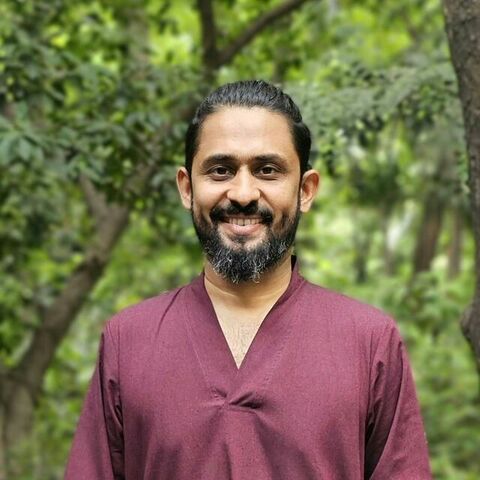
I'm Jerry.
I'm a meditation and mindfulness teacher based in Fort Kochi,
India,
And I run Nishrayasa,
A holistic wellness studio where I share meditation,
Mindfulness,
And sound based practices.
Thank you for being here.
One of the things I hear most often from people who want to start meditating is,
I love to meditate,
But I don't know how.
And usually there is another sentence that comes right after it.
My mind is too busy.
If you have ever said either of those things,
You are not alone.
And actually having a busy mind doesn't mean you are bad at meditation.
It's simply what minds do.
We think,
Remember,
Plan,
Worry,
Imagine.
We replay conversations.
We make lists.
Sometimes we even think about how much we are thinking.
So if you have been avoiding meditation because you believe you need to have a quiet mind first,
You can let go of that idea.
You don't need a quiet mind to meditate.
You meditate to become more familiar with the mind you already have.
When people picture meditation,
They often imagine someone sitting perfectly still,
Completely peaceful,
With their eyes closed and not a single thought in their head.
It looks beautiful.
But it isn't a very realistic picture of what meditation actually feels like.
Meditation can be much more ordinary than that.
You sit down.
You close your eyes,
Notice your breath,
And then your mind wanders.
That is meditation.
Seriously,
That's a big part of it.
So let's make this very simple.
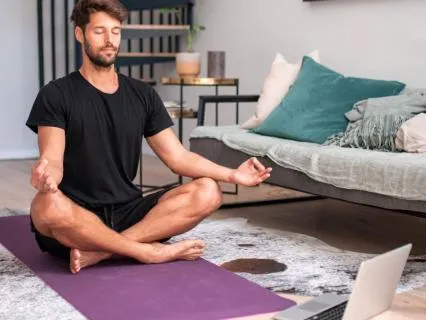
If you have never meditated before,
You don't need a special room.
You don't need incense or a particular cushion.
You don't even need to sit cross-legged on the floor.
Find somewhere you can sit comfortably for a few minutes without being disturbed.
A chair is perfectly fine.
A sofa can work.
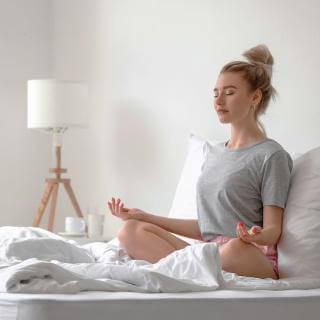
Even sitting on the edge of your bed can work.
The important thing is that your body feels reasonably comfortable and your posture allows you to be both relaxed and awake.
You don't want to be slouching so much that you fall asleep.
And you don't need to sit so rigidly that your back starts complaining after two minutes.
Just sit naturally.
Let your hands rest wherever they are comfortable.
Close your eyes if that feels okay and then notice your breathing.
You don't have to change it.
You don't have to make it deeper.
Or slow it down.
You don't have to breathe in a special way.
Just notice that you are breathing.
Feel the air moving in and moving out.
Notice the movement in your chest or your abdomen.
And for a few moments,
Simply stay with that.
The breath becomes something you can return to because your mind will wander.
There's really no point pretending otherwise.
You might suddenly remember an email you haven't answered,
Or start planning what you're going to have for lunch,
Or remember something someone said three days ago.
You might start thinking about whether you are doing the meditation correctly.
And then perhaps a minute later you realize,
I have been thinking this whole time.
And this is where many beginners assume they have failed.
They think,
I can't meditate.
My mind won't stop.
But something important has actually happened.
You noticed.
You became aware that your attention had wandered.
And now,
You have the opportunity to return back to the breath.
That's it.
No frustration,
No criticism,
Just return.
And then it will probably wander again.
And you will return again.
And this may happen 20 times in 5 minutes.
That is okay.
In fact,
Those 20 returns are 20 opportunities to practice awareness.
Think about learning to play an instrument.
You don't become good at it by never making a mistake.
You practice.
You notice what happened.
And you try again.
Meditation is similar.
The wandering is not the problem.
The practice is noticing that you have wandered and coming back.
And that's a really useful skill beyond meditation.
Because eventually,
You start noticing when you have wandered in everyday life too.
You notice you are having a conversation with someone but thinking about something completely different.
You notice that you have been worrying for 10 minutes.
You notice that you are irritated before you say something you might regret.
The same thing happens.
You notice and you come back.
So when you are beginning,
Don't make the practice unnecessarily difficult.
You don't need to meditate for 30 minutes.
You don't need to sit perfectly still.
You don't need to have profound experiences.
Start with 5 minutes.
5 minutes is enough.
And if 5 minutes feels like too much,
Start with 3.
What matters more than the length of one meditation is whether you come back tomorrow.
And the day after that.
Meditation is a little like looking after a plant.
You don't pour a month's worth of water onto it once every few weeks and expect it to flourish.
You give it a little attention regularly.
The same is true here.
A few minutes each day can become something meaningful over time.
And there's another thing I want to say because I think it can save beginners a lot of unnecessary frustration.
Don't judge your meditation by how peaceful you felt.
Some days,
You'll sit down and feel completely settled.
Other days,
Your mind will feel like it's hosting a conference.
Some days you'll feel sleepy.
Some days you'll feel restless.
And some days you'll wonder why you even bothered sitting down.
All of that is part of the practice.
Meditation isn't a test you pass by feeling calm.
The real question is what happens when you notice what's here.
Can you be with restlessness without immediately fighting it?
Notice a thought without following it.
Feel an uncomfortable emotion without needing to get rid of it completely.
Can you simply stay for another breath?
That's where the practice begins to become interesting.
And eventually you may notice that meditation is changing things outside the time you spend sitting.
Maybe you catch yourself worrying a little earlier.
Maybe you listen more carefully when someone is speaking.
Maybe you remember to take another conscious breath in the middle of a stressful day.
These changes can be very quiet.
You may not even notice them at first.
But that's often how meditation works.
It doesn't necessarily transform your life overnight.
It changes little moments.
And those little moments make up your life.
So if you are new to meditation,
Don't worry about doing it perfectly.
There isn't a perfect meditation.
There is only this moment and your willingness to be here for it.
Sit comfortably,
Notice your breath,
Let your mind wander,
Notice when it does,
And gently come back.
That's enough.
You don't need to empty your mind.
You don't need to become someone else.
You don't need to escape your life.
You are simply learning how to be here for the life you are already living.
And perhaps over time,
That becomes the most valuable thing meditation gives us.
Not a mind that never wanders,
But the ability to keep finding our way back,
Back to the breath,
The body,
To the present moment.
And perhaps back to ourselves.
Thank you for listening.