In this video,
We're going to explore how quickly our minds make assumptions about what we see and what we experience.
And how those assumptions can sometimes become so convincing.
That we mistake them for reality.
I'll also give you a simple exercise to help you notice this for yourself.
And see how it might be impacting you.
Because we do this,
All of us,
All the time.
We see something and very quickly we decide what it means.
We make assumptions.
We label people.
We create stories and.
.
.
Then we can start experiencing those stories as though they're reality.
So let's start with the exercise.
For the next 20 seconds,
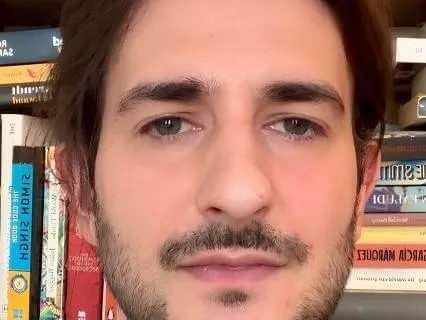
Just observe me.
Don't try to work anything out.
Just notice what happens in your mind.
What do you notice about me?
What impressions come up?
What kind of person do you imagine I am?
Maybe you notice my appearance.
The way I speak.
My expression or the way I carry myself.
Just notice what your mind does with that information for the next 20 seconds.
I hope that wasn't too awkward.
But here's the interesting part.
You just spent 20 seconds looking at me and in that very short time,
Your mind may have already created an idea.
Or an image of who I am.
But here's something you couldn't have known by looking at me.
I have something called Usher syndrome.
It affects my hearing and my vision.
And so I'm gradually losing my eyesight.
At the moment I have about six degrees left.
Which is like looking through a straw.
And I also wear hearing aids.
And the point is.
.
.
In just 20 seconds,
Your mind can form an impression of someone.
You can be completely certain about someone while knowing almost nothing about them.
And we do this constantly.
We see someone who doesn't smile at us and we think they're unfriendly.
Or someone doesn't reply to our message.
And we think they're ignoring us.
Or perhaps someone says something a bit bluntly.
And we think,
Oh,
They're angry.
And this is why I think it's interesting to ask ourselves.
When I think I'm seeing something.
How much am I actually seeing?
And how much am I interpreting?
Now,
I'm not suggesting we stop interpreting.
We can't.
Our minds are going to make assumptions.
But we can notice when it's happening.
And that noticing gives us a little bit of space.
And so the next time you notice yourself becoming very certain about someone or about a situation,
Just pause.
And ask yourself.
What do I actually know?
What do I see and hear?
And what am I adding?
And it's okay not to know.
We don't always have to come to a conclusion about things.
We don't always have to decide what something means.
Because sometimes it's in that uncertainty.
When we don't rush to fill in the gaps.
That we can actually see what's there.
You don't have to get rid of your interpretation.
Just recognize that it is an interpretation.
And stay curious.
Because there might be something there that you haven't seen yet.
And crucially,
This applies to ourselves too.
We all have stories about who we are.
About what we're capable of.
About our limitations.
And sometimes we become so used to these stories that we stop even questioning them.
We don't just think.
Oh,
I'm bad at this.
We start experiencing ourselves as someone who is bad at this.
So perhaps the next time you find yourself feeling certain,
About yourself,
Someone else.
Or situation.
Pause for a moment.
And ask.
Am I actually seeing what's here?
Or am I seeing what I think?
Is here.
Maybe that small moment of awareness is enough.
To give us a little more freedom.
Freedom to question.
Freedom to listen.
And perhaps sometimes freedom to see things more clearly.
Thank you for taking the time to explore this topic with me.
I hope it's been helpful.
And until next time.
Stay present.