Hi there,
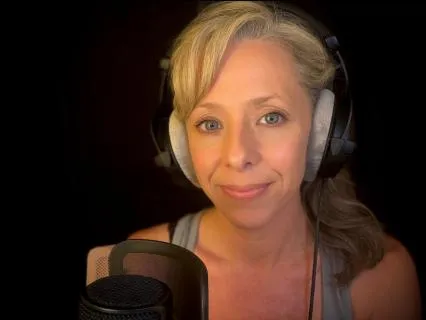
I'm Katie and welcome.
So today I wanted to chat a bit about chronic pain.
Chronic pain is a very pervasive condition that is impacting our society and I have lots of clients who are dealing with some kind of pain in their body,
Whether it's related to an illness or to an injury or something else.
And I'm actually one of those people too.
I had a snowboarding accident several years back as well as a roller skating accident.
And really messed up my spine.
I had a surgery as well and while it helped with some things.
It's never really fixed the problem.
And I just have some spinal complications as a result of that.
And it hurts.
It hurts quite often.
And when this all first occurred,
I wasn't able to get medical treatment for quite a while and I held so much pain in my body.
My pain is exacerbated by sitting,
Which is kind of the bane of my existence,
It feels like,
But I have to sit for work.
So I had to find ways to navigate this and to work with this.
It was really hard at first,
But I found somatic experiencing and I learned how to work with my nervous system.
And that was the key part that was that's what helped this.
Continues to help this so much.
But I want to go back to this idea that pain is not the whole story.
When we are bodies that have chronic pain,
When we've been holding pain in our bodies for a very long time.
It's very easy for our nervous systems to sort of get sensitized or kind of hyper-focused on the pain and all that it involves,
Which it can be a lot.
All the things that might activate it or hurt it or trigger it or,
You know,
Give us a flare-up or whatever it might be.
We get very,
Again,
Hyper-focused on that.
And that is a story,
And that's a legitimate story,
And that's there.
But through nervous system work,
Through nervous system awareness and somatics,
We learn to find a way to recognize what else is here.
What else is here?
There's usually always something here.
And I get it.
When you've been holding a lot of pain in your body for whatever reason,
It's hard.
It's hard to think about something else sometimes.
But it's possible.
One of the tools I like to use is somatic sensory orientation.
When I'm having a really bad day,
I will tune into my senses and the senses are part of our physiology and they impact our nervous system.
They are intertwined.
But,
You know,
One thing I like to do is like look out the window and maybe look at the clouds or look at the tree or maybe there's a bird outside.
And I ask myself,
What do I notice in my body?
Yeah,
My back might be screaming at that time,
But when I allow myself to orient to something else,
Something starts to soften.
Maybe even just a little bit.
Or maybe I will lay on my floor and I will fill the carpet.
Or maybe I'll just bring a little bit of movement.
I really like to dance and I can't just.
.
.
Dance like I used to,
But I can sway.
I can bring movement.
I can listen to music.
I can drink a nice hot,
You know,
Nice hot cup of tea or whatever.
I can find things in my environment that soothe me.
I feel like people with pain are actually kind of good at this,
But we just need to learn how to infuse it into our nervous system,
To really drink that in,
To be like,
Oh,
Okay,
That's helping.
And pay attention to that,
To that story,
Instead of the other story that we are so accustomed to doing.
So I just wanted to share this idea with you.
This is a brief little talk.
You know,
Again,
Pain is not the whole story.
What else is there?
And for bodies that are holding chronic pain,
We have to work a little bit differently.
We have to navigate life differently because when a body has illness or injury or whatever it might be in the body,
That is an additional nervous system load that we have to carry.
I mean,
It's kind of hard enough to regulate our nervous systems just in a regular body in this world today,
But when you have chronic pain,
It's adding even more.
And our little systems just stay on high alert all the time,
So we have to find the other story.
We have to find the ways to let that soften even if it's bit to bit,
Bit by bit.
And I'm not saying this is gonna cure your pain or heal your injury or your illness.
And,
Or but,
And,
Let's say,
It can support it over time.
Little drops of this,
Little practices every day,
Finding little moments,
Little glimmers,
As Deb Dana in Somatic Experiencing says,
Little glimmers,
Little pockets of peace that help your nervous system relax,
Over time start to build.
They really do,
And they start to build more capacity and more room.
So,
We can live our lives.
And I think that's what most of us with chronic pain want to do.
We just want to live our lives and we don't want to have to hurt.
But the moral of the story is that the nervous system is so linked to this.
And so that's what we need to do is learn how to support that aspect of it as well and how we navigate life.
So you're welcome to check out my resources I have in regards to chronic pain and the chronic pain club and some other practices where you can have an experiential experience of bringing little.
Little drops of ease to your nervous system and possibly.
Discovering what the other story is in addition to the pain story.
I hope this was supportive.
If you have any questions or would like to drop a comment,
Feel free to do so.
Thank you for being here and thank you for sharing your time and your attention and your nervous system with me as well.