Hello,
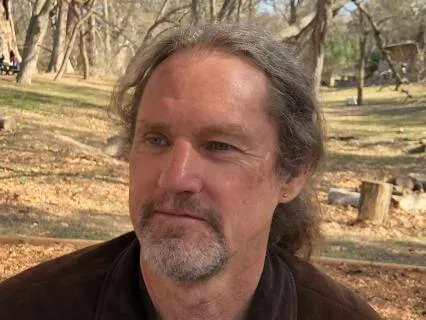
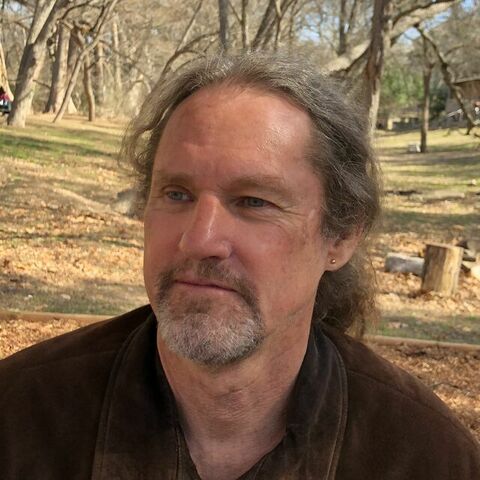
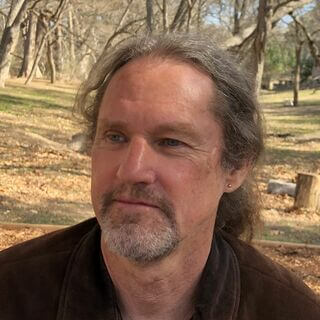
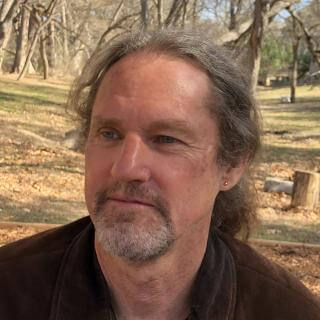
This is William Cooper.
Welcome to Awakening Together.
Relaxing into happiness.
I trust you're doing well.
Why do people do the things they do?
I don't really know.
Do you ever wonder about it though?
Well,
There's so many reasons,
But let me tell you a little true story first,
And then we'll talk about it.
I was flying to Kathmandu.
And then Bhutan.
But first there was a layover for a number of days in Dubai.
It was November 8th,
2016.
I went to sleep in Dubai.
On the evening of November 8th,
And woke up on November 9th.
The presidential election had just occurred overnight as I slept,
And I was surprised,
As well as most of the world,
With the election result.
I flew on to Kathmandu,
Then to Bhutan.
And finally,
I ended up for some months in India.
I was at the Ramana Ashram in the little village of Theravanamalai,
A very sacred,
Holy place at the foot of the holy mountain Arunachala.
Because I was one of the only Americans there,
People would come up to me and say,
What's going on in the United States?
How did so many people vote the way they did?
What is happening?
I myself didn't really know.
I was stunned.
How could this happen?
And you know what?
Everybody was stunned.
No matter how they voted,
They couldn't understand how other people could vote the way they did.
We're all living in the same place,
Yet we see things so differently.
What was even more surprising,
It happened again in 2024.
Differing viewpoints.
How could this happen?
What are people thinking?
On a psychological and social level,
It was very disturbing.
Why do people make the decisions that they make?
Yes,
There are so many reasons that go into decision making.
There are so many reasons that we view the world the way that we particularly personally view it.
Way back when,
I used to think people thought like me.
But through the decades,
I've learned,
No,
Nope,
They don't.
Some do,
Many don't.
So rather than going through so many different explanations,
I want to share with you one viewpoint,
One explanation that I found among many others to be very,
Very,
Very helpful.
It's not the only explanation.
But it's one to consider if you've had some of these same questions.
It's Kohlberg's stages of moral development.
Dr.
Lawrence Kohlberg was an American psychologist And he spent his career.
Studying moral development.
He came up with six stages of moral development and said that each of us starts at stage one and then moves up the ladder,
Stage two,
Three,
Four,
Five,
And six.
Maybe we only get to stage one.
Maybe we only get to stage two.
But everybody has to start at stage one.
So we've all been to Stage 1 and likely move forward from there.
We can't skip stages.
We have to move as high as we can,
But move through them in sequence from stage one forward.
And as with most everything else,
We can only move as fast as we can move.
We can't push forward more quickly.
It's a natural development.
I can't look at somebody else and say,
Hey,
I'm on stage 5.
Why are you on stage 2?
You should be on stage 5.
Nor they,
Me.
We can only go as fast as we can go,
And we have to go through our stages.
As we can go through them.
We can understand every stage that we're going through and every stage that we've been through in the past.
For instance,
If we're at stage four,
We can understand stage four,
Stage three,
Stage two,
Stage one,
All of the stages that we've previously gone through.
We can also understand the stage above us,
Stage five,
At least a bit,
But we can't understand anything above stage five,
Which is stage six.
So for instance,
If we've gotten as far as stage three,
We can kind of understand stage four,
But we don't have any clue about stage five or six.
They just don't make any sense to us.
The funny thing about all of this is understanding stages and where we each are is something like a one-way mirror.
If I'm at stage six,
I can understand every stage below me because I've been through them.
But if I'm at stage three.
I can barely understand stage four,
But I don't understand anything above that.
I can't see forward too far.
Only people that are higher than me can see backwards all the way down to one.
And if I'm at stage six,
I might mistakenly think,
Well,
People are people.
If I understand them,
They should be able to understand me.
But it's not so,
Because I can look all the way back,
But they can't look all the way up.
They just don't understand.
Any stages above one stage above where they are.
It seems to me that misunderstanding of this fact,
This one-way mirror,
Is one of the causes of some of the discord that is going on out in the world.
So let me go through the stages with you,
And then we'll talk about it a little bit further.
For me,
It made sense and was a major piece of the puzzle to help me understand and see where human behavior often comes from.
Okay,
Stage one.
When I'm in stage one,
My moral outlook centers around obedience and punishment.
My actions are judged by consequences.
I simply want to avoid punishment.
My morality,
My way of looking at the world,
Is to avoid punishment.
I will do whatever I need to do,
Say whatever I need to say.
As long as I can avoid punishment.
Stage 1.
Possibly now I move to a higher stage,
Stage 2.
And stage two centers around self-interest.
What's in it for me?
I'm seeking rewards.
What's the best deal I can get?
The best deal I can make will shape my morality.
Once I've mastered Stage 2,
I might move on to Stage 3.
And that is the stage where my morality.
.
.
Is centered around looking good.
How can I gain your approval?
I make my moral decisions now.
In a way that makes me look good.
That's my morality.
How do I look good?
In stages one through three,
My morality is centered in some form or fashion around my self-interest.
In stage one,
I attempt to avoid punishment.
Stage two,
I'm looking at what's in it for me.
Stage three,
I simply want to look good.
Now,
Perhaps mastering stages one through three,
I then move on to stage four.
Stages four through six shift from an individual perspective to a societal perspective in my morality.
Stage four is about law and order.
Law and order maintains society's order.
And so I follow the law regardless of my personal opinions.
Believing that social obedience is paramount.
So now my morality is shaped by rigid rule following and adherence literally to the law,
Law and order.
If I move to stage five,
I'm still interested in the law.
But now I believe that laws can be changed.
They're flexible.
They're simply social contracts to give the greatest amount of good to the greatest number of people.
Opinions change,
Demographics change.
Elections change so laws can change to fit the current situation.
There are many different viewpoints and laws can be changed if they don't currently fit the highest welfare of society.
Important than rigid rules in Stage 5.
In stage six,
The final stage,
I follow my heart.
I follow my internal values.
I follow justice,
Equality,
Human rights.
I listen deeply to myself.
I hold universal moral laws that are written on my heart as far more important And if societal laws conflict with them,
I will quote,
Unquote,
Break the law in order to do the right thing.
Perhaps Gandhi or Martin Luther King or Jesus or so many others are good examples of stage six.
So how did Kohlberg's six stages of moral development add to my clarity and understanding of why people do what they do.
Well,
First,
It removes judgment.
We've all been through all of the stages before where we are now.
So we can certainly understand those stages.
We've been there.
We've lived them.
And that's how we saw the world back when we were in that stage.
So there's really no sense to judge others that are going through stages that we ourselves have been through.
Especially when we know that a person is where they are and they can't go any faster than they're going.
We couldn't go any faster.
And nobody else can either.
We all are where we are.
It's not purposeful that you're at stage five and I'm only at stage two.
We are all just evolving and opening as we can.
Human beings together.
It also reminds me that the world looks different to each of us,
Depending on which lens we're looking through.
If I'm at a stage one,
I'm simply trying to avoid punishment.
And Of course,
I'm going to act the way I am acting.
It may not be,
To me,
The best way to act.
Or to society the best way to act.
But it is understandable from the perspective of that individual person who's trying to be safe.
So back to the election.
In the United States,
There are wide swaths of people who are voting in order to feel safe.
They maybe want an authoritarian to protect them.
Or they're voting because it's the best deal for them.
I don't like their character,
But I like their policies.
They're best for me.
I hope to be more prosperous.
It's a good deal for me.
Certainly these are not the highest moral stages,
But they are moral stages and we've all been through them.
I feel that the deeper we are in our awakening,
We naturally open up into higher stages of morality.
Not always.
But it helps.
If I don't feel frightened,
If I am taking refuge in the Buddha,
If I do feel one with everything because everything is me,
I certainly act differently than if I feel alone.
Great fear and separation and hurt.
And unfulfillment.
Each is going to put me in a very different stage of development.
So for me,
The deeper awakening I can experience,
The better.
And with it comes a deeper understanding of all the various prior stages I've been through.
But one of the most clarifying aspects of Kohlberg's stages of moral development was one simple thought,
And that is that we can't understand more than one stage above where we are.
I remember talking to a man.
Who started to get very upset and it seemed like every fifth word he used the word woke.
So-and-so is woke when this is going on and it's woke and this and this and this is woke.
On and on he went.
And to me,
Woke seems to be a good thing.
It's good to be awakened,
Woke.
But it's not used that way these days.
In Kohlberg's sense,
What it's referring to is certain people are further along than only one stage above me.
And I can't understand anything about what they're talking about.
It's so beyond me.
It's just like fantasy land.
And because I have no idea what these people are talking about and why they act the way they do,
That I simply write them off with words such as woke.
Or there have been so many expressions through the years,
Way back,
That was about spirituality that you didn't understand.
You would just say,
They are woo-woo.
Or now you could call people far-left socialist extremists.
Or another pejorative term,
You could call people rednecks or weirdos.
There's so many terms.
You might even write them off as satanic.
So I guess the two aspects of Kohlberg's stages of moral development that I found most helpful in sorting out What's going on in the world is the actual six stages of moral development reminding me that we're all where we are and we're evolving.
And when we look through our lens of where we are,
The world looks quite different than it might to my neighbor.
And the second thing is that when somebody is more than one stage above where I am,
I totally can't understand where they are.
And it just seems perhaps bizarre or made up or a fantasy.
So I might pejoratively dismiss them with some catchphrase.
And each group has their own phrases.
I think we've all seen a a lot of that,
Writing off groups of people or individuals with a dismissive phrase.
Though this podcast is a little bit different than all the other ones I've done on Awakening,
We are in the world and clarity having an idea of what's going on.
Can be settling and helpful.
I know that Kohlberg's stages of moral development aren't the total solution at all.
But it is a helpful piece that adds to my clarity when you mix it with all the other understandings that we have.
I hope it's helpful to you too.
I look forward to talking to you next time.
Take care.