Hello,
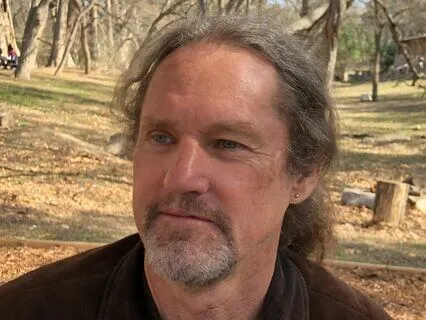
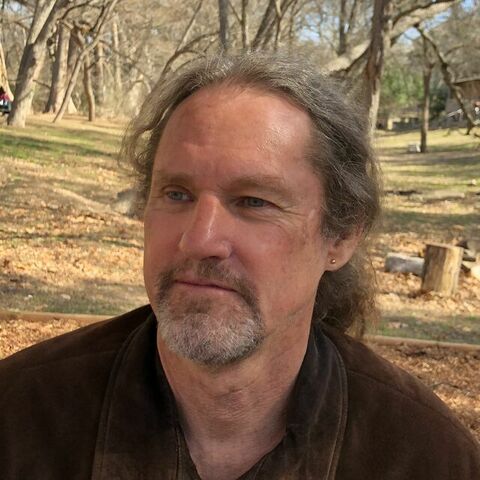
This is William Cooper.
Welcome to Awakening Together,
Relaxing into Happiness.
I trust you're doing well.
Today,
Let's talk about PTSD.
Your natural state,
Your awakened state,
Is pure openness,
Flowing,
Oneness,
Radiant happiness.
You're one with all things,
And because you are all things,
There's deep trust,
Because everything is you.
The universe flows and supports you.
Deep,
Heartfelt love and happiness.
That's your natural state.
It's always there.
That's always happening all the time,
And it stretches beyond this creation into all things that are not created,
Infinite and beyond.
That's you,
Always.
The process of awakening is opening up and letting yourself receive and enjoy who you are,
Because we're typically blocked,
And as we open up,
We call that awakening.
One of the most locked up positions we can be in is when we have what has been labeled PTSD.
That's when our system has been so overwhelmed that it's cramped up and shut down.
It's like a muscle cramp in your calf.
It's just so tight and painful you cannot concentrate on anything else.
No amount of talking or therapy or books that you read or TV shows that you watch or meditation that you do is going to help that muscle cramp in your calf.
It's the same thing with PTSD,
Except it's a brain cramp,
And it's a nervous system cramp.
It's an emotional cramp.
Your body shuts down.
It's so overwhelmed,
And perhaps you can function,
But you function at a low level because so much of your attention has been drained with this giant cramp,
Just like it would be drained if you had a muscle cramp in your calf.
It just shuts you down.
Now,
In order to carry on,
What a person usually will do is they'll often take this big ball of pain,
And they'll cover it with some kind of tension and hide it in their body.
They'll dissociate from it so they don't feel it.
It's frozen somewhere in their body,
And it appears as a perpetual ball of pain deep inside that resurfaces a lot,
Especially when you're stimulated.
You see something that reminds you of it or has the same emotional makeup or even is intellectually similar.
Many things can trigger it to come back up again.
Short of it coming back up again,
It might feel like a block inside of your system that just never goes away or a stuck place inside of you that you just can't overcome.
And with such repressed pain and disease inside of you,
Sometimes it fosters health issues as well.
These things may be very persistent,
The block or the numbness or the reoccurring thoughts,
Because your thoughts can race.
They're trying to get away from the pain.
That's another way to dissociate.
You go up into your mind,
And you just think,
Think,
Think,
Think,
Because thinking isn't really living.
It's just making conceptual overlays about life.
It's a good way to get away,
Like watching TV.
So,
You might find yourself thinking a lot or having a lot of anxiety or panic attacks or depression.
These things are persistent.
Often,
You have PTSD,
Post-traumatic stress disorder.
Often,
It's indicated if you have something that just doesn't resolve.
It does not go away.
It stays with you year after year after year after year.
It drains a lot of your energy.
So,
What happens in PTSD?
Your brain actually becomes overwhelmed,
As does your nervous system,
And that's called kindling.
It fires up,
And it cramps.
It's kindled.
To protect yourself from your environment,
You'll often dissociate,
Withdraw,
And go within yourself.
You will disconnect from life,
At least to some degree.
So,
If the process of awakening is opening,
This is the process of closing in a very vigorous and strong way.
You often become closed in the stuck position.
So,
How does PTSD happen?
Well,
Your system can be overwhelmed with a traumatic event,
Or you could have a lower-level,
Repetitive event that happens for a long period of time that affects you.
It could be,
For instance,
You're bullied as a child for a year in and year out,
Or somebody says negative things to you for a long time,
Or you're put down,
Or you're embarrassed,
Or it could be all sorts of things.
The traumatic events,
Of course,
Would be a car crash,
Or a war,
Or something that's more obvious,
An attack.
That will overwhelm your system as well.
So,
You can get PTSD with longer repetitive emotional traumas that are lower level,
Or you can have a quick big one that just overwhelms your system rapidly.
Either way,
You shut down.
When you shut down,
Your attention,
Your awareness fixates on the pain.
It does what they call riveting.
It will rivet to that pain,
And you'll become less aware of what's going on around you because your attention is drawn to the pain,
Or the block,
Or however you've managed this huge amount of energy.
It could be a frozen feeling,
Could be a stuckness,
But you keep going back to it,
And you will do something that they call reenactment.
You'll keep going back and try to work it out.
If I had said this,
Then I wouldn't have had this problem.
Let me think what I should have done instead.
If I had driven left instead of right,
I wouldn't have gotten into the car crash.
You doubt yourself,
Or you question yourself,
Or you begin to imagine how you could have dealt with the situation differently,
But you do that a lot.
You keep going back to it.
You go back to childhood.
If it's a childhood event,
Oh this happened,
And that happened,
And this person was bad to me,
And I wish this had happened,
And now they didn't do this,
And I'm still affected by it,
And you can't let it go.
That's a sign of PTSD.
Now when you have PTSD,
Just like when you have a muscle cramp in your calf,
As I said before,
And it's very important,
Meditation might help a little bit around the edges,
But if you've really got a bad muscle cramp in your calf,
Meditation isn't the best tool to work on it.
You do something else.
You stretch it out,
Or you do something else that's going to work.
Psychotherapy.
If that person knows about PTSD,
Then it can be helpful,
But other kinds of psychotherapy often just help around the edges.
Spiritual practices might help around the edges,
But maybe not so much.
So as a result,
Unfortunately,
Some people have been stuck,
And they've meditated for decades,
And maybe the reason they are meditating is to release the pain,
But it never releases,
Because they're using the wrong tool for this particular problem.
It mimics emotional problems,
Because it is,
Except it's just different.
It's stuck.
The brain is kindled.
The nervous system is kindled.
So what you want to do,
Rather than some of these other things,
Is you want to do what they call quench the brain and the nervous system.
Quenching.
That's where you let it relax and open back up.
So how do you quench?
Well,
You want to open up.
What they found is the best way to do this is to work with this intense,
Perhaps buried material very slowly.
Go at your own pace,
But go very slowly,
Because if you arouse things very quickly,
If you work with something in a rough and quick way,
You'll often be re-traumatized,
And you'll close back down.
It's just too much.
It's too intense,
Too fast,
And people tend to close down when you're rough with them.
If you're rough with yourself,
You'll close down.
If you're gentle and nice to yourself and slow and easy does it,
You can build trust with yourself and open back up,
And that is awakening,
Opening back up.
So if you ever use a system that closes you down,
You know you're probably not on a good track.
Do things that open you up.
In this case,
With PTSD,
You go very slowly.
That's very,
Very,
Very important.
What do you want to open up into?
Well,
Felt experience is very important,
And I mean a good felt experience.
What's the very best?
The very best is you,
Your being,
And if you've been meditating for some time,
Perhaps you realize your being by now clearly,
And we've talked about it in prior podcasts,
Coming from beyond this created universe,
Down into it,
And it first comes in as light and sound and bliss and so on and so forth,
Like the colors of a rainbow,
But it feels so good.
Perhaps you've just been lying down on the grass and you see the sky and it's just blue and beautiful and your heart opens and you feel bliss.
There is only one bliss,
And that is the bliss of your being,
And that is what you're feeling in those blissful moments.
That's what you want to open up into.
So,
If you experience your being all the time anyway because of your meditation practice in your prior spiritual practices,
Rest in that and just let the tension,
The fear,
The anger,
Whatever's within the PTSD,
Let it melt and open up into the bliss of your being.
Now,
If you don't feel that,
If you're cut off from that,
Or maybe you're just not there in your spiritual practice quite yet where you're feeling that as fully as I'm describing it,
Well,
Everything is made of this bliss.
Everything in life is a portal to it.
So,
Connect to something very practical.
Do you have an animal you can hug or love?
There's only one love.
You might feel it more directly through your dog,
But that's the infinite love coming through your dog.
So,
Hug your dog and feel it.
That's your best portal.
Or you have another animal,
A cat or a tree.
Maybe you just like to look at trees or nature or just sit in nature or look at the blue sky.
Maybe you like to take your shoes off and just walk in the grass.
Walk slowly so you can connect.
Maybe just stand there.
Maybe put your hands in the grass.
Maybe lie in the grass.
Listen to yourself and do whatever opens you up.
A big word in the PTSD world is pendulate.
And what pendulate is,
Is that you swing like a pendulum from where you are to a deeper truth.
And when you put those two together,
You'll eventually melt into the deeper truth.
Perhaps you remember our podcast on coherence therapy.
If you don't,
You might want to go back and listen to that one.
But coherence therapy is when you put two things together,
You'll melt into the higher thing,
The higher felt experience.
So,
When you pendulate,
Remember you've got PTSD and you'll want to pendulate from your closed down self and begin to feel something more open,
More truly how you are.
Perhaps you remember a time that was better even today than what it feels like perhaps now when you're triggered.
And just kind of melt into that experience that you just had earlier in the day or one that you had yesterday or last week or last month or a year ago or before you got the PTSD.
Recall what it was like and just melt into that the best you can.
Or as I said,
Nature,
Animals,
So many different things you can pendulate in and out of.
The nature of your being,
The felt experience of who you are in meditation,
You can pendulate there.
Also in a prior podcast,
We talked about relaxation and how you soak up good feelings.
And take them in and that is what relaxes you.
Well with PTSD,
One part of you has been twisted off into a big ball of pain and it's over to the side.
Typically what people will think is,
I'm a person who has anxiety that's over here.
I feel it in my stomach or I feel it in my body.
I'm here and I feel it over there.
Or I'm a person who has depression or I'm a person who has anger or hurt or whatever it is.
But that's not exactly true because it has you in one place and this disruption,
Hurt,
Anger,
Fear,
Depression,
Over to the side.
But really you are the depression.
You've just dissociated so it seems like it's over there.
But in order for the depression to relax,
It has to be the one that receives the love or the care or soaks up the good feelings as you pendulate.
So you pendulate from the depression or from the anxiety to the infinite or to your dog or to your cat or to your tree.
You step into it.
You own it.
You get into the middle of that lump if you can,
That lump of pain or anxiety and you say to yourself,
I am anxious.
Not that I'm experiencing anxiety.
You say,
I am anxious and you feel it.
You feel you own it because that's nobody else being anxious.
That anxiety in you is in you.
That is you.
It's just been dissociated and put over to the side by you.
But now you're re-associating it and owning it.
So you take it in and I am anxious.
I am depressed.
And from that point,
It feels horrible.
I agree.
But from that point,
You then reach out and you drink in the good feelings.
I am anxious and I pendulate to something good and I just rest in that and I soak it up like a dry sponge.
Maybe I can only soak up a drop,
But I do that.
Or maybe two drops,
But I do that.
Well,
After a while,
The sponge opens up.
It might take days,
Weeks,
Months,
I don't know.
But it will open up.
So that's how you begin to relax and open up the tensions.
When tensions fully receive relaxation,
They relax.
And when something relaxes,
It's gone out of your body.
It's not like there's this lump of anxiety.
Once it relaxes,
It's not there anymore.
So you've let it go.
It's integrated now.
When tension relaxes,
It melts back into the ground of your being and it's totally gone.
In PTSD,
When you say,
I am anxiety,
You're looking at it from the perspective of a subpersonality that's been formed in the middle of that ball of pain.
Now,
Yes,
It's true on the bigger picture.
It's not that you have anxiety or you are anxiety.
You're everything.
You're beyond everything.
You're beingness itself.
So that's the deeper truth.
But when we work with PTSD,
You have to be in the middle of what's happening on the psychological level,
On that color of the rainbow.
So you play that game in order to open up that level so that you can flow and everything can melt back into oneness and reintegrate,
Connect.
If you try to deal with something through willpower,
Like,
Yes,
I shouldn't have this,
I don't like it,
I'm going to push it to the side or I'm going to will it away or I'm going to outthink it or I'm going to read a book on philosophy and get ahead of it or just believe that it doesn't exist or something like that,
You in essence re-dissociate it and re-freeze it.
So it doesn't go anywhere.
It just might disappear from your vision for a while.
But then if somebody looks at you funny tomorrow,
Suddenly it comes popping up and you're overwhelmed again.
So connection is the antidote for the separating qualities of PTSD,
Its connection,
And letting your natural flow occur.
Peter Levine is a doctor who has pioneered lots on post-traumatic stress disorder.
You might enjoy his book Healing Trauma.
If you go to my website on the resources page,
I have information about that and some other PTSD information plus a link to a video clip that shows an animal who has PTSD in the wild and they video this animal.
It's a polar bear and as the polar bear comes to,
It doesn't resist what happens to it and it starts to shake and in that shaking it releases the pent-up overwhelming sensations that have caused PTSD for it.
You might notice yourself shaking or convulsing.
That could happen at some point.
If possible,
Don't get in the way.
Don't shut it down.
I know it's easy to freak out about something like that,
But just go with it.
Let it happen.
Let your body do whatever it needs to do.
Just let yourself flow naturally and that will release some of that kindling.
Not everybody needs to do that,
But if it does happen,
That's what's happening.
You might want to watch that video because as the video continues,
You'll see a woman who has severe problems.
She can hardly walk.
She's a mess.
She's got all sorts of troubles.
She goes through a process just like the polar bear did and her problems more or less disappear.
It illustrates how this is not a meditative.
.
.
Meditation is not a solution for this therapy.
Traditional therapy isn't a solution generally.
It's a muscle cramp.
So it explains why people sometimes can do spiritual practices for decades and get not very far because they're held back by their cramps more or less.
You have to deal with things on the level that it exists and follow the rules and laws of that particular level.
We are a continuum and we exist on lots of different levels and each one has its own language and we have to be respectful of that language.
In India,
They say sometimes that this world doesn't exist,
Yet everybody jumps out of the way if a big bus heads their direction.
So they are respectful.
We have to be also.
So the healing of PTSD trauma is very visceral.
It's a felt experience.
You might find movement helpful,
Moving your legs or your arms.
In Peter Levine's book,
He goes through a lot of that and the audiobook is very helpful because he takes you through exercises that might be helpful.
What I've tried to do in this podcast is give you the main principles and point you in the right direction so that I think most people will be good with this podcast.
But if it opens something up more deeply and you would like to see a therapist,
You should see a therapist because this podcast or any other is not a substitute for psychotherapy when you really could use it.
If you do go see a therapist,
Ask them specifically if they've had training with PTSD because not all therapists have.
Since both muscle cramps and PTSD are not intellectual problems,
The intellect isn't much help.
So stay away from that unless you really need to use it.
Instead,
It's felt experience and connection.
The deepest connection ever is the connection of your being.
It is connecting to yourself,
Your beingness,
The infinite oneness.
Open into the infinite.
The last thing I'd like to say about PTSD at this moment is back to a prior podcast that awareness is curative.
So as you put your attention on the PTSD and you connect,
Oftentimes as you're pendulating,
You're going to feel unease because you're coming from anxiety or depression or whatever it is into beingness or connection or love or well-being.
But as you do that,
You'll still be feeling that anxiety or that anger or that hurt.
So remember as you put your awareness on it,
That's another way just automatically where that which is balled up and frozen will begin to open like a flower and melt like an ice cube,
Very gently into the infinite.
And we've talked about that before,
But it does happen here as well as you put your attention on this process.
So be gentle with yourself.
Let yourself unfold nicely.
I hope that's been helpful.
What I plan on doing in the next number of podcasts is to talk more about PTSD and psychological issues from different vantage points.
I'm not going to go in it all very deeply,
But just enough to make sure that everything is opening all up and down the spectrum of the rainbow that is you.
Later we'll talk about more spiritual issues and gurus and what gurus can do and can't do and awakening and the process of awakening and energies and a number of other things that might be more traditional to awakening.
But I don't want to skip this part because it's often overlooked.
In episode 30,
A couple of podcasts from now,
We're going to look at another way to work with PTSD using the principles from Richard Swartz and internal family systems.
I think you'll enjoy it.
And I look forward to talking to you again soon.
Take care.