Hi,
Welcome to All Things Yoga with Vicky,
A podcast about all things yoga.
Today we're going to consider what the end goal of yoga practice is.
And the question I'm going to pose is,
Should we even have an end goal?
So if we look at social media,
There are so many posts of people showing their progress,
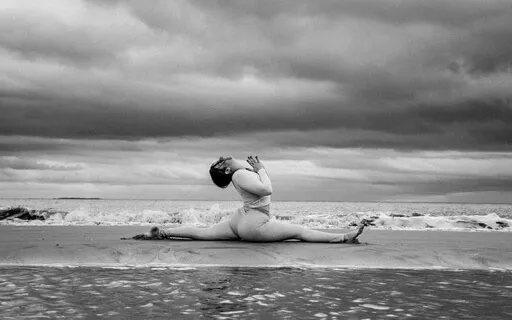
Showing their progress over months in splits,
Or issuing challenges about putting ourselves in the version of the pose that they are putting themselves in.
So we have to ask really,
Is this completely what yoga is about?
Now let's begin by looking at one of the texts that yoga students often study in order to get to know the origins of yoga.
The text is called the Yoga Sutras of Patanjali.
Now in its original Sanskrit form,
It's not a very long read,
But each translation comes with a wealth of commentary about the text and its meanings.
Now one area that most translations do tend to agree on are the opening lines of the Yoga Sutras.
And the translation that I'm basing this on is by Alistair Shearer.
However,
I have tweaked a little to bring in some other kind of ideas of the translations.
So the translation of the beginning of the Yoga Sutras that I'm thinking about today is,
And now the teaching of yoga begins.
Yoga is the settling of the mind into stillness.
When the mind is settled,
We reside in our true nature,
That of unbounded consciousness.
So this is something that's really quite key.
The text then goes on to explain how this can be achieved,
But there isn't any mention of plank challenges or how to get into crow pose in a week.
Now this begs us the question,
What is going on on social media as far as yoga is concerned?
Well,
The origins of yoga don't necessarily lie in the physical practice,
In the exercise.
The origins of yoga lie in meditation,
And the Yoga Sutras teach us this.
Yoga was seen as a way of reaching enlightenment,
And enlightenment can be thought of as oneness with the universe,
From a Hindu point of view,
Allowing for escape from suffering and cycles of reincarnation.
Sounds pretty good,
Eh?
Now I'm going to now think about why yoga has become about being bendy and headstands on beaches and the like.
Perhaps it's because Western culture doesn't align with these ideas of birth and rebirth.
We don't tend to,
In the West,
Have a reincarnation idea in our cultures.
Perhaps it's down to the pressure to look good or stay young,
That everything is based around the physical.
And yoga is quite often,
And I hate to use the word,
But sold as a panacea,
Something to keep you young and active and beautiful.
As a psychologist,
I put forward the Freudian idea that sex sells,
And quite frankly,
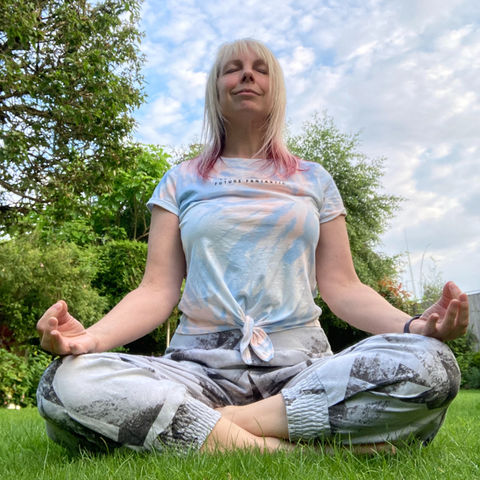
Downward dog in a bikini does seem to get more attention and more likes than pictures of someone sitting in meditation in loose fitting clothing.
Call me sceptical.
Whatever the reason,
It's really easy to forget that yoga isn't necessarily all about contorting our bodies or achieving a certain version of a particular pose.
However,
I will say that if that is your bag,
Then there's nothing wrong with that.
I mean,
Who doesn't feel a great sense of achievement when you balance for longer than you have before in tree pose,
Or you find you're able to touch your toes in a forward bend when you couldn't?
Physical practice does have its place.
Now the physical practice of yoga in Sanskrit is called asana,
And it's mentioned in the yoga sutras.
It's mentioned as the movement and poses that allow us to get comfortable in preparation for seated breathwork and meditation.
So some of the poses that we're familiar with from classes will allow us to get comfortable to sit,
To do our breathwork,
Our pranayama,
And meditation.
But interestingly,
The yoga sutras don't really give the physical practice,
This asana,
A starring role.
Now when we get fixated and strive to be able to,
As I would put,
Nail a version of a certain pose,
It isn't really useful for us.
And it's not really mentally healthy.
Because if we fail to contort ourselves enough,
Or balance expertly enough,
We may use yoga as yet another stick with which to beat ourselves.
And this is something that we are very good at.
We're very good at telling ourselves we're not good enough,
We need to do this better,
We need to do that better.
No one needs that.
And yoga isn't about punishing ourselves because we have failed at yoga.
In my experience,
Poses often come,
And come more easily,
When we stop trying and we cease to be attached to an end goal of what we think that pose should look like.
Now this is spoken about in the yoga sutras.
The term a parigraha is translated as non-attachment or non-grasping.
And this is a really useful attitude.
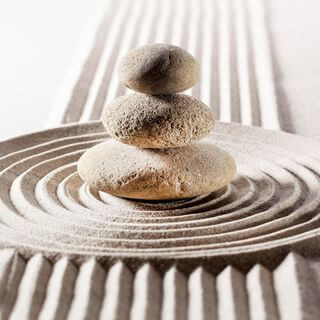
Now there are people who've likened it to having a handful of sand.
If you want to keep sand in the palm of your hand,
Squeezing it tightly with your fist will just cause that sand to spill out and be lost.
Just like trying too hard to force a pose can often lead to discomfort or even injury and put us back where we started.
So if your yoga is all about the physical,
You might like to think about incorporating other aspects of yoga to get even more from your yoga practice.
Next time you step on the mat,
Keep in mind the words of,
Patanjali,
Yoga is the settling of the mind into stillness.
It's not the gritting of the teeth and the grimacing to link your hands in cow face pose.
Let's try and find some of that stillness because apparently it's really nice.
Please remember to hit subscribe and if you'd like to contact me,
You can through my website,
EQYoga.
Co.
Uk.
Thank you so much for listening.