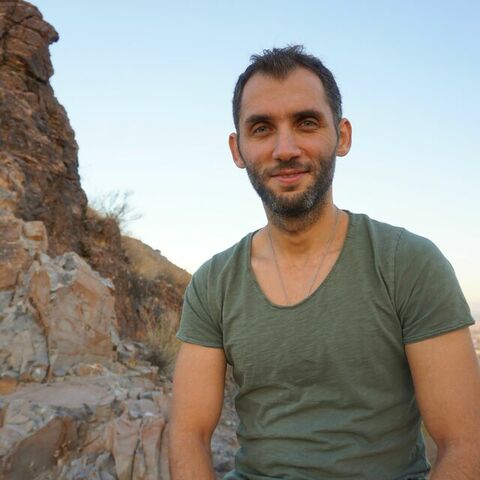
This is episode 176,
Smile for Success with Will Revak of oralwellness.
Com.
My name is Tudor Alexander and this is the Dance of Life podcast.
Every week,
My goal is to inspire you to take action towards what you love,
Live a transformed life and enjoy the journey there.
Are you ready?
Let's go!
What's up everybody?
Thank you so much for joining me today on another episode of the Dance of Life.
My name is Tudor Alexander and I will be your host.
You know,
Today we have an amazing,
Amazing guest,
But first I wanted to see if you knew this because this was really surprising to me when I learned it.
97% of all cancers have a causal relationship to the mouth,
Teeth,
Jaw and tonsils.
That's by Dr.
Joseph Issel,
A famous integrative oncologist.
And that quote really gets you present to how utterly important it is to have good oral health and an oral health routine is part of your own health puzzle.
You know,
Oftentimes we don't really see oral health on the same plane or significance as something like,
You know,
Taking your supplements or taking care of your digestion or mental health.
But in reality,
Especially with this quote from a very influential figure in medicine,
Almost all cancers have something to do with a disorder in the mouth,
The teeth,
The jaw,
The tonsils.
And now that sounds,
At first it sounds really crazy,
Like how is that relationship even possible?
But as you'll learn in this episode,
You know,
We could probably talk for another three or four hours on this stuff.
But in a short hour,
We're going to be diving into some really interesting stuff about your oral health and how it relates to every part of your body from your digestion to your mental health,
Your mood,
Your stress levels,
Your survival rate from all kinds of serious illnesses.
A lot of really cool stuff in this episode.
Today,
My inspiring guest is Will Rievack.
He's co-founder of oralwellness.
Com.
That's spelled O-R-A-W-E-L-L-N-E-S-S.
Com.
And that's a company that supports the community in navigating the path to optimal oral health.
They're rooted strongly in holistic principles.
And Will and Susan,
The founders,
Believe that health begins in the mouth and that creating optimal oral health plays a direct role in the creation of a healthy life.
Their accomplishments include creating a holistic oral health product line that touts happy customers in over 75 countries around the world,
Producing free video tutorials to help people learn about how to care for their oral health,
And a free series of expert interviews with experts from around the world on oral health.
You can follow them on social media at oralwellness,
O-R-A-W-E-L-L-N-E-S-S,
Or simply go to their website,
Oralwellness.
Com.
If you guys check the blog post for this episode,
There's going to be a special link there where you can get a ton of free reports,
Free downloads,
Some video series,
And also a 10% off coupon that you can use on anything you order from them.
I've personally used Oral Wellness now for about a year and a half,
Or probably more actually,
And I absolutely love their products.
They've done a phenomenal job researching everything that they create,
Everything they produce.
They're super informative with their video tutorials on how to brush your teeth,
How to avoid cavities,
Degradation of your enamel,
How to keep optimal flora in your mouth,
You know,
Happy,
How to avoid bad breath,
What to eat,
What not to eat.
There's so many wonderful things there.
You know,
Guys,
I can't stress enough.
I hope that after you listen to this episode,
You'll be inspired to really take care of your oral health.
You know,
For me personally,
It took a lot of work in the sense of I had to get a lot of dental work before I woke up to the fact that,
Oh my gosh,
You know,
These are the only teeth I get this life,
So I better take care of them.
And it's not just about teeth,
There's so much more that I hope you'll learn from this episode about tooth alignment and how it relates to your meridians and your health and root canals and all kinds of stuff.
So really super,
Super exciting.
You know,
Today we're talking about smiling for success.
And like I said,
Oral health is a huge part of your daily health routine.
And I've known about Will and Susan for,
Like I said,
About two years now.
So my goal is to introduce you guys to a practice,
A new practice in your life that will hopefully impact the rest of your health routine.
Health is going to be a big part of the podcast this year.
I'm really looking forward to researching more on all manner of things in health,
Biohacking,
You know,
Looking at taking control of our health for optimum energy and wellness because that is a huge part of living a created life,
Right?
Taking action towards the things that you want is a little tough when you're not healthy.
So health is the number one pillar.
And oral health,
As you'll soon find out,
Is,
If anything,
Probably right up there because it causes and is related to everything else.
So super excited to jump into this episode with you.
A lot of good stuff in this.
Make sure if you like this episode to subscribe.
And if you find this useful,
If you know anybody in your circle,
In your family that's dealing with a lot of oral health issues,
Send them this episode.
Share it with them.
You know,
You never know the difference it could make in their life and their ability to take action to learn some new techniques.
I learned that I was brushing my teeth wrong and at the wrong time,
You know,
And it's not going to kill you today.
But over the course of 10 years of doing the wrong thing,
It's going to add up to some serious consequences later.
You know,
So little tweaks like this over the course of a lifetime make a huge,
Huge difference.
So you never know the difference you can make for somebody right now by sharing some information with them.
It's free,
Costs you maybe 20 seconds,
And you could change somebody's life.
So if you like this episode,
Also let me know.
We can definitely do some more of these.
Share your biggest lesson that you got out of today.
I'm really curious to know.
At Instagram or Facebook,
You can find me at Tutor Alexander Official.
And with that,
Let's rock and roll.
It's time to go smile for success with Will Revack.
Will Revack,
Welcome to the show.
Today we have an exciting,
Exciting episode to share with you.
My name is Tutor Alexander.
I'm your host for the Dance of Life podcast.
My awesome and inspiring guest today is Will Revack of oralwellness.
Com.
What's up,
Man?
How are you?
Thanks so much for having us,
Tutor.
It's a real exciting time to come here and talk to you.
Dude,
I'm stoked.
You know,
We were just talking a little bit off the air here,
But health is – or dental health is such a big part to the health puzzle.
Especially,
I think,
Today with all of the things that we have access to in our diet,
In all the chemicals and stuff that are in our environment.
But most people don't realize that it's such a big part of health,
Isn't it?
Like a big part of the puzzle.
Absolutely.
You know,
What Susan and I have realized through the years is that our culture – and I would say it's a global culture for the most part – but our culture has this,
What we call a mental disconnect,
A psychic disconnect with our mouths.
In other words,
We eat well.
Those of us people on your podcast and whatnot are aware of the effect of food on diet,
On the health.
We eat well.
We exercise.
We,
You know,
Whatever,
Manage our thoughts.
We maybe even consider products that we put on our skin.
But what about what's going on in our mouths?
So there's this disconnect that we have that that's really our mission and our focus with oral wellness is to help people heal this mental disconnect and realize that what's going on in the mouth has a huge impact on the rest of the whole body.
Why do you think that there's that disconnect?
Has it just been like culturally not – are there – let's put it this way – are there any cultures,
Obviously in the world outside of the U.
S.
,
That have less of a disconnect in their approach to mental health?
Or is that pretty universal around the world?
Yes and no.
So there are some cultures,
You know,
Particularly the Asian cultures are more holistic paradigm.
And so they are raised within the mentality of this idea that the body is one whole.
Okay,
So if you live in a paradigm of holism or a mentality of a holistic paradigm,
Then you're going to be less likely to have this mental disconnect.
However,
We also think that it's kind of an ubiquitous human situation because even though we all use our mouths every day,
We can't really effectively see what's going on in them by ourselves easily.
It's like,
You know,
You can look at your nails and be like,
Oh,
I got a little bit of a cuticle issue or a chipped nail or whatever,
Right?
But how do you do that to your own mouth?
And so there's this surreal experience.
And so unfortunately the industry has kind of capitalized on that,
The dental industry,
And like,
Well,
You're dependent on us to tell you what's going on in your mouth instead of being able to look for yourself.
Yeah,
It's almost like the feedback is not as obvious.
Exactly,
Exactly.
Yeah.
It's a broken down feedback loop because why?
Well,
How many of us really get in the mirror and like,
Okay,
What's going on in there and figure it out?
Yeah,
It's more like,
You know,
Even with brushing,
I think up until recently in my own life,
Until I learned how to brush and especially even reading some of the articles that you guys have created on brushing,
Timing and all these useful things,
Like I was just like,
Okay,
Let me just get rid of this.
It's not even,
It was just like something you do in the morning and at night just for like a minute and then just get it over with.
It wasn't like all these different things that,
You know,
They're part of dental health,
Like remineralization and whatever else,
All the things we can talk about.
But yeah,
It's interesting how that's a cultural paradigm.
But yeah,
You know,
You mentioned the Asian traditions and you look at the Asian cultures.
I'm pretty familiar with that myself.
I've done a lot of like acupuncture and,
You know,
Chinese medicine and all stuff and the meridians.
And it's interesting because if you go to an osteopath or any functional medicine doctor,
They're,
Like you said,
The approach is looking at the whole body as a one system.
They take into account the meridian points around the teeth,
Right?
That's correct.
And how they each,
I remember learning about how each tooth is related to a certain organ.
Correct.
And even just the position of your teeth,
If it's slightly off.
Yep.
It can affect the nerve signals to that organ,
Which can cause disease in the long term,
Which is like crazy to think about that.
Like,
Didn't you,
That quote that you gave in the beginning was about,
What was it from the oncologist,
Joseph Issles?
Yes.
Like 97% of all cancers have a causal relationship to the mouth.
Like,
What is,
That's crazy.
Right.
What is that about?
So if you think about that,
A lot of people are just like,
Oh,
Okay,
Whatever.
But if we think about the fact that Joseph Issles was an integrative oncologist,
So a holistic cancer doc,
Back in the 20th century,
Last century.
And he was very much a scientist and scientists do not flippantly throw around the term causal relationship.
You can go to studies all you want on PubMed and they'll talk a lot about correlations,
But to say causal,
It puts a big emphasis on that for me.
Yeah,
Like,
So Issles is saying 97% of all cancers have a causal relationship to the mouth,
Tooth,
Jaw,
And tonsils,
I think is the full quote.
So what the heck does that mean?
Well,
That means the mouth is a critically important component to the health of the whole body.
And of course it is,
You know,
If we just stop and we just kind of step outside of our mental disconnect paradigm that we are in,
Then we go like,
Wait,
Let's think about this.
Okay.
70,
80% of the immune system is in the gut,
Right?
Is in the mucosal lining.
They're exogenous bacteria.
It's a microbial community that is living in and on us.
It's not actually our bodies,
Right?
Okay.
What's at the very beginning of this microbial community?
Our mouths.
The mouth,
Yeah.
Okay.
So this is the headwaters to the whole river of our immune system that runs through our system.
It is hugely important.
I've interviewed people from around the world,
Experts,
And they,
You know,
Like dentists who literally wrote the book on root canals and root canal therapy,
And they have lost,
They've told me that they've lost count of the number of patients who came to them,
Said,
You know,
Mostly women,
I have breast cancer,
And they extract a root canal on the same side of that,
Of the cancer,
And the cancer diminishes.
Wow.
Really?
Yeah.
Well,
Hands down.
Why?
That's crazy.
Well,
Because root canals,
They're not all terrible,
But it might be wise for a person to consider to have them very closely looked at because they become a chronic inflammatory issue for people.
Yeah.
And they just drip inflammatory cytokines.
They drip inflammation in the body,
And what we all know now is that inflammation is the root of all disease.
Yep.
That's crazy.
You know,
I heard,
I was actually talking to a friend recently that I was catching up with,
And she was telling me about this biological dentist that she met here in town,
Who apparently was a pretty big deal guy.
He like won a lawsuit against the dental board.
Wow.
Because they were trying to sue him for using all these non-traditional methods and stuff,
And then he ended up actually winning the case,
And he was telling her about a case,
You just reminded me of this with your story,
About a guy who had like pancreatic cancer,
And who was like,
It was inflamed,
And you know,
They were surgery and all this stuff,
And so he went to this dentist.
And for some reason,
There was some correlation there,
But he went to the dentist,
Had him address the root canals and basically clean that up and take it out,
I guess.
And literally within maybe a week or even sooner than that,
I don't even remember the exact time date,
But his pancreas,
Like there was no more issue.
So it's like,
That was just mind blowing to me.
I mean,
Because I have a couple root canals too.
I'm like,
Man,
You know,
Maybe I should get these taken out now or something.
Right.
So let's take a look at that since people that are listening to your show here are maybe feeling a little bit uncomfortable with this idea.
So we wrote a blog post that talks about a tool that is commonly actually used in alternative diagnostics for early detection of breast cancer,
Most commonly.
It's called thermography.
It's using thermal imaging.
And a person who uses thermography can identify heat signals on superficial body tissue.
So obviously breast tissue,
It works very well on.
They've also found that it works very well on the face.
And so what a thermographer can do is do a scan of your face and identify,
Is there a heat signal?
Is there chronic inflammation?
Chronic because inflammation brings heat,
Right?
Right.
Yeah.
So is there chronic inflammation at one of those teeth?
And I believe that that's a very low invasive,
You know,
Low risk way to identify if one of these teeth,
Root canals,
Is being a pesky situation on your immune system.
Wow.
Interesting.
And even if it's now,
Let's say you have no pain,
It could still be creating the inflammation.
Oh,
Absolutely.
So that's where that,
Does a dentist do that or where do you get that done?
No,
There's thermographers in your town for sure.
They just aren't mainstream.
That's an actual profession?
Like I've never even heard of that actually.
Yeah.
I can send you a link to an association of people who does this.
Yeah,
We can put it in the blog post for this.
Yeah,
Yeah.
I mean,
And we can give you a link to the article too that talks about this idea of using thermography to,
For early,
You know,
Just to identify pain points because unfortunately the solution to a person who has a root canal that is causing them issues is not one that any of us want to face because obviously root canal therapy is there to help us keep a tooth in the head.
But,
You know,
I could go a long time on this subject actually too,
As far as the implications of root canals and the experts that we've interviewed and what they've found in them and just,
I'll leave it here.
The bottom line is this,
If a person has a root canal,
Well,
Let's go about another way.
Dentistry is the only medical profession that would ever consider leaving a piece of dead tissue in the body.
So a root canal is dead,
Right?
It's cut off the blood flow,
It's cut off the nerve flow to it.
It's a dead tissue.
But unfortunately,
Because of this mental disconnect that we discussed earlier,
We think of them basically as just like tiny rocks or something.
Yeah,
They're objects.
They're objects,
Exactly.
But it's actually living tissue until we stop that flow to it,
Right?
And if we stop that flow to it,
Now it's dead tissue.
Well,
What happens if like,
You know,
Your finger is dying and it dies and you leave it there,
It's become gangrenous,
It rots,
Right?
And it becomes a tremendous breeding ground for inflammation.
So,
You know,
I don't want to scare anyone with that type of description,
But essentially that's what a root canal is.
Now,
Some people's immune systems can stay on top of it better than others.
Other people find that it undermines their health,
You know,
And it's a slow,
Chronic,
Silent burn that can definitely cause issues.
Other than thermography,
Are there any good markers that you can kind of keep tabs on and see how your body's responding to it,
Like with inflammation?
Yeah,
I mean,
Some dentists,
You know,
If you go to a biological dentist,
The one that,
You know,
We'll talk about it afterward and see who you're talking about,
I can give you my opinion of them.
Some dentists will use what's called a cone beam or a 3D imaging technique.
It's a 3D x-ray system.
And it gives a much,
Much better picture of what's going on as far as any infections in the jaw around a tooth.
So that can be used.
Yeah,
Cone beam.
3D x-ray,
Essentially.
Interesting.
Yeah,
I had a,
Actually recently this year,
Like maybe about two months ago,
Well,
At the time this episode is going to post,
It's going to be 2020,
But in the fall I went and had,
And the funny thing is this happened by accident,
So I'm so lucky that they discovered it.
I had a root canal,
Believe it or not.
Yeah,
A root canal.
And then what happened was I actually went into the dentist for something totally different.
And then they discovered that through an x-ray that maybe the top of it might be a little bit something going on.
So I ended up having to go to the like oral surgeon,
I think,
Where they drilled on top of the tooth,
Like through my gum.
I mean,
It sounds pretty nasty,
But they had to drain it.
Right.
Yeah,
Because it was infected,
You know,
And then they filled it up with more stuff.
I'm like,
Oh my God,
And I didn't even know like it wasn't,
It wasn't in pain.
Yep.
But you know,
Like I've heard a lot of things like with the bacteria that can infect your teeth also can infect the lining of your heart and all that kind of stuff.
Absolutely.
So what you had is called a periapical abscess.
So it's an infection at the base of the tooth,
At the root of the tooth,
That's under the gum line.
We don't get to that through oral hygiene.
Yeah.
And you said it was around a tooth that had been root canaled,
Right?
Yeah.
Yeah.
No surprise there,
Unfortunately,
Tudor.
So here's the thing,
Okay,
If the way that we approach holistic oral health is really kind of a two pronged approach,
We do our best to address issues locally in the mouth,
Utilizing products and techniques that,
A,
Have either been proven by the test of time or have a holistic formulation mindset behind them.
But then we also approach it from a standpoint of a whole body system.
Okay.
Now,
Since we can't get to the apex of that tooth root to be able to treat it from an oral health standpoint,
From an oral hygiene standpoint,
Then we have to come systemically.
Now,
What can we do for that?
You know,
The sky's the limit.
You know,
You can look at your diet,
You can look at your stress levels,
You can look at supplementation.
I mean,
It depends on the level of insult on the person's system.
But something as simple as just ramping up your vitamin C can knock that back.
You know,
Just cooking out an infection.
You know,
Anything that we can do to kind of rev up the immune system because really,
All we need to do is get the immune system over the hump and be able to like,
Hey,
Now we can take care of this.
So,
It's so interesting.
I mean,
Even like with bite alignment,
I was looking into that for a little while to get,
I mean,
Obviously here,
Like the Invisalign and stuff is a little bit expensive.
And I realized that insurance doesn't cover like going to the orthodontist and getting it,
You know,
Getting it taken care of.
So,
Even though my buddies and orthodontist still ended up would cost me a pretty chunk of change.
So,
But what do you think about that?
What do you think about aligning the bite?
Because I've been to,
For example,
My functional medicine doctor.
He's like a hardcore osteopath and stuff.
And he was like trying to get my teeth just a little bit aligned,
Like even just tiny tweaks,
You know,
They work in the mouth and the palate because all these different things that we were just talking about.
So,
What's been your experience with that,
With bite alignment?
Right.
So,
There's a couple of points I want to touch on here.
First,
You mentioned the idea of the various different acupuncture meridians of the body that relate to internal organs impacting and relating to teeth in our mouth,
Right?
So,
You know,
Some teeth will relate to the heart,
Whereas some teeth will relate to the lungs or the liver or the spleen or whatever,
Right,
Around the whole palate.
So,
We wrote an article several years ago saying that can a routine filling cause whole body health implications down the road?
Now,
This touches on the idea of bite alignment.
You know how when a dentist,
You know,
You get a filling,
An occlusal filling on the chewing surface and the dentist says,
Okay,
And he puts a piece of what's called disclosing tape in your mouth and says tap,
Tap,
Right?
So,
They can see where to kind of,
You know,
Drill down a little bit so that it matches your bite.
Yeah.
It's really,
Really important for anyone listening to take your time,
Remember that you're the MVP,
You're the most valuable person in your health and oral health journey.
And so,
When a dentist wants to rush through this very important step,
Do not let them do it because if that tooth filling does not get properly seated,
Does not get filed down enough,
Then that pressure is going to affect the tooth opposite it.
And now you're going to be causing irritation to the meridian system and the internal organ opposite that tooth long term.
This is bad news.
Okay,
So this relates to tooth,
To bite alignment.
Now,
If you want to take it another step further,
Last month,
Susan and I went to an event,
It was a biological dentistry event and showcased the company there.
And a lot of the people there were talking about expanding our dental arch and they're talking about sleep issues.
Now,
Let's back up and look at whole body health.
Okay,
Whole body health has a lot of different components to it,
Right?
Sleep is important,
Lifestyle is important,
Whether you're relaxing,
You have meditation or prayer practices to be able to keep the body in a state of rest and digest instead of fight or flight all the time.
All these are important components.
Sleep is hugely important.
Sleep is the restorative function,
Right?
So,
A lot of these dentists were talking about the impact of our dental arch being slightly narrowed and that affecting our airways and creating a moderate level of obstructive sleep apnea,
Disrupting our sleep.
Okay,
If we disrupt our sleep,
We're punching holes in our ability to maintain optimal health.
So,
The dental arch being like the roof of your mouth or like?
Actually,
In both directions.
So,
The upper palate is really like a dome,
Right?
Your dental arch is between your,
So it's both the teeth,
The arch of the teeth from your back most molars to the front.
So,
Those create an arch from your front teeth going back to either side.
So,
You have two dental arches,
Right?
And then you also have the dome space,
Which is the upper palate region.
So,
They're talking about the horizontal dental arch affecting sleep apnea.
They're talking about pushing your molars out slightly,
Expanding the actual,
The structure of the face.
Wow.
We're talking about expanding it slowly.
So,
Rather than orthodontics,
In a traditional orthodontic sense,
What you're doing is you're actually moving the teeth in the jaw.
So,
It's weird to think about it,
But our bones are not solid.
Our bones are porous and they're supple and they change.
So,
What orthodontics does is it puts a pressure against a tooth or teeth at once.
And it kind of,
By putting the pressure there,
It kind of liquefies the jawbone around the teeth roots.
And then the teeth shift and then they stop moving the teeth and the jawbone solidifies and now that's your new positioning of the teeth.
Wow.
Incredible.
This is different.
Okay,
This is now actually talking about expanding the jaw.
And by expanding the jaw,
You actually create more space in the airway to where you no longer,
You know,
Obstructive sleep apnea,
I believe,
Tudora,
If we can,
You know,
Kind of predict the future here.
I think it's going to be a gigantic,
It's a huge elephant in the living room for our culture.
Why do you think,
Why do you think it's such a huge elephant in the living room?
Well,
For a couple of reasons.
You know,
Part of it is this mental disconnect.
Part of it is an over compartmentalization of the medical and science fields,
Right?
The dentist is a tooth doctor.
The doctor doesn't deal with the mouth because that's a dentist's zone for the most part,
You know.
So then your dental arch affecting your airway,
Who is the specialist that deals with that?
So that's part of it.
And another part of it is.
.
.
It's kind of like a problem that gets left behind doing all the separation.
Exactly,
Exactly.
So because of over compartmentalization,
We get,
We lose sight of A,
The holistic component,
As well as B,
What about where this field almost overlaps that field,
But we drop a couple.
But in this case,
It's a big,
Big deal because without restorative sleep,
There's no hope of living a healthy life in my opinion.
Oh yeah.
I mean,
I actually,
I have,
I mean,
Occasionally I have obstructive apnea.
And it's funny,
I recently,
When it first happened to me,
I was like,
I think I was in college and I,
Every time I lay on my back and I sleep on my back,
It usually happens.
And you wake up and you're like,
You can't breathe.
And oh my God,
It's like the scariest thing in the world,
You know.
And recently I took a genetic test,
Like,
You know,
You get your genes and sequence and stuff.
Sure.
And it told me that apparently I have higher odds of dealing with this issue.
So it's fine when I sleep on my side,
But man,
I know exactly what that's about.
But now that you're mentioning that,
It's like,
Holy smokes,
I wonder if all,
Especially I've had a ton of work,
Like all these,
I'm sure like everybody else,
These tiny little cavities around the mouth that every time they go in there,
They're moving something with all the pressure and hitting and stuff.
So that's fascinating.
Wow.
So get this,
Okay,
Since this affects you,
And I think it affects a lot of us,
Basically here's the thing,
We can't really effectively diagnose this ourselves.
Our partner can,
Somebody sleeping next to us can,
Because if we snore on a regular basis,
That's obstructive sleep apnea.
Yeah,
There's no way to know if you're doing that.
Right,
You just,
We're unconscious.
I mean,
You know,
Once you get tuned into it,
Then you're like,
Wait,
Now I'm having an apneic event like your experience and what you described.
The dentist is the person to really,
Dentists can't legally diagnose sleep apnea,
But the dentist is the one to spot it,
Because here's why.
In dentistry,
There's,
It's very obvious for a dentist to be able to spot what's called bruxism or grinding the teeth.
Okay,
And for a long time it was thought like,
Oh,
Bruxism is because you're stressed,
You're living a modern lifestyle,
Whatever,
And what they've come to realize is that people who grind their teeth at night are grinding their teeth as part of a sympathetic nervous system response to shake them out of that apneic event.
Really?
Yes.
Wow.
If you think about it,
An apneic event is you're suffocating,
Right?
It happens at the bottom of the exhale.
Yeah,
Your body's freaking out.
Right.
And so two things happen.
You go into major fight or flight,
So you get an adrenaline rush,
Which,
What does that do?
That creates adrenal fatigue if it's happening to you multiple times a night.
Wow.
So you slowly lose your body's,
Your body slowly loses its capacity to really mount an immune response because it's just dog tired.
Okay.
And on the flip side,
Then you get the experience of,
So you have an apneic event and not only does it stress your adrenals,
But your teeth are going to,
You hurt your teeth and clamp down.
The body's sympathetic nervous system does this naturally to clear that airway.
Wow.
That is fascinating.
Holy smokes.
It's a,
You know,
Yeah,
That's why we're so passionate about this because the bottom line is we don't,
We don't connect the dots in our culture.
Now it's coming,
You know,
Functional dentistry is coming around and there's people,
There's dentists talking about sleep apnea.
So it's happening.
It's definitely moving.
And I think especially with the internet and resources such as yourself,
I mean,
You guys are doing a lot of really good work.
It's kind of giving,
I think these days,
Especially with health,
You have to be your own doctor and researcher to some degree.
Obviously,
You know,
It's important to have people you trust that are professionals,
But one thing I've noticed in my own health journey is just,
You have to like really take your health into your own hands,
Do the research,
You know,
And be informed because you can't just place everything in somebody else's hands.
You know,
You have to really connect the dots yourself.
I 100% agree with you.
Absolutely.
We have to be the MVP,
The most valuable person on our health journey because no one else can do that for us.
With the mouth,
Really quick with the mouth expanding thing that we just talked about,
Is that something that a regular orthodontist did or is that like a biological dentist will know how to do that?
Like how do you even get that done?
Yeah,
A regular orthodontist is not going to be affecting the dental arch.
They're going to be talking about straightening teeth.
Mostly what they're doing is cosmetic.
It's important for an oral hygiene factor.
You know,
If your teeth are really misaligned,
It makes it more difficult to keep them clean.
But above that,
It's not really.
So where would you go,
I guess,
To quote unquote optimize your bite,
Your mouth shape?
Yeah,
So there's a couple of organizations that do really good work that kind of categorize different areas of fringe dentistry.
So the IAOMT,
The International Academy of Oral Medicine and Toxicology,
IAOMT.
Org is great to find a dentist that,
For example,
Is using biocompatible materials or knows how to properly remove mercury amalgams and not totally thrash your nervous system with it or utilizes ozone gas in dentistry,
Which is hugely beneficial.
There's another one,
The IABDM,
The International Academy of Biological Dentistry and Medicine.
They talk a lot about sleep apnea.
And then there's the Holistic Dental Association as well.
So any of those organizations would be a good starting point to find someone who is going to be able to address the bite issue,
Not just from an orthodontic standpoint,
But from expanding the sleep airway.
That is fascinating,
Man.
I'm gonna have to look into that.
That sounds really interesting.
And I guess pretty much they're going to list every state and you can just look it up just like a normal.
.
.
Exactly.
Like the way the insurance has it.
That's cool.
I'll have to look that up.
Yeah.
How did you guys get started with this whole journey?
I mean,
How long have you been doing oral wellness?
When did you start with this?
Well,
We officially started the company in 2009.
2009,
Oh,
Nice.
Ten years.
Yeah.
However,
We've been at it a lot longer than that.
We just didn't have the company name,
If you will.
My wife,
Susan,
Many,
Many years ago now,
Probably 25 years ago,
Was diagnosed with advanced gum disease called periodontal disease.
She'd always gone to the dentist.
The dentist that she had gone to for several years was kind of a conventional drill and fill dentist and wasn't really addressing gum health.
And so did not warn her,
Didn't realize,
I don't think,
That she was having gum disease developing.
So went to a new dentist,
Moved to a new town,
Went to a new dentist and the dentist said,
Ooh,
You've got severe periodontal disease.
And it got really sober in the room and handed my wife a brochure that basically said,
You know,
It's time to go get dental surgery and spend tens of thousands of dollars.
Geez.
And my wife being very self-directed and has,
For as long as I've known her,
Not taken what a person in a white coat has to say as the gospel.
Right.
You know,
She's got a very good head on her shoulders to where she's like,
Okay,
Thank you for your input.
You know,
I appreciate the information.
I'm going to,
She knows that she's the MVP of her own journey.
So she took it on her own hand and treated her mouth for a year with at-home solutions and,
You know,
Techniques that we teach now in oral wellness and went back to the same dentist.
And the dentist was totally perplexed because in conventional dentistry,
They'll tell you that you can't reverse gum disease.
Okay,
That's just not doable.
So then the dentist is like,
I must have mismeasured last year.
And Susan's like,
No,
You didn't miss measure.
I've been treating this at home.
Let me tell you what I'm doing.
And the dentist more or less said,
I have to go to another room.
I don't have time.
And this put a fire under my wife's spirit,
If you will,
Her rump,
To not let that go.
And so for years,
You know,
Friends or family would say that they've got oral health issues and she would coach them on what she had done.
And then in 2007,
Basically as an answer to prayer,
My wife and I put out like,
Okay,
Where's our home-based business that does no harm,
That really helps people,
That's really fulfilling,
That we feel is just our life's calling.
And it took us two years to wake up to it,
If you will,
And recognize that it was with us all along.
And so we started oral wellness and basically on a wing and a prayer saying like,
We don't know if people are really going to want to hear what we have to say.
And here we are 10 years later with,
You know,
We have happy customers in over 75 countries around the world.
That's amazing,
Man.
No,
I mean,
It's such a,
You guys really do a lot of good work and so informative.
All your articles are amazing.
I've really spent quite a bit of time reading and learning about when to brush,
What,
You know,
What to do.
I actually,
I remember reading an article about kombucha.
Yeah.
I'm not going to drink kombucha anymore.
Have you dealt with any like haters?
I mean,
Oh,
God.
I'm sure you have.
Like,
How is that come because I mean,
Especially with dental health,
You know,
Like,
For example,
There's a lot of things like you said,
That are not yet culturally like the mainstream.
So,
You know,
How have you dealt with,
I guess,
Haters both on a casual sense,
People who aren't experts,
And then how have you dealt with people who,
Let's say they're dentists and they're,
They object to what you're saying that,
You know,
They think it's ridiculous,
Whatever,
Like that kind of stuff.
How's that for you?
When we wrote that article on kombucha,
We got a storm of hate mail.
Of course,
You know,
It generated a spike in traffic too,
Which was kind of a love hate situation because it crashed.
All publicity,
Right?
Yeah,
Except it crashed our host.
So,
Unfortunately,
We really weren't able to capitalize on it in a big way.
But yeah,
We get some hate,
You know,
We primarily get,
You know,
The bottom line is this,
Who do we,
If I have an issue with something or someone,
Why?
It's because I have an opinion that I have formed,
And we all want to believe that our opinions are right.
Right?
So,
People who wrote in about the kombucha article or,
You know,
One of our products has a very high quality of cattle bone powder in it,
Because it's very effective to help remineralization of the teeth and lower tooth sensitivity,
And help basically heal existing decay and protect against future decay.
And we get the vegan hate mail from that,
You know,
And unfortunately,
I don't have a solution yet that is a natural solution for remineralization for people who choose not to use any animal products.
And I respect that if that's the choice,
I get it.
So that's,
You know,
We deal with it because by,
Honestly,
I deal with it by reading testimonials from happy customers.
When we get hate mail,
It's like it sucks.
I don't like that feeling that somebody is really bummed with what we're doing.
But then I have to just go kind of refresh my consciousness with,
You know,
Raving emails and testimonials that we get.
Literally,
We're blessed to get them every day.
From professionals,
It's kind of a different mix.
What we've found,
Like for example,
At this recent trade show that we went to,
This biological dentistry convention,
A lot of dentists or high dentists will walk by and just kind of,
You can just see the scorn on their face.
It's like,
Oh,
Please,
You know.
And then you have others that would come up and we don't know these people and they're like,
Thank you guys so much for being here.
I've got a tab open on my computer and I show my patients about your guys' site every day.
So the industry is coming around to realize the holistic nature,
But it's the nature of the beast.
When we become highly educated in something,
We think that we know it.
So rather than stay in this student's mindset of being curious,
Like,
Okay,
I know what I know,
But maybe what I know really isn't so,
And what else is out there as far as knowledge and information?
So we really embrace the idea of a student's mindset.
We're always open to new information and researching.
And we think we have a pretty solid model when it comes to how demineralization,
How cavities occur,
And how to reverse that situation.
What's been the biggest thing you've learned this year,
2019?
I mean,
That's a pretty open question,
But I can answer it however you want.
I continue to learn.
Impatience is an old friend of mine,
Is an old teacher of mine.
So on a personal level,
I continue to learn that as an entrepreneur,
I have to manage my own stress levels and walk my talk if I'm going to be able to optimally serve those in our community.
As far as on an oral health level,
There's a lot of new emerging tech coming out that's very exciting to us as we geek in this holistic oral health realm,
Because of situations in conventional dentistry that oftentimes lead to really no good answer.
Like,
Okay,
I have decay,
I have to get it filled.
They put an amalgam filling in my mouth,
Which is 50% mercury,
Which is the most potent toxin known to man in my mouth that off gases 24-7.
That's like the stupidest thing.
Why did they,
Just to cut you off really quick,
Sorry,
But why did they ever decide to make mercury as a filling in the mouth?
That seems so ridiculous to me.
Well,
Okay,
So they started doing it around the Civil War.
Oh,
Wow.
So 150 years ago,
Mercury is a very malleable metal,
So it's easy to work with.
It's not like you have to have a forge to heat it up and like gold to be able to form a filling or a crown prep.
Mercury is very malleable,
So they would mix it into what's called an amalgam,
Which is simply a fancy word for an alloy,
A mix.
And you mix the mercury with some silver,
Some dentists unfortunately still call them silver fillings.
That's such a green wash,
But mix it with silver,
Tin,
A little bit of nickel,
And create an amalgam now that you can smash into a filling prep and it's going to stay put.
Wow.
The problem of course is that now we have more sophisticated technology that shows us that mercury leaks from mercury fillings and it's an extremely potent neurotoxin.
Wow.
So there's tremendous implications of mercury,
And I think the American Dental Association is in a really tight spot because as Europe,
The European Union has outlawed the use of mercury amalgams.
Wow.
They don't,
Right?
They're recognizing the impact.
So what does the ADA do?
The ADA is like,
Because if we admit that it's a problem,
Then we've got a humongous issue on our hands of people saying,
Well,
How long have you known?
And they're going to come snooping on us.
Right?
So I believe what they're doing is they're just slowly letting it die off by,
Because most dental colleges now don't teach amalgams.
They're teaching the biocompat or the,
You know,
At least various different composite resin materials,
The white filling materials.
So anyway,
The new tech that I'm excited about that we're really like,
Wow,
What's the possibility of this is the emerging stem cell research.
You know,
I think that it's a very real possibility to imagine,
To dream that,
You know,
In,
I'm going to throw out there and say five to 10 years,
You could have those root canal teeth pulled and they could let the area heal over and make sure there's no infection there and then plant some stem cell seeds,
If you will,
In that area and it would regrow new teeth.
That's amazing.
Yeah.
I've heard a little bit about that.
That's exciting.
Yeah.
I don't think it's that far off.
Yeah.
And it's not that far off either.
I remember I talked to a,
There's a,
I know a guy here who actually heads a big stem cell research facility and they do not necessarily for teeth,
But yeah.
Just all the stuff that's possible,
Stem cells in the next,
Whatever,
Like you said,
Five,
10 years.
That's,
Yeah,
That's exciting.
But now here's the question though.
It's not really,
In many ways,
The modern dental industry is set up just like the pharmacological industry.
They don't make any money if you're,
You know,
If you're healthy.
So how do you see that playing out?
I mean,
Is it going to be mostly offered by biological dentists?
Is the FDA going to really try to prevent it from being approved as a mainstream therapy because of lobbying on the part,
You know what I'm saying?
Yeah.
Yeah.
So if we look at what the industry has done with implants,
I think we can see a model of how they'll handle it.
Okay.
When implant technology came around,
Traditional bridge work was the way to go.
If you had a tooth pulled,
Then what they would do,
A dentist would file down the two adjacent teeth and then build a bridge across it.
Okay.
Well,
There's inherent problems with bridge work in and of itself.
We don't need to get into that now.
But when implants came along,
Implants are now the new darling of the dental industry.
So,
Oh,
Here's the answer.
We don't have to do traditional bridge work anymore.
We can put a tooth in for you.
So that's kind of,
I think,
I hope that that's the route that it'll go because we're not fans of implants.
I don't think that it's a wise idea for the most part,
Especially the materials that the lion's share of implant dentists use.
So,
You know,
You're kind of throwing out one bad choice for another,
But with stem cells,
It's with your own body's tissues.
And it would just be a very,
Very different thing,
I believe.
Now,
Are there going to be problems with that that we realize?
I don't know.
Maybe,
You know,
I mean,
The bottom line is that there's no getting away from the fact that we cannot remove ourselves from the consequences of our actions.
If we don't take care of our health,
Our teeth are going to break down.
With implants,
Do they put,
Are there chemicals that they're using?
And I've never had an implant,
But is there,
What are the issues with implants?
Well,
Most of the implants that are used,
The technology or the materials that they use is titanium.
They put a titanium rod,
They implant that into the gum,
Or excuse me,
Into the jawbone and let that stabilize,
That the jawbone get used to that.
They basically screw it into the jawbone.
It's gnarly,
But sorry.
And then once the jaw,
Quote unquote,
Accepts that,
Then they put basically like a crown on top of it and it functions as a tooth.
Of course,
The problem is that most dentists use titanium and there's a lot of bad PR on titanium in particular.
The bottom line is that metal's in the mouth.
Okay,
Titanium is a non-corrosive,
Non-reactive metal,
But even within that framework,
It still corrodes and breaks down.
And if you're in the mouth,
What we learned from Hal Huggins,
The modern biological,
The modern grandfather of biological dentistry,
Is that metals in the mouth,
Metals and the mouth don't go well together.
Right,
Our mouths are part of.
.
.
It's a sort of pH and,
You know.
.
.
Exactly.
What happens is we have,
You know,
Obviously our mouths are part of the microbiome,
You know,
One of the microbiome regions in the human body,
So lots of organisms live in there,
And that's normal.
When we put metals in there,
These typical organisms that produce typical toxins that our bodies know how to deal with immunologically now become atypical microbes that produce atypical toxins and our bodies are like,
Our immune system's like,
What's going on here?
And so it's just a curveball at our immune system that's,
Again,
Another inflammatory stressor.
Yeah,
Everything is such a,
You know,
Delicate system,
And when you take one part out,
You can't do that.
Everything has been evolved and created in relation to one another.
Right.
The teeth have a very specific structure and movement and pH,
And it's just so fascinating.
Like you said,
It's not just an object or a tool for chewing down food.
They're living parts of your body with.
.
.
Exactly.
.
.
.
They're living parts of your body.
They're living parts of your body.
They're living parts of your body.
They're living parts of your body.
They're living parts of your body.
Yeah,
And I think even just studying about how xylitol works and how it tricks bacteria from coming out of the pores in your teeth,
Because that's where they like to hide,
So they come out.
Yeah,
That would be the coolest thing,
To be able to just zoom yourself down and to witness this whole.
.
.
Totally.
I mean,
We kind of aspire,
We dreamed of the idea of creating animation videos just to educate kids in particular about this.
Oh,
Yeah,
That'd be good.
Like,
Hey,
Let's go on a trip down inside your tooth,
You know,
And start to heal this disconnect and help people realize,
Because most people really don't get that teeth are alive,
Even that.
I think that's probably it,
Isn't it?
So that we look at our teeth as inanimate tools or objects rather than living,
Porous,
Pulsating,
Moving things that are part of our body.
Exactly.
Exactly.
So we disconnect from it because we don't think it's alive.
Yeah,
Arguably it's not all of our fault because we've been inculturated,
We've been conditioned to that too,
But I think that for the most part,
Conventional dentistry treats our teeth like rocks too.
Yeah.
Really what I want to see is I want to see,
And it's coming,
Technology,
Emerging technology that a dentist could use for filling material prep that would help that tooth regenerate at that site.
So they clean out the decay tissue and then they apply a material that the body goes,
And I've read some stuff,
Some emerging tech on this.
Is it stem cell based?
I don't remember the details of this one.
I don't think this one is.
This would be for a cavity situation.
Yeah,
Exactly.
Because then why?
Well,
Because now that's your body's own living tissue again instead of a filling,
Which is inanimate.
Now you're making your living teeth rocks by having more and more filling put into it.
That's interesting.
I mean,
What do you think with people's approach?
I mean,
What do you think is the common,
The top mistakes that people make?
Obviously,
Like the disconnect is a big one and that leads to a lot of them.
But I'll give you an example of my own situation,
Like with brushing,
Until I read your guys' article on brushing timing and when's the best time to brush and when's a not good time to brush.
I had no idea.
And even before that,
It was so interesting.
I used to eat very frequently in college.
I thought eating six meals a day was the right thing to do.
This is before I knew about intermittent fasting and all this stuff.
But I was eating all the time and I wasn't brushing after that.
I would brush in the morning and at night,
Whatever.
My teeth are objects,
Just do that.
I didn't even think about that.
So that led to a lot of problems.
I had literally 20 something little cavities that I had to take care of over the course of three years or so.
It was a lot of work.
And during that whole period,
I started to pay attention because that's when you pay attention,
When life swings your head against the wall.
Funny enough,
So I'll see where this story is going,
The dental hygienist at the time,
I was like,
Hey,
Why do I have so many little gum line cavities?
What's up with that?
And she's like,
Well,
You had a lot of little pockets in your teeth that were very sensitive enamel.
She's like,
Did you take a lot of antibiotics when you're little?
I'm like,
Yeah,
I had a lot of ear infections.
And she's like,
Well,
That can do it.
There's been some situations where antibiotics,
Especially when you're young and you're forming your teeth,
That can lead to poor enamel that grows.
So basically,
Which makes you more susceptible to cavities.
Then later on,
Like within that same year,
I ended up going to the naturopath or something else.
And long story short,
We were looking into food insensitivities and all this stuff and dairy came up as one of them.
And she told me,
She's like,
Oh,
You had a lot of ear infections when you're little.
All the people that I've treated for dairy intolerance had ear,
There seems to be some sort of correlation between dairy intolerance or immune reaction to dairy and ear infections.
So dairy intolerance leads to ear infections leads to antibiotic usage leads to weak teeth leads to,
It's like,
Holy smokes,
How is all this stuff related?
It just blew my mind.
So until all that,
You have no idea what to do.
So that led me to learning,
Long story short,
Back to the point,
That led me to learning about how to brush,
When to brush and all that stuff.
So what do you think are some of the top mistakes?
Like if you could give,
Let's say three,
Three things that people need to be aware of in their own oral routine.
Obviously everybody's different.
What are some of the top three?
You mind if I go holistic with this?
You go for it,
Man.
Yeah,
Let's do it.
Okay.
So I'll give,
Let's speak on the level of oral hygiene and let's also speak on the level of a more holistic approach.
So we need to get to know what's going on in our mouths.
We have a really simple,
It's a free download off of our site.
We call it the Oral Wellness Mouth Map.
And it's a 15 minute exercise where you're going to sit down with this piece of paper and a pin and a mirror and maybe a string of floss and look around your mouth and take a dated record of what you find.
It does not take a dental license,
A dental hygienist license or to be a dentist to look around and go like,
Wow,
That gum looks really inflamed.
There's something up there.
Yeah,
I'm going to mark that on my mouth map because now I don't have this disconnect in my,
With my mouth anymore.
And I can look at this piece of paper out in front of me and go like,
Okay,
Now where was that inflamed tissue?
I got to pay more attention to that.
You're aware of it now.
You've brought awareness to it.
Exactly.
So awareness is super key.
So that would be really our number one thing is to begin that healing with that,
With the mental disconnect you have with your mouth by taking a date with yourself for 15 minutes and filling out those mouth maps.
Now you had a dated record and,
You know,
It sounds a little bit simplistic,
But Susan and I have said for all along throughout Oral Wellness that how on earth can we get to going where we want to go if we don't know where we are?
We have to know our location on a map in order to begin to chart a course to better territory.
So this mouth map doing,
Taking 15 minutes one time and identifying your location on this map really gives you a very,
Very strong place to be able to start from and figure out what's going on and be able to make improvement.
Now,
That said,
Another piece of the puzzle as far as oral hygiene goes is to stop doing it unconsciously.
Okay,
So we can talk all day long about what toothbrush is better,
What floss is better,
What,
You know,
Electric versus manual toothbrush,
Toothpaste,
Whatever,
But we're staying on a really superficial level of questions with that.
What we want to encourage people to do is to get down into the how and into the why.
So,
For example,
People ask us,
Oh,
What type of toothbrush should I use?
It's like I don't really care what type of toothbrush you use.
We have our preferences.
But what's more important is that you understand how to brush your teeth and even more important,
Why to brush your teeth.
Okay,
So the biggest mistake that people make is that they brush and floss unconsciously.
We call it zombie brushing.
You just scrub away like you shared from your earlier experience.
We all did it,
Right?
Why?
Well,
Because we learned to brush our teeth when we were like three.
It's like we joke around about this,
But like so we all learned to brush our teeth when we were three and then we never revisit that habit that we're supposed to do every day that's intrinsically important to the health of the rest of our body.
Right?
And what other exercise,
What other habit did we learn,
What other strategy did we learn when we were a toddler that we didn't revisit and improve upon our technique?
Right?
It's like do you write checks with a crayon?
No,
Of course not.
Right?
Tying your shoes,
I guess maybe that might be the only one.
Yeah,
That's a good point.
Thank goodness.
But that's not really related to your health necessarily.
Yeah,
Thank goodness it doesn't have an impact on our health.
Yeah.
So we suggest that people revisit the subject of oral hygiene like wow,
Maybe there's a way to brush my teeth like an adult.
That's really interesting.
Yeah,
We talk about getting them out of the zombie zone and getting into conscious brushing and conscious flossing.
Yeah,
Just mindfulness basically.
Be mindful about what you're doing.
Exactly.
And understand the why and the how behind it so that you can utilize whatever tool you're going to use and navigate that well.
Yeah.
So that's really our advocacy on an oral hygiene level.
The third piece that I would throw out there to people,
The third biggest mistake that we make is a very fluffy,
Holistic approach,
But I want to put it out there to everybody listening.
We,
How do I put this,
The toxins that go into our mouths,
Whether they be through food or crazy dental hygiene products that have no place in the mouth or whatever are important.
However,
The toxins and the poisons that we let come out of our mouths in the form of the words that we choose to speak of negative speech and words of poison have not only a poisonous effect on our health,
But they poison everybody whose ears it falls upon.
So our last little bit of advocacy here to navigate this path to greater oral and whole body health is to just,
You know,
Our mothers were right.
You know,
If we don't have something good to say,
Don't say it.
It's sometimes best just to shut our mouths and not speak it.
So,
You know,
I'm not suggesting that we suppress stuff and create,
You know,
Emotional turmoil and that whole,
You know,
Rabbit hole.
What I'm suggesting is that if we feel like lashing out and bashing someone verbally,
Or ourselves for that matter,
That we just check in there.
Like,
You know,
Is this really going to serve anything,
Direction of what I want in my life?
And over time that I believe can really help us just live a happier,
Healthier life,
Which of course then leads to a greater immune response and greater health in the long run.
Yeah,
It's all related,
Isn't it?
It is.
It reminds me of that quote,
I think it's by the Dalai Lama,
It says,
Before you,
It might be by the Dalai Lama,
I'm probably misquoting it,
But it's like before you say anything,
Pass it through three gates.
Is it necessary?
Is it loving?
Is it kind?
Right.
That's like if it doesn't pass through those three gates,
Then don't say it.
Yeah,
And if you find your breathing real shallow in something,
Then it's probably not passing through those three gates stopped,
You know,
Like the idea of take a breath,
Take two breaths before letting that fly can really just kind of ratchet it back.
Man,
This has been so great.
I feel like we could talk for like another two or three hours with this.
That's generally what we find with interviews.
It's like,
Oh,
We didn't even really get into so many components,
But you know,
It's all good.
Well,
We'll post your,
There's a nice link on the blog post for this where people can get more info for those guides,
The free guides on oral health,
The mouth map.
You got some good products too,
Like I've been using the shine and the,
Is it heal by mouth or healthy mouth?
Your choice.
We make that a play on words on purpose so that people can take it wherever they want with that.
What's your favorite product that you guys have?
Wow.
My favorite?
I don't have a favorite.
You know,
I mean,
They evolved over time.
You know,
The healthy mouth blend,
We brought that out originally just to help people deal with gum disease,
But then we started getting feedback from our community saying,
Wow,
You know,
The decay has stopped.
So what we've realized through the years is that the healthy mouth blend is really addressing this,
This ecological complex of the mouth biome on a biological level.
It's addressing the biological component of this complex.
And then shine is,
You know,
Several years later we said,
Well,
Wouldn't it be great if we had a product that helped people just directly support tooth decay,
You know,
Directly support tissue that's decayed and help protect against future decay because we're not fans of fluoride.
Yeah,
Me neither.
Yeah.
And so we came out with shine and so that's really addressing tooth decay from a chemical standpoint.
So we've got a biological product.
We have a chemical product,
You know,
Chemistry based,
Not really chemical.
It's natural ingredients,
But chemistry focused product.
And together they work extremely well to assist people.
I've had some great results with them.
I think they're phenomenal.
So.
Yeah.
Really good.
I appreciate you saying so.
I have,
You know,
It's always funny,
You know,
We,
You know,
We can have,
You know,
Happy customers from 75 countries around the world and have a global community of,
You know,
Tens of thousands of people.
And yet it's close,
It's people close to us that just know us personally that are like the most skeptical.
And I have a friend who is a major skeptic nurse and he's like,
Man,
I got this tooth sensitivity.
I said,
You know,
Give this a try.
He's like rararara,
He's like grumbling.
I said,
Just try it like this and let me know.
And he came back and he's like the biggest convert now,
He's like,
Dude,
That really helped and I've never had anything help stop this sensitivity.
The bottom line is this,
If your teeth are sensitive,
What does that mean?
They're porous,
Right?
They're letting too much in.
So we need to support the enamel.
We need to put up a better shield,
If you will.
Now,
We can't really take the time to get into fluoride now,
But that's the way that conventional dentistry and culture says to do it.
But we don't really see that that's of a holistic paradigm.
Do you have anything coming up as far as new products or anything you're super excited about?
We have all sorts of fun stuff coming up.
We tend to,
We're idea people,
But I can't let the cat out of the bag yet for any of those three.
But we have a product that we're very excited about that's going to contribute to establishing a better microbial set point for the mouth,
If you will,
Just to help create a healthier biome in the mouth.
We're very sustainably oriented,
And so we're looking to reduce plastic impact in the world.
And we believe that as much as we can do that as consumers,
That's great,
But industry need to do it.
So as a company,
As a small company,
Small but growing healthfully company,
We are looking to lower our plastic use as well.
So we're very excited about a product that we're going to be releasing pretty soon that will massively help with that in our industry.
Yeah,
All sorts of fun.
We're re-launching a new product that is for people with advanced gum disease and periodontal disease that has been a long time in coming that we're thrilled about too.
It's all modular educational videos,
And that's never a dull moment around here.
That's awesome,
Man.
Final question for you.
What are you most grateful for right now?
I am most grateful for right now,
I don't have just one,
Peter.
I am most grateful right now to have a project that I'm passionate about that leverages my skill sets and that really helps people in a very overlooked and under considered way.
And I am extremely grateful to have an amazing partner to walk that life with.
That's awesome,
Man.
Shout out to Susan.
Yeah.
Yeah.
Well,
Honestly,
And I'll denigrate myself a little bit here and say that Susan is the brains and I'm the mouth.
I like to research and I have a lot of this stuff off the top of my head.
But a lot of the insights that we have in the company are from either Susan's own personal use and experience or from her ability to listen to guidance and be like,
We should try this.
And that sends me off in a research direction and look in and yeah,
We're a tremendous team together.
That's awesome,
Man.
Well,
This has been an absolute pleasure.
This is awesome.
Thanks so much for having us,
Bro.
It's been a real great time.
All right,
Guys.
Well,
I hope you enjoyed that interview with my awesome guest and friend will reback of oral wellness dot com.
You know,
My goal with this episode is to help you take action and improve your health through caring for your mouth.
I mean,
It's pretty straightforward.
You know,
Will and Susan have done such an amazing job creating a vast,
Vast resource for learning and for self-care.
And I really hope that it can be of good use to you.
It's been a huge use in my own life with the issues that I've had in my own health and care.
And I really wanted to share that with you guys so that you can improve your own health routine,
Your own confidence.
You know,
Smiling and having good oral health is such a big part of our confidence.
We're social creatures.
We interact with our mouths,
But we often don't really take care of our mouths,
As Will suggested through that psychic disconnect in the same way that we take care of our bodies.
So hope you enjoy this episode.
If you want to follow Will and Susan,
Check out oral wellness on Facebook or Instagram.
It's spelled O-R-A-W-E-L-L-N-E-S-S or oralwellness.
Com.
And don't forget about the special blog post for the episode show notes.
You can always find the show notes at danceoflife.
Com slash podcast.
That'll be a list of the most recent show notes.
But on that show notes for this episode,
176,
You'll be able to get a ton of freebie stuff like downloads,
Video series,
And also your 10% off coupon that you can use for anything that you want anytime.
So hope you enjoy that guys.
And you know,
Like I said,
If you really found this episode useful,
Make sure you share it with a friend.
You know,
Everybody's dealing with something with their mouth,
Whether it's a lot of cavities or having root canals or different things and information can change a life.
They really can.
So if you know anybody in your circle that needs to hear this message today about oral health and smiling for success,
Share it with them.
Hope you enjoyed this episode.
Let's remember our quote from the beginning that 97% of all cancers have a causal relationship to the mouth,
Teeth,
Jaw,
And tonsils.
That's by Dr.
Joseph Issles,
The famous integrative oncologist.
And you know,
To me,
What that means is that your mouth,
Although it's not really commonly thought of more than just as a tool for eating or talking,
You know,
That's a huge part of your health.
It's huge.
It is the first point of access to everything else.
So take care of it,
Support it to do its job.
You know,
Give it love,
Give it part of your practice that you do everything else so that you can smile for success for all the success that's coming your way.
Be ready for it with a beautiful smile.
Thank you for listening.
Hope you have an awesome,
Awesome rest of your day.
Tune in next Friday.
That's gonna be Valentine's day already.
My goodness,
Already Valentine's day.
We're going to do a special on the three pillars of having a great relationship.
So make sure you don't miss that.
Whether you're single,
Whether you're not single married,
Doesn't matter.
There's going to be some great principles there.
I'm going to share with you guys on how to create good relationships in your life.
You know,
It's not just about romantic relationships.
All relationships have fundamental things that we want to create an experience with every person we have in our life.
And that's what life is about,
You know,
Living abundant relationships.
So make sure you tune in next Friday for that episode.
And in the meantime,
Remember your life is a dance.
So go out there and dance it well.
For more episodes and weekly content,
Stay connected at dance of life.
Com