Welcome to Tricycle Talks.
I'm James Shaheen,
Editor and publisher of Tricycle the Buddhist Review.
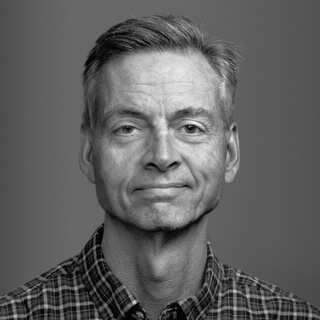
Today our executive editor Emma Varvolukas speaks with Shozan Jack Hobner,
The pen name of a Zen monk who has just written a new book,
Single White Monk,
Tales of Death,
Failure,
And Bad Sex,
Although not necessarily in that order.
The book not only deals with what Shozan calls the human condition,
That would be death,
Failure,
And for some I guess bad sex,
But also breaks down what it was like to be at the center of a sexual abuse scandal at the monastery where he practiced.
His longtime teacher Joshu Sasaki Roshi faced a spate of allegations from multiple former students in the years before he died at the age of 107 in 2014.
Shozan,
As one of Sasaki Roshi's primary caretakers when the scandal broke,
Had a front row center seat to the subsequent fallout.
Now let's listen to Emma Varvolukas and Shozan Jack Hobner.
So thanks so much for talking with us today,
Shozan.
I'm happy to be here.
Thank you for having me.
So death,
Failure,
And bad sex,
That's quite a trifecta.
Yeah,
Yeah,
It's the triple threat.
It really is.
Is there anything else you think you would add now that you're looking back on the book?
Death,
Failure,
Bad sex,
I mean I think that about covers it.
The subtitle was getting too long anyway,
So I'll leave it at that.
It's true.
Well,
So all these topics are not necessarily easy topics to go through or to write.
Do you find that writing about them is a cathartic process for you?
Yeah,
I think so.
I mean,
You know,
The title definitely came after the fact.
My first book that I wrote,
Zen Confidential,
Was sort of the adventures of a rube monk in the monastic world.
After that,
I kept writing essays,
So I don't have a very long attention span,
So I just sort of work on 3,
000 word bursts.
And,
You know,
I found after a few years in the monastery,
The bloom was a bit off the rose.
You know,
You're very idealistic when you first enter the spiritual organization.
And maybe you think it's going to answer all your problems and give you a detour around that,
Some of those deeper things that you went into the monastery to face.
But,
You know,
After a while of practicing,
You realize you have to face them.
And the big,
You know,
Those three topics,
Sex,
Death,
And failure,
Are part of the human condition.
And I found myself writing over and over about them.
So after I had a few essays,
I came up with that title and came up with that theme.
So you mentioned that maybe through practice,
You're forced to face these sort of things that you wish you could kind of bypass.
And then is the writing too a method of facing them?
Yeah,
A lot of times I don't know how I feel about something really important and really big until I begin to find the words for it.
Sometimes it's just a sentence that sounds true that I can't deny.
You know,
It works.
And if it works and I've produced it,
Then I tend to trust it in terms of how I feel about something.
So the practice that I do,
Zen meditation,
Zazen,
It's about many ways quieting the mind and not getting drawn into the sort of gravitational pull of your thoughts.
Sometimes when you're writing,
Something comes up out of that silence and helps you process what you're going through.
And that's what it's like for me when I'm writing.
But there is kind of a push and pull between the silence and the words,
Kind of a bit of a creative tension.
Yeah,
I mean,
The Zen tradition certainly has a little bit of a push and pull with words.
Yeah,
There's and there's millions and millions of words devoted to that effect in the Zen tradition.
Yes.
So you mentioned your first book,
Zen Confidential,
About you being a sort of monastic newb.
How did you come to Buddhism?
I mean,
It goes way back,
But I studied philosophy in college and it was a great book's Western themed program.
You know,
I spent four years studying Western philosophy and didn't quite find a way to live.
There were all kinds of interesting,
You know,
Ideas,
But none of my professors,
I would say,
Were really truly wise.
They were just experts in their field.
So I decided to go to Hollywood and write screenplays.
And through that process,
I found Joseph Campbell.
And through Joseph Campbell,
Somehow I stumbled into Alan Watts,
The great Alan Watts.
And,
You know,
He turned me on to Buddhism and to Zen.
So I studied for a while with the Diamond Way Sangha and then Shambhala.
And then I eventually found Zen Buddhism and became really close with a Zen monk.
And in him,
I found somebody who was sort of a living example of wisdom,
Right in the heart of Hollywood of all places.
That's not where you would generally expect to find them.
Yeah,
I know it was,
I guess that's where you got to look where you shouldn't.
That's true.
So just to come back around to the subtitle,
You know,
Because I've sort of presented this as this difficult book of death,
Failure,
But something that is very clear about anyone who's read your writing is that it's often really hilarious.
And especially in the Buddhist world,
There's kind of a dearth of humorous Buddhist writing,
People kind of take things very seriously.
And I was wondering if you just talk about the role of humor in your own writing and in your practice?
Yeah,
I mean,
I would love to have a dearth of humor.
Generally,
Whenever I try and write something super serious,
It never works.
And whenever I try and write something very funny,
It never works.
Usually what happens is I there's a serious topics,
Some sort of thorn deep in my side,
And I sit down to write about it.
And the process of writing is compressing different ideas and stories and characters and experiences and feelings and thoughts and just sitting down really just,
I mean,
It's grunt work with the mind.
I mean,
You know,
It's like moving bricks and building a house and doing plumbing,
But just with different ideas.
And eventually something begins to take shape of its own accord.
I'm not a great thinker,
I'm not an original thinker.
And my experiences are not all that unique.
So usually when something sparkles on the page and really works,
It's kind of a joke of some kind.
That's usually the end point.
It's like,
I can't take this any further.
It was funny.
I laughed.
It was funny.
You know,
I don't know why there's such a dearth of humor in Buddhism.
It's,
I mean,
My favorite monks,
Favorite priests are people that approach the whole thing with a sense of humor.
I think it might be in particular Buddhist writing.
There are definitely people I know who are Buddhist practitioners and very lighthearted and very funny.
But when it comes down to writing,
I think people have this feeling that you need to capture something that is very serious and very true.
And they confuse the truth with a somber sort of atmosphere,
Maybe.
Yeah,
That makes sense.
And you know,
There's also this thing of the teacher guy or the teacher lady thing.
Like,
Okay,
I've got my robes on.
I'm speaking from the Buddhist version of the chair of St.
Peter and I have to,
You know,
Be respectable and show the tradition in a good light.
And it's that whole teacher thing that I'm speaking as an authority now.
I try as much as possible to avoid that.
I know just intuitively,
There's something in me that resists trying to be an expert or trying to be enlightened.
I mean,
There's that quality in the super seriousness of American Buddhism and then there's that quality of,
I know something you don't and I have to try and present it now.
And I think I'm trying to undercut that.
I mean,
Really,
Teachers are just people who have devoted a larger portion of their time and energy to the questions that we're all facing on the cushion.
And when people share their failures and their struggles and their challenges and pull the curtain back on that,
I find it to be extremely useful and actually inspiring too.
Definitely.
And also a lot of trouble starts when people feel the need to behave in a way to live up to expectations.
Yeah,
That's huge.
Yeah.
And there are expectations on teachers.
You've got to,
I'm giving you my time and energy and some devotion and you're going to give me the goods.
As opposed to,
Here's my experience.
It's up to you to get the goods,
But this is what I went through and maybe I can help,
You know,
Maybe my experiences are going to help you on your path.
But it's up to you.
It's really up to you.
It's up to each individual practitioner to forge their own way.
Well,
I know,
I mean,
Just speaking for myself,
I love to abdicate personal responsibility.
Yeah,
That's a great thing to admit.
We all do.
It's so easy to do that,
Especially when you get a nice,
Knowledgeable,
Charismatic teacher.
It's just like,
Here's my responsibility.
Take it away from me.
I don't need it and I don't want it.
But eventually that boomerangs back and sooner or later you have to take responsibility for yourself.
Even if you have,
You know,
The most wonderful teacher,
The most supportive community,
The best teachings in the end,
You know,
You're on the cushion alone with yourself and you've got to do the work.
Yeah.
I know since we're talking about teachers too,
And I definitely want to talk in particular about your own teacher,
Jojo Sasaki Roshi,
Who's a big figure in American Buddhism.
And he became even bigger because he started to be at the center of this sexual abuse scandal,
I think it was a couple years ago.
And the way that the book is divided,
The first half of the book is standalone essays about different periods of your life.
The second half of the book is a novella about you sort of being at the center of this crisis and the fallout that occurred afterward.
And just the way you put it in the book,
I'm just going to read this because I think it really encapsulates the whole thing you wrote about your teacher as one of his two primary caretakers and the head monk at the main monastery.
I was at the heart of this darkness and the darkness became mine.
So I wanted to ask you,
Since you really were at the center of this vortex,
Because,
You know,
Various women came forward with a lot of serious allegations.
Are there certain patterns of behavior or common themes that you see in the Buddhist communities where this happens?
Because this is certainly not the first time that we've seen such events play out.
Yeah.
Well,
Again and again and again,
We have these situations where,
I mean,
I think it's on Tri-School's website now,
There's not one but two letters from communities who are having to deal with this same scandal.
I mean,
I've thought about this a lot and sat with this and contemplated this and made mistakes around this issue.
You know,
The way I've come to think about it,
So let me put it this way,
You've got a situation where a teacher has touched a student,
Okay?
So we do private koan practice with the teacher.
So let's take a hypothetical situation.
A female student goes in to do koan practice,
Is touched by the teacher,
Comes out of that room and goes to somebody and says,
This happened.
I don't know what to make of it,
But I'm not comfortable with it.
So in that moment,
You have a problem,
Okay?
And it's real.
I don't know about other communities,
And I don't even necessarily want to speak as a whole for my community.
I can just talk about my own experience,
My own observations.
I think what can happen is the problem is big and people don't know how to deal with it.
They don't know how to talk about it,
And they don't know how to approach the teacher.
They don't know how to talk about it amongst themselves.
And so the problem kind of goes underground.
It goes into sort of the subconscious of the community,
And everybody knows it's there,
But people aren't really talking about it.
So it becomes kind of an open secret.
And the problem with an open secret is you've got a community problem,
A problem within the organization,
But the community isn't dealing with it.
So in that situation,
The problem,
Which is a community problem,
Falls onto the shoulders of the individuals,
Okay?
And each individual has to deal with it.
And that's big.
It's a big burden for each individual to have to carry a community problem on their shoulders.
And I think eventually that problem becomes almost kind of a nightmare for some individuals.
You get a little bit distorted having to rationalize what's going on,
Having to justify it.
Eventually,
That nightmare turns into almost a kind of a demon.
I mean,
The problem isn't going away,
Okay?
It's not going away.
But if it's not being dealt with and it stays in the darkness for long enough,
A problem becomes a nightmare,
Eventually becomes a demon.
And a demon is just a problem that's soaked in darkness for long enough that it takes on a life of its own,
Okay?
Eventually,
That demon is going to come back out into the community.
And that's the repressed problem taking its revenge on the people who didn't deal with it.
And that's most often what I think happens is people just don't talk about it.
They don't keep the problem out in the open,
Keep it in the sunlight.
I mean,
When you're talking about sexual misconduct,
I mean,
My own experience around it is that it is so tricky.
It is so sensitive.
It is so personal.
And it is so intimate.
And it strikes at the heart of a community and its relationship with its teacher and people's relationship with each other.
I think communities that tend to be top heavy in terms of leadership have a harder time dealing with this problem.
And in those instances,
I would say,
Okay,
You've got three jewels in Buddhism.
It's the Buddha,
Who's the teacher,
The Dharma,
Which is the teachings,
And the Sangha,
Which is the practitioners.
And if you value,
Say,
The Buddha or the teacher over,
Say,
The Sangha or the community,
You're going to have a situation where people are less willing to confront the problem head on.
And regardless of what your interpretation is of the behavior,
If the woman comes out of the private meeting with her teacher and says,
There's a problem,
There's a problem.
And believe me,
Deal with the problem,
Because it's a lot better than having to deal with a demon down the road and the problem never goes away.
Yeah.
Yeah.
And you mentioned something in that second half too that I hadn't really thought about,
Which was that the woman who had a problem often left,
Right?
So all you're left with at the monastery is sort of this self-circulating positive feedback loop,
Which also serves,
I think,
To drive the problem underground.
Yeah,
Absolutely.
That's a big problem.
The women that have an issue with it,
If there's not a field of conversation for them to enter,
Oftentimes,
They just don't come back,
You know?
Or they'll say something to somebody,
But it never becomes a problem.
And exactly what you said,
You've got sort of a self-circulating community.
So,
Yeah,
No,
You're exactly right.
I think sometimes from the outside,
When you see the aftermath of something like this,
And you want to ask people,
You know,
Why didn't you just leave?
Why didn't you find somewhere else to practice Zen?
Did it occur to you?
Yeah,
I mean,
I would hit,
Boy,
That's a good question.
I mean,
You know,
I had a strong connection with my teacher,
Joshu Suzuki Roshi.
He never,
I guess I would say,
Did me wrong.
He was very close,
Very intimate,
And very strong.
So I didn't have that option of leaving.
It was sort of like trying to leave your family.
You know,
He was my,
His Zen DNA was in my blood.
I couldn't really leave.
And somehow deep within me,
I felt like,
You know,
You can't run away from this.
I mean,
This is the human problem.
You know,
People are not perfect.
So you got to see this through.
And the,
When I was in the community,
The,
I guess the problem or the dysfunction around it was never,
Never pushed me to the point where I felt like I would be compromising my integrity if I stayed.
But I was always aware that this was an issue that we hadn't resolved,
Even though,
I mean,
My teacher was,
I mean,
He was close to 100 when I started practicing.
So the problem was mostly in the past,
But,
You know,
It was still there and issues around it were still there.
I mean,
Usually if you've got sexual misconduct of some kind in a community,
You know,
The issue is not really sex.
It usually has to do with power and power dynamics.
So,
Yeah,
I mean,
Kind of what we were talking about earlier,
Especially in Western communities,
I mean,
You know,
When I visited Japan,
It was kind of interesting.
There's a lot of Roshis or Zen masters in the Rinzai monastic system in Japan,
A lot of monks.
There's not one teacher who dominates in Japan.
On the one hand,
The Japanese monastic system as I've witnessed it in my limited experience is very sort of bureaucratic.
On the other hand,
There's a thin line between bureaucracy and a kind of almost harmony.
So if you have a situation in Japan where a teacher is getting out of line,
There's pushback.
In America,
You don't always get that.
You usually get one charismatic teacher who begins a community and presides overall.
So when you get problems like we had in our community,
It's really hard for there to be any pushback against the teacher.
So again,
The problem is not sex.
In my experience,
It usually has to do with power.
And I think there's a little bit of a isolation problem as well because,
You know,
You mentioned in Japan you get pushback and I think it might be part of the fact that they're embedded within a cultural system that Buddhism is a part of.
In the United States,
You are operating outside of mainstream society.
So there's that kind of isolation.
And then in addition to that,
A lot of these communities aren't even connected to other Buddhist organizations.
So like you're sort of this isolated little kingdom.
Yeah,
It's interesting.
And you're right in the sense of,
I mean,
You know,
What I would,
I mean,
You know,
My experience of Roshi was,
I remember someone telling me that when you go into Sanzen practice,
It's kill or be killed.
And there was a kind of a samurai aspect to doing Sanzen with Roshi.
He was really serious.
And in my own experience,
I found him searching for my buttons almost is how I would put it,
Trying to find a way to locate what I was scared of or proud of those unconscious crutches or issues that I wasn't dealing with.
And we went very deep.
That was my experience of working with him.
You know,
You know,
You get up at three o'clock in the morning,
And you're,
You go to bed at 10 at night,
And every I'm talking about like a formal retreat right now,
Every aspect,
Every moment in between that time is accounted for in the group practice,
And you're exhausted,
And you're in a different state of mind.
And you're,
It's very profound,
But you're not thinking rationally,
You know.
And so that can just complicate the problem along with the isolation that you're talking about.
You're just in a different state of mind when you're really going for it in a practice and you're doing a practice with a traditional teacher who's all in that can exacerbate the problem because,
You know,
I loved working with her.
I loved it when he pushed me.
I loved it when he looked for my buttons because I got to create the boundaries with him.
I mean,
I remember when we were,
He was not a teacher who was afraid of sex or any of the traditional things that religions usually have prescriptions against.
He,
You know,
He wasn't.
I mean,
I remember I was in the room with him and he was talking about how you dissolve your ego,
Yourself,
Your sense of self completely through activity.
And he was talking about a really easy way to do that or a really obvious way that you forget yourself is when you see a beautiful person crossing the street.
You know,
You're not thinking about yourself.
You're in that moment.
You're completely one with the experience.
And he was talking about that to me.
And then he mentioned a fellow student.
This is when I first started practicing and he said,
Oh,
You know,
Maybe when you see this person,
You know,
I had to pause in that moment.
And I knew a lot about Roshi and how he worked with students from my mentor.
And I had to make a decision in that moment.
Okay,
Do I want to go down this road with him?
Like,
Do I want this guy in my personal life?
You know,
And my response was to kind of just sit there and give him a look until he stopped mentioning this student.
Like,
No,
Roshi,
You're not going to play the Yenta matchmaker with me and the student.
I'm not going to date this person.
I'm here to learn Zen.
Let's move on.
You know,
But in that moment,
I got to create my own boundary with him.
And when I was clear with my boundaries,
He respected them.
I guess which is another lesson coming out of this whole scandal experience is create your boundaries with your teacher.
He or she is not going to,
Maybe not going to create them for you.
Now,
If that teacher doesn't respect the boundaries and you're clear about them,
Then you've got a problem.
But,
You know,
A lot of times this work is not,
It's not psychiatric work.
It's not therapeutic work necessarily.
You know,
It's a spiritual practice and it has to do with dissolving boundaries.
And yet you got to be smart about it.
Like,
I didn't want him in my personal life.
It didn't seem appropriate.
It wasn't what I was after,
But he was trying to find that line.
Maybe,
You know,
This guy is here and he's lost.
And this is my teacher thinking this,
Maybe this guy's here and he's a little bit lost and he's looking for help.
Well,
Maybe he just needs a spouse.
Let's push him in that direction and see what happens.
Yeah.
And I could see this,
You know,
Functioning fine.
If you are capable of setting boundaries,
I think what really ends up happening is when people are vulnerable for whatever reason,
You know,
Maybe their background and they aren't able to do that.
Then you get into all kinds of messy outcomes.
Yeah.
No,
That's a really good point.
And that's when it becomes heartbreaking and tragic.
I could do that.
I could make a boundary.
I had really good training for my mentor.
And I'm a guy.
I mean,
He wasn't touching me,
You know,
I mean,
Sexually.
I mean,
We would hug a lot.
He was helping to de-thaw me from my sort of,
You know,
Over-intellectualization.
And so he's always hugging me,
Shaking my hand and being warm towards me.
It was never a sexual boundary was crossed.
And you're right.
There are people who,
Because of their history,
Wind up in a Zen center.
They have got questions.
They're hurting inside,
You know,
They go into a room with an authority figure and they get touched sexually,
Which might be the absolute last thing they need.
And they don't have the equipment to say no.
They don't,
They don't.
Yeah,
They can't.
And that's when it becomes really heartbreaking.
And that's when the problem is real.
Yeah.
You know,
I think a little bit of what you're pointing to earlier,
When you're talking about your teacher,
It's clear how much,
You know,
Respect and love you have.
And I think a lot of people who go through this kind of experience,
Or even people who aren't involved in the experience,
Just looking from the outside,
There's a difficult reconciliation that used to go on between,
Okay,
Maybe this person was very gifted with Dharma teaching,
But also maybe this person had a really serious shadow side that was not okay and created really terrible repercussions.
Did you find yourself going through that kind of reconciliation process?
Yeah,
It's,
I mean,
It's interesting.
Ultimately,
My conclusion was I don't know what Roshi was doing.
I have no,
I really can't say.
I know that there was a huge problem.
And that became obvious with the scandal.
The scandal itself wasn't a problem.
It was a different kind of problem.
There was a huge problem.
For me,
I took it on as a kind of a koan,
I guess.
I mean,
I remember,
Actually,
There was a documentary filmmaker,
A wonderful woman,
And she and her partner had started filming Roshi before the scandal.
And they were always kind of around in the background filming this meal,
That ceremony,
Filming us interacting with Roshi privately.
And she filmed all through the scandal.
And I remember at one point after the scandal,
She was having an interview with Roshi,
And she asked him about the behavior with women.
And I remember he said,
I'm probably misquoting,
But I remember he said,
We live in one world,
One cosmos,
Good and bad exist in this one cosmos.
Why?
That's sort of how I've taken on this issue is as a kind of koan,
Okay?
I mean,
I know what my experience was with this guy.
It's hard when you're outside of a scandal and you're just looking at it from the outside to see the beauty of the teacher because you haven't interacted with him personally.
I had.
I had seen Roshi's,
What I can only describe as unconditional love.
I've seen it for me and for many of his students,
And a kind of a pure love.
Then,
You know,
In the left hand,
We're holding the problem,
Which is undeniable.
And to embrace the teacher's whole character and to embrace the teacher himself as a teaching,
You have to embrace both sides without softballing the sexual misconduct one bit.
And without also attaching to that and forgetting the love that your teacher showed you.
I mean,
You know,
What you're asking me is how I hold those two things equally.
And that's,
I will be holding that problem,
Contemplating it,
Sitting with it for the rest of my life.
One thing that does happen is I find myself less judgmental towards people who have made mistakes,
Less willing to just condemn people outright.
Because,
You know,
People are complex,
Great people,
Small people.
The people in between,
We're all complex.
We have good and we have bad,
If you will.
So it's still a koan for me.
Yeah,
Actually,
When I was reading through your book and just preparing to talk to you,
I,
You know,
I had a little Google doc of notes and at one point I had just written,
This is complicated,
Dot,
Dot,
Dot.
Oh,
Thank you.
Yes.
You know,
And I would even,
When you get,
When you're in the center of this,
The words become so important.
It's complicated,
But it's complex,
You know.
It's really complex.
Complicated sounds like a headache.
Complex sounds like you can work with it.
It's rich.
Something might grow from it.
And again,
You have to be really careful because it's not,
People's pain around this issue is not your growth opportunity.
Like that's the wrong way of looking at it.
So ultimately it's,
I try and hold it in balance and not come to any conclusions there,
You know.
I mean,
It's,
It's really deep.
I mean.
Well,
One thing that was an added factor of complexity in this particular case with Irasango is that it really hit the mainstream news.
And the publicity for this was,
You know,
It got covered by the New York Times.
It got covered by the LA Times.
It was definitely covered in the Buddhist news world a lot.
How did you find that kind of sort of forced bringing into the light or this publicity?
How did you find that it affected the Sangha?
Did it help?
Did it confuse things more or both?
That's a good question.
I hope I don't go off on a rant here.
Okay.
I mean,
It did kind of go viral the whole story.
And,
You know,
The Buddhist America was,
Had been dealing with this problem for a while.
And there were a few scandals before us,
Kind of close to our scandal that hit the news and made it a little bit into the mainstream.
For some reason,
It was like a perfect storm of factors in our case.
And we were overwhelmed with press response.
Let's put it that way.
I mean,
I remember being in the middle of the retreat.
And,
You know,
We're just like a monk up on the mountain.
I've been up there for nine,
Ten years at that point.
And,
You know,
Getting a call from the LA or the New York Times,
It's like,
Are you kidding me?
Like,
What is going on here?
It was hard.
I mean,
It was really,
Really hard for everyone.
And in a lot of ways,
I think we got steamrolled by it.
And there was a,
It was almost impossible to have a conversation about exactly what you said,
The complexities around the issue and the complications around the issue.
A lot of quick judgments from people,
A lot of easy answers.
I mean,
If you're writing an article for the New York Times,
You don't have a large word count to explore the complexities around the issue.
And so you paint a portrait of a teacher who abused students.
And that's part of the picture,
But it's not the whole picture.
And yeah,
I think our community got hit really,
Really hard.
And you know what?
We had it coming on some level.
We had a problem that we didn't deal with.
But I don't think when you reduce a complex issue like this to a simple story of good and bad,
You really,
I can tell you from inside the problem,
You miss the heart of the problem.
And I think that's what happened to us.
And I'm still a little bit pissed off at Buddhist America for that,
Frankly.
Well,
I mean,
I think it's always easy to cast stones,
Right,
When you're not in the thick of things.
Yeah,
I do it myself,
Even now.
Yeah,
No,
It is.
It's hard to think about hurts.
You know,
You're like,
Damn it,
Another teacher did this,
You know?
Everybody already thinks I'm crazy because I go to that meditation group on Friday evenings,
And now this story is in the public,
You know?
And you don't want to be on that side.
So you,
Like you said,
You cast stones,
You condemn,
You know,
It's a bit of a lynch mob.
And that's a lot of times what happens on the internet and online culture is there's a lynch mob.
Yeah,
And you mentioned too,
Like,
You don't want to be a person who's like,
Oh,
Yeah,
I belong to this Buddhist tradition.
And oh,
Yeah,
You're reading about all this stuff in the news about these Buddhist teachers.
And you mentioned in the book,
Your conversation with your parents when you sort of come clean to your parents about what's happening.
And you have a great line about it.
You say you have to sit your parents down and tell them the life you seriously disappointed them for is actually quite a bit worse than they'd imagined.
Yeah,
That's fun.
Let me say this,
Because I'm really glad you brought that up,
Because it just flashed in my head.
And I'm almost done with my rant here.
You know,
I thought my parents were going to be like,
Oh,
Yeah,
We knew that was a cult that you were joining.
And now we're proven right.
When I finally sat my parents down and just talked to my mom and my dad about it.
My dad had perspective on it.
And my mom did as well.
And my mom is very Catholic.
And I had thought that she would be judgmental.
That was my knee jerk reaction.
In fact,
She listened.
She just listened.
And there was a there was a path,
An open path of conversation between me and her.
It was interesting that my conservative Midwestern Catholic mother provided me with that path.
But a lot of my progressive liberal,
Big town Buddhist friends did not.
So let's Yeah,
Let's sit with that for a little bit.
Well,
She's your mother as well.
That's true.
But she's she's she's has a history of making clear where I've gone wrong in life.
Which is what mothers do.
Yeah.
That's true,
Too.
Yeah.
Yeah.
Yeah.
I mean,
I guess my point is,
These problems are complex.
And we're probably going to see more of them.
Any way that we can provoke open discussion conversation for it around it is good,
Especially when you have women who feel disempowered and abused within these communities.
There's got to be conversation around it and an open path conversation to make something that's already difficult to talk about more difficult is not the answer.
And once these scandals break,
If there's any way to facilitate discussion with that community,
I think that's really helpful.
Yeah,
And that's part of the taking them out of isolation as well.
You take these communities out of isolation,
But a lot of times the isolation is a kind of cocoon where these communities can grow and experiment and do things their own way.
And a lot of times that isolation is just like minded people gathering together to really pursue something together that they believe in and not necessarily caring what other people think.
I wouldn't have joined this group of crazy Zen practitioners if I felt it was sort of a more mainstream watered down mindfulness infused,
Not that there's anything wrong with mindfulness.
I liked the edgy,
Weird quality of the community and the teacher.
But you can't be blind to the problems that that climate can engender.
Right.
And you mentioned earlier,
Too,
When you were talking about the relationship between a student and a teacher,
That it's not a therapeutic relationship,
That it's operating in a space that's a little bit more volatile,
It can be magical,
Can be just more tumultuous.
And I think that's one of the conversations that's going on now in the Buddhist community is this walking this path between putting regulations and making sure there are not abuses of power.
People are really trying to make Zen centers and Tibetan Buddhist centers and all kinds of Buddhist traditions safe for women to come and practice.
Right.
But also that by virtue of this teacher-student relationship,
Especially in the Zen and the Tibetan traditions,
Where this guru figure is more important than something like a Theravada tradition,
There is this quality to it that resists being regulated.
Yeah.
And that's not a problem we're going to solve on this podcast.
Well,
Maybe we still have a few minutes now.
I'm kidding.
Well,
No.
Yeah.
I mean,
That question just wipes my mind clean.
I mean,
There's no easy answer to it.
All I can say is,
You know when something is wrong,
You know when it is,
And you're going to mutilate your integrity if you don't speak up.
That relationship is so precious and so delicate between a guru slash Roshi and the student.
There's so much trust there,
And there's so much a release of,
Just so much trust.
Yeah.
So,
And you can go to such deep places with with your teacher and in your practice when that relationship is working.
But of course,
There's a shadow side to that,
And there can be a shadow side to that.
There's always a shadow side to that.
If you let go of your own responsibility and you give that over to the teacher,
I don't think that should ever be encouraged.
And when you do that,
Yeah,
Sooner or later,
You're going to run into problems.
And then hopefully there's a responsibility on the account of the teacher as well to regulate their own behavior.
Yeah.
And like I said,
In the Japanese monastic system,
There's other Roshi's and sort of a monastic bureaucracy that they're going to push up against.
In America,
If you're just a solo guru sort of type teacher,
I mean,
It's that classic saying power corrupts.
And if a teacher is in a position of absolute power,
Power is just a,
It's a natural force.
This is nothing against the teacher.
It's just like water on metal.
It's going to rust it.
Power sitting on a teacher unchecked and unchallenged for a long period of time is going to corrode that teacher's character a little bit.
I believe that,
Or I feel that,
Or I've experienced that,
Or I'm working with that.
So I think the question you're asking is,
Is there anything we can do to prevent that from happening?
Correct?
Do you have any answers?
Do I have any answers?
I mean,
You know,
The answers I've heard from other Buddhist teachers are really about the setup of the community itself to have less of a top-down model and more of a side-by-side model.
I know that people are working on that,
But I know I don't think I have the answers either.
Well,
I think that's a good way of looking at it.
Again,
When we come back to the Three Jewels,
There's a Buddha,
The Dharma,
And the Sangha.
You have to respect the Sangha,
Take the Sangha seriously.
And part of that is spreading out the responsibility for teaching and leading the community,
Distribute it a little bit more.
Empowering people to lead is one way of doing it,
So you don't just have all the powers centered on one person.
You know,
I've been talking about isolation a couple of times,
But also these things don't happen in a cultural vacuum.
Even a Buddha center is sort of prey to the winds of the culture around it.
And in the United States,
When you have a culture where this happens to women all the time,
It is also a sort of like massive cultural problem for the world,
Really.
So when you start to go into those terms,
Hopefully progress will be made as general societal progress is made.
Yeah,
That's a really good point.
And maybe that happens through these big,
Messy,
Ugly scandals.
Ultimately,
It's a good thing.
The wound is cleaned out one way or another.
One lesson I get coming out of it,
Out of such a scandal,
Is it goes back to the progress of where you've got a problem.
You know,
In classical Western mythology,
There's the dragon,
Right?
And the dragon appears and the dragon is small.
It's the size of a cat.
And the boy says to his mom,
Hey,
There's a dragon in the living room.
And the mom says,
There's no such thing as dragons.
Okay,
So this goes on.
The mother keeps denying the dragon that the young boy keeps pointing out.
And every time she denies the dragon,
The dragon gets a little bit bigger,
A little bit bigger,
A little bit bigger,
Okay?
It's the same things with these problems that we repress.
You deny them,
And that dragon is going to get a little bit bigger and a little bit bigger and a little bit bigger.
And the confrontation is going to be ugly when that thing is full-sized and breathing fire.
So deal with it early.
Recognize it early.
Bring it out into the open.
Deal with it early because the problem isn't going away.
It's alive.
And it's calling you to deal with it and to grow through working with it and solving it.
That's good advice.
I did want to ask you about the end of the book.
I should put a spoiler here because I am going to spoil things for anyone who hasn't read.
Not that it's a huge plot turn or anything,
But in the end,
You talk about leaving your home temple and leaving behind your life as a monk there.
Why?
Yeah,
Good question.
You know,
There were four stages to sort of my teacher's death.
He was leading our community and leading the monastery where I was at.
And it was the the sheikah there or the head monk.
He was leading it pretty strongly right up until he got,
I think it was February 3,
2012,
He got sick.
Very,
Very,
Very sick.
And he was 104,
105 at that point.
And we took him to hospital and spent,
I think it was a week there.
It was completely touch and go.
I mean,
He was definitely on the verge of death.
And something did die.
But he came back and he found a sort of a new plateau to live at.
But he was no longer a teacher.
I mean,
Just like that,
In that week and a half that he was sick,
That teacher side of him was gone.
So that was the first death.
I talk about the four deaths in the final part of the book.
That was the first death.
Our teacher died.
He was just wasn't teaching anymore.
And he didn't really speak to it at all.
He just no longer was leading retreats,
Giving tesho public talks on Dharma texts or doing koan practice.
Then the second death was the scandal.
That was pretty much the death of his public reputation or his name.
The third death was when he decided,
Or he just didn't name a successor.
So in the Rinzai Zen Buddhist tradition,
Lineages passed down from teacher to teacher.
And that's how it survives.
It's a word outside of the scriptures or the books.
He did not leave a successor.
That meant that within our community,
We had nobody who could do koan practice with us.
And nobody who could give teshos or a certain level of public talks.
So nobody was empowered to teach at the level that he taught.
So in that sense,
Our lineage died.
And then finally,
He died physically.
So,
You know,
We were faced with a huge gap at the top in our community.
Eventually,
The community started working with a new Japanese Zen Roshi.
And when he began to take responsibility for the community,
It became clear to me,
Okay,
I think it's time for me to move on.
And I'd been thinking it for a while.
I was made an Osho by Sasaki Roshi,
My teacher.
And that means that,
Okay,
You need to go out and start your own temple now and manifest the practice in your own way.
Once this other new Roshi kind of became spiritually responsible for the community,
I felt less of a need to stick around and help.
And there was also the fact of this book that was coming out,
And it was becoming clear to me.
I mean,
If you read the book,
You'll understand why.
But,
You know,
I had a visible position of leadership at the home temple of our Sasaki Roshi's community.
And in my own heart,
I thought,
You know,
It's probably not entirely appropriate that I'm writing about the stuff that I write about in the way that I do and continue to hold that position.
So a few things came together,
Some people found out about the book,
And we're not entirely happy about it.
And that kind of just pushed me over the edge.
It was like,
Okay,
All this stuff is coming together.
It's time for me to go.
And then I was writing the afterword for the book.
And right when I was trying to decide,
Am I going to leave or not?
Am I going to leave or not?
And then I wrote myself leaving.
And I thought,
Well,
It works on the page.
I better follow through.
That's really life imitating art.
Yeah,
Exactly.
It's like,
I guess,
Yeah,
I don't want to rewrite it.
I better leave.
And so then what are the plans now?
You know,
I lived at the monastery for 10 years,
And it was a smallish piece of property.
I spent a lot of that time sitting in the meditation hall looking at the ground.
So now I'm growing my hair out a little bit,
Although the male pattern baldness means I'm keeping it fairly buzzed still.
Traveling,
I'm doing a lot of writing,
Catching up on a lot of the things that I didn't do when I was in the monastery,
Dating somebody,
Which is new,
And mostly writing and traveling and dating this woman.
That's what I'm doing now.
Is the next book going to be Married White Monk?
Married White Former Monk?
Maybe I'll have to,
If I write it and it works,
I'll have to do it.
I'll have to propose.
Exactly.
There you go.
That's how you make life decisions,
Boys and girls.
Exactly.
Well,
Shozan,
Thank you so much for being so candid about your book and everything that went into the process of making that book.
And it was really good to speak to you today.
Thank you so much.
Thanks for giving me the space to discuss these things.
You've been listening to Emma Varvoluca speak to Shozan Jack Hobner,
Author of Single White Monk.
If you'd like to offer your feedback,
Please email us at feedback at tricycle.
Org.
I'm James Shaheen.
Thank you for listening to Tricycle Talks.