Welcome to Tricycle Talks.
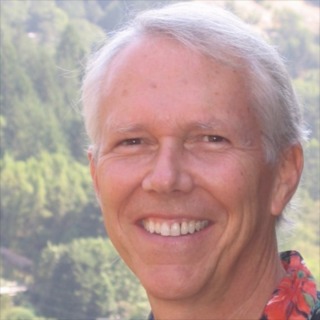
I'm James Shaheen,
Editor and publisher of Tricycle the Buddhist Review.
We live in a world of fear,
But need we be driven by it?
In this episode of Tricycle Talks,
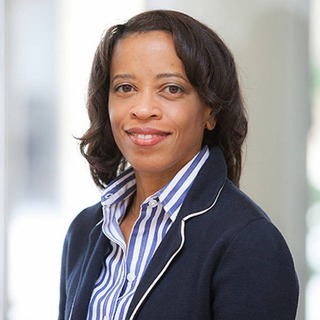
Dr.
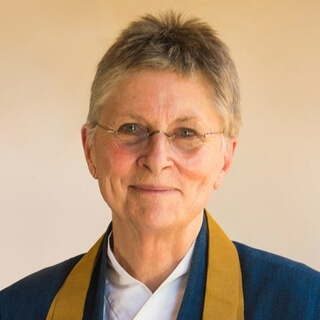
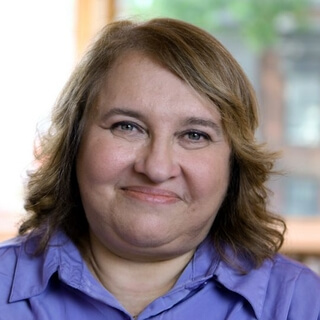
Pilar Jennings,
A Tibetan Buddhist practitioner and psychotherapist,
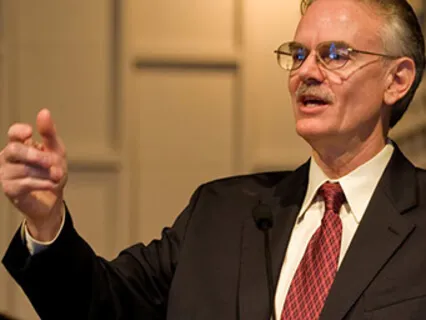
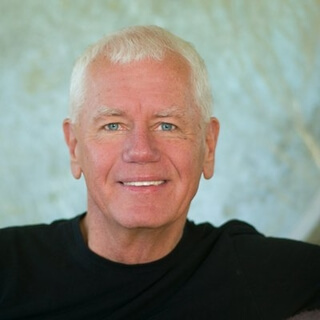
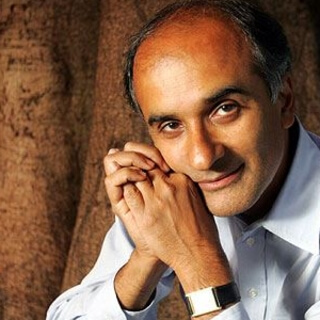
Speaks with Michael Kinnaman,
Ecumenical scholar and former dean of the Lexington Theological Seminary.
He is most recently the author of The Witness of Religion in an Age of Fear.
Drawing on their different academic and religious backgrounds,
Jennings and Kinnaman discuss the differences between healthy and unhealthy fear,
And the role that each of us can play in bringing peace to an uncertain world.
Now,
Let's listen to Michael and Pilar.
This is Pilar Jennings,
And I have the pleasure of introducing Michael Kinnaman,
Who is the author of The Witness of Religion in an Age of Fear.
Welcome,
Michael.
Thank you very much,
Pilar.
Michael,
You are a well and widely respected leader and scholar of the ecumenical movement.
And just to let our listeners know,
You've held many noteworthy positions,
Including general secretary for the National Council of the Churches of Christ,
Executive secretary of the World Council of Churches Commission on Faith and Order,
And dean of Lexington Theological Seminary.
Michael,
In this book,
Which I found to be extremely compelling,
You propose that we're living in a time in which fear has become extremely pervasive,
Both as a feeling and as a narrative for Americans across identity markers.
You suggest that America is suffering the equivalent of a panic attack,
Which really seems to capture it.
And I wondered if you could say a little bit about how you came to be interested in this topic of fear and also why it feels important to you to address at this particular time.
Yes,
I appreciate the summary that you gave.
I think that's an accurate description of where we are in this country.
I don't make a judgment in the book about whether the period we're living in has greater fear than other periods.
People who will remember the 1950s,
Of course,
Remember the period of Joe McCarthy back in the early 1920s.
We had the Red Scare and all the way back to the Salem Witch Trials.
So it's not as though fear has been unknown in the United States.
But in this culture,
It does seem that we have high levels of it now again.
My own awareness of this probably came with the House Intelligence Committee hearings in 2010,
When Peter King was holding hearings on Muslim Americans and terrorism and suggesting that 85% of the mosques in this country were dominated by Muslim radicals.
Already,
We had heard from the FBI director,
It was then Robert Mueller,
That Muslim Americans were most likely to be involved in helping to ferret out possible terrorism and 99.
9% being fully patriotic.
And yet we had this high level of fear coming from Congress because it played well politically.
Yeah,
I was in the room for that hearing and it was clear to me and to all of the other colleagues who were there that this was driven by fear,
Targeting false victims because of the level of fear that was being felt.
And that's when the idea of a book that would deal with a broad religious response to fear came to me.
Yeah,
So this is a particularly timely book,
Right,
When we find in so many domains of life,
Certainly in political and religious life,
That fear has taken over.
You affirm again and again throughout the book that of course there are many justifiable reasons why we feel fear,
Right,
Fear is warranted.
But that often we end up with what you describe as misdirected fear.
And I wonder if you can say a little bit more about your understanding of healthy fear or necessary fear in contrast to this misdirected or unwarranted fear.
Yes,
I think that's a very important question and obviously fear is a natural part of human life.
I am a white male who has never experienced the threat of sexual violence.
I've not experienced daily gang violence in my neighborhood.
I've never experienced my own religion being under attack.
And so it's not for me to dismiss fears from persons who have experienced those things as being inappropriate.
What we have,
However,
Are inappropriate fears where they're unwarranted by any actual threat and are often used to keep other people afraid.
A recent book that outlined this so powerfully was Ta-Nehisi Coates Between the World and Me,
Where he speaks about growing up as a black youth in Baltimore.
And he talks about fear was endemic,
People felt it throughout the neighborhood because it felt as if the system were stacked against them.
And he speaks about fear as a great injustice that other people were invested in keeping him and his community afraid.
That's the kind of fear that I wanted to address in this book,
The fear that makes other people afraid.
When we have that kind of unwarranted fear,
It often makes it very difficult for people to constructively interact,
Makes it more likely that we're going to misuse public resources and certainly that we will target inappropriate victims.
And I think we're seeing that now across the country.
And as a result of all of this distorted and misdirected fear,
We have populations that are now chronically fielding that distorted fear.
Muslim Americans and African Americans and immigrants,
Et cetera.
You also,
Michael,
Try to help the reader just understand this evolution of fear,
Which I found to be very helpful.
And in that discussion,
You lay out three primary theories that include issues of leadership and what our leaders are seeking,
Child rearing and parental values.
And I wondered if you could say just a little bit about these theories or perhaps the one you find to be most compelling and understanding why,
Why we have so much fear that is not in sync with with the reality of danger or perceived threat in terms of the theories.
Why now in contemporary American culture,
One of these theories you already mentioned,
Peter Stearns.
We now are in a period when many people favor a risk averse approach to parenting and education,
He argues.
And this has meant a generation of young adults who aren't able to respond appropriately to the kinds of threats which do come to us in daily living.
I don't know how much weight I give to that theory,
But it certainly is worth thinking about the two theories that are more compelling to me.
And I spend more time on the book.
One of them is that many people in this culture experience rapid,
Almost unmanageable social change.
At least that's how it feels to them.
And as a result,
We see surveys where upwards of 50 percent of the public respond.
I feel like a stranger in my own country.
Part of this is understandable social change.
I ache for those people.
Part of it,
However,
Is driven by less noble intentions.
I suspect it's people longing for the era when white Christians control the scene and they are worried about demographic changes caused by immigration or refugees or more Muslims and Buddhists and others in the population.
That is obviously troubling that people are driven by fear,
But also in some sense understandable.
The more sinister reason for the high levels of fear now is that it's in the interests of certain groups to keep us afraid.
One obvious one that everyone jumps on whenever I speak about this in public is the media.
As you know,
Say in the 1990s,
Many of the news organizations had to become more self-sufficient and so they also sensationalized stories and we began to see much higher levels of crime stories on the evening news.
Annenberg and other communications departments have done studies on this to show that the more you watch the evening news,
The higher your fear of crime.
So I don't press that one too much because I've also known a lot of journalists who have tried to counter fear mongering.
So that's a mixed bag.
But politicians obviously is the other group.
We have now high levels of political rhetoric in which politicians tell us to be afraid so that they can posture themselves as the ones who will protect us.
We saw this,
I think,
To be really honest with the travel ban and with all of the governors protesting against Syrian immigrants coming into their states after the Paris attacks.
The statistics that have came out actually after the book,
Cato did this study,
Showed that since the 1970s,
3.
25 million refugees have come into the country as part of the official Refugee Assistance Act.
And of those 3.
25 million,
20 to 0 have been involved in any way with terrorist activity.
Yeah,
So it's a very clarifying statistic.
It is.
And yet we're developing public policy based on this kind of complete misperception of the threat of refugees.
So,
But what's happening is that something like the travel ban,
While not justified by any real security need,
Is a political tool to convince persons who have been told they should be afraid that their fears are being addressed.
That's troubling.
And I try to name that in the book.
Yeah,
It's disheartening and it's distressing,
Right?
And as a psychologist,
I think about how something similar happens in family systems.
When there's a person in power who has their own unworked through fear and anxiety,
Often they want to position themselves as being the protector.
And then they find ways to generate anxiety in the family and pull the other family members close.
And so I see something similar happening on a political scale and now on a global scale.
I don't try in the book,
As you know,
To delve much into psychological theories more in the realm of politics and theology,
But that's helpful because I do think that there are real parallels.
Yeah.
Yeah,
I know.
Well,
We might need to stay in conversation because I found myself learning from you and wanting to better understand both how fear speaks to religious life and psychological life.
And it's interesting to hear you talk about this issue of fear and anxiety in response to social change.
And certainly all the world religions have made efforts,
Perhaps from the beginning of religious life,
To address our struggle with change.
And one of the themes in the book that I so appreciated is that you are calling upon people in all traditions to collectively and actively respond to this culture of fear.
And you see it,
I think,
As part of our spiritual practice that we can be addressing suffering,
Right?
We can be addressing fear as a form of suffering,
As a way to care for one another.
I do believe across the board,
The major world religions all have common themes that would allow us to serve in some sense as an antidote to this sort of fear in the culture.
And so part of what the book tries to do is to urge religious communities to work together addressing these deep cultural currents like fear.
When I was General Secretary of the National Council of Churches,
I worked very closely with Muslim,
Jewish,
And occasionally Buddhist and other colleagues on legislative initiatives,
For example,
On Capitol Hill.
But in some sense,
That's responding at a more superficial level.
I'm glad we do that.
But I wish we also,
In an interfaith community,
Could respond to these deeper cultural currents where I think we have even more to say to the culture and could say it together.
Because we might disagree on particular policy applications,
But we don't disagree as religious communities about how fear has been hazardous to the human family and about the need to address it constructively.
Having said this,
Some of this is a bit counterintuitive because religion has also been seen through the centuries as a cause of fear,
Where fear of hell or fear of sin or other motivators like this have been used to try and drive people into faith.
Sometimes when I've talked about the thesis of this book to more secular friends,
They will sort of throw up their hands and say,
That didn't make sense to me at all because I see religion as the problem.
And part of the reason for that,
I suspect,
Is that in the current climate,
It's fundamentalist religion that garners the headlines.
And all traditions,
I dare say this,
Even of Buddhism,
Have their fundamentalist wings.
And I suggest in the book that fundamentalism is the religious form of the world's anxiety.
It really does try to draw boundaries to keep others out and to keep doctrines pure and lives in some sense in a zero-sum game that is fearful.
But I don't think that's our traditions at their best,
And that's what I really try to get at in the book.
Across the board,
For example,
There is a sense that human beings often cling to the wrong things to protect us.
You get this very strongly if I read the Buddhist tradition correctly with a sense of the illusory way in which we project out of our consciousness a desire to avoid the impermanence of reality,
As Buddhism would put it.
That in our desire to overcome separation and death or to avoid these things which are inevitable,
We generate fear and then we try to hold onto things,
Wealth,
Power,
Status,
Whatever it is,
That will somehow protect us from that which is really an example of the impermanence of reality and can't be overcome.
So what we need to do in the Buddhist tradition is to be mindful of it,
To face fear directly,
To understand it in depth.
I honor that and try to outline that as clearly as I can in the book in one section.
But other religions also have that same kind of impulse.
In Christianity,
For example,
And in Judaism,
There's a sense that the only acceptable fear is really the fear of God,
By which they mean awe or reverence of God.
Because if we were to focus our attention on the ultimate creator,
On the ground of being,
Then we would learn to put other things in proper perspective and wouldn't attach ourselves to false idols.
Another one which is really important in the Buddhist tradition and I think in all of them is a sense of human interdependence.
If we understood the interdependent character of reality,
Then we would also understand that what we often try to protect is misguided.
For instance,
Our security depends upon the well-being of others,
Not simply on unilateral defense of what we have.
Yes,
Yeah.
It's so interesting,
Michael,
Because while I don't think this is a direct quote of anything in the sutras,
There are lots of references to how really the only thing we have to fear is a too fierce grip on oneself.
Or a preoccupation with oneself because it really actively interferes with a felt sense of interdependence.
If we're the most important person in town and then we end up organizing our lives around that feeling,
It's very hard to have that upwelling of empathy and concern for others and the sense that their needs are as important as our own.
And so I'd love to hear you say a little bit about how to cultivate that feeling of interdependence.
I know in the Buddhist tradition we have all sorts of practices to really get it into the psyche,
To get it deeper into the mind so that it starts to feel instinctual.
I certainly appreciate the Buddhist emphasis on mindfulness,
For example,
And on the way in which the famous Shantideva quote that I can't heal that outside of myself but only the mind.
And so that's where the focus is.
In the Western tradition,
In my own Christian tradition,
We have this same kind of teaching that goes all the way back to the sense that human beings are all created in the image of God,
Of one creator.
This runs across Judaism,
Christianity,
Islam.
And so part of what I recommend in the book is teaching our own traditions.
I was talking about this at the General Assembly of my church this past week,
And the dominant response that came from around the room was we need to have more direct exposure to those who are regarded as other.
That the more exposure we have to Muslims,
For example,
The less fearful all of this sense of Islam becomes,
The more exposure that we have to immigrants and refugees and so on.
All of this is crucial to recognizing the interdependence and what we hold in common.
And that will go a long way toward increasing this sense of interdependence and breaking down some of the walls that we build.
One of the really interesting studies that came out after the book was finished found out that on average,
American adults believe that there are 54 million Muslims living in the United States.
That would be 17 out of every 100 residents is Muslim.
The actual number is 3 million,
Which is 1 out of every 100.
When I told this study to the Islamic Society National Convention a week ago,
The ripples across the room were very audible.
Because of course,
What it means is most of the people who were surveyed don't know any Muslims.
But they've been told that they're dangerous.
And so as a result,
They think there must be a whole bunch of them.
17 times more than is actually the case.
Skewing the way in which we see others.
I'll add one other word about that which has come to me since writing this book.
On the first chapter,
I fill it with studies and statistics talking about fear in the culture,
Lots of surveys.
I sent that chapter to my brother who absolutely loved it.
But he's an actuary.
And he found all of the statistics really interesting.
But he wrote back to me and he said,
But I don't think most people will be persuaded.
Because we live in a culture now where if you already see the world through a certain lens,
Factual data may not dissuade you.
But it also reinforces the point that you were asking about a moment ago.
Which is that education won't necessarily be the full answer,
Although it's an important one.
But rather the deep commitments of the heart which are associated with religion may be the best way to really say no to the sort of fearfulness which dominates the culture right now.
Yeah,
I have to say I also found that first chapter to be very illuminating.
And as a New Yorker,
It really put in stark relief how distorted my own fears were,
Particularly of terrorism.
I think there was the statistic that we're four times more likely to be struck by lightning than killed in a terrorist attack.
And I thought,
Well that's very helpful to keep in mind.
The next time I have that fear that grips me,
That's really not in sync with reality.
That's why walls,
For example,
Are the worst possible response.
One of the chapters,
As you know in the book,
Deals with the Israeli-Palestinian conflict.
The more you throw up walls of that sort,
The more you cut the populations off from one another and the higher levels of fear that are experienced.
So I'm afraid that some of the policies that we're seeing out of the current administration not only stoke fear with the kind of rhetoric that's coming out,
But also some of these policies may actually increase fearfulness as well.
Yes.
Yeah,
You quote Dr.
King as saying,
People fail to get along because they fear each other,
And they fear each other because they don't know each other.
Which is such a powerful reminder that if we don't get to know each other,
Right,
Then fantasies take over.
Yes.
That's why I recommend,
For instance,
The Seeds of Peace program where you have Israeli and Palestinian kids coming together,
Or Jewish kids from the U.
S.
Getting together with Palestinian ones in camps,
Because the more they get to know each other,
The less the dominant fear narrative really plays for them.
Right,
If they have that early exposure that challenges misperceptions and whatever it is they've internalized from their own culture of fear,
Then they're a long way toward dealing with reality,
Right,
And allowing the facts to get in there,
Because the cognitive function is still operating,
Right,
It hasn't been so flooded with anxiety and fear.
That's right.
You know far better than I,
And I'd be interested,
Actually,
Pilar,
Though I'm not asking the questions here,
But your thoughts on how deep-rooted fear is,
Is an almost pre-rational emotion,
So that it often will win out over something like hope,
Which is a more cognitive activity,
Unless we're really intentional about being hopeful and telling a different narrative.
Yeah,
I know,
I appreciated your curiosity about the unconscious roots of fear.
What it brought to mind is a psychoanalytic idea of what's called projective identification,
Really making people seem fundamentally other,
And there's this idea that whatever aspect of our being that we might experience as being not me,
We'll then cast out and try to find a home for,
Usually in another individual or possibly a group,
And then we go about organizing that person or group as if they're dominated by the very thing we have evacuated from ourselves.
Very interesting,
Yes.
It made me think about how to help religious communities understand some of the psychological underpinning of fear.
I wonder if that's something you've thought about.
I was thinking about the questions toward the end that you sometimes pose to the people in your community.
What fear do you bring with you today as a way of just making a little more room for what people might be struggling to name or know more about?
I was trying to keep the book short so that it could be used for congregational or group study,
Interfaith groups,
And that that's happening in various places,
And I'm gratified by that very much.
But that meant that I left out other parts,
And a number of people have said,
I wish you had said more about the personal dimension of this,
Because often in response people will personalize it,
Move it out of the political realm and more into the psychological and their own affective response.
What's been interesting to me in speaking with Buddhist colleagues,
For instance,
Thanasaro Bhikkhu,
Who's the Thai Buddhist monk that I mention in the book,
And he moves it from the personal realm into the public,
But that I don't see as much in Buddhist tradition.
There's more a sense that the individual mind may be the response or the consciousness response that's needed within the society as a whole,
Whereas in the Western traditions they will speak more about the social implications of our religious faith,
Or at least speak about it more easily.
So wrestling with that relationship between the personal and the social,
Between the psychological and the political,
That was a part of the book that if I were to write more I probably would try and focus on that.
You remind me,
Michael,
That the traditions really need to be in conversation,
Right?
Because certainly there are significant differences between the various Buddhist lineages,
But you're right in suggesting that Buddhists have a lot to learn from our Christian brothers and sisters around how to bring our faith lives and our spiritual lives out into the secular world.
That's a part of what I obviously hope happens with interfaith work.
My own Christian ecumenism has been more aimed at trying to build up community across the disparate Christian communities,
But it's quite clear today that many of our issues are far bigger than that.
I mean,
The Christian response to climate change makes me laugh.
These are issues that demand all of us acting together as people of faith,
People of goodwill,
Trying to address the questions of the day that are simply far larger than we can do individually.
And we're finding the more that we spend time with one another,
The more we have to learn from one another,
And that our faith is built up,
Not torn down,
By that kind of encounter.
I think that's an exciting time,
Really a time that speaks hopefully toward the future.
Yeah.
I agree wholeheartedly,
And I was particularly struck and moved by your encouragement for various religious communities to make welcoming the stranger a key part of the community's identity.
And you talk about how fear is toxic to a spirit of hospitality.
And conversely,
When we welcome those who are in some way fundamentally unlike ourselves,
We really find a needed antidote to fear.
I'm very glad you named that,
Because I think that's an important practice for all of us to cultivate.
And it would run counter to the ways in which so many in the West have historically defined identity.
I certainly know this better than I,
That we often define identity by distinctives over and againstness,
Rather than by welcome of those who are different.
I don't think our religious communities at their best should be that way.
Our identity should be precisely in this welcoming of the other,
Recognition of interdependence.
Yes,
Yes.
Right.
It seems that one of the primary endeavors in all religious life is to find a feeling of connection,
Right,
To oneself and to as many other beings as we're able to cultivate that feeling of connection with.
Yes.
The other thing that I had wanted to ask you about was the interceptor of fear that you speak of as being differentiation.
When we begin to recognize that people who seem to be our foes are not one thing,
Not uniformly hostile,
Right,
But have variability and that there might be variability within a group.
Yes,
That's certainly important and it comes out of all kinds of studies,
Including those done by Israeli sociologists.
And I think I put it in the book in connection with some of them who have done extensive work on what peace would look like in the Middle East.
And they've concluded that one of the key factors in peacemaking in the Middle East is this refusal to lump all of the others into an undifferentiated category,
Which then you can label as hostile.
So all Palestinians are like this or all Israelis are like this or all Iranians are like this or whatever it is,
Is bound to be wrong.
And it doesn't do justice to the possibility of common ground that we can see in the other community.
Yeah,
I sometimes think of this issue in terms of issues of understanding sameness and difference.
Both are extremely important.
We need to cultivate and feel the sense that we are sharing the human condition.
We're sharing the basic markers of the human condition.
But the way we experience the human condition has real differences.
That need to be appreciated and better understood.
Yes,
That's right.
And to insist that ours is the only way or the completely superior way or whatever will also engender fear in the other.
So the need to recognize that point really would address the whole topic we've been dealing with.
Yes.
Unfortunately,
Our time is limited.
I'm so enjoying this conversation with you.
I wanted to just share a quote from your book,
Which I found to be particularly moving,
In which you say that religious community can model a world without fear by refusing to live in fearful isolation from one another.
And it is my hope that people of all faith traditions read your book,
Learn from you,
Because your perspective is so needed at this time.
And I want to thank you.
I have learned a great deal from you and hope that we'll continue to be in conversation.
It's been my pleasure.
I appreciate very much the conversation.
So thank you for that.
Thank you,
Michael.
You're welcome.