I'd like to point toward.
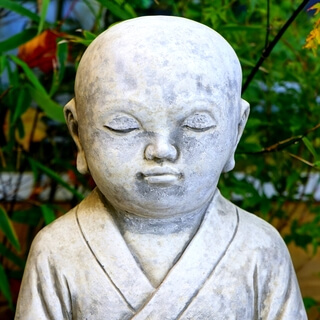
The stillness behind all of the drama.
This island.
Underneath all of the commotion.
And in many ways,
This is what meditation invites us to see.
What any spiritual practice invites us to see.
There's this great commonality in our human experience as human beings.
Where there appears to be this commotion,
This drama.
Just thinking,
Thinking and thinking.
And underneath all of that noise.
There's a stillness that has always been there.
There's a stillness that is.
Infinitely more true and real.
Than all of the noise.
And maybe in a very traditional and spiritual way.
There is the dream of a life that we.
.
.
Think our way through.
So much of our daily lives are.
Spent circling narratives.
Telling stories.
Thinking about her thinking.
While also assuming that that is life.
And I do find that fascinating.
That we are living this dream of a life.
And underneath that dream.
Is somewhat of a sacred stillness.
That has always been the same and will forever be the same.
And it's interesting,
I guess,
As a personal anecdote.
All of my thinking about thinking never really goes anywhere.
It's almost as if it serves as a distraction.
Maybe sometimes it gives the illusion of progress.
That I'm actually figuring something out.
But over the many,
Many years of this journey.
The only real solution that I find is coming back to this stillness.
And it's difficult to.
.
.
Point to this and make it clear without mentioning the ego.
Not as if it's wrong or bad,
But.
.
.
Just seeing the mechanism of it.
This character that I imagined to be.
This character that imagines his life.
And all the drama that circles it.
Trying to be enough,
Afraid of not being enough.
Thinking about others.
In many ways.
It's like this ego is.
Struggling to keep a dream alive.
And dream of itself.
And it's not wrong and it's not bad,
It's just interesting.
Because in the stillness of this,
What I see is that drama of the ego.
Is watching a life that isn't a life at all.
And to see that makes me very curious about what is life really.
To see that I am not really who I think I am.
That who I think I am is.
Imagined.
Makes me curious about what am I really?
And there is this conflict for the one that I think I am.
To even look in that direction.
Because as I look,
The one I think I am disappears.
And what disappears with it.
Is the world it's trying to hold on to.
The self it's trying to hold on to.
It's kind of like.
.
.
Having a dream of a spiritual journey.
Where this person you imagine yourself to be is.
Trying to be spiritual,
Trying to figure out life.
Trying to find the real prize.
And then this character in the dream.
Realizes that the real prize is to wake up from that dream.
Is to let go of the dream.
And the last thing that character wants to do that's in the dream is to wake up from the dream.
You see that as a great disappearance for the character.
The character doesn't want that.
That's like death.
It's like that character says,
I don't want you to forget about me.
And in the spirit of that.
The ego loves the spiritual quest.
And it avoids the conclusion.
The quest itself is very validating.
Gives the illusion of progress.
The illusion of I'm almost there.
How long have we?
Been almost there.
What a disappointing message.
For the ego.
That there's nowhere to get to.
You're already there.
You've been there the whole time.
You know what I find fascinating about all of this spiritual work?
And you could even call it therapeutic work.
You could even call it personal growth.
But in the most genuine sense.
The mechanism.
Behind whatever that seems to.
.
.
Create meaningful progress.
Is always the result of some version that is letting go of the ego.
Like you can imagine yourself sitting in therapy.
And you are.
Ego is going on and on and on.
About how it's not finding the validation that it wants.
In some way or another.
How life is against you.
How the world isn't being how you want it to be.
And in that great exhale.
In some way or another.
You see that you're just creating it all.
In some way or another that you are.
Holding on to a lie that blames the world.
So you can protect an idea of yourself.
Because it's so terrifying to let go of that idea of yourself.
Which in another way of saying it's.
.
.
To see that none of it is personal.
And you really want it to be personal.
And another way of saying as you sit there in therapy.
Realize the great misunderstanding of your experience.
Kind of like saying I have.
Interpreted my life in a way.
That takes things personally that are not personal at all.
And that's the great healing,
Because then it says,
I can let go.
I'm fascinated by this as I look at my own direct experience.
To examine those.
Painful things of the past.
The current painful things are this.
Projection of future painful things.
And to see how they all circle around taking something personally.
This is about me,
This is in my way.
This means I'm not enough.
It means I wasn't loved.
I have interpreted life as against me.
In my way.
And in the belief of that,
I have withheld love from everyone around me.
Secretly wanting them to be different.
If only.
Then I could find myself.
Then I could be enough.
And I hope we can look at this without any self-judgment and just find the humor in it.
To be radically honest about our direct experience.
And just see how much.
We are in a desperate fight to protect the ego.
In one way this shows itself as how much we distort the truth of things in order to protect an idea about ourselves.
Who we tell these little stories that.
Put ourselves above others.
Or to protect how other people see us.
It's like,
I want this other person to think that I'm enough.
So I'm going to say this about me.
Do you guys see this?
I mean,
Again,
And it's super playful.
And the only way.
.
.
That I can describe it.
I'm sure it's not the only way,
But.
.
.
For me at least,
It's a brilliant illustration.
Of how much we are running around on this planet.
Trying to be God?
Rather than letting God be God.
And what is it to try to be God?
In many ways,
It's trying to get the world to worship you.
Which is the same as saying trying to get the world to see you a certain way.
And so in order to do that,
You have to distort the truth.
You can't just let it be what it is.
You can't just let people think what they think.
Which is such an interesting dynamic because it.
.
.
Looks at other people.
As if they exist to serve you.
You look at circumstance and do the same.
This is about me.
And it all circles around me being seen a certain way,
Which is another version of me being worshipped.
And then we have these.
Adorable and unconscious tools of manipulation.
Where it effectively says,
I will love you if.
.
.
And we get so crafty in the way that this expresses itself.
And we are so crafty in the ways that we lie to ourselves.
And again,
It's adorable.
It's not wrong,
It's not bad.
It's just the mechanism of ego.
In one way,
It could be said that it's not even you doing it.
It's just the conditioning playing out.
The misunderstanding and the confusion playing out.
Through your human experience,
But it's not really you.
And so I'm very curious about what exists.
Beyond this ego's attempt to validate itself.
Beyond the ego's attempt to protect itself.
Behind all of that drama.
That noise.
And you know what's interesting about this?
Especially as it relates to what we might call the sincerity of our search for the self.
The sincerity of the quest that's trying to figure out who am I.
What am I?
What's amazing is the paradox.
The paradox ends.
The more I find the truth of what I am.
The more this self disappears.
The more I have truly found myself.
The more there is not a self there to find.
I disappear.
And in that disappearance is also the great disappearance of the burden.
That is trying to get the world to validate this self.
The burden of taking things personally.
And it's such an odd freedom that.
.
.
Just gives people back to themselves.
And it's not a giving people back to themselves because it's the spiritual thing to do.
It's more so that it just happens automatically.
It's not so much something that you do.
It's a natural byproduct.
Of seeing this great disappearance.
I guess as an illustration of this.
Which could be.
.
.
Printed on every other experience I might have.
But in the moments where.
.
.
I find myself.
Upset or frustrated with my wife.
It doesn't take long before I realized.
That I am.
Taking something personally.
And projecting it on her.
It doesn't take long to realize that I'm turning this into something that it's not in an effort to protect an idea about myself.
And in deeply seeing that's true.
I see this pain that I'm with.
Has absolutely nothing to do with her.
And in that realization,
There's a natural letting go of her,
Giving her back to herself.
And then there is this.
Beautiful and Gentle Humor.
That smiles at any idea of blaming her.
This is obviously not about you.
And this innocence is restored.
I love you.
That's giving her back to herself.
And I can't escape this.
You know,
It's not a belief,
It's not an ideal,
It's not a hopeful expectation.
It's simply.
.
.
What's true.
That any angst or any internal tension any inner violence.
At all,
Conflict,
Drama,
Suffering.
I cannot escape the truth.
That this is a resistance that's trying to protect an idea of myself.
And it wants to blame the world.
Which is so fascinating because that inner drama wants to think it's 10,
000 things on the outside.
But it's one thing on the inside.
Which in a gentle way is saying that all of this suffering is self-created because I'm holding on to an idea of myself.
And I'm not speaking to anybody else's experience.
You can have your experience.
This is just what I see.
And I get really honest about my own experience.
And without going into great detail.
I can.
.
.
Remember one of the most painful experiences of my life.
Kind of suffering that day.
Has you rolling around on your bed,
Screaming,
Asking,
God,
Why?
Why is this happening to me?
This isn't fair.
Feeling absolutely destroyed and crushed.
Feeling so attacked.
Only to find out I'm rolling in agony.
Over the loss of who I think I am.
It's such an interesting thing to see.
Because the mind ego wants to convince us that we are suffering.
Over the outside.
Suffering over things not being how they should be.
But what I'm really suffering over.
Is the loss of who I thought I was.
The loss of how I wanted to be perceived.
The loss of.
A life that I imagined I was building.
And I can see in many ways how this just turns the world upside down.
And it's very humbling.
Extraordinarily humbling.
Painfully humbling.
And also beautifully humbling.
And in the embrace of that truth.
Not the embrace of an idea.
Or wishful thinking.
Or doing the right spiritual thing.
But the embrace of that truth.
I can't help.
But to forgive everyone.
This isn't about you.
And maybe it's a side note or maybe it's right on point.
But it invites me to see the nature and opportunity of suffering.
Because this is all of my suffering.
This is the only thing I suffer about.
Suffering being the emotional disturbance.
That is in many ways associated.
With feeling like I'm not enough.
Not worthy,
Not loved.
Not seen.
Or the loss of something.
That I hold dear that is my self-validation.
This suffering is the resistance.
Of my ego holding on to a lie about myself.
And that is not popular.
I can promise you the world doesn't want to hear this.
Are real.
And even though in my experience,
At least for what I do,
There's a small number of people who show up to hear this.
And it surprises me that anyone shows up at all.
Who wants to see that they are the creator of their suffering?
I guess the answer to that is.
.
.
It's the one who's willing to be radically honest with themselves,
Finally.
And they also see it's the doorway of.
Real healing.
A healing that can finally let go of the resentment.
You see,
This is the ego's struggle to survive.
And in one way of speaking,
It's the whole dilemma.
The whole confusion.
Were in the most simple way.
It is a case of mistaken identity.
Where we have identified with this character in the mind.
That creates.
A dream of life in the mind.
How we imagine things to be.
And we assume that dream is reality.
Just like the dream of yourself.
There's who you think you are.
It's in the mind,
It's imagination.
And you think it's really who you are.
And therefore it wants to survive.
And the way that it survives.
In one way is through capturing your attention.
Which is why I hate you.
Consistently and constantly takes things personally.
Oh,
This is about me.
This is about me.
This is about me.
It survives in the imagination.
To keep it alive,
You have to think about it constantly.
It has to be validated.
Which is kind of like saying.
.
.
The ego is on a quest of trying to become real.
Which very directly.
Points to the ego's journey.
Of trying to be enough.
Trying to be seen as enough.
Trying to escape a feeling of inadequacy.
It's like.
.
.
Fundamentally.
And maybe unconsciously.
The ego has an intuitive sense that it's not real.
That it's not enough because it's not real.
But it fights for its survival.
Which is kind of like saying.
It wants to be seen.
It wants people to validate it.
Tell me I'm real.
Because I'm so afraid of the truth.
I'm so afraid of the truth I know within.
That in some way says this isn't really about me.
And so we.
.
.
Move with this.
Agenda that.
Make sure the world sees us a certain way.
And we are terrified of the world seeing us in a way that is not that.
Which is what makes it not safe to be ourselves,
Not safe to be honest.
And so we contort ourselves into this.
Version.
That gets the world's approval.
Apparent approval.
Apparent validation.
And it's a validation that is unsustainable.
Which is why you have to constantly Go out and get it again.
Do you ever realize this?
Like you have a moment where.
Things go your way and you're like,
Oh,
I'm validated.
I'm real.
I'm worthy.
And then 15 minutes later,
That fades away.
Or next week or whatever.
And you have to chase something else.
That's the wheel.
And maybe in the world.
They will tell you that is to be a productive member of society.
To entangle your worth and value.
With people around you.
And be on a perpetual quest of being enough.
Which,
You know,
In many ways is fine if that's the game that human beings are playing.
But again,
From my experience.
.
.
When I look at it,
It's all imaginary.
And also.
.
.
In seeing that it's imaginary.
And seeing what is there beyond and behind the imagination.
I see that the essence of what is being sought after is already here.
And whether you call it,
I want to be loved.
I want to be approved of.
I want to be respected.
I want to be seen.
It's all the same thing.
We just have different stories for it.
It's some version of I want to be validated.
And again.
Understand that it's understandable.
Which is to say it's not wrong or bad.
And in many ways,
It's beautiful.
But in the same way that a painting of the sunset can be beautiful.
The painting is not the sunset.
So we can tell beautiful human stories.
And that's beautiful.
But it doesn't mean the story is true.
It's like being hungry.
And seeing a beautiful photograph of food.
It could be comforting,
But it doesn't really feed you.
I guess it's also.
.
.
Wise to say,
You know,
A lot of the human journey.
Is a human journey.
That includes the ego,
And it's very possible that we don't ever see beyond that.
And so that's just the human journey,
And that's fine.
So it's not any sort of should or expectation that everyone should see this.
And there can certainly be a life lived with what we might call a healthy ego and an unhealthy ego.
Which might give rise to different human experiences,
And that's fine.
But I would also suggest that.
.
.
Life lived with a healthy ego is the result of seeing that you are not the ego.
And so it's still a spiritual journey,
Even though we don't realize it is that.
And maybe what I'm pointing to is.
.
.
Where is this?
All essentially.
What is the discovery?
Do you see this light?
If we can say that in some capacity,
The opportunity on the human journey.
Is to wake up from the ego and see what's really there,
Which is to expose some degree of love,
Just in the manner of speaking.
Do you see that that journey exists along a relative scale?
And there's no requirement.
Too.
End up at the complete end of the spectrum.
The opportunity is to simply move across the scale.
And everyone's journey is their own on that scale.
And depending where you are on that scale.
It distorts how you see where other people are on that scale,
When in truth Everyone's in the same spot.
They're on the same scale.
And the scale is more of a circle.
Than an A to Z,
So there's not really a hierarchy.
You just are where you are.
And you're playing the same game that everyone else is playing.
Which has seen a deeper truth of things to allow more love.
Which is also why I don't have much to say about anyone else.
Which is also why I don't comment much on.
Let's say,
The social issues of our time.
In many ways,
I see that it's just how it's supposed to be.
Which is also to let the world be the world and for me to live my life.
Which is so interesting because when I do.
.
.
Let's say,
Get online.
It's like,
Wow,
People have so much to say about other people.
Which is this drama.
Which is interesting too,
Because.
.
.
When I.
.
.
Let's say,
Look at the social landscape.
Whether it's the.
.
.
Wars being fought,
Whether it's the politicians lying.
Whether it's the corruption and the utter darkness and despair.
When I look at all of that.
I see myself.
It's like whatever it is that is playing out in others.
I can see that that's playing out inside of myself.
What is that phrase?
Let he who is without sin be the first to cast the stone.
And when I look at the world and all of its shenanigans.
In a very real way.
I see that I can't say that I'm better than anyone else.
It's very hard to judge.
Furthermore,
It's very difficult to profess separation.
As if one man's actions is separate from the whole.
Rather than one man's actions is an expression of the whole.
And so it makes no sense.
To blame another man as if he's separate from the whole.
If that makes sense.
And human beings,
My goodness,
They really love to blame the individual.
They really want to figure out whose fault it is.
And then punish them,
Which,
You know,
Is a whole other conversation,
But I find it fascinating.
Because again,
When I look at my own experience.
And I see where or how I might do that,
And I look into why.
It's because I'm hiding from myself.
It's like.
.
.
Because I have already condemned myself.
Because I see myself as guilty or not enough.
In order to hide from that.
I will make other people guilty.
And the more I see what I have done to myself.
It becomes difficult to blame anyone else.
If anything,
There's a compassion there.
Where it's like,
I get it,
I understand.
Same with my wife.
Right,
And again,
This is all a fractal,
So it applies everywhere that I look.
When I watched my wife.
Behave in certain ways that are essentially an extension of being afraid.
What I see is how much the same we are.
Words like.
.
.
You're getting confused and imagining a bunch of things that aren't really happening and taking it personally.
And then blaming the world.
Yeah,
I do that.
I get it.
So how silly it is for me to say you're doing it wrong.
What is that phrase that says,
Something to the effect of.
.
.
Be wary of trying to remove the log from somebody else's eye when you haven't.
Remove the twig from your own.
Something like that,
I butchered it for sure,
But.
.
.
Do you see it in some way?
And maybe I'm crazy,
Okay?
This is entirely possible.
I ask myself that quite often and I have to re-examine my position.
But I always come back to the same truth.
But the more I look in the direction,
Which is also what I see to be spirituality pointing to.
The only conclusion I'm left with is there's nothing to judge.
And everyone is a child of God.
Equal of love in the same amount.
And the only reason I wouldn't see that love and extend that love is because I'm trying to protect an imaginary separate sense of a self-importance.
I'm trying to be God.
And it makes life serious.
Sufferable and full of drama.
And it's all adorable.
And it results in a beautiful humility that in many ways heals our relationships.
And I wonder if you can see that,
And I guess returning to the example of.
.
.
My relationship or being married.
There were these moments of humility where essentially it is expressed,
Oh my goodness,
I was making all of this up and blaming you when I was taking something personally that wasn't really personal.
I'm sorry,
I love you.
Which is also like the spiritual conclusion.
I got scared.
I blamed it on you.
And now I see that what I was scared of isn't a real thing.
And so there was no need to blame you.
I'm sorry,
I love you.
I thought this was about me,
And I see that it's not.
And I blamed you for it.
I blamed you for the stories I told about myself.
I'm sorry,
I love you.
You're innocent.
You might also be adorably confused,
But welcome to the club.
There's just so much innocence.
And again,
The world does not want to see this innocence.
Which is also the playful difficulty in embracing the innocence.
Because it's almost like you are exiting the social club.
That wants to judge and condemn.
Or the world wants you to pick a side.
And if you don't pick a side,
That's the same as picking the other side.
And because we want to be validated by the world.
We often.
Go along with our group agenda.
And blame who the group blames.
And then there's the beautiful invitation that says,
I'm not interested in this game anymore.
Ha ha ha I'm just gonna live my life.
You Which is also like saying,
I'm just going to trust God.
So once again,
For me,
The invitation,
Which is also the conclusion.
Be still.
Open up.
Fearless.
See what's really true.
And let the truth be the truth.
Thanks for hanging out with me.