Hi and welcome to the Temple Podcast.
My name is Edward Pike.
I'm the founder of the Temple.
And this podcast is a place for us to really explore the various temples of our humanity,
Our homes,
Our relationships,
Our bodies,
Our practices,
And even our businesses.
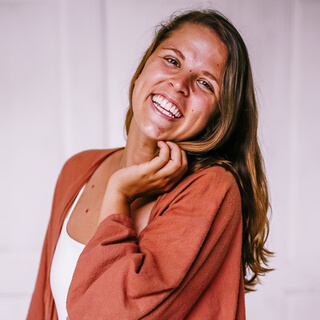
So today we speak with Angie Cole.
So I met Angie when she came to Crete at the beginning of this year for about five weeks,
I think.
And she just rocked up to this co-working day I was organizing,
And we connected straightaway,
And I really felt her depth and power and love and compassion.
And over the coming few weeks I got to spend some more time with her during her stay and got to connect with her a bit more.
And she absolutely loved her relaxed and open and seemingly effortless style,
Let's say,
Which really allows—and you'll see that in the recording—for her to be a messenger for a wisdom that is profound and yet super simple and reminds us of our true free nature,
Our true wandering nature,
Which especially amongst these times of quarantine and lockdown is just so needed and can be deeply,
Deeply challenging.
So in this podcast we touch on things like why we have forgotten how to wonder as a human being,
On the power and the wisdom of actually letting go of our plans,
On how to wonder even in times of lockdown,
And on the edge and the creativity and the juice and the magic that can be found through our wandering.
So Angie Cole is a coach,
She's a consultant,
And she's a guide,
And she supports people to create the work that,
In her own words,
Keeps them lit up and well paid.
She balances instinct,
Experience,
And practical strategies to help her clients create lasting and significant change.
Her website and her mission is Untaming the Wild,
And it's to inspire folks to shed the things that hold them back and to really reconnect them with their essential nature.
So you'll find more information about Angie in the links below this podcast.
I invite you to really drink in her words and to see how you can apply all this simple and profound wisdom to your life and how you can start to weave the art of wandering into your day,
As you'll hear from Angie,
Into your structure around your life and work,
Into your business,
And just into your life in general.
So enjoy the podcast.
In this world there's room for everyone,
And the good earth is rich.
It can provide for everyone.
The way of life can be free and beautiful.
Okay,
Hello Angie,
Hello.
Hi Edward,
How are you?
I'm good.
It's really good to connect again.
Yes.
We spent a bit of time together when you were here in Crete.
You were here for what,
Five,
Six weeks?
Yes,
I was in Crete for six weeks,
I think.
Six weeks,
Yeah.
But I really feel like I got to know you and got to kind of really get a good feel.
That's the way of saying it.
A good sense of you as a person.
And yeah,
And as a result,
You know,
We're here.
You've written a beautiful post for Forgotten Art Blog.
And I'm also curious to see what evolves,
What other things come through our connection in the future,
And when you come back to Crete,
Et cetera.
Yes.
So I was really curious,
I still am very curious about wandering.
I would love to start with that.
Like,
What is wandering?
Great question.
I'm still curious about wandering.
Which is the best part is that I have a wandering relationship with wandering.
Yeah.
Right?
I continue to learn more about it.
It inspires me.
It teaches me all the time.
So my working understanding of wandering is that it's movement without a fixed destination.
And it doesn't have to be physical movement as I'm learning right now.
And I'm sure we'll talk about where my former experience of wandering,
Which might be,
It's a Thursday and I have a few hours and I can leave and go outside and I can just see where my curiosity and my instinct take me.
That's not happening.
So I'm finding other ways of wandering and it really just is about creating new territory.
And so,
You know,
Often for me,
That's literally exploring someplace new because I love newness and I love the unexpected and I love not knowing.
But it can also be taking something incredibly familiar and seeing it differently,
Finding the things that are new.
So there are ways to keep things fresh and exciting and present.
Wandering is both a practice and a result of being present.
Yeah.
Can you give an example of how you apply that to your life right now,
Especially in the lockdown,
As you say,
Like wandering kind of associated with it,
As you say,
One,
You know,
Leaving the house and kind of venturing out without a fixed destination.
So how do you,
How do you apply that to,
Is it wandering around the flat with no fixed,
Am I going to be led to the kitchen today or the toilet?
I don't know.
I'm assuming it's not that.
It's not,
But it could be,
It really could be.
And I'm putting together,
I'm putting together a wandering bingo.
Oh yeah.
Yes,
I am.
I'm putting together a wandering challenge.
Yeah.
I'll be putting out in the next couple of weeks.
And one of them is just go to a corner of your house that you think you know.
Yeah.
That you look at every day that you,
Or the corner of your basement that you haven't looked at in how many ever months because you just don't go down there.
Yeah.
And just go and see,
Just look as if you've never seen it before.
Be open.
Be open,
Be curious.
Let go of what you think you know,
Let go of what you think you can expect.
Expectation narrows our field of vision in relationships.
What we think we can expect from someone will often create what we see.
Yep.
Very true.
Right.
So yes,
It could be going to a room in your house or getting to the bathroom in a different way.
Right.
The places I am using that right now,
Two specific things that,
Well,
Actually there are many,
But one I'm intensely curious about right now is the flow of my day.
So I have,
I've always felt challenged by and downright resistant to schedule.
Yeah.
And routine,
Routine is kind of the dirtiest word I can imagine.
It just feels,
It feels boring.
It feels like a trap.
It feels arbitrary.
You know,
How am I supposed to plan what I'm going to do at nine 30 in the morning next Tuesday when I have no idea who I'm going to be next Tuesday.
But,
And this is an example of taking something you think you know,
And seeing it with fresh eyes.
So it was inspired by,
You know,
I think a lot of us right now are experiencing the feeling of Groundhog's Day where it just feels kind of like the same day over and we're not,
We don't have those same markers of Tuesday morning.
I like to go to this cafe on Tuesday or it's Wednesday night.
So I have,
I have trivia night with my friends.
Without those markers,
Everything just feels like it's flowing into one big blob of time.
So I started to feel that and I thought,
All right,
That does not feel good.
That's not going to work for me.
I'm going to feel,
I just tend to get kind of lethargic and flip into,
Yeah.
Yeah.
Right.
Yeah.
Exactly that.
Yeah.
Where Netflix rolls on for the seventh hour and you're not sure what day it is or when you last took a shower.
So I could feel that coming and I thought,
All right,
That's not going to work for me.
I need to do something different.
And as much as my,
As my bratty little teenager was rebelling,
I thought,
All right,
Schedule.
I think I need to experiment with some structure.
And so even playing around with the words of what did it feel good to call it and ritual felt really good.
And focusing more on,
And this is something I talk about,
I think in the,
In the wandering post and certainly something I talk about with my clients,
Which is focusing more on what is it that I'm trying to achieve?
What's the,
What is the desired feeling or the desired change more than,
You know,
What do I want to do or where do I want to end up or how do I want to get there?
I knew that what I wanted was a feeling of purposefulness and a feeling of presence.
Yeah.
Right.
Yeah.
And so I started experimenting with,
Okay,
What do I think those things might be?
And so that included some,
A morning ritual of starting my day really gently with some warm lemon water and honey.
I'm taking them and becoming a certified meditation instructor,
Very excited about.
And so I have books to read for that and I have homework to do.
And so starting my morning with that.
And letting it evolve.
Something I've noticed in this pursuit,
But also,
And we can talk a bit about my business too,
Which is I still have the programming of a plan is better than no plan.
Period.
Right.
A plan that's just always better.
A plan is better than no plan.
And so I even found myself getting caught up in that of saying,
Okay,
I have to set the goal and then I have to keep the goal.
And if I don't keep the goal,
Then I have failed and I am a failure.
And I noticed those things come up and I thought,
All right,
We,
Nope,
We know how to do this.
And so I just opened it back up.
Wandering has to have a discovery element.
Beautiful.
Yeah.
So the first day of experiencing this structure,
I was going to learn more about what I needed to apply the second day.
But if I had just said,
Okay,
Seven days in a row,
I'm going to do this at nine o'clock.
I lose the discovery.
That's so true.
It becomes like it really does.
I experienced that.
It does become a cage.
It genuinely loses that sense of innocence and curiosity that you're speaking of.
Right.
We lose the sensitivity.
I apply this to physical wandering because I think it's a metaphor.
If we can understand how to do it when we're actually moving through space,
Then we can apply that to everything else.
And so when we're walking somewhere and we know where we're going,
Right,
I'm going to the chiropractor.
I was seeing a physiotherapist when I was in Crete.
So I knew where I was headed.
I had a fixed destination and I knew the route I could take to get there.
When we move that way,
We actually do stop seeing things.
Yeah,
Very true.
We don't need our sensitivity of sight and sound and orientation in space.
We just don't need it.
And so it kind of falls away.
And the same is true for had I just made a goal and stuck to the goal because that was success.
I would have lost all of the sensitivity to how to actually refine it and make it for as free spirited as I am.
I actually love efficiency.
I love designing the most streamlined,
Most precise.
Yes,
The essence.
Get to the essence.
Yes.
So wandering,
You know,
It's kind of gotten a bad rap that wandering just means you're lost,
Right?
You don't know where you're going and you're just confused.
But wandering actually creates so much more precision,
So much more quickly.
Because again,
Going back to the schedule example,
If I had just done it for seven days,
It might have taken me seven days to stop and reflect and say,
Okay,
What didn't work and what did work.
Instead,
On day two and then day three,
Like by day four,
I knew the parts I needed.
I knew the parts I could let go.
The efficiency actually happened much more quickly.
Wow.
It's like it's allowed a deeper intelligence in the process.
As you say,
That sensitivity,
You're allowing something through that otherwise you wouldn't allow.
Yes.
In a wisdom or a deeper state of awareness.
Yes,
Absolutely.
So why do you think we don't wander?
As you already touched on that,
We do have this image that it's a waste of time.
Yes.
Or that we're lost.
If you don't know where you're going,
Then you're just lost.
You know where you're going,
And you're going there full speed ahead without looking,
Blinkers on,
Or you're lost.
It's like that kind of duality.
Do you have a reason or an explanation for that?
I do.
I have emerging understandings.
I say that.
I mean,
I've been studying this in my life for decades,
But I also know I'm always learning.
So there is just a fundamental underlying,
Certainly in the Western world,
Certainly in North America,
Certainly in,
I would say,
A lot of European countries,
That a plan is better than no plan.
It's just more noble.
It's more respectable.
It's more legitimate.
Think about when we start asking young people what they want to be when they grow up.
What are you going to do?
What do you want to be when you're 30?
You're six.
You should know by now.
Yeah.
That knowing is the valuable thing.
So it's this,
Yeah,
It's the underlying message that the plan is the thing that is valuable and thereby makes you valuable.
If you have a plan,
You are to be respected.
You are to be listened to.
You are to be trusted.
Right?
Trust the guy with the plan.
Yeah,
Exactly.
Right?
Follow him.
Don't follow the person who says,
I'm following my instincts here.
Trust me.
What about this way?
I kind of get a feeling that this way might be better.
Exactly.
Yeah.
My gut's telling me that this is the way to go on this.
And that it isn't logical.
It isn't because the numbers add it up.
Yeah.
It's because my intuition,
My instinct,
My gut gave me the nudge.
Right?
Well,
We have a lot of names for those people and they're not nice.
So I think that's why.
I think even those of us who have had a stronger sense of that,
I mean,
We all have it.
Okay?
We all have instinct.
We all have intuition.
We all have a deeper wisdom.
And for all kinds of reasons,
Which I can talk about if you think it's interesting,
We all,
We fall on a spectrum of connection to those feelings or trust of those feelings or just even having access to them.
Yeah.
So,
But even those of us who kind of are on the end of that spectrum,
That's very high where we,
We feel it,
We hear it,
We trust it.
We kind of have to do it in secret a little bit.
Right?
Certainly when it comes to things like running a business.
Yes.
Yeah.
Right?
Very true.
When people want to know how I set prices for things.
And I tell them.
They want a plan,
Right?
Yeah.
They want the calculus.
They want to know.
They want the margins.
They want to know the profit plan.
They want to know how it fits into my funnel.
They want.
No,
It just feels good in my body.
Yeah,
Exactly.
And I know.
Exactly.
It's what came to me.
It's what came to me.
And I know that I have patterns around numbers and I know when it's time to raise my rates for coaching,
Like I just know,
Especially now I've been practicing in that arena for seven years now.
I know.
And I know to trust it because I have proof.
Yeah.
Yeah.
So is that your question?
Yeah.
Why don't we wander?
It's just so heavily programmed.
It's so heavily,
You know,
We're so heavily bent toward the masculine of it's logical,
It's provable,
It's mathematical,
It's linear,
It's structured.
It's safe.
Yeah.
Yeah.
Yeah.
It's minimizing.
It's ordered.
Yeah.
You want to minimize chaos,
Minimize risk,
Minimize the unknown.
I think that's a lot of why we don't wander is it is inherently engaging with the unknown.
Yeah,
Completely.
And it is inherently about trusting ourselves.
And more than anything,
That's what we've been taught not to do.
Not to do.
Yeah,
Exactly.
To keep our focus outside of ourself,
To the authority,
The teacher,
The government,
Yeah exactly,
Politicians.
Yeah.
And there was something that came into my mind when you were first speaking of why,
You know,
We follow the guy with a plan.
And what's so clear in that moment is that it's just a made up thing.
It's just this person has this idea that is like so,
I don't know,
Somehow logically created and boxed in that is able to articulate it to others.
And you then get kind of,
Ah,
Kind of the Holy Grail has arrived as a plan that will keep us safe and it will keep us certain and keep us in the known versus the person who goes,
I don't have a plan.
I just have a feeling.
And it's which one is more made up,
You know?
Exactly.
Yep.
It's all made up.
I remember being a pretty young person and realizing that a lot of this stuff was made up.
And just realizing,
Oh,
Well,
If it's all made up,
Then I can make up stuff too.
And I don't have to believe that guy who's made up saying things,
You know,
He thinks his made up thing is better than my made up thing.
Yeah.
No,
I don't have to do that.
Yeah.
Here's the other interesting part is that I,
Again,
For as flowy and free spirited as I am,
I'm actually incredibly skeptical as well,
Which has served me really well in this pursuit because I don't trust my intuition just because it feels good.
I mean,
Yeah,
It feels,
It feels well,
And this is kind of a tangent,
But our,
Our feel good,
Our pleasure,
Our,
That just like that good feeling we get when we're doing the right thing,
That is a signal to our intuition.
So,
But it's not just that it's because I have accumulated decades of evidence.
Yeah,
Exactly.
My scientific brain is also satisfied.
My masculine need for evidence is also satisfied.
I have countless examples of times when my intuition could,
Could see around the corner.
Right?
My logic can't do that.
My logic can only see what's right in front of me.
Yeah.
My intuition can look around corners,
It can see things that,
That aren't material yet.
So it's not just,
I mean,
I always feel like I have to,
You know,
Back it up because we do live in such a concrete mess.
It's a really good point.
It's a really good point.
And it also makes me recognize that I've kind of done the same with that.
Yeah.
And it's really empowering to recognize that,
That there's a part that is satisfied that just,
Of course,
It's a bit idealistic to say,
Oh,
You could just know it,
You know,
Of course,
Just,
Just know and trust your intuition.
It's like,
Yeah,
I get it.
But we've been so trained to not that there's also,
There is a need to actually,
You know,
To do that bit of maybe unconscious,
Subconscious research,
Like you say.
And then to satisfy that part until,
Until you're living beyond it,
You kind of transcended that.
Not that the doubt,
Doubts don't come up.
How do you experience that?
Does the skeptical part rear its head at times?
And when,
What kind of situations might that happen in?
Gosh,
Yeah.
I mean,
All the time.
And,
And I,
The more I'm learning about neuroscience and the brain in this meditation course I'm taking,
Actually,
We're reading this book called the Buddha,
Buddha's brain,
Buddha's mind.
I can find it for you.
I think it's Buddha's brain and it's kind of integrating neuroscience with,
You know,
This ancient wisdom of meditation.
And we're always kind of doing this dance between our animal cells and our,
I don't know,
Our cosmic cells,
Our divine cells are that part of us that's beyond knowing.
And it's just true that our animal,
You know,
Our animal cells,
Our brain is in particular reptilian,
Like limbic brain is,
It's one job is to minimize the unknown.
That's what it is here for.
Right?
To scan the environment and say,
I don't know what's past that rock.
I'm not going over there because we will die if we go over there.
That's just the assumption.
Yeah,
Exactly.
The assumption is if it is unknown,
It is dangerous.
Period.
Our most base,
You know,
Instinct on the physical plane is let's just assume that everything unknown is dangerous.
And so we're always doing that dance between those two parts,
Which is why it can be difficult to know if,
If what I'm feeling is fear or that kind of just like animal fear,
Or if it's really an instinct about,
No,
That's not the right thing to do.
Right?
Because they kind of live in the same place.
They're,
They're right there together in the same part of our neurology.
So with practice,
Here's what I'll say about that.
With practice,
I've learned that my fear talks a lot.
When my fear is trying to get my attention and it's just trying to distract me and keep me from doing that thing.
She's really,
She talks a lot.
She talks really fast.
She says a lot of words.
She's like,
No,
I don't think that's worth it.
You know,
She's very logical.
She wants to tell me all the reasons why we shouldn't do that thing.
She kind of speaks in a high voice.
When I hear that voice,
I can be like,
Oh,
That's probably not my instinct telling me not to do that thing.
When my instinct is telling me no,
She's a woman of few words.
She says no.
That's awesome.
That's the discernment.
She doesn't plead her case.
She doesn't get all excited.
She will just let me know that that is not the direction and she's very heavy.
She puts her feet down.
She is clear in her resistance.
That's some of the discernment I've gotten between those two.
It's really helpful.
You mentioned authority.
That second voice is such a powerful authority.
That's how you have these false figures of authority.
Which are,
Do you know exactly that first voice,
Do this because this and this and this,
And I'm trying to market and manipulate you into doing this or buying this or do.
And the second voice is like,
No,
That's there,
Powerful.
Wonderful.
That's a great thing to take away actually,
To practice that discernment.
Which is why we have to be quiet enough.
I've had to get quiet enough to be able to hear her.
Because if all I'm hearing are all of my frantic voices,
It's easy for her to get lost.
But now I am just more practiced at,
First of all,
Just knowing that she's there and that she will let me know if I ask,
If I take a moment to ask.
Which is why going back to wandering is such a great practice for if you're just trying to connect with that part.
If you don't even know what I'm talking about right now and you're listening to this conversation,
That's okay.
But wandering is a great,
Is such a simple way to just begin to feel that yes and no with really low stakes.
Does it bring you closer in a way to the word that comes as like the kind of the edge,
That kind of,
Yeah,
Edge is the word that comes,
The kind of edge of where you can start to feel your nerve at a deeper level.
Yeah.
Right.
Because wandering is all about the edge.
Yeah.
Yeah.
The edge of the known and the unknown.
Yep.
Yep.
Yep.
The whole thing is expanding the edge of where I've been and where I've not been.
Nice.
So you just,
You just touched on practice and I'd love to dive into that with you.
So part of,
I guess the concept of the Temple Podcast is understanding what are these temples that we create for ourselves that we have,
Our bodies,
Our homes,
Our businesses,
Which you touched on,
The world,
Our relationships,
And also the practices that we have.
So let's dive into that.
What are the practices that you found helpful for yourself to get to this place of being able to bring more wandering into your life?
Until this week,
Actually,
This temple had kind of faded into the background for me,
Not because it's not my daily practice,
But because it had become such a practice,
I kind of lost,
You know,
When we integrate something,
We kind of stop being it.
And just this week I had some conversations that really brought it to the forefront again,
Which is my temple of self-worth,
My temple of worthiness,
The temple of I love myself no matter what,
No matter how bad I mess it up,
No matter how big I fail,
No,
Whatever I think I'm doing right or wrong,
That I,
My love for me based on my sense of self-worth is unshakable.
And that is core to a deeper practice of wandering because wandering is about following what feels good.
Wandering is about,
You know,
The yes is in the direction of what feels good and the no is away from what doesn't feel quite right.
And in order to do that,
I have to believe that I deserve to feel good.
Wow,
That's powerful.
Yeah.
It doesn't mean that I don't do things that are hard,
I do,
But going back to discernment,
There are different kinds of hards.
There's fruitful hards,
There's like climbing,
You know?
There's the banging yourself against the wall hard.
Yeah.
There's doing hard for the mythical merit of having done the hard thing.
It's a big fat lie,
There are no gold stars for struggle.
So,
It's my practice of self-love and I haven't always had that.
In fact,
It's a relatively recent thing.
There was a really distinct period of my life about six years ago now,
Five,
Six years ago,
Where.
.
.
Let me back up one more step to say sometimes we wander out of choice,
Sometimes we are thrust into wandering.
Sometimes we thought we had a destination and then that destination is removed.
Yeah,
Good point.
We thought we were going to marry this person,
We thought we were going to get this job,
We thought we were going to move to this city,
We thought we had a destination.
And then circumstance comes along and that destination is removed and we find ourselves wandering.
So,
That's where I found myself and I realized.
.
.
In that case,
I was leaving a relationship that had really not been for me for a long time,
But I had given up parts of myself to be able to stay there and fit.
Yeah.
So,
As I'm emerging from this relationship,
What was most apparent to me was that I had gotten so far away from myself.
I've gotten so far away from the things that make me me and make me happy and make me feel good.
Which is what led me to this understanding that what I had to do was learn how to love myself.
Because I saw that that was the thing that had allowed.
.
.
As I'm sitting there on the floor of this cabin in Maine going,
How the hell did I get here?
How did this happen?
How did I fall asleep in my life so much so that I was completely absent from my life?
And I realized that the thing that allowed me to give up those parts was that I didn't have this deep sense of love.
For me.
So,
I started with,
I got to learn how to love myself and I had no idea,
No idea how to do that.
I had no examples of people in my life who I thought they figured this out.
This person will be my how to love yourself role model.
Yeah.
I didn't have anybody like that because I think it's actually a pretty rare thing.
Yeah.
So,
I started with,
Okay,
What do I know about love?
What do I know about.
.
.
I may not know how to love myself,
But I feel like I know how to love other people.
So,
What is that?
How do I do that?
What do I know about loving other people?
And it was,
You know,
The first place I started was how I talked to myself.
And I realized that the things I said to myself,
I would never have said to someone who I love.
Yeah.
So,
That's where it began.
I didn't know anything else,
But I knew that.
I knew that if I were to begin to practice self-love,
That that was an easy place to start.
And so,
When I would find myself saying,
Such a loser,
Why did you do that thing?
Why can't you just get your act together?
Why can't you just.
.
.
I would stop that.
And I would say something encouraging.
I would say something nice,
Or at least something neutral.
At the very least,
I would just say,
You know,
It's all right.
We're going to be okay.
It's okay.
It's going to be okay.
But it was really incredible,
And it started to have such a profound.
.
.
Create such a profound shift in the way I was showing up in my life and showing up in my work.
And it just deepened and grew.
So,
That's one of the temples that I hold as very sacred.
And anytime I find myself in trouble,
Anytime I find myself in some darkness or having a hard time,
That is the place I go back to.
All right.
Even now,
Even now,
Where's the self-love?
You've made this mistake,
Or you're being hard on yourself about this thing.
If I go back to that,
I can find my way.
Yeah.
And you just briefly connected it to one doing,
Which I love.
How would that look for someone,
The practice of one doing as an act of self-love?
Yeah.
So,
They are.
.
.
They're symbiotic in that the more you practice one,
The more you get of the other and vice versa.
So,
Let's just use the very simple illustration of wandering,
Of actually going outside and moving through space without knowing where you're going.
When you're allowed to.
When you're allowed to.
Yes.
I can't mess it up.
You can't screw up wandering.
Yeah.
Because there's no predetermined pass or fail.
Right?
So,
There's already a gentleness built in and I keep actually seeing myself in Hanyah where you and I met because those streets are so perfect for wandering.
Right?
There's just all these little nooks and crannies and folds.
And so,
At each new crossroads,
I can stand there and my brain,
My programming might kick in and say,
Well,
Don't mess this up.
You got to pick the right one.
You can't pick the wrong one.
What if you go the wrong place?
In that moment,
I can stop and practice and say,
There's no wrong thing,
Babe.
You know,
We've got this anywhere we go.
It's going to be perfect.
So,
Just being kind to myself.
I get to practice that and then go in a new direction.
And then when that road leads me somewhere new and I have a new discovery,
Then it reinforces that I am trustworthy.
It reinforces that I can count on myself.
Trying to think of an example for today when we really can't go out any longer.
Yeah,
I think we can look at our days like that.
We can look at our days like the streets of Hanya.
You know,
Every day in Hanya,
At some point I needed to feed myself lunch.
Right?
So,
There might have been fixed points throughout my day.
So,
Some of us have jobs where we're working remotely.
Some of us aren't working right now.
Some of us have kids at home.
Some of us don't.
So,
There might be,
We all kind of have different degrees of fixed points in our day.
But how you get there,
What you do in between,
How you can create newness,
Freshness.
You always sit at this desk and this table.
Do you like it there?
Do you not like it there?
Is there an adjustment you can make?
I had this desk in that same cabin in Maine and the lampshade on the lamp on the desk always annoyed me.
It stuck out into the middle of the desk.
It was this big round lampshade.
And I tolerated it and tolerated it.
And every day I would sit down and I'd go,
God,
I just hate that lampshade.
It's in the way.
It takes up my view of the lake.
I just really hate this lampshade.
And I had it on my to-do list for ages to go get a new lampshade.
And I just kept putting it up,
Putting it up.
Because we tolerate things.
We just put up with it.
Right?
Angie in her self-love does not tolerate those things.
It is worth it to feel good.
That lampshade was going to cost me like five bucks at Target.
It was not a monumental investment in my life.
Right?
One of the most amazing things I ever did was change that lampshade.
It changed everything.
It changed every day that I sat down.
So I think right now in particular,
Because our options have been so narrowed,
Find those things you're tolerating.
That really you don't like.
You don't like this chair you're sitting in.
You don't like the fact that,
I don't know,
That clock across the room is ticking.
Turn it off.
Find a way to change it.
Yeah.
Because you deserve to feel good.
Because you deserve to not be tolerating those things.
And I love that because that when you do that for the little things,
It turns into doing that with the big things.
So you start with the lampshade and then you leave the work that you're not enjoying,
That you've been hating for years.
Or you create a new society.
You can stop tolerating oppression.
How you do one thing is how you do everything.
So tolerating the lampshade.
That's actually a good point.
Yeah.
And a really nice invitation for people right now,
As you say.
A really good invitation for people right now who are kind of forced to be here.
But it's still like,
In a way,
It's like when I run group retreats.
It's always on the main invitations is how you do things right now is how you do everything outside.
And it's like this is a microcosm of your entire life.
And perhaps this retreat that we're all having to have is also that.
An opportunity to see things at a more microcosmic level.
And then having the awareness that if you're doing that here,
You're also doing it outside in a much bigger scale probably.
Yes.
Yeah.
And it goes back to the just becoming sensitive or returning to being,
To having a connection to the sensation.
So I kind of numbed out my annoyance at the lampshade because it was just there every day.
Yeah.
You know,
So we become that's when we become tolerant,
We stop feeling it.
So just taking a pause,
Sitting in the,
You know,
The place where you sit in the morning and have your coffee and just really taking a moment to say,
Is there anything about this I could change to make myself just even 10% more comfortable to feel just a little bit better?
Is there something simple I could do to just start feeling those places that are out of alignment?
Yeah.
Wow.
Yeah.
That's beautiful.
It comes back to that sensitivity,
As you say.
Because in that sensitivity is the wisdom and the intelligence and the heart and the love,
The heart.
Yes.
I love this moment as it is.
And is there something that would,
The creator self kind of kicks in as well?
Like,
Is there something I could create that can change?
Yeah.
Yeah.
Is there something I'm telling myself to just ignore?
Just suck it up.
Yeah.
Again,
Going back to where we're somehow more stoic if we just suck it up and tolerate the thing that's uncomfortable.
Yeah.
No.
There's plenty of,
There are plenty of things in life that we,
That we can't change,
That,
That are uncomfortable already.
So find the things you don't have to put up with and make them better.
Yeah.
Which leads,
I think,
Actually beautifully into your work about how you do this for people.
I'm curious,
You know,
Yeah.
Do you want to tell us a bit more about this?
How you bring the essence of wandering into your coaching,
Into working with people?
Yeah.
Yeah.
I,
You know,
I,
As someone who has often wandered,
Well has always kind of wandered,
We don't always see the path.
I didn't always see the path looking forward,
But I can see it now looking back.
Right?
I can see how it was not random.
It was not disconnected.
It was not,
I wasn't lost.
Yeah.
Yeah.
I was almost just putting the pieces together backwards.
Well,
You were not on,
You were not on that plan.
You,
Maybe you were the wanderer.
You weren't the guy with the plan.
You were the wanderer.
I was.
So I can see how all those pieces added up.
I,
You know,
I have a degree in experiential education,
Which is learning through experience,
Which is all very closely tied to this.
And I,
A lot of my former life was in the world of consulting and organizational development.
And even that I was always very unconventional in my approach to that.
And it was always about trying to understand what wasn't working and not following a formula to solve that,
But really just understanding,
Okay,
What's the,
What's the nature of this organization and what makes sense for this organization in terms of ways to make this better.
And all of that led me to where I am today,
Which is coaching individuals.
And what they really all have in common is just as I was saying before,
They're either at a place in their lives where they are beginning to wander by choice.
And I don't think they would all,
They wouldn't all use that word,
But I see it through that lens.
I tend to attract one of two kinds of folks.
One folks who have kind of always been the rule followers.
They've always,
They lived by the plan.
Right.
They really,
They got the straight A's.
They got all the gold stars.
They did all the things you were supposed to do.
And then they got to this place and they thought,
This is not at all where I thought I was going to end up.
I got the degree.
I got the job.
I got to,
You know,
They're offering me the partnership at my law firm.
I don't want it.
And,
And everything in my body is screaming,
No,
And I don't know what to do.
I don't know how to move through the world without the plan.
So that's kind of one bucket of folks that,
That my coaching tends to be a powerful fit for.
And the other are folks more like me who have never really bought into the plan.
We kind of from the beginning were rebellious and had seen that it was all pretend,
But they're looking for some camaraderie in that in particular around running businesses or leadership.
So I don't only work with entrepreneurs,
I work with folks who are inside organizations as well,
But that they want their leadership to embody their instincts,
Their intuition,
Their feminine wisdom.
So those folks are kind of looking for community around that just to know that they're not the only ones to just kind of be validated and reassured.
So those,
Those tend to be the two ends of the spectrum of folks that I work with.
And then my coaching is,
I mean,
Coaching by its nature is pretty wandering.
At least in my application of it,
Because I don't go into a coaching engagement knowing exactly where we are.
That's true.
There's no plan.
That's very true.
We explore together.
And I am a skilled explorer.
Right.
I am a PhD wanderer at this point.
So I'm really good at being in that space with people as they are either experiencing that for the first time and really unsure and scared about doing that,
About how to listen to their instincts and how to connect with their own wisdom or with folks who are strengthening that,
But doing it in this bigger arena.
Yeah.
Nice.
So how can someone experience your work both in terms of resources and the bingo you mentioned,
But also in terms of sessions and whatever?
Yeah.
So I do,
I do have a couple of spots opening up soon in my one-on-one coaching.
So the easiest place to start for folks is my website and that is untamingthewild.
Com.
Cool.
And you can find a little bit more about me and the work that I do there.
And certainly a feeling of who I am and what matters to me,
What you can expect from me.
And there's a place there that if people do want to talk about coaching,
What that looks like,
There's a place where they can just schedule a free chat just to get on the phone and connect and get a sense of whether or not we would be a good fit.
I'm very,
I'm very transparent.
I,
You know,
Very early on in my coaching practice knew that conventional sales tactics,
Everything that I was seeing be taught to coaches about how to do that were not going to work for me.
So there's none of that.
There's,
I'm,
I will hold a strong container,
But I'm not,
I'm not trying to hustle you or manipulate you.
That doesn't work for me.
And then there are a couple of other ways to connect there.
One is that I do send somewhat regular broadcasts via email.
So that is something folks can sign up for.
I also am doing something,
Especially right now,
Called Study Hall.
So Study Hall has been around for a little over a year.
And right now we're doing Study Hall Quarantine Edition.
So we're doing,
We're having it multiple times a week.
Study Hall is the best little thing I ever made.
And it kind of started on a whim because it was something I needed,
Which is two hours of focused work time.
Because even in the world of wandering,
There are times we need to focus and work on a particular thing.
So all that information is also on the website under Study Hall,
But basically we're doing a special thing on Mondays called Tutor Time,
Where I'm bringing in a guest to talk about a topic and then our Study Hall work is on that topic.
And then a few other days during the week,
We're doing regular Study Hall,
Which is two hours of co-working.
So people will come on,
Just briefly share what it is they're going to focus on.
And then we work in two 40-minute chunks of time,
With an optional but highly encouraged dance party in between.
Yeah,
Love it.
Move your body,
Shake up your energy.
And then we do a quick close out at the end.
And it's just such an incredible community of people.
Folks are just really warm and affirming and encouraging.
And I'm so proud of the community we've created there.
So if you've never joined us,
Don't worry.
It's just a really lovely group of folks.
You are welcome.
Nice.
So those are the main things right now.
I am not doing a lot of group stuff that's open.
I do have a group program,
But it's only for alumni,
Coaching clients.
I've really pared back my practice to just coaching.
I just love coaching.
And something jumps to mind.
So the bingo,
We put a pin in that.
Yeah.
And also,
I don't know if there's something you can talk about yet,
But your idea of running something here in Crete.
Yes.
So it's so funny talking about instincts and seeing around corners.
While I was in Crete,
I got really excited about leading a retreat there.
And then I'm also planning one in Portugal in the fall.
And I kept thinking,
But 2021.
And people kept saying,
But you could do that now,
Like this fall.
Why wait until fall of 2021?
And my instincts were so clearly,
Nope.
Nope.
Right.
There was no logical reason in that moment that a Portugal retreat in the fall of this year wouldn't work.
It made all the sense in the world.
It was totally logical.
Yeah.
And yet everything just said,
No,
No,
Not now,
Not yet.
And now,
Of course,
I see why that is true.
But what I would love to do in spring of next year,
So March,
April-ish of 2021 is a retreat there in Crete.
To really focus more on the self-love,
Self-worth,
Slowing down,
Giving ourselves permission to feel yummy and luxurious and decadent and cared for and nourished.
That place has such a feeling of that.
Yeah,
It does.
Everything from the food to nature,
To the locals,
Everything is,
Well,
Of course there's all sides,
But there's a lot of that here.
So that's the feeling for Crete in 2021.
And then in the fall of 2021 is going to be the first wandering home retreat in Portugal.
Portugal.
It's going to be all about wandering.
Because like many old European cities,
The streets just have that feeling of.
.
.
Lisbon is it going to be?
Oh yes,
Perfect place for wandering.
Yeah.
You can't get lost.
You can't get around.
Right.
You're either going toward the water or up the mountain.
Exactly.
Yeah.
So that's,
Yeah,
Little sneak preview of that stuff coming up.
And your bingo.
Do you want to say something more about that?
Yeah.
It really was inspired by a lot of the questions we talked about,
Which is how do you do that now when folks are feeling so,
Myself included,
Trapped and limited and that our options have been taken away?
And there can be a part of that that feels cozy and like a big hug.
Yeah.
But that has its limits.
And there are certainly days that I feel like I'm just going a little stir crazy.
So what I want to do is create a choose your own adventure around wandering.
So it's going to be a challenge where you can start with any square on the grid and just choose a wandering experience that you want to create.
And again,
That could be just going to a corner of your house you've never seen before.
It could be having a conversation with someone that you live with or someone afar that you just want to see in a different way or explore differently.
So that's what I'm going to be.
That's really cool.
And I'll make sure I post links to all of these things somewhere around the podcast.
It will be obvious.
Yeah.
Is there anything you want to add before we close?
Anything else you want to say?
I think for anyone who's listening who,
Again,
You fall on either end of that spectrum,
Either this sounds horrifying to you,
Right?
If this just sounds like how.
.
.
How is that fun?
Right.
If it sounds terrifying,
But also a little intriguing.
Because there's part of you,
There's a little part of you that feels excited by this.
But your,
What Martha Beck calls,
I think the social self.
Oh,
If you haven't read that book,
Then follow your North Star by Martha Beck.
She gives a great illustration of this.
So our social selves are kind of the ones,
The rule followers,
They're like,
Have the plan.
So if your social self is freaking out and saying this person must be crazy and there's no way that this is fun,
That's okay.
Start with something small.
Start with,
I don't know,
You always make spaghetti on Thursdays.
Fine,
Do that.
But is there something that would make it even better?
Something that would make it even more enjoyable?
Something you've always wanted to try that just feels too crazy?
Give yourself permission.
Give yourself permission to explore pleasure a little bit more.
Just as an experiment.
That's how I trick myself into trying new things.
It's not a commitment,
Just an experiment.
And if you're someone who's been hiding this part of yourself,
If you're someone like me who's been in the closet as a wanderer and explorer,
Know that you're not alone.
That this doesn't make you irresponsible or reckless or unviable.
I felt unviable as a business owner in the beginning because I wanted to do things this way or that I just couldn't do them the other way.
I just want you to know you're not alone and you can build big beautiful things following your instincts,
Not following the rules,
Not doing all the things that you're supposed to,
Should do.
My life is a demonstration of that on purpose.
Wonderful,
Thank you so much Angie.
It was a real pleasure to speak to you.
Thank you.
Thank you.