All right,
Let's get into it.
Get yourself into a laying down position,
Arms at your sides,
Legs slightly apart,
Palms face up,
Toes fall out to the side.
Take a deep breath in and slowly exhale out through the mouth.
Let's enjoy some gentle breathing now.
Allow your body to settle into this position known as Savasana,
Which translates to corpse pose,
A position of surrender,
Of relinquishing our control of everything.
This position says we give into the world without the need to change it.
Remind yourself that you have nowhere to be and nothing to do.
I want you now to remind yourself of the intention of this meditation.
The intention is not to scare you or bring you down,
But to wake you up and allow you to live a life more abundantly.
Internalize that intention now in whatever way you need.
With that intention set,
Begin by feeling how heavy,
Still and calm your body is and attempt to maintain it as such throughout this.
I'm now going to cover nine points that are divided up into three parts to help you meditate on the importance of death and more importantly,
The importance of life.
Part A.
Death is inevitable.
No one has ever got out of life alive.
The only thing that anyone has to do in life is die.
It is the fate of every living being.
It is an inescapable part of life,
Just like birth.
It is in fact the one thing that unites us all.
It is a natural end to our existence here on earth.
Let's explore in more detail with three points.
One.
Everyone will die.
Think of the rich history of your world,
Your ancestors,
The ones that paved the way for you to live now.
They once lived on the same earth that you are on and now they are gone forever.
Bring to mind now the names of all the famous rulers,
Musicians,
Criminals,
Actors,
Comedians,
Soldiers and spiritual leaders who have died.
Think of how this array of careers,
Although very diverse,
Could not help any of them get away from death.
All the people that came to your mind had lives,
They had friends,
They had lovers,
They had adventures,
They had heartache and they had hardship.
No different to you.
And then at different stages in their life,
They died.
They walked the same earth as you and they breathed the same air as you.
And now they are no longer.
Close to home now,
Think of people that you know personally who have died.
This can be hard,
But consider how they were once here and now they are not.
Now think of all the people you know that are still alive and in your life.
Consider the fact that they too will die at some stage.
In fact,
Of all the people that are alive today,
All 7 or 8 billion people,
In a hundred years they will all be dead.
A hundred years after that,
The generation after them will be dead.
You are no different.
You will be gone too.
Accept this.
Feel this.
Embrace this.
Point 2.
Life is a depreciating asset.
This is our big mistake,
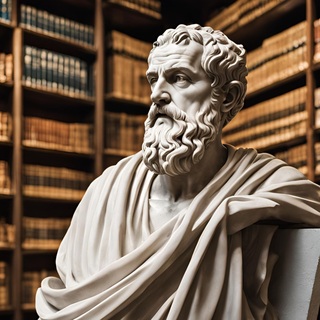
Seneca wrote.
To think we look forward toward death.
Most of death is already gone.
Whatever time has passed is owned by death.
Seneca is reminding us here that each day that passes is no longer ours and each moment that we are alive we actually get closer to death.
In the time you have been listening to this,
You are actually closer to death than you were at the start.
Time is contagious.
It eats up everything in its path.
You can imagine it like a stream and you are floating.
There is no getting off and at the end,
There is a massive waterfall that will carry you to your death.
That is the fate of you and the fate of everyone.
How does this knowledge make you feel?
Does it make you nervous or want to cling to life?
Does it make you want to find a way out?
Is there a way you know of that can help you enjoy the journey and the feeling of being swept away by time without the fear of the waterfall beyond?
Life is passing us by and there is nothing that we can do.
Point three.
We have limited time for spiritual practice.
Let's continue this analogy of you floating on a river of time with a waterfall at the end.
What are some of the things you could do to prepare for the inevitable?
Remember there is no getting off this stream,
No way of avoiding the end.
How does knowing this help you decide on how you spend your time?
In a very practical way,
I want you to guesstimate how many hours you spend watching TV or even choosing what to watch.
How much time you spend on activities that don't interest you,
That by your own admission are a waste of time.
How much time do you spend being angry or upset or lazy?
Then think of how many hours you spend doing things that light you up,
Helping others,
Enriching your life and the life of others in the world.
As you guesstimate those numbers,
Which one's the biggest?
Can you change that?
This concludes part A which is all about recognizing the necessity for you to take what's left of your life and live it well,
Because it will definitely end.
Part B.
Tomorrow is never promised today.
You are now aware of death as an inescapable event,
But our minds can sometimes get a bit tricky and they can make us believe that death is a long time in the future.
So let's deal with that with the next three points.
Point number four.
Life and death are uncertain.
I'm sure you're aware that life expectancy has vastly improved in the last hundred years.
However,
When we think of this average age of 80,
It's easy to think that this is a requirement,
Not an average.
The reality is life can slip by at any time.
Sometimes it happens even at birth,
Or as a teenager or young adult,
And then sometimes as an old adult.
Life is routinely taken from people.
Just in the time that you've been listening to this meditation,
Over a thousand people have died.
And guess what?
None of them woke up this morning thinking,
I think today's the last day of my life.
Today is my death day.
None of them thought that today would be the last chance they'd have to do anything.
You are no different.
Even today could be your last day.
Point number five.
There are a thousand ways to die.
Death has many helping hands.
Sometimes it comes externally as in an accident,
In a car crash or being hit by a car,
Maybe a plane crash or an attack.
Even mother nature can deliver the blow itself,
With a storm,
A flood,
Earthquake or fire.
Sometimes it comes from our own body,
A blood clot in your brain,
A virus that's undetected,
A cancer that emerges,
A sudden heart attack,
An infection that gets out of hand.
Your body spends its life fighting off the inevitable until it loses.
Sometimes it's even things that are good for us that kill us,
A medicine or treatment that goes wrong,
An allergic reaction to food.
The sports we love can kill us.
Even the house that is usually our sanctuary can be our death trap.
Take a moment and imagine all the ways you could die.
All the ways other people have died.
Point number six.
The human body is fragile.
You are only ever one heartbeat,
One breath away from death.
The human body is incredible,
But the smallest change to the delicate balance can be enough to end it.
Too much or too little of something and you're gone.
Too much or too little of air and that's the end of you.
Too much or too little of food,
Again,
Your demise.
Even something as simple as water can kill you if it has a pathogen in it or you drink too much.
A small cut can become an infection,
Sunburn can become cancer and blood vessels in your brain sometimes just burst.
The older you get,
The more you can feel these changes in your body,
The slow breakdown of tissue and bone.
And it can only last so long before eventually your body perishes.
Now as we conclude part B,
Reflect on the fact that not only will you certainly die,
But it could happen right now.
Know that your body is fragile and that death can come at any time.
Potsi Only our spiritual endeavors can help us at death.
As my teacher used to say,
I've never seen a hearse with a trailer.
His point was that we cannot take anything with us at death,
We've got to do it on our own.
Even on our deathbed,
The majority of what we possess is useless.
The exception of this,
Of course,
Is our state of mind,
The peace of mind that we have led a good life and our ability to accept how things are without attachment,
But with love.
A tricky thing to do,
Something that takes our entire life to get right,
However long that is.
The last three points help you realize this.
Point seven.
Relationships are so important,
So you'll be forgiven for thinking that your loved ones will help you in death,
But the reality is they won't.
Often the first thing people do when they think of death is want their loved ones to be there,
But the reality is they cannot help you,
They cannot stop the inevitable,
And more than likely they won't even know what to say in that moment.
Dying is a solo sport.
Ironically it is this attachment to others that actually makes life harder.
We should love those that are close to us,
But not in a way that we cling to them.
This is a tough thing to put into practice,
And this is why we have to start now and practice.
Practice the disattachment to others,
Not the stopping of loving of others,
But just the attachment.
Point number eight.
Things cannot help you.
At the end of the day,
The king and the pawn go back to the same box.
We can spend so much of our life accumulating stuff thinking that it will help us in every situation.
In some cases it is correct,
But not in death.
If anything,
If we are too attached to the things that we own,
The act of dying becomes even harder as we want them one more time,
We want to cling on to them.
So we start the process now of detaching from the things that we own.
Failure to do so means that the things we own end up owning us.
Point number nine.
Your body cannot help you.
We have already discussed how the body is fragile,
But being detached from our body is tough.
Our body is like our best friend,
It has never left our side,
It knows us intimately,
We have experienced everything together.
You have cleaned it,
Grown it,
Fed it and cared for it.
In return,
It has protected you and allowed you to interact with the universe itself through action and observation.
However,
It is not impervious to death,
It is a physical thing and so it belongs in the physical realm,
It belongs to this world,
But your soul does not.
You cannot take your body with you and you cannot avoid pain or the ultimate demise of it.
When it comes to death,
Its role has come to an end.
Like a vehicle that transports you to your destination,
At some point you must exit,
You must leave it at this place.
Begin to become aware of the limitations of your body now and begin to detach from it.
Feel how your body is still but your mind and your soul is still active.
You exist outside of your body too.
These final three points allow us to release that pain of death that is largely due to our attachments.
They route us into this world which death rips us from.
By reducing the attachments we can more easily move from our life to our death.
This concludes our meditation.
I know many emotions may come up,
Sadness,
Loss,
Helplessness,
But remember your intention.
This meditation is designed to help you lead a life more abundant,
More free.
To soften the blow of death,
Not to bring it on prematurely.
To summarize,
You will die and it can happen in many ways at any time.
Use your time wisely to find peace and do only what matters.
Namaste.