The world’s largest free audio library for everyday wellbeing
Attention & Awareness
Koan practice is a Zen meditation method in which a practitioner works with a paradoxical question that cannot be resolved by logic, using it to move beyond conceptual thinking toward direct awareness (Ronell, 2004), (Hooper, 2007).
Last Updated
2 Jul 2026
We are still reviewing this page. Our research team checks every technique page for accuracy and evidence quality before final release. Details may change as that review completes. The evidence badge shows our current reading of the published research.
RECOMMENDED DOSE
No direct dose evidence; editorial synthesis. A short, regular sit lets a newcomer become familiar with holding a koan without strain or discouragement. Treat this as a starting point only.
No direct dose evidence; editorial synthesis. Once seated practice feels stable, a longer and more frequent sit supports sustained inquiry, consistent with common seated-meditation conventions.
No direct dose evidence; editorial synthesis. A daily longer sit reflects a committed practice level and is best undertaken with support from a teacher; scale down if fatigue or discomfort arises.
Session length
Session length: 10–15 minutes
10
MIN
How long each individual practice session should last from start to finish.
Frequency
Frequency: 3–5 days
3
DAYS
The number of days per week to fit a session into your routine.
Session length
Session length: 20–30 minutes
20
MIN
How long each individual practice session should last from start to finish.
Frequency
Frequency: 5–6 days
5
DAYS
The number of days per week to fit a session into your routine.
Session length
Session length: 40–45 minutes
40
MIN
How long each individual practice session should last from start to finish.
Frequency
Frequency: 7 days
7
DAYS
The number of days per week to fit a session into your routine.
About this card. No direct dose-response literature exists for koan practice; these figures are conservative starting points drawn from general seated-meditation conventions. These recommendations are not a substitute for personalised guidance from a qualified practitioner.
Quick answers to what people most often ask. Each card links to the deeper section below.
evidence
No randomised trials, systematic reviews, or physiological studies isolate koan practice, so its effects remain descriptions of the tradition rather than tested findings. Philosophy and Zen scholarship characterise the koan as a method for reaching the limits of conceptual, analytical thinking, and related Zen meditation as cultivating direct, non-conceptual awareness.
Read moregood for
Koan practice suits people drawn to a demanding, insight-oriented meditation who want to question the nature of thought and self rather than simply unwind. Traditionally it is undertaken by committed students working closely with an experienced teacher. It is not established for managing acute distress, trauma, dissociation, or any diagnosed condition.
Read moresafety
Most healthy adults can practise koan practice at low risk, but it deliberately builds and holds mental pressure rather than calming. People managing trauma, dissociation, acute anxiety, or a vulnerability to psychosis should approach carefully with professional and teacher support, since loosening the fixed sense of self may feel disorienting rather than settling.
Read morehow it works
Koan practice works by frustrating the thinking mind until it lets go. Because the question cannot be answered by logic, the habit of reaching for a tidy conceptual answer wears down, loosening the grip of analytical thought. Zen accounts then describe a shift toward direct, non-conceptual knowing that arrives before experience is named.
Read moreA Zen meditation method that works with a paradoxical question, unsolvable by logic, held continuously to move past conceptual thinking toward direct, non-conceptual awareness (Ronell, 2004).
A teacher assigns a specific koan, a paradoxical question or phrase such as Zhaozhou's 'Mu' or 'What is the sound of one hand clapping?'. The practitioner holds it continuously, in seated meditation and throughout daily life, without trying to solve it intellectually, until the questioning intensifies into what the tradition calls great doubt. Periodic meetings with the teacher check the practitioner's engagement and pace the mounting pressure toward a breakthrough, known as kensho or satori, a direct and non-conceptual recognition rather than a worked-out answer.
Koan practice is not a riddle or brain-teaser to be solved by clever reasoning; the aim is to exhaust logical thinking, not to win at it. It differs from breath-focused or mantra meditation in that the object of attention is an unanswerable question. It is most associated with the Rinzai school and contrasts with the Soto emphasis on just sitting. It is also distinct from the casual use of 'koan' to mean any puzzling saying; here it is a formal practice guided by a teacher within a lineage.
Not to be confused with
Riddles and brain-teasers
A koan looks like a riddle but is not one. Riddles have a clever answer you arrive at by reasoning; a koan is designed to defeat reasoning, and treating it as a puzzle to be solved intellectually misses the point of the practice.
Mantra repetition
Both koan work and mantra practice involve holding something continuously, but a mantra is a sound or phrase repeated to steady and settle the mind, while a koan is a question held in unresolved doubt precisely to unsettle habitual thinking.
Positive affirmations
Affirmations are statements you repeat to reinforce a belief or mood. A koan is the opposite in spirit: it is not an assertion to internalise but a paradox that dismantles the mind's attempt to settle on any fixed answer.
Koan practice appears to work by frustrating the thinking mind until it lets go. Because the question cannot be answered by logic, the mind's habit of reaching for a tidy conceptual answer is progressively worn down, a loosening that scholars describe as working past the limits of conceptual, analytical thinking (Hooper, 2007). As that grip eases, Zen accounts describe a shift toward non-conceptual awareness, a direct kind of knowing that arrives before experience is named or explained (Sharf, 2014). Both descriptions come from philosophical and historical scholarship on Zen rather than from laboratory measurement, so they are best read as how the tradition understands the practice working, not as tested findings for koan work specifically.
That stuck feeling of chewing on a problem the thinking mind cannot crack starts to ease when a koan simply refuses to resolve. Holding a paradox that logic cannot answer is described as a way of loosening conceptual, analytical thinking (Hooper, 2007), so beliefs and assumptions that felt like solid facts can begin to feel more like ideas you are holding than fixed truths.
When the mind finally gives up trying to solve the koan, experience can turn vivid and immediate, a sound simply a sound, without the running inner commentary. Scholars describe koan-style Zen as cultivating non-conceptual awareness, a direct mode of knowing that arrives before words and labels take over, though this comes from accounts of related Zen methods rather than koan practice itself (Sharf, 2014).
What koan practice does in the body has not been directly measured, so there is no reliable account of specific changes in heart rate, breathing, or brain activity during the practice. What practitioners describe is more experiential than physical: a build-up of mental pressure and effortful concentration as the question refuses to resolve, sometimes followed by a sudden sense of release or spaciousness. Broader Zen meditation has drawn some neuroscientific interest, but those observations concern the wider practice family, not koan work specifically, and should not be read as measured effects of koans.
Direct clinical evidence for koan practice is essentially absent, so this is best described at an emerging, tradition-level tier rather than as a set of proven benefits. What the available scholarship supports is descriptive: the koan is characterised as a way of working past conceptual, analytical thinking (Hooper, 2007), and related Zen methods are described as cultivating a direct, non-conceptual awareness (Sharf, 2014). These are accounts of what the practice is understood to do, not measured outcomes. What is not supported: there are no randomised trials, no systematic reviews, and no physiological studies isolating koan practice, and no basis for claiming it treats anxiety, depression, or any diagnosed condition.
Most of what has been written about koan practice comes from philosophy and Zen scholarship rather than clinical study. Scholars describe the koan as a method for reaching the limits of conceptual, analytical discourse (Hooper, 2007) and trace related Zen meditation toward a direct, non-conceptual awareness (Sharf, 2014). No randomised trials, systematic reviews, or physiological studies isolate koan practice itself, so its reported effects remain descriptions of the tradition rather than findings from controlled research.
0
Meta-analyses
0
RCTs
0
Systematic reviews
0
Observational
5
Pilot
Outcomes measured
| Outcome | Effect size | 95% CI | N | Comparator | Source |
|---|---|---|---|---|---|
| anxiety | reported narratively | 95% CI -14.67 to -3.72] | — | — | Kiropoulos et al., 2026 |
The research is useful for setting expectations, but study methods and participant groups vary. Treat the findings as general guidance rather than a promise about any single session, and not a replacement for clinical care.
Avital Ronell (2004). Koan Practice or Taking Down the Test. https://doi.org/10.1080/1353464032000171091
2004
Finding: This scholarly essay examines koan practice as a Zen contemplative method rather than testing it in a trial, and it makes one point clearly: a koan is not a riddle waiting for a clever answer. Instead, the practice deliberately pushes against the reach of ordinary logical, step-by-step reasoning, using a paradoxical question as a device to work beyond it. For someone considering the practice, the takeaway is that "getting stuck" on a koan is not failure but the point, since the aim is to loosen the grip of analytical thinking rather than to solve a problem. Because this is a conceptual, humanities-based discussion and not a study measuring effects on stress, mood, or attention, it explains what the practice is rather than showing what it does for practitioners.
See full citation in referencesCarl Hooper (2007). Koan Zen and Wittgenstein's Only Correct Method in Philosophy. https://doi.org/10.1080/09552360701708753
2007
Finding: This philosophical analysis compares koan Zen with Wittgenstein's idea of the "only correct method" in philosophy and argues that both work by setting limits on conceptual, metaphysical reasoning rather than by adding new ideas or answers. For someone practising, it reframes a koan not as a riddle with a clever solution but as a device that deliberately blocks the usual logical, analytical mind, so the point is to work past habitual reasoning rather than think your way through it. This is a humanities essay rather than a measured trial, so it describes how the practice is understood, not any effect on the brain or on stress; there are no participants, outcomes, or numbers here.
See full citation in referencesLitza A. Kiropoulos, Trevor J. Kilpatrick, Tomas Kalincik, Leonid Churilov, Richard Macdonell, Neil Shuey (2026). A tailored cognitive behavioural therapy intervention for depression in those newly diagnosed with multiple sclerosis (ACTION-MS): A randomised, assessor-blinded, active comparator trial. https://doi.org/10.1016/j.jad.2026.121917
2026
Finding: In this randomised trial, adults recently diagnosed with multiple sclerosis who received a therapy program tailored to that early, uncertain period showed a clear drop in anxiety compared with those given standard support, with the measured difference pointing consistently toward less worry rather than more. For someone navigating a stressful new diagnosis, this hints that structured mental-health support during that window can meaningfully ease the emotional load. Keep in mind the study looked at a specific group, people newly diagnosed with MS, and tested a formal cognitive behavioural program rather than koan practice itself, so it speaks more to the value of early, targeted support than to this technique directly.
reported narratively
Robert Sharf (2014). Mindfulness and Mindlessness in Early Chan. https://doi.org/10.1353/pew.2014.0074
2014
Finding: This work of Buddhist studies scholarship traces how koan-style meditation (known as kanhua practice) took shape within Chinese Chan Buddhism, arguing that eighth-century Chan teachers were already experimenting with new, more accessible meditative methods that later crystallised by the Song era. It describes these techniques as aimed at cultivating a direct, non-judgmental awareness that steps back from ordinary discursive thinking, which lines up with how koan practice is often understood today. Because this is a historical and textual study rather than a clinical trial, it tells you about the roots and intent of the practice, not about measured effects on the body or mind, and its descriptions cover the broader Chan and Zen family rather than koan work alone.
See full citation in referencesSteven Heine (2021). Just Sitting and Just Saying: The Hermeneutics of Dōgen’s Realization-Based View of Language. https://doi.org/10.3390/rel12020081
2021
Finding: This scholarly study traces how the 13th-century Zen founder Dōgen used deliberately paradoxical, puzzling language to express a state of "non-thinking" reached through meditation, treating riddling speech as a way to dissolve either-or distinctions like delusion versus insight or speaking versus silence. For a practitioner, it clarifies why the strange, self-contradicting phrases you meet in Zen are meant to point toward a direct shift in awareness rather than to deliver a logical answer you can reason your way to. Keep in mind this is a historical and textual analysis, not a measurement of any effect on wellbeing, and it focuses on Dōgen's Sōtō tradition rather than the Rinzai style of koan work specifically.
See full citation in referencesKoan practice grew out of Chinese Chan Buddhism, where scholars describe distinctive meditation methods emerging by the Song era, and was later refined in Japanese Rinzai Zen, the school with which it is most closely associated (Sharf, 2014). The Rinzai teacher Hakuin Ekaku systematised the koan curriculum in the eighteenth century, and Zen traditions have long used paradoxical language to point toward a mode of awareness beyond ordinary thinking (Heine, 2021). These roots help explain the practice's form, the teacher-assigned question, the sustained doubt, and the emphasis on a breakthrough rather than a clever answer, not its clinical effects.
For most healthy adults, koan practice is low-risk. It works differently from calming meditation, though. Rather than settling the mind, it deliberately builds and holds mental pressure: the sustained, unresolved questioning that the tradition calls great doubt. For many people that pressure feels like productive frustration, and the loosening of a fixed sense of self can feel freeing. A few situations still call for real caution. Because the method loosens de-identification, your habitual sense of being a solid, thinking self, it can feel destabilising rather than liberating for people in acute distress, working through trauma, or prone to feeling detached from themselves. These cautions come from how the practice is traditionally taught and from its proposed mechanisms, not from safety trials, since there is little modern clinical research on koan practice specifically. The practice is traditionally done alongside an experienced teacher, and that guidance matters most when difficult states surface.
People managing trauma, dissociation, acute anxiety, or a vulnerability to psychosis should approach koan practice carefully, ideally with both professional and teacher support. Deliberately sustaining unresolved doubt and loosening the ordinary sense of self may feel disorienting rather than settling for them. This caution is drawn from how the practice is taught and from its proposed mechanisms rather than from measured adverse effects, since no study has examined koan practice in these groups. Anyone currently in acute distress, or feeling unsteady or detached from themselves, is better served by working with a mental-health professional first.
Koan practice does not settle the mind the way calming meditation does; it deliberately builds and holds mental pressure through sustained, unresolved questioning. If you are currently in acute distress or acute anxiety, that mounting pressure can feel overwhelming rather than clarifying. Prioritise mental-health support first, and take up intensive koan work only once you feel reasonably steady. This caution reflects how the practice is traditionally taught and its proposed mechanisms, not measured adverse effects.
Because koan practice loosens de-identification, your habitual sense of being a solid, thinking self, it can feel destabilising rather than freeing for people processing unresolved trauma. Work with both a qualified teacher and a mental-health professional, keep sessions shorter, and stop if inward focus intensifies distress. No study has examined koan practice in people working through trauma, so this is a practice-informed, mechanism-inferred caution rather than a measured risk.
The practice deliberately loosens the ordinary sense of a fixed, thinking self. For people prone to depersonalisation, a distressing sense of detachment from yourself, this can tip from liberating into disorienting. If the loosening of your familiar sense of self starts to feel unsettling or you feel cut off from yourself, ease off and tell your teacher or a clinician rather than pushing harder. This caution is drawn from how the practice works and how it is taught, not from safety trials.
People with a vulnerability to psychosis should approach koan practice carefully, ideally with both professional and teacher support. Deliberately sustaining unresolved doubt and loosening the ordinary sense of self may feel disorienting rather than settling. No study has examined koan practice in this group, so this caution comes from how the practice is taught and its proposed mechanisms, not from measured outcomes. Anyone feeling unsteady or detached is better served by working with a mental-health professional first.
Koan practice has no demonstrated effect on any medical or mental-health condition. Treat it as an insight-oriented practice rather than a treatment, and continue any care you rely on. Severe symptoms call for professional support rather than a contemplative technique. This reflects the near-absence of modern clinical research on koan practice specifically.
Koan practice is best approached in the company of a qualified Zen teacher rather than alone, since the tradition relies on that guidance to assign the question, check your understanding, and pace the building pressure when difficult states surface. A sensible starting point is conservative and unhurried, letting the great doubt intensify gradually while you stay attentive to your own steadiness. Treat it as an insight-oriented practice held alongside any care you rely on, not as a substitute for it.
Work with a qualified Zen teacher rather than practising alone, especially at the start. In the tradition the teacher assigns the koan, checks your understanding, and paces the building pressure, which is the main safeguard when hard states arise.
Before taking up intensive koan work, notice whether you feel reasonably grounded. If you are in acute distress, actively working through trauma, or prone to feeling detached from yourself, pause and seek professional support before continuing.
Hold the question with steady attention rather than forcing a breakthrough. Great doubt is meant to intensify slowly, and rushing it tends to add strain without deepening the practice.
If the loosening of your familiar sense of self tips into depersonalisation, a distressing sense of detachment from yourself, or into rising anxiety, ease off and tell your teacher or a clinician. These states are a signal to slow down, not to push harder.
Koan practice has no demonstrated effect on any medical or mental-health condition, so treat it as an insight-oriented practice rather than a treatment, and continue any care you rely on. These safeguards reflect how the practice is traditionally taught and its proposed mechanisms rather than findings from clinical trials.
This information is educational and is not medical advice. This practice is not a substitute for professional care and should not replace prescribed medication or treatment for any medical or mental-health condition. If you are managing a health condition or taking medication, talk with a qualified health professional before changing your practice. If you are in distress or crisis, seek professional support.
| Technique | Best for | Use with care | Evidence strength | Distinction |
|---|---|---|---|---|
| Shikantaza (Sōtō Zen "just sitting") | Practitioners who want a quiet, receptive, non-striving form of sitting rather than a teacher-assigned focal question. | If you find open, unstructured sitting leaves the mind drifting, the directed focus of a koan may hold attention more readily. | emerging EVIDENCE | Shikantaza is the objectless "just sitting" of Sōtō Zen, where you rest in open, choiceless awareness without a question or focal point. Koan practice moves in almost the opposite direction: it hands you a paradox you cannot solve and asks you to hold it until the questioning intensifies into great doubt. One relaxes into open presence; the other deliberately builds pressure toward a breakthrough. |
| Self-inquiry ("Who am I?", atma-vichara) | People drawn to directly investigating the sense of "I" without the Zen framing of great doubt, kensho, and teacher checking. | Like koan work, self-inquiry can loosen a familiar sense of self, which may feel destabilising for those managing dissociation or acute distress. | emerging EVIDENCE | Self-inquiry turns attention back on the questioner, asking "Who am I?" to dissolve identification with the thinking self. It shares koan practice's aim of loosening the grip of the intellectual "I," but it uses a single investigative question about the self rather than a teacher-assigned paradox carried toward a formal breakthrough within a lineage. |
| Mindfulness meditation | Everyday attention training and stress-related goals, and for those who prefer a widely taught practice that can be learned without a lineage teacher. | EVIDENCE | Mindfulness meditation trains present-moment attention, noticing breath, sensation, and thought without judgement and returning gently when the mind wanders. Koan practice is not about calm observation of the present; it deliberately frustrates the conceptual mind with an unsolvable question until ordinary logical thinking gives way. The goals and the felt experience differ: steady, receptive attention versus mounting doubt aimed at a non-conceptual shift. |

A koan is a paradoxical question a Zen teacher assigns, such as "What is the sound of one hand clapping?", that cannot be resolved by ordinary logic. It is used as a device to work past conceptual thinking, not as a riddle with a clever correct answer (Ronell, 2004), (Hooper, 2007).
+
A koan is a paradoxical question or phrase given by a teacher in Zen practice, and scholarship describes it as a way of reaching the limits of conceptual, analytical reasoning rather than a puzzle to be solved (Hooper, 2007). Unlike a riddle or brain-teaser, which has a clever answer you arrive at by thinking harder, a koan is designed to frustrate that reaching for a tidy answer, you hold it continuously until logical thinking loosens its grip (Ronell, 2004). This is a description of how the tradition understands the practice, not a claim about clinical or therapeutic effects.
No, not in the ordinary sense. A koan is not a riddle with a clever answer; Zen tradition describes it as a device you hold continuously to work past conceptual, analytical thinking rather than one you solve intellectually (Ronell, 2004), (Hooper, 2007).
+
No, not as you would crack a puzzle. In the way the Zen tradition and scholarship describe it, the koan is held continuously through sitting and daily life, and its point is to wear down the mind's habit of reaching for a tidy conceptual answer rather than to reward one (Ronell, 2004). Scholars characterise it as a way of working past the limits of conceptual, analytical thinking (Hooper, 2007), so treating it as a problem to solve intellectually is understood to miss the practice. This is how the tradition frames the practice, not a tested clinical finding.
Not really. There are no randomised trials, systematic reviews, or physiological studies that isolate koan practice, so it cannot be said to be scientifically may "work." What exists is philosophical and Zen scholarship describing it as a way of moving past conceptual, analytical thinking (Hooper, 2007).
+
Not really. Direct clinical evidence for koan practice is essentially absent: no controlled trials, systematic reviews, or brain and body studies have tested koan work specifically, so any claim that it "works" would go beyond the evidence. Scholars describe the koan as a device for reaching the limits of conceptual reasoning (Hooper, 2007), and related Zen methods as pointing toward a direct, non-conceptual awareness (Sharf, 2014). These are tradition-level descriptions of what the practice is understood to do, not measured outcomes, and there is no basis for saying it treats any condition.
In theory, it wears down the mind's habit of reaching for a tidy answer. Because a koan cannot be solved by logic, Zen scholarship describes it as pushing past conceptual, analytical thinking so a more direct, non-conceptual awareness can surface (Hooper, 2007), (Sharf, 2014). This is how the tradition explains the practice, not a tested cognitive change.
+
In theory, holding a question that logic cannot resolve gradually frustrates the mind's usual reach for a neat conceptual answer. Scholars describe the koan as a way of working past the limits of conceptual, analytical thinking (Hooper, 2007), loosening identification with the thinking self until related Zen accounts say a direct, non-conceptual awareness, a knowing that arrives before experience is labelled, can emerge (Sharf, 2014). These are descriptions of how the tradition understands the practice working, drawn from philosophical and historical scholarship rather than from measured or tested changes in koan practitioners.
Great doubt (taigi) is the intense, sustained state of unresolved questioning that builds as you hold a koan you cannot solve. Zen tradition describes it as a mounting pressure the practice deliberately cultivates rather than avoids (Hooper, 2007).
+
Great doubt, or taigi, is the name Zen gives to the mounting pressure that accumulates as a practitioner keeps holding a paradoxical question the logical mind cannot resolve. Rather than something to escape, it is deliberately cultivated: scholars describe the koan as a way of working past the limits of conceptual, analytical thinking, and great doubt is the felt build-up of that process (Hooper, 2007). This is how the tradition describes the practice working, not a clinically measured or physiological state.
Yes, it can. Because koan practice deliberately loosens your fixed sense of self and sustains unresolved "great doubt," it may feel destabilising or bring on detachment (depersonalisation, a distressing sense of being cut off from yourself) for some people, especially amid acute distress, trauma, or a tendency to dissociate. This is a practice-informed, mechanism-inferred caution rather than a measured risk, so work with a teacher or clinician.
+
Yes, it can. Unlike calming meditations, koan practice builds and holds mental pressure and loosens de-identification, your habitual sense of being a fixed, thinking self, which can feel unsettling rather than freeing for people in acute distress, working through trauma, or prone to feeling detached from themselves. Importantly, no study has measured adverse effects of koan practice specifically, so this caution is inferred from how the practice works and how the tradition describes it, not confirmed by safety trials. If inward focus tips into heightened anxiety or a persistent sense of detachment, ease off and seek teacher or professional support rather than pushing harder.
Use care. No study has measured koan practice's safety in people with anxiety or trauma, so it is not established as safe for these groups. Because it deliberately sustains unresolved doubt and loosens your usual sense of self, it may feel destabilising rather than settling; approach it with professional and teacher support, and seek care first if you are in acute distress.
+
Use care. This is a practice-informed, mechanism-inferred caution rather than an evidence-confirmed one: there are no safety trials or adverse-event studies of koan practice in people with anxiety, trauma, or dissociation (a feeling of being detached from yourself or your surroundings). Because the method builds and holds mental pressure and loosens identification with the fixed, thinking self, it may be disorienting rather than calming for those who are acutely distressed or working through trauma. The safe course is to work with a qualified teacher and mental-health professional, and to prioritise clinical care first if you feel unsteady or detached.
Traditionally, yes. Koan practice is meant to be done with an experienced Zen teacher who assigns the koan and paces the building pressure, especially at the start (Ronell, 2004). This is tradition-derived guidance rather than a tested finding, so treat teacher support as the sensible default, not a proven requirement.
+
Traditionally, yes. In the Rinzai school most associated with koan work, an experienced teacher assigns the koan, checks your understanding, and paces the mounting "great doubt," which is described as the main safeguard when difficult states surface (Ronell, 2004). No study compares solo with teacher-guided koan practice, so this is a practice-informed, tradition-level recommendation rather than an evidence-confirmed rule. Starting alone is not shown to be harmful, but the teacher relationship is the tradition's built-in support, and it matters most in the early stages or if inward pressure feels destabilising.
There is no set timeline. No study measures time to a koan breakthrough (kensho), and the tradition itself promises no schedule: a first encounter can feel like little more than repeating a strange phrase, while deeper shifts, if they come, tend to build over long, committed practice rather than arrive at once.
+
There is no reliable answer, and no number of sessions, weeks, or months can be quoted as evidence-based, because no research quantifies time to kensho (the breakthrough moment) and it is never certain. Traditionally, practitioners hold the koan continuously through sitting and daily life until the mounting pressure the tradition calls great doubt reaches a critical point, a process paced by an experienced teacher. What can honestly be said is descriptive rather than measured: the deeper shifts, if they arise at all, build gradually over sustained practice rather than at a fixed moment.
They move in opposite directions. Shikantaza is the objectless "just sitting" of Sōtō Zen, resting in open, choiceless awareness with no focal question, while koan practice, most associated with Rinzai Zen, hands you a teacher-assigned paradox to hold until questioning builds into "great doubt" toward a breakthrough. One relaxes into open presence; the other deliberately builds pressure.
+
They move in opposite directions. Shikantaza is the "just sitting" of Sōtō Zen, where you rest in open, choiceless awareness without a question or focal point, whereas koan practice, most closely tied to the Rinzai school, gives you a paradox you cannot solve and asks you to hold it until the questioning intensifies into great doubt aimed at a non-conceptual breakthrough (Sharf, 2014). This distinction is a tradition-level one drawn from Zen historical and philosophical scholarship rather than a clinical head-to-head; no direct comparative research contrasts the two practices. In short, one loosens into receptive stillness while the other cultivates mounting, directed inquiry.
A paradoxical question or phrase a Zen teacher assigns, such as "What is the sound of one hand clapping?", that cannot be answered by ordinary logic. It is held as a device to work past conceptual thinking rather than solved like a riddle with a correct answer.
A structured contemplative object used in Rinzai Zen to frustrate discursive, propositional reasoning and precipitate a non-conceptual cognitive shift.
The breakthrough moment in koan practice, a direct, non-conceptual insight in which the usual boundary between the observer and what is observed loosens. It is described as an experiential shift rather than an intellectual conclusion.
A reported altered state characterised by a transient dissolution of subject–object distinction and self-referential processing, described in Zen scholarship rather than measured in controlled study.
The intense, sustained state of unresolved questioning that builds as a practitioner holds a koan continuously. It is the mounting pressure the practice deliberately cultivates rather than something to be avoided.
A deliberately cultivated state of sustained cognitive tension arising from holding an unresolvable inquiry, framed in the tradition as a precursor to a non-conceptual breakthrough.
The school of Japanese Zen most closely associated with koan practice, whose koan curriculum was systematised by Hakuin Ekaku (1686–1768). It contrasts with Sōtō Zen, which centres on objectless sitting.
A lineage of Japanese Zen Buddhism that organises koan study into a structured, teacher-guided curriculum aimed at kensho.
The Chinese Chan practice of "observing the key phrase" of a koan, described by scholars as an early forerunner of later Rinzai koan work.
A Song-era Chan contemplative method focused on the critical phrase (huatou) of a koan, identified in historical scholarship as a distinctive meditation technique.
The "just sitting" meditation of Sōtō Zen, in which one rests in open awareness without a focal object or assigned question. It is often contrasted with the directed, question-driven approach of koan practice.
An objectless, non-directive form of Sōtō Zen meditation emphasising open, choiceless awareness rather than a focal anchor.
Breaking down habitual thought patterns and mental categories so they come to seem constructed and workable rather than fixed and absolute. In koan practice this is proposed to happen as the paradox wears down the mind's reach for a tidy answer.
Deconstructive processing: the systematic dismantling of habitual concepts and mental categories, revealing them as constructed rather than fixed. Proposed as a mechanism, not a measured effect of koan practice.
The process of loosening identification with thoughts, roles, and the sense of being a fixed thinking self, creating some distance between awareness and its contents. It often feels like discovering you are not simply your thoughts.
Disidentification or self-concept flexibility: the cognitive process of releasing identification with thoughts, emotions, and self-narratives, creating experiential distance between awareness and its contents.
Resting in direct experience before it is labelled, judged, or interpreted, so a sound is simply a sound without the overlay of inner commentary. Scholars describe this as the mode of knowing koan-style Zen aims to open.
Non-dual or non-representational cognition: direct, pre-linguistic experience without applied labels, categories, or conceptual frameworks, described in Zen scholarship as the aim of koan-style practice.
Zhaozhou's famous single-word koan, often translated "no" or "not," traditionally used as a beginning koan. Like other koans, it is held rather than answered.
A foundational one-word koan attributed to Zhaozhou, commonly assigned as an entry point in Rinzai koan curricula.
Avital Ronell (2004). Koan Practice or Taking Down the Test. https://doi.org/10.1080/1353464032000171091
Cited in: Faq, What it is
Carl Hooper (2007). Koan Zen and Wittgenstein's Only Correct Method in Philosophy. https://doi.org/10.1080/09552360701708753
Cited in: Benefits, Faq, How it works, Research, What it is
Litza A. Kiropoulos, Trevor J. Kilpatrick, Tomas Kalincik, Leonid Churilov, Richard Macdonell, Neil Shuey (2026). A tailored cognitive behavioural therapy intervention for depression in those newly diagnosed with multiple sclerosis (ACTION-MS): A randomised, assessor-blinded, active comparator trial. https://doi.org/10.1016/j.jad.2026.121917
Cited in: Research
Robert Sharf (2014). Mindfulness and Mindlessness in Early Chan. https://doi.org/10.1353/pew.2014.0074
Cited in: Benefits, Faq, How it works, Research, Roots and tradition
Steven Heine (2021). Just Sitting and Just Saying: The Hermeneutics of Dōgen’s Realization-Based View of Language. https://doi.org/10.3390/rel12020081
Cited in: Roots and tradition
Editorially curated. Tracks are not themselves clinically studied; evidence on the page applies to Koan Practice as a technique.
Beginner content for Koan Practice

★ 4.9
·
Talks
·
3 min
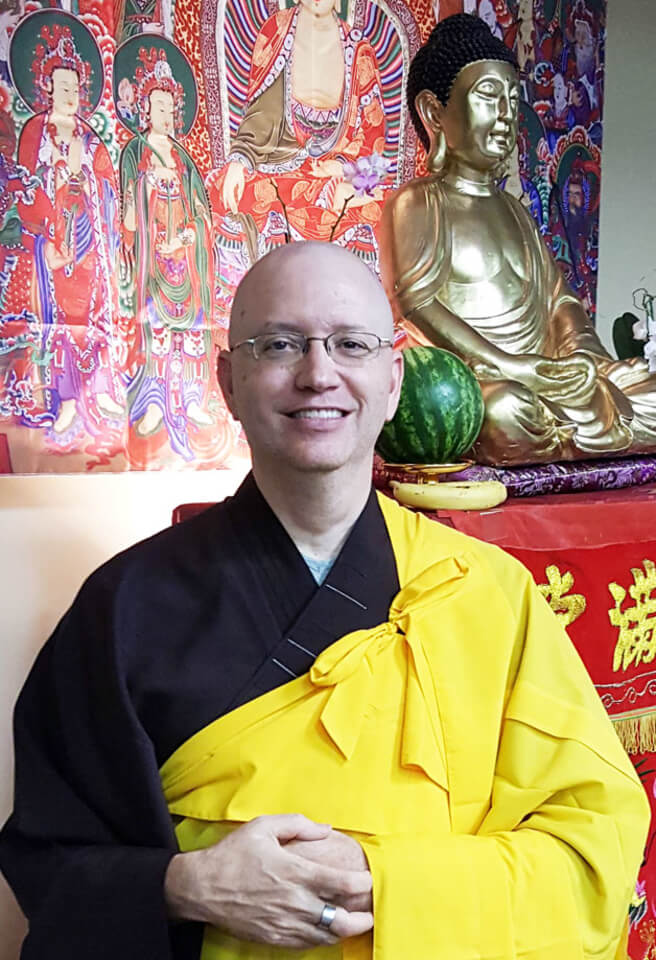
Ven Dr Douglas Myeong'il Cheolsoeng Gentile
How hard is Koan Practice?
Koan Practice uses a shared Play Page Large Label profile so duplicate taxonomy placements produce one public effort assignment.
3
Mental Effort
3 / 4
▾Emotional Depth
1 / 4
▾Physical Intensity
1 / 4
▾Prior Knowledge
3 / 4
▾Explore guided sessions to deepen your Koan Practice technique.