The path is about going deeper and it's about integrating what we realize in these experiences.
It's like a whole new life can open up.
["The One You Feed"] Welcome to The One You Feed.
Throughout time,
Great thinkers have recognized the importance of the thoughts we have.
Quotes like,
Garbage in,
Garbage out,
Or you are what you think ring true.
And yet,
For many of us,
Our thoughts don't strengthen or empower us.
We tend toward negativity,
Self-pity,
Jealousy,
Or fear.
We see what we don't have instead of what we do.
We think things that hold us back and dampen our spirit.
But it's not just about thinking.
Our actions matter.
It takes conscious,
Consistent,
And creative effort to make a life worth living.
This podcast is about how other people keep themselves moving in the right direction.
How they feed their good wolf.
["The One You Feed"] Hello everyone.
Just a reminder that all the extra support we're providing during this time is available at oneyoufeed.
Net slash help.
The free group coaching each week has been a wonderful way to meet so many of you and we're forming a really special community there.
So I'd encourage you to check it out.
Recordings of the sessions are also available and you can get all the details at oneyoufeed.
Net slash help.
Secondly,
Keeping a good perspective is more important than ever right now.
And I recorded a video teaching about three types of perspective and the three things that all unhappy people hold onto.
You can get free access to that at spiritualhabits.
Net.
Thanks for joining us.
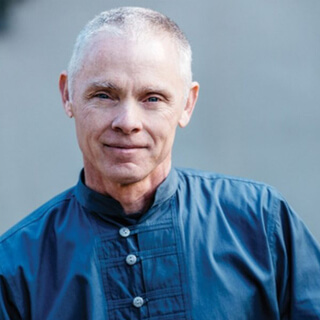
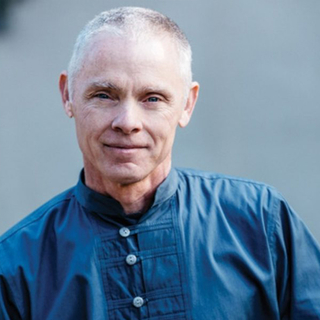
Our guest on this episode is Henry Schuchman,
A poet,
Writer,
And associate Zen master who lives in New Mexico where he teaches at Mountain Cloud Zen Center.
He's published eight books to date of fiction,
Poetry,
And nonfiction,
And writes regularly for Tricycle,
The New York Times,
And other publications.
In this episode,
Eric and Henry discuss his beautifully written book,
One Blade of Grass,
Finding the Old Road of the Heart,
A Zen Memoir.
Hi,
Henry,
Welcome to the show.
Eric,
Thank you so much for having me.
I am really happy to have you on.
We're gonna discuss your wonderful book called One Blade of Grass,
Finding the Old Road of the Heart,
A Zen Memoir in a moment,
But let's start like we always do with the parable.
There's a grandfather who's talking with his grandson.
He says,
In life,
There are two wolves inside of us that are always at battle.
One is a good wolf,
Which represents things like kindness and bravery and love.
And the other is a bad wolf,
Which represents things like greed and hatred and fear.
And the grandson stops and he thinks about it for a second and he looks up at his grandfather and says,
Well,
Grandfather,
Which one wins?
And the grandfather says,
The one you feed.
So I'd like to start off by asking you what that parable means to you in your life and in the work that you do.
It resonates very strongly with me,
And I feel that there have certainly been times in my life when I could sort of say I wasn't really good enough to say I wasn't really feeding the right wolf.
When I got into places of despair and nihilism,
And especially in my early adulthood,
For me,
It was learning really to begin to realize that there were choices,
Deep choices one could make about how one lived one's life,
How one experienced one's life.
It began for me in my mid 20s,
Early to mid 20s,
In a real way when I first took up meditation.
It was then that I realized I didn't have to be entirely driven by the forces that seem to have been mostly driving me,
Especially in my early adulthood,
Which were really around anxiety and stress and craving for acknowledgement.
And I had a lot of ambition in my early life.
I was trying to be a writer from my mid teens,
Actually.
And all of it had led to a pretty unhappy life.
And the moment I started meditating,
Meaning that on a daily basis,
I was being still for a chunk of time each day,
It was as if the dial on my nervous system could turn down,
And it stopped being so hyper active and so kind of overloaded and running so hot and hard.
And as my nervous system settled down,
I just started to realize that there was space to make choices,
To make decisions,
Not out of impulse and a sense of need,
But more out of well real choice.
And gradually as my practice sort of evolved and went on and I got into Zen and other kinds of Buddhism as well in time,
I realized when I hear that parable now,
It's like for me,
It's kind of describing practice because it says one wolf is about love and bravery,
And the other is about greed and hatred.
And in the Buddhist view,
All of us have what are known as the three poisons,
Which are greed and hatred or desire and aversion or desire and ill will and delusion,
Three poisons.
And to start practicing is to start recognizing them and to cease to be under their enchantment or under their spell.
And so when I hear the parable,
To me,
I wanna say,
Yeah,
Absolutely feeding the wolf that is about growth and capacity and space and love,
Always turning to where the greater love is.
But at the same time,
I kind of almost wanna say,
It's wise to make some kind of allowance for the other wolf.
It's like,
Something in me says,
It's good to know that I can slip into those old habits and that they're not banished exactly,
It's more that they're allowed for.
I don't know whether that makes any sense.
I had wrestled with negative side quite a bit in the course of my journey.
And I feel that I don't really wanna banish it.
That hasn't worked so well as understanding it,
Acknowledging it and allowing for it and giving it some kind of space,
But not letting it take over.
Right,
Totally makes sense.
Two things there,
I think,
Obviously,
There's stuff to be learned from these so-called negative emotions,
Right?
They're coming from something for some reason.
So there's something to be learned.
And then secondly,
I think what you say was so important is that when we just feel bad about ourselves for having them,
We just compound all the problems.
Yes,
Exactly,
Exactly.
And I found that in my journey,
Being able to see that underneath a lot of that negativity I wrestled with in early life,
There were just some wounds,
You know,
There's some basic pains and griefs and things that somehow I had missed in growing up.
And,
You know,
There's stories about that.
I certainly have worked with in therapy.
But,
You know,
To be able to open to what is painful,
For me,
Has been part of my journey into greater wholeness and greater wellbeing,
Rather than sort of banishing pain,
Learning how to open up to it and sort of be with it and offer it some kind of space.
That's proven to be a wiser path of growth and healing for me.
Yeah,
I agree completely.
One of the things in your story that I resonated kind of throughout it was you talked about,
Since early on in life,
You had mild,
Low-grade sort of depression,
Dysthymia.
Is that how you pronounce it?
Dysthymia?
Yeah,
I've heard it,
Dysthymia,
Yeah.
Dysthymia,
Yeah,
Yep.
You know,
You've had that,
And it was your companion for a long time,
Even as you journeyed deeper into your spiritual life,
Even as you had some pretty profound awakening and opening experiences.
And that describes me pretty well.
I've had some tremendous opening and awakening experiences.
And to find myself a little bit later,
Like,
Oh,
There's my old friend again.
Low-grade depression,
Here he is,
Hanging around.
And I just thought we could talk about that a little bit because I really resonated a lot with it.
And I think that that was part of your story that I kept really resonating with,
Was you kept growing spiritually,
And yet didn't make everything better.
And I don't think your message is like,
Oh,
You hit a point where it all goes away.
But you do have a message of a certain peace eventually coming.
For me,
It was like a kind of a seesaw for a long time,
Really,
Between really finding deep,
Deep peace and a great sort of intrinsic love in every moment,
At times,
And then just being sort of triggered right back into old contraction into depression or mild depression and the same old habits.
But there was a point in my,
I would say it was my long training under certain Zen teachers,
Who were very kind of patient and kind with me.
And I mean,
There's a moment in time when on a retreat,
Actually,
I just had a really,
For me,
It was a very deep experience where just everything,
Really everything just sort of fell away,
And there wasn't anything left.
And instead of it being like really a nihilistic kind of experience,
It was the exact opposite.
It was the cure for all nihilism,
I felt.
And after it,
Everything sort of came back in a new way.
And like there was nothing more precious than this moment,
Whatever it might be.
And that was over 12 years ago now.
And really something has been different since then.
It's not that I perfectly bless it and marvelous or anything like that,
But because I still have habits that I wish I didn't have,
But it has been really different.
It's a real different orientation kicked in where I just didn't get so caught by my sense of me.
I couldn't sort of say that it's vanished entirely forever.
I think it still comes back at times,
But it's not a problem.
And I haven't had depression like I used to in quite a long time,
Not really since that moment.
And I'm not claiming any great achievements spiritually or anything.
It's just that things have been remarkably easier and in a way that I never would have expected.
I always thought basically,
No matter what others may sort of find on this path,
I'm not cut out for that.
I can do a certain amount.
I can get a certain way down a path of spiritual growth,
But I'm always gonna get knocked back by my psychology.
It's never gonna really relinquish its hold,
But I was wrong.
There was something really unexpected did happen.
And again,
I don't wanna make it sound like I'm claiming some exalted status or anything at all.
And it's certainly not like I'm,
My wife knows perfectly well that I can get a bit down,
I can get a bit grumpy.
But it's so much less of a problem.
Right,
And I guess my question for you would be,
You'd had several of these sort of,
In Zen we call them Kensho moments,
Right?
These big awakenings where even your sense of self did fall away,
But then it seems to sort of come back and reconstitute itself in a more durable form.
Do you think it was the fact that as you matured in your Zen practice,
You had a better container for those things and that you were better able to take those experiences and integrate them and live them?
Or was there something about the depth of that other experience that was deeper and more final?
I'm kind of curious what you attribute to that sort of,
That turning point,
Because you'd had other pretty profound awakening experiences.
That's a great question,
I'm honored that you would even ask it,
But I think the answer is both.
Definitely the container was being expanded and made healthier through my training.
And a lot of,
I mean that really all goes down to my teachers who were just really wise and kind and patient with me.
So I think there was really as the container,
Let's say,
Was more and more ready,
It allowed,
Actually possibly I'd say it allowed for something deeper to happen.
Letting go thoroughly is really sort of difficult for us,
I think.
When I was 19 actually,
I had a sort of random awakening experience out of nowhere.
Without any interest in that kind of thing,
I wasn't into spirituality at all.
I was like a,
I'd grown up in Oxford,
England,
Son of academics,
And I was all set to be an academic myself,
If anything.
And then suddenly I just had this random moment of utter union with the world.
And it was the most beautiful thing that had ever happened to me.
And it came out of nowhere and it was a profound sense that I was just inseparable from the fabric of the universe,
Really was what it felt like.
And that the whole of creation was sort of immediately present right in the moment where I was.
It was all me and I was all this.
And there was no separation of any kind anywhere sort of thing,
Was what it felt like.
But when it,
And then it sort of faded.
And I walked around and kind of blissed for a few weeks.
And actually I was away from home at the time and I went home.
This is when I was 19.
And within half an hour of walking into my dad's house,
I was broken.
I was just a wreck.
I had a very,
In some ways,
Very privileged,
Culturally privileged childhood with my parents both being at the heart of the university and all that.
But it had also been difficult because we had a really difficult divorce situation when I was young.
And I'd had really bad eczema from the age of six months,
Right the way through childhood.
And so when I came home at that time after this opening,
I was really open.
And all the unhappiness of my childhood that I had kind of fended off and found ways not to feel in order to function as a child,
It all just sort of landed on top of me then.
And I had a kind of breakdown actually.
At the time I thought,
Oh no,
This is kind of the end of the world.
Whatever's going on is a disaster.
When I look back on it,
I realized,
Well,
No,
This was the other side.
This was like,
Got to reckon with the wounds.
And to only be sort of having a great expansive moment.
I mean,
That's lovely and wonderful.
And some ways,
There's some deep truth in that kind of experience.
But to have that without,
In my own case anyway,
Also learning how to be with my pain and wounds and grow in that way as well.
You know,
It just somehow in my biography,
I had to do both.
In a way what happened then was like the back and forth between oceanic expansiveness that I sometimes taste,
Especially when I started training in Zen.
And you know,
Real contracted anxiety and pain and depression,
Which I'd also experienced.
And finally,
I think,
You know,
Through different kinds of work,
Not just meditation,
By the way,
You know,
Dream work and other kinds of therapy and a lot of yoga and things.
I think it all helped to reach a point where I could let go more thoroughly of the whole system is what it felt like.
And no longer needing to sort of go back and forth,
Really in the same way.
I've heard it referenced by Ken Wilber,
There's waking up,
But there's also growing up and cleaning up.
There's more to a well-lived robust life than just awakening experiences.
There's a lot of other stuff we have to work our way through.
At least that's been my experience.
I agree.
There are people like,
You know,
One or two of my teachers who don't seem to have needed to go through so much on the healing side,
But I think they just had happier childhoods.
Yeah.
Actually.
It could be.
I think some people are more damaged than others.
That's just a reality.
Yes,
I think so too.
And at a certain point I had this notion that,
You know,
Maybe people who are real deep seekers are more damaged.
They're carrying more trauma,
More traumatized,
And that's what makes them want this grand liberation of awakening.
But actually I don't believe that anymore.
I think because the people I see,
You know,
My colleagues in the world of meditation and awakening,
You know,
There are some who just didn't seem to have the same kind of need for so much healing work.
I don't know.
I guess we're all different.
So it's hard to lay down rules,
But it seems smart to acknowledge that,
Like you said,
That we're multi-dimensional,
We've got different facets and different aspects.
And to only work on one,
Like,
You know,
This sort of deep kind of spirituality,
It might be an unbalanced thing for some of us.
["In the Hall of the Mountain King"] In your epilogue,
You try to sort of summarize the book in a number of points.
And that was the second point.
You said some of us are gonna need other kinds of help along with meditation,
And the more that those different approaches understand and respect one another,
The better.
So that might lead me just maybe to go to three,
Because I think some of these points were a good summation of things.
And the third point you said,
".
.
.
One common misunderstanding of meditation in the West is that it's an individual undertaking.
I fell for that and fell foul of it.
In fact,
It's collaborative and relational,
At least if you want to make real progress.
" Could you share a little bit more about that and why that's the case?
Okay,
Thank you.
I mean,
I would say,
Like,
In my early years as a meditator,
You know,
Basically I was kind of given instructions and told to go and do them.
And I did it primarily alone.
I had a couple of friends who also did that kind of meditation.
It was TM,
By the way,
Which was really popular back in,
You know,
Late 80s in London.
It was more or less the only kind around.
I did it in the late 80s myself.
In Columbus,
Ohio,
Of all places,
I still can't believe one existed.
There was a TM teacher in Columbus,
Ohio.
Well,
They were tremendously successful,
You know?
Yeah.
Maharishi Mahesh really was brilliant at sort of marketing and giving it a great image.
Yeah.
So,
Yeah,
It was the first big form of meditation in the West that really got scaled up to a high degree,
I think.
But once I stumbled into Zen,
And by the way,
The reason I got into Zen was that I recognized that it understood.
You know,
That random moment I mentioned when I was 19 years old,
I knew when I read some Zen writings,
I just could sense that it understood what I'd experienced then.
And luckily enough,
I think I was right.
But once I got into Zen in a serious way,
I kind of got the sense that you're supposed to have a teacher.
The way I'd grown up and the character I had,
I just didn't really trust anybody,
Not really.
I certainly didn't trust some trumped up would-be spiritual teacher,
You know,
Zen or otherwise.
So I wasn't prepared to entrust myself to a teacher.
So I'd go and do a lot of retreats and I went to lots of different centers of different kinds of meditation,
Actually.
And,
You know,
I'd listen to the teachers' talks,
You know,
They'd resonate to some degree or not.
But the idea of actually becoming a student,
It just,
I was too independent and,
You know,
I just didn't trust people enough.
And I had a career by then as a writer.
I was,
You know,
I was lucky in that regard.
I got to work as a writer full time from fairly early in my life.
And there was a reason I had a career like that,
Which was that I just wasn't prepared to put myself under somebody else's authority if I could avoid it.
And so I couldn't see my way to having a teacher until finally,
Somehow I was just kind of ready and met a wonderful teacher,
Actually,
Funny enough,
In my hometown,
And started studying in a serious way with him.
And that was when suddenly the whole thing just went into a whole different gear.
Because I realized,
Man,
It's not just about meditating.
There's a path here.
You know,
Things can happen.
Whatever I would experience by then and by way of the,
You know,
Occasional,
I think by then maybe a couple of strong sort of awakening or opening experiences.
That was in a way only the start.
Like what this teacher,
John,
He was called John Gaynor,
What he represented was that those were like doorways and beyond them there's a path.
And the path is about going deeper and it's about integrating what we realize in these experiences.
And,
You know,
It's like a whole new life can open up.
It's just sort of having the experiences is only step one kind of thing.
And that path couldn't be embarked on without a guide.
And,
You know,
That was a huge thing for me to,
First of all,
To realize that,
And second to realize that I wanted it.
That was like a huge kind of crumbling of defenses in my psyche in a beautiful way to open up to,
Wow,
Somebody might help me in this way that matters so much to me,
But I'd never known where to turn really.
It was an awesome,
Or I'd known where to turn,
But not turned wholeheartedly enough.
And suddenly to realize that I could.
It was a wonderful thing.
It was really like scales of armor falling off my heart.
And so the teacher was a big part.
How important was the community around the teacher for you early on?
Well,
That took me longer to realize actually.
Because I was definitely not somebody who sort of terribly liked institutions,
You know?
My main experience with them was in education and I was kind of rebellious.
You know,
I grew up admiring Peter Tosh and Che Guevara.
And most institutions were things that ought to be torn down as far as I was concerned.
So even when I went to a Zendo,
Which is a pretty radical kind of institution in the West,
At least in those days,
Even then I didn't really think of it as a home.
You know,
I thought of somehow something intrinsically threatening about any institution almost,
You know?
And gradually,
Gradually I just got softened by sitting with people.
I think it was mostly just sitting in a lot of company of other people,
Being silent in a room.
I think it just kind of taught me that I'd had human beings wrong.
Whatever assumptions and feelings and attitudes I'd had a long time unconsciously and maybe also consciously towards others,
They were pretty much all wrong.
And sitting in silence with others,
I think was the thing that allowed me to open that up.
And I started to just sort of fall in love with,
Not exactly literally,
But you know,
Kind of feel like I was falling in love with the room,
With the people in the room.
It's a beautiful idea.
And I think that's kind of been me most of my life.
I've been like,
I'll figure this out.
I'll read about it.
I'll meditate.
I'll do all this stuff.
And it's been in the last several years where I've really went,
Hey,
I think it's time to pick a path,
Pick a community,
Like try and ground myself and stop being the lone wolf in that regard.
Yes,
That's a phrase I think I use in my book here and there.
I was like a snarling lone wolf.
Well,
There's the wolf again.
Yeah,
Yeah.
That's the bad wolf,
The loner.
The wolf,
Yeah,
Thinks he's got to do it alone and must do it alone.
And everybody else is like,
Keep them at your distance.
This is something else that resonated throughout your book.
You said,
Fourth,
Well,
For some,
It may be helpful to find a live-in community.
We don't have to do that.
And further,
We don't have to go to a community that is very non-Western.
We doesn't have to be,
These teachings don't have to be presented as exotic.
That we can,
A,
Be a lay person,
A person in the world,
And work within our cultural trappings to some degree.
Yeah,
I feel that quite strongly,
I think,
That we have that choice.
So,
From my point of view,
Sort of like the deep teachings of Zen,
They don't have to be conveyed in robes with a lot of ritual.
I actually happen to have pretty short hair,
But you don't really have to have a shaved head.
And really,
The deep teachings are about what we humans are and how we could best live or how we can live good and helpful lives and how we can tame our harmful impulses and how we can grow in,
Hopefully,
In wisdom of different kinds.
One kind of wisdom being how to live less harmfully to ourselves and to others,
How to love ourselves and others more.
And another kind of wisdom being this more deep experiential openings to the nature of the present moment that on one level,
This present moment is just as it appears.
There's things in front of us,
Like right now there's a computer screen and Eric's on the other end of the line and I know it's Henry sitting here in the sitting room in his home in Salafeh.
There's a little wind outside and the bare early spring trees are stirring slightly and the grass is,
And all that's just as it is.
But at the same time,
There's an infinite expanse right here and there's a boundlessness that's utterly beautiful.
There's a level of total intimacy that even in an ordinary moment,
If we're open to it,
We can sense that we're just part of it.
We're part of one whole,
Which is presenting itself in just this way just now.
And that's always available.
It's always right here and right now.
And learning,
I mean,
The training,
And I would call that another level of wisdom,
So to speak.
We are humbled by it because it's just awesome to be part of one enormous reality,
And we're inextricably part of it.
It's an amazing thing to realize and to sense,
To have the kind of training that can allow us first of all,
To discover that for ourselves.
I think that's an incredible thing,
But then to go on,
And it's not that easy,
I would say for most of us,
But hopefully eventually just be able to sort of sense it,
Maybe not all the time,
But often.
And whenever we kind of remember to,
Oh yes,
Just coming back and realizing this is here,
This whole is here right now,
And all is one,
But it's also just each thing exactly as it is.
And I find that just so beautiful and it fills my heart with love whenever I remember.
And to have the possibility of growing in those kinds of ways just doesn't seem to me to need elaborate foreign costumes or elaborate foreign rituals.
It just doesn't seem necessary to me.
I know that there are other forms of Buddhism in the West that are much more traditional and follow the customs and the liturgies of Asian forms.
And I respect that deeply.
I'm personally,
I'm just glad that that's not the only way.
I wouldn't say Indians.
It's something you just were saying reminded me of a couple of lines you wrote,
And I did want to get a couple of lines of the book in because you're such a beautiful writer.
You said you're talking about training as a lay person or a person who doesn't join a monastery.
You say it's not like a monastery,
This kind of training.
Life goes on.
You have to keep making sense of the ordinary daily grind,
But the training starts to infiltrate normal life,
And odd moments of joy and minor revelation fall on us as we push the toddler on the swing,
Or step off a cold street into a warm shop,
Or get into the car and listen to the choking of the starter motor.
Everyday sights and sounds start to hit us in a more immediate way,
And we meet them with appreciation.
Well,
I'm glad I said that.
I agree with that.
Yeah,
I could pull out hundreds of these,
But this is a good pivot point because you're also a poet,
And you are interested in poetry from very early on.
You talk a little bit about why Zen and poetry have such a close affinity with each other.
Yeah,
And I think that bit you just read speaks to that.
Thank you,
Because it seems to me it is about cherishing the everyday,
Cherishing the normal.
A moment ago,
I was talking pretty sort of cosmically about the vast boundless moment or whatever,
But actually,
However cosmic it may be,
It's showing up as just this tablecloth,
Just as it is,
And the lamp,
And the folded sweater,
And the water bottle.
Each thing is so precious.
This level of appreciation,
We could call that another facet of wisdom,
To be able to appreciate our life in the moment.
That means,
I think,
Well,
It's so amplified when we see that all things are just sort of freely arising in one great boundlessness.
It's so beautiful.
We don't have to maybe open up to that boundlessness to even just get the sense that whatever arises,
We know it's going to pass away,
And it's therefore so precious.
To be able or to be encouraged to find beauty in the most ordinary things is definitely part of the Zen tradition.
It's one of the reasons I love it.
Other forms of Buddhism maybe have less concern with externals.
They're more about internal experience.
Zen really loves to turn the lens outward and to explore our relationship with the world and to see the world as our ultimate teacher.
In a sense,
At the deepest level,
It's part of us.
It is us,
In a sense.
I don't want to sound too spooky to the listeners,
But there's a level where we can discover that in awakening experience and so on.
Even without that,
Just to sense the wonder of the ordinary.
If you just look at something simple like a glass of water,
Maybe standing in a bar of sunlight coming through an open window,
What an amazing thing it is to take a step.
Well,
Actually,
That's a really amazing thing.
There's one famous Zen story where a Zen master is walking with some other kind of practitioner who's maybe more like a magical practitioner.
They come to a river,
And this other practitioner just walks across it.
He can walk on water.
The Zen practitioner wades across the river.
He says something like,
You rascal.
If I'd known you could do that,
I'd never have walked all this way with you.
There's something wrong with valuing superhuman powers because it distracts us from the miracle of this moment just as it is.
Actually,
We should really be appreciating the miracle of just being able to sit here and chat.
One of the things that draws me to Zen the most is that I'm always pointed back to my immediate experience.
I don't have to be somewhere else.
I don't have to go somewhere else.
I don't have to do something.
It's always pointing me back.
It's right here,
Right here,
Right here,
Over and over and over.
For someone who spent a lot of his life thinking that it was always somewhere else,
It's a great constant reminder.
No,
It's right here.
It's really good for me.
Yeah,
I'm sure it's good for all of us.
I think you talked about that's what poetry does.
Poetry is the practice of really paying very close attention.
Exactly.
I'm sorry.
I was going to come around to that.
I forgot.
Exactly.
Poetry has that in common,
That real close attention and being able to render it in hopefully beautiful speech,
In a beautiful word,
Similar probably to somebody who draws,
An artist who draws.
They're just giving so much attention to the medium they're working in and to what they're seeing.
Whether it's in the mind or in the imagination or in front of them,
If it's representational art,
That kind of deep attentiveness,
When that expresses itself on the page,
Whether it's a,
Like I said,
Whether it's a visual art or poetry or even great prose,
When that kind of attentiveness is expressed,
I think we can't help responding to it.
Our hearts are touched by it and it wakes up in us our own capacity to be that attentive and to appreciate what is before us.
I think that's one of the functions of art is that it opens our hearts and our eyes to our own life.
Great art centers us back in the middle of our own life where we can appreciate it more fully.
So does meditation practice,
For sure.
The other thing I wanted to talk about was,
There was a point in your life where you felt like your marriage was a little bit in trouble.
You were feeling drawn in other directions.
And I just want to read what you wrote.
I really love this because it's something that comes up in my mind a lot also.
And you said,
Self-help gurus might say,
Get on with it,
Do what you want.
You don't live forever.
Basically encouraging you,
Like chase whatever it is you want,
Chase your dreams.
But Zen said,
Wait a minute,
Check out who is calling the shots.
Who is the tyrant declaring what must and must not be,
What we must and must not do.
See the bigger picture.
Who else is involved?
Who has the most at stake?
And will this situation lead to more suffering,
All told or less?
And I just love that idea because I do think in the self-help world,
Which is a world I sort of travel in the shows in that area,
There's a lot of that sense.
There's another phrase that irks me a lot that I hear often,
Which is like,
Let go of what's not serving you,
As if the point of everything is to serve us.
And I love that you sort of pivoted here and Zen said,
Slow down and be more present and think more deeply.
And it turned out to be the right thing for you.
You're still,
As far as I know,
At least the end of the memoir,
Still a very happily married man.
But I just thought it was really fascinating the process you went through there.
Yes,
Yes.
Thanks for bringing that up.
I mean,
I do feel that this discovery that we can make in deep spiritual or contemplative training,
That our sense of self is actually an illusion.
It's not that we're not somebody.
We are,
I'm Henry,
Born in such and such a time,
Living in such and such a place,
Doing certain things.
But the sense of me that is a kind of like a certain sort of contraction in that I sense in the middle of my being somehow some kind of core or kernel or nugget,
That is the me that I've always been.
If we go deep in meditation and really examine it,
We find that it's not really there.
It just appears to be and sort of feels like it is.
So with that in mind,
When we serve ourselves,
We're probably likely serving in a sense the wrong thing,
Because it's not really there to be served in the way we thought,
If you see what I mean.
But I think it's a tricky point,
Actually,
Because at the same time,
I really think a lot of us in the West need more self love.
So it sounds contradictory,
But it's really not.
It's just that there are sort of different levels of growth and different levels of love.
And on one level,
Loving ourself is sort of learning to deeply accept ourself.
And that doesn't mean just willy nilly doing whatever we want and trying to gratify all our whims and desires.
It doesn't mean that at all.
It means discovering that there's a place within where we're really at home with ourself.
And if we act from there,
It's so much easier to act in loving and helpful ways.
And actually,
When we're not there,
When we don't know how to be there,
We're much more likely to be driven by impulses and desires that are only really there to try to fill the hole because we're not in the middle.
So there's a place for really coming home to ourselves and learning self love and self compassion.
But there's also a place for discovering that our sense of self has been very,
Very limited.
And that we belong in a much greater way to a much greater whole.
And that too is a source of,
I would say,
In a sense,
Even deeper love that we can open up to.
So if we're stuck in the mindset of kind of trying to make ourselves feel okay by managing what we get and what we don't get,
We really are going to have a harder time in both those projects.
Because,
You know,
Coming home to ourself and just being all right,
And peaceful and content,
Just being me,
That's a big,
Beautiful thing to find we can do in itself.
And then,
You know,
If we're curious about the sort of deeper discoveries of who am I,
And what is this world?
And what is this life that these deep contemplative paths offer,
Then we may find,
Wow,
I'm not even what I thought I was.
Instead,
I'm part of a much greater whole.
You know,
That's even more marvelous to discover,
You know,
And neither of them is going to be helped by a life that is driven by trying to gratify some imagined self.
I think the tricky part,
Of course,
Is sometimes our outside conditions should be changed.
You know,
Sometimes we do need to change our outside conditions.
And sometimes we need to change our inside conditions.
And I think that's what can be tricky.
But I think that I hear a lot of encouragement,
A lot of what feels spiritual to me these days,
Which is very much feels like the spiritual imperative that's being given is please yourself.
And I just,
I'm just not sure that's really the message.
The right message.
And your point is what is self anyway?
That is the deeper,
Obvious question that awakening is driving that?
Yes,
That's right.
And you're absolutely right to bring up,
You know,
Like,
Sometimes we're in situations that are abusive,
Or that are really harmful,
And not wholesome at all.
And something needs to change externally.
I totally agree with that.
And sorry,
I didn't mean to suggest that that's not the case,
That it's only about sort of deep inward discovery.
I think you're absolutely right.
And in fact,
You know,
Again,
This is another face of where we really want practice to be manifesting in the way we live,
You know,
That if it's not being expressed in a wholesome life,
That is wholesome,
Meaning really harmless to others and to self,
If it's not being expressed in that way,
You know,
Well,
We just keep working at it.
And,
You know,
We acknowledge,
It may take a lot of work,
And it takes a lot of practice.
And we're not really seeking to get it perfect,
We're just doing the best we can and hopefully getting a little better and being more and more helpful and more and more fulfilled along the way.
Totally agree.
I think that's a great place for us to wrap up on that beautiful idea.
You and I are going to talk some more in the post show conversation about working with Koans,
Which is a fascinating subject and one close to my heart.
So listeners,
You can get access to the post show conversations,
Ad free episodes and all kinds of other good stuff at oneufeed.
Net slash join.
Henry,
Thank you so much for coming on.
I can't recommend your book highly enough to listeners.
It's a beautiful,
Beautiful read.
And it's one of my favorites I've read in quite some time.
So very wonderful.
And thank you for your time.
Well,
Thank you,
Eric,
So much.
I'm really honored to be on the show.
I'm very grateful for this chance to connect with you and all the listeners and thank you so so much.
Thank you.
If what you just heard was helpful to you,
Please consider making a monthly donation to support the One You Feed podcast.
When you join our membership community with this monthly pledge,
You get lots of exclusive members only benefits.
It's our way of saying thank you for your support.
Now we are so grateful for the members of our community.
We wouldn't be able to do what we do without their support and we don't take a single dollar for granted.
To learn more,
Make a donation at any level and become a member of the One You Feed community.
Go to oneufeed.
Net slash join.
The One You Feed podcast would like to sincerely thank our sponsors for supporting the show.