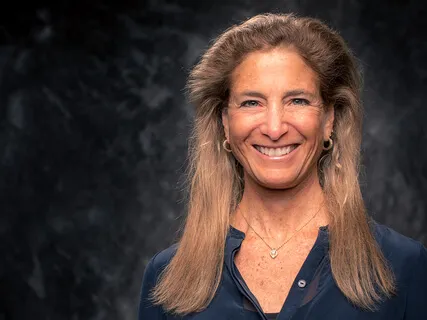
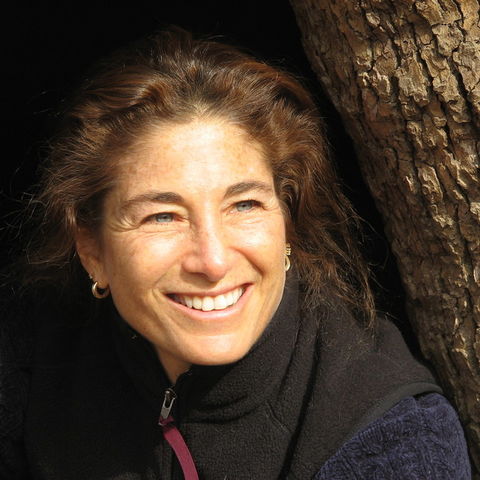
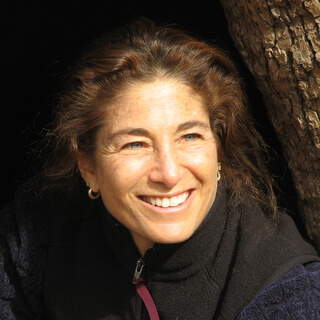
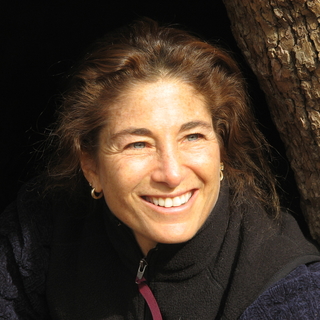
The following talk is given by Tara Brock,
Meditation teacher,
Psychologist and author.
Namaste and welcome.
Welcome to all that are here,
Welcome those that have joined us live stream.
This is the third of a series of talks that I have given on radical compassion and they are drawn from themes that are in my new book as I mentioned earlier it's coming out December 29th and I've given a focus on really in the book the practice of RAIN and how this practice of mindfulness and compassion can help us bring real intimacy and love to our inner life and how it can help us to wake up through conflicts or any distance with each other and then in a really deep way how radical compassion can help us wake up the heart-space that really includes our world so that we actively engage and care because it feels like that is the medicine we need right now.
So this is as I mentioned the third and if you didn't hear the first and the second of these talks you can go to my website at tarabrock.
Com and you can downstream it that way.
The way I wanted to start tonight is with a story that to me really captures the spirit of radical compassion and inspired by Jarvis Masters for many years.
He is a long-time prisoner and meditator.
As the story goes he was in the exercise yard in San Quentin when one of the… one young inmate was about to throw a stone at a pigeon and now the unspoken rule in the yard is mind your own business.
But Jarvis immediately raised his arm to stop him and antagonized the young man,
Shouted at him,
What are you doing?
But everybody is expecting a fight.
But Jarvis responded in a very spontaneous way.
He said,
That bird has my wings.
That bird has my wings.
And the tension dissipated.
And interestingly for days after the incident different inmates would come up to him and say,
What do you mean by that,
Jarvis?
But intuitively we know what Jarvis meant.
That when we pay close attention to any living being you know it,
If you pay a lot of attention to a dog,
Your dog,
That dog becomes a really precious creature or to a tree or to a child,
To a plant.
Whatever we pay attention to becomes part of us and you can sense the longing of life to live,
The longing of others to love and be loved.
We become connected.
So that bird has my wings is a way of really relating out of a sense of belonging to all beings.
And when we are preoccupied with judging,
When we are throwing stones,
When we are resentful,
When we are stressed,
We forget and then we can harm each other.
So in this class what I would like to do is look a little bit at what blocks us from that realization of our belonging and ways we can wake it up.
And I remember some years ago somebody shared this story about a bus of kindergartners and they are on a school trip and a little girl brings the driver a handful of peanuts and he is surprised and touched and thinks,
Well,
They must think I am hungry and eats them.
Ten minutes later she comes up again with another handful and he goes,
Wow,
How generous.
But at the third time he says,
Honey,
You and your friends,
You can share and enjoy them.
And she goes,
Oh no,
We just like sucking the chocolate off of them.
So it is entirely natural that our motivations are mixed.
And some of our motivations come from the more primitive part of our brain that has got a self-focus and when that primitive part of our brain is charged up then it turns into greed,
I need more,
Insatiable,
Our aggression,
Push away.
And that is one level that we are all rigged that way.
We all have that primitive brain.
And we all have a more evolved brain that perceives a sense of we and out of that mutual belonging there is this natural sense of love and appreciation,
There is a sense of compassion and care when we see others suffering,
Of generosity.
So we are endowed with this capacity to care and it feels good when we care.
And what is interesting is that evolution rewards us for compassion because it feels good.
It is a real reward.
And it has been the last ten to twenty thousand years that that reward has kept us moving in the direction of being more collaborative and communicative and extending our caring beyond just kin.
But for hundreds of millions of years before that – and just think of the timing,
Ten to twenty thousand versus hundreds of millions of years – we were in these little hunter-gatherer groups and others were the enemy.
And if they looked different,
Acted different,
Sounded different,
Smelled different,
We didn't trust them.
And our survival ring was activated and others were unreal and they were less than us.
So we have got these different energies going on inside us and our trajectory is to awaken and realize belonging.
Einstein puts it this way in one of his most famous quotes – and I love sharing this one because it is so resonant – he talks about an optical delusion of separation that is a kind of prison for us that restricts our affections to just a few people nearest to us.
He says,
Our task must be to free ourselves from this prison by widening our circles of compassion to embrace all living creatures and the whole of nature in its beauty.
So we are looking at how RAIN,
The acronym RAIN,
Which really represents recognize,
Allow,
Investigate and nurture,
Bringing those qualities of mindfulness and compassion,
Can widen the circles of compassion.
And so I want to first just invite you to reflect in your own life.
What would it mean?
Let's say if you decided you wanted to enter this new year and widen your circles of compassion,
Make it something you are doing on purpose.
The given is we have the capacity to care.
But what science is showing us is that when we actively train this capacity,
When we actively develop it,
It gets strengthened in a really meaningful way.
So what would it be to widen your circles?
And you might consider – and you can think of this with your eyes open or closed – who are the people that you encounter regularly but maybe don't know so well,
Work or in daily life,
That you might deepen your attention to?
What would it mean to widen your circles each day by just including with more attention,
Choosing a few people,
Practicing?
And what would it mean in the wider community,
Our global community,
If you heard about different vulnerable populations and you deepened your attention there?
I am thinking right now just in the last few weeks how much has come up about,
You know,
The one to two million Muslims in China who have disappeared in the last couple of years into concentration camps.
What if we really let ourselves deepen our attention?
What would that do?
Or to those who in a daily way experience the violence and injustice of racism?
What would it do if we leaned in,
Learned more,
Deepened our attention?
Or if we deepened our attention to the billions of non-human animals each year who have tormented and shortened lives in industrial farms?
What would happen?
How would that change us?
So the question is what stops us?
What stops us from really sensing beings in our daily life and those that we don't know from being more real and from mattering to us?
And there are three main ways that we get blocked.
And one of those ways is just the habit of self-centered attention,
That we just don't pay attention.
So there are very few other people that are really dimensional and real to us.
The second way is that we have a habit of creating a bad other.
We very quickly have a hierarchy and make others less than.
And the third is that we have a fear of overwhelm so we pull away from the sense of suffering.
We'll just take them one by one and I'll explore kind of the antidote,
What we can do that can begin to decondition that.
So the first one,
This habit of not paying attention,
Really not wondering about what it's like to be you to other people.
Because unless there is proximity and we wonder about that,
There is not going to be care.
So there is an elderly man who wrote this essay.
He said he was asked to talk about what he and his wife are doing now they are retired.
And he said,
Well,
For example,
To make days interesting,
Mary,
My wife and I went into town and visited a shop last week.
When we came out there was a cop writing out a parking ticket.
We went up to him and I said,
Come on,
Man,
How about giving a senior citizen a break?
He ignored us and continued writing.
So I called him a jerk.
He glared at me and started writing another ticket for having worn out tires.
So Mary called him a creep.
He finished the second ticket and he started writing more tickets.
This went on about twenty minutes.
The more we abused him,
The more tickets he wrote.
Just then our bus arrived and we got on it and went home.
We tried to have a little fun each day now that we are retired.
So obviously a silly example but our ways of entertaining ourselves or moving through the world don't take as others as being real.
In Buddhism they are called neutral people.
It's not like we are angry or down on them and it's not like we are attracted to them.
They just don't matter.
And if you decided to deepen your attention to the neutral people you would find your heart becomes profoundly more sensitive because it's a big zone of trance.
We just shut down.
It's a person that's behind the counter at the checkout counter at the supermarket.
Or it might be some of the kids that are there when our child is having a play date.
Or it might be,
You know,
The cousin of somebody that's there at a social gathering.
We just zone out with neutral people very often.
And it can happen in nature that we are so in our virtual reality that the trees and the squirrels and the life around us is just a backdrop.
It's like a two-dimensional backdrop to a wa.
So the way that we deepen attention first of all to have that aspiration at the beginning of each day that you are going to move through the day and try to see each person and know that each person is an opportunity to wake up and sense realness.
And I find the mantra,
We Are Friends,
As being a really powerful way to cut through the trance.
Like if I… Today I went to Safeway to do some shopping and there is a woman that is always there at the express counter.
She's not completely neutral because I've kind of developed a back-forth.
But what got her more in my heart was as I was waiting in line I would just look at her from a distance and say,
We are friends.
We are friends.
And it was like,
It's the truth we are friends in a deep way.
There is a benevolence.
But it brought that truth into living reality.
So you might close your eyes for a moment.
Let's practice for a second exploring this.
You might imagine tomorrow someone that you might see in some setting – tomorrow,
Thursday,
This busy,
Stressed time of year,
Everything is speeding up – but just imagine someone who might fit in that category that you don't know so well.
And just imagine the reflection and sense the reflection and what happens when you just say,
We are friends.
The truth is just like me this person wants to love and be loved.
Just like me this person doesn't want to suffer.
You might imagine a few of the people that are sitting close to you here this evening or if you are live streaming that are in your home or that you might be seeing later,
If you are listening on the podcast,
Somebody who is nearby you right now,
Bring them to mind,
We are friends.
And notice what happens to your heart.
This simple reflection is sometimes described as a form of stealth meta,
Meta is loving kindness,
It's kind of a secret way of reconnecting with others that opens our heart.
So that's the first block,
How to break through that block of kind of a trance with neutral people that we are not in the habit of paying attention to.
Now the second one is more emotionally challenging.
And this is the block where we have the habit of sensing this person is bad,
They are in some way less than and as soon as there is hierarchy our heart is not fully open.
If you have any sense of being better than someone or worse than someone your heart is not fully open.
Does that make sense?
What hierarchy does?
A Taoist master was sitting naked in his mountain cabin meditating.
A group of Confucianists entered the door of his hut having hiked up the mountain intending to lecture him on the rules of proper conduct.
When they saw the sage sitting naked before them they were shocked and said,
What are you doing sitting in your hut with Adonai pants on?
The sage replied,
This entire universe is my hut.
This little hut is my pants.
What are you fellows doing inside my pants?
So this unreal othering happens when we have difference in religious views,
We have difference in political views,
When we are of different race,
When we are of different class,
When we are of any difference.
It's very,
Very easy because of those millions of years of conditioning.
When there is any difference it sets off a bit of a fear that says,
Oh,
Other,
Not as good.
We do it very quickly.
And I really feel like a huge portion of the healing that's absolutely essential in our world is this commitment to shining a light on the unseen biases that create that separation for all of us.
So we look at it and we start,
You know,
Sensing how… and it's really an amazing lens when you say,
Wow,
Any hierarchy,
Any better or worse,
And this is the grounds of social injustice,
Violence,
And war.
This is the grounds of it.
I think of the United States,
Our societal conditioning to assigning blame,
To creating inferior,
Punishing badness,
Has led to more incarceration than any other country in the world.
We are five times more in terms of our prison population than the average of most every other country in the world.
Five times more.
And that's a signal of the hierarchy and the blaming and the punishing.
And then of course our toxic societal bias against people of color means that six times as many African-Americans as whites in our jails.
This is the suffering of hierarchy,
Of superior,
Inferior.
And of course it plays out.
Difference in genders,
Sexual orientation,
Gender identity.
Politics is really huge right now.
It's very hard to be thinking about what's going on politically and not snap into a sense of bad other.
I know you understand.
And yet it's part of the trance that actually keeps our hearts from being awake.
This is the great blindness.
Most people don't actually believe we are all equal.
And when I say we are all equal,
I don't believe that everyone has intrinsic value.
Most people don't believe that.
We are too conditioned by our culture.
But science shows that especially when there is fear we snap right into that hierarchy of worth.
So I invite you to check that out when you are feeling stressed,
Anxious,
Emotionally reactive,
How quickly others seem inferior or superior and how when we live out of that it causes harm.
I want to share a story with you that was one of the stories that has most impacted me.
And I share it once every couple of years.
It was told by a Unitarian minister – and I am aware here we are – in a Unitarian church.
I grew up Unitarian and it was told on Christmas Eve.
I was with my family at the church and this Unitarian minister told the story.
So this is a woman,
She and her husband,
Two children,
Had a long grueling trip going down the coast in California and they stopped at a restaurant that is nearly empty.
And her youngest son,
Eric,
One-year-old,
Is put in a high chair and suddenly she hears him squeal with glee.
He is saying,
Hi there.
These are two words he thought were one.
Hi there.
His face is alive with excitement and then as she writes she says,
I saw the source of his merriment and my eyes could not take it in all at once.
A tattered rag of a coat,
Baggy pants,
Both they and a zipper at half-masked over a spindly body,
Gums as bare as Eric's,
Hair uncombed,
Unwashed,
And his hands were waving in the air flapping about on loose wrists.
Hi there baby.
Hi there big boy.
I see you buster.
My husband and I exchanged a look that was a cross between what do we do and poor devil.
Eric continued to laugh and answer,
Hi there.
Every call was echoed.
This old geezer was creating a nuisance with my beautiful baby.
I shoved a cracker at Eric and he pulverized it on the tray.
I whispered,
Why me?
Under my breath.
Our meal came and the nuisance continued.
Now the old bum was shouting from across the room,
Do you know,
Patty?
Patty cake?
Attaboy!
You know,
Peek-a-boo?
Hey look,
He knows peek-a-boo!
We ate in silence,
Except Eric who was running through his repertoire for the admiring applause of a skid row bum.
Finally we had enough.
Dennis went to pay the check imploring me,
Get Eric and meet me in the parking lot.
I trundled Eric out of the high chair and looked toward the exit.
The old man sat poised and waited in his chair directly between me and the door.
Lord,
Just let me out of here before he speaks to me or Eric.
I headed toward the door.
It soon became apparent that both the Lord and Eric had other plans.
As I drew closer to the man I turned my back,
Walking to sidestep him in any air he might be breathing.
As I did so,
Eric,
All the while with his eyes riveted to his best friend,
Leaned far over my arm reaching with both arms in a baby pick-me-up position.
In a split second of balancing my baby and turning to counter his weight,
I came eye to eye with the old man.
Eric was lunging for him,
Arms spread wide.
The bum's eyes both asked and implored,
Would you let me hold your baby?
There was no need for me to answer since Eric propelled himself from my arms to the man's.
Suddenly a very old man and a very young baby were involved in a love relationship.
Eric laid his tiny head upon the man's ragged shoulder.
The man's eyes closed and I saw tears hover beneath his lashes.
His aged hands full of grime and pain and hard labor gently,
So gently,
Cradled my baby's bottom and stroked his back.
I stood awestruck.
The old man rocked and cradled Eric in his arms for a moment and then his eyes opened and set squarely on mine.
He said in a firm commanding voice,
You take care of this baby.
Somehow I managed,
I will,
From a throat that contained a stone.
He pried Eric from his chest unwillingly,
Longingly,
As though he was in pain.
I held my arms open to receive my baby and again the gentleman addressed me,
God bless you man,
You have given me my Christmas gift.
I said nothing more than a muttered thanks.
With Eric back in my arms I ran for the car.
Dennis wondered why I was crying and holding Eric so tightly and why I was saying,
Oh my God,
My God,
Forgive me.
I remember sitting there in church after hearing this and just being so aware of how many people I had kind of in my mind put in a little box of something less than who they were and how sad,
How sad for them and for me and how sad for a culture that's just really thick in the atmosphere to not see the goodness that's here.
When we are living inside bias,
Superior,
Inferior,
We can't see who's there.
Our intelligence,
Our wisdom,
Our sight is narrowed.
We can't see the goodness,
We can't see our shared vulnerability.
I often mention Mother Teresa saying,
If you're suffering it's because you've forgotten that you belong.
And it doesn't matter whether we think we're superior or inferior,
Either way it's severed belonging,
Right?
So we then sense what helps us to undo this.
And again the antidote is the intention when we become aware that there's in some way a putting down or an inflation that we pause and instead of believing our thoughts we look to see the vulnerability,
You know,
What's it like being you?
And we look to see the goodness.
And I find for myself I have a phrase that I sometimes will just say which is,
Not superior,
Not inferior.
Not superior,
Not inferior.
I mean,
Who am I if I'm not superior or inferior?
And I find when I really let that settle into my body it's like a lot of space opens up and it's a mysterious belonging to the universe.
Not superior,
Not inferior.
We might take a moment and pause and we'll just do a brief reflection here.
I invite you to bring to mind someone either you know or you don't know but of a different class or race or political party,
Some difference where you suspect the conditioning of superior inferior is activated in you.
Ideally a person,
A real living person that you know where on some level you suspect that you feel superior.
And you might feel superior not for reasons of race or religion or class but because you feel like you're more intelligent or successful or attractive or whatever it is.
We evaluate on all those levels all the time in a moment.
So someone where you sense that you are living inside a sense of superior.
And take a moment to deepen your attention to the person,
To both their human vulnerability,
What they might be living with,
The fears,
The hurts.
And see if you can see beyond the mask to basic goodness how this being longs to love and be loved.
As a sense of wonder,
Sensing the sacredness,
The life that lives through this being.
You might sense not superior,
Not inferior.
Who are we?
Who are we when there's really no superior or inferior?
Can you see that bird has my wings?
This radical belonging.
And so we've talked about two blocks to having an awake heart and one of them is just this habit of not paying attention to others,
Especially those neutral others,
We're going into trance,
And then the second one we actually have locked into bad other or inferior other.
The third block is pretty universal which is we are afraid of pain and afraid of being overwhelmed.
If we pay attention to the magnitude of the suffering of the world it will be overwhelming.
And yet the alchemy of compassion is unless we're willing to feel,
Unless we're willing to be touched by suffering,
It will be an abstract kind of compassion,
It won't be real tenderness,
A really awake heart.
Radical compassion is when there's a tenderness and an act of caring.
So the truth is that it takes practice to let suffering in.
And there's some tricks.
It's a matter of going slowly but one of the best supports is if you imagine breathing in and breathing out that if you're going to breathe in suffering and let yourself be touched you have to be able to then breathe out and sense that you're offering it into the universe to be held by the universe with care,
With love.
But if you're just always breathing in this is where we get empathy fatigue,
We just get creamed because our limbic system just gets agitated and it does feel like too much.
The heart becomes a transformer of sorrows if you know how to breathe in but also breathe out and really offer out either through prayer or active helping.
People that can actively engage their caring actually feel better because we're not bottled up and paralyzed.
So we're going to practice that as we close this breathing with what's challenging.
But I just want to kind of come back to the basic theme here which is we all have the capacity to move to a life and it becomes a real adventure with that sense of that bird has my wings.
Where we run into others and it's like anybody that we run into including any animal,
Non-human animal there can be this sense of the aliveness of connection and that open-heartedness and it feels good.
And we have that wired into us as young,
Young children and it's something that we can cultivate.
I thought I'd share with you because I started with a story about children and mixed motives.
I thought I'd end by sharing some stories about children and the heart space that's there.
One child writes – and this is in response to the question – what does love mean?
And these are four to eight year olds.
One little girl says,
Well,
When my grandmother got arthritis she couldn't bend over and paint her toenails anymore so my grandfather does it for her all the time even when his hands got arthritis too.
That's love.
Another – when someone loves you the way they say your name is different,
You know that your name is safe in their mouth.
Love is when my mommy makes coffee for my daddy and she takes a sip before giving it to him to make sure it tastes okay.
Love is what's in the room with you at Christmas if you stop opening presents and listen.
When you tell someone something bad about yourself and you're scared they won't love you anymore but then you get surprised because not only do they love you,
They love you even more.
Love is when your puppy licks your face even after you left him alone all day.
I know my older sister loves me because she gives me all her old clothes and has to go out and buy new ones.
You really shouldn't say I love you unless you mean it but if you mean it you should say it a lot.
People forget.
Finally,
When you love somebody your eyelashes go up and down and little stars come out of you.
So radical compassion has all the flavors of love.
It has the love that's appreciation,
The love that's caring,
The love that's forgiving.
It means though if our life is to have meaning that it comes into action.
There's a lot of people now that are saying this is the point in history when the activists,
The social activists need to learn how to sit down on a cushion and get connected with their heart and spirit.
And the people that sit on the cushion all the time,
They need to know how to bring what they've discovered on the cushion and get out there and do stuff,
Help,
Which is really a key piece.
So we've had the three parts now in these talks of radical compassion to the inner and the healing with others and then bringing it into the world as a healing kind of medicine.
And I want to say personally – and I shared a few stories throughout the story I shared tonight about the old man who was in relationship with the woman's son is written in radical acceptance – I have a lot of stories in there but I want to mostly say I really appreciate your support in bringing this book into the world because so much that is in it has been inspired by people doing RAIN and telling me their experience and how it went.
And so I feel very much that you all are the grounds of the book.
So with that I want to end with a brief reflection if you will,
Closing your eyes.
We talk about widening the circles.
The innermost circle is the life right here,
This body,
This heart.
So just to sense your own body,
Heart,
Mind.
Notice what's here and if there's any physical discomfort or emotional discomfort take a moment to offer kindness within.
You might offer a gesture of kindness putting your hand on your heart or just a simple message a few words of care.
It could be as simple as,
It's okay.
And notice what happens right away when there's an intention to be kind to the life inside you.
And feeling your heart space and taking a moment to sense someone in this world or some group that you know is suffering that calls to you,
Some people that are going through a hard time that really touch you.
And let your breath support you as you willingly breathe in and say,
May I be touched?
May I be touched by this?
Sensing the fear,
The loss,
The grief,
The pain and letting your heart be a transformer of suffering as you breathe out and offer your prayer.
May you touch freedom and healing and peace.
Breathing in and breathing out.
And sensing who you are when you're really feeling your care,
How it takes you beyond any small sense of yourself.
That bird has my wings is an expression of universal belonging,
Of realizing the sacredness that lives through all beings.
Namaste and thank you.
For more talks and meditations and to learn about my schedule or join my email list please visit tarabrak.
Com.