If you understand that you are significant just by what you are,
Then you're really significant.
You are simply enough.
You have everything just from where you came from.
You are unique.
You are significant.
And your responsibility in this world is to go out there and spread that and show that.
Welcome,
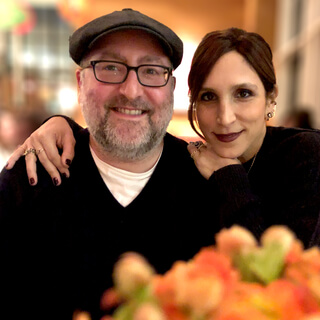
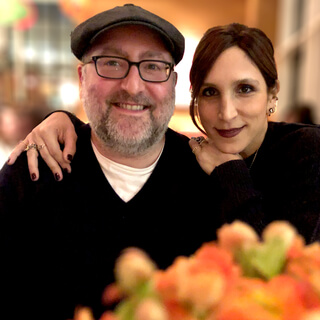
Welcome to the Spiritually Hungry Podcast,
Episode 69 in our new and improved podcast home setting.
Yes,
Our new studio.
This is very exciting.
It's the first podcast we're recording in our official Spiritually Hungry studio.
Got the mugs to match it.
Yes.
Cheers.
All righty,
Let's get into it.
Significance,
Accolades,
Approval,
Recognition,
Appreciation,
We all have a desire to know that we're important.
In fact,
It's a basic human need.
But what happens if we don't feel significant?
We can feel our motivation wane.
Some even become depressed while others seem to go into overdrive trying to prove their significance.
Some even become praise junkies,
Not change junkies,
But praise junkies.
We'll cover that along the way today.
So I want to start this episode with a tale about Joseph.
I love your tales.
This one you know,
I wish I could just surprise you.
But this one's about.
.
.
You survived your ones,
That one didn't go so well.
This is about Joseph the miser.
Hundreds of years ago in a small village in Poland lived a man named Joseph the miser.
He was the stingiest person in all of Poland,
Perhaps even all of Europe.
He was wealthy beyond measure,
But refused to share with anyone.
When people would come to his door and beg him for help,
He'd spit in their face and slam the door.
He was widely hated by the entire community,
So much so that when he died,
They didn't even bury him properly.
His body was simply tossed over the fence into the cemetery,
Left for the vultures.
A guy like him didn't deserve a proper burial.
A few days after his death,
All the poor people in all of the neighboring villages noticed something amiss.
Every Friday,
For as long as they could remember,
They would receive an envelope with money.
But this week,
They didn't receive anything.
How were they going to eat?
They put two and two together and figured out that Joseph the miser had been the one anonymously giving to the poor forever,
Really.
Little envelopes of money each week.
For years,
He'd been supporting this village and others,
But had never asked for recognition and managed to keep his identity secret for years.
Eventually,
He was given a proper burial once everybody realized how generous he really was.
This is an extreme story,
Like most parables are.
And the point,
I don't think,
From the story is that we should be rude and have everybody despise us all on the sake of being anonymous.
But it does,
I think,
Make us take a deeper look at how much and why we desire recognition for the things that we do.
How often,
If we're honest,
Do we look around once we've done a good deed to see if anybody noticed?
Or when something goes well,
Jump to take credit?
And as you've probably already deduced,
The Kabbalists take a very different approach to recognition.
So in the Zohar,
And I'm sure you're going to have a lot more to add to this,
Which is the main Kabbalistic text,
It says,
Blessings from the hidden worlds rest on him whose affairs are concealed from sight,
But judgment from the revealed world rest on him whose affairs are for all to see.
So there's lots of interesting ideas here.
And before we go into the spiritual aspect,
I do want to cover this one other thing.
The neuroscientist and Maslow's hierarchy of needs all deduce that the feeling of importance or significance is hardwired in our human nature.
And I think,
You know,
A lot of the concepts we talk about,
I think they tend to be confusing because on one hand,
It's a need.
On the other hand,
The wrong parts of us are too invested in that need,
Right?
So it's okay to have the need,
But which part of you are you using to fulfill that?
And how?
I would say how.
Right.
So Maslow would define this area of need as esteem,
And it covers confidence,
Achievement,
And the respect of others.
And without meeting those esteem needs,
We weren't able to reach the highest levels of self actualization,
Which again,
According to Mr.
Maslow,
Is the fulfillment of your full potential as a person.
Yet the Zohar and the story of the miser indicate that we should shun external validation and seek no recognition for ourselves.
So Michael,
What is your take?
And wait,
Is it finding a healthy balance of external recognition?
Or is our goal really to seek no outside validation or recognition?
And before you answer,
Because I can guess where you're going to go,
We have the same opinion,
But I want you as we answer this to still touch on how do we fulfill our need for achievement and to get to our highest level of self actualization?
There's a lot there.
There always is.
If I can,
Even before I answer your question,
One of my favorite parts to the story you told is another addition to it.
And that is that the spiritual leader of that town had a dream.
And in the dream he meets Joseph,
The miser,
Who was treated so poorly throughout his life and in essence should have been treated with such great respect and honor.
He had this dream after Joseph passed.
And in the dream he meets Joseph and he says to Joseph,
He says,
Why did you do that?
Why did you make all of us treat you so poorly?
And he said,
Again,
Like you said,
That I wanted to do the right thing,
But I wanted to make sure that my ego does not become involved.
And he says to him,
Tell me about your soul now.
He says,
Of course,
In the world of the souls,
Everything is revealed.
I get to spend all day and all night with the most elevated and wise people that ever lived.
It's a beautiful existence,
He says.
But in truth,
Nothing fills me even here with as much pleasure as I got every Thursday night,
Friday,
Eve,
That I spent going and putting envelopes under people's doors.
So it both explains what happens to a soul that lives a life in that way,
Meaning that they go out of their way to share.
On the other hand,
They also go out of their way to not get recognition,
Which,
Again,
There's another story of mine,
A story that- Are you going to avoid my questions altogether?
Absolutely not.
No,
No,
I'll- You're like,
Here,
I heard your question,
But let me talk about what I really want to talk about.
Go ahead,
Tell me your other story.
No,
No,
No,
I won't.
I will wait.
I will wait for the right time.
So to answer the question,
The need for significance,
Because the question has to be not,
As Maslow and professor,
Researcher,
Chloe Maden,
Also says the same thing,
That we have six basic human needs,
And one of them is significance,
To be significant.
And I do want to go into that a little bit later.
But kabbalistically,
We always try to go to the root,
Rather than simply accepting the fact that we all are born with a desire to be seen as significant,
To be,
I would rephrase that,
We are born with a desire to be significant.
What's the root of that?
Because when you understand the root of something,
It gives you a better understanding of its actual purpose.
So the kabbalists say something which I think is so beautiful,
Profound,
And gives us a completely different view of this idea.
We are,
Each one of us,
A spark of the divine,
A spark of God,
A part of God,
In that some way we are actually God.
We are part of the creator.
That's the kabbalistic view of what humanity is.
It is a part of the divine,
A part of,
You can call it God,
You can call it the creator.
It's kind of like branches to a root.
Or the other example he's using is rocks,
You and from the same mountain,
Where it's all one.
There really isn't a difference between what we are and the essence of the creative force of this universe called the creator.
So if you understand that,
That what am I,
What are you,
What is each one of our listeners at their core,
We are a spark of the creator.
We are a spark of the creative force that created this world,
Which by the way has so many ramifications about our lives.
But that also means that the fact that we desire significance is the same way that our source,
That that we are a part of,
God,
Knows that it needs to do.
But being significant is not only a part of us,
It is at our essence.
Because if you're God,
Or at least a spark of God or a spark of the creative force of this world,
You understand about yourself,
You are a very important being.
You are a very significant being that must do significant things in this world.
So- Which is ironic because we search for other people to tell us that we are significant and that we are unique when we already are all of those things.
Exactly.
And that is such an important point because,
And then just to complete that idea.
So the need for significance goes to the core of who we are.
It isn't an ego-based desire that somehow became part of our hard wiring through evolution or wherever else you might understand it.
It is true and it is at our core.
The only difference is,
What do I need significance from or who?
And the point that you touched on is so important because the creator,
The creative force of this world does not wait around to be told by people,
Oh,
You're significant because I appreciate or I understand what you've given me,
This amazing natural world you've created.
But it is significant by its own being,
By the fact that it is the creator force behind everything.
And therefore,
What we are to understand about ourselves is that I am significant.
And I am significant because I am part and parcel of the creative force of this world.
And therefore,
I have so much important creation to do with my life.
But none of that is affected or created by the fact that you see me as significant or anybody else sees me as significant.
I am significant because that is what I am.
So the self-actualization as Maslow posited is something that is on us to discover.
And that's really where do you look for your significance?
Is it from external or internal?
Right.
I'm sorry,
I just wanted before you say that,
But you said it's so important that that is the fork in the road of significance.
And it's not just that one is right or wrong.
If you understand that you are significant just by what you are,
Then you're really significant.
If you are only significant because somebody else sees you as significant or some other people see you as significant,
Then you're actually insignificant because you will be living the insignificant part of yourself and the insignificant parts of your life.
There's a famous quote from the great Kabbalist,
The Kaskarebi,
He says,
If I am me because you are you and you are you because I am me,
Which means that if our significance is dependent on each other,
Then I am not I and you are not you.
But if I am I because I am I and you are you because you are you,
Then we both are.
And that's the understanding that the mistake.
.
.
That's the secret to every successful relationship,
By the way.
Also also.
But also the understanding that if I am seeking significance by others,
I am insignificant.
I will be insignificant.
If I understand that I am significant,
Significant because that is what I am at my core,
My essence.
I am the creator.
I am part of the creative force of this world.
And I have so much to create in this life and in this world,
Then I'm truly significant.
Well,
I love that because you'll chase you'll be searching your entire life if it's based on external.
And the Zohar talks about this also.
It says every situation in life has an external and an internal aspect.
And they're rarely,
If ever,
The same.
Our body and all of its desires represent the external aspect and our soul represents the internal aspect,
Which you touched upon earlier.
But I think let's just rewind way,
Way,
Way back to when we were little.
And I'm sure this sounds familiar to many.
Mommy,
Mommy,
Look what I made.
You like it?
Daddy,
Watch how fast I can run.
From the time we begin speaking,
We start seeking,
Seeking out feedback from our environment and really mostly from the people that we care about the most.
We look to those closest for recognition,
Validation and approval for almost everything we do.
The need for this recognition is universal,
As we said,
And early in our development in particular,
But really throughout our entire lives,
Recognition or feedback is essential to our learning and our growth process.
At some point,
Though,
Our desire for feedback morphs into and overlaps in our desire to be significant,
Right?
Significant to other people.
To other people.
Important,
Relevant.
It's no longer enough to learn.
We want to be seen in a certain way.
And when we're not,
Then we suffer.
And many people spend their lives desperately seeking this external approval,
Sometimes at the cost of their own authenticity and happiness.
And I mentioned praise junkie earlier,
But I think this is really interesting because there is a physiological thing that happens when we receive praise.
Our brains release dopamine,
Right?
A neurotransmitter.
So it's a chemical that stimulates that area of our brain responsible for contentness and pleasure.
So,
Of course,
It's something that we often go back to seek because,
Quite honestly,
It feels good.
Right.
And I think that that's really a big part of today's topic is to be aware,
Though,
That that is not lasting,
That is not real.
And that is what gets us really into a lot of trouble.
There's an education expert.
His name's Alfie Kahn.
And he and I like this a lot because we've talked about this in Raising Our Kids.
He suggests that too much praise or more precisely the wrong kind of praise turns children into praise junkies.
Says Kahn,
It leads them to measure their worth in terms of what will lead us to smile and dole out some more approval.
And one study showed that children who are highly praised in the classroom were more likely to give up on challenging tasks and less likely to share their thoughts or volunteer,
Which begs us to consider the possibility that praise may not always be a good thing.
So the question really is,
What do we praise?
What do we recognize in ourselves and others?
External accomplishments or internal accomplishments?
Do we praise the result or the effort?
Big one,
That one.
Do we praise progress or perfection?
Do we praise the physical manifestation or the intention in our heart?
Because praise is really powerful.
And where we direct it determines what will be motivated to grow and continue to pursue.
I think there's such an important point.
I would actually stop here and ask our listeners to ask the question,
How significant do you see yourself?
Winning at night,
The doors are closed,
There's nobody else in the room.
It's just you.
Do you see yourself as significant?
Do you accept how powerful,
Unique and significant you are regardless of any statement or approval by anybody outside yourself?
That's the first part.
And I would really recommend working on that,
Working on raising your own appreciation for who you are,
But what you are.
But I think the other really big question in that was,
Do you recognize the effort or the result only?
And I know somebody who,
For me,
Very result oriented.
I had to really put a lot of concentration and focus to give myself that internal validation that effort is awesome.
And that's got to be more than enough.
Right.
As a matter of fact,
We spoke about this in one of the previous episodes that there's a phrase from the ancient Kabbalists.
They say,
The work is not for us to finish.
Our purpose in this world is the effort that we put into it.
But if you really,
And this is something that I try to do,
And I really recommend this for our listeners.
When you really see yourself as the creative force,
As a part of the creative force in this world,
And therefore you are unique,
You are significant,
And you have a purpose in this world that is not dependent in any way,
In any way about how others see you.
Not dependent in any way.
And that gives you a great internal power.
And I think too often we don't spend enough time focusing on that.
And therefore,
Yes,
It's easier to go out into the world and say,
Praise me,
Praise me,
Then I'm happy,
Rather than saying the most important work that I do is appreciating my own significance by who I am.
And yes,
Of course I want to manifest and I want to do,
But it begins,
It must begin with a growing appreciation of my own significance,
Separate and apart,
Regardless of how I am viewed by other people.
The only caveat,
And I think it is important to touch upon,
Is that,
Let's talk about our relationship.
I know that if you viewed me as insignificant,
It would be a problem.
Not because my significance is dependent on your thought about it,
But in a relationship you want to be seen for who and what you are.
And if your partner,
Right,
So I would,
If your partner sees you as insignificant,
That isn't,
It's not enough then to say,
Well,
Okay,
It's enough that I know,
Oh,
That's something.
But in a partnership,
And also as parents to children,
Children to parents,
It's not so much to see them as significant and therefore they are significant.
But I think if you don't appreciate- I was just going to say,
This is where appreciation comes in.
Exactly.
If you don't appreciate your partner,
Then there's a problem with the relationship.
So whereas I think for myself,
Often,
I really couldn't care less what other people think of me,
As long as I see myself as doing the right thing,
As revealing my soul's purpose in this world,
It is important to me that you see me,
Again,
I have to word as significant,
But you see me as for what I am.
I think that's the point.
So I would separate those two needs in a relationship.
It's important for partners to see each other for the significant being that they are,
And that is separate than the need to go out into the world and have other people see me as significant.
You have to appreciate,
You have to both be appreciated and appreciate your partner in order for the relationship to be true and thriving.
But that is not in the same vein as saying,
I don't care what other people in the world think of me.
That is important,
And that is part of our spiritual work.
But in a partnership,
In a relationship,
And even as it has to do with our kids,
It's important in a relationship that is important that you be seen for what you are,
And that is significant.
Well,
I'm really happy you're bringing this up because I do think this is where people get confused because in relationships that aren't healthy,
They can really rely on that validation,
Even though they don't see it as validation.
And then that then goes to every other area and every other relationship in their life.
So I think it's important to just pause for a second and define the difference between appreciation and validation.
Appreciation is the act of estimating the qualities of things and giving them their proper value,
A critique or written evaluation,
Especially when favorable.
So you're being seen and you're being acknowledged for who you are.
Validation is the act of affirming a person or their ideas,
Feelings,
Actions as acceptable and worthy.
And this is the problem.
Appreciation is pretty straightforward.
Validation says,
I find you worthy.
And that is a lot of responsibility to rely on other people for.
And it's also an impossibility because it can't happen.
It's also a mistake.
Yes.
Because validation has really helped make me okay.
Right.
Feedback,
Which can be part of appreciation,
Has helped make me better.
Right.
From a very positive,
Or just see me for who I am.
Right.
And I do.
And you mentioned with parenting also,
I thought this was really quite sad,
Actually.
There was a TED talk that was given by Dr.
Laura Trice,
A counselor who works primarily with people engaged in the 12-step program.
And she shared her findings from work and rehab facilities.
She often does one on one with different people who are facing life and death with addiction and what she found to be most consistent for each of them was a specific longing for appreciation.
And again,
I think this word can be used loosely and I think the way we're explaining it might be different,
But appreciation,
Praise or acknowledgement.
In short,
They want to know that their mother or father was proud of them.
They wanted to know that they were valued and appreciated by their siblings and loved ones because it really is that need,
Especially of the people we care most about.
So this is the thing.
You first have to understand and know,
As you said at the beginning of the podcast,
That you are simply enough.
You have everything just from where you came from.
You are unique.
You are significant.
And your responsibility in this world is to go out there and spread that and show that.
Full stop.
Then,
Of course,
In the healthiest of relationships between your parents and your siblings and your partners and your loved ones,
There needs to be appreciation because it's the way that we express that we see a person for who they are.
Where it all goes wrong is that many of us are not taught at a young age to recognize how to do that for ourselves.
We go from mommy,
Look at me,
Daddy,
Look at me,
Look what I did.
And the parents innocently enough from love,
Wow,
You're amazing.
You did this,
You're that.
And then we rely on that.
And it can work even in school where if you get 100%,
You tell everybody and they're like,
Wow,
That's really great.
Or teachers like,
Why are you showing off?
You shouldn't have done.
We have so much feedback along the way that confuses us.
So I think it's a really important differentiation to make.
I also think that Tony Robbins expressed this and I thought this was a really clear way on significance.
He says there are six basic needs that every single person on the planet tries to fulfill.
As he says it,
It's certainty,
Variety,
Connection,
Growth,
Contribution and significance.
Yeah,
That's also,
I think,
Based on Chloe Maden's work.
Everyone prioritizes their needs differently depending on where you are at in life.
We can feel significant via productive or destructive means.
So productive would be trying to be the best at what you do,
Stand out for your accomplishments or be recognized by your partner for what you contribute to the relationship.
Right?
Yeah.
Although I would separate those two out.
Yeah.
Again,
I think a lot of the words are exchanged loosely and destructive,
Which is self-sabotaging,
Reckless behavior and creating problems to get attention because attention is confused with recognition that you may be unsure of how to get in a healthy way.
So again,
Recognition can be replaced with appreciation,
But I think we're clear about the idea here.
Yeah.
Well,
I don't want to go off on a tangent,
But I think you might though.
But is that those six areas I think are worth delving into maybe at a different time.
But because certainty,
Variety,
Connection,
Connection,
Growth,
Growth,
Contribution,
Contribution,
Contribution,
And significance,
And significance.
And if I'm not mistaken,
Chloe Madens says that if a person's.
.
.
Because every person has.
.
.
It's not that everybody has those at the same level,
Right?
Some people prioritize one over the other.
And I think she says that you don't want to prioritize significance,
Variety,
And certainty because then that won't lead to fulfillment,
But rather if you focus on connection,
Growth,
And contribution,
Which are more obviously.
.
.
External.
I wouldn't say external.
Well.
.
.
Doing,
Right?
Doing in a positive way,
Right?
Because.
.
.
I mean internal expression externally,
Right?
That's how we show what's internal.
Right.
I'm saying if you group those two as she does,
Right?
So if you take contribution,
Growth,
And connection on one hand and variety,
Significance,
And certainty on the other,
It might seem obvious that.
.
.
Which she does say that focusing your life on that first group,
Which is growth,
Contribution,
And what was the third?
Growth,
Contribution,
And connection,
That will make you a better person and also more fulfilled.
But I think if you have the spiritual views,
Let's talk about significance,
Then it's actually a very important push for growth and for self-acceptance.
I think the mistake that when most people think about significance,
They think about how others are viewing me,
How they're viewing me as significant.
But I do think,
As you said very rightfully,
That most people,
I don't think,
Grow up with,
I was going to say proper or the word is healthy,
Appreciation for themselves and drawing significance from what and who they are rather than what others say they are or how others applaud or support their work.
Those are two very different things.
Because on the one hand,
I do think it's important,
And this is something that I work on,
Growing my esteem for myself,
Right?
It sounds egotistical,
But it's actually,
I think,
At the core of what needs to be done that every day,
Hopefully,
We realize how great we are.
And we are great and significant because of what we are,
Regardless of how others view us.
Second,
The work that we do in the world is important on its own,
Regardless of how it's viewed by other people.
If you're doing the right thing,
It should mean less and less to you how it is being perceived made significant by other people.
And I think some of my favorite historical giants and important figures are the ones who did the right thing,
As it could be called,
Or pushed themselves to do good in this world,
But could care less about the way others view them.
And that's something that I really aspire- But it takes a lot of work.
Yes,
Absolutely.
Consistent work.
And that's something I really aspire to,
That I do desire to do great things in this world.
At the same time,
I also desire to diminish the importance that I put into how others view it.
Because often,
When you're doing the right thing,
It won't necessarily be viewed with such great acceptance or support while you're doing it.
And most importantly,
It shouldn't matter to you.
It shouldn't matter to you.
If you know yourself,
If you're doing the right thing,
Then how others view it should be completely insignificant.
And to get to that place,
You really have to practice this every day.
How much of today was spent wondering about what people thought about what I said or what I look like?
And I spent most of my earlier years really focused way on what people thought externally.
And I think that I only switched over to the other side to really not caring,
For the most part,
When I realized it was an impossibility.
You will never make everybody happy.
You will never be significant in everybody's eyes.
In fact,
Most people are struggling themselves.
And they're going to give you the negative because it makes them feel better.
And I finally,
I feel like when I finally realized that,
Because I tried for so many years the other way,
That it was really when I started to feel most free and living a very authentic life and having the best relationship with myself.
It was only when I was like,
Okay,
This is absolutely an impossibility and I just don't care.
I often really,
I really enjoy reading the prophets in the Bible.
And there's two amongst my favorite.
I have many favorite of the prophets because again,
What I find inspiring about the stories of the prophets is that they were often doing important work,
But completely hated and opposed by people.
So it's a good sign.
It often is a good sign.
So amongst my two favorite prophets are Isaiah and Jeremiah.
The thing about Jeremiah.
Jeremiah was opposed.
It is not a spiritually hungry podcast if you're not singing.
Don't stop,
Don't stop.
Dun,
Dun,
Dun was a good friend of mine.
Are you going to join?
I don't know the song that well.
I don't either.
Keep singing until you get some love.
No,
Inspire us.
Yes.
But because Abigail likes singing that song,
So that's how I really,
Really heard.
How does it go after that?
I think I'm mixing it up with Joy to the World.
No,
I didn't mean it.
That was the one song.
All the poison girls.
There you go.
Joy to the fishes in the deep blue sea.
I'm not sure it's the same song.
Somebody will tell us.
So in his lifetime he was hated.
He was actually eventually killed.
So you would often say,
Well,
What kind of life is that?
In reality,
We know,
And this is another Kabbalistic principle,
That when you're doing the right thing,
When you're doing important work,
The energy of that never disappears.
So much so that the Kabbalists teach that the energy that he created over 2,
000 years ago continues shining into this world.
And that view,
Which is,
Again,
Sometimes to do the right thing you're hated.
Sometimes to do the right thing you're completely unsupported.
But if you are understanding of your own significance and understanding that that actually forces you to do many things that sometimes people won't like or won't support,
But it doesn't matter.
Because I know that the energy that I am creating is eternal.
And that's why I think if you want to ask yourself the question,
Am I living a significant life,
The question should be,
Am I investing in true and eternal things?
And what's eternal?
Eternal is anything that we are doing that is for the benefit,
For the benefit of the world,
For the benefit of others,
Even for the true benefit of myself.
And I think,
Again,
If you read through history,
You will find that those that created in all walks of life,
Whether it's political,
Whether it's social,
Whether it's even in the world of art,
Usually you will find that the significant,
Meaning the historically significant people are those who were not often seen as significant in their time or by many people in their time.
By the way,
I think that if you're so busy with what people think,
It's kind of a guarantee you won't do the right thing.
And you're not going to do what you can do in this world to do.
I can honestly,
I mean,
Because you're not even following your own purpose because you're not connected to your soul.
You're following everybody else.
You're following their voice and their beliefs and what they think you should do.
And by the way,
It's usually not going to be in your own best interest.
And I would say that you can actually make it a perfect equation where the degree percentage to which a person is invested or caring so much about others,
Viewing them as significant is inversely related to how much they're actually doing of what their soul came into this world to do,
Which means,
Again,
To make it clear,
If a person's 80% invested in what other people think about them and whether they see me as significant,
That means it's only 20% of my life that I'm living as it's supposed to be.
Very scary.
So,
If I have time now to go back to that story that I mentioned in the beginning,
It's one of my favorite stories.
Yes.
Isn't it great that we spread the stories out because now I'm ready to hear another story.
Oh,
Thank you.
So,
The story is of,
Again,
A very unique capitalist and his name is Zusha.
And the story is that once a man came to his teacher and said to him,
He said,
You know,
I respect you.
I know that you're a very spiritual person,
But I have heard of an interaction of one of your students and I was very surprised that a student of yours would behave in such a way.
And I'd like you to explain to me why he behaved in this way.
So the teacher says,
Sure,
Tell me the story.
So he tells him,
He says,
There was a wedding in a small village and it came the day of the wedding and the hall was ready,
The food was ready,
But the family of the bride lost the dowry and with the dowry they were going to pay for the food,
For the hall.
So basically the wedding couldn't go forward.
So everybody in town was a small town of a few thousand people.
They started looking for the money.
And finally,
After a number of hours,
Your student,
Zusha,
Who was traveling through town came to the leader and said,
Oh,
I found the dowry.
He says,
And it was a significant number,
It was around 10,
000 rubles at the time,
He said,
But before I give it back,
I want to hear from the family of the bride,
The exact denominations of the money so I know if what I found is actually the dowry.
They tell him the exact denominations.
He says,
Okay,
Let me go back to my inn.
He goes back to the inn.
He comes back with the dowry exactly in the same denominations that the original dowry was.
He said,
Wait a minute,
This was the money that was lost.
And right before he's about to give the money back to the family,
Allowing the wedding to go ahead,
He said,
But wait,
Wait,
Wait,
Wait.
I am not giving the money back unless I get a 20% finder's fee.
And the people,
The family,
The bride,
The groom,
Everybody in town are looking at him.
What are you,
Crazy?
You know,
They're a poor family.
This is all the money that they have for the wedding.
This is the dowry.
You're going to take 20%.
They're not going to be able to pay for the wedding.
It's crazy.
So people literally started grabbing the money out of his hands and started beating him up,
Beating him up,
Beating him up.
So it got so bad that he literally ran out of town.
He dropped,
Of course,
All the money and he was literally run out of town.
So the man says to the teacher,
I can't imagine why a student of yours,
You're clearly a very spiritual man,
A very good teacher.
How can a student of yours behave in this way?
So the teacher says,
You know,
I'm sure there's another version to this story.
Let me call my student Zusha and let him share with us the truth.
So the teacher calls Zusha into the room.
He says,
This is the story that this man told me.
I can't imagine this is the way you would behave,
Not wanting to give the money back without a 20% finder's fee.
So much so that you had to be run out of town,
Beaten up to get the money back.
So Zusha's like embarrassed and he says to his teacher,
I really would rather not have to speak about this with you,
With anybody.
His teacher eventually says,
You have to,
You have to.
So Zusha says,
Well,
If you ask me the true story,
I'll tell you the true story.
My daughter was going to be married and Zusha,
As well known,
Was a very poor man.
I did have money for the wedding,
For the dowry,
For the hall,
For the food.
So I decided to travel around the villages nearby and raise money for my own daughter's wedding.
And I'd been traveling for a number of weeks and I'd been able to raise around 10,
000 rubles which is the amount of money that I needed for the wedding,
For the hall,
For the food,
For the dowry.
And I came to this town and I looked,
Saw that everybody was really worried,
Upset and I asked them what was going on.
They told me the story that this girl is about to get married.
The family lost all their money,
Their 10,
000 rubles and now the wedding can't go on without the money.
So I said to myself,
You know what,
Even though you spend all these weeks raising money for your own daughter's wedding,
If you have the opportunity to share with these people,
You should do it.
So I went into the hall where everybody was standing and I asked them for the denominations of the bills because obviously my money was not in the denominations that they lost.
So I asked them for the exact denomination they told me and I went to the money changer to get my money to fit in the denominations that they said it was,
Their money was.
And as I'm walking to the money changer,
My ego starts building.
So who in the world would do what you're doing?
Take your own daughter's wedding dowry and giving it to somebody else who you don't even know so that they can get married.
You're such a.
.
.
My ego is growing and growing and growing.
And the one thing we know,
We learned from you,
My teacher,
Is that doing good is important,
But having ego from it is the worst thing.
So as I'm walking to the money changer and I'm walking back to the hall and think,
How can I both do this tremendous action of sharing,
But find a way to diminish my ego through it?
Because if I go in there and tell them the truth,
Everybody's going to love me.
But if I go in there and tell them what I told them,
Then not only will I have the opportunity to share,
But also get a nice ego beating.
And that's why I did what I did.
And they reacted in exactly the way I thought they would.
They grabbed the money from me,
They beat me up,
And I was able to share,
But also have my ego diminished.
That's the beautiful story of Zushu.
This idea that too often,
Even when we're doing the right thing,
Even when we're doing tremendous actions of sharing,
Our ego gets involved and that's not a good thing.
Which all leads us back to the same idea,
That if you appreciate your own significance and you live a life based on revealing the true greatness of who you are,
Then it becomes less and less and less,
Hopefully down to zero,
Caring how it is viewed and how others view me as significant or not.
Because my own significance should come from an appreciation and understanding of who I am.
And that is not ego that is truth.
And that I live a life that manifests it.
That's total freedom,
Really complete freedom.
So I want to ask you,
Can you share a time when you succumbed?
As we all do at times,
To needing,
If the word is approval or significance validation from anybody outside yourself.
I mean so many times for the first,
I'd say 27 years of my life,
For sure.
And I think that,
You know,
I'm one of,
We're three sisters.
I think a lot of the feedback we got actually was on how we looked really.
And so then when I found Kabbalah when I was 17,
I,
You know,
I wasn't even comfortable with that,
By the way,
Because it made me feel like,
You know,
I didn't like being dependent on something that was fleeting.
I was aware of that at a young age.
You don't know,
It looks changed,
Whatever.
So the other part of that is that I didn't have a lot of confidence,
I think,
In my ability to do or to create or manifest because I never got feedback on that either.
So the validation came from physicality,
Which then I think developed into a needing disorder.
Wasn't only because of that,
Right?
So I realized that that was not going to be a healthy way for me going forward.
And then the other part of me that I wanted to rely on,
Which was the internal,
Wasn't developed.
And I think I really only started to break through.
That was not the full force,
Like on the other side was when Josh was born and I couldn't make this look OK externally,
Right?
Because he came into the world different and I had to come to terms with how I felt about it and what I wanted to derive from it.
And so all of that external then became internal.
You know,
What do I think about this?
What do I believe about it?
What do I want to create from it?
And it really was such a profound shift that it changed my entire core being and existence from probably being a praise junkie to a change junkie.
I think then,
As I've spoken about probably vaguely,
Which I'll continue to do,
Then that followed by another 10 years of really being attacked for who I was and what I was trying to express.
So that didn't work either.
Right.
So even though it was now focused on internal,
I still really craved.
I mean,
Again,
Our needs,
Right,
Our needs was I mean,
You know,
See me,
You know,
Like it's not bad to hear a good thing once in a while.
And now it got to the point where I was it was all negative.
I was damned if I did or damned if I didn't that I just was like,
I just don't care.
You know,
I really I just I got pushed so hard that.
And I'm so grateful that it helped me just break through not to care at all.
And sure,
Every now and again,
I'll hear something or,
You know,
And they'll bother me for a second.
And I'll be like,
OK,
It's impossible and I don't really care.
So and that was like,
That's freedom.
And that's really was the beginning of the making of me of who I wanted to become.
And it's a forever journey.
How about you?
It's interesting.
I was trying to think as I asked you the question.
And so let me answer it in a roundabout way,
Which is that often when.
Well,
I think our listeners like specifics.
Yes.
No,
But well,
It is a general and I think maybe the good thing about it,
I won't get specific is that it's a good tool,
Is that often doing the work that we do and we're very blessed to be able to inspire and help people in significant ways relatively often.
You get praise,
You get praise.
And I know that praise is a very dangerous,
Very dangerous energy to receive.
And I try to remind myself almost every single time,
Whether it's the smallest thing or the biggest thing,
You know,
You did this,
You did that.
I literally have this voice in my head that says,
Remember,
The reason you did it is not because of this praise,
But because this is,
You are a significant soul and your soul has this work to do in this world.
And I think if not,
It's very easy to take the cheap energy out of receiving praise.
And again,
By the way,
Giving praise,
Receiving praise is not a bad thing,
Right?
Because often when I was a little bit younger,
I would like try to either make a joke about it or like,
Because I was uncomfortable receiving it,
Right?
Partly because I thought it was spiritually not the best thing for me,
But also often people are uncomfortable receiving praise.
And I realize I really did that often it's the right thing to do is to receive it,
Meaning the person giving it might need to be sharing that with you or it's the right thing.
So you don't sort of push it off.
But what you do want to have that internal conversation with yourself.
You don't want to be dependent on it.
Exactly.
I'm so appreciative that the significant soul that I am,
Which I know has been able to share with this person,
Inspire that person.
But remember,
That's not why you do it.
Remember the fact that they're excited now or appreciative now,
That's not why you do it.
That's not why you did it before.
That's not why you'll continue to do it.
And I think for me,
I often find that that's an important area you don't want to fall into.
You don't want to fall into when praise comes as it often does when you're doing important work,
That you keep reminding yourself because this is a life work,
Not to fall into the praise,
Not to fall into receiving any significance of your own being,
Which is significant on its own from this praise.
So in leaving our listeners,
Spiritually speaking,
The highest form of recognition is between us and our soul and the creator.
The form of recognition is completely concealed and only we know whether or not it's happening and that's the beauty of it.
So what does it look like?
It's recognizing the beauty,
The power of my soul and reminding myself of it constantly,
Especially when I fall or I don't meet my own or others expectations.
It's to have those conversations with yourself.
It's not to constantly say,
Oh,
You're doing an amazing job.
Even if you do fall,
It's to be able to say,
Okay,
So what is it that I'm really pursuing and have those continued conversations with yourself.
Stay honest and be accountable,
Always with love.
So long and short of it is we tend to feel that we're receiving when we're seen as important in the eyes of others and when we get recognition.
And in these moments we feel proud and powerful.
Ironically,
We learned spiritually that,
And this is what we need to remember,
That the creator lies in the hearts of the humble.
So if we can stay in that space where none of it really matters,
Where it's not really real and you keep checking in with yourself,
That even when you fall or even when it didn't turn out the way you wanted,
Just keep your eye on where you want to go.
And that's all that matters.
Right.
So I would leave our listeners with one idea.
It is,
As we said,
And this is really a life's work,
That you are significant.
You are significant because you are a part,
A piece of the creative force of this world.
And that is a truth that will not change regardless of what anybody thinks of you,
Either good nor bad.
So make sure that you're constantly reminding yourself of that.
And then the work that you do in the world,
Because you are a significant being and you should be doing significant work,
Is not dependent on the accolades or significance that you derive from anybody with whom you are sharing or anything that you're doing.
It comes from an appreciation of who you are and that this is a manifestation of it.
Okay.
Do you have a letter for us?
Yes,
I do.
So first of all,
I want to thank all of our listeners who are loyal listeners.
And it's really beautiful to see every week as more and more listeners join the Spiritually Hungry podcast before I get to two really comments.
They're both short,
But I thought really heartfelt,
And that's why I wanted to share them,
As we always say.
The reason we take the time to create this podcast is because it inspires us to inspire you and hearing how it inspires you,
Inspires those around you,
Gives us even greater inspiration to continue.
So I'll share one letter that came in and then one comment on Apple Podcasts.
Dear Monica and Michael,
Thank you for being so inspiring,
Instructive,
Intimate,
And warm.
As I listen to the podcast,
I feel like I am there listening to your conversation.
We hope to see you again soon here in Buenos Aires.
Aldo.
Thank you,
Aldo,
For that letter and also one comment from Apple Podcasts.
This is from Christine.
I wish I could truly express how much your podcast means to me.
Thank you for the content,
A glimpse into your marriage and the calm the tone of your voices creates in me.
With respect,
Christine.
So both Aldo and Christine,
Thank you for sharing with us and sharing with others.
Please continue to send all of your questions,
Comments,
Inspirations,
Letters to Monica and Michael at kabala.
Com.
Continue to go to Apple Podcasts.
We have five star ratings.
Write reviews and share this podcast with everybody that you know.
We hope,
As always,
That you enjoyed listening to the podcast as much as we enjoyed recording it.
Stay spiritually hungry.
Bye.