Really,
People at the end of the day do want to be heard.
They don't always have the courage or also the confidence or even the clarity to be able to do that.
So I think that's a game changer.
If you want one tip on how to really get on the other side of this,
Just don't be afraid.
Don't be afraid to ask anything.
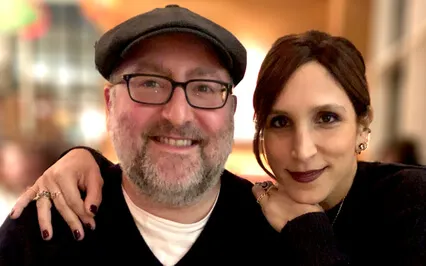
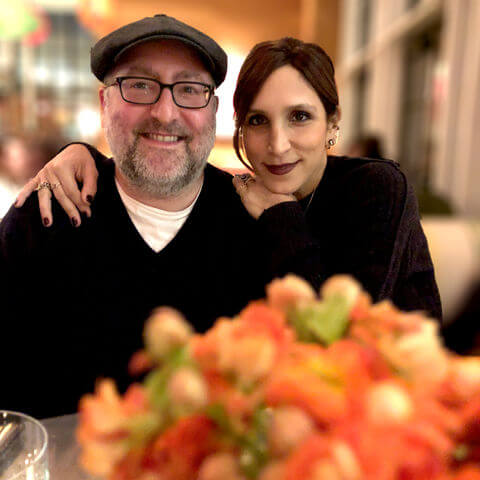
Welcome to the Spiritually Hungry podcast with Monica and Michael Bird.
It's good to be back in our studio.
It feels like we haven't been here for months.
We haven't.
We have recorded all over the world and we've been all over the world,
But it's nice to be back here in the Spiritually Hungry studio.
Just talking just to each other in a small little basement.
Basement.
No,
Oh,
Sorry.
Our beautiful set.
This is technically a basement.
Okay.
Nobody needs to know that.
Really?
I'm not joking.
This isn't the basement.
That's the basement.
This is part of the basement.
Are you so secretive?
I'm just happy to be here with you.
Me too.
So I'm still exhausted from all the fun things we've been doing,
The work-related things we're doing.
My voice,
Our listeners might notice my voice is a little bit- You just interrupted me full stop.
I'm so sorry.
As I was saying- You're exhausted.
And energized at the same time.
My,
Our children's book just released a few minutes ago.
Yes.
I'm going to have to interrupt you.
Oh,
I can count on that.
Okay.
I ask all of our listeners to pause the podcast right now.
No one's going to do that.
Do not.
Well,
Actually,
No,
No,
Wait until I finish what I say.
Don't pause it now.
Can you imagine?
You do that all the time.
You've given long instructions.
You do that all the time.
I'm so sorry.
I apologize.
Don't pause yet,
But pause when I tell you.
Go to amazon.
Com and order as many copies as people you know of The Gift of Being Different by Monica and Abigail Berg.
It is an amazing children's book.
It's also good for adults.
And it's about Monica maybe will give us a few seconds of what it's about.
And hopefully we'll have a few podcasts to go even more deeper into that topic.
But in a second,
I will ask all of our listeners to pause the podcast and go to amazon.
Com and order your many,
Many copies of The Gift of Being Different by Monica and Abigail Berg now.
I was really distracted by your voice.
Well,
I wanted to share with you why I know I'm an analyst.
Why it sounds like you follow a frog.
Exactly.
So we've had many weeks of festivities and spiritual connections and among some of them there's a joyous dancing and singing.
And I obviously sung and yelled a lot.
So the voice is not an unhealthy sore throat,
But rather a very joyous manifestation of joy.
And that's why it sounds like this.
But it sounds unhealthy.
I still think you can sing and sing loudly and learn how to use your voice properly.
No,
Really,
They can't be good for it.
I actually have this thought.
This is completely off topic.
I often have this thought.
I think that just like with muscles,
You want to push them and then they get stronger.
By the way,
An MD is probably listening to this.
Listen,
I'll tell you right now,
Friend.
No,
It's just like using your muscles.
Use them too much.
Oh yeah,
I know a little bit about this.
You get a tear.
Yes.
Well.
But this isn't a tear.
This is just a strain.
And you can,
God forbid,
A person can damage.
Well,
Let's assume that I'm right.
I think you're wrong.
And if there's a doctor that's listening to you.
Do you really want to be embarrassed?
You're going to get so many letters.
I don't mind being embarrassed.
I love being.
.
.
I'm curious about being embarrassed.
Well,
We are going to talk about curiosity because.
.
.
Yeah,
I love being curious about being embarrassed.
Like new ways of being embarrassed.
I can provide some.
Yes.
Well,
We are going to touch upon curiosity because we are picking up where we left off.
We're talking about assumptions.
We spoke about it a few weeks ago,
But there is still more to say on this.
And we are going to make it more specific in terms of assumptions and how they damage relationships.
So I want to tell you a story.
So now you like this.
I love the stories.
It's about a boy from Calcutta,
India who became a Nobel Prize winner by asking one simple question.
How do you know that's true?
His name is Abhijit Banerjee.
I did Google that and I said it correctly,
I think.
He was a professor of economics at MIT.
And again,
He won the Nobel Prize in 2019 for his efforts to alleviate global poverty.
And he says,
Or he said,
I grew up in the middle-class family in the city of Calcutta.
I just by accident more or less happened to live right next door to one of the biggest slums in Calcutta.
So I had a slightly resentful childhood in the sense that I was surrounded by kids who didn't go to school,
Who were playing all day,
Whereas I had to go to the extremely boring school every day.
Which I think it's interesting because already that's not where your mind would go when you're starting to hear the story.
He said he didn't see the kids who lived in the slums as objects of pity or scorn.
Kids in the slum were better at flying kites than Abhijit.
He was in awe of how good the slum kids were at marbles,
Even better than him at cricket.
The slum kids assumed that he would be better because he came from middle-class family.
The slum kids were savvier than he was.
They taught him how to curse,
And he said he was coached by the experts.
Those early relationships shaped the work that would lead to his Nobel Prize for his unique efforts to alleviate global poverty.
As a kid,
Abhijit was known for asking too many annoying questions.
By the way,
I love kids that ask lots of questions.
I think we lose that novelty as we get older.
For sure.
Because we're afraid we'll look stupid.
My favorite is when kids don't wait for the answer.
It's a question after question.
Because they're so curious.
During academia,
He stopped questioning as many things,
But he noticed that so much of our current understanding of economics was based on unproven theories that everyone took as facts.
So he picked back up again,
Asking questions about the most fundamental foundations of economics and the reasons and solutions for poverty.
Economics is what he said.
Economics is about questioning everything,
Questioning assumptions you don't even know are assumptions,
And being sophisticated about looking at data to uncover the facts.
So that was a really cool way to look at this topic we're talking about today.
Assumptions are our preferred stories.
We're built to draw inferences,
Connect dots,
And tell stories.
And these stories we create help us make sense of the world and the people around us.
Even if the story is wrong,
We still feel comforted by it.
And I know many people,
Right?
A lot of the work that I do with people is about rewriting the story,
Changing the belief systems you have,
Because it doesn't matter if it's based on truth or not.
If you believe it to be true,
It is.
Right.
And I think what you're saying is that the stories that we have assumed are often a great barrier to relationships,
Certainly a great barrier for happiness.
And curiosity is what pierces through those assumptions,
Really being a person who lives as a curious being more often than an assuming being.
It's interesting.
I had a session with somebody earlier today and I didn't even know that she wanted to talk about fear.
And I think a lot of people struggle at this.
Her whole thing was,
You know,
I want to know what my purpose is.
She has a career that she likes,
That she enjoys,
But she feels like her fear is she's afraid of dying and not having achieved something great and something purposeful,
Right?
Because she has a family and she's married,
Has kids,
Has a career that's doing well,
And she feels like she was meant to do something greater than what she's doing.
So I talked about,
You know,
How much focus is on being versus doing in your day.
And I said,
You know,
Who do you want to be?
And her answer,
One of them was,
I want to be happier.
And I said,
Okay,
What are the things that make you unhappy?
So we went through that.
And my advice to her is why don't you start getting curious about who you could be,
How you could change things in your life.
And she said,
What do you mean be curious?
I don't understand.
Like you had to see her face.
She did not understand what it meant to be curious about self and about different ways we can react to different situations just getting out of our own movie.
So that was interesting.
Yeah.
Again,
I think that's so true that we think we know ourselves.
And I think that knowing is the same problem as assumptions and it stops us from changing.
Whereas if you say,
No,
I'm curious,
I can react to the situation this way or I'm curious at what are the other ways that I can react to it.
And if you ask yourself those questions,
Personally,
You'll surprise yourself,
Which I think is fun,
But also you'll be on a path towards changing rather than being set in the ways that you assume is who you are.
But also,
You know,
I love to quote Bob the Builder.
He doesn't say,
Let's fix this.
He says,
How can we fix this?
Just by asking yourself the question,
How can I be more curious?
How can I do this differently?
Your brain right away,
The obedient servant it is like,
Oh,
How?
How?
It starts to look for solutions.
It reminds me,
Like even yesterday we were on a call and there was something that wasn't going right.
And I always,
It's a.
.
.
I'm always being terribly wrong.
But I'm always interested in calls like that.
There are people who are like,
You're ready to list all the problems and delve into them.
And for me,
It's always a simple question.
Okay,
So what's a possible solution?
What's another,
Well,
We can't,
We don't have a solution.
What's another possible solution?
You know,
And ultimately,
You'll almost always find that there is something that can be a solution rather than assuming,
You know,
These are the problems,
It's very clear to us,
This is the way things are.
They can't be made better.
You know,
We'll have to wait.
That's what I wanted to say.
Somebody watched a video that I,
Something I said when we were in Israel.
We were at a different,
One of the Kabbalists and,
You know,
Sites,
Energy sites of where he was buried.
And anyway,
In my talk,
I was referencing how,
You know,
I hope that I feel humbled coming to such a great place with where I'm at.
And her email to me was like,
You're doing much better than you think you are.
And I was like,
No,
I think,
And that's not what I'm saying really,
Right?
I think I'm being,
I feel,
I think that I'm being misunderstood.
Like,
Thank you so much.
But yeah,
Am I proud of what I'm doing,
The work I'm doing?
Yes.
Am I happy with,
Yes,
I'm not beating myself up.
I love myself.
But if I put it in the context of who I desire to become,
Which I can't even see fully and I can't fully understand,
But I know that there's more,
Right?
It's just that knowing that allows you then to say,
Okay,
I know that there's that and I can't see it.
I'm curious about it.
So every day I'm going to try to unpack that.
Right.
That's so important.
Again,
Like we've mentioned that over the past few weeks,
We've gone through the Kabbalistic New Year.
And the message that I always share when I have the opportunity is that I have no idea what's coming in the next year,
But I'm very excited to see it unfold.
And I think that's a very different view,
That curious both view of life and desire in life,
As opposed to many people who,
Again,
Want things to be set and stable and want to everything to be as it was.
I want to know what this coming year is going to be.
The reality is none of us can actually know,
But more important than that,
The great things,
The exciting things are going to be the things that we have no idea about.
So that curiosity about life and even this day,
Yes,
We have some idea of what the plan for the day is going to be,
But being really curious and excited about that curiosity,
I think is what opens us up to greater possibilities than we're currently experiencing.
So I think where people get stuck before they're like,
Oh,
Yeah,
Curious,
I don't know,
Future,
I think we get stuck in our preferred stories and they're usually negative.
Right.
And I'm going to give you a few examples because we lean toward the explanation that reinforces our belief,
For instance.
And here's just a few.
You don't get a promotion at work,
So you assume you aren't good at your job.
Your partner isn't very talkative of late,
So you assume they are angry with you or losing interest in you.
Your mother has never understood your choices,
So you assume she doesn't really love you or not as much as your sister,
Let's say.
So some of the most harmful assumptions we make are about our own value or odds of success.
Assuming that someone will definitely turn you down before you even ask them out on a date.
Assuming that a client doesn't want to work with you before you even send an offer.
Assuming that people are focused solely on one perfection you have identified with your body,
Personality,
Work or performance.
Assuming that a group of people don't like you and they make fun of you.
So we already create this whole for ourselves based on just complete assumptions.
Right.
So one of the things that I think is so important is when we talk about curiosity,
I think it's important to underscore why it's so important.
So there's a book.
I don't know if you read the book Curious by Todd Cashton.
You mean the book you borrowed from my desk?
No,
I didn't borrow it from my desk.
Really because I found it actually on the bookshelf,
In your bookshelf yesterday.
No,
I was reading it on my iPad.
So I don't think so.
Well,
And I saw my notes all over.
In fact,
Oh look,
What's this?
Oh yeah.
Okay.
But go ahead.
So a few things.
So his thesis is,
And I would say I really like the thrust of the book.
I don't know that I would recommend it as a great book,
But certainly the basic thesis is very important.
And I'll just share a few quotes from the book.
By the way,
To all of our listeners,
I would recommend reading at least the first few chapters.
I thought they were interesting.
So he says,
Another reason that curiosity is neglected is that it operates below the surface of our desires.
It's not as simple as thinking positive or being optimistic,
Being grateful,
Being kind or feeling good.
Being curious is about how we relate to our thoughts and feelings.
It's not about whether we pay attention,
But how we pay attention to what is happening in the present.
And I think that's why curiosity is,
Like you said in your conversation today with somebody we're counseling,
That we don't often understand what curiosity means because you could be going through the same thing,
But the question in your mind is,
Oh,
That's interesting,
Rather than,
Oh,
This is happening.
Or why is this happening?
Oh,
That's interesting that it's happening.
I think curiosity is subtle as taught,
As a very famous psychologist is saying,
Because it has to,
It's going through life and being curious rather than upset or disappointed or just experiencing.
Well,
I think the way I explained it to her,
I think it's action oriented.
When you're curious about something,
It means that you're going to seek something out and try to see it a different way.
I can't tell you how many times I've added miles onto a run or even if,
Because I was curious about what was around the bend or what was up the hill or what was just in the far distance that looked something.
Yeah,
I don't think I've ever had,
That's never happened to me.
But even like I walk a lot.
I will share something which is a little,
I was actually,
I was in the sauna and I was watching a game and I was curious to know what the end was going to be.
So you got a few extra minutes in there.
Exactly.
Or even in the city,
I get tired of walking the same streets,
But I walk from the places that I just,
I love,
Not only just for the exercise,
But I really love studying people and I love hearing little conversations that I'll pick up like a sentence here and there.
And I'm like,
Oh,
That's interesting.
And then it gets me on a whole nother thought process or something I want to write about.
But anyway,
I usually,
There's this one place where you,
It looks like a dead end and you have to go up an avenue or down an avenue.
And I always did it that way,
A safe way.
And one day I was like,
No,
I think I'll end up going through Grand Central Station,
Which would be really cool.
I'm not going on the train,
But you know what?
I'm going to walk through.
And it was so pretty and it was so fun.
Now it's my favorite one.
But I thought curiosity has always served me for my greatest good.
And I think what you said is so important.
You know,
We often use the phrase,
Let's unpack it.
I think curiosity is about knowing that every second in our lives has a limitless energy to it and you can go past it or you can stop and unpack it.
And whether it's actually a positive experience or a negative experience doesn't even matter.
The joy of unpacking actually brings so much benefits to it.
But I think it begins with the thought.
.
.
But I think you said it,
You arrive at a knowing that you wouldn't have if you didn't explore it.
Exactly.
So,
But I think,
But I just want to underscore because I think it's so important.
We go through life fast usually.
And we certainly go through life fast when we're going through things we don't like and or things that aren't interesting to us in the moment.
The converse,
And I think what we're trying to inspire our listeners to come to is to say every moment is full of great energy.
And I don't want to go through anything fast.
Not the good,
Not the bad,
Not the mundane.
I want to unpack it.
And that's what curiosity enables us to do.
Enables us to unpack situations.
Learn from,
Experience different from,
Grow from.
And I think it's so important.
It really is so important.
But by the way,
Everybody gets to that place in life.
They don't always,
They don't know it till they're there where they're like,
You know,
I'm just not.
.
.
These things I've been doing for 10 years,
It just doesn't make me happy anymore.
And I just wish I wasn't here.
I don't know why I'm in this place.
And they're almost upset at themselves.
Like there's something wrong with themselves because they're not satisfied or content by what they were satisfied and content with all these years.
And I'm like,
This is great.
This is awesome news because now you can become curious about yourself and who you're meant to become.
But it's,
I do understand because I do,
Again,
This is a conversation.
I had this conversation with three different people today and I didn't know that that's where we were going to go,
But that's where we ended up.
And it wasn't even because this was on my mind.
It's just that people get to that place in life where you can't always do things the way that you've done them.
But by our nature,
We are hardwired for seeking,
Which is hand goes hand in hand with being curious.
By hand in hand,
I think they're one in the same,
Right?
They're one in the same.
And unless,
And this is one of the big thoughts that Professor Kasten speaks about is the fact that unless you are living a curious life,
You actually will never be happy.
You can have moments of happiness,
Moments of success,
Moments of accomplishment,
But living curiously is it actually allows the majority of your life to be fulfilling.
Well,
We know that firsthand.
I think we moved to New York because we were curious about it.
I mean,
We felt called,
But we were really curious about it.
What would life look like there?
Right.
And that's an important point as well.
The curiosity leads you to the places that aren't,
I don't know if I'm going to use the word certain secure,
But are new and sometimes scary.
Unknown.
Unknown and sometimes scary.
Unless you're living a curious life,
You'll shy away from those places and often miss out on so many great experiences you could potentially have.
So just one more quote from curious.
Only in the present can we be liberated to do whatever it is we want.
It's a razor thin moment when we are truly free.
When we are curious,
We exploit these moments by being there,
Sensitive to what is happening,
Regardless of how it diverges from what it looked like before or what we expect it to be.
I think it's a very important point because it's not about,
Oh,
This is an amazing thing just happened.
Let's unpack it.
That's also good.
But how about,
Oh,
This is not what I thought was going to happen.
Let's unpack it.
Oh,
This is not what I wanted to happen.
Let's unpack it.
So I want to read these words again because I think they're both very inspiring and very important for all of us to hopefully engage in a more curious life.
So when we are curious,
We exploit these moments.
And that's what life is about,
Exploiting the moments,
Not letting them go by.
Being there,
Sensitive to what is happening,
Regardless of how it diverges from what it looked like before or what we expect it to be.
We are engaged and alive to what is occurring.
We are energized.
We are open and receptive to finding opportunities,
Making discoveries and adding to the meaning in our life.
To reiterate,
It's not about being attentive.
It's about the quality of our attention.
I think this thought,
If practically used,
Really transforms your life.
And it's just a question of how you make it as a consistent and constant part of your life.
I often look at small children,
Right?
I think that any time I start to feel like a great quality,
Like being curious,
Kind of waning,
I'm like,
Okay,
What can I do more of that is similar to what children are doing?
They're always looking for new things.
They're always curious.
They're always seeking.
They want to have fun.
They ask lots of questions.
They appreciate the newness of everything,
Right?
I think that you just need to go back to that to be guided.
Yeah.
And then maybe the final thing I'll share from curious,
The way he posits it that the ideal person,
He calls them and hopefully us,
The curious explorer.
And I think if there's one thing that our listeners get from this podcast is how do each one of us become more of a curious explorer?
That's interesting.
I do want to say what I found from his book that I thought was really interesting.
He says,
To discover the missing ingredient to a fulfilling life is that curiosity is nothing more than what we feel when we're struck by something novel.
As we grow older,
Our instinct to explore is tempered by our desire to conform.
I can say it better.
We stop asking questions because we might look stupid,
Right?
We stop putting ourselves in positions where we're open to feedback,
Criticism,
Because we don't want to be vulnerable.
We tend to dismiss curiosity as a childish,
Naive trait,
But as Todd Cash didn't explain,
It can actually give us profound advantages.
So I mean… I just want to underscore something you just said,
Which I think is so important.
The reason we're so averse to criticism is because we're not curious.
We don't want to be curious.
You want to change.
Yes,
Exactly.
Whereas,
And again,
With all the caveats that of course not all criticism is good and you shouldn't take it from everybody,
But as a basic point in life,
You want to be somebody who actually does want to hear how you're perceived by other people.
They could be right,
They could be wrong,
But isn't it interesting?
Yeah.
No,
So say it.
No,
Because when you're speaking about it,
I'm thinking about,
And this is why it's so tricky.
If you're driving a car,
Right?
There's certain things set up in place to make sure that you're a safe driver.
Maybe you can improve.
Maybe if you get too many tickets,
It's an indication that you need to… Take a break.
Or change the way you're driving,
Right?
Or I mean,
With most physical things in life,
There are things set up in this world to give you feedback guidance.
So you know,
You know how you're operating.
When it comes to things of character,
Of soul,
Of nature,
Right?
One of those things,
One of those tools is feedback.
It might be some criticism.
Again,
Doesn't mean,
Again,
With the speeding tickets,
Maybe the cop just likes to give tickets.
I mean,
Of course there's a balance,
But I think if we could redefine these words that we really don't like,
Like vulnerability,
Feedback,
Criticism,
Input,
However you want to phrase it,
As your buffers,
Your guide to show you,
Like,
How are you doing in this thing called life?
I mean,
That's really what that is.
And I would add,
It's not even so much what you're doing,
It's just how you're being perceived,
Which is also important.
So it comes to mind… Well,
You have to unpack that because how you're being perceived,
I really… I think how people are experiencing you.
I know you like me to give personal examples,
So I'm going to… But you hear what I said?
No,
Say it again.
How people are experiencing you.
I don't think it's so much about how you're being perceived.
I think that's tricky.
Isn't that the same?
No.
How people are being perceived.
I think that's like what they think of you.
The experience is what are you putting out there?
I would just… Maybe it's… Because I think how… I think that… Yeah,
It might be semantics,
Right?
Because how you're being experienced,
Is how people are perceiving you,
Right?
If you're being experienced as a nasty person,
You're being perceived as a nasty person.
I know that there's a difference.
I guess I don't like the word perceived.
I'll keep using it then.
So I'll give you two examples,
Which I've found… Make it good,
Michael.
Make it good and make it juicy.
I found them both illuminating and interesting.
So because again,
I do try and I do strongly believe in this idea.
Did you get it criticized?
Yeah,
Yeah.
Oh,
Why didn't you tell me?
No,
This has been over time.
I thought it was like yesterday.
Oh,
It happens all the time.
I get criticized all the time.
Not least by you.
No,
You don't.
We love you.
Thank you.
Your family loves you.
Oh,
Thank you.
Thank you.
So two things that I've heard in the past about me and from people is first,
That I think this… I forget who it's from exactly.
I heard it from a few people that people are… So they're not scared of me but sort of… Yeah,
That I might not be approachable.
And to me that was so interesting because I see myself as the opposite of that.
Like I'm sort of… I think I'm a relatively happy-go-lucky kind of person who's open to people.
But it made… Again,
This wasn't actually meant as a criticism when the person told me this.
It's just that they sort of saw me as this teacher.
I think this example is more about how they feel about themselves.
Exactly.
But the point is… But it did make me realize that if I want to be more approachable,
There's probably things that I can't do.
Number one.
Number two,
Related to that was,
Again,
People thought that I was being short with them.
Why are you smiling?
It might have been you.
But the point again,
I think when I'm in certain situations or having certain conversations,
It's very bottom line.
This isn't… Especially like I would say in work situations where it's not to my mind a social situation where we're joking around.
Right,
When you say,
Hi,
Good morning,
How are you?
And then you've asked the question.
There you go.
I was like,
What's you?
It's all coming back to me now.
Well,
Sometimes I'll see a text and I'll just… Hello.
Hello.
So yes.
The point is,
It was never… so when I heard that,
It wasn't that I was like,
Oh,
They're saying I'm a bad person or… To me it was always,
Oh,
That's interesting.
And if it's interesting enough,
Maybe there are ways for me to mitigate that,
To act in different ways.
I think that's such an important point that what happens in here,
The ego is such an adversary.
The ego is like,
I don't want to hear anything wrong about you.
Me,
Right?
The ego.
No criticism.
Just keep me as I am.
Whereas the real,
The soul's voice is,
No,
Please let me hear.
I'm so curious to change,
To grow,
To find out how I proceed.
The good things,
The bad things,
Everything.
It's so important.
So important.
I agree.
So what I would say,
Maybe when we talk about as it relates specifically to relationships,
The thought that I had is,
As many of our listeners know,
We're very fond of John Gottman and his research into marriages.
And he said in his opinion,
In his studies,
And he's been doing this I think over 40 or 50 years now,
That there's three traits that are necessary for strong relationships.
One is to be able to negotiate conflict.
Second is to repair after any type of negative situation.
And the third is curiosity.
And of course,
We're not going to talk about the first two,
But the last one.
That when we talk about curiosity,
Everything we said until now,
Our listeners can say,
Well,
I might or might not be inspired or desiring to be curious.
I hope they are.
But what I think John Gottman is telling us is that unless you are curious in your relationship,
It is unlikely that you're going to have a strong and growing relationship.
And I think one of the ways I think that it's important for our listeners to think about it is the idea of turning away and turning towards.
What does that mean?
That when,
Again,
In the words of John Gottman,
When one of the partners,
Husband,
Wife,
Partner,
Is making a bid,
It could be for attention or for anything.
For connection.
There are,
In his research,
There are those who turn towards,
Which means,
You know,
You say,
Oh,
I saw something really strange today.
And as opposed to saying,
Oh,
Say,
Oh,
What was it?
Right?
So that was- Or saying,
Oh,
You always see strange things.
Enough of the strange things.
Right?
So that's a bid and you can turn towards it or turn away.
In his research,
I want to get these numbers right.
Those whose relationship flourished- 70%?
86% turned towards.
And those who wound up being divorced,
What do you think the percentage of- Turning away?
Turning towards.
Well,
Both.
How much they turned towards each other,
The ones that divorced?
Yeah.
10%?
33%.
So which,
By the way,
One would think that's- Skeptical.
No,
It's not.
I mean,
He has a ton of research on why couples make it- Right.
And this is one of the three pillars,
Right,
Of a strong relationship.
And I was thinking about our relationship today.
You know,
86% means almost nine out of 10 times that one partner makes a bid.
We do.
We try,
But I'm saying,
But my point is- Sometimes it's eight.
Right.
But my point is 33% doesn't sound that low,
Right?
How many couples do we know that are like down to zero or 10?
It sounds so low.
Or you can imagine if- One out of every three times,
Right?
So you come home from work and you make- We're saying 10 times.
The research says that in order for the relationship to be strong,
You have to be doing it 86% of the time,
Which is about nine out of 10 times,
Which means almost perfect in reciprocating,
Turning towards a bid from your partner.
That's not easy,
Certainly for busy people.
And on the other side of that,
I was going to say 33% is,
You know,
If you're there or if you're there and you're going to be able to be there,
You're going to be able to be able to be there.
And I think that's a big thing.
And I think that's a big part of the problem.
And I think it's also a big part of the problem.
I think it's a big part of the problem,
Because it's not about making the choice to do it or not.
Because you know what,
As busy as we all are,
We can watch a game on TV or we can go- It's just about prioritizing.
Right.
But all this to bring back to the importance of curiosity in relationships.
Are you being curious now?
Never.
Never did you say that.
Is that how you see yourself?
Let me think about this for a second.
I never thought of you in that way.
How I perceived.
Let me see how I perceive you in this regard.
I'm curious.
Hmm.
We do have that.
Yeah,
I guess maybe that is.
I guess I know it is true about you,
But you're so not that way in a relationship.
You're so not.
You're so gray.
Well,
Not about your- You're going to be gray.
Like you allow a lot of- Leeway.
You do.
Yeah,
Yeah,
Yeah.
Not harsh.
But wait,
If I'm giving over a point or if I'm teaching- No,
I guess your opinions are black and white,
But you're- Delivering.
No,
Your ability to see the other's point of view and meet them.
Yeah,
Yeah,
Of course.
That's not what,
Yeah,
Absolutely.
That's just interesting,
Because usually people are black and white.
They're black and white everywhere.
I'm still curious.
Yeah.
Huh.
I thought that was- So my point was- What was it?
That if you're in a relationship,
Unless you're actively curious,
And we're using the example here of bids and turning towards,
But that's just one example.
Unless you're curious about what is happening with your partner,
What they feel,
What they say,
And you're actually not just curious,
But you're asking about it and delving more deeply into it.
The chances of your relationship surviving.
What about being great is close to zero.
Well,
I've written about this in Rethink Love,
This exact point,
And I quoted John Gottman.
The example I gave from our lives is that if you were watching something that was funny and you'd call me over and say,
Monica,
Look at this.
I think you'd really enjoy it.
I nine times out of 10 come.
Even if my hands are full of cookie dough or I'm in the kitchen or I'm like,
It's not the opportune time,
I will because,
And that was a decision I made early on and you'd do the same for me,
That if you took the time to stop watching what you're watching for that example,
And you stopped,
You could have continued enjoying yourself because you wanted to share it with me because you thought I would enjoy it.
That warms my heart and I want to reciprocate and I don't take that for granted that you cared enough to stop what you're doing to show me,
To share a moment with me and to connect.
I think that is why that is the glue or one of the three pillars that he talks about because it creates a connection and appreciation.
It's not just about,
Oh yeah,
Okay,
I'll turn towards.
No,
It's so much deeper than that.
Absolutely.
And it's interesting to point out that out of the three pillars,
It's the only positive one,
Right?
The other two are conflict resolution and repair.
This is what I'm saying.
This brings you.
.
.
This is maybe,
Again,
To my mind,
If not the most important amongst the most important.
And I think often in relationship people say,
Well,
We have the same goals.
We have a family.
We want the same things in life.
We have fun together.
There's a list of things that people have in their mind,
If not clearly concrete in their mind,
Of what's going to make their relationship work.
Well,
Good or bad news is that actually what's going to make your relationship work is constant curiosity.
Nine times out of 10 at least.
Be curious about whatever your partner is saying,
Doing.
Like you said,
It might not just be words.
It could be a sigh.
It could be anything.
And again,
Good news,
Bad news,
Unless you're doing that nine times out of 10,
Unless curiosity is a consistent part of your relationship,
Unlikely that the relationship will grow.
And as the research shows,
More likely that it will wind up either in divorce or just not being a great relationship.
And I often use this example of how people are with their children or even with their pets.
They're very curious about everything.
Oh,
They did that.
That's new.
I did this other thing.
I hadn't seen that before.
That's a different behavior.
And mostly it's because I think if it's a child,
We feel kind of ownership or responsibility there.
If it's a pet,
They can't speak for themselves.
We're paying a lot of attention because for many reasons,
We don't do that with our partners.
We don't do that in relationships per se.
But if you approach your relationship the way you approach those other two examples I just gave,
Imagine how different your relationship would be.
Another point that I wanted to bring up is we often jump to conclusions a lot.
We assume that my partner likes this restaurant and they're like,
Italians,
They'll want to go to this restaurant tonight without ever asking them,
Without giving them the option of like,
Do I still know this about my partner?
Has it changed or do I just – I'm assuming it because it's always been this way.
And even if you've been married 10 years,
15 years,
20 years,
I think that we assume that we know them and we don't give the space to say,
Wait a second,
We've been married this long.
I know I've changed from who I was or what I desired five years ago.
And my partner has too.
So it's so important to be able to constantly – and again,
That's the curiosity.
But just because it's been a certain way for a certain period of time doesn't mean that it's still that way.
Absolutely.
Absolutely.
And unless you're curious – and the point is even if it hasn't changed,
The fact that you asked the question is already being curious and already improving the relationship.
So it's not so much that every time you ask a question,
The answer is going to be something that surprises you.
But the fact that you're actually interested what the answer is going to be is creating that clue and the growth in the relationship.
Yeah,
It's like it shows you really care.
You're interested enough to say what is it that you want to do or what's on your bucket list.
Whenever I recognize something new about myself,
You're the first person I tell.
And because you're my best friend but also we need to make sure we know what's going on in each other.
Like seriously,
What's going on in our worlds and what excites us still.
Absolutely.
I remember one summer,
I had this epiphany that I don't need to ever assume anything about a person's motivation or actions of why they've done something.
I have no idea what's going on in anybody's mind.
I stay really current what's going on in my own mind.
I'm very available to myself.
But I realized like I have no idea.
And even if I was really close to somebody or even if I was really not close to somebody,
I'm aware that all of that can change.
And so if I ever felt something that was different or there was a weird energy or juju going on,
I made it a practice and I've continued since I had that epiphany saying I'd call the person up.
And I guess for some who really don't like confrontation,
Which I don't think it has to be,
It's really conversation.
Yeah,
But you love those.
I have clarity.
And also I don't have enough time or patience or desire to entertain a story that may or may not be true.
It's a waste of time in my book.
And I don't want to do it anymore.
It's boring and it was taking too much out of me.
So I decided that there's nothing – but this is the thing.
Here's the caveat.
I decided there's nothing I'm afraid of hearing.
I was secure enough to say,
Okay,
I can take it or leave it.
I can decipher what is true for me and what is more about them.
And so when I finally got to that place and I had the courage to be in this space.
And so I would go to the person.
I would either text them or call them and say,
Hey,
I'm feeling something.
Is there something you want to tell me?
Or maybe there was a misunderstanding or I'm just really curious.
And every single time,
They would let down their armor and they would say how they felt because really people at the end of the day too want to be heard.
And they don't always have the courage or also the confidence or even the clarity to be able to do that.
So I think that's a game changer.
Like if you want one tip on how to really get on the other side of this,
Just don't be afraid.
Don't be afraid to ask anything.
Nice.
Nice.
That's what I think is nice.
Is it nice?
It's curiously nice.
Yes.
Okay.
So a quote that I really like from Albert Einstein about curiosity.
My God,
How do you have all my,
Have you been reading my books?
How did you know?
I have that here too.
So go for it.
Let me see if it's the same one.
I don't want to waste time.
Wait,
Wait,
Wait.
Tell me your quote.
I have no special talent.
Oh,
No,
What is that?
I'm only passionately curious.
Interesting.
Yes.
That was the one I was thinking about.
Nice.
Most people stop looking when they find the proverbial needle in the haystack.
I would continue looking to see if there were other needles.
I like that one better,
But they're both by him.
So they're both good.
Curiously good.
So.
Curiously delicious.
This should be like a Grey Poupon commercial.
Curiously tasty.
I think I'm hungry.
I'm going to start making food references.
It's nearly dinner time.
Yes.
What are we going to have?
I'm curious.
I'm curious too.
I have no idea.
Me either.
I'm just kidding.
So I'd like to share a really beautiful email that we got from one of our listeners.
And again,
Reminding all of our listeners to please make sure to send your questions,
Comments,
Stories,
Inspirations to Monica and Michael at Kabbalah.
Com.
We read them.
We are inspired by them.
And often we get to read them to the rest of our listeners and it inspires them as well.
I do want to say one other thing that came to my mind and it's a compliment to you.
So in this book launch,
Which is my least favorite part of writing and publishing a book is this part of it where you need to ask people like,
Would you like to read my book please and come to this and that.
It's just not my comfort zone there.
And I'll do all of it.
And then it's hard not to get disappointed if there's an issue on shipping or whatever the details that come up.
And I never assume and I never put it on you that you need to help me or this is not working.
And last night there was an issue around this and you just stepped in and went above and beyond.
No,
But the thing is I never assume and I never expect that from you.
I mean,
I suppose if you didn't do it,
I would be disappointed,
But it's not even like – do you understand what I'm saying?
It's not even in our relationship,
Which I think is a really important point for our listeners – no expectation,
No assumptions.
Be clear about what's important to you and if the person's again curious and paying attention,
They're going to step up and show up.
So thank you.
Okay,
The letter?
Yes.
Dear Monica and Michael,
In parentheses M&M,
I've been writing this in my mind for several weeks now and so I've finally taken a few minutes to actually finish what I've been imagining.
First,
I need to extend my deep gratitude for you both and your podcast.
I contracted the Delta variant of COVID about a year ago and it somehow significantly altered my brain.
I've been dealing with overwhelming anxiety and intense depressive episodes since that time.
I've been residing in a very dark place with a constant cascade of the darkest thoughts for days and months unending.
This summer I've been working in a very isolated job,
Which hasn't helped,
And only my headphones as company.
Silence wasn't an option nor music as my mind would drift into horribly anxious places.
A friend suggested podcasts and after a couple of unsatisfying attempts,
The universe led me to spiritually hungry,
In parentheses,
As Michael often says,
There are no coincidences.
I've truly enjoyed getting to know both of you as well as stories about your four children and your puppy,
Miles.
I've been able to listen to about six to eight episodes each day.
That's wild.
In parentheses,
I work for 12 hours a day.
So I've gone through the first 110 and I'm halfway through the series for a second time.
I've benefited tremendously from your sharing.
I appreciate the spiritual concepts as well as the anecdotes,
Stories,
And scientific research that provide support for the topics you share.
I'm not sure where I would be today if I hadn't been led to your benevolent messages,
But that seems irrelevant now.
It came to me when I truly needed it.
You have educated,
Motivated,
Challenged,
And inspired me.
You have caused me to laugh,
Cry,
And most importantly,
To start to repair the destructive trajectory that I was spiraling into.
You helped save me.
Probably the most profound lesson you've passed to me is through the synergistic manner in which you both interact and both support and complement each other.
I grew up with horrible relationship role models and failed into marriages and numerous other romantic relationships,
And I'd become quite cynical.
You've both shown me a working model of compassionate and successful companionship.
It's so uplifting.
I'm still near the bottom of the hole,
But I'm starting to recognize that the way out is up instead of continuing to burrow deeper and dig my own grave.
With the armor and tools that you provided,
I'm optimistic that I can find my way back safely.
I hear your request at the end of each episode to write or share.
I've certainly shared many of the episodes with my five adult children,
And now I'm writing to thank you both.
I hope you enjoyed reading this as much as I've enjoyed writing it.
Sincerely grateful,
Spiritually starving,
Dale.
That is so beautiful.
By the way,
I did enjoy it.
I think I enjoyed reading it more than you enjoyed writing it.
And I find this personally very inspirational.
I hope our listeners find this very inspirational.
And so therefore,
Thank you,
Dale.
And thank you to all of our listeners,
But please make sure to keep sharing.
And I feel such pressure.
We've got to get some more episodes out for our.
.
.
Yes.
Yes.
Please make sure to share this podcast with as many people as you can on Apple Podcasts.
Write five star reviews.
Send your questions,
Comments,
Stories,
Inspiring stories to monicaandmichaelatcabala.
Com.
And these emails truly are greatly,
Greatly inspiring.
Thank you so much for being open and vulnerable and sincere with us.
It really,
Really inspires us.
Stay spiritually hungry.