Welcome to our second talk on Ryujin,
The Dragon Song.
In the first session,
We talked about the various translations of the title Ryujin and its relevance to Zazen practice.
Let's now turn to the text.
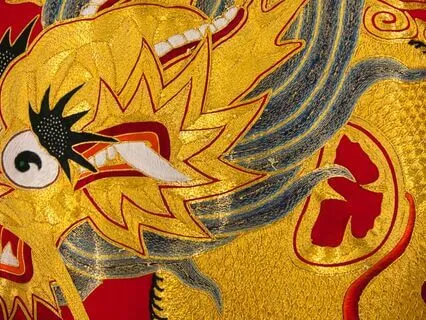
Beginning with the image of a dragon,
Ryujin is written using a string of metaphors that we will meet and examine as we continue.
I'm reminded of the freely-disporting dragons that we encounter in Yangshan's Mind and Environment,
Which is the 32nd koan in the collection Shouyou Roku,
The Book of Serenity.
It opens with this,
The ocean is the world of dragons.
Disappearing and appearing,
They sport serenely.
The sky is the home of cranes.
They fly and call freely.
Ocean and sky are images that express totality,
Vastness,
Emptiness,
And oneness.
Ocean points to the depths of practice,
And the sky points to the vastness of practice.
The dragon in this encounter dialogue that opens Ryujin begins with another image.
Sings in a withered tree.
Again,
That's sings in a withered tree.
Dogen will explain this all to us using a string of metaphors that derive from old encounter dialogues that he quotes and comments on.
In the first few lines of his commentary,
Dogen shares an encounter dialogue which is how he often opens his writings.
He describes how we go about this as he notes,
Just knowing how the dragon's song is simultaneously realized and expressed.
He starts with this dialogue.
A monk once asked Master Tuozi,
Is there a dragon singing in a withered tree?
Master Tuozi replied,
I say there is a lion roaring in a skull.
Dogen comments,
And I quote him.
Discussions about a withered tree,
Or sitting in stillness,
And dead ash,
Or composure in stillness,
Are originally teachings outside of the way.
In other words,
They're non-Buddhist teachings.
But the withered tree spoken of by those outside the way,
And that spoken of by Buddha ancestors,
Are far apart.
This distinction is a critique of quietist practices.
He makes this same distinction in Fukan Zazenji,
The Principles of Zazen.
This is his first writing upon his return from a four-year pilgrimage in China,
Where he writes,
And I quote,
This practice is not meditation.
It is simply the practice of ease and joy.
Dogen's distinction can be traced back historically to the first ancestor of Zen in China,
Bodhidharma.
In his legendary practice of nine years of wall-gazing,
Which historians at that time confused with the Indian trance-inducing tyana,
There's a big difference between quietist practices of deadening the mind or getting lost in emptiness,
Which is,
According to Dogen,
Nothing but a passing phase.
And in contrast,
Insight-oriented practices such as mokusho or silent illumination,
The Chinese precursor to Dogen's shikantaza,
Or just sitting,
In which everything is bright,
Clear,
And experienced without attachment or aversion.
Dogen continues,
Those outside the way talk about a withered tree,
But they don't authentically know it.
How can they hear the dragon singing?
Dragon singing,
Also disporting freely,
As in Yangshan's mind and environment,
That I quoted before,
In Zen,
Represents a realized person.
Dragon singing is an expression of a realized being,
Such as sitting in shikantaza,
In a fresh,
Joyous,
Deep,
Clear,
And vast awareness.
The activity of just sitting itself is the dragon singing,
Silently expressing the Dharma.
Master Tozi's response,
A lion roaring in the skull,
Is another way of expressing the same realization.
The lion's roar is an image for the fearless expression of the truth of the reality of being.
It expresses the vibrant,
Deep,
And clear awareness of the Buddha preaching by silently sitting.
The implication is that we all have the same mind as Buddha and are all capable of expressing realization,
Each in our own unique ways.
This conversation between Tozi and the monk exemplifies two unique expressions of realization.
Now someone told me that they were taught to smile when they sit,
That I should try it.
Maybe I would like it.
Maybe that is their expression of realization.
I don't know.
Someone else said that they frown when they sit,
That realization always brings about a frown.
I say,
When sitting,
Just sit.
Nothing more,
Nothing less.
Someone else said,
When sitting,
You should always concentrate on the breath.
Dogen says,
When there is a long breath,
Notice that the breath is long,
And when there is a short breath,
Notice that the breath is short.
In other words,
No picking and choosing,
No concentrating on an object to the exclusion of everything else.
Shikantaza is an all-inclusive awareness.
If smiling,
Just smile.
If frowning,
Just notice that you are frowning.
Someone else said,
Don't let go,
Just let be.
That letting go is an action,
And letting be is just witnessing.
Actually,
These are all passing mind moments that we simply notice without grasping or pushing away,
Also without judgment.
Don't make a big deal about it.
When letting go,
Just let go,
And then let go of letting go.
When letting be,
Just let be,
Without indulging letting be.
No attachment,
No aversion,
Just sitting as sitting,
And just sitting no matter what.
Thank you.