Welcome and thanks for listening to Truth Wisdom Freedom Conversations.
Each week I'm joined by various conscious leaders as we discover more pathways in becoming heart-centered human beings.
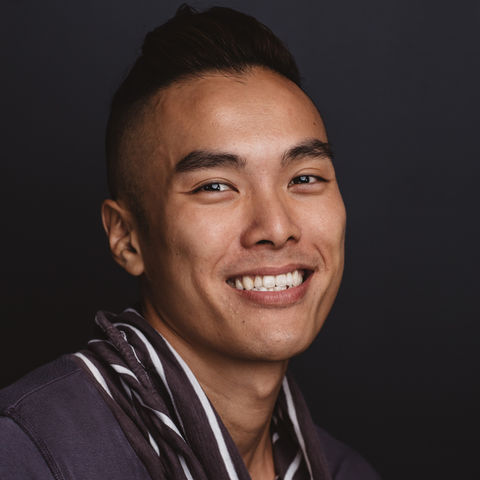
This is your host,
Author,
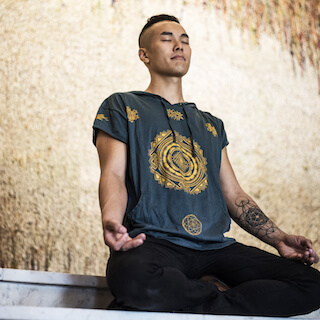
And spiritual coach,
Johnson Chong.
Hi everybody and welcome to another episode of Truth Wisdom Freedom Conversations.
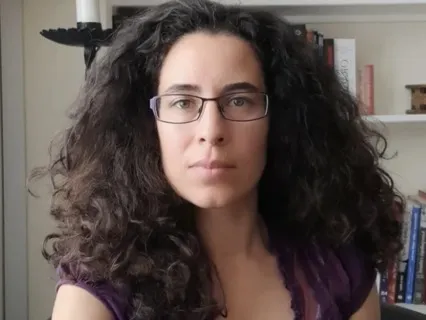
I'm really excited to be joined here with Dr.
Tanya Portquedo.
And today we are talking about health,
Illness,
And healing from various cultural perspectives.
So Tanya here is a shamanic medicine energy practitioner and she's also a medical anthropologist.
So she has this wonderful bridge mentality between the holistic and also modern scientific approaches.
She's traveled extensively to places in Europe and Asia and Africa to explore health,
Illness,
And healing from various cultural perspectives.
And most especially the contrasting belief systems around health and food and nutrition between modern science and the local traditions.
So in this episode,
We will be discussing how the lack of a deep emotional connection to food and nutrition can lead to illness from a medical anthropological perspective.
We'll also be talking a lot about Western medicine and what it can learn from more of these indigenous,
More local health belief systems and around infant and child feeding practices.
We'll also talk a little bit about that paradigm shift that we're experiencing around the world,
Moving away from the more left brain masculine approach and moving into a more feminine,
Inclusive,
Intuitive approach.
And also we'll talk about the social cultural importance of food and the use of herbal medicines for some of the field studies that Dr.
Tanya has done in relationship to diabetes and also diabetes and depression.
And also of course the future of health and medicine.
So we have a lot here,
A lot of exciting things to get ready to talk about.
So let's just start first with maybe Tanya,
You can introduce yourself and tell us what is medical anthropology.
So first of all,
Thank you for having me.
It's a honor to be on your show and for the introduction as well.
Yes.
So medical anthropology in essence is the study of how different cultures in the world perceive health and illness.
So it's moving away from the Western paradigm and focusing more on,
As you mentioned,
The local traditions and different ways of perceiving the body and illness and health.
And what we define as cosmologies.
So different ways of understanding reality around us and our pace in it as humans and the interaction with the environment as well.
And I know that we were talking a bit before when we had some previous discussions that you had spent a lot of time in Africa and also in places like Bangladesh and India.
And you were hired by governments to observe local belief systems and their mythologies around health and wellness.
You have some really interesting stories of being this person,
Having to negotiate,
Almost translate to the government officials that brought you there to implement more Western practices of how to treat things like diabetes.
And then there was the counter belief system from the local traditions.
Maybe you want to share a little bit about what you discovered by being posted in these types of situations.
So I have worked in Europe and Asia and Africa,
As you said,
Precisely looking at how to bridge or connect local culture with interventions,
Mainly around nutrition and diabetes.
And whether in Europe,
For example,
In Scotland,
Which is what I did my doctorate study,
Or in Bangladesh or different countries in Africa.
What really stands out is the connection that people have with the land and the connection that they have with nature.
And how this connection,
It's so powerful in a way determines the way they perceive and understand illness and health and how to heal ultimately.
So there is a very interesting commonality when it goes down to connecting,
As we were talking about that inner self and the place around you to understand why you're ill and who you are.
And how to get better.
This I would say is probably the heart and the core of what I've learned during these years.
Was that something unexpected on your journey when you were working with these big pharmaceutical governmental boards and agencies?
And they had an agenda,
I'm sure,
Of wanting to implement their health initiatives.
Were you more on board with them and then your view started to change as you were studying the local people?
How did that happen?
It's always been a kind of a battle,
I must say.
The forming I've had in some medical anthropology has always been,
And my degree is in social anthropology,
It's always been quite open as a discipline in trying to understand people's understanding and cosmologies of health and illness.
Having said that,
It's still a very colonial discipline.
The fact that it was born in the Western world to then go to different societies and learn how they lived,
It does have implications.
So I wouldn't say that my view was totally neutral.
It's very difficult to remain unbiased,
Especially when you've grown up as a Westerner.
With time,
I have to say,
And the more I talk to people,
This is the key of the work I've done so far,
And ethnographic work,
It's all about what people say,
What they think the reality is.
What the person thinks about diabetes.
Why do they think they have diabetes?
Why do they think that their child is malnourished?
Do they actually think their child is malnourished?
But in terms of undernutrition,
Yes,
They definitely believe that the children are malnourished most of the time because of bad eye.
Somebody gave them bad eye.
But this is a whole big subject.
You can just look at a child and even unintentionally,
If you say,
This child is beautiful,
You can give the child bad eye.
If you say this child is big,
You can give that child bad eye and it might start shrinking or not eating well.
Sometimes they actually put little marks in baby's heads or the scalp actually here so that it's protected.
They believe the spirits can enter the fontanel,
Which is part of the scalp,
But it's not totally closed when you're a baby.
It's quite vulnerable also spiritually,
Which makes sense as the crown,
Isn't it?
That's why you need to protect babies.
You as a health advisor,
Your child is malnourished because it's not eating a nap.
I'm like,
Well,
Look,
No,
There's a dog barking next door.
That's why he's like this.
So and so looked at him or her.
That's why he's like this.
So we have to refrain from making comments about children's,
How they looked and how healthy we thought they were because that could change the energetic luminous energy field and they will start being unwell.
Was that in Bangladesh or was that in Africa?
That was in Bangladesh,
Yes,
Definitely in Bangladesh.
Although Africa has the beliefs about bad eye too.
So it was similar across the board in Bangladesh and Africa?
Yeah,
Similar concepts,
But different ways of explaining and seeing it.
For example,
The evening,
That's something else that would people fear or not fear.
But there is a time of the day where the sun goes down in between day and night where spirits actually come out,
Become more present.
And that that time is quite dangerous for babies to be outside.
And South America has that concept called Serenu.
My mom would always tell me,
Don't go out without dressing up properly on Serenu,
Which is the 6 p.
M.
In tropical countries,
Because it's dangerous for your health.
That's interesting.
I've heard of some of these kind of folklores from people,
But they've actually had an experience with it,
That there was a physical manifestation of some sort of disease.
I once met a Tibetan monk,
A Rinpoche actually,
Who we did some rituals together for blessing the land.
And he said that he was once cursed by a land deity because he had peed somewhere that was not where he was supposed to pee.
And no one knew what was wrong with his skin.
But the next day,
When he came back from the forest,
He had all these rashes everywhere and hives.
And all these healers came and tried to give him all types of physical ointments to soothe the rashes,
But nothing helped until one person said,
Did you do something you weren't supposed to do to dishonor or disrespect one of the spirits of the land?
And he had to recall what he did that day.
And it was like,
Oh,
I think I peed in this area.
Oh,
No,
You shouldn't have done that.
And so then they had to do this whole ritual around it.
Maybe it was a big placebo effect from a Western perspective,
But we don't really know.
But his rashes disappeared after a very long time,
Like weeks of having this rash,
Right,
Of doing these rituals to ask for forgiveness from these land spirits.
So there is something to the local traditions that have been there for a very long time that Western science may not logically understand.
But there's a reason why these cultural practices have been put into place.
Yes,
And there's a reason,
There is a logic behind it.
As we were saying,
It's not a masculine logic.
And also with the scientific means,
This is not something you can reproduce.
Science is very,
It's very rigorous.
You have to be able to reproduce the same phenomenon in a specific context.
You need to control the variables.
It's not possible when you are dealing with phenomena that are so interconnected with nature and different factors,
You cannot reproduce them.
Completely different way of understanding whether that was it.
It doesn't matter whether that applies to everybody else.
But it did apply to that person.
Something that anthropologists look at is the more people question is why me and why now?
So it's not that you got the disease because many other people might have the same risk factors and they might not get it.
It's why that person in particular,
In that particular time,
This is what different cosmologists are able to explain because they have looked into the factors of not being in balance or having,
As you said,
Broken the rules of the land.
There are many other factors that might have played a role.
So it's not necessarily the virus.
If your environment is healthy,
Whatever virus or whether the JAGWAT comes to you,
It's not going to attack you because your environment is healthy.
You don't attract that specifically into your life.
This is what we are missing.
Do you feel like in a lot of the local traditions there was this innate law of attraction or a law of synchronicity that was at play?
Absolutely,
Because they close it to nature.
It's very difficult not to see that when you look at plants and animals because that's how they live.
The interconnection is so powerful that you can only learn that that's how you can live your life and be healthy.
As soon as you remove yourself from that,
Then you have to make your own rules on how to live and be healthy.
And being disconnected,
The world becomes smaller.
I think the feminine had a lot to do with it.
Not women in particular,
But the feminine within each one of us.
That's the most important aspect that we need to revive.
It's that feminine intuition going in and saying,
Does this resonate with you?
Does that make sense to you?
Rather than to somebody else who came up with a theory?
Yes,
That's yours.
That's your explanation.
I had a powerful experience recently with them.
I was asked by a friend to help because a girl who took MDMA went into a coma.
So I think she took ecstasy on the first night and then she was in a coma.
She started convulsing.
I gave her a session on three different occasions and I could really feel the change.
She was undecided.
She wasn't sure whether to come back or not.
There was a lot going on through her body,
But mainly it was to do with her being one again.
So when I did the slow retrieval,
I could feel that she felt one and then she was happy to come back.
You know,
They gave her three percent chances of survival.
They told her parents three times that she would die,
That she wouldn't live longer than a week.
After the third day,
She opened her eyes and she started moving.
On the ninth day,
This girl was back home.
She had multiple organ failures.
So she just needed that support.
And other kids took the same pills.
They didn't react as she did.
You know,
It was a party.
It affected her in that way.
That was her specific journey.
And why did it happen to her at that time?
There's a lot there that we don't necessarily understand and it's interesting.
That diagnosis of you have three percent chance of surviving,
That almost becomes your reality because you,
As a person,
Were trained from society to then believe the doctor.
It's a self-fulfilling prophecy,
Isn't it?
We have to break out of that.
Yeah.
Three percent chance is maybe not for her.
Let's see what else is there.
Let's see.
Let's feel her field.
Maybe it's not about her dying.
Maybe she doesn't know what to do.
Maybe coming back with a body that doesn't serve her anymore is not something that's in her plans.
What's her contract?
What were the factors here that were influencing her?
The family situation?
It's just so complex.
Obviously,
The doctor had the machines and that's all they could do.
Prepare the family for the worse.
The family didn't lose hope.
Every time they would tell her she's peaceful,
She's taking her decision.
She just needs support.
She wants her sister.
You know,
Trying to help.
She wants her sister.
She has a sister?
Yeah.
She definitely wants.
.
.
She has a dog?
Yeah,
There is a dog.
And she's itching.
Something's really bothering her.
She's got carol itchy.
It was interesting.
She took this pill.
It's going to kill her.
She will die.
Actually,
At the sole level,
She was doing her whole journey.
She just needed guidance,
Basically.
I did all this from the living room because I didn't want to go to hospitals.
I could bring rattles and all this stuff.
It's going to be.
.
.
I'm glad I didn't because I saw a picture.
She was intubated.
Like,
She had machines.
You know,
These cases here don't really happen.
So she had everything she could possibly have connected to her.
But after that,
Her mother said,
I'm absolutely convinced this is what saved her.
This is not saved her.
She said this is what brought her back home.
And her mum,
You know,
Not very spiritual religious.
And I said to her,
I would love to meet you when she's better.
So she came.
She's fine.
She's just taking some medication to help.
But,
You know,
Nine days after she was at home moving,
She just needed to nap.
She's 16.
And that's it.
But she totally believes that this is what helped them.
They intuitively feel that what she needed was just some guidance back home.
Sounds like a case of soul loss,
Basically.
Yes.
The soul was fragmented and it just needed to reintegrate because the remaining fragments that were existing in the current time that she was then,
When she overdosed,
Was not sufficient to keep her alive.
She had lost the part of herself that was not going to keep her in this earthly dimension.
Definitely.
Also her friends laughed at her because they were scared that they would be caught.
So when she started convulsing,
She wasn't all alone.
Yeah.
So there you have past lifetimes of abandonment coming out.
And yeah,
That's that's hard.
That's going to trigger a whole cascade of former lifetimes of feeling abandoned multiplied by a thousand.
And then you wake up and you're abandoned again.
No point in coming back and saying,
You know,
Her soul part was,
I am,
There is no point of life,
I'm giving up.
And I thought that's the main part you want to heal.
Because even if she comes back,
A life where you feel that you don't want to live and you don't want to be connected.
Do you see what's amazing?
It would have been,
Anyway,
It was a very interesting case for me to really see the limitation of science.
They kept her alive,
Well down,
But she needed that extra support,
Which science couldn't give her.
She's now a case study for the hospital and they're studying her.
I mean,
The doctor cried when she woke up.
So science is like,
What?
The three percent?
I love that.
I know that you talked a lot about how you discovered that many of the cultures that you were witnessing and living among,
A lot of the people were having a deep emotional,
Spiritual connection with the food that we don't necessarily see in the West.
And I know when we were talking earlier,
You said that,
Well,
The Western way is really counting the calories,
Looking at what percentage of proteins you're consuming,
How many carbs you're eating.
And it's very mathematical,
Very masculine.
And you noticed that in a lot of the local traditions,
It was not that.
So maybe you can talk a little bit about that.
The connection with food is very powerful.
Me,
I would say,
A vagal,
If you like.
And that connects people.
So what I've learned and my background,
I'm Italian,
So I grew up in Italy and I have a strong connection with food.
But it's more the food culture than the food itself.
It's how food is used,
What food represents,
Which is not necessarily just to nourish the body physically,
But also spiritually and emotionally.
And it's something that we have disconnected with.
And I would say that one of the main reasons why is because we don't grow food.
Maybe we don't actually make a lot of food.
We don't have that connection with the land.
So we do forget where we come from and what we are connected with.
And the way we use foods as well is really different.
It's very hard to go to a particular cultural context and ask people to change the way they have used or they think about food.
Because it's just so ingrained.
It's so deep into the culture.
And it's not an isolated element of fact.
This is food.
It's connected with everything else.
It's connected with motherhood.
It's connected with the land.
It's connected with the family.
It's connected with nurturing.
It's connected with the family.
It's connected with generations,
With the neighbours,
With the animals.
It's connected with death.
It's connected with rites of passage.
It's very deep.
The way people understand it,
It's the way people live food.
It becomes emotional.
It becomes something for the soul and not just for the body.
In most cultures,
And I mean cultures of societies where people are connected to the land more than we are,
Food is emotional and it's not just physical.
So I think in our Western world we see it differently.
And I definitely resonate with you.
You being of Italian background,
I come from a Chinese background.
And definitely food was very much ritualised around the summer solstice,
The winter solstice.
Any sort of holiday,
There was a different type of food to represent the rising or the falling of a certain moon or festival.
The thing with a lot of these foods that were brought out during celebrations is that they're really sweet.
There's a lot of sweet,
Fried,
Oily foods.
You see this in India.
You see this in China.
You see this in places,
I'm sure,
Like even in Italy and in other local places.
So if you were encountering a lot of emotional,
Spiritual connection with these foods that people have eaten for generations,
And then you're also there to study diabetes and the effect of,
You know,
Because one of the main causes of diabetes is an abnormally high consumption of sugar.
So how are you then going to educate people without disrespecting their local traditions?
Where were you in navigating that?
Well,
You start from where they are.
You start from listening to the stories and seeing what role sugar has or sweetness as a taste.
This is something I've also looked at.
It's taste and memory and emotion.
So what is that particular taste of sweetness connected to?
And then understanding why is it so important to reproduce that memory connected to that type of taste?
Then you can,
I wouldn't say change it,
But modify the way that particular taste is perceived.
So this is another element that is actually really strong with food is the taste.
First of all,
Our role is to understand the connection between that particular food and the role it plays in the cultural context,
And then see if there is a way that that understanding can be reached or connected with the way we understand,
Which is also cultural.
We perceive science as being an objective field.
It isn't.
It's part of our culture as well.
It's not objective.
And we constantly change our mind about things and theories in science.
It's always developing.
So there is there is a way,
But without understanding how people perceive these foods in relation to which specific ritual or context,
It is hard to go in and say,
You shouldn't eat that.
This is bad for you.
This is what causes your diabetes.
This is what can cause malnutrition.
That's not what they think or might think.
They might think their diabetes is caused because they sister died or a relative passed on or because they migrated.
So saying don't eat sweet foods is not going to resonate with them at all.
So that's really interesting that you brought up the point of people may not feel that they got diabetes from eating certain foods,
But they may have gotten it from a hex or a sister dying or a spirit attaching to them.
Right.
And these are local animistic shamanic beliefs that people carry.
It's part of their culture and it has been for a very long time.
And here comes a big pharmaceutical company that's trying to push their health initiative and their drugs.
Right.
They're trying to sell something to shift that perspective.
So how do you marry the both so that both sides are happy?
It's hard.
You have to actually compromise in a way somewhere along the line and understand that while you can modify some behaviour,
You still need to keep some very important elements of the culture.
And at the same time,
The big farmers or the government or the big NGOs that have a big presence in these countries need to understand that they also need to learn from these cultures.
Usually what we did through interviewing mothers and people would be to try and translate the way or explain through Western means how the way people think actually makes sense to them.
And there is a logic behind it.
There is a resonance.
There is an understanding.
It's not folklore.
It's not just made up beliefs.
It's rooted somewhere.
Understanding that root is very important and addressing if the mother,
For example,
Is worried that her child is malnourished because,
For example,
The child got scared by a spirit and doesn't believe that the child is malnourished because it's not eating a specific nutrient,
Then you address both.
You support both and you try to explain how perhaps by giving these specific nutrients,
It would help the child to be strong and not get scared the next time that he feels a spirit.
When you have in mind the happiness of the people and really trying to help rather than just pushing an agenda,
You do find ways.
Sometimes the struggle is that big organisations and governments struggle to,
They want their projects to be implemented and they readily follow the map.
That sometimes is the issue.
There would be this is the money,
This is the programme,
We're just going to implement the programme and that's it.
And then they realise 10,
20 years later that it's not actually working and there is a reason for it.
This is where medical anthropologists come in and try and help.
It's really not easy,
Mainly because the big organisation and governments and NGOs and also the way we perceive health and illness from a medical perspective is very rigid,
Can be really rigid.
I definitely hear you on the rigidity of how our systems can be in the West.
So what were some of your biggest obstacles during your time as a medical anthropologist on the field?
And what were some of the more surprising,
Beautiful moments that you had with the local people?
I'm interested to hear some stories.
Coming in as an external person,
It always brings challenges.
Coming in with my background,
I'm obviously white,
Although I have a mixed background.
And coming as a person who has studied,
So with a degree,
With a certain specific title and knowledge always has implications.
It might give you respect,
But at the same time,
It might not give you the ability or the opportunity to really gain the trust of people.
You might gain a specific type of trust,
Which would be the trust of you probably know about certain things,
But probably not the trust to really be integrated in the family or in the society.
So I have to spend quite a lot of energy and time to integrate,
But not fully.
It's important that you preserve your identity.
So I have to preserve my identity.
This is who I am.
I am white.
This is how I look in winter,
Mostly.
I can get really tamped too by living in the UK.
That's why I'm likely.
However,
I'm open to understanding.
I really want to try and understand.
And after a while,
People start embracing you.
This culture,
They're very hospitable.
Most of them are.
Do they have a sense of community?
So eventually I did manage to get embraced in their own society,
Even as a foreigner,
But as a person that is open and is willing to eat their food.
I know some of it looks really strange.
And this is something actually I've always had a passion for,
Obviously eating.
You'd be surprised at how big of a difference that makes when people see eating the foods that you get offered.
The obstacles are many from the landscape,
From the security,
Safety.
Being as a woman,
Single,
Traveling in some parts of the world,
Women don't necessarily travel alone.
That was a bit of a challenge.
The language barrier,
It's always a big obstacle.
It's always very big.
So I have to rely many times with the help of interpreters or colleagues that will come with me.
But many,
Many beautiful things.
I would say the beautiful experiences really counteract any negative thing that I have overcome.
Part to heart connection that you can create with people when you go into their homes and you sit there and then you really embrace their life.
And then you kind of tell them,
I know I have a lot to learn from you and I'm open.
Everything from there becomes beautiful.
The most powerful one,
It's in relation to diabetes and working with Indian and Pakistani migrants.
And how they perceived tablets,
Tablets for diabetes,
To control diabetes or blood pressure,
Any types of tablets that they would take.
They were perceived as something solid that didn't support health because it didn't flow into the system.
For example,
The Ayurvedic way of perceiving health,
It's always in relation to movement and there is flow.
So taking a white tablet that was solid was something that they really didn't like and many ended up stopping and reducing their tablets daily without their GP's consent.
And instead using different types of remedies coming from plants or foods like okra,
For example,
Ladies fingers,
That they were soaking water.
And then they would rather drink it,
Feeling that it will flow faster into the body,
Will make them feel better than taking something solid that was not perceived as healthy for the body.
And then the way of understanding blood,
As diabetes,
Being connected with the sugar in the blood,
Having taken something that was hard,
It really didn't make sense.
So telling authorities or the government,
Look,
You can talk to your patients first of all and see if they are actually taking their tablets and if they are not,
Try and understand what is it about them that they don't like.
Most of the times it would be side effects,
Which is why they would start stopping the medications altogether.
And sometimes it would just be the way they would colour,
It would be the texture,
The way they tasted that was a barrier to them.
And the fact that many people do use herbal medicines,
They mainly know from cultures,
From working with the land,
That some herbs and plants are very powerful.
They would actually stop many of the tablets that they were on.
And then you have the story of,
Oh,
People do not adhere to some specific medication that I prescribe.
And there are specific reasons,
But they are not courageous enough,
They don't feel that if they express them,
Somebody will listen to them.
My mom is like that.
She very much sticks to the old traditional herbal ways from Chinese culture.
And she is very anti-allopathic medicine.
Even if the doctors were to prescribe her antibiotics,
She would not take them.
And she would resort to the herbs that she grew up learning how to use.
And so there is for sure a pro and a con to everything.
And there's things that we can see and things that we can't see.
What kind of herbal medicines did you find across the board in your time in Asia and Europe and Africa that were integrated into more of the modern approaches?
Was there any sort of cross-mixing of the pharmaceuticals and the herbal?
Definitely not cross-mixing,
No.
What I did find,
It's not just herbs,
But also foods being used to heal the body.
Many types of vegetables,
For example,
Very good for diabetes that people will talk about.
In terms of malnutrition,
I'm the nutrition in this case,
Because it was with infants from six to 24 months.
It would generally be the food,
You know,
The breast milk or the foods that mother cooked at home that would be considered to be the best type of food.
So not connection.
Well,
Actually there is.
It's probably a big disconnection in terms of what we prescribe or know in allopathic medicine that might help diabetes to actually what people want to use and use.
This is a main issue,
I would say.
Another interesting point actually that came across probably in all field studies is that with migration,
Whether that's international migration or it's migration within the same country or land,
The disconnection from the community and the land,
It's one of the main reasons why people feel they get ill.
It's a very big subject.
Now we're actually realizing that high blood pressure and the risk factors that we have for many chronic diseases originate from a lack of connection or lack of support from the community and people around.
Yeah,
It's definitely this feeling of feeling like an island not connected to other islands and you feel alone.
And that for sure,
If that is the emotional root of many of these illnesses,
It can be mental,
It could be physical and it can be emotional.
And this pattern can definitely ripple out into many different areas because we know that from a shamanic perspective,
There's really only two diseases,
Right?
That's the root cause,
Whereas in the West,
They're always looking at the mutations and the variations of this and that and all these auto-immunes and giving names to things.
But for indigenous cultures,
It's really you're either in alignment and balance with nature or you're not.
And that's it.
It's very simple.
And I think that's one of the most challenging things to integrate with the modern perspective of viewing how the world works and these older traditions that have been around much longer.
And I think it's beautiful that you were in such a position to have to translate that and to make both sides almost see.
It's almost like being a mediator in a way,
Isn't it?
Yes.
And also somebody who can remind people of how we lived in the Western world as well.
So it's not that we never had that connection.
We've lost it.
So to be able to remind people that this is how a person actually lives when it's in mutual balance with the environment,
Then illness does not present itself in that way anyway.
And I know that you also studied depression.
So is there a relationship between food,
Social,
Cultural norms and beliefs and depression that you found that was very different from,
Again,
The governments and the local people?
Yes,
I found a very strong connection with depression and diabetes.
So when speaking with people that had diabetes,
For example,
We talk about type two diabetes,
So this is the diabetes that people usually get when they're slightly older.
But now even children actually get in type two diabetes or diagnosed with type two diabetes.
Most of the times that I would talk to them,
They would say I've been depressed or I've been taking tablets for depression.
I am on antidepressants.
There seems to be a connection between depression and diabetes,
Antidepressants,
Medications and diabetes.
Well,
The people who take tablets for diabetes,
They have a lot of depression and people with depression eventually have got diabetes and then take tablets.
It's like a circle.
I once came across a family.
This is a Pakistani family in Scotland.
The whole family was on antidepressants from the mother,
The father,
The children and the cousins and mother-in-laws.
And I must say there would probably be more people,
But sometimes depression is a bit of a taboo subject.
I mean,
I understand why that would be the case when you're perceived as a person that is probably unable to deal with reality when you have to show that you can actually deal with it and you're strong when you don't have that social support.
And it was often said to me,
I know that those tablets were causing depression and I know my diabetes was caused because I was depressed or down.
Well,
My diabetes is giving me depression.
The way it was described as a sinking heart rather than the word depression.
Some of the Asian cultures,
They talk about what we would probably explain as depression and stress and anxiety as a heart that sinks.
That's how they embody that feeling of being depressed.
And that's how they would express it.
And this is something that I would have to explain as well.
If you probably talk about depression,
People are less likely to connect if they want to talk about it.
But when you talk about sinking heart,
Then people are more likely to talk about it.
And this is again,
Was related with the disconnection from the community moving into urban centres and actually diabetes is higher.
It actually rises when people move from the land,
From farming,
The farming land or the land that they lived into urban centres.
Whether that's in Asia,
Africa or whether they migrate to the UK or the United States,
It's usually the case.
I'm sure that's a really big issue for the mass exodus of refugees flying around the world to seek asylum from regimes that are violent in their home countries and then having to move away from a more agricultural society to then being stuck in a place like New York City or London,
These places that really welcome refugees.
I'm a city rat,
So I was born in New York City.
When I leave and I go out into nature,
I definitely feel a massive shift in my mood and my emotions and my connection to myself.
I definitely feel happier.
This is something very simple.
We all can feel this.
And I know for sure that the opposite is true.
I don't live in New York City anymore.
There's a reason I don't live there.
But when I do go back,
It's oh my goodness.
And just having to put ourselves in the shoes of someone who was very much connected to the land and then having to move to a completely different place,
A different kind of belief system on viewing the world.
And that's going to put a lot of mental emotional stress,
Which will then create certain eating habits and a different relationship emotionally to the food.
So it's all interconnected.
It's going to create a domino effect because it's not just one cause.
It's many different things are happening at the same time.
And I think that's what's really difficult about studying something like this.
It almost seems like the best use of our time is to focus on the conditions around health and to create that in the mind,
The body,
The heart,
The energy,
Our relationship to spirit.
And then let that create the conditions for joy and bliss and happiness instead of having to diagnose all the time,
Which I feel is a very Western,
Methodical,
Old way of doing things.
So maybe we can talk a little bit about your opinion of the future of medicine and the future of health and what we need to understand as a global society to move forward.
It's,
As you say,
Many of these risk factors that we call in relation to chronic diseases or the main issues that we have in the world.
This includes chronic malnutrition as well.
It's the empowerment of people.
It's letting people know how the body works and the fact that the body is a powerful mechanism.
I wouldn't want to call it machine.
It's time for us not to wait for GPs,
Doctors,
Governments or big health organizations to tell us how we're supposed to live to be healthy because we already know our bodies already know how to do that.
We just don't remember it.
And we are not taught how to think about our bodies and health and illness in that way.
We need to move away from the top down approach that helps will come from the top,
Perhaps spiritually as well.
This might be the case.
But realize that when we follow our intuition,
The resonance,
When we connect with the land and the community and people,
Because we are humans and ultimately we survive with people,
It's how our species really carries on.
Then we will enter into a new age where we will be healthier and not just physically,
But mentally,
Emotionally and spiritually.
So it's that merger from the duality or I am separated from people around me or my environment,
Which we are too.
But we are also one,
Understanding the one,
Going back to the unifying principle that we all deeply interconnected.
And that's where health and empowerment comes from.
And I definitely hear you on the necessity of having to return to the land,
Reconnecting with the land.
However,
That's not accessible for everyone.
People that are still having to live in cities and that's not an option or they don't even know that it's an option for them.
So what can people do in very busy cities to connect with the land?
Do you have some ideas for them?
Yes.
I mean,
Just before actually,
Probably a few months ago,
I started writing a book about the connection with chronic illness and land and nature.
You don't need to live in the countryside isolated.
I think this is quite unreasonable at the moment because most of the world population lives in open centers.
Maybe it has changed with the coronavirus.
There are things that we can do where we are to connect with nature,
Whether that's growing plants or having herbs just around our backyard,
Going to parks.
If we live in a town or close to a place that has some parks and nature to see.
It's also connecting with people.
I think we see nature sometimes as something that is out there,
Connecting with our family members,
Our friends,
And seeking that support and having that sense of community.
It's something that we can create wherever we are.
What we need to do is probably not change the place we live in,
But the way we perceive the place that we live in.
There are many ways to bring nature back in.
And it's not just about,
I would say,
Plants and trees.
It's also about people and animals.
We are in the earth.
We are on the earth as we are right now.
We can connect to Mother Earth anytime.
That's beautiful.
Thank you so much for sharing that.
Are there any other things that you would love to share about medical anthropology and about local belief systems,
Health,
About illness?
Is there anything else that you would like to share?
It's a fascinating world.
And I think for any person,
I would definitely advise or encourage people to study and research how different parts of the world see health and illness.
I'm sure that resonates with most of us at some level.
I would say if each cosmology varies and changes from South America,
Central America,
North America,
To Asia and Africa,
One thing that probably is still the same in all of them,
It's the going back in to have those answers,
To go back to that space.
We probably will call that spirituality,
To the spiritual aspect of ourselves,
To find the answers to what can help us be happier.
Not just healthier,
Not just live longer,
But just be happier as a species.
This for me has been probably the biggest lesson.
Well,
Thank you so much for all of your insights and your time and your wisdom.
It's really lovely talking to you.
Thank you.
Thank you for having me.
It's been a honor.
Yes,
Thank you.
And if you'd like to follow Tanya and find out more about what it is that she does,
She offers shamanic energy medicine sessions,
As well as personal nutritional guidance,
If you want something more specific pertaining to your own health,
Because we're all very unique and we have our own cultural beliefs and backgrounds and stories and genetics and epigenics that we have.
She has all of that information available on her website at taniakedu.
Com.
That's T-A-N-I-A-Q-U-E-D-D-U dot com.
Tanya Kedu.
So half of your last name,
Basically.
That's me.
You can reach me there.
I'm also on Facebook and Instagram and ritual by email as well.
Thank you,
Johnson Pintin,
For doing this amazing work.
Thank you so much for your time,
Tanya.
I'll talk to you soon.
Thank you,
Everyone,
For tuning in for Truth,
Wisdom and Freedom and see you next time.