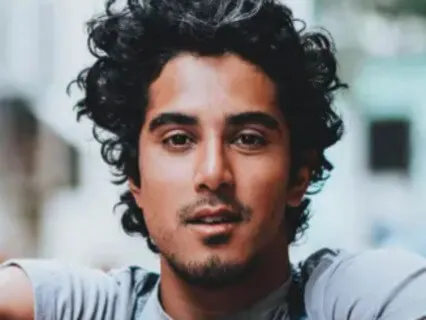
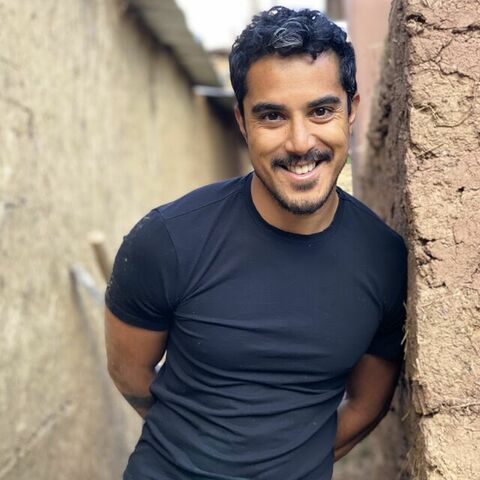
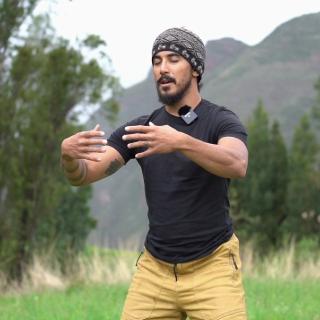
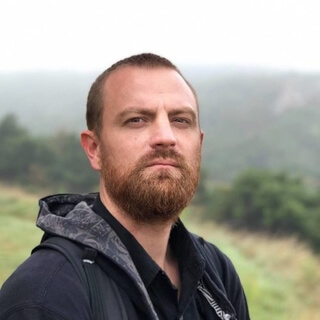
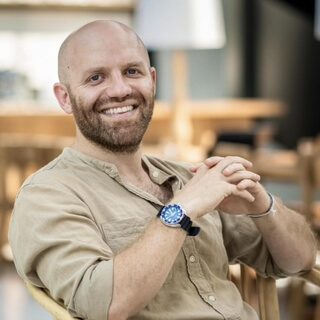
Today's guest is Ian Armstrong.
Ian is a kung fu master,
Qigong master,
I think he would call himself that,
And he is the lineage holder of the Nam Myang kung fu lineage,
Which I thought was really interesting.
And some of my friends here in Thailand who study with him in his retreat center in Thai,
Thailand,
Said he was someone I had to meet.
And I'm glad I did.
He was an interesting guy and definitely had,
I don't think he'd used the word Zen,
But a Zen-like presence about him.
Although we did speak about Zen Buddhism and Taoism and Confucianism and various aspects of Chinese culture.
We had a very great conversation to speak with someone who I don't know his competence levels in his work directly.
I will probably train at his school at some point while I'm here,
But he definitely had an air about him which speaks.
Yeah,
Interesting guy.
Anyway,
You'll listen to it.
I was particularly interested in his take on meridians and fascia.
If you caught my other podcasts with people who knew about Chinese medicine and qigong,
Which I've always found so interesting,
Like the Chinese take on stuff because like Chinese medicine,
For instance,
Is so scientific in its feel and its classifications and its precision.
But it's not science because the assumptions of Chinese medicine and qigong and kung fu and all this stuff isn't arrived at through the scientific method,
Like the understanding of qi and meridians and stuff.
It doesn't mean it's not useful,
But that's why I kind of asked everyone from this world about their take on it.
And I really liked his and now I never considered that fascia and meridians tied together.
Anyway,
I'm not going to give away what's in this conversation.
If you hear background noise right now,
It's because I'm still in Thailand at my friend's place in their very Thai home surrounded by rice fields.
There's a mountain and there's lots of bugs and animals everywhere.
And also in the interview itself,
There was some noise.
I made the personal poor call of having a steward in his office.
I didn't realize there was construction right outside and I also didn't know that he had many children who were coming in and out of the office while we were doing this.
We'll try to cut that out,
But I think you'll probably hear them outside playing and stuff such as life,
Real sounds.
And yeah,
Right now you're listening to episode 073,
Ian Armstrong,
Kung Fu,
Qigong,
Bend,
Not Break.
You're listening to the Ruwondo podcast,
Part of the Gotham podcast studio network in New York,
New York.
If you enjoy the show,
Please subscribe and rate it wherever you listen to podcasts.
All right.
So we're here in your office in a Kung Fu retreat up in Thai,
Thailand.
And we were connected by my good friend Jen,
Who I know works with you.
She said you were someone I had to meet.
She told me a little bit about you,
But I understand,
Obviously you have this retreat center here and you're part of this lineage that I was very interested in going back to China.
And if you could say a little about yourself and what you're doing here,
That'd be great.
Okay.
So yeah,
I'm Ian Armstrong and I run the Kung Fu retreat here.
This was kind of like the first,
The world's first Kung Fu retreat,
Which we set up here in,
By starting in 2007.
So before coming here,
I was two times world Kung Fu champion.
Is that a competitive Wushu or?
Traditional Kung Fu.
Yeah.
So doing the routines in traditional Kung Fu rather than modern.
So one of the weapons in 1993 and freehand in 2004.
And been studying Kung Fu since 1981.
Before that I was a boxer and most of my key training was done in Singapore.
You're from the UK though,
Right?
Yeah.
Yeah.
Yeah.
I'm from the UK.
I don't know whether people can tell from my accent or whether they can't.
Sometimes I think it gets a bit confusing,
Australian.
Yeah.
Well,
I think for us Americans,
Everything sounds like British.
Yeah.
We mix them all up.
Nah,
It's British.
Come from the Southern age of London.
And so,
Yeah,
It was a big,
A big thing.
My first trip to Singapore was 1997.
So then I've been training with one of the Chinese guys from Nanyang,
London.
And yeah,
In those days,
It was quite a big deal going out to Asia to train.
And then the group that I trained with Nanyang,
The genetic association,
We started in 1954 in Singapore and the founder had come from China.
So Singapore,
The majority of the Singapore population were Chinese.
So the old guys,
They were all kind of ethnic Chinese living in Singapore.
Master Hung was born in Fukien province,
China in 1924.
Okay.
And he was your teacher?
No,
He was the one who started the camp.
And so he lived right through the Japanese occupation of China in the period of the second world war.
And then after that,
When the Japanese withdrew,
You got the civil war in China and he fought in the nationalist army.
And then when they were pushed out of China,
He went to Singapore.
Instead of Taiwan?
Yeah.
That's right.
Because they had family and business in Singapore.
And he set up our club in 1954 and it's been going ever since.
He died in 1984 and was succeeded by my teacher,
Master Tan So Tin.
And very sadly,
He died just about three and a half weeks ago.
So I'm the third generation of Nam Yang,
Third generation master.
Yeah.
I don't know if I'm using the right terminology,
But you're like the holder of this lineage.
Like this is passed on and you're the one who has this whole tradition.
So I was the first disciple student of Master Tan.
So I did the kind of initiation by sure under him in 1994.
Yeah.
Obviously there,
We're a family.
We've got a big extended kung fu family.
So some of Master Tan's generation are still alive in Singapore.
And as well as me,
There's lots of other students at Master Tan.
But I was the most senior one because I was the first one.
Yeah.
Gotcha.
And I'm curious how this works.
I mean,
I don't know a ton about kung fu.
I did box and I'm interested in the martial side,
But as far as like the word that peaked for me was like lineage,
Like this,
Like this like a special knowledge that's being passed.
Like how is it that someone has chosen?
Is it just the most senior?
Is it the one who's willing to take it on or it reminds me of like Jedi stuff?
Yeah,
Yeah,
Absolutely.
It,
Uh,
What we seek to do is to continue our family and continue our teachings.
Cause there's a great deal in the,
In the teachings,
Which I'm sure we'll talk about in a little bit.
And we really don't want them to die.
And the,
So it's,
There's a big emphasis on passing it on to the next generation,
But obviously we want to kind of safeguard the fact that people are good enough to pass it on.
So the,
The teach teacher will work on the next generation who are the people that are going to pass it on.
And they're the kind of closest students and the,
Yeah,
Each teacher will entrust the next set of teachers to carry on the art,
Carry on the lineage.
And it works like a family.
So if the teacher is the father and the teacher's teacher is the grandfather,
Hence you get master,
Grand master,
Great grand master.
And of the teacher students,
You can kind of have the elder brother and the next one down,
This seniority thing,
Which in Asian families is always very important.
This,
You know,
Your position in the family or you're the older brother or younger brother,
Younger sister.
So it's the job of the master to kind of safeguard the art and regulate the art and make sure that they're basically quality control.
So something,
This is somewhere where things like Kung Fu and Chi Kung are very,
Very different from say yoga.
Now I remember speaking to a friend who's a yoga teacher and about the commercialization of yoga and the subsequent dilution.
I mean,
Yoga is really a kind of very spiritual practice and meditative practice for spiritual enlightenment.
And the physical side of yoga really is intended to prepare you for the meditation to kind of still the mind and get you in that right mental frame.
And now,
You know,
A lot of yoga schools are little more than a aerobic studio.
Yeah.
Actually I know yoga teacher trainings now,
They're actually teaching how to promote yourself on Instagram as part of their curriculum.
I mean,
Which maybe is necessary on some level,
But I can see the dilution as well.
And I said to my friend,
Well,
You know,
Who in yoga,
You know,
Who,
Who is the overall authority,
Who,
You know,
Which people,
What do you mean authority,
You know,
They don't have authorities,
You know,
Everybody just does what they want to do.
And that is totally different to Kung Fu and Chi Kung.
It's the whole point,
The whole function of the master is to say,
This is the right way and this is the wrong way.
So if you want us to endorse you,
You've got to do it properly.
It doesn't mean you don't advertise on Instagram because nowadays you have to,
But it's to say,
Well,
Are you doing the real art?
Are you worth our,
You know,
Are you worthy of carrying on our name?
Have you found that?
I mean,
I don't think we want to go too deep into this,
But obviously on the business side,
One of the reasons why maybe the bar has lowered in yoga for instance,
Is that most schools make their money by training teachers.
If they say someone's not good enough,
They don't get the money or they get less money.
So like,
That's like perhaps an issue of like why that path has been taken to that community.
I wonder if that's a thing that,
You know,
Because when you're sharing the way that it's passed on,
It's like,
Well,
It's kind of maybe hard to scale that way or spread this teaching when the bar is so high.
Tom,
We're having a special talk.
Sorry about that.
Maybe that's why we're still really small because we were very insistent on maintaining the standards.
We are trying to gradually expand.
You can still,
I think,
Run 200 hour teacher training courses and do a really good job and produce good teachers.
So long as those teachers realize that it's actually,
This is a life's work and you've got to really devote your life to this practice and constantly strive to get better.
So everybody has to start somewhere.
But in terms of saying,
Well,
What is,
What is yoga?
What is it all about?
In our terms,
You know,
In our case,
What is Kung Fu?
What is it all about?
Somebody needs to maintain the standard.
And if it becomes little more than a workout,
Then it's gone wrong.
Somebody needs to step in and say,
No,
This isn't,
This isn't what I do to fix this.
So can you share a bit about what it is then?
Because I studied different martial arts,
But I know that even the term Kung Fu is used very widely.
And,
And I know you want to speak about the Qigong Kung Fu relationship.
You speak a lot about that.
Yeah.
Kung Fu is a difficult thing to define.
The term means hard work over a long time,
Sustained effort,
Or more precisely the product of hard work over a long time.
So anything which you have to work hard at in order to achieve is Kung Fu.
So in the actual Chinese terms,
Cooking is a form of Kung Fu because you have to work hard for years to be a master of martial arts.
In Western terms,
Kung Fu generally means Chinese martial arts.
So that's usually where the definition is.
It's a kind of capsule term,
Chinese martial arts and related arts,
Distinguishing them from say Japanese or Thai or Korean.
So with the Japanese martial arts,
You tend to call each one by an individual name.
We've got Judae,
We've got Jisoo,
We've got Karate.
In China there's just so many that it's mind-bogglingly confusing.
Maybe 10,
000,
Maybe a hundred thousand,
Depending where you draw the lines.
China's got a lot of people,
A lot of materials.
So when we say Kung Fu,
We mean Chinese martial arts.
I came to Thailand actually to study with Montak Chia,
Who you're familiar with.
I think in his books he coined the term sexual Kung Fu,
Which was maybe laughed at one point.
But it's understood as sexual cultivation practice.
That's right.
It's a practice that you develop over time.
Therefore,
The term Kung Fu is appropriate.
Similarly,
Qigong is a form of Kung Fu because it's something you have to work on,
You have to study,
You have to experience,
You have to practice.
So there is a lot of overlap between Kung Fu and Qigong because Kung Fu was developed in China.
So it's all based around what we could call Chinese traditional science that draws on all the ideas of Chinese medicine,
The tea circulation around the body.
Whereas modern Western sport draws a lot on kind of modern sports science,
Kung Fu draws on traditional Chinese science and tea keeps coming into that.
Tea is the basis of Feng Shui.
Feng Shui is really about how the tea circulates in your home.
Chinese medicine is about how the tea circulates in your body.
And tea is the energy that fuels Kung Fu.
Actually,
You have a lot of different branches of Qigong.
So we focus partly on Qigong for health,
So keep the body in good shape,
Keep the mind,
The breath in good shape so that we're fitting up to practice.
And also on the martial Qigong for strengthening,
Developing the body,
Being able to absorb stronger blows,
Being able to deliver stronger blows.
Whereas other people,
Maybe they go into the kind of the medical side of Qigong and they're looking more at using it as a type of Chinese medicine.
And then you mentioned Maintai tea,
One of his specialisms is the sort of the Taoist sexual Qigong practices.
So yeah,
There's lots of,
It's such a broad thing.
There's lots of different specialisms.
Yeah.
What do you specialize in here?
Like,
Do you go into like the Taoist sexuality type stuff?
No.
It's something that I have a reasonable knowledge of.
But it's not something that we teach here.
And it's not something that I particularly want to teach here.
Because when you start teaching that kind of changes the atmosphere,
The tone of the place.
I mean,
It's a very good thing to do and something that I'm very much in favor of.
But if we start singing marketing for sexual Qigong,
Then it's done have set an idea in people's heads that this is somewhere that you come if you want sex.
And I think the whole atmosphere of the place would change.
And so I'm quite happy to leave that to Maintai tea.
It's not that far away from us.
I want people to come here,
Intending seriously to work on themselves.
Mentally,
Physically,
Spiritually,
To develop,
Develop the body,
Develop the mind.
But I think if there's too much,
You know,
Idea of what I'm looking to hook up with someone for sex,
Then it kind of kind of distracts from what we're really about.
Yeah,
I get that.
So whilst I do endorse the practice,
I'm quite happy to say to people go to Maintai tea.
So can you run us through like kind of what someone experiences,
Maybe their journey through studying with you studying from your graduate school.
Yes,
So interesting,
Interesting question.
Kung Fu began with the monk Bodhidharma from India,
Who was appointed head monk at the Shaolin temple.
And it was him who started to teach kung fu to the monks.
And question why teach the monks this kind of thing.
Bodhidharma was also the founder of Zen Buddhism,
Which is the Buddhism really focuses on the mind.
And in Buddhism,
We study the mind and the mind is a terribly flawed device.
The human mind is really a bit of an disaster area.
And in order to,
To elevate ourselves,
We need to elevate the mind.
In order to elevate the mind,
We need to understand the mind,
We need to be able to access the mind,
We need to be able to change the mind.
Well,
That's easier said than done.
People underestimate the significance of the mind body link.
And if you really want to get into your mind,
One of the best ways to do it is through the body,
Through physical.
Kind of brings us back to yoga.
Yoga,
Actually done properly will help you access your mind.
Kung Fu,
Very much the same thing.
We connect left brain,
Right brain,
Conscious,
Subconscious,
Head brain,
Body brain,
And start to really get mind,
Body,
Breath to function as a whole.
And that kind of elevates us.
And if you look to really take a real overview,
Where are you going in the end?
That's kind of where we're going.
So looking to reach a higher state of consciousness,
And ideally,
You know,
A higher state of enlightenment,
Although that's not something that comes easy.
Also,
Kung Fu is something which has history,
Has its philosophy,
Has its traditions,
Has its culture.
And there's a lot of wisdom in Kung Fu.
And we're trying to pass that on,
We're trying to transmit the wisdom of Kung Fu to the people that we have.
Now,
We found that best way to do this is to completely immerse people in their study.
So that you're not just going to classes,
Reading about it,
You're absolutely living it.
And that's,
That is the kind of ethos of the retreat here.
It's come somewhere you come to live Kung Fu.
You really do eat,
Sleep and breathe Kung Fu.
And we try to minimize the distractions away from that.
I mean,
Obviously,
People go into town,
People get online,
But you live here,
You get up six o'clock in the morning,
Down to start training.
So you get to do your Qigong at sunrise,
Which is the best time to do it.
Three and a half hours training with a little break for Chinese tea,
A sort of philosophy.
And then it's breakfast,
And you see around the grounds where we're doing a lot of work on our organic farms.
So we're trying to give people a really,
Really healthy diet with as much homegrown food as we can manage.
We're not 100% self sufficient,
But we're working hard.
A bit of a break,
Train again,
Lunch,
Train again,
Dinner,
And then rest of it in the evening.
And Kung Fu is not only about yourself,
It's also about your interaction with other people.
So we try to have an environment in which people socialize,
In which people connect with each other,
And that human interaction is really important.
So the journey here is kind of getting back to basics,
Starting to really kind of know yourself,
Focusing in on yourself,
But also building your relationships with other people.
And for a lot of people,
They keep coming back.
This is the interesting thing that I hadn't anticipated when we started that we'd get so many people keep coming back.
Because once they experience it,
They realize,
Wow,
Okay,
This is what it was all about.
So I know the demonstrative things like breaking bricks or anything,
That's not the point,
But it's something that maybe draws in a lot of people or for someone who maybe doesn't understand this internal thing you're speaking about.
I mean,
If you could share a little bit about that,
I'm curious.
Because also,
I mean,
I briefly went to a Qigong school in the States in Austin,
And they actually had levels where the first grade,
Let's say,
Was just the body hardening.
Can you stand below assault?
And what was interesting is like I saw 70-year-old women there who could take a punch to the stomach better than most men.
I was like,
Oh,
There must be something.
I mean,
Objectively,
There's something here.
And then the next level would be like the sexual side.
And then the third level is far more spiritual.
But obviously,
Can you speak a little bit about what is it that allows someone to do that?
And how does it tie perhaps to the internal cultivation?
Well,
If you sum it up in one word,
That's chi.
That's your energy.
Generally,
People have very little control of their chi,
Very little control of their energy,
Very little control of themselves.
By training,
We change that.
That's the whole point.
And that's a very interesting example.
Because that's quite impressive.
If you're getting 70-year-old ladies taking a punch,
It's really very good.
Now,
It's not all just kind of energy.
There's obviously a physical dimension to it as well.
This is something that a lot of people don't understand about chi kung.
It's all rooted in Chinese science,
Chinese thinking.
Chinese thinking looks at things as a whole,
Doesn't want to chop them up and compartmentalize them.
Chinese thinking looks at people as a whole.
So if you study that type of thinking,
A person has their physical aspects,
Their mental aspects,
Their energetic aspects,
Their spiritual aspects.
And it's important that you develop them together.
And there are so many Western peoples that are not interested in the physical.
I don't want to be doing that kind of energetic stuff.
Not realizing that if you don't pay attention to the physical,
The energetic stuff won't happen.
Again,
Going back to Paudidaala and Shaolin Temple,
This was one of his key messages.
You can't ignore the body because the body is so wound in with the mind,
The spirit.
You've got to look at the overview.
So when we develop energy at chi,
We're looking at developing the meridians,
Which are the pathways through which the chi flows.
And those pathways run through the fascia,
The tenderness material in the body.
So you have to develop that fascia,
That tenderness material to facilitate chi flow.
And our true strength lies in the fascia.
Is that what feng is?
I don't want to be saying the word incorrectly.
I was taking tai chi push hands lessons from someone.
You say like there's strength and there's feng,
I think.
I don't know if I'm saying it wrong.
Like being able to like structural strength,
Like to just withstand someone.
That's slightly different.
The word could have been ging or jing or fa-jing.
But there's a number of Chinese terms.
If we slice through the kind of the linguistics and keep.
Yeah,
Body mechanics,
Body structure is massively important.
We have a web of fascia tenderness material running through the whole body.
So that would include the actual tendons,
Muscle sheaths,
Bone sheaths,
Organ sheaths,
All the connective tissue.
That's what holds everything together.
And the meridians tend to run through this material,
The fascia.
So by working on and developing our fascia,
We're facilitating better qi flows,
Basically opening the meridians.
And at the same time,
We're developing that strength that enables us to take a blow.
So as you say,
Taking a blow or knocking the end off a brick isn't the ultimate objective of the qi kung.
But it does show that you have achievement in qi kung.
Because if your qi kung is good,
Then you will be able to do this kind of stuff.
And if you're not able to do it,
It kind of raises questions.
So just kind of like a test metric or something?
Yeah.
And I guess,
You know,
Ultimately,
In the true sense,
If your development in your qi kung,
Your kung fu is very good,
Then you will be a healthy,
Positive person who's successful in life.
You know,
You'll be a good person.
But people like to see things.
People want to say,
Well,
Give me something that I can see.
And being a healthy,
Positive,
Successful person isn't something you can really do for a demonstration.
Right.
On the other hand,
If you want to demonstrate your achievement in qi kung,
And you say you washed your face and broken glass,
And then the spear on your throat,
Then it's like,
Okay,
Yeah,
Now I've got it.
That's visual.
Yeah.
Is it always tied to,
I'm thinking like the Marine Corps does body hardening drills,
Which I think are not that different than some of like the,
You know,
I don't know,
Like iron shirt stuff I've seen.
Like they see,
I don't know,
Maybe they're very different,
But mechanically they seem the same.
I'd imagine there's probably many people who do body hardening and the military who maybe don't have any of the internal benefits.
Like they don't necessarily line up.
Right.
It may be possible to fake that or like get the demonstrative effect without the internal effect.
Well,
Part of how we would see it is that,
Even if you don't understand about qi,
If you exercise well,
You will be developing your qi.
It's just that in Western terms,
Maybe you use different,
Different words.
Okay.
So,
Take for example,
A gymnast.
Gymnasts have really well developed bodies.
They have great posture and they have this kind of elastic explosive strength,
Which is exactly what we're trying to develop in kung fu.
And you know,
When I look at a gymnast,
I might remind you,
My reckoning is that their qi flow will be really good.
And they're not practicing,
As they see it,
Qi ku,
But they are practicing things which really benefit the qi flow.
If you take your guys in the Marine Corps,
Then a lot of what they're doing may well be benefiting their qi flow.
It's just that they don't use that word.
In qi,
You can actually interpret qi as breath,
Air,
Gas,
Oxygen,
But anything which develops your breathing,
Technically is qi ku.
So,
Through the kind of practice that those guys put in,
They probably are benefiting in qi a lot.
Having said that out of interest,
There's different approaches to body toughening.
And the Western way is often all about hardening.
Whereas the Chinese way,
If it's done in the deeper sense,
Is about being pliable and being flexible.
So,
If we take your kind of classic terrorist thinking,
Take a brick.
Wow,
That's pretty hard,
Tough and strong.
Look at that.
Yeah.
But we know for sure that if you hit the end of it sharply,
It'll crack in half.
So,
Maybe it's not that strong after all.
If you take a hard rubber brick,
That has a degree of flexibility.
And you could hit that brick all day.
And doesn't matter how good your martial arts is,
It's not going to break.
It's going to bounce every time.
So,
Actually which one's stronger?
You may have noticed that in one of the favorite themes in Chinese artwork is the bamboo.
You get these kind of black watercolor paintings of bamboo.
Bamboo is supposed to kind of epitomize the towel.
So,
It's incredibly strong.
It's also incredibly light and it's flexible.
So,
When the wind blows,
The bamboo sways,
But it doesn't crack.
In a storm,
You see trees crack,
Branches come off,
Bamboo,
Just sways.
So,
This is your classic Taoist thinking that true strength is adaptable,
True strength is flexible.
So,
In the kind of Kung Fu Chikung practice,
What people often don't understand is that we're not training the body to be hard and rigid because if it gets hit hard enough,
It will tear and will get injured.
Rather,
We want it to be slightly elastic so that the blow is slightly absorbed and then pushed out.
And by having the right level of elasticity,
Then we can achieve the result.
So,
That may be slightly different to how they're doing in the Marine Corps.
Yeah,
I'm not sure.
I'm actually curious a lot about this fascist stuff because from what I understand,
Even Western medicine didn't really give it much weight till relatively recently.
I'm not sure from what I understand.
And I've actually asked a few other guests in the podcast about Chi movement.
I have a friend who's been on who's getting his doctorate in Chinese medicine.
I was asking him like,
How do people know what Chi is?
Or how do they know where the meridians are?
I forget what he said actually,
It was a couple of years ago,
But you're saying that these pathways are in through the fascia as far as we know?
Yeah.
So,
You could get Chi and its properties is very similar to electricity.
And you could visualize meridians as pathways through the fascia,
Which are conductive of Chi,
Which have a high conductivity of Chi.
So,
You have this electric-like energy that's very similar to electricity.
And you could visualize energy and electrical potentials can move through the body.
There's no doubt about that.
Science doesn't disagree with that.
And inevitably,
There are going to be certain roots through the body that are easier to flow through.
And that's how I would describe the meridians.
And by working our bodies in the correct way,
We can actually very much increase that conductivity.
Yeah,
That makes a lot of sense.
This is probably the best model of understanding it for it because like,
Let's see,
Even practicing Montauk,
Chi is,
I mean,
It's not his,
But like the microcosmic orbit,
I've always felt a blockage in my thoracic spine.
I didn't really put it together until recently,
But I've also had injuries in that area where I'm sure I'm not sure my fascia has been knotted up.
Like I've pinched fascia on my back.
I was like,
Oh,
I actually felt less sensation there.
And I guess those are an obvious connection.
Very likely you have scar tissue in the fascia.
And fascia has a grain,
Like wood has a grain.
So generally all the strains run in the same direction.
When you get scar tissue,
They're all kind of knotted together and tied up and that substantially reduces the conductivity.
With a great deal of practice over a long time,
You can pull the strain straight.
It's like untangling a very big ball of tapered up string.
So it's kind of good news.
It's not,
There's no hope,
But scarring in fascia will inhibit cheek flow and the thing is just keep stretching it.
Yeah.
So actually,
I mean,
I don't know how related it is,
But I had knotted fascia on my left side and it was actually affecting my sensitivity in my left hand,
Which goes along with everything you're saying.
And then I think,
I don't know if it was related,
But I actually broke my elbow doing kind of basic martial arts things.
I think everything was knotted.
So I couldn't hold it together perhaps.
But,
Um,
Anyways,
This is off to say it's changed my entire philosophy of training.
Like my assumptions were very American,
I think.
And like train till failure,
Go hard.
And I've been following actually Russian philosophies more of like,
Never training until failure and going for slow volume.
I don't,
I don't know if there,
I was,
I'm curious if there are maybe Taoist principles or Kung Fu principles around fitness or that,
That are,
Yeah.
Anything you can share?
Certainly.
Take the middle way,
Don't go to extremes.
If I sum up our view of how you should train.
Yeah,
Here we go.
We want our training to support us through our whole life and keep us healthy in the world age,
Fit into our age.
And if you look at traditional martial arts from Eastern Asia,
And also yoga,
Both of them have that kind of built in the assumption is that you want to end up being one of those amazing old guys who can do all this astounding stuff,
Even though they're 18 years old.
And,
You know,
The one I always kind of spring on people picture your career,
Your kind of ideal martial arts master.
And it'll always be different,
But it's almost invariably an old person.
Now,
If we look at the Western approach of sport,
If you said picture a great sportsman,
Master sportsman,
You would never picture an old person,
You would picture an Olympic athlete.
And in the Western approach to sport,
There's an assumption that you will burn out and then you will retire and this will probably happen in the mid thirties.
And then you kind of,
You know,
Pensioned off and you exercise by throwing darts,
Lifting pine classes,
Manipulating the pool cue.
So where did it really get you?
Now your classic Western sporting approach is you've got to be faster,
You've got to be stronger,
You've got to go longer,
You've got to jump higher.
So you push yourself to extremes,
Which is exactly what terrorism cautions against.
You concentrate on your external body,
Particularly your muscular system.
They also do a lot of cardiovascular,
But there's a lot of development of muscle.
Sure,
The muscle is often developed in conjunction with fat,
So you can't do it any other way.
But sometimes that's the expensive fascia,
Right?
Sometimes at the expense of fascia and it's very external.
Very little attention is paid to the internal organs and all that muscle and all that going to the extreme is putting more and more stress and pressure and demands on your internal organs until you hit a point where the organs simply cannot keep up with the demands that have been put on them and they start to suffer.
And at that point when your organs just can't maintain your external body and all those demands,
We say,
You know,
I'm getting too old for this.
I'm getting too old for football,
Getting too old for whatever I'm doing.
I'm going to have to retire.
And there is typically no kind of pathway of development after you retire from competitive school.
So,
Yeah,
I mean,
Take American football,
You're going to finish,
You're going to burn out.
That's the same for boxing.
As a boxer,
You will hit a point where you're done for and there's no playing after that.
Therefore,
It's Western sport almost plans to put you on the scrapheath halfway through your life,
Which if you think about it in those terms,
It's completely crazy.
Like I say,
The old style Asian stuff,
The kind of Indian stuff,
Chinese,
Further east views that as silly.
And it's all about building you up progressively through your life so that you do become that old master,
Can be astounding,
Even though you really hate it.
Yeah,
I think when my elbow break recently was kind of like a wake up call,
Like,
Okay,
I'm not going to be a peak level athlete in this lifetime.
I might as well at least train for longevity so that I'm fit later.
And it's been,
I didn't realize how much it was going to be a shift of like how I even like lift a single weight or anything.
So as far as like performance fitness,
Is that ever a focus?
I mean,
It's not like I assume you don't ever,
I guess,
Really focus on the muscles by themselves or try not to be good.
Because actually,
I mean,
One thing that drew me to Shaolin was like seeing these documentaries of relatively old monks doing flips and jumping higher and what you would expect from a 20 year old.
The approach is just slightly different.
It is really kind of developing elasticity in the fascia.
This concept of elasticity is really important.
It allows the explosive movements and not carrying too much muscle.
So if you carry too much muscle,
It basically holds you back.
And even if you look at,
Okay,
So Jim,
Some of them,
That's a very muscular,
But they're not,
They're not completely loaded like bodybuilding.
You look at competitive boxes,
Competitive boxes,
Most of them,
They're not carrying excess muscle because it just tires you out.
Also,
They have weight classes where,
Yes.
So even in a situation where you have to be very competitive,
Building too much muscle is a mistake.
But if you follow the right practices,
Then you can still maintain this physical ability into old age.
That's what we're trying to promote.
Promote.
So I actually wanted to ask you about this earlier.
Let me just make a note.
So I don't forget anything.
Well,
I'll go back to this.
As you are now,
As you're.
.
.
And we're recording something here.
So we have to be very,
Very quiet.
I was going to ask you,
As you are now the heir of this work,
What is next for you in this?
Are you looking for,
Are you going to promote one of your students?
Are you looking for a disciple?
That's a really good point.
What I'm looking to do is train up a group of disciples to carry on after me.
Ideally,
I'll train several groups one after the other.
I've been very focused on that the last couple of months.
But I need people that are really kind of dedicated.
And that it's not just the physical knowledge,
It's the kind of understanding the philosophy,
Understanding the ethos,
Understanding the culture.
And,
You know,
If you rely on one person and something goes wrong,
It crashes.
So I'm looking to get a group of people and get them working together.
And very much with the view to transmitting the art in its entirety,
In a complete form,
And preparing the people to do the same thing to get ready the next generation and pass it on.
And I really do think it's got a lot to offer a lot of people.
So yeah,
I'm really kind of narrowing down who are the appropriate people.
And your students must know this,
Right?
Is there like some sort of maybe competition between them or are there people gunning to be there?
It's interesting.
One of the things that I'm really keen to avoid is this feeling of competition because all I want is people working together.
As humans,
We're naturally kind of a bit insecure and jealous.
And competition arises from insecurity and jealousy.
So,
You know,
My job as the master is to make sure we don't get that creeping in.
Because what I want is a group of people that support each other,
That are kind of helping each other up,
Rather than maybe holding each other back.
And,
You know,
I think when people start to realize just how big a responsibility it is,
They're not all dead keen to take it on.
It is a heavy responsibility.
Yeah,
So actually,
I didn't realize the hour is almost up,
It's kind of flew by.
So this might be the last topic.
You mentioned Taoism.
I didn't know that there was like a overall connection between Taoism and Kung Fu.
I mean,
Is that the case?
Like,
Are they kind of woven together?
I would say yes.
There's a lot of philosophy in Chinese Kung Fu.
And in a way,
You can say it's the philosophy of China.
And Chinese philosophy is influenced particularly by three schools.
We have Taoism,
We have Buddhism,
Chinese philosophy is influenced by three principal schools.
There are some Buddhism and Confucianism.
And you can't understand Kung Fu without having a basic understanding of these philosophies.
Confucianism as well?
Yeah.
I've always understood that there are a lot of Confucian principles are kind of at odds with Taoist principles.
Maybe I'm wrong.
I don't know enough.
I don't know much about Confucianism.
Possibly.
Although,
I mean,
Through the history of China,
I mean,
All three of these have greatly influenced China.
And there is no doubt that there's a lot of influence of Confucianism on Chinese thinking,
And therefore on Kung Fu.
Particularly in terms of how the people relate within the family,
There's a group because the relationships between people was something that is really kind of emphasizing Confucianism.
So,
I would suggest that if you try to understand Chinese thinking,
You got to understand those three.
And you can see their influence in Kung Fu.
And you might say,
Here I can see a lot of their influence.
It was here,
I can see a lot of Confucian influence.
And in total,
What you have is the philosophy of Kung Fu,
The way of Kung Fu.
But there's a huge amount of Taoist influence in Kung Fu.
Kung Fu schools tend to be divided into those of kind of the Buddhist side and the Taoist side.
Xiaolin obviously is the Buddhist side,
Xiaolin being the Buddhist temple,
Wudang being the Taoist side,
Originating from the kind of concentration of Taoist hermits around Wudang mountain.
Tai Chi is the most famous of those styles.
But actually,
It's all influenced by Chinese thinking generally,
And that has all three of them in there.
This might be a very uninformed comment or question,
But this might be my last question as well.
But I've noticed in Chinese commercial areas,
It seems so anti-Taoist,
Anti-Feng Shui in the way that it's like,
Did something get lost?
I don't know enough about China or anybody.
Oh,
Absolutely.
Yeah,
Totally.
This is an interesting observation that now we have a great number of Western people coming really interested in Chinese philosophy,
Chinese practices,
Chinese medicine,
Qigong,
Kung Fu.
And he got a lot of Chinese,
Like most of the Chinese,
Doing their absolute best to be as Western as possible.
Yeah.
And it's all about,
You know,
Efficiency.
And it's worth bearing in mind that in the Cultural Revolution in China,
Basically what it was about was eradicating Chinese culture.
And absolutely,
I mean,
Under communism,
Religion was banned,
Right?
Kung Fu was banned.
You could be beheaded for being a Kung Fu teacher.
And everything that China had to do with Chinese culture was boom,
No.
And it was absolutely Chairman Mao's little red book,
You know,
The way of communism.
And communism now is subsiding.
And what we've got in this place is the race to make money.
Yeah,
Consumerism,
And religion.
So it's kind of sad.
So don't expect to go to China and see all this culture and philosophy.
Yeah,
Well,
Thank you.
This has been an enlightening conversation.
Where can people find more about your work?
Oh,
The start point is kungfuretreat.
Com,
Our website.
But if you search for Nam Yeung,
Kung Fu will be straight up there.
It's in a beautiful area in Thai,
Thailand.
So,
Yeah,
Awesome.
Thanks so much.
Very many thanks.
Yeah.
What I mean,
If you want to drop by and try a little bit of Kung Fu,
That's very welcome.
Yeah,
Definitely.
Cool.
I'm a thing.
I'm only here till tonight or tomorrow morning.
But I live in Chiang Mai.
So I come here.
So you're based in Chiang Mai?
I'm based in Chiang Mai.
In the city or?
Just in the city,
Just a little bit outside.
Yeah,
More green area.
Chiang Kian,
It's in the northwest of Old City.
Yeah,
A little bit past Maya.
Hang on,
Northwest.
Yeah,
A little north of the road towards.
Okay.
Yeah.
Yeah,
Cool.
And I'm up in Pai,
A fair amount.
I visit Jen,
Trevor.
Yeah,
When you're coming down,
You know,
I have a good look.
Yeah.
I'm really sorry about the kids.
Hey,
Thanks for listening to the podcast.
If you want to catch the rest of my work,
Go to www.
Ruwondo.
Com.
Cash me on social media,
At Ruwondo.
And please do not forget to subscribe.