Welcome to the Mindfulness Meditation Podcast presented by the Rubin Museum of Art.
We are a museum in Chelsea,
New York City that connects visitors to the art and ideas of the Himalayas and serves as a space for reflection and personal transformation.
I'm your host,
Tashi Chodron.
Every Thursday,
We present a meditation session inspired by a different artwork from the Rubin Museum's collection and led by a prominent meditation teacher from the New York area.
This podcast is a recording of our weekly in-person practice.
In the description for each episode,
You will find information about the theme for that week's session,
Including an image of the related artwork.
Our Mindfulness Meditation Podcast is presented in partnership with Sharon Salzberg and teachers from the New York Insight Meditation Center,
The Interdependence Project and Parabola magazine and supported by the Frederick P.
Lenz Foundation for American Buddhism.
And now,
Please enjoy your practice.
Good afternoon,
Everyone and Tashi Delek.
Wow,
So wonderful to see so many of you and welcome to Mindfulness Meditation at the Rubin Museum of Art.
I'm Tashi Chodron,
Himalayan Programs and Communities Ambassador,
And I'm so happy to be your host today.
We are a global hub for Himalayan art with a home base in New York City,
And we're so glad to have all of you join us for this weekly program where we combine art and meditation.
Inspired by our collection,
We will first take a look at work of art.
We will then hear a brief talk from our teacher,
Kimberly Brown.
So the talk will be about 15 to 20 minutes for the meditation guided by her.
Let's take a look at today's theme and artwork.
The theme is self-discovery,
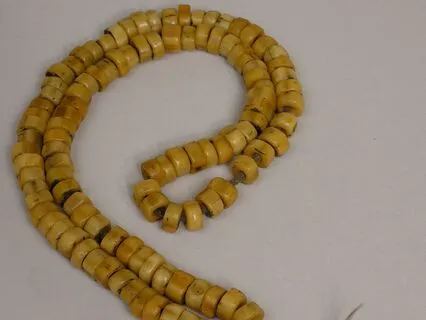
And the artwork for today's session is this beautiful prayer bead,
Often known as mala in Sanskrit and chenwa in Tibetan word,
Which is hand-picked by our teacher from a selection.
And this is Tibetan sheep bone prayer beads,
Origin from Tibet.
The date is unknown,
And as you can see here,
Sheep bone with some thread as a tassel.
And this is about 17 and a half length into one and a half into half size.
Our theme for the month of June is self-discovery,
Utilizing prayer beads can quiet the practitioner's mind and deepen their awareness,
Leading to self-discovery through introspection and mindfulness.
The prayer beads in Tibetan Buddhism,
The prayer beads are used to count the recitations of prayers and devotional invocations,
Which is mantras.
And prayer beads come in many different materials.
As you see here,
It's a sheep bone.
Tibetan prayer beads are in crystal and then turquoise,
In bodhi seeds,
Prayer beads.
Some of these prayer beads,
They say it's symbolized or the spiritual belief is that the prayers are multiplied.
For instance,
If it is a bodhi seed,
Which is from a bodhi tree,
The impact or the result of each prayer bead is multiplied many times or 100,
000 times,
Which is much more blessing.
And then certain deities like Avalokiteshvara,
The Bodhisattva,
Who often associates with crystal prayer beads,
And then there are also pearl as well.
And the peaceful deities often holds lighter color prayer beads,
Whereas the fierce wrathful deities hold bone malas.
Bone malas also are a symbol and reminder of impermanence as well.
So now let's bring on our teacher for today.
Our teacher is Kimberly Brown.
Kimberly Brown is a meditation teacher and the author of Navigating Grief and Loss,
25 Buddhist Practices to Keep Your Heart Open to Yourself and Others,
And Steady,
Calm,
And Brave.
She leads classes and retreats that emphasize the power of compassion and kindness meditation to reconnect us to ourselves and others.
Her teachings provide an approachable pathway to personal and collective well-being through effective and modern techniques based on traditional practices.
She studies in both the Tibetan and Insight Schools of Buddhism and is a certified mindfulness instructor.
Kimberly,
Thank you so much for being here,
And please help me in welcoming Kimberly Brown.
Hello,
Everyone.
Thank you,
Tashi Chodron.
So the theme,
The theme of self-discovery,
It's somewhat humorous in the Buddhist tradition because there isn't a belief in a solid self,
Right?
There isn't a belief,
Like many of us might have learned,
Or it's pervasive in our culture,
That we could maybe take my brain out and put it in a jar,
And there Kim would be,
This very fixed object,
Really.
But common sense tells us,
And Buddhist leads us to understand,
That what we are,
What our self is,
Is an ever-changing,
Impermanent,
Dynamic entity responding all the time.
And one way that meditation practice can help us get a glimpse of what's really there is when we start to notice our thoughts,
Because many of us have a lot of ideas,
Stories,
Beliefs about who we are,
About who the self is.
And even more pervasively,
We have ideas about who the self should be.
And if you pay attention,
Using mindfulness,
Using concentration,
Using compassion,
You can start to get a glimpse of what is actually here,
And that you,
What you call you,
What I call Kim,
Is certainly not a story,
Or an idea,
Or a belief system.
There's a sense of reality of life,
Right?
And reality means,
Well,
Everything's changing all the time,
Including this self,
Right?
Everything's impermanent,
Including this self.
We all have struggles and suffering,
And we're all contingent,
We're all dependent on each other,
And many,
Many conditions.
So we're going to do a practice today,
We'll do some mindfulness,
And then we'll also do some loving kindness,
Because sometimes,
Approaching this sense of self,
Bringing attention to our experience,
Can sometimes be painful.
Some of you might not like yourself,
Or some of you might be grieving,
Or sad,
Or in pain.
And if so,
Compassion and kindness can help us get a little bit closer to actually who we are,
And maybe integrate all parts of ourselves.
So I'm going to ask everybody to take time to adjust your seats,
So that you're sitting in a comfortable way,
But also in a way that is steady and alert.
You want to be awake as well as relaxed.
Try to find that spot,
And if possible,
You might notice if your shoulders are above your hips.
You might notice if your ears are above your shoulders.
If you work on a computer a lot,
Your head might be sticking out,
Mine always does.
You might want to move it back,
So your ears are above your shoulders.
Just letting yourself be,
Let yourself be.
You'll notice in every moment,
Something is arising.
Light is entering your eyes,
Sound,
Smell,
Taste,
All the physical sensations of your body,
Plus thoughts and associations,
Memories,
Images,
Emotions.
And I'd like you to bring your attention to your right eye,
Your left eye,
Paying attention to your upper lip,
And your lower lip,
And resting here where the lips meet.
Bringing your attention to your right shoulder,
And your right arm,
Experiencing the top of your arm,
Elbow,
And your lower arm,
Experiencing your right hand,
The palm of the hand,
And your fingers,
Your thumb,
Forefinger,
Middle finger,
Ring finger,
And your pinky finger,
Your right hand.
Bringing your attention to your left shoulder,
Left arm,
Left top of your arm,
Elbow,
Your wrist,
Your left hand,
The top of your hand,
The palm of your hand,
Thumb,
Your left forefinger,
Middle finger,
Ring finger,
And your pinky finger,
Experiencing your left hand,
Experiencing your right hip,
And your right seat,
Experiencing your right leg,
The thigh,
The knee,
Your lower leg,
Ankle,
And your right foot,
The top of the right foot,
Sole of your right foot,
Your right big toe,
Second toe,
Third toe,
Fourth toe,
And your right pinky toe,
Your right foot,
And bringing your attention to your left hip,
Your left seat,
Your left leg,
The thigh,
The knee,
Lower leg,
Ankle,
Your left foot,
The top of the foot,
And the sole of the foot,
Left big toe,
Second toe,
Third toe,
And fourth toe,
And your left pinky toe,
Your left foot.
Gathering your attention now,
Resting it on your ears,
Letting sound enter your ears.
You really don't have to do much,
You don't even have to listen.
You're just allowing,
Receiving,
Resting here,
But you're alert,
You're paying attention to the sounds that are entering without judgment,
Without getting caught in a story about them,
Just being with the comings and the goings of the sound.
Just notice where your attention is,
If it's strayed to a story or a plan,
Come back.
If you feel so sleepy,
I know I do with the heat,
You're welcome to gently open your eyes and just let them gaze softly down.
Whatever you're doing,
You can do a little less.
And shifting your attention to your heart center,
To the center of your chest,
Where you can place a hand on your heart,
And I'd like you to make a connection with someone with whom you've had a loving,
Easy relationship.
You can remember a moment when this person was kind to you,
A teacher,
An old friend,
Grandparent.
And imagine both of you at a place that is maybe safe and special to you,
Be it a family kitchen,
Be it a park or the beach.
Imagine the two of you there.
You can see this being looking at you with their real concern and love for you.
And if you don't feel you have had a person like that or have a person like that in your life,
I'd like you to imagine someone who's inspired you,
A writer,
A teacher,
A spiritual being,
A pet.
And imagine both of you at this lovely place,
And imagine they're saying to you,
May you care for yourself with ease,
May you be happy and free,
May you care for yourself with ease,
May you be happy and free.
And you might hear them say your name,
May you care for yourself with ease,
May you be happy and free.
And just for a couple of minutes,
Receiving these blessings,
Letting these blessings wash over you as you hear this being say them to you.
Receiving their blessings,
Hearing them say to you,
May you care for yourself with ease,
May you be happy and free.
Just for one more minute.
Keeping your connection with this being,
Feeling your presence in this safe and beautiful place,
And saying to yourself the same blessings,
May I care for myself with ease,
May I be happy and free.
May I care for myself with ease,
May I be happy and free.
May I care for myself with ease,
May I be happy and free.
And continuing just for a couple of minutes,
Two minutes,
Repeating these phrases to yourself,
As if you're giving yourself a gift,
May I care for myself with ease,
May I be happy and free.
And we'll just take a moment to include others,
Maybe everybody here today,
Get a sense of the people next to you,
May we care for ourselves with ease,
May we be happy and free.
Including all your loved ones,
Including all your enemies,
All the people you don't like,
All the strangers in the world,
May we care for ourselves with ease,
May we be happy and free.
Sabe Sata Sukhi Hantu,
May all beings be free from suffering and the causes of suffering,
May all be happy.
Thanking yourself for your practice today,
Take your time as you bring your attention to our conversation.
Thank you so much.
That concludes this week's practice.
To support the Rubin and this meditation series,
We invite you to become a member at rubinmuseum.
Org slash membership.
And to stay up to date with the Rubin Museum's virtual and in-person offerings,
Sign up for a monthly newsletter at rubinmuseum.
Org slash e-news.
I am Tashi Chodron.
Thank you so much for listening.
Have a mindful day.