Welcome to the mindfulness meditation podcast.
I'm your host,
Dawn Eshelman.
Every Wednesday at the Rubin Museum of Art in Chelsea,
We present a meditation session led by a prominent meditation teacher from the New York area.
This podcast is a recording of our weekly practice.
If you would like to join us in person,
Please visit our website at rubinmuseum.
Org slash meditation.
We are proud to be partnering with Sharon Salzberg and teachers from the New York Insight Meditation Center.
The series is supported in part by the Hemera Foundation.
In the description for each episode,
You will find information about the theme for that week's session,
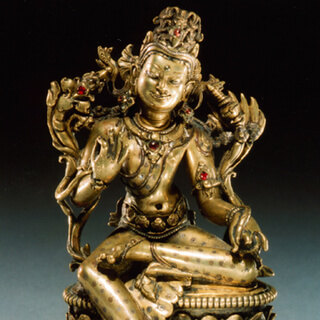
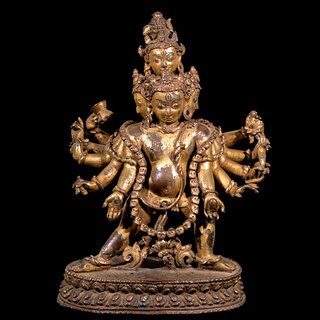
Including an image of a related artwork chosen from the Rubin Museum's permanent collection.
And now,
Please enjoy your practice.
Welcome to our weekly mindfulness meditation.
We're here every Wednesday at the Rubin Museum.
And this month,
We've been exploring the theme of listening in connection to our The World Is Sound exhibition up on the sixth floor that is exploring how sound is connected in the Tibetan Buddhist tradition.
So we're looking at listening this month and particularly how it can be used as a tool during meditation.
And behind me,
We have a couple of artworks that are a mouthful,
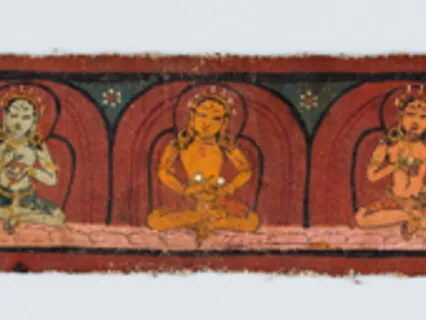
But they are the ritual empowerment texts and illuminations of the 100 peaceful and wrathful deities of the Bardo.
This 17th century piece is part of a series of ritual texts that include the 108 gods of the Bardo,
Better known as the Tibetan Book of the Dead.
And the Bardo is really used as a tool.
Girls will read the Bardo to their students to empower them,
And they will practice meditation using the text from the Bardo,
Hoping that they can take advantage of the state between death and rebirth,
Which is known as the Bardo,
And help them reach enlightenment.
And in Tibetan Buddhist traditions,
They also believe that hearing is the last sense to leave the body.
So after a person is deceased,
Tibetans will read the Bardo to them,
Hoping that they will be hearing it in their state between death and rebirth,
They can gain some illumination.
But to talk to us a little bit more about listening and how it can be used as a tool in meditation,
We have Tracy Cochrane.
Tracy is a writer and editorial director of the quarterly magazine Parabola,
Which can be found online at parabola.
Org or upstairs in our bookshop.
She has been a student of meditation and other spiritual practices for decades.
And other than the Rubin Museum,
She also teaches at New York Insight,
And every Sunday at Territown Insight in Territown,
New York.
And you can find her writings and teaching schedules at tracycockrane.
Org or on Facebook and Twitter.
So without any further ado,
And no more shaking,
I welcome Tracy Cochrane to the stage,
Everyone.
Like Camilla,
It's wonderful to come here and see so many friends,
So many familiar faces.
And every time I come here,
I come down through Grand Central on the train,
And I walk down,
Which is why I always wear sneakers.
And not that I want to point out my footwear,
But then I get here and I see Camilla and Dawn and they look so chic,
And I'm in my sneakers.
But it's important to me because then my trip becomes a kind of pilgrimage.
I once heard that there are three ways to travel.
You can be an explorer.
Very few people get to do that anymore.
Even the Buddha was a pilgrim in a way.
You could be a pilgrim.
An explorer sees something completely new.
A pilgrim rediscovers or feels what other people have felt.
When the Buddha reached enlightenment,
He said he rediscovered an ancient road that other people walked.
And you could be a tourist,
And we know what that is.
We go places.
So when we come into this room in a way,
The wish and the hope,
At least for me,
Is besides this wonderful air conditioning.
Isn't it wonderful to be cool and be together and to be quiet in a different way is also to touch something that we may have forgotten in ourselves.
And we can think of this,
A very good way to reach this is through listening.
So I just want to sound the bell just for a minute and just invite you to listen to it.
So what happens is that the attention turns back towards ourselves when we listen.
And I looked up the word,
Just to make sure,
Being nervous like Camilla.
And it comes from a Sanskrit root that means to attend or to obey.
Isn't that interesting?
It doesn't mean obey a command from outside.
It means to be with what is.
To open and receive what is right now.
So I was observing myself while I walked down Fifth Avenue and all the other streets it took to get here.
And I can't help but think of that great New Yorker,
Sometime New Yorker,
Superman.
Also Batman,
Spiderman,
You name it.
I could type all New York superheroes have a way of being in life where they kind of swoop in and then they retreat.
They show up and do something dazzling.
And then they disappear.
They recede.
Superman had his fortress of solitude in some polar region.
And walking through the heat of the streets today that sounded pretty darn good.
We feel in a way like we have to put on a costume and a mask to show ourselves.
And it's perfectly natural.
There's nothing wrong with it.
I once read that a Buddhist definition of ego is a protection against pain.
Isn't that interesting?
A protection against vulnerability,
Against a lack of control.
We have identities.
And we present with these identities.
So we know who we are.
And we know where to go.
Like in the Bardo.
So you're a mother or a boyfriend or a writer or an editor.
You're someone.
Because we all fear those moments when the mask comes off.
And we're nobody.
No one.
Or no one in particular.
I saw a cartoon in the New Yorker years and years and years ago.
And it's always stayed with me.
It has a family in a car.
And they're in a national park or something somewhere.
And the mother figure in the car says,
We all agree that we're lost.
The important thing is,
Who is to blame?
And we all know that feeling.
That inner scramble.
That inner scramble to explain ourselves or to blame something.
To get ourselves together.
So the wonderful and interesting thing about this invitation to just listen is that when we're at the end of our rope.
When we're lost.
Or even when we're feeling full of ourselves.
We can turn and discover a different world.
The path is always talking about the cultivation of things like compassion and equanimity.
Sympathetic joy.
But what we discover when we turn to ourselves is that it's already there to be found.
So that this is a practice that's not really about banishing ego.
It's quite unkillable.
Believe me,
I've tried.
It springs right back to life.
But it's about being easier with our stories.
With that tendency.
A little bit more able to turn towards ourselves and remember.
Listening is synonymous with remembering.
You know the sati word for mindfulness,
To remember.
It doesn't mean a memory of the past.
It means remembering the present.
What's here.
And what's here when we let ourselves quiet down.
When we let ourselves listen.
We remember the sensitivity in the body.
It's like the deeper text that we can read.
We remember that there's something in us that wants to be part of life.
That is part of life.
And we can taste moment by moment an ability to be present.
And this really is a practice of moments.
To be all here.
Nothing hidden.
Belonging.
Discovering that just to breathe is significant in a way that we typically forget.
It means that we are given life.
We're meant to be here.
We're welcome.
I've quoted this before,
But since it's listening,
It really is the perfect thing to quote again.
The great American writer Annie Dillard was describing being in nature in some beautiful glen or something.
And just seeing something.
And you don't have to be outside.
It could be here.
Just being relaxed and touched for a moment.
And she said,
All my life I had been a bell.
And I didn't know it until I was lifted and struck.
Isn't that beautiful?
When we do this practice together,
We turn towards ourselves.
And we give ourselves the immeasurable gift of our own kind attention.
And what begins to unfold is that text,
That deeper text of life.
In the responsiveness of the body.
Even feeling how delightful it is to be in this cool room and to be able to be quiet with other people.
In that sensitivity,
That appreciation,
And the feeling of the heart,
The wish under all the words to be present.
The happiness of being alive.
When we feel these things,
That's what they mean.
It guides us.
Listening is a superpower.
When we turn and give our attention to ourselves,
Because that's a secret.
You can't really listen without listening to yourself too.
Do you find that?
You do it right now.
You can be like,
I wish you would get on with it.
Or I wish this was over and we could just sit already.
Whatever it is,
You're seeing it.
And you're embracing it.
And you begin to uncover a deeper,
Deeper truth.
Which is what they call the meaning of life.
Isn't necessarily something that people are going to give you in a formula.
Or even a feeling.
It's that willingness to be open to this moment and the next moment.
And willingness when we forget to come back and to listen again.
So I'll let you try it now.
Instead of just talking about it.
You take a very comfortable seat.
It's feet flat on the floor.
And it's quite interesting to treat the body with enormous care right from the start.
Recognizing that it's a gift.
That it's made out of phosphorus and calcium and iron.
And all these things that literally come from stars.
So honor it.
It's alive.
And you let your eyes close.
If you're comfortable,
Some people have eyes open and inverted.
I close my eyes.
The better to be still.
And we bring our attention home.
To the sensation of being in this body,
In this moment.
And immediately you're going to feel things and think things.
And we let everything happen to us.
Exactly as it's happening.
Allowing ourselves to be.
Finding ourselves completely acceptable.
Right now.
And as you feel yourself beginning to soften,
Beginning to relax.
Let the attention come to rest on the breathing.
Without seeking to change it in any way.
Noticing the in-breath and the out-breath.
You might choose to notice the rise and fall of the chest.
Or the passage of air in the nostrils.
Choose one point of focus for this sitting.
And when you find yourself taken by thinking,
Memories,
Sensations,
Tension,
Whatever it is,
You gently bring the attention back again to the breathing.
And to the experience of being in this body.
And we begin to remember that this awareness is a light inside the body and mind.
Waiting to be remembered.
Noticing,
As we begin to relax,
That the body and heart and mind respond.
Open like a flower.
There's a vibrancy in us.
And a wish to be present,
To be here,
To receive and to give.
Open.
And when we stray,
Notice how it feels to be very,
Very gentle with yourself,
Welcoming everything into the light of your awareness,
Into this awareness that we share.
Letting no feeling,
No thought be exiled.
Letting no feeling,
No thought be exiled.
Letting no feeling,
No thought be exiled.
As we soften further,
We begin to remember that there's a responsiveness in us that isn't thinking that's wise and compassionate.
It's the simple willingness to come home,
Back to the breath,
Back to the body,
Back to a stillness that isn't silence,
But a letting go,
A non-resistance to what is.
Letting no feeling,
No thought be exiled.
Letting no feeling,
No thought be exiled.
Letting no feeling,
No thought be exiled.
Letting no feeling,
No thought be exiled.
Letting no feeling,
No thought be exiled.
Even if we're dead asleep or in torment,
We can gently come home with this breath and again to remember the present,
To remember the moment,
To remember our deeper humanity,
Our deeper wish.
Letting no feeling,
No thought be exiled.
Letting no feeling,
No thought be exiled.
Letting no feeling,
No thought be exiled.
Letting no feeling,
No thought be exiled.
Letting no feeling,
No thought be exiled.
Letting no feeling,
No thought be exiled.
As we make this movement of attending,
Even if it's just a few times,
We begin to remember all the life that's present here and supporting us.
It's like finding water in the desert.
Letting no feeling,
No thought be exiled.
Letting no feeling,
No thought be exiled.
Letting no feeling,
No thought be exiled.
Sati.
The word for mindfulness means to remember.
This isn't separate from listening,
From attending.
It's coming home to this moment,
This life.
Opening to receive,
Exactly as we are.
Letting no feeling,
No thought be exiled.
Letting no feeling,
No thought be exiled.
Letting no feeling,
No thought be exiled.
Thank you very much,
It's a joy to be with you.
That concludes this week's practice.
If you'd like to attend in person,
Please check out our website,
Rubinmuseum.
Org slash meditation to learn more.
Sessions are free to Rubin Museum members,
Just one of the many benefits of membership.
Thank you for listening.
Have a mindful day.