Welcome to the mindfulness meditation podcast presented by the Rubin Museum of Art.
We are a museum in Chelsea,
New York City that connects visitors to the art and ideas of the Himalayas and serves as a space for reflection and personal transformation.
I'm your host,
Dawn Eshelman.
Every Monday we present a meditation session inspired by a different artwork from the Rubin Museum's collection and led by a prominent meditation teacher from the New York area.
This podcast is a recording of our weekly practice currently held virtually.
In the description for each episode,
You will find information about the theme for that week's session,
Including an image of the related artwork.
Our mindfulness meditation podcast is presented in partnership with Sharon Salzberg and teachers from the New York Insight Meditation Center,
The Interdependence Project,
And Parabola Magazine.
And now,
Please enjoy your practice.
Good afternoon.
Welcome.
Welcome to our weekly virtual mindfulness meditation with Rubin Museum of Art.
I am Tashi Chodron.
We are a museum of Himalayan art and ideas in New York City,
And we are so glad to have all of you join us for today's session where we combine art and meditation online.
It's great to have so many of you joining,
And I would like to welcome all of you,
Our regulars,
Those who are here for the first time,
And everyone in between.
And welcome to those listening to our free weekly podcast.
Maybe some of you are now able to join us virtually.
We are so delighted to have as our teacher for today Rebecca Lee,
Who we will introduce in just a moment.
So for today's session,
We will take a look at a work of art from our collection.
We will hear a brief talk from our teacher,
And then we will have a short sit,
15 to 20 minutes.
It's so wonderful to see so many of you joining from all over the world.
I see someone from Bangkok,
And then from San Francisco,
Staten Island,
Of course many of the folks from here in New York.
So for the month of August,
This program is completely free to anyone who wants to join,
And thereafter it's free to our member community as usual.
So please invite your friends,
And let's build our community.
So if you have been tuning in to our Rubin and our social media accounts over the past month or so,
You will know all about our participatory project called The Lotus Effect,
Which invites folks to fold a lotus out of paper in honor of someone or something that has helped you during a difficult time.
This month in mindfulness meditation,
We are thinking about the symbolism of the lotus as represented in some of the beautiful Hindu and Buddhist art in our collection.
Hindu gods and goddesses and Buddhist deities often sitting or standing on lotus thrones and lotus petals.
And we are talking about one of the ideas that lotus represents is awakening.
So let's take a look at a beautiful art from our collection.
Lotuses grow in muddy,
Mucky waters,
Rise to the surface and unfold.
They bloom untainted by the muck,
And they remind us that the moment of beauty can emerge from the toughest conditions.
We are so thrilled to introduce our guest teacher for today,
Dr.
Rebecca Lee,
A Dharma higher in the lineage of Chan Master Shen Yan,
Started practicing meditation in 1995.
She began her teacher's training with Master Shen Yan in 1999 to become a Dharma and meditation instructor.
Later on,
She trained with Simon Child to lead intensive retreats and received full Dharma transmission in 2016.
Currently,
She teaches meditation and Dharma classes,
Leads retreats in North America and UK.
Her talks and writings can be found at rebeccalee.
Org.
She is the founder and guiding teacher of Chan Dharma Community and a sociology professor at the College of New Jersey,
Where she also serves as faculty director of the Allen Dowley Center for the Study of Social Justice.
Rebecca Lee,
Thanks so much for being here.
Thank you,
Tashi.
Thank you,
Everyone,
For being here.
And also thank all the staff for setting this up,
There's quite a bit of technology involved.
I'm very excited to be able to practice with you.
And this month's theme,
Awakening,
Is particularly meaningful during this juncture of our time.
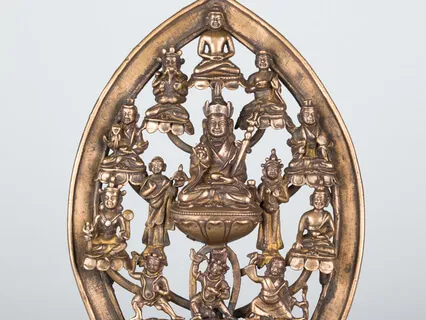
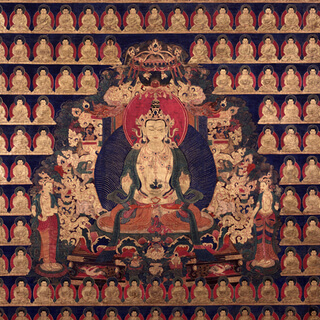
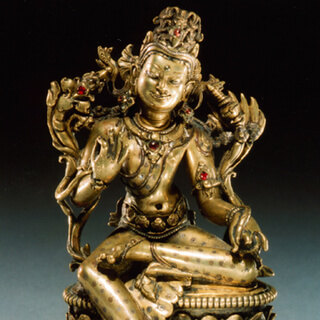
If you pay attention to the artwork chosen for today's talk,
This session,
You notice that there's Buddha,
But also it has the other earlier life events of the Buddha.
And this is important to keep in mind.
As we think about awakening,
We often have this tendency to think about awakening as something mysterious,
Something that is completely separated from who we have been.
It's something that is mysterious because we don't know what it is,
But it's just different from completely separate and independent of where we have been as a person.
In fact,
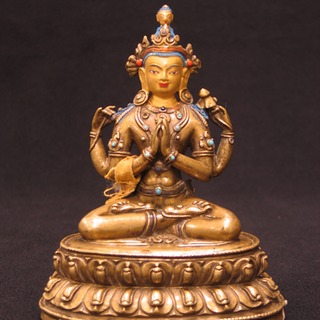
This statue reminds us that where we are now,
Including the moments of awakening,
Is the culmination of all moments of our lives.
So when we allow ourselves to settle our mind,
Often through the practice of meditation,
And allowing ourselves to be fully here with this subtle mind,
And clearly cultivating this clear awareness of our body,
Mind,
And everything that's going on in this present moment,
Then we can afford ourselves the opportunity to be awakened.
And what this awakening is involves is being able to notice the habits,
The habits of being asleep,
Because awakened really is a word in relation to the state of being asleep.
And we don't know that we've been asleep so long that we don't know.
And we've been asleep in the dream that we have created about our life,
About the world,
About who we are.
And what it refers to is that we have been asleep imagining about our life instead of being truly with our own lost self and our world.
So we're stuck in our idea of who we are,
Our idea of who our loved ones are,
As if they are fixed entities.
And that's what I refer to as the dream we live in.
So to give you an example,
Recently,
I was able to visit my parents,
My elderly parents,
And their air conditioning was not working.
And my mother asked my dad,
Who's in his 80s,
To check on the remote control.
And sure enough,
The battery was off,
And my dad turned on,
Changed the battery,
And it still didn't work.
So they thought the air conditioner was broken.
And when I turned up,
I checked the remote control and my dad put in the battery backward.
And so when I changed it,
It worked perfectly.
And my mom was just so upset.
It's like,
What's wrong?
That's the kind of stuff that I just gave your dad to look after.
That's his job,
And he should be doing it perfectly,
Which he might have been when he was younger and could see more clearly.
But at his age now,
He couldn't see the fine print on the remote control.
So that will mean by our living in the dream,
Our idea of who other people in our life are,
As if they are fixed entity.
Maybe my dad was very capable and could see perfectly early in his life,
But not so much now.
And when we can notice,
Notice these habits of being asleep in our dream,
Then we have the opportunity to notice that we don't have to perpetuate these habits.
And thus,
To awaken,
To awaken to the true nature of our being,
The true nature of everything that includes our loved ones,
The world around us,
What's the true nature?
The true nature is that every moment,
Every moment of our being,
Of the world,
Is the coming together of many causes and conditions that are constantly changing,
And everything is a flow.
You might have heard of this teaching in terms of the word emptiness or interdependence or interbeing.
And though we know this conceptually,
We forget and go back into our dream over and over again,
Because that's our default.
So when we can notice,
Notice this and give ourselves an opportunity not to perpetuate it,
Then we also can recognize that we can cultivate the conditions for the life we want,
While clearly aware that many causes and conditions are involved,
So that we know clearly that we can do our best,
But we don't really have control over the actual outcome.
Maybe the outcome is still in the general direction that we want it,
But we don't have control over the exact form of the actual outcome.
And every moment,
We can remember that we can choose what we do in this moment,
How today contributes to the conditions of our future moments.
So this moment,
Am I here,
Clearly aware of the fact that I can keep perpetuating the old unhelpful habits?
Very often that's done in the state of not being awakened,
Or being awakened,
Clearly aware of the fact that I have been perpetuating these unhelpful habits,
Or living in a dream that I don't have to,
And to perpetuate it,
And instead be willing to come up with the courage to live,
To see clearly what's going on,
To live with compassion and wisdom.
So let me give you some examples of how that looks like,
And some of you might have experienced it recently as our life had all been turned upside down in this pandemic.
So some of us may notice that we are not who we thought we are,
Maybe having to work at home a lot,
Being cut off from our usual social interactions.
So we might,
Many of us,
We have a tendency to get very frustrated,
Believing that now something's wrong with me,
Because for example,
We might have thought that I'm a very productive person,
I'm very organized,
I'm very creative,
I'm always coming up with interesting ideas,
I'm very motivated,
Or very disciplined,
If I come up with a plan,
I can see through.
We have these ideas about ourselves,
And in our past,
We've been able to carry these things out and work and function this way fairly consistently.
And some of us might have noticed that over the past few months,
And I have heard that from many,
Many people,
That I just,
It's just this thing,
I just get behind,
Even though I'm supposed to have more time,
I don't need to commute to work.
And just in one,
Our usual way of responding is to get really frustrated,
Getting upset at ourselves,
And thinking that something is wrong with us.
And maybe thinking that,
Oh,
I was wrong about myself,
Like maybe I'm really just this lazy,
Unmotivated,
Undisciplined,
Not really creative person.
And that,
And believing that we finally knew who we are.
And this kind of thinking has to do with our not seeing,
Understanding that every moment about being is the coming together of many causes and conditions.
So in the past,
Before the pandemic,
For example,
We had a dedicated space for our work.
So for example,
This friend,
I know she works at home,
But she has her house to all to herself all day for her to work on her writing.
So she was able to stay on schedule,
Get very organized and be very productive and very creative.
And since the pandemic started out here in the New York area,
Her partner had to work from home.
So she no longer has a dedicated space to work and the kids at home.
And so it was,
The conditions had changed completely,
Which the conditions that had contributed to her ability to work the way she did,
Were no longer there.
So it should not be surprising that the way she worked changed.
She still was able to produce what she needed to produce.
It's just the process and maybe the timing felt very,
Very different.
And understanding that everything is the coming together of causes and conditions,
Applying applying the teaching,
The Dharma teaching of emptiness,
That every moment of our beings to coming together of many,
Many causes and conditions,
Help us wake up from the illusion that there is a permanent me,
An inherently productive,
Inherently creative me.
And recognizing that there are many causes and conditions that made it possible.
So for example,
Again,
Like thinking about creativity,
Very often we require the conditions of being exposed to many new people,
New environment,
Having the opportunity to interact with others in an embodied way to stimulate new ideas in us.
Cause creative ideas are really co-created among a community of thinkers.
So the pandemic made it quite difficult to do that when we are all working from home in front of our desk,
In front of a computer,
Instead of being able to,
For example,
Attend conferences or being able to engage in retreats for some of us,
Then the process through which we work with ideas become quite different.
So maybe we're still coming up with interesting ideas,
But the process feels very different and we don't feel as creative the way we have experienced it.
And so we might draw the wrong conclusion that I'm not as whatever,
Creative or productive or organized as I thought I was.
It's just that our being,
Our experience of ourselves had changed because causes and conditions,
The way we live has changed a great deal.
And similarly,
We can apply this in our interaction with our loved ones.
When we notice someone,
We love someone in our life,
For example,
Children in our life,
Deviating,
Not behaving in a way that we are used to them being,
Because we had an idea of how they are,
Who they are supposed to be,
Then we are likely to blame them for misbehaving,
Especially with children.
Recently I've spent a fair amount of time with my nephews,
Ranging from half-year-old to 12-year-old.
And for example,
My three and a half year old nephew,
He's a very easygoing,
Cheerful kid that we're used to before this pandemic.
And he's quite moody and he's been accused of being naughty and misbehaving deliberately.
A lot this summer and not very cheerful.
And so our tendency might be to blame them for misbehaving,
To what's wrong with you,
Why can't you be ABC,
Whatever it is we believe this child is supposed to be because of our habit of seeing people as fixed entities,
And of course we end up creating a lot of conflict and suffering.
However,
When we have a chance to settle down our mind and be fully here,
Fully connect with whoever is in front of us and apply the teachings of emptiness,
Then we have an opportunity to see that,
Yeah,
This little kid was happy,
Cheerful,
Because he had interesting days.
He could get up and go play with his friends at the nursery school,
With stimulating activities,
With teachers he loved,
And learning new songs every day.
And in the afternoon,
He got to go down to the playground and play on the swing set and all that stuff.
And none of that,
None of that is possible now with the pandemic and the closing down of nursery schools and closing down of these playgrounds.
And all he did was just be stuck at home all day and getting bored.
And we shouldn't be surprised that this kid is a little lethargic and a little moody and checked out to get attention a little bit more than before.
So our ability to awaken to the emptiness of the beings and our environment allow us to empathize rather than to blame,
And perhaps also allow us to identify things that we can do to help while acknowledging the new situation.
It's not that we try to turn this person into the old person again,
Or try to make ourselves into the old self again,
But things have changed.
What can we do?
And this way,
We may be able to look into our past and draw on our strengths and lessons we have learned in the past to help us through the challenges in the present moment.
And so in this way,
We can see that awakening is a process.
We have the habit of going into sleep.
But in moments when we remember to practice,
We awaken to the fact that all is the coming together of causes and conditions.
And that allow us to remember not to perpetuate unhelpful habits,
To remember to empathize,
To remember to see that this is all a flow and that we are able to cultivate and identify the useful conditions to be helpful.
So in this way,
We can see that awakening is a process in our practice.
And in this process,
Wisdom and compassion arise is an integral part of this process that continues to deepen as we remember to practice more and more often.
So let's take some time to practice together,
Practice meditation that help us learn how to settle our mind and cultivate this clear awareness.
So I'd like to invite you to sit yourself in a comfortable posture.
If you're sitting in a chair,
You might find it helpful to make sure that your two feet are firmly planted flat on the floor.
That will give you the stability of your upper body.
You might find it helpful to sit to the front edge of your chair.
That will allow your lower back to fall into its natural curvature,
Giving your spine the ability to support the body and reducing the amount of tension you have to hold in your muscles to hold up the body and allowing the body to relax.
And as the body relaxes,
The mind can relax.
This can be facilitated by tucking in our chin slightly,
Tip of the tongue touching the roof of the mouth behind the upper front teeth,
Mouth closed,
Eyes downcast.
And if your eyes are closed,
Remember not to shut it to recreate tension,
Just allow the eyes to be relaxed.
And I take you through a guided meditation.
Feel the relaxation of the top of the head like melting butter,
And feel the relaxation spread to the forehead.
Check to see if we're holding tension in this area by habit,
Perhaps from worrying or a lot of intense thinking.
Right here,
Right now,
You can give these muscles a vacation and allow,
Allow the tension to melt away.
And feel the relaxation spread down to the eyeballs and eye muscles.
Simply experience the subtle sensations of these muscles relaxing like melting butter.
As we allow,
Allow the tension to melt away.
And feel the relaxation spread to the facial muscles.
Check to see if we're holding tension in these muscles by habit,
Perhaps from the need of holding a certain facial expression for the world to see.
Right here,
Right now,
There's no need to do that.
One can give these muscles a vacation and allow,
Allow the tension to melt away.
And feel the relaxation spread to the entire head.
Feel the relaxation spread down the neck muscles.
Directly experience these muscles softening like melting butter.
As we allow,
Allow the tension to melt away.
And feel the relaxation spread to the shoulder muscles.
And down the arms,
To the forearms,
And all the way down to the fingertips.
And feel the relaxation spread to the chest area.
Check to see if we're holding tension in this area by habit,
Maybe from fear,
Anxiety,
Maybe grief.
Right here,
Right now,
We can give them a rest and allow,
Allow the tension to melt away.
And feel the relaxation spread down the torso,
To the lower abdomen,
Where we hold a lot of tension by habit.
Trust that the skeletal structure can hold up the body.
And these muscles do not need to work so hard.
Allow,
Allow the tension to melt away.
And feel the relaxation spread to the upper back,
Down to the lower back,
And all the way to the buttocks,
Where we feel the sensations of the body sitting on this chair or cushion or bench.
And feel the relaxation spread down the thigh muscles,
And all the way down to the toes.
Feel the relaxation of the entire body sitting right here,
Right now.
Moment after moment,
You maintain this clear awareness of the experience of this body-mind sitting right here,
Right now.
And you might notice the changing sensations of the subtle movements of the body as it's breathing.
And you can maintain this clear awareness of the changing sensations of the body breathing as a way to anchor your attention to the emerging present moment.
There's nothing you need to do to the breathing.
The body knows how to breathe.
All you need to do is to stay with the changing sensations of the body breathing,
Moment after moment.
And if there are thoughts coming through,
Not a problem,
They are part of the present moment.
Allow.
Allow it to be here.
Allow.
Allow.
Allow.
Allow.
Allow the thought to be heard and fully experienced.
Allow it to move on in its own time.
No different from the sound of a bird outside your window or the sound of cars passing by.
No need to fight against it.
No need to completely focus and obsess over it either.
Moment after moment.
You maintain this gentle,
Clear awareness.
And if the mind drifts off and loses connection with the breathing,
Not a problem,
You use that as an opportunity to practice remembering to find your way back,
To reconnect with the body-mind.
It takes a good lot of knowledge to really feel like a person been in a good mood.
.
.
.
.
.
.