Welcome to the Mindfulness Meditation podcast.
I'm your host,
Dawn Eshelman.
Every Wednesday at the Rubin Museum of Art in Chelsea,
We present a meditation session led by a prominent meditation teacher from the New York area.
This podcast is a recording of our weekly practice.
If you would like to join us in person,
Please visit our website at rubinmuseum.
Org slash meditation.
We are proud to be partnering with Sharon Salzberg and teachers from the Interdependence Project.
The series is supported in part by the Hemera Foundation.
In the description for each episode,
You will find information about the theme for that week's session,
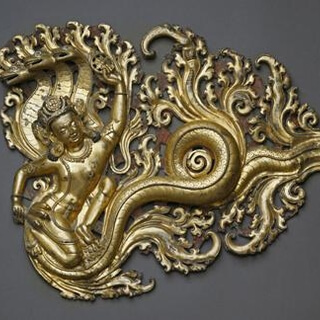
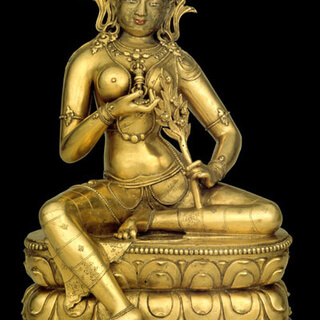
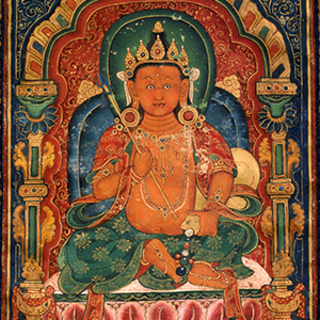
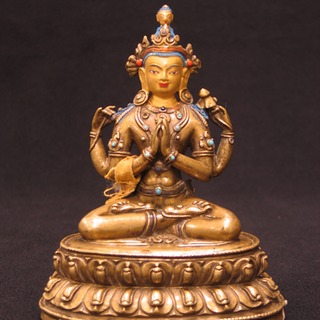
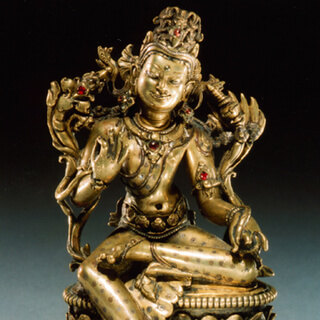
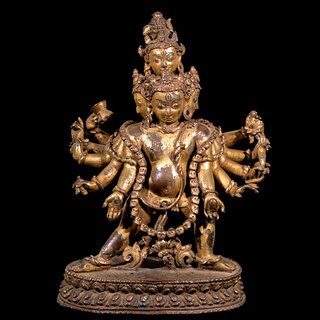
Including an image of a related artwork chosen from the Rubin Museum's permanent collection.
And now,
Please enjoy your practice.
Lui Diti,
What comes in my mind as a Two Cents Tibetan Buddhist practitioner,
You know,
The word for karma.
And karma is something that our own action results from our own action.
That can be from many past lifetime because Tibetan Buddhism or Buddhism believes in next life reincarnation.
So the karma,
Even though,
You know,
There is certain action and then you face the causes and effect,
The condition,
But then if you do good things,
You know,
You can actually try to get rid of the obscurations or the negative karmas too.
So that is fluid,
Right?
Like fluidity.
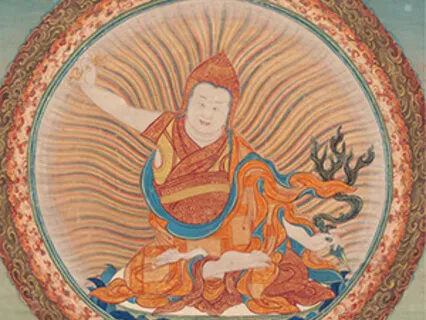
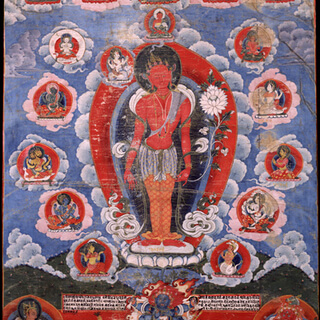
And the art connection for today is this really brilliant treasure revealer called Jettun Ningbo.
He's also addressed as Lama Jettun Ningbo,
Which is a teacher from the 16th to the 17th century master.
And I'd like to share with you that,
You know,
I'm so thrilled to be here to introduce this because having received these great Nyingma teachings from my root teacher,
His Holiness Pana Rinpoche,
Who is one of the greatest Nyingma masters of this century,
Who actually passed away in 2009,
I grew up receiving teachings and hearing so many of the treasure revealers,
Including Jettun Ningbo.
And so I was so excited to find out that,
Oh,
This is the object for today.
And I was just asked because Don is not able to be here,
So if you wanted to hear Don's beautiful voice,
It's today I'm Taun,
Not Tashi or not Don,
But Taun,
I was joking.
So the other beautiful connection about Jettun Ningbo is that it turns out Jettun Ningbo is born in a place called Kung Po in Tibet.
And guess what?
Kung Po is where my mother was born.
But in 1959,
When the communists took over Tibet and my mother was a teenager and,
You know,
So many,
Around 80,
000 Tibetans along with the Dalai Lama,
Crossed the Himalayan mountain on the foot and came into exile.
And that's where I'm born and raised.
So you know,
That's another connection that I have that I was excited to share.
So the treasure revealers,
There are treasures that has been hidden by the great Padmasambhava who brought Buddhism into Tibet in eighth century.
And then along with his concert,
Ishitsoja Mandurava,
They hid so many treasures in the skies and the rocks and the water,
Space.
And then treasure revealers were born different time to reveal the treasures to benefit beings during that period and onwards.
And so these treasures are revealed by the treasure revealers at certain time and then it benefits the period and moving forwards.
So that's a great example of Jettun Ningbo.
And today I believe is International Women's Day.
Did you all know that?
Yay,
Right?
So hashtag International Women's Day.
What?
It's March 8th.
So this week,
Basically.
Okay,
Can I rephrase it and say this week is International Women's Day.
And you know,
In the Tibetan Buddhism,
Even on Mother's Day,
On Mother's Day,
I used to wish everyone,
Including men and everyone,
Happy Mother's Day.
And then I explained,
You know,
We believe that everybody has been your mother in one single lifetime.
You know,
To treat everyone with respect and how you want to be treated,
Treat others like how you want to be treated.
That being said,
You know,
Why it says is that everyone has been your mother in one single lifetime is being born as a human,
We believe that it takes many lifetime to be reborn in this human form.
That you may have done something really,
Really great in many past lifetime to be reborn in the human form.
So it's called precious human rebirth.
And so that connection to many lifetime that everyone has been your mother in one lifetime.
So that connects to everybody as happy International Women's Day.
Right?
And when I was,
You know,
Sharing that,
There was one person who was from San Francisco,
Who is the executive director of Aging Research something.
And he said,
Wow,
That is so interesting that everybody has been mother in one single lifetime in Buddhism or Tibetan Buddhism,
Because he said,
Because,
You know,
What I have found out from his research,
He said,
Is that DNA comes from mother.
Isn't that something?
So I always say,
Buddhism is so science.
Right?
Okay,
I don't want to talk too much.
So today,
Our teacher is Kimberly Brown.
So wonderful to have you back,
Kimberly.
Kimberly Brown is the executive director of Interdependence Project and a graduate of its meditation teacher training program.
Kimberly leads mindfulness and compassion classes,
Workshops and retreats for groups and individuals in New York City.
Kim studies American and Tibetan Buddhism and practices loving kindness meditation.
Her teaching methods integrate depth,
Psychology,
Compassion training,
And Buddhist techniques as a means to help everyone reconnect to their inherent clarity and openness.
So please help me welcome Kimberly.
Tashi,
Thank you for that beautiful introduction.
And hello,
Everyone.
Yes,
I am surprised to see anyone here in this winter storm.
So you are like the A-team.
Thank you for being here and take a moment to appreciate that you came here for yourself and that you're supporting your community.
Is there anyone here that is brand new to meditation?
Great,
Welcome.
Welcome.
Hi.
So as Tashi mentioned,
You know,
Today,
The theme for this month is fluidity.
And it's corresponding with the Rubens year long theme,
The future is fluid.
So we're looking at this amazing tanka of this great teacher,
Jatsun Ninpo.
And it said that he practiced in a cave for 17 years,
That his mind was vast and wise.
As mentioned,
He lived in the 17th century,
And he discovered or revealed these teachings.
Now,
These teachings were hidden in the eighth century by this teacher,
Yeshi Shogo.
I always mispronounce that.
Thank you,
Yeshi Shogo.
And she had planted them in the eighth century with the intention for future teachers to discover this at auspicious moments and reveal it to help everyone wake up,
Right.
So this Lama discovered these hidden treasures.
And there were two types of treasures they call the Tibetan word is terma.
And there are two types,
There are actual artifacts,
Material objects,
Ritual objects,
Hidden in the earth in the landscape to be discovered.
And then there were teachings.
These teachings are called translated in English,
Often as intention treasures.
And the intention treasures are revealed in someone's mind,
Right.
And this Lama,
You can see her treasures were revealed in his mind,
And he wrote them down,
Right,
So he could share them.
So in a certain way,
It's possible,
I think for us to consider this as an important metaphor for our own practice,
Okay.
As we practice,
We are cultivating our own intention treasures that will be revealed to us in the future.
The present is determined,
What's happening right now is determined by countless conditions and causes from the past,
Okay.
In our own lives,
This is our own actions,
Our own thoughts and words and speech and behaviors.
And also the conditions in which we live,
Right.
So all of that creates the present,
And then our present moment actions create the future.
So what that means is that the future cannot be determined or fixed.
It relies upon previous causes and conditions to arise.
That means we can create conditions in which auspiciousness is revealed in our own lives and our own mind.
Now these intention treasures,
We can cultivate right now for the future through our practice,
Our meditation,
Our Dharma practice.
And by Dharma practice,
I mean our formal sitting meditation,
But also our each action that we are orienting,
That we are choosing to orient in a way that is beneficial to ourselves and each other,
And that is not harming to ourselves and each other.
And through these practices,
We can start to manifest our intentions,
Our treasure intentions.
When I was thinking about this idea of the future not being determined,
You know,
More or less,
I think we all understand that.
And yet,
There's also a sense that each one of us are very fixed personalities,
Selves,
Individuals,
Right.
There's an idea of,
You know,
Oh my God,
I've always been this way,
I'm never going to change.
She's been like that since she was a child.
My mom's always been difficult,
She always will be,
Okay.
And yet that is a complete misperception because there is no fixed Kim,
For example,
Like a little Kim that's in my head and I could,
You know,
Maybe extract her and put her on a table,
Impermanent,
Unchanging,
Right.
That's not how it works.
Everything that's arising in me is a result of past causes and conditions,
Right.
So we can start to see how what we said in the present can help determine our future.
And in fact,
Probably you,
I think many of you have been coming here quite a bit.
And in the Buddhist tradition,
You'll often hear people say,
We are planting seeds that will ripen in the future.
You'll hear things like the fruits of your practice,
Okay.
And that's all pointing to how we can begin to cultivate in the present moment actions that have outcomes that are beneficial to ourselves and each other in the future.
There's a neuroscientist,
Richard Davidson,
And he studies certain qualities,
Qualities like compassion and kindness and lovingness and wisdom.
And although many of us have an idea that someone like His Holiness,
The Dalai Lama is just born that way,
So kind and loving,
Or you'll meet someone and think,
Wow,
They're just so patient,
That's just how they are,
Right?
Or you might have a good friend who's very compassionate.
Oh,
They've always been that way.
Okay,
Now Richard Davidson and his research has noticed that these qualities are inherent in each one of us.
Each one of us can cultivate them.
Okay.
One is that they're a lot like language,
In that each person has the ability to speak language when they're born.
And it needs to be fostered,
Right,
And developed,
Helped with their environment.
So each one of us can do that too.
Again,
The future is not fixed.
If you are ever lucky enough to have a teachings with the Dalai Lama,
He's usually here once a year.
He has a,
Usually has a big teaching,
Lots of people come out and he will often say to you,
People think,
Oh,
He,
You know,
I know how to do this.
I'm so wise and smart because I'm the Dalai Lama.
But it's the result of 60 something years of teaching,
Or years of study,
Right?
60 or 70 years of study.
And if each one of us did that,
We can also cultivate and develop our minds too.
So last year,
I was lucky enough to have a teaching with a Tibetan teacher named Thay Sathu Rinpoche.
He doesn't come to the West a lot.
And the teaching he wanted us all to really take in was that he said,
Western people don't understand what a miracle is.
It was really important to him.
He said,
A miracle is simply something that was once impossible.
And now it's possible.
That's all it is.
And he wanted us to understand that because through our thoughts,
Our words,
Our actions,
We can create different conditions,
Different possibilities.
And we have powerful and valuable lives to bring about changes,
To not have a fixed future,
And to consider everything that's possible for us.
So let's sit together.
Let's cultivate our own intention treasures today.
I encourage you,
If you are someone who usually keeps your eyes closed,
I encourage you to keep your eyes open.
If you're someone who usually keeps your eyes open during meditation,
Then go ahead and close them.
With your open eyes,
You can softly gaze at the chair back in front of you.
So go ahead and don't meditate.
Don't not meditate.
Just letting yourself settle in here.
You've just walked in from a storm,
You may be wondering what it's like outside.
You might be remembering something you have to do.
Just noticing that feeling your feet,
Bringing your attention to your seat and your belly.
Feeling your shoulder blades in the back of your head,
Allowing sound to enter your ears.
Taking a moment to remember why you're here,
What your intention is.
Working together,
Coming to this community each week.
Take a moment to appreciate that.
Noticing where your mind is,
Gently feeling your feet and your seat and your belly.
Bringing your attention to the center of your chest.
Noticing that you're breathing.
You can go ahead and take a few conscious deep breaths.
And placing your attention on your breath.
You don't have to change it.
Just being with it,
Allowing it.
And being with it,
Allowing it.
Take a moment to appreciate that.
.
.
.
.
.
.
Bringing your attention to your breath.
.
.
.
.
.
.
.
Bringing your attention back to your breath to this moment.
.
.
.
.
.
.
.
.
.
.
.
.
.
.
.
.
.