Welcome to the Mindfulness Meditation podcast.
I'm your host,
Dawn Eshelman.
Every Wednesday at the Rubin Museum of Art in Chelsea,
We present a meditation session led by a prominent meditation teacher from the New York area.
This podcast is a recording of our weekly practice.
If you would like to join us in person,
Please visit our website at rubinmuseum.
Org slash meditation.
We are proud to be partnering with Sharon Salzberg and teachers from the Interdependence Project.
The series is supported in part by the Hemera Foundation.
In the description for each episode,
You will find information about the theme for that week's session,
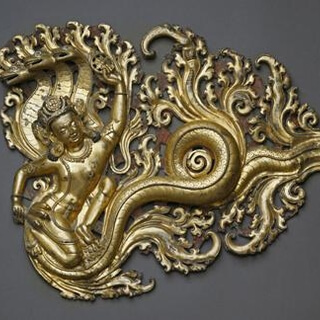
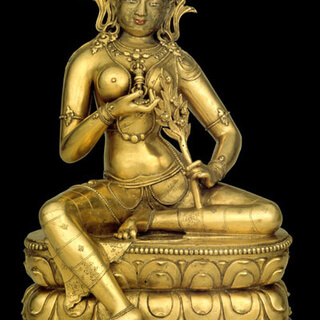
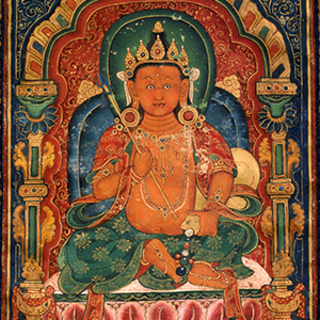
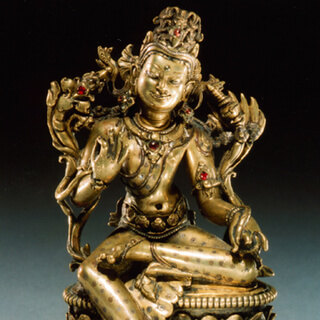
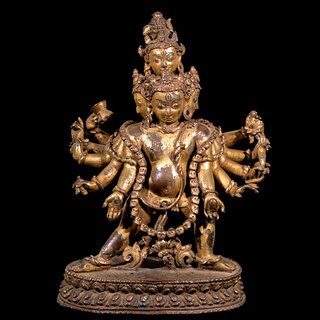
Including an image of a related artwork chosen from the Rubin Museum's permanent collection.
And now,
Please enjoy your practice.
Hi,
Everybody.
Welcome to the Rubin Museum and to our weekly mindfulness meditation practice.
My name is Dawn Eshelman.
I'm head of programs here.
Great to have you all here.
This month,
We are talking about discovering.
And so far this month,
We have been talking about that in terms of our practice,
How within moment to moment,
What that experience is like as we meditate,
That kind of return to the breath and the rediscovery of that.
And we're talking about it on kind of a larger scale in terms of our process of life and development.
And today we're going to bring teachers into the mix a little bit.
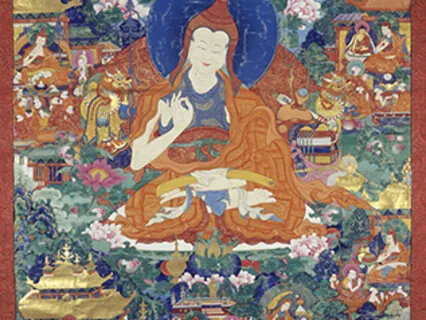
But this is all in relationship to this exhibition that we have up on the sixth floor called The Second Buddha,
Master of Time,
That tells the life story of Padma Sambhava,
Who was the second Buddha.
He brought Buddhism to Tibet.
But he didn't do it by himself.
I know we've sort of made him into this big kind of hero figure.
But in fact,
Of course,
It was this lengthy process.
And he had many people helping him to do this.
And one of them is the figure that we're looking at today.
This is Shantarakshita.
And he was an Indian monk and teacher who helped to bring the practices of Buddhism to Tibet over a period of time.
And so today we're looking at that.
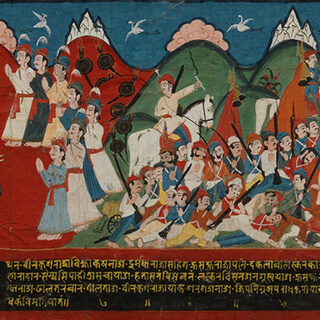
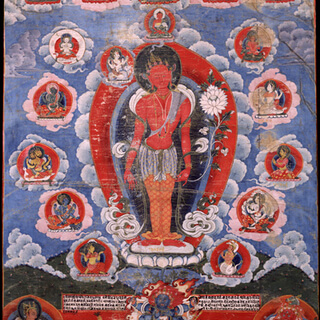
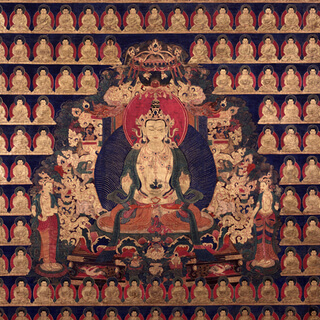
And this tanka,
This painting that we're looking at,
Is what's called a narrative painting.
You can see that there are different kind of scenes from his life here that are represented all over the painting in different areas.
And if we were going to make a film of Shantarakshita's life,
This would be our storyboard.
So you can kind of imagine these scenes being enacted.
And if you want to learn a little bit more about each of these scenes and take a closer look at the painting,
You can meet Jeremy right afterwards.
He'll take you up to the sixth floor and you can take a closer look here.
But today we're really focusing on his role as teacher and this idea that discovery is a process and takes some time.
And so with this in mind,
I'll ask you to just think about the teachers in your life,
You know,
Perhaps the formal teachers like that we have here as part of our practice,
But elsewhere as well for you in education and elsewhere,
But also the informal teachers or people that you don't necessarily expect to be your teachers who teach you a lot along the way.
So speaking of teachers,
It is fabulous to have Kate Johnson back here with us.
Thank you,
Kay,
For being here.
She teaches mindful yoga in New York City public schools and Buddhist meditation at the interdependence project.
She holds a BFA in dance from the Alvin Ailey school at Fordham University and an MA in performance studies from NYU.
She's trained at Spirit Rock Meditation Center,
The interdependence project,
Laughing Lotus Yoga and the Presencing Institute.
And she's writing a book all about waking up to power and oppression as a spiritual practice.
Please welcome her back,
Kate Johnson.
Thank you,
Dawn.
Hi.
It's good to be here.
Yeah,
So this theme of narrative painting and the structure of it really is something that I'm excited to explore in our meditation practice today.
And to use it as an opportunity to talk about two concurrent factors that the Buddha talked about together in the instructions on mindfulness.
In most of our meditation instructions today,
We emphasize the development of mindfulness.
The word that is used in the Pali text is sati.
So we emphasize the development of this quality because it's so important to be able to notice of what is actually happening in a moment to moment to moment way,
Internally and externally,
And the way that those relate with one another.
So that's one way to think about mindfulness.
In the Satipatthana Sutta,
Which is the,
I'm sure many of you know the discourse in which the Buddha talks about mindfulness and mindfulness meditation,
He talks about this quality of sati,
Mindfulness,
Together with another quality that we talk about a little less but that I love and I'm excited to share with you today,
Sampajana,
Or in Sanskrit,
Sampajanya.
And this quality is usually translated as something like clear seeing.
And so it's the idea that together with this ability to really attune in a moment to moment way,
What's happening in the realm of thought,
Emotion,
Body sensation,
External conditions,
Which is the mindfulness part,
The sampajanya is kind of like the wisdom part of that practice where we're able to actually know how those moments of mindfulness relate to one another in terms of cause and effect,
Moment to moment,
And even in terms of making sense of an arc of experience or even the arc of a life.
So that's what we'll be working with today in the practice.
I was thinking that we could start by just settling into a basic kind of mindfulness of breathing practice.
And then I'll just give you an overview of what we'll do so you don't feel like I'm like stunning you with some wild contemplation.
We'll do the mindfulness of breath practice as a way to gather and unify the attention and settle the mind.
Of course,
We all know that when we sit down to settle the mind,
It rarely feels settled.
It feels like it's ping pong all over often.
But the wonderful thing about the mind is that it settles on its own in its own time.
So we can kind of relax,
Feel that we're sitting here,
Notice that we're breathing,
And allow the contents of the mind to settle just as if we had a jar full of water and glitter and we shook it up and then set it on the counter.
Glitter settles to the bottom.
Mind does the same thing.
It might take a little longer than the time we have to sit today.
But it will settle to some degree and we can experience that.
And then with the settling of the mind and with this cultivation of this quality of sati,
Of mindfulness,
This other quality sampajanya becomes possible for us to actually clearly see the way that this moment relates to the moments around it and even the arc of our experience,
How we got here.
So at that point,
I'll just invite us to do a brief contemplation about kind of in spatially the way that this narrative painting works to kind of zoom up from a bird's eye view,
Take a look at where we are in our journey at this moment,
And to generate some questions that I'll ask if you're willing,
You can share with the person next to you.
So I'll guide you through this whole thing.
But just wanted to give you a sense of where we're going together.
Does that sound okay?
Okay,
Cool.
We'll do it together.
And then,
As always,
We'll have time for discussion or questions afterwards.
So I see many of you've already done it,
But go ahead and find your comfortable meditation seat as comfortable as possible.
I know that,
You know,
Body doesn't tend to be super comfortable,
Whatever we do,
But set ourselves up as well as we can,
Letting the feet rest on the floor to whatever degree that's possible and letting the seat be firmly on the chair.
And sense into the energy in the meditation posture by letting the spine become long and reach up towards the ceiling and letting there be some openness in the heart.
So there's a little bit of brightness in the meditation posture,
As well as the relaxation of the softening the face and the shoulders,
Letting the belly relax,
Hands can rest.
And then,
You know,
Just taking a moment to enjoy the fact that we're sitting down right now and not doing much of anything.
It's so nice.
I love sitting.
I notice that in addition to how nice it is to sit,
There might be many other thoughts and emotions that are present right now.
Life is complex.
The world is complex.
So that doesn't go away when we sit to meditate.
Seeing if you can notice all that's present for you at this moment.
Just commit to for the next few minutes,
Turning your awareness towards the feeling of breathing as a way to care for your mind and heart,
To allow it to have a sense of rest and steadiness so that we can then be of benefit to ourselves and to the world when we get up from this seat.
And so without doing anything fancy,
Just noticing that you're breathing and allowing the mind to become naturally curious about the sensation of breath,
The shifting temperature of the air,
The parts of the body that expand and contract or relax with each inhalation and exhalation.
Perhaps we can even connect with a soothing quality of the breath.
We can allow it to ventilate our experience.
The rhythm might be calming to us.
And taking pleasure in the fact that we don't have to change it at all or do anything different.
We just get to feel it.
And knowing that by really feeling each breath,
The mind naturally starts to settle down.
Let's talk.
So every so often,
We can just remind the mind that we're meditating right now.
There'll be plenty of time later to plan our shopping list or our next vacation,
Plenty of time to worry or ruminate later.
But for now,
We can sometimes find it's quite easy to just drop whatever thought train we were on and come back to feeling,
Oh,
This one breath in,
This breath out,
So refreshing.
These bitchin ch allowing you to do this walk without moving their feet.
.
.
.
.
.
.
.
.
.
.
.
.
.
.
.
.
.
.
.
.
.
.
.
.
.
.
.
.