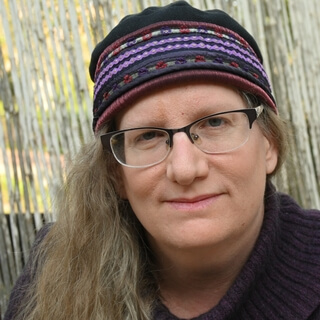
Welcome.
Allow yourselves to settle and arrive where we will begin in one minute.
Thank you.
Welcome and thank you for your patience.
We will begin in one minute.
We're having a technical difficulty with the live streaming.
It should be finished and settled in one minute.
Allow yourself to settle and arrive before we begin.
Okay.
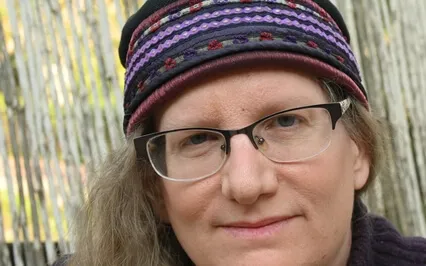
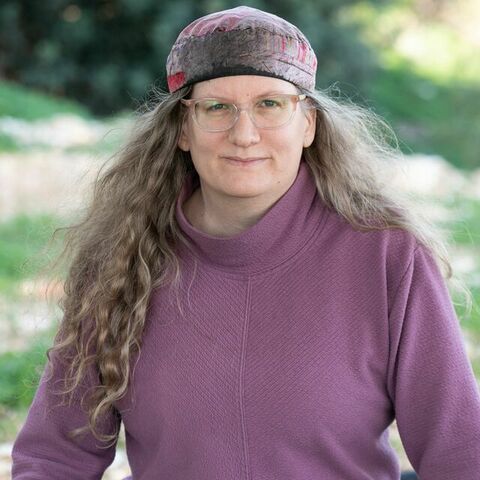
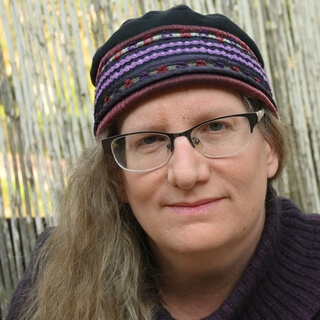
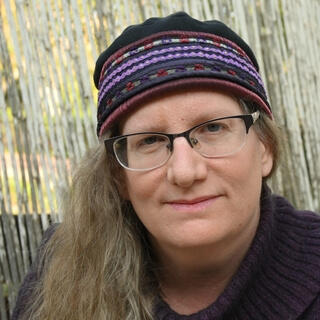
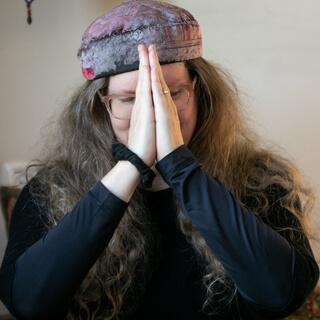
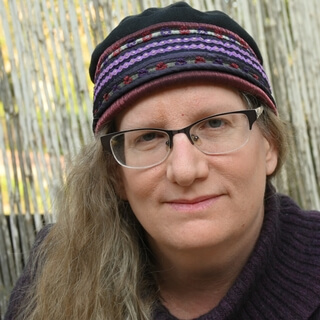
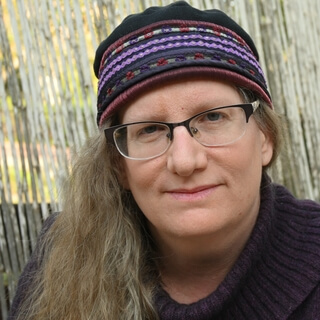
Welcome to awakening Torah moose our mindfulness.
I am Rabbi,
Sassy Oriole Steinbauer founder and director of the Institute for holiness.
I'm a con the kadusha Kehilat Musa.
I'm delighted that you've taken time out of this part of your day,
Wherever you are in the world to engage in delving into the Hebrew Bible the Torah,
From the lens and practice of moose our mindfulness which is our specialty here at the Institute.
We really bring the synergy of the wisdom of Judaism of moose are the spiritual discipline of doing to Kuhn kind of rectification of army dots or personality traits.
And that with their Nevada insights,
The passing mindfulness to bring the strengths of all together to learn and practice together,
Delighted that you've joined us today and Sunday,
October 2 2022 This is our 53rd sitting together,
Call a covert and we spent 53 sessions together practicing and learning is quite accomplishment.
And,
Of course,
Am today also is the seventh of tea tray which means we're getting close to the day of atonement to Yom Kippur,
You may be feeling that in alignment with doing the Sudaka to feel the to shoo vast so Sudaka meaning justice this righteousness this giving of charity and acts of wonderful deeds to others,
The feel of really pouring our hearts out to Hashem to God and others,
And of to shoo of repentance of returning of asking for forgiveness and forgiving.
So where are we in the Torah portion today what are we going to jump in together.
So as you know,
Last Shabbat yesterday.
We jumped into why yellow,
Right,
Violet.
Yes,
Absolutely very short.
This is the shortest partial the shortest tour portion in the whole Torah.
Think it's only like 30 to so keen 30 verses,
So it's a great one if you're a bar about needs fun and the ones who lane from the Torah,
Right.
Okay,
So before we jump in we always do our cover note our intention for today's practice let's go ahead and pull that up together.
We were having some technical difficulty going into this we're having issues live streaming everywhere for some reason.
So we're able to do so on YouTube so for those of you joining us on YouTube Welcome.
Here we go.
Here are our cover note our intentions.
So we see this act this practice together today right now as doing an act of radical self care.
We say this is something I'm doing to strengthen my own soul.
In order to be a benefit to others in the future.
This is why we practice.
We don't practice to become better meditators right better moose our practitioners,
The practice to be better people on the path for caring and service of others and of God.
And so we go to the second covenant right here before doing acts for others because we also see this practice right now is on behalf of others.
This is something I'm doing to strengthen my relationship to others.
So I can be a better conduit of God's good to others when they need me.
And find out the final thing that we see this practice together taking refuge and community.
Doing this awakening is that we are strengthening our relationship with the divine.
So we say this is something I'm doing to strengthen my relationship with the Creator.
So I can be a better conduit of God's good to others when they need me.
So may we merits bringing these kavanah these intentions to our practice today and to our lives,
Especially afterwards where the real work happens,
Right.
We have the practice and then we have the daily work.
Alright,
Let's jump in.
Let's give you a brief summary.
That this is where Moshe Rabbeinu our beloved ancestor is about to pass away to go to our ancestors.
And he tells Am Yisrael our nation that he is 120 years old and his life is coming to an end.
And he will not be able to enter Eretz Yisrael the land of Israel with them.
But a moment of teshuva,
A moment of facing,
A moment of accepting what is before oneself and the impermanence of it all.
That even Moshe Rabbeinu,
Our greatest prophet,
His life comes to an end,
But not his memory.
And not what we do in the name of his memory.
Does name be for a blessing?
Moshe encourages the people.
He tells them not to be afraid.
That God will take care of them.
God will take care of us.
Yehoshua,
Who has been the person that's supporting Moshe Rabbeinu this whole time,
Who has been basically kind of an apprentice in training.
He will lead Bnei Yisrael,
Our ancestors.
And he is given the statement,
Chazak ve'matz,
Right.
He is,
Moshe says to him,
Be strong and be brave.
How much of us need that on a daily basis?
We need that whispered into our ears.
Be strong and brave.
You can do this,
Right?
You can do this teshuva thing.
Not just during Rosh Hashanah,
The New Year and Yom Kippur,
The Day of Atonement.
How about in our Musa mindfulness practice,
We do it all year,
Right?
We say it's more important what happens after Yom Kippur ad until the next Rosh Hashanah.
Also in this parasha,
Every seven years at the end of the Shemitah cycle,
The year of release,
There's that special ceremony on Sukkot called Haq El.
It is an amazing,
Massive public Torah reading event,
At least in theory.
It gets discussed if they actually read the whole thing,
Supposedly they were supposed to or did.
The king himself,
If there is a monarch,
Is the one that is to read this.
And some think that it was just certain books and varem and Deuteronomy that were read.
That's up for debate.
We'll never know,
Right?
God describes what could happen when in the future B'nai Israel stopped following the Torah.
Well,
We might kind of want to say to ourselves,
Have the people been following the Torah the whole time?
No,
We've seen some of the consequences or punishment of that in the Torah.
So what's really sad and brought up is something new in this Torah portion of the God mentions the painful possibility of something called Hester P'niim,
God hiding God's face from us.
Like someone that's not present or visible,
Which are two different things,
Not always one is and are,
You know,
It's God visible to us.
And even those without vision,
Obviously,
God's not visible to them in the sense of seeing.
But God can be present.
God can be present in us,
Feeling around us,
In our lives.
So in this case,
When God says the punishment is going to be Hester P'niim,
It's like God saying,
I'm going to turn away from your needs and your suffering.
It's actually worse than not being present or not being visible.
Because just because someone's not present means that they haven't completely abandoned you,
Right?
In the sense that maybe they're not here today for your needs or suffering,
But they might be tomorrow,
Right?
And this threat,
This punishment is like twofold.
It's not only that you're not going to have that visibility or presence,
Which has its own ramifications,
Right?
But also a turning away.
There's a turning away.
That's the second.
It's threefold,
Actually.
The third is my needs and my suffering.
My unpleasantness is not going to be shared.
It's not going to be seen.
And this is new and very difficult,
Right?
It's one thing to be told I'm going to punish you and these are what you're going to receive,
Which obviously God still in your life,
If you're actually receiving them and aware of it.
This is different.
This is a whole new layer.
So we're going to hold on to that.
And finally,
God tells Moshe to write down the song of the Torah,
To teach it to B'nai Yisrael.
This is amazing.
What's this song?
What is this she-ra,
Right?
Obviously,
It gets discussed by our by Hazzal,
Our ancestors.
What is this thing?
We don't know exactly.
It's debated.
Is it ha-azinu that will come next,
Next week's Torah portion?
Is that what we're supposed to be in our mouths,
Be memorized?
Or is it the whole Torah?
What is it?
Okay,
So I want to focus this week on this he-ster panim,
Because this is,
I would say,
Theologically and maybe even also in philosophy and Jewish philosophy,
Exactly.
One of the most difficult things that is discussed and believed,
This idea that there is a hiddenness to God.
And even a hiddenness from our suffering and needs.
Theologians or philophores will bring the Holocaust,
The Shoah,
As an example that God was not there or God was hidden and didn't hear the suffering and the needs.
This is complicated.
Obviously,
There is no right or wrong answer.
And obviously,
When you're dealing with is God absence from a people,
From a nation,
Or is God absent from one's personal life?
So I know plenty of survivors of the Shoah,
Including my own Ima,
That would say to you on an individual basis that God was with them during that trauma,
That genocide,
The intergenerational trauma,
Communal trauma,
And that God is with them on a daily basis.
God helped them survive and without that relationship of seeing their needs and their suffering,
They wouldn't have made it.
And that that is a key part of their survival and even how they continue to operate today.
So we might be dealing with more of this in a national sense,
Right?
If we're dealing with a people in our master narrative in the Torah,
Where we're told that God was face to face with Moshe and spoke to the people and you could hear it,
And you even saw on a pillar of fire and a pillar and a cloud,
God was physically there and manifested,
Right?
You could sense that this is the divine.
And obviously,
As we move into Israel,
There's going to be a cut of the dependence on man,
On food that's given freely by God.
Suddenly we have to make our own food.
There's already a distancing maybe of dependence upon.
And sometimes,
Then when we're in the land,
We have to make our own food,
We have to fight our own wars with God's help.
Obviously,
We have to build the temples,
We have to do and live in the field,
Regardless of Hamelik Vasudev,
If the gods in the field,
If we actually see a pillar,
If we actually feel and hear or hear and see the voice,
There's going to be a change in that relationship and that change in some ways has to happen,
Because you can't remain dependent upon God the way that we did for 40 years in that desert as if we were a child and everything was given and provided to us.
There has to be some maturing and with that is difficulty,
With it sometimes is unpleasantness,
With it is the longing and the pain of attachment and wanting things not to change,
Wanting things to be the way they are.
And so even with our people then being kidnapped and taken out of the land of Israel,
Moved to other countries over the past 2000 years,
That's even a further distancing from us being in God's land and doing that work,
Right?
So you can imagine that the things that we got used to and named as signs of God being visible and with our people shifted and changed.
And if we held on to the attachment that it had to be that pillar of fire,
That it had to be that cloud,
That it had to be the man,
That it had to be God showing up in the Holy of Holies,
That it had to be something specific in that way that our ancestors had at one time or used to and labeled all that's God,
Right?
If we're attached to that,
Which some people still are today,
That's why you have this call for the Third Temple,
This is why you have a call for the return of the monarchy,
The levi'im and the koanim,
The priesthood,
Because that is what they associate as this is when God was not doing chester panim,
God was close.
God was near,
We could see it,
We could hear it,
We could recognize it.
There's been a shift.
And if you're not tied to the attachment,
If you could actually open to bitukhan,
To trust in God,
To the possibility that there's not a hiddenness,
Not even from our people,
Because we've been held and maintained and brought even back to the land.
There is a small,
Still silent voice in all of us,
We've been given that from the beginning,
Beginning with Adam and Chava,
Beginning throughout all of,
If we're getting close to ending the Torah here,
Think back to the Rashid and Shemot.
When I told you when someone said I had a fear of God,
That meant that they had that moral compass.
They knew right from wrong.
That's part of the divine within.
That's part of the gift.
We have the divine within,
We have it holding and carrying our people.
It's there.
It's just not the way it was.
And this is one of the most difficult practices for anyone to do.
This is where the Buddha and Buddhism,
Particularly in Theravada,
Theravada,
Vipassana,
Insight Buddhism brings in this idea.
It's not even an idea.
I see it as kind of built into the fabric of the world.
Is this impermanence,
Right?
That everything changes,
Including God,
Including our relationship with God,
Including the manifestations of it that we associate with God and as God.
And so if we are in this moment where we're really attached to a certain way of being and God being a certain way and even ourselves and relationship and being able to see certain signs,
Right?
Then we're going to be stuck and I'm only stuck.
We're going to cause our own harm and suffering.
And then we're going to think that God's not there for it,
That there is this Chist or Pānim,
Right?
But really the gift is in the practice of our mūsā mindfulness,
Especially in response to this parṣa,
Right?
Where we are told what will happen if we don't follow God's ways,
Which can feel really painful and even distancing,
Correct?
It can be the type of thing where we have to recognize that that's how our ancestors experienced it and feared what would happen if they did not follow exactly as is.
And I might even venture to say that maybe even God was attached to them being a certain way.
And so when they weren't going to be that way,
Then there's going to be the harm and the suffering.
So in some ways we're all having to grow and shift and be able to shuv,
To do tushuvah,
To turn,
To be able to have that adaptability to see that I'm changing and so are you and our relationship is changing therefore.
And that you're actually not hidden and gone.
I know you're here for my harm and suffering and I know you're here for my joy and love and compassion.
So with that,
We're going to move into our guided mindfulness meditation practice.
You may assume one of the four postures that is in mindfulness meditation,
Which is either a seated position in a seat or on a cushion,
Like a zafu,
Or lying down,
Encourage you to keep your eyes open if you have vision so that you remain awake and alert.
You can also assume a standing posture,
Almost like the mountain pose,
So that you're grounded and held.
There's also walking.
Not walking to somewhere but being.
You'll use my voice as your anchor along with your breath and body.
Come to your upright position created in the image and likeness of the divine.
And allow yourself three deep cleansing breaths inhalation,
Exhalation,
Allowing yourself to arrive.
Inhalation,
Exhalation,
Settling,
Going to some stillness,
Inhalation,
And exhalation,
Allowing your breath to slowly settle,
Allowing it to come to its own natural rhythm,
No need to force it or control it.
Today we're going to do the great practice and work of really seeing what is in us.
As we are in these 10 days between Rosh Hashanah and Yom Kippur,
To be able to face our own internal Hester Panim,
Where we turn away from our own suffering and pain and loss.
How we cause our own harm and suffering.
So much of our ancestors maturing and growing into a people and dependent,
But still carried by God is this ability to care for oneself and community.
With that is a certain maturity over time.
So we allow ourselves to sit right now,
Sit with what is to really have the embodied felt sense of what is present for us.
Where are we having strong emotions or sensations in the body?
Or thoughts that might be really dominating.
This is the time to face the hindrances that might be part of our practice in life right now.
Whether it be sloth and torpor,
Certain tired or laziness to our practice.
Maybe it's the attachment trying to hold on to things the way they were.
Maybe even how we were earlier in this year.
Maybe it's actually a version of being in denial,
Trying to push away that things are the way they are,
Or that things change,
And they will.
For some of us,
It's greed.
It's a real coveting,
A desire.
And what we say in the practice of moose or mindfulness,
The most challenging and often difficult of the hindrances is a real facing that we have lost faith,
We have lost trust in the process in God and the divine.
And that's affecting us and that's very much going to affect us with Hester Panim,
With this being able to have the divine within and ourselves to turn towards ourselves.
To care for ourselves with self compassion and self honor.
To be able to face our own pain,
Our own suffering.
And to be our best spiritual friend to ourselves to take care of ourselves.
This is the practice.
This is where we are today.
So recognize within your body right now.
Where are you feeling that you've turned away from yourself.
We are not facing your own suffering.
Where have you hid your face from yourself.
Do you feel it in your belly.
Do you feel it in your chest.
Do you feel it in your heels,
Your toes.
Do you feel it in the upper arms and your shoulders,
Your neck.
Where is it real for you.
This hiding from yourself.
What does it feel like.
Is it hot.
The ball.
How does it manifest.
See if you can turn towards it Can you lean in and attend.
Ask yourself Can I be with this.
Can I attempt to stay present and practice around this.
How do I turn away from myself in this moment what do I need.
How do I take that turning away from myself,
How do I take that ball wherever it might be located.
How do I gently put my hands on it.
Hold it.
Soften it.
Invite it to come to you.
To turn to know that it can.
Knowing that in this practice right now here with me,
You can take refuge.
Right now you can make the choice to turn to turn that face.
Face yourself.
Face yourself with warm loving eyes.
With compassion,
With love.
And then the next minute,
We will practice in silence to allow ourselves to feel the felt sense of this in the body to really investigate it.
So,
Finding this way right now in our practice to make peace with ourselves our human imperfections.
It is the ground of all healing.
Often our deepest suffering is a sense that something we have done is essentially and fundamentally about us.
That we are fundamentally wrong and unacceptable.
And facing this part of you that you may have internalized or accepted as this unacceptable part of you.
Facing it softly and with love.
We bring the self compassion directly to the places of fear and unmet needs.
To the pain that may be there that's given rise to what has so long been unforgivable.
You can mentally or gently whisper to yourself now.
I see how I've caused myself suffering.
I see how I have turned away and hidden my face from myself.
I now in taking refuge and community turn my face.
Forgive myself now.
Simply offer the words forgiven.
Forgiven.
Meet whatever rises here.
Judgment,
Shame,
Grief,
All with the loving hand of forgiveness.
Even the resistance that may arise.
Honor it,
See it.
And gently whisper forgiven.
Forgiven.
You can call in the presence of someone you love dearly.
And support you in this loving and understanding,
Having their compassion flow into you and support you.
If you ever feel today,
Right now,
Or in the next week before,
Or even after,
Where you cannot forgive yourself,
Where you have turned your face,
Where you have hidden from yourself again,
You might believe and have that storytelling that you don't deserve to be forgiven,
That your pain does not deserve to be seen.
And you will come to this practice again,
Knowing that you are worthy,
Were created in the image and likeness of the divine.
That there's always space and room for you to turn your face to do to shiva to return to forgive.
Acknowledge and accept all with compassion.
You may say to yourself,
It is my covenant is my intention to forgive myself when I am able.
This intention that you've just laid is the practice itself.
It is the seed of forgiveness,
The willingness to gently open the heart to gently turn.
Gently and slowly open your eyes when you are ready,
If they were closed.
Coming back into this sacred space together,
Whether on zoom or on YouTube or live streaming and our other locations.
We here at the Institute for holiness,
Thank you for your practice and joining us weekly,
Supporting the Institute all year round so we may give these offerings to God and to the world.
And with that we need your annual support.
Do give donations at this time of year as Sadaqah,
As righteousness,
As justice.
And if you are a member of the institutions you love like ours.
You can find the information on the website or reaching out to me,
Do consider becoming a monthly sustainer a member,
So that we continue this work together this learning and practice that is so meaningful to all of us.
I wish you Gomar Khatimat Tovah,
Which is to say,
May you be sealed in the book of life.
May you face that life and have it turned towards you to carry and love yourself and there you meet the face of the divine.
And this new evolving ever changing relationship.
We are very much in the same spirit to practicing together soon.
We will not be meeting on Sunday this coming Sunday because it is Arab Sukkot the festival of Booths.
And we will not be meeting on Sunday because it is Arab Sukkot the festival of Booths.
I think I'm going to go ahead and present this live on Tuesday,
October 11 which is the second day of Sukkot for those outside of Israel,
Who observed two days.
So I apologize if that does fall on you that you won't be able to join us live in your observance and for those of you who only observe one day or not at all.
You are welcome to join me on that day,
There will be an announcement sent out.
So thank you again,
And I wish you all the best.