Welcome to Awakening Torah Musar Mindfulness 5783,
The Hebrew year.
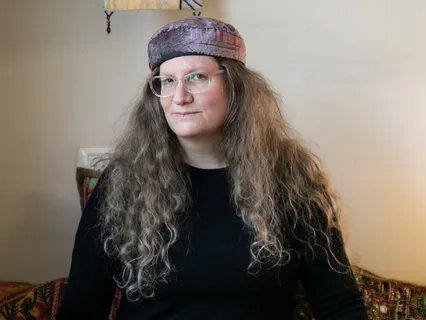
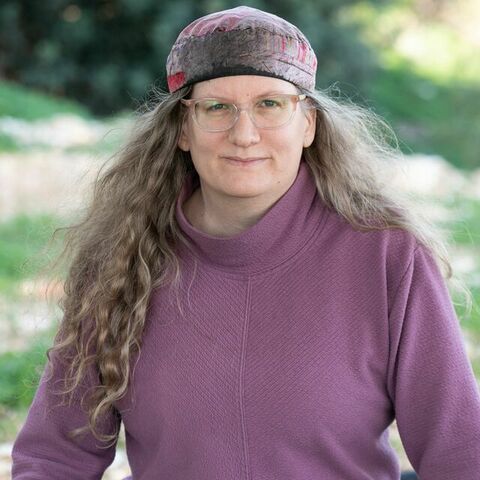
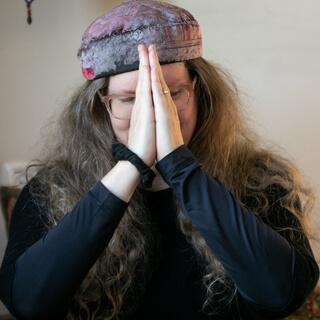
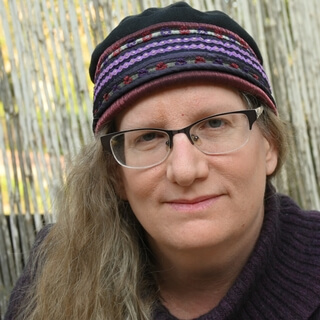
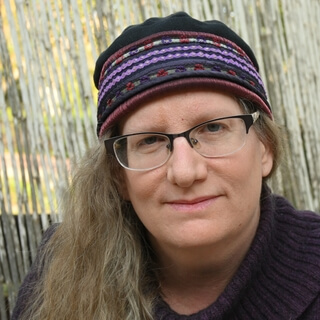
I am Rabbi Chassu Uriel Steinbauer,
The founder and director of the Institute for Holiness,
Kehilat Musar Mindfulness.
We couldn't meet on Sunday due to a stomach flu.
Rodra Tashem,
I am better.
So I'm delighted to be here with you on Monday,
February 27th at 5.
37pm Israeli time IDT.
You are welcome to join us on Zoom or live streaming on our YouTube channel.
Please subscribe,
Visit the website to gain the Zoom link and subscribe to our newsletter and website there.
And we will begin.
We always cover the Torah portion,
The Hebrew Bible weekly portion that came the Shabbat,
The Sabbath before,
Which was on February 25th,
2023.
The Hebrew date was the fourth of Adar,
The month of Adar,
5783.
And the Torah portion was Truma,
Which we translate as a gift offering,
An offering to God,
A free will offering that comes from one's heart.
So,
As usual,
We always begin with our Kavanot,
Our intention for today's session.
It's very important in spiritual practice to enter your practice with intentions,
With Kavanot,
So that we may merit fulfilling them with God's help.
So let's go ahead if you're watching on video,
Otherwise I will read these out loud for those listening on podcasts or some other audio method,
Or you simply don't have vision.
So the first is these three go together.
And why do they go together?
Because one is about one's relationship with oneself,
One is about one's relationship to others,
And one's relationship to the divine.
And in Musar mindfulness practice,
We always have this threefold relationship of really strengthening all three because if one is weak,
Then the rest are affected.
So we see this practice together when we come together once a week for Awakening Torah Musar mindfulness,
That we are doing this as a radical act of self care to learn this Torah together from our ancestors and from God.
And we also see it as doing this an act for others,
Because we're going to strengthen ourselves to be able to be of service to others.
And the final one is that we're doing this in order to strengthen our relationship with the divine.
And so what we say is,
This is something that we are doing to strengthen our own soul,
In order to be of benefits to others in the future,
And so that we can be a better conduit of God's good to others when they need us.
So may we merit this today,
As we enter Tumach.
As usual,
I will give a brief summary of the Parsha,
And then I will focus in on what we are going to cover today.
So,
In this,
God commands the people to make me a sanctuary,
Make God a sanctuary.
A Mishkan,
And God tells Moshe to collect donations,
The struma,
Of gold,
Silver,
Fabrics,
Oil,
Spices,
Wood,
Precious stones and all other materials to help build the Mishkan.
The sanctuary that is being commanded for them to build in the middle of the wilderness,
In the Mibar,
In the desert.
And Moshe receives instructions for building the different utensils of the Mishkan,
The keilim,
In Hebrew,
There's the aron,
The ark,
Which will be made of wood covered in gold.
It'll contain the luchot,
That contain the aser el ha'dibrot,
The 10 utterances,
Also known as the 10 commandments in Western culture.
On top of the aron will be two golden keruvim,
These weaned angels,
And God will speak to Moshe from between these weaned angels.
The shulcha,
The table,
Also is made of wood and gold and will hold the special loaves of bread,
Known as lechem ha'panim.
And the menorah would have seven oil lamps,
Its design was beautiful with almond blossoms,
And it'll be hammered out from a single piece of gold.
And the walls of the Mishkan are made out of 48 wooden boards held together by silver sockets and golden poles.
Very,
A lot of detail,
Right?
Harvei pratim.
A wooden mizbeak,
A wooden altar covered with copper,
Nachoshet,
Would be in the courtyard of the Mishkan.
This is where animals would be sacrificed.
So this is kind of a brief summary of what we find covering this week's parsha,
Which I also want to give you,
If I can find my Torah here.
I want to give you the chapter,
And this is obviously coming after Mishpatim,
This is our 1,
2,
3,
4,
5,
6,
7th parsha in the Book of Shemot.
This is our 18th sitting together.
We are quite blessed to say.
So Truma,
For those of you following,
And hopefully you've had a chance to study this in the preceding week and listen to it perhaps read and chanted on Shabbat,
Begins in chapter 25,
Verse 1,
And it goes all the way through chapter 31,
Verse 18.
Okay,
So what are we going to focus on today?
You might be thinking,
Okay,
Well,
There's all these beautiful details of what these gifts,
These Truma is going to be brought.
And what does this have to do with us when it seems to be something limited to what our ancestors built in the Midbar,
In the desert?
And as you know,
In our practice of Torah,
Musar,
Mindfulness,
Of using the beautiful ancient traditions of Musar in the Jewish tradition and of the Dharma of mindfulness in Theravada Buddhism,
For us to learn what we can most from God and the Torah from our ancestors,
What is it that they want us to learn and apply to our lives today and our spiritual discipline and our practice together,
In order to grow and transform into the people we're meant to be in service of the divine and others.
So what do we learn from this,
Right?
You might be thinking.
It's in one Pesuk,
To be honest with you,
It's there in the whole Parsha,
But in our Pesuk,
Where Hashem says,
Vasuli Mikdash v'shachanti betocham,
Do or make for me a Mikdash,
A sanctuary,
And I will dwell among you,
Plural,
Masculine,
Meaning everyone.
Do,
It doesn't say lo betochol,
Not make me a Mikdash,
Make me a sanctuary,
And I will dwell in the sanctuary.
This is very,
If you studied the Hebrew Bible,
You know from rabbinic tradition,
Our tradition,
That we do super close readings of the Hebrew and we learn from our ancestors,
The past 2000 years,
The Zerat Hashem,
The Parshanim,
How to do these really close readings and that we're to pay attention to this language,
That it doesn't say betochol in the Mikdash,
It says betocham,
Among you,
Among the people,
Right?
The people who are in relationship with Hashem and us today.
So make me a sanctuary,
Right?
So when God commands our ancestors to build a sanctuary,
We are receiving God's loving hand to guide our practice to make Hashem a sanctuary,
A sanctuary also within.
Building an interior world,
As we are taught by one of our master Musar teachers,
Rav Shlomo Walby,
He teaches that this project of Musar practice is building an interior world,
It's soul making,
As my dear colleague and friend,
Zach Newman,
Likes to call it,
Soul making,
Right?
It's this very mindful,
Applied mindfulness,
Applying a beauty and path of building the life within,
Right?
And so,
Yes,
We are born,
Right?
This is more than tikkun hamidot,
As some people,
Including some of my colleagues at IJS like to translate Musar or the practices,
It's so much more than tikkun hamidot of repairing our soul traits,
Our personality traits.
Yes,
We are born with the divine spark.
We all are born and created in the image and likeness of the divine,
Right?
And much of our life curriculum is to allow that divine spark to shine through.
And something more.
We are co-creators every single day with Hashem,
And part of our task,
Our practice together,
Is to refine and build upon that divine spark within.
This is our project.
So when Hashem comes and says,
Shachanti betocha,
I will dwell with you,
It comes from the root,
Shen chaf nun,
It means to dwell,
To be a neighbor.
And Hashem is saying that we as neighbors,
This model,
Right,
That when we dwell in shared community,
Right,
We share the love of life together,
Of the growth of the community,
Of the care,
The concerns,
The losses.
The neighbor becomes part of who we are.
And when we act in alignment together and this shared vision,
The shared path toward holiness,
Right,
It is as if we are one and as if we are living the soul's destiny,
Which is what the altar of Kalm,
One of our great Musar teachers and creators of the modern Musar movement,
The altar of Kalm and Rav Shimon Shkot teach us that our soul's destiny is to be a benefit to the other,
Right,
Benefit of the other,
To bear the burden with the other.
We are to be with the other,
Dwelling together,
Right.
And so there's something quite beautiful here.
Even one of our parshanim,
Zadakh Laderach,
He notes that from this pasuk,
Asu li mikdash v'shachanti betocham,
That the betocha means Hashem rests as a neighbor,
That we are to be a sanctuary to welcome Hashem into our hearts,
And that every day we are given another day to turn to our shachein,
Our neighbor,
Both God and neighbor,
And benefit them,
To bear the burden with them.
This is the path of Musar mindfulness.
This is building a sanctuary for God.
This is building an interior world.
This is our soul's destiny,
The path toward holiness.
Our inner sanctuary and this building of that,
This refining of the midot,
This building an interior world,
Even more than just repairing soul traits,
Is to serve all beings,
All sentient beings.
And therefore,
Just like the sanctuary of our ancestors in the desert was constructed through the true mot,
Through the generosity of all,
Everyone brought a free will love offering.
Their hearts stirred them and they gave,
They became neighbors,
Shachinim.
They started to build this interior world together in addition to the physical mishkan,
The sanctuary.
We too,
We practice in a community,
In a vad,
A musar vad,
In the sangha as we sit in mindfulness meditation together.
We do this out of generosity of spirit and practice,
Right,
For the benefit of our community,
Our locality,
Our people,
Our nation,
The world,
All sentient beings moving out from concentric circles of obligation,
Taking care of what we can as much as possible.
This is the gift that we've been given.
This is the soul's destiny.
This is what it means when Hashem says to us in the Torah,
Make me a sanctuary.
It's ongoing.
This is our task together.
We do this by taking refuge in community and strengthening each other,
Supporting each other,
So that we can build this internal world,
We can build the sanctuary together.
Now,
Come join me in mindfulness meditation to practice toward holiness.
I invite you to your sitting posture that is right for you out of the four mindfulness meditation postures.
We,
You can have it be seated in the chair,
Or on a meditation cushion.
You can be standing like in a mountain pose,
Something strong,
Where you feel held and solid,
You might even want to hold on to a chair or something by you so that you feel supported.
You can lie down.
If you have vision,
I invite you to keep your eyes open so that you don't fall asleep during the practice,
Or you're also welcome to do a walking meditation,
You're not walking to anywhere,
You're just practicing walking back and forth.
I'm going to be in my chair seated.
I ask you to firmly plant your feet on the ground,
So that you are held by the earth,
Just in case,
God forbid you have any trauma in your background or in the present,
That this will ground you more you'll feel the earth you'll feel that you're here in case you get lost and thought in storytelling.
In case you get lost and memory body sensations of the trauma,
You're welcome to open your eyes and look around to bring yourself back to the present moment with me for the rest of us.
I encourage you to close your eyes,
If you feel safe and comfortable,
You are welcome to just lower your gaze,
And we always begin with three deep cleansing breath,
So inhalation here we go,
Beginning to arrive,
And let all that exhalation out the gift of oxygen,
Letting the shoulders lower as you do so.
Exhalation,
Letting it all out,
Even a smile on your face if it feels natural to you.
It feels so good to be alive and sitting here together.
In this moment,
Here together,
Allowing yourself to really arrive grateful for this moment,
Allow your breath to settle to its own natural rhythm,
No need to control the breath.
Allow yourself to witness whatever arises and sitting with it,
Asking if we can be with this,
Knowing that whatever arises is not us,
It arises,
It has a certain shelf life,
And it passes that there is an impermanence to life,
Like our breath,
Our thoughts,
Our emotions,
And even the sensations in the body,
Come and go.
So even at our most trying moment when we think we're not going to get through something,
We know and trust that this too shall pass,
Just like we know when our greatest joy,
Not to be,
We may notice the desire to try to attach and control and hold on to,
And we meet that with kindness,
We meet that with loving compassion,
Self compassion and compassion for others,
And we smile we come to the present moments,
Knowing that this is here.
This is life right here,
Right now,
And no other place to be this to this moment,
Simply begin again.
If you're noticing that you're having monkey mind today and the thoughts are jumping all over the place.
Just notice,
See if you can witness it from an inner distance,
This capacity to build an inner life and inner sanctuary is resourcing is building the skills within to be able to pivot in our spiritual discipline,
And in life,
Even if we are restless or in pain,
Or having a hard time being here right now in this moment,
We can witness.
We can sit and be with us together.
The soul destiny,
The potential of the path on the shared path together is one in which we reflect to our shaheen,
Our neighbor,
Our best intentions,
And we begin with words,
Intentions of meta of loving kindness for the other,
You may quietly repeat what I share with you.
May you be filled with loving kindness,
Maybe you safe from inner and outer dangers.
May you be well and body and mind,
Maybe at ease,
Full of joy,
Maybe kind to yourself,
You accept yourself justice you are.
Right now we turn these intentions into cover notes into a plan for action for deed,
Or we will build the foundation of benefiting the other of bearing the burden with the other,
And you may repeat after me.
May I do acts that fill you with loving kindness.
May my deeds reflect chesed and loving kindness.
May we build a sanctuary,
A neighborhood,
And our internal world,
One with acts of loving kindness.
May my deeds make you feel safe from inner and outer harm and danger.
May we work together with acts that build safety for our sanctuary and neighborhood to be free from inner and outer dangers.
May my deeds help you feel well and body and mind.
May our shared deeds,
Make our sanctuary and those who dwell in our neighborhood,
And all sentient beings feel well and body and mind and spirit.
May our shared deeds,
Help you feel at ease and full of joy.
May our shared deeds and our shared sanctuary and neighborhood,
Help one another feel at ease and full of joy.
May our shared deeds of bearing the burden with each other,
Reflect kindness and compassion to each other.
May our shared responsibility and deeds reflect that we are accepting each other just as we are,
Knowing that we will face each other with Rahami,
With compassion,
Knowing that we are all the different places on this path.
May we face each other with the intention and potential of our souls nature,
Rather than simply on our present deeds in the present moment,
Or how we've behaved in the past.
May there is no shakhi neighbor,
That I will work towards your safety and the causes of safety,
That our shared paths will be of one of liberation,
Deep responsibility and justice and compassion.
I will spend the next five minutes in silence and I will ring the bell.
When it is time to come out of our meditation.
If your eyes were closed,
Gently and slowly open them again.
Allow the light to enter,
Without too much shock to the system,
Especially as we face each other if you are watching on video,
The shared sacred zoom space together.
Thank you for your practice for joining today,
Us here at the Institute for Holiness,
Kichilat Mussar Mindfulness.
I'm Rabbi Chassi Oriel Steinbauer,
Director and founder of the Institute,
Teacher at Insight Timer where you may be listening to this,
In addition to our podcast on YouTube,
And the website of Kichilat Mussar.
Today's sitting is sponsored by the Steinbauer family,
And a loving memory of my Abba,
My father,
Sarieh Frederick William Steinbauer.
And was an embodiment of this building a sanctuary,
A neighborhood of deep responsibility,
Every day of his life,
As he dedicated himself to the honor and the sustenance of his family,
Both his parents and his sister,
Whom he took care of,
In addition to his family by marriage,
With his four children and grandchildren.
Daily he sustains everyone,
Visiting,
Bringing them over,
Sharing meals,
Sharing even home together and space,
Always making sure to meet the obligations and needs of everyone in the family.
He was a model for everyone of Iraq,
That stability that you knew that you could count on him,
And he modeled the importance of taking care of one's needs at home first,
Making sure they're met,
And then moving out to neighbor,
Then into larger community,
Into the shared city or village or kibbutz,
Into the larger state.
And today,
We're grateful for the sponsorship and honor of his memory.
May his memory continue to be a blessing for everyone.
So,
We thank you for your donations to continue to support the ability to offer this public offering once a week to everyone,
And for awakening Torah Musa mindfulness.
We accept your truma,
Your Dana,
Your sedaka,
Your donations to support the Institute and this offering.
You may find everything you need at the website.
Thank you again for today's practice.
B'ezrat Hashem,
I will see you or you will hear from me next Sunday at our usual time,
Which is 1230 Eastern Standard Time,
And we will jump into next week's Parsha,
Which is Tetzaveh.
So,
You are to be studying Tetzaveh all this week,
Reading it,
So that you have that background knowledge,
And God willing,
You're able to participate in some community where you'll hear the Torah reading on Shabbat morning,
The Saturday morning,
Whether it's in person or online or on Zoom.
And then we will join together on Sunday to come together to apply the Musa mindfulness to it together.
Our week's practice and actually our lifelong practice is to not go one day without being of benefit to someone else,
To carrying the burden with them,
Whether that means smiling at someone that you normally ignore,
Writing a card or a note to someone,
Making that phone call,
Going over to the neighbors and giving them eggs.
I have a beloved shachain,
A beloved neighbor who brings me eggs all the time.
Be a giver and a receiver.
This is our task.
Thank you again.
I look forward to seeing you and practicing and learning with you on Sunday.
Take care.