Welcome.
Welcome to awakening Torah,
Musa,
Mindfulness,
Allow yourselves to settle and arrive we will begin in one minute.
Welcome.
Welcome to awakening Torah,
Musa,
Mindfulness.
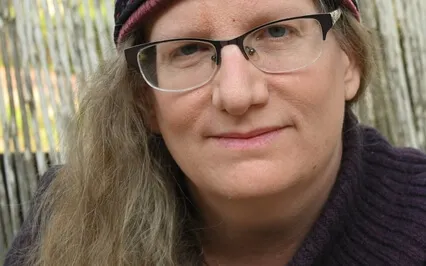
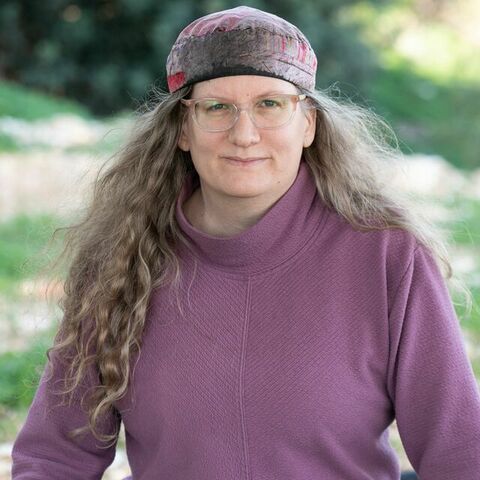
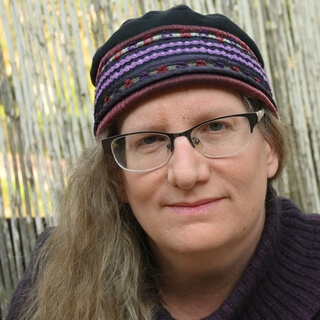
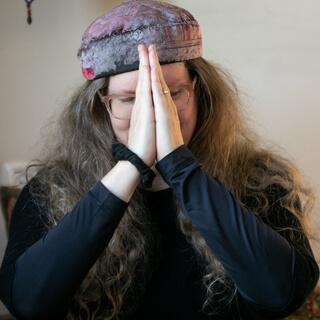
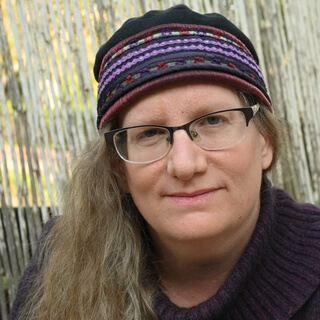
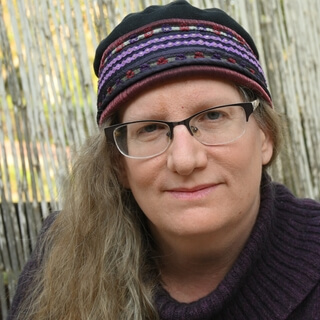
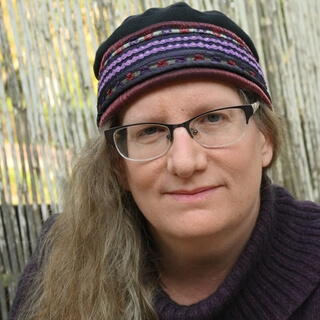
I am Rabbi Hasia Oriel Steinbauer founder and director of the Institute for holiness Kehilat Musa.
You are joining us live on zoom and live streaming on Facebook,
YouTube channel,
LinkedIn and Twitter welcome on Sundays at 3pm Eastern Standard Time here in Israel at 10pm.
Welcome to all of you from all over the world who are joining us.
I'm delighted.
Today is a Sunday,
The 15th of March the 14th of ER.
We are in the middle of counting the Omer which I will touch upon in a bit.
We will begin with our kavanah our intention for today's talk and practice together our seated mindfulness meditation practice after we dive into the Torah portion together and encounter it.
I'm going to share screen for those of you on video.
For those of you are here on auto audio,
You will hear me read this.
We start with the first two covenant.
The first one and the last one.
And if you're joining us I just ask that you self until we have a chance to have some comments and questions and answers at the end of the session.
So we begin with number one,
Before doing acts of caring for the self,
Which we see this practice together on Sundays as self care.
This is something that we are doing to strengthen our own souls in order to be a benefit to others in the future.
And our last kavanah is down at the bottom,
Because we see this as doing an act to strengthen our relationship with the divine however we define that.
So that we say this is something that we are doing to strengthen our relationship with the Creator,
So that we can be in a better conduit of God's good to others when they need us.
And may it be so.
So,
That is our wish and our intention for today's session.
As we move in.
So,
As I had taught a couple sessions ago,
After Passover,
There was a slight shift in what Torah portion we were covering.
So here,
Because Israel only cover seven days of the Passover holiday versus nine outside of Israel,
Who when we are observing the Torah portion has shifted a tiny bit.
So for us here in Israel,
Last Shabbat,
We had covered the parasha of Bahar.
And for those of you outside of Israel,
You will be covering it this coming Sabbath.
So,
Either way,
You will be able to delve in and encounter this and apply it as practice as much as possible.
So we're back at the mountain.
And that's what it means when we say Bahar,
It's in the first in the first pursuit,
The first verse.
And what we are facing here are principles of land tenor.
And in particular chapter 25 of Vaikra of Leviticus is essentially a code practice on the subject of land tenor in ancient Israel.
And it's really a code practice among our ancestors that is actually put this is the only laws preserved in the whole Torah.
It is a unique collection of laws and commandments that governs the rights of landowners and the legalities,
Essentially,
And the selling of the land.
And what is important about it is that we're going to touch upon is essentially whose land is this really?
What does it mean?
What does it signify?
What we are we're going to share and learn together?
And what does it mean for us today?
One of the tricky things is that in this system embodied in chapter 25 is a maximum of 50 years known as the Yovel can be the only length of time where someone cannot own land.
So let me explain,
Let me delve in and what that means.
So first in this parasha we learn the earth belongs to God,
And particularly the land of Israel.
And you might buy land you think you're buying land you're really more of a tenant to God's land.
And so you're never fully your property in the store portion.
And the idea is expressed in a few different needs for a few different commandments.
The first is this idea of Shmita,
Which essentially means release.
So every seven years,
There is a Shmita here,
A year where we release the land from the work that we expect of it and that we do on it.
And essentially that crops become public property and there's no more work on the land.
So anyone can come and eat.
That's the first set of laws.
And that's this idea of the Yovel.
And it is the 50th year when the rules of the Shmita continue to apply,
As they do in the 49th year.
And as they do.
Someone's joining us,
As they do apply that the land gets returned to its original owner,
And a person who was having for instance financial money trouble might have had to sell their home or farm.
And during the Yovel they actually get it back.
So those are the some concepts that we have to keep in mind so one doesn't have to wait for the Yovel.
So if their family if their clan essentially their relatives should help them buy back the land as soon as possible that is in this tour portion.
And it's in a process called Gula,
Which is Gimel Alef Lamed,
Which means redemption.
We're helping redeem that person we're helping redeem the land,
So that they can become a tenant to God's land again.
So,
Who have the person who bought and sees their land must be prepared to sell it back for a fair price.
Why is this happening right what's going on here,
What do we have to say about this so essentially that relief is always coming in these set of laws relief for the land relief for people that may have had to give up or sell their land during rough times they might not have had enough seed or it was a famine or who knows what was going on,
That someone would essentially in some ways have to become indentured.
And so what's happening here that it was expected that by rendering these kind of land transaction as conditional that it limited the duration and by guaranteeing the right of retrieval by the original tenants or owners as we want to call them.
The debilitating process of disenfranchisement essentially could be stemmed.
Having basically our ancestors from 2500 years ago where we think the Leviticus over a long period of time was written during the Persian period,
Coming to an awareness that we don't want to have land,
Only in the hands of a few families for perpetual ownership,
In the hands of creating a society that we don't want to live in that doesn't reflect how they see being created in the likeness and the image of God.
So this is what we're witnessing here.
Wonderful ideas wonderful theories we always can look at the history of how much scholars think this was actually practice.
But that's what we're going to start with.
And I'm going to pursue this,
What I'm going to focus on from this partial by saying that,
And when the land was actually sold essentially.
In the first place,
Everyone knew that it would be returned after a certain amount of time that was just because of these laws that was the underlying assumption in the transaction.
They understood that it was more of a rental as I said like tenancy,
Like you were a tenant almost to God's land,
And the price reflected that.
And then the Yov-El ensures that no family accumulates land for too long.
It gives everyone a chance to stay on equal footing,
Even if it takes 50 years.
And the land is actually God's as I mentioned earlier the Yov-El reminds us that we never really own what we think is ours,
Particularly the land.
And so,
I will close with one statement some beautiful thought that Nahama Lebowitz actually brings.
One of my favorite Torah teachers,
Her students actually created a new studies and vyikra and Leviticus there's a whole set of fees for each book.
And she actually brings an interesting source you don't often find this.
She brings a,
An American economist at Mark Do you mind if you hold off comments and questions towards the end.
Thank you.
I appreciate it.
And so,
Henry George is his name and his years are 1839 to 1897.
And he has a book called Moses the Lawgiver.
So I just want to pause with the title before I share what he has to say.
Because if you recall my teaching starting with Bereshit with Genesis and then moving into Shemot Exodus.
I showed how we started off with this kind of vigilante justice,
Where people had a concept of fearing God and that was a,
The language of,
I fear God meant I have a moral compass,
I know right from wrong,
And I'm going to behave as such.
So for instance we see this with the midwives in Egypt who refuse to murder the Hebrew babies they say they fear God.
And that shows that they're not going to engage in that behavior.
So,
You have this like individual sense of justice but no overarching rule of law.
And what happens with leaving Exodus and entering Vayikra,
You suddenly have a community,
And you have rule of law coming,
Coming through Moshe,
Someone who himself was a vigilante and his justice how he treated the Egyptian who was beating the Hebrew slave.
And then later on,
How he even treated his own brethren with the golden calf,
Calling for the murder of 3000 of them.
So this is someone who has this impulse for for justice,
But needs to be contained by a rule of law and so he's given this to in order to teach the people to but it's as much to contain Moshe I think and to train him as it is the people.
And so here comes this wonderful American economist who in his book,
Moses the lawgiver Moses learning to be the lawgiver and live by the law.
He says he found in the yo veil law,
A challenge of the perennial cause of social oppression,
Inherit in the absolute possession of land by only a few.
And so according to George the economist that the Torah as a code of law,
Aimed at ensuring justice,
Equity and happiness for those who follow it now that's the key.
It's sought to avoid the concentration of land the sources of life,
Wealth and power and the hands of the few.
And that would reduce poverty and the domination of man by man,
And quote.
So,
I'm going to tie this today to two things that are happening along with our portion today still in the West,
In the United States and Canada and everyone over in that area of the world.
It is still what we call pay socks shiny.
The second place.
And just to let you know what is that second piece of what's going on here.
So in the Torah.
It's the case of a group of Israelites who are carrying up.
Yo subs body from Egypt.
And by carrying his body up,
They become what's called Tommy,
Which is impure from being in contact with a dead body.
So they are told that they can't well they know they can't participate in the first Passover offering because you can't go and have and give the offering when you are in pure,
And they feel extremely excluded by this so much so they even say and bummy bar in numbers chapter nine per soup seven,
That they were feeling hurt that they were not in the midst of the Jewish people.
And it's very profound.
So first of all,
You have a group of people who are mindful enough to be aware of how they're feeling about being excluded from the major festival.
The first that the Jewish people are really going to keep and do coming out of Egypt,
And they advocate they self advocate.
They go to Moshe,
They say this is not fair,
He obviously talks to God and God says there's going to be a second Passover,
A month from now and they will be able to partake in the past the Pascal am offering essentially,
They will somehow go through a purification process.
So,
Lots of people like to call this holiday a holiday of second chances.
It's of value.
But as my beloved colleague and friend Rabbi me her burger says this original group that movie motivated Hashem giving the holiday didn't actually mess up,
Meaning they didn't mess up anything that they needed a second chance.
They were carrying in because they were in the middle of a different needs for different commandment.
They were carrying a body in order to bury it,
Which is huge mates,
Huge commandment.
So,
They say that really it made them hurt,
Like as I said earlier that they didn't feel like they were in the midst of the Jewish people that they were being excluded.
And for good reasons,
Even when you're being excluded for good reason it hurts.
So pay section me is there for a day for remembering to look around when doing a meets for a commandment and see who else wants to join in see who else is being excluded.
Even if accommodations are needed.
It's a holiday of inclusion.
It's a holiday of self advocacy of people being brave really being balanced in their me dot is they approach.
So I want to bring this in for our teaching into our meditation today.
So I'm going to tie it also to where we are in the old mayor.
So for those of you who don't know what the old mayor is briefly it's this custom of counting each day between the holidays of Passover and shovel the festival of weeks,
And it says biblical origin.
So,
Basically over time these weeks the seven weeks,
Talking about the Schmitan the oval beam seven.
These seven weeks essentially carry a certain spiritual quality of what we today call a me that soul traits.
And it's a way that one can be very awake to the good around them the transcendence and their lives and express it in this beautiful way of being mindful each day.
So this week.
So here in Israel we've already moved into the 30th day.
For those of you in the West,
You're still in the 29th.
And in this week is considered in this fear roads in the kabbalistic tradition of code of splendor,
But more in the moose our tradition and here at our Institute.
And I see a time to the media of gratitude of hold that yeah,
And particular hakara to this recognizing the good.
That's part of the splendor of life,
And it has this relationship to that.
So when we move into our meditation.
You should begin to find yourself where you need to be in your seated position as I begin to speak slowly now,
And it can be standing.
You can push in whatever works for you,
But go ahead and begin to adjust and settle and arrive.
But as we move into this meditation.
I really want you to think,
Where can I be more at ease in the present moment.
Where can I soften my willful efforts.
Where can I soften in such a way to be awake to the good around me to what is here.
And basically,
Even where can we lean in,
Even to the unpleasant This is the practice this week,
Where whatever comes up for us can we meet it with love.
And we meet it with really balanced self advocacy that we learned from our ancestors in the pace actually me story in the second Passover story.
So where there's pain.
We offer compassion even to ourselves,
Where there's fear we offer tenderness,
Where there's resistance,
We especially offer patients.
So,
Please come to whatever upright means to you,
It can be an internal uprightness,
Not always can everyone sit.
Allow yourself to begin to settle and arrive.
Shut your eyes if you feel safe.
Lower your hands on your thighs or into your lap.
Breathe deep cleansing breaths.
It's such a gift to be able to receive the breath.
Notice your shoulders begin to relax with each breath and breath,
The gift,
The free will offering to us your breath gratitude to the divine that we are here to serve.
Allow your breath to begin to just relax and go at its own pace,
No need for you to control it.
Begin to notice what is here for you right now,
Right here in this moment.
Any thoughts from the past pulling your attention away from my voice or from your breath as an anchor,
Or perhaps the sounds around you.
Maybe you're planning for something in the future.
There's no need to push the thoughts away or to attach to them to identify with them.
To simply note them,
Even honor them.
You can say a mental noting I will visit you later.
For some of us it might be strong sensations in the body.
Whether it's difficulty breathing or tense or soreness,
Or maybe even excitement in the belly.
Simply notice recognize and allow it.
Bring your attention back to the present moment.
For others of us we may be surprised by strong emotions that are rising right now.
The desire to speak,
Struggling with being here and now.
We can lean in and let go be here with whatever arises.
We as Jews begin each day with a chance with a prayer of gratitude,
Where we say,
Monda Ani or Monda Ani,
Thanking God for returning our soul.
We Buddhists also begin each day with a chant of gratitude for the blessings of life.
Ancient traditions begin with some form of mourning gratitude.
Some even prayers of gratitude for the suffering that one has been given.
They might learn from the suffering that they might awaken to the deepest possible compassion and wisdom.
Our practice of most our mindfulness and this aim of our spiritual life is to awaken a joyful freedom.
Benevolent and compassionate heart.
In spite of everything.
This gratitude,
This hoda ya,
This haka ratatov is a gracious acknowledgement of all that sustains us.
The great and the small.
The appreciation for what sustains our life day in and day out.
Gratitude is actually confidence and a blessing in life itself.
It gladdens the heart.
As gratitude grows through practice,
It gives rise to joy.
We experience the courage to rejoice.
Rejoice in the good fortune of ourselves and others rejoice.
Even in the midst of so much pain.
We learn not to be afraid of pleasure.
We do not mistakenly believe that it is disloyal to the suffering of the world to honor the happiness that we are awake to in the present moment.
We know through our practice that we can carry both.
As our practice grows in this week of gratitude practice and the joy grows we finally discover a joy without cause.
Allow yourself to sit quietly and at ease.
Allow your body to be relaxed and open.
Your breath natural your heart at ease.
Begin this practice of gratitude by feeling how year after year,
You have cared for your own life.
God has carried you and carried your ancestors who also carried you.
Carried the land aware of its need for rest.
For all sentiment readings.
At its pinnacle at its best.
The laws of land and year the Schmita the yovel embrace a concept of community of connection that you will be cared for and held.
Allow yourself to begin to acknowledge all that has supported you with gratitude I remember the people,
The animals,
The plants,
The insects,
The creatures of the sky and the sea.
Air and water,
Fire and earth.
All whose joyful exertion blesses my life every day.
With gratitude I remember the care and labor,
The thousand generations of elders and ancestors who came before me.
Allow yourself to say I offer my gratitude for the safety and well being I have been given now for gratitude for the blessings of this earth that I have been given now for gratitude for the measure of health that I have been given now for gratitude for the family and friends that I have been given now for gratitude for the community that I have been given now for gratitude for the teachings and lessons I have been given now for gratitude for the life I have been given just as we are grateful for our blessings,
We can be grateful for the blessings of others.
Continue to breathe gently and remind someone you care about,
Someone it is easy to rejoice for.
Picture them in all their glory.
Feel the natural joy that you have for their well being,
For their happiness,
For their success.
Each breath,
Offer them your grateful heartfelt wishes.
May you be joyful.
Your gratitude increase.
May you not be separated from great joy.
May your good fortune and the causes of your joy increase.
Fence the sympathetic joy and care in each of your phrases.
When you feel some degree of gratitude for the joy of this loved one,
Extend this practice to another person you care about.
Recite the same simple phrases that express your heart's intention.
Splendor is something shared in connection and in community,
Shines out from our souls and something meant to be shared with others.
It's almost as if you can't contain it.
May you be joyful.
May your gratitude increase.
May your good fortune and cause for your joy increase.
In our last five minutes as we move into silent meditation,
Gradually open your meditation to include neutral people,
Difficult people.
And feel you can extend this gratitude and joy to all beings everywhere,
Near and far.
And we will be able to open our eyes to the bell when we are to come out of our guided mindfulness meditation.
Thank you.
You're welcome.
You're welcome.
You're welcome.
You're welcome.
You're welcome.
And from time to time your thoughts may wonder.
And that is just the practice.
You simply begin again.
You can open yourself to whatever your anchor is here in the present moment.
You can open yourself to whatever your anchor is here in the present moment.
You can open yourself to whatever your anchor is here in the present moment.
You can open yourself to whatever your anchor is here in the present moment.
And you are ready,
Joining us in this sacred circle on Zoom and from all over the world as we take our kavanaut,
Our intentions for today to be mindful of who is being excluded and even when we are doing these fold or good deeds or acts in the world to try to include as much as possible and to be aware of who is being excluded from equitable housing or housing at all.
How can we take these ancient traditions and practices to try to have a just society and care for the other.
And I'm so grateful that you've joined us today we're going to open to Mark here I know wants to say something,
Please tell us your name is for those who are listening and watching you can come off mute if you want to contribute,
Or you can stay on mute or even hidden video it's fine all is welcome here.
Just so you can say your name and where you're coming from.
Yeah,
I'm Mark Schneider I'm from panorama city,
California on the west coast near Los Angeles,
In the San Fernando Valley.
And so my question is,
We're talking about.
After seven years the land goes back to the people and we have all these old contract agreements.
Are they being followed today in Israel.
And if not,
Why not.
And the other question I would have is,
What,
What are we gaining by going over this kind of material is,
Is it to give us a sense of our identity as,
As Jews.
And so we go over the Torah and we read about it.
So we get to know who we are in the present because of who we.
And so those are some of the questions that came up to me.
I appreciate anything you have to add to that.
I'm so grateful for your questions and I love what I valued about the first time you joined is just your honesty and your,
You know,
You come at it with what you need to address,
And I'm very grateful for that.
And I encourage that for anyone who is practicing engaging so the first thing,
The concept of yoga,
The yoga,
And where ownership returns to the original owner that does not exist in Israel,
I don't think that's existed for probably over 2000 years and people were actually unfortunately kidnapped and enslaved and taken out by the Romans,
So.
The Shemitah year though is practice this idea of that you let the land lay file file like let it rest every seven years and that you are not to benefit from it and you a the land can be then consider public property and people can eat off of it that exists.
And but of course in the modern economy of capitalism in which Israel participates as part of the whole world order there are all sorts of laws and loopholes in it because we're now dealing with what we call big agricultural businesses we're not dealing with just small individual farmers.
So,
Some of the loopholes are for instance that the farmer will be sold to a non Jew,
So that that farm can continue producing.
The problem with that is among several things is that the land doesn't get to rest and any modern farmer will tell you today that there's actually value to the land resting so much so that really smart farming today will have part of the field that does lie follow that doesn't get farmed and they'll turn it over and switch.
And then,
You know,
Year by year.
So,
It's mostly where there's high irrigation because apparently there's too much salt in the ground and then actually can really cause the output of the product that's being grown to not produce as much so there's actually some sound practice and knowledge behind this.
And so I hope that answers your question about Israel.
And the,
The second question I think is very important.
And I don't think there's one answer to it.
So all I can say is why it's meaningful to me and why I do it and I would even put it back to you mark and say,
Why are you here.
Why are you studying it with me and encountering it,
And you'll have to answer whether you want to answer that out loud that's fine it's up to you but like each of us have to work through of like why are we engaging in this ancient texts and this tradition.
And that probably changes and probably should over one's lifetime,
I don't think it should be the same answer.
I think it should be the same question and day out in year after year.
I can only answer for me,
I'm standing on one foot that this text the Torah is beloved to me.
Some of it is not rational meaning I can't give you a scientific explanation why it's just in my heart,
It's in my tradition it's in my family.
I study it daily.
I'm leaning into the struggles.
And I gained so much from it and I learned something new each year and each partial and like as I go around and so it's part of my people it's part of who I am.
And,
Like any ancient tradition like for instance I also study,
Some of the ancient Buddhist texts for my practice of mindfulness,
And that has issues and issues with history also like any ancient traditions going to have difficult text things that might not apply today,
Or shouldn't.
And there's there's still something there for me of value and something to engage in it's about,
It's really,
To be honest with you that kind of threefold community,
Being with other practitioners teachers,
And you know my engagement with God,
So I hope that addresses your question but I don't think it's going to satisfy it because as I said it's so particular.
Are you looking for a particular response.
It sort of applies to something that happened,
You know,
A long time ago.
The world has changed from there to now.
And so for me,
I look at it,
Because it's still human beings interacting with human beings,
And that never changes.
It doesn't matter if it was a million years ago,
We're people and we act the same then and now.
So it all it gives me,
In a sense,
An insight of how how people have lived and dealt with the same situations that I have today in frame in,
Of course,
In modern times,
And they're framed in differently.
So it you know the jealousy.
It,
But to start to tour out with a brother killing a brother at that it's horrific.
I mean,
What.
I mean why do you starting out with something like that but that should have been cleansed from the Bible long time ago.
They shouldn't have let that,
I mean put that in as an example of brotherly love or,
You know,
And and loving kindness and all that stuff so that there's things about it that are in there and remain in there.
And so it makes you realize what,
Why was that so important to put that in at the very beginning,
And,
And keep it there.
And,
And then also the other thing is the tree of good and evil.
I mean,
Hey,
You don't need evil.
You just have a tree of good.
There's only good in the world there is no evil,
It doesn't exist the word doesn't exist.
It never happened.
It never will happen.
So why did God want evil.
Okay,
That's another one.
And so,
And all of it is.
I don't know I had.
Hey,
It's all God.
I mean I'm God,
Your God,
Everything's God,
It's,
It's a Spinoza version of God,
God is all the laws and all the physics and all the matter and everything in the universe.
And that's my belief in God,
That God is totality is all.
And so,
And so I'm,
I'm sort of a scientist.
And so I have to see some evidence of things.
And it's also a kind of a book of knowledge of teachings.
It goes back to all kinds of other civilizations maybe some of the hana Rabi isn't mixed in with it and other civil,
You know,
We get.
We're part of everything.
So I find that very interesting,
Because it gives me a connection in the present to things that went on in the past,
And I have an identity now,
Now my identity is not just here and you know 2022.
You know my identity is,
It goes back it's expanded it goes all kinds of civilizations all kinds of ages.
You know I'm a universal person in a sense that I always have been,
And I guess I always will be.
And I want to know who I am now.
Who I will be in the future.
So,
Yeah,
That's a quick,
That's a quick the without writing a book.
Yeah,
I'm on one foot it's beautiful it's a beautiful response.
Yeah.
And I,
I look forward to even hearing more from you as we continue and like even hear that response a year from now I'm sure it'll be a little bit different but.
Thank you for sharing very grateful and thank you for your practice today for all of you joining on live streaming,
And we welcome your donations of any amounts or a sponsorships from week to week just be in touch with us.
Please subscribe at Kehilat Musar.
Com,
Consider joining us as a member of the community for $18 a month,
And be in touch with what you would like from the Institute,
And how you would like to participate it's all there on the offerings page,
And I wish you a blessed week of gratitude practice and splendor,
And I look forward to learning and practicing with you next week.
Thank you,
Mark,
And thank you for the other participant who had to leave early.
Take care.
Have a great week.
Rabbi to know that.
Thank you.
Great,
Wonderful.
Thank you.
Okay,
Nice meeting you.
I'm glad to be Sunday.