Shalom,
Welcome,
Welcome to Awakening Torah,
Musar Mindfulness.
We here at the Institute for Holiness,
Kehillat Musar Mindfulness,
The community that practitioners practicing Musar Mindfulness from the Jewish tradition and the Dharma of Mindfulness from Theravada Buddhism of Insight Vipassana,
Where we really learn the wisdom from two ancient traditions from our ancestors to really delve in to look at the weekly Torah portion of the Hebrew Bible and the Jewish tradition to learn from our ancestors and from what God what what they wanted from us,
How to be our best version of ourselves,
To know our curriculum,
To know how to make the best choices in life,
Right,
To resource to be able to respond wisely on this path towards holiness.
So welcome.
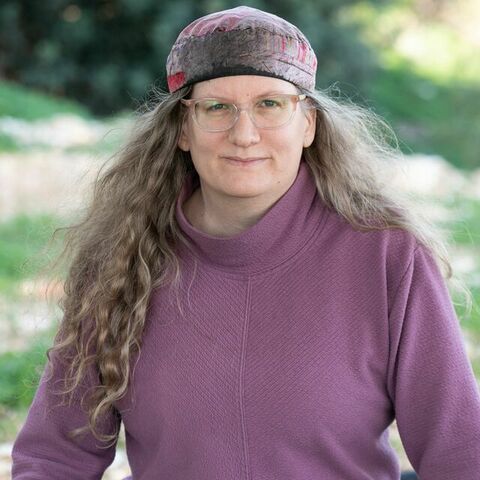
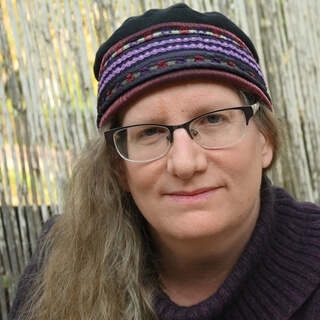
I am Rabbi Hasio Oriel Steinbauer,
The founder and director of the Institute.
You are here with us on Sunday,
July 2,
2023,
Which on the Hebrew calendar is the 13th of Tammuz,
The Hebrew month of Tammuz,
5783 is the Hebrew year.
So what are we looking at?
We're looking at the Torah portion that happened yesterday on Shabbat on the Jewish Sabbath on the 12th of Tammuz,
Which was the first of July.
And we looked at the Torah portion called Balak.
Now Balak is in the Book of Numbers,
Also known in Hebrew as Bamibar,
Which is in the wilderness.
And for you in the diaspora,
You were having a double portion of the parasha that came before,
Which is Chukat Balak.
So you had Chukat and then you had Balak.
And now Israel and the diaspora,
Meaning outside of Israel,
Are caught up to the same weekly Torah portion.
So this following Shabbat,
As we start learning this week and learning more,
We will delve into Pinchas.
And Pinchas we will read from the Torah this coming Shabbat.
And when we meet on Sunday together,
We will look at Pinchas together and be back on the same page.
So what do we do here?
First we delve into our Kavanaugh,
Our intention for today's session.
Before we begin our practice,
So I'm just going to share screen with you,
For those of you watching by video.
And for those of you who are listening by audio on our podcast,
You will hear me read these.
Now we share the same Kavanaugh every week for us to really merit the fulfillment of their intention.
So we receive this act of coming together for this about 45 minutes every Sunday,
B'srat Hashem,
God willing,
As an act of radical self-care.
That we are taking this time for us to learn and practice Musa,
Our mindfulness together.
And that we're doing this to strengthen our own souls in order to be of benefit to others in the future.
So that is our first intention,
Our first Kavanaugh.
The second is that we're doing this for others.
And we say we're doing this to strengthen our relationship to others so that we can be a better conduit of God's good to others when they need us.
And the final Kavanaugh,
The final intention is our relationship with God,
To strengthen our relationship with the divine.
We say that we're doing this to strengthen the relationship in order to be a better conduit of God's good to others when they need us.
That we refine ourselves to be that vessel to care for others.
So those are our Kavanaugh for today and every week.
May we merit fulfilling them.
And right now,
Just take a minute to even pause and think to yourself who in your life is in need of either extra love and care or your prayers,
Someone to hold.
And that we may bring them into this shared merit that we bring God's good to them.
Quejen yehi razon,
May it be so.
May it be so.
Okay,
So let's move through the regular program that we always do,
Which is we do a summary of this Parsha.
For those of you who haven't had a chance to delve in and know what we're kind of addressing.
Then we'll really hone in on what we can share this week.
So I'm going to go ahead and do that with you now.
So in this Parsha,
In Balak,
Balak is the king of Moab.
There is other ancient Near Eastern kingdoms in the land of Canaan,
Which would be the future land of Israel.
And one of those kingdoms is known as Moab,
The Moabites in English.
And so Balak is this king and he seems to have like a bit of a federation of Midianites that seem to be kind of tribal kingdoms,
Trying to kingships that are kind of under his rulership.
And he,
Dislikes is not the best word.
He is threatened by Bnei Israel,
By the children of Israel.
He basically witnesses them in the desert at the edge of the border,
Heading into the land of Canaan and he is threatened.
And we'll talk about why is that?
What is it that actually he sees versus what is the narrative and the storytelling that goes on?
Okay.
So he,
In reactivity to this,
To the narrative that he tells in addition to the actual experience of seeing Bnei Israel,
He sends messengers to someone named Bil'am.
And Bil'am is known as,
I guess the best way to say is that he is known as someone in deviation,
Perhaps a sorcerer,
And even it gets acknowledged or even debated if he's a prophet of some sort,
Right?
He sends for Bil'am and the key thing that you need to realize all this,
This whole Torah portion really is about non-Jews.
It's about non-Jews behavior towards and reactivity towards the children of Israel being at the edge of the border of Canaan.
And so Bil'am is known for cursing people.
He gets fired by people in the land to curse people and Balak decides to pay for him to curse the children of Israel.
So God actually is in relationship with Bil'am and speaks to him through dream and says,
No,
You are not going to curse the children of Israel.
But Bil'am tries for a different answer.
Several times.
God eventually says,
Yes,
Go ahead,
Not to cursing them,
But rather Bil'am must go ahead and say only what God,
What Hashem tells Bil'am to say.
Okay,
But there's going to be no cursing here.
And so Bil'am goes ahead and sets out to meet Balak,
The king of Moab.
And God actually has reactivity towards his going out.
We will address that.
And God sends kind of a bit of a scary angel.
I don't know if I would call that,
I don't know if there's some narrative there,
But there's definitely an angel who's wielding a sword and it's experienced as scary by Bil'am's donkey who can see the angel,
Whereas Bil'am cannot see it.
So the donkey swerves off the road and then squishes Bil'am into the wall at his foot and finally stops and actually sits down to avoid the sword of the angel.
Bil'am hits the donkey each time.
And in response to this,
God allows the ability to speak in the donkey.
The donkey actually speaks to Bil'am.
God reveals the angel to Bil'am after this,
And the angel then criticizes Bil'am for hitting his donkey and emphasizes that Bil'am must only speak God's words.
So it's not only God who has said this,
But now it's also the angel.
So Balak and Bil'am meet up finally,
And Balak is ready for Bil'am to curse the children of Israel,
Bnei Israel.
But whenever Bil'am opens his mouth to speak,
Blessings only come out.
After this happens three times,
Which is how much actually he hits the donkey,
Also the number three looms very large in the Sparashah,
Balak sends Bil'am away in actual anger and reactivity that he only blesses the children of Israel.
Some of the children of Israel at the end start to worship Baalpe,
Or the god of the Moabites and the people in the land there.
And in reactivity to that,
Not only does someone named Pinchas,
Who is the grandson of Aharon,
May his memory be for a blessing.
As you recall,
Aharon was the Kohen Gadol,
The chief Kohen,
The head.
I'm lacking the word in English.
Not the big Kohen.
I'm just going to say the head,
The head priest,
The chief.
I don't know why I can't come up with the word right now,
Excuse me.
He was the chief priest and then he passed away last week,
As you know.
So Elazar,
His son,
Takes over as the head Kohen.
And so Pinchas is kind of next in line being the grandson of Aharon.
And he actually in reaction,
Reactivity to the B'nai Israel,
The children of Israel,
The Jews who actually start to worship Baalpe or the false god,
The god of the people there.
And he murders not only a Jew,
But a non-Jew who are engaging in what seems to be intercourse to perhaps marry or worship the god.
So in reactivity to this or response to it,
Depending on how you look at this,
God also sends a plague.
And in this plague.
I believe it's a total of 24,
000,
I have to look at the number again.
And let me see if I have it here.
Yes,
Another 24,
000 people perish in that plague.
It's assumed by many of our parshanim,
Our commentators,
Especially modern scholars,
That the older generation,
The ones 20 and older who were basically their punishment,
Their sentence was to die in the desert,
In the wilderness,
That they are the ones that died during this plague,
Because they feel that the census that follows this incident certifies this.
Which is really interesting because the numbers don't add up.
Not that we need to discuss the numbers right now.
But if you think about we were told there's at least 600,
000 men,
Which would be about 2.
2 million people with women and children included.
And there probably were was much more people who were over the age of 20 who died or were destined to die,
Were punished to die in the wilderness.
So I'm not sure if the numbers all really add up.
OK,
So that's that summary.
I want to say that our rabbinic tradition calls these chapters the section of Baal-am.
And really this understanding that these are disparate scrolls that are brought together and that the thing that's linking this chapter,
The obvious link,
Is that the Israelis are encamped at the borders of Moab in chapters 21 and 25,
The chapters before and after this Torah portion.
And so this juxtaposition is why Baal-am,
The section of Baal-am is found here.
Right.
So in the actual Baal-am,
We are in chapter 22 through 24,
Chapter 22,
Verse 2 through 24,
Verse 25.
So I think there's actually something much stronger that's actually linking the chapters before and after,
Especially before.
And we're going to discuss those.
OK,
So let's just start off.
With an understanding.
That in our practice and in our learning,
We know that.
What is part of dukkah,
What is part of suffering,
The unsatisfactoriness,
The pain,
The difficulties in life are not only a craving,
Attachment,
Unbalanced desire,
But really what's at the heart of that are three things.
And those are greed.
Ill will or hatred and delusion.
And if I was going to say there's I mean,
There's many parashiot in our sections of the Torah portion that could fill this bill.
This is really,
I would have here the sections of Baal-am and then greed,
Hatred and delusion right underneath it as our subtitle.
Why?
OK,
What's going on here?
Anger is the kind of midah that seems very central that will arise that there's lots of anger and reactivity.
But what's behind the anger,
If we can identify it as really greed,
Hatred or ill will and delusion.
OK,
So let's let's let's jump in.
So in the previous chapters before Barlaki,
We'll know that we had the story of the spies.
Right.
And when they came back,
10 of them or not,
Of course,
The two,
The Kalev and Yehoshua who survived.
But the rest actually testify,
Actually say in their own narrative and their own storytelling that we were like grasshoppers to the people in the land of Canaan.
We were like grasshoppers.
So what it's really showing is that they saw themselves as grasshoppers.
They they felt insignificant.
They felt small.
They felt.
The not powerful,
All of them,
Then the fear and the worry and the doubt.
Right.
If talking about the veiling factors and the hindrances that arise in our practice,
Our ancestors had such the spies has such strong doubts.
Right.
Because of the fear.
And so which is part of delusion.
Right.
So this story of Barlaki is essentially an inversion of the spy story.
So for the spies to see them as grasshoppers,
We suddenly have a story and maybe even a need for one where the non Jew is mirroring for us in his speech and his behavior and his reactivity.
How big and great we are.
It even says that we're rough,
We're big,
Right.
We're many.
We're not grasshoppers.
A in the story,
Israel by Valach is actually seen as oxen.
And when he's speaking to the Midianites,
The Moabite King,
Balak is speaking,
He sees how numerous the children of Israel are,
How they cover the earth.
You can't even see the earth.
And they're like oxen.
They'll just swipe up,
They'll lick up the land and they'll kind of lick us up,
Too.
We'll be gone.
And all of our all of our things that we have attachment to and own.
So lots of delusion and storytelling here,
Right.
There might have been two point two million people down there.
OK,
That might have been our actual fact.
But the storytelling is,
Is what are you reacting to that number?
There are these people definitely coming to cause harm and suffering.
Are they really going to behave like oxen towards you and your items?
So we have to look at the reactivity that goes on with Balak,
The Moabite King,
And how like I said,
Is this is essentially an inversion,
Right,
Of the spies and the reactivity of our ancestors in response to the spy speech,
That delusion,
Right,
That they felt like grasshoppers,
Too.
They couldn't get out of that once they had that imagery.
They were a grasshopper.
So what does the king of what is Balak see?
We have to be very precise about this.
So he says here,
And if you're following along and I want to lead you in,
I think it's early on,
Actually,
And I might not have designated it for you.
And it's right at the beginning,
Chapter twenty two,
If you go through verse two in the first few verses.
So what does he do?
He saw what the Israelites did to the Amorites.
OK,
So that's the first thing.
Then he saw that the children of Israel were numerous.
And his reaction was alarm.
And then the third was his own reactivity,
Maybe even the second or third arrow,
Probably the second.
Right.
They had the experience of how numerous they were,
The experience of witnessing that what they did,
What our ancestors did,
That the Amorites.
He dreads Bnei Israel.
He dreads the children of Israel.
OK,
So there we have it.
We have this reactivity coming in,
And that reactivity leads him to want to make Bnei Israel like grasshoppers,
To make them vulnerable to attack.
And so this is why he goes on to hire someone,
B'alam,
To come and curse them.
Now,
I'm going to say when we're talking about greed,
Hatred and delusion,
I'm going to talk about the reactivity continuing and anger.
So God appears to B'alam and B'alam,
Excuse me.
Hold on.
No,
B'alam.
He appears to B'alam in a dream and tells him,
You can't curse them.
You can only bless them.
You can only do what I put in your mouth.
And at first it's this kind of struggle that it's almost as if he shouldn't go.
He's told not to go.
And and then so he says he says the first time,
B'alam,
To the messengers,
I can't go.
I'm not going to go.
Only God can determine if and when I'm going to go.
And then B'alam sends a second set of messengers who are more dignified,
More have social status in the community.
And so they appear and offer him financial benefit in good.
He then again goes again and thinks about it overnight and dreams,
Which God comes to him and says,
OK,
You can go.
But again,
You only can speak what I put in your mouth.
So he goes,
He saddles his donkey known as a female donkey.
And God is angry at this.
God has reactivity.
And a lot of people have to spend time trying to figure out why does God change God's mind?
God first says,
Don't go.
And then God says,
Go.
And then God says,
God's angry.
OK,
So there's like this kind of almost passive,
Aggressive form of communication of expectation.
So what happens here?
Lots of commentators,
Marsha Niem will say that it's because they'll find the reasons in the language or in midrashim of that B'alam,
Because he got up and went before the people asked him to go again in the morning,
That he showed arrogance and that he wanted to cause ill will.
He had hatred for B'nai Israel and he wanted to cause them harm.
I think it's actually much more tender and about the relationship between the divine and B'alam.
B'alam even says that the Lord is his God.
This is a close relationship.
This is someone who believes in and worships the God of Israel.
So I think God,
It was almost like a nesayyon,
It was a test for him.
For him to know that God did not want him to go.
And even if God gave permission,
He wanted him with his own free will to say,
I'm not going.
God does not want me to go.
I only can say what God puts in my mouth.
Zeyhu,
I'm not going.
But he didn't.
He went.
And then God has anger.
That he went ahead and did this because he has disappointment,
Right?
It's again,
This feeling like God is in relationship with certain people and the nation has expectations,
Desires.
Greed might be too strong here,
But there's definitely a sense of attachment to a certain way of being and it's not fulfilled.
So we then witness anger,
We witness reactivity.
And then we have the whole scene with the donkey.
And reactivity to this with the angel,
Right?
Who the angel.
So then we have this like,
It's a cycle of anger and the cycle of greed,
Hatred and delusion.
So you have Bilal who doesn't understand that the donkey sees the angel with the sword and he beats her and he yells at her and screams at her.
And then the donkey is finally able to speak.
And derides him and says,
You know,
Haven't I been loyal,
Good servant to you this whole time?
And even the angel is angry at Bilal and saying for hitting the donkey,
Right?
So there's this kind of cycle going on essentially.
And but I think in behind all this,
Besides God having this plan that we will hear that we're not grasshoppers and that this story will be told to us generation after generation.
I think there's something even more important here that we have to remember the Godot on the larger scheme of things,
Which is why did God even take Bnei Israel out of the institution of slavery out of Egypt?
One of the key reasons.
So the world would know God,
The God that intervene in history.
That there is one God and that the world will know this and recognize it.
So what happens here?
In chapter 23,
Verse 17,
We find that when Bilal is blessing,
He's supposed to be cursing the children of Israel for Balaam,
For Balak,
Excuse me.
I keep mixing up the names.
Bilal is the person who is supposed to be cursing.
Balak is the king of Moab,
The Moabites.
And he is so.
Hashem manifests to Bilal and puts words in his mouth,
Says,
Return to Balak and speak this.
And so Bilal returns to Balak and finds him standing by his offerings to Hashem,
To God.
And the Moabite dignitaries are with him.
And Balak asked him,
What did the Lord say?
OK,
What did the Lord say?
Look at this language here.
It's a very incredible.
Ma diber Adonai,
Right?
This is the first time Balak recognizes Israel's God,
First of all.
And that Israel's God alone determines Israel's fate.
This is,
I think,
The purpose of this Torah portion that we have here,
A non-Jew who is recognizing the God of Israel and that nothing,
No magic,
No oracle,
No anything to do with idolatry,
Nothing can interfere with the plan of that God for the children of Israel.
So what is his response?
And finally,
Recognizing this God of Israel,
He has anger towards Bilal for not cursing them,
Essentially fires him and moves on.
And but,
You know,
The story doesn't end there.
It's where we could end it for right now.
But unfortunately,
The Torah portion ends on,
Again,
A note of harm and suffering,
Of violence.
I would even say a family violence in the sense that it's,
Again,
The Levites who are killing other Levites and other people.
So what happens is the Moabite women come to entice the Israelites to participate in the cult of Baal Peor,
Who was a god to those people then.
And in punishment and reactivity to this,
A plague breaks out,
Pestilence breaks out,
And God actually commands Moshe to do quite violence to what is considered the ringleaders in a way,
In a form that we haven't witnessed in the wilderness.
So it's not only that there's harm and suffering and violence,
But the violence is escalating.
The violence is really ill will,
Almost hatred.
There's delusion going on.
So before this order towards the ringleaders is carried out,
An Israelite enters with a Midianite princess,
Enters kind of this sanctuary area,
Which gets debated if that's an area that marriage is supposed to happen.
Through intercourse or what's the purpose of that area?
But they enter it.
And Pinchas,
Who I told you about earlier,
Who's the grandson of Aharon,
He's actually the chief,
The head of the Levite guards.
He is stationed at this entrance to where the priest,
I mean,
To the where the Israelite and the Midianite princess enter.
And he spears the couple in either the stomach area or in the private area during sexual intercourse.
And when this happens,
The plague is halted.
So.
Which this should definitely remind you of when the other plague happened against Bnei Israel.
I think at that time it wasn't the snakes.
I don't remember what it was,
Just a plague.
Aharon went with his fire plan in front of it and halted the plague,
Stopped it.
So here we have again someone in a Levite priest role functioning to stop a plague.
I don't think that was Pinchas' intention.
I don't think he thought,
If I go and murder these two people,
It's going to stop the plague for the rest of Bnei Israel.
But that is how God responds.
So.
You may wonder this whole time,
Where is Moshe?
It's like,
Where is Waldo book or where is Moshe during all this?
So you may recall that Moshe is like Simson is like.
You know,
We say in the Musar mindfulness tradition that that one could,
In their anger and their reactivity,
Go to fight or they could go to flight.
And there's two other options,
Too.
But the flight is like the deer in the headlights.
They just or that's freeze,
Right?
Flight is a little bit like freeze,
But freeze could be a little bit different than flight.
But the freeze is like the deer in the headlights.
I can't move.
I can't do anything.
And this is Moshe.
My Moshe and the site of this,
This he sees he's he's one of the people at the time at the sanctuary,
Sees them walk in front of him.
There's nothing he doesn't speak.
And,
You know,
Some see this as a leadership vacuum that more and more because Moshe is not taking up his proper amount of space as leader,
Meaning his mida of anavav,
Humility is not balanced.
He is taking too little room for a leader.
A leader needs to step up and take up more space.
And he is not doing so.
And I think he's not doing so because one,
I say this every time his bucket is full.
But it's even more than his bucket is full.
I think by this point,
He's not resourcing.
It's almost like he's lost his capacity and skills for resourcing of what he might have had before.
Maybe it's the fact of one traumatic event after another.
And maybe there's even some trauma there that's causing the the fight,
The flight or freeze because he used to fight all the time.
Right.
He even had reactivity and anger.
And now there's the freeze or the the flight.
And so.
Yeah.
I think I'll close with that and just say that.
Pinchas is the one who steps up and Moshe's passivity in his leadership vacuum.
And sometimes when we don't take up the proper amount of space as the appointed leader,
There are severe consequences for that.
Right.
Because then you get often.
Reactionary,
Violent.
Vigilante justice and leadership emerging and taking taking the throne.
So which will concern our beloved ancestors and rabbis for the next 2000 plus years,
Who are will be deeply troubled by Pinchas's behavior,
Even though God stops the plague because of it and will reward him and his ancestors.
So with that,
We're moving into our own mindfulness meditation practice.
I invite you to assume your posture,
One of dignity,
One where you feel upright.
And with that amazing paradox of also being at ease,
Even though you are upright.
So if you are seated like I am,
Please bring your feet to the ground to be really held by Mother Earth,
Really rooted that you can feel really embodied,
Held by your feet,
Held by your seat bones.
Move away from the back of the chair so you can be upright.
I invite you to close your eyes if they are open and if you have vision,
Otherwise lower your gaze.
And we're going to take three deep breaths,
Inhalation.
You can even raise your shoulders and exhale.
And inhalation.
And exhalation.
Taking in the gift of oxygen and exhale.
And inhalation.
And exhalation.
Fully arriving,
Fully being here,
Welcoming yourself to stillness.
Inviting yourself to full presence in the present moment here,
Listening to my voice.
As we move into a mindfulness meditation on compassion,
On Rahamim,
Compassion for others and self-compassion,
Which is so important.
So important in response to a Torah portion like Balak.
Where we're dealing with greed,
Hatred and delusion and anger and reactivity and the cycle of violence and one that is actually becoming more violent to the point where our leader is frozen in that cycle of escalating violence.
And it creates this vacuum and in that vacuum more violence emerges,
More pain,
More harm and suffering.
And what that does,
What that really weighs on us.
So just right now recognize in the felt sense,
The embodied sense inside the body where you feel this Torah portion.
Where you feel Balak and his reactivity and Bil'am and his reactivity and anger,
His violence towards his donkey.
And you feel,
Ah,
Balak's anger towards Bil'am,
God's anger towards the people,
Pinchas' anger towards the Israelites and the Midianite princess.
Holding it all.
Making room for the sorrows and the suffering.
Knowing that we can recognize the suffering,
We can recognize the pain.
And know that we have this shared common humanity.
Dr.
Kristen Neff teaches us about great practice of self-compassion that we recognize the suffering,
We recognize our shared common humanity that we all either have suffering right now or have had it and that that suffering actually unites us,
Brings us closer and together and that shared experience.
And that we also extend finally in the third practice that Dr.
Kristen Neff brings self-compassion,
Extending comfort when we're sharing this pain and meeting it with compassion.
So we gently and kindly say to ourselves,
May I be held in compassion.
May I pain and sorrow be eased.
May my heart be at peace.
You may gently invite your hands to hold your hearts.
Allowing the full body breathing to move out any stuck reactivity.
And then our compassion extending it to Balak.
Sending it to his doubt to his worry and restlessness and his fear of the children of Israel.
How his heart was not at peace.
And the struggle and the relationship between Bill and Hashem,
Bill and his donkey,
Bill and the angel.
Knowing that pain and sorrow was not eased in those relationships.
Whole body breathing in.
Whole body breathing out pain and sorrow.
Repeating after me,
May I be held in compassion.
May my pain and sorrow be eased.
May my pain and sorrow be eased.
May I be at peace.
Extending compassion to others.
Aware of the difficulties.
Opening our hearts to the suffering of friends and neighbors,
Community.
Even to difficult people like Pinchas,
Who is our brethren.
Someone who acted out,
Murdered others.
Can we find any compassion?
Can we understand his commitment and love of Hashem and how it was expressed inappropriately,
One that caused harm and suffering,
But understand the pure intention there.
Can we open our hearts to that?
Can we open our hearts to Moshe,
Our great leader who froze,
Who was silent,
Who was weeping at the tent with others,
Who was frozen.
Who went into Ebud,
Who went into flight and disappeared.
May they be held in compassion.
May their pain and sorrow be eased.
May they be at peace.
Allowing for the next few minutes to be in silence meditation.
I will ring the bells when it is time to come out.
If your eyes were shut,
Gently and slowly open them.
Coming back into this sacred shared space together,
Whether you are joining us on Zoom or on our YouTube channel.
Say hello to Mitzi in the corner,
To the cat here if you have vision and can see in the video.
Allowing yourself to arrive here again.
Thank God for our practice.
Thank you for taking refuge and community with the Institute for Holiness,
Kekilat Musa Mindfulness.
Thank you for allowing me to share my offering and teaching with you.
Please do give what donation you can to sponsor and support these public offerings every Sunday.
We are delighted that you join us.
Please feel free to email us with questions and comments,
Adding them into the chat box or in the comments box on our YouTube channel.
Please subscribe.
We are delighted that you are here and that you practice and help bring God's good to others,
Bring less suffering and harm to the world,
At which is fully you.
On this path towards holiness together.
I'm Rabbi Chassi Oriel Steinbauer,
Founder and director of the Institute for Holiness,
Wishing you well this week.
Looking forward to being together next Sunday.
May you have an easy fast.
Somkal if you are fasting on the 17th of Talmus.
Take care.